I remember one of my clients, Elena, coming in for a wardrobe review wearing a giant, fluffy, cloud-like sweater. "Sofia, I know I look three sizes too big in this, but at least I'm warm," she said, shivering from the draft. The funny thing was, her hands remained icy cold. This incident perfectly illustrates the biggest winter myth: we tend to think it's the thickness of a garment that keeps us warm.
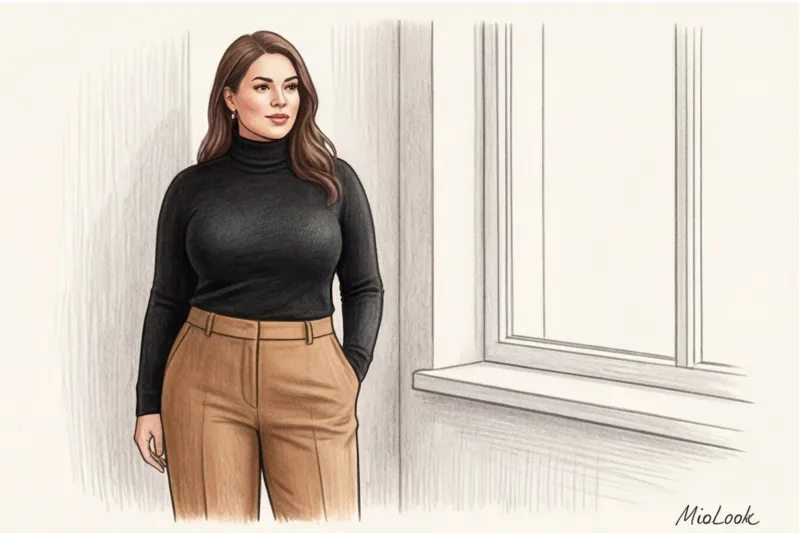
In reality, voluminous, textured knits made of acrylic or loose mohair are incredibly wind-resistant and don't retain body heat at all. For plus-size figures, this illusion comes at a cost: you sacrifice a beautiful, defined silhouette for non-existent comfort. We'll be approaching the cold weather from a textile engineering perspective. We've already discussed how to create the right look in our article. A complete guide to creating a capsule for plus-size women Today, we'll explore how to stay warm using fiber's properties while maintaining a sleek silhouette.
The Anatomy of Heat: Why Thick Clothing Is the Main Enemy of a Slim Silhouette
When we put on a thick, oversized sweater or a puffy, voluminous jacket, we visually disrupt the body's natural structure. The garment takes on a life of its own, transforming the body into a shapeless ball. But textile science is relentless: it's not the garment's weight or thickness that warms us, but the heated air the fibers can trap within themselves.
According to The Woolmark Company's 2023 research on thermoregulation, 1 millimeter of high-quality natural merino wool retains 30% more heat than 3 millimeters of synthetic acrylic. The difference is dramatic. Look for the wool fineness on the label: the ideal choice is a yarn with a fineness of 18.5–19.5 microns (often labeled as Extra Fine). This incredibly fine, almost silky thread is warmer than your grandmother's itchy cardigan.
"True warmth comes from the micro-layering and tight weave of fine natural yarns, not the physical bulk of the garment. The tighter the yarn is twisted, the better it blocks out cold air."
The Secret of Microlayering: Next-Generation Thermal Underwear
My main secret for styling in the cold season is an invisible "zero" layer. Forget about thick cotton T-shirts. Cotton is hygroscopic: it absorbs body moisture (yes, we sweat in winter too), takes a long time to dry, and starts to cool you down. This is a surefire way to catch a cold and feel uncomfortable.
Instead, invest in high-tech thermal underwear. Personally, I recommend blends of silk and merino wool (for example, 30/70) or modern microfiber with heat-retaining technology.
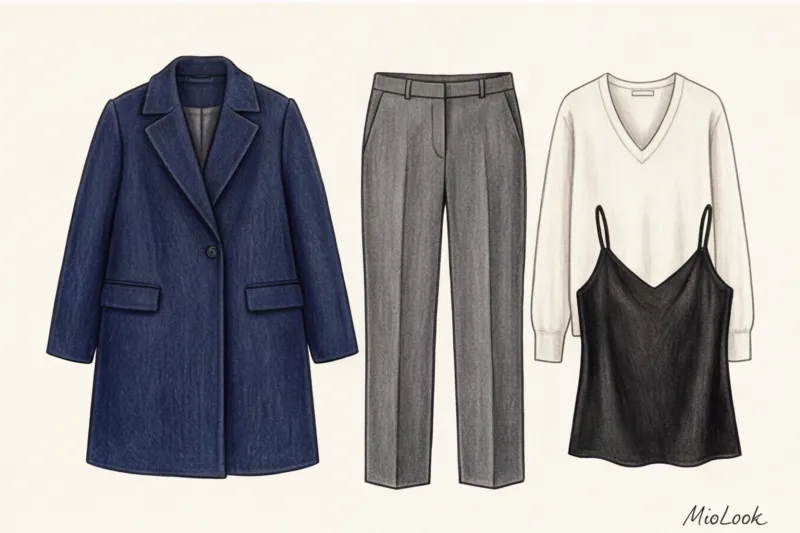
- Landing: Thermal underwear should fit like a second skin. If it bunches up, it doesn't work and adds unnecessary bulk underneath your clothes.
- Cut: Choose models with a deep neckline (U- or V-shaped) so that they are not visible from under shirts and jumpers.
To be fair, it's worth noting a limitation: thin merino or silk thermal underwear will NOT work if worn over a textured lace bra—all the seams will immediately show through. Smooth knits require completely smooth, seamless underwear.
Access to MioLook for €0.99 — one-time payment
A smart AI stylist will select the perfect look and help you intelligently incorporate layering into your everyday wardrobe.
Get access — €0.99 onceThe Perfect Fall Basic Wardrobe for Plus Size Women: 5 Key Investments
When putting together a fall basic wardrobe for plus-size clients, I always use the "frame capsule" formula. This is a collection of pieces that hold their shape and are easy to combine, creating elongated vertical lines. Here are five pieces that will be worth every penny:
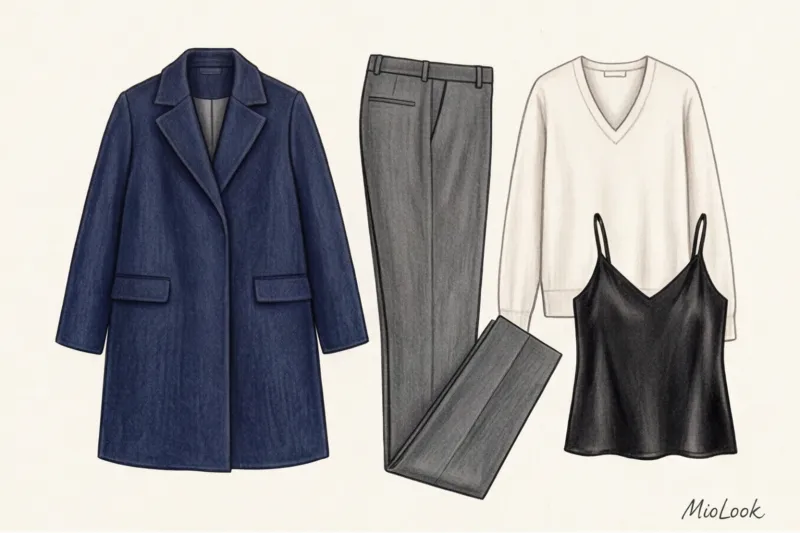
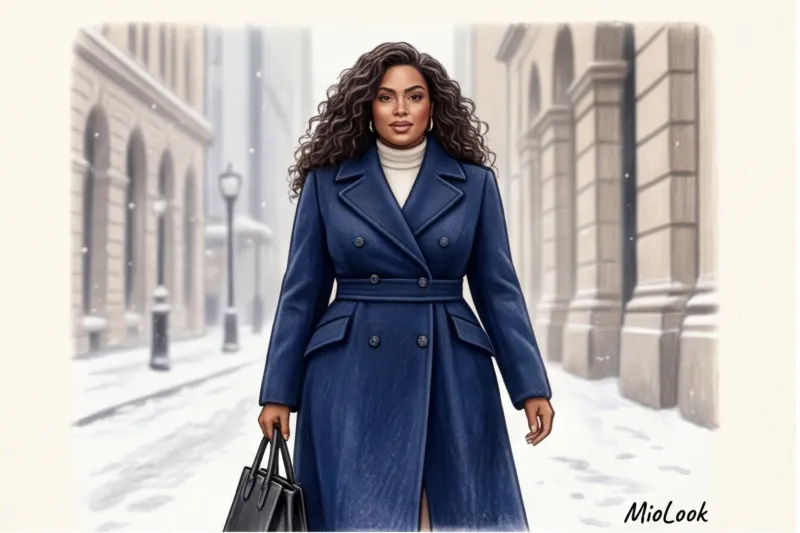
- Structured coat with the right amount of stiffness. Look for broadcloth or heavy drape with a weight of at least 500 g/m². The key is a set-in sleeve. A robe coat with a dropped shoulder seam visually widens the upper body and adds bulk. A set-in sleeve, on the other hand, creates a crisp, straight shoulder angle, flattering the silhouette.
- Wool blend trousers with lining. A knee-length (or full-length) viscose lining is a sign of a luxury item. It prevents the pants from stretching at the knees and prevents the fabric from sticking to tights.
- A fine merino or cashmere jumper with a V-neck. Opens the neck, lengthens the face and fits perfectly under a jacket.
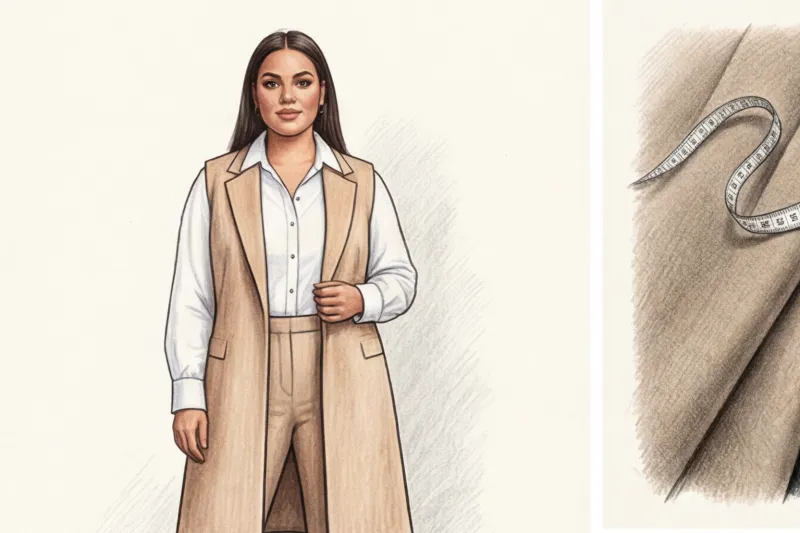
- Straight-cut jacket made of thick wool. Replaces a cardigan. Single-breasted, length just below the widest part of the hip.
- Shirt made of thick cotton or modal. Works as an intermediate layer, creating geometric accents (collar, cuffs) peeking out from under the jumper.
Textile Guide: Fabrics That Will Keep You Warm Without Adding Bulk
When shopping, I always teach my clients to "read" fabrics with their hands. Choosing the right texture is 80% of the key to a plus-size figure's fit.
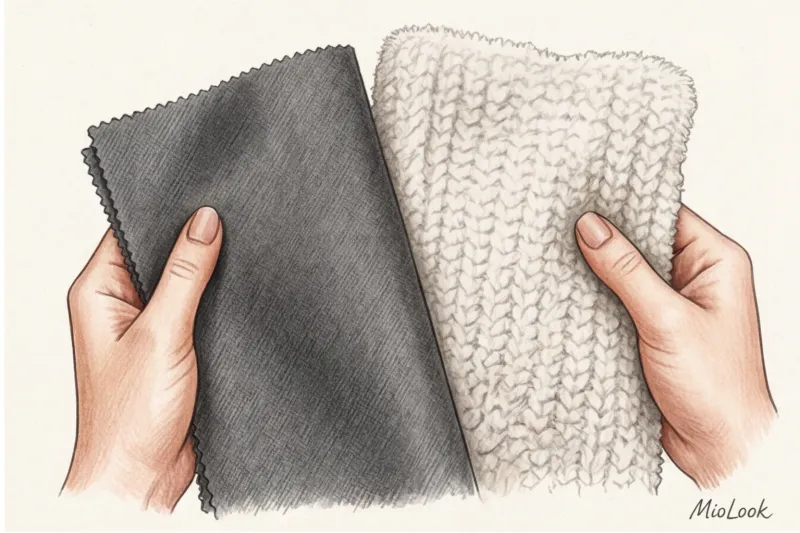
Please note worsted wool This is wool whose fibers are combed before spinning, removing the short, fluffy hairs. The result is a smooth, matte, dense, yet incredibly flexible and flowing fabric. It's ideal for suits and skirts: it doesn't stand upright, falls in heavy folds, and doesn't make you look fat at all.
What fabrics are worth adding to your fall/winter wardrobe:
- Cashmere: One thin cashmere sweater is enough to replace three acrylic pullovers. It's an investment in pure, weightless comfort.
- Thick viscose and modal: The best alternatives to summer silk for blouses. They're heavier, wrinkle less under outerwear, and don't generate static.
Here's a list of textile "taboos" for plus-size women in the city:
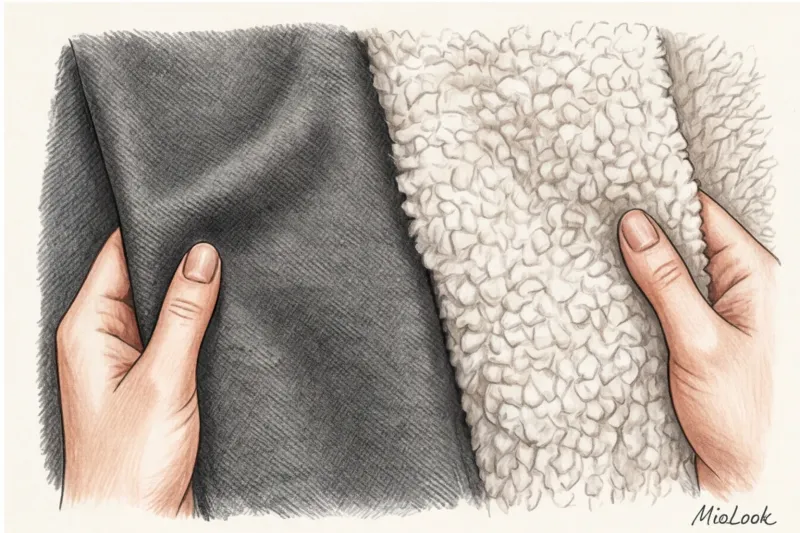
- Boucle fabric: Small knots create the effect of visual expansion on a 3D level.
- Thick corduroy with a wide rib: A hard texture that adds bulk to the hips.
- Plush and fleece: Save these fabrics for trips out of town. In the city, they cheapen the look and blur the lines of the silhouette.
Your perfect look starts here
Join thousands of users who look flawless every day. Digitize your closet with MioLook and create looks in just two clicks.
Get access — €0.99 onceLayering Architecture: How to Combine Clothes Without the "Cabbage" Effect
Layering is a great tool for shaping your figure, provided you understand the laws of optical illusions. The WGSN agency's 2024 report emphasizes that the smart layering trend for plus-size women is shifting away from loose-fitting garments toward structured geometric pieces.
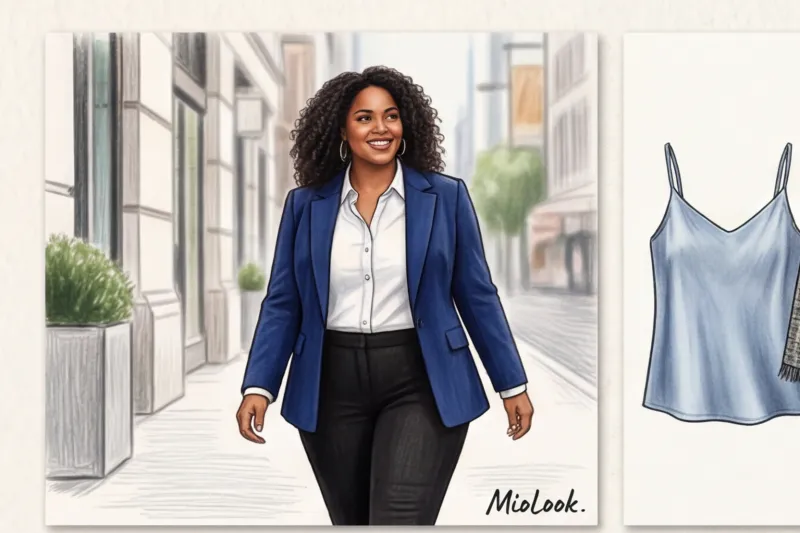
The main rule of a stylist: the bottom layer should always be thinner and more flexible than the top one You can't wear a chunky knit sweater under a thin silk jacket—you'll get lumps and creases. But a thin silk blouse under a heavy wool jacket looks impeccable.
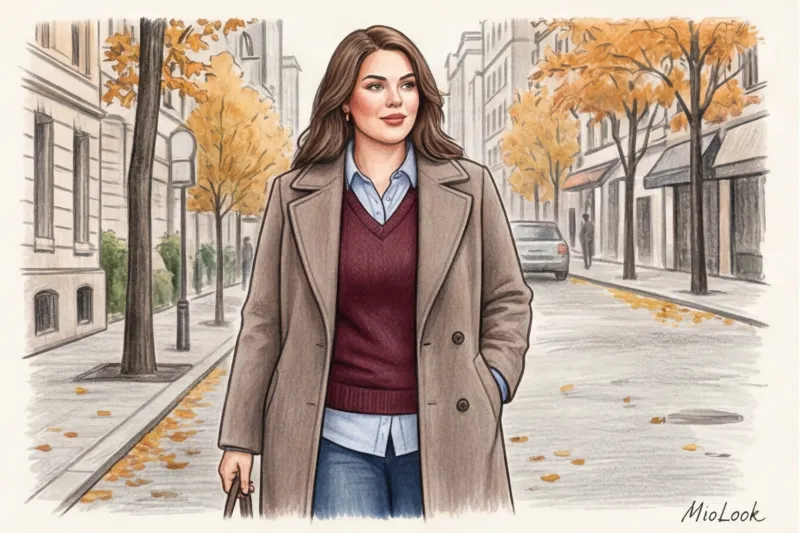
How it works in practice:
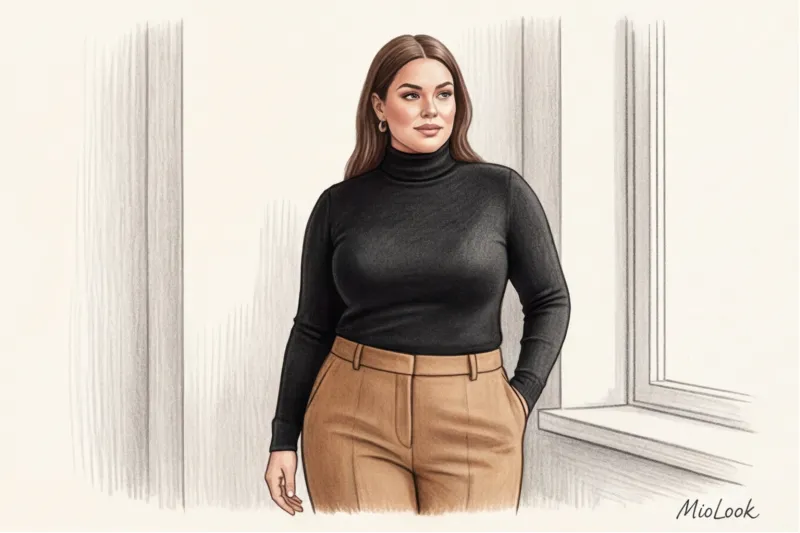
- Color verticals: Wear a turtleneck and trousers in the same deep shade (e.g., navy blue), then layer a contrasting jacket or coat (e.g., camel) over the top. The coat's hem will create two strong vertical lines, visually cutting off the sides.
- Contrast of textures: A smooth leather skirt paired with a matte merino sweater creates depth without adding bulk. The eye catches the play of light on the leather and the absorption of light by the wool, giving the outfit a sophisticated and luxurious feel.
- Length of layers: Never end your top layer at the widest part of your hips. The jacket should either end higher (at the waist/upper third of the thigh) or extend lower, covering the danger zone.
Shoes and accessories: finishing touches for a warm base without adding weight
Even a perfectly constructed silhouette can be ruined by the wrong details. Have you ever noticed how a huge knit snood, paired with a full bust, creates a monolithic figure and deprives the neck? Replace chunky knits with thick pashmina stoles (a blend of cashmere and silk). They can be draped in graceful flat folds, creating a diagonal V-shape across the chest.
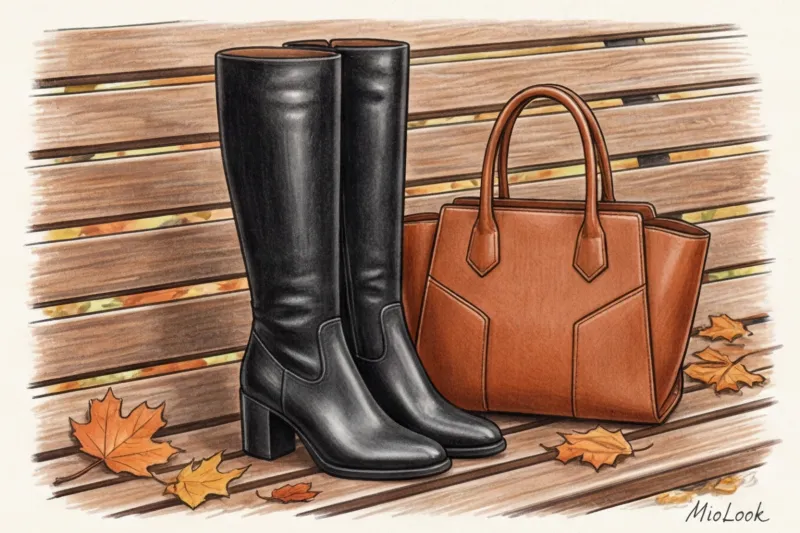
Shoes serve as the visual anchor of the entire "architectural" look. Avoid accordion boots or styles that hug full calves, emphasizing their volume. Look for tube boots with a straight, stiff shaft. The space between the foot and the shaft visually slims the leg. The heel should be stable and proportionate—a kitten heel under a bulky winter coat looks comical and unsafe.
The same goes for bags. Soft, shapeless bags and tiny micro-crossbodies are lost against the backdrop of outerwear. Opt for more rigid shapes (totes, satchels) in medium or large sizes. The geometric shape of accessories subconsciously evokes a sense of smartness and status.
Checklist: Preparing Your Closet for Cold Weather
It's time to move from theory to practice. To make your fall/winter wardrobe work for you, do a quick inventory. Incidentally, this is much easier if you take photos of your items beforehand and upload them to MioLook - This way you can see the gaps on your phone screen without rummaging through the shelves.
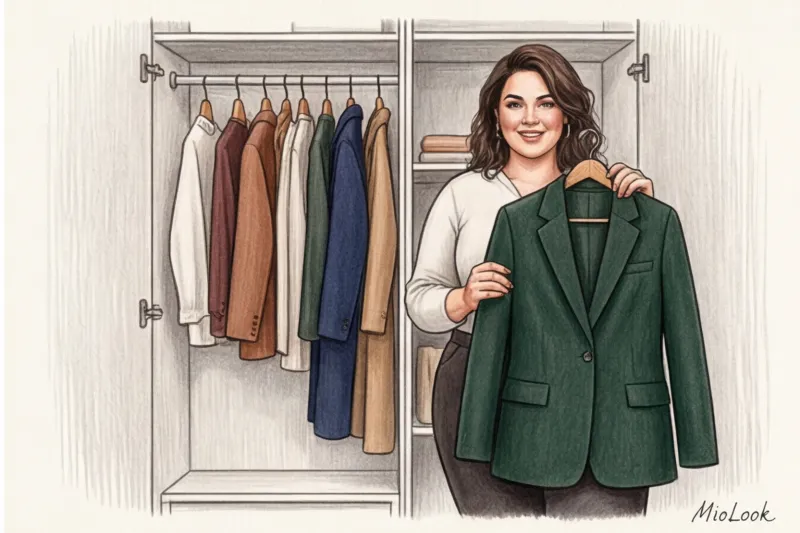
- Step 1: Getting rid of "empty" things. Ruthlessly discard acrylic sweaters, stretched knits, and cardigans that have lost their shape. If a garment doesn't hold up or keep you warm, it has no place in a smart wardrobe.
- Step 2: Heat Base. Buy two sets of proper, form-fitting thermal underwear (black and nude) with a low neckline.
- Step 3: Check the top layer. Assess your coat or jacket. Does it have a defined shoulder line? Is the fabric thick enough? If it feels like a soft blanket, consider a structured style.
A warm winter for a plus-size figure isn't a compromise between style and health. It's a precise calculation: high-quality thermal underwear, smart, fine wool, straight lines, and crisp textures. Invest in the right textiles, and you'll never have to hide behind shapeless layers again.