

Last Tuesday, a client came to me for a wardrobe review with a classic fall problem. She'd bought a luxurious, oversized wool-blend sweater for almost $300, but she couldn't wear it. It was chilling outside, and in the office, she'd be drenched in sweat after fifteen minutes. Sound familiar? The problem wasn't the sweater, but the fact that she'd worn it over synthetic underwear and tried to squeeze it under a tight, mid-season coat. The perfect autumn capsule wardrobe It's not just a set of beautiful, warm clothes. It's a complex architectural climate control system.
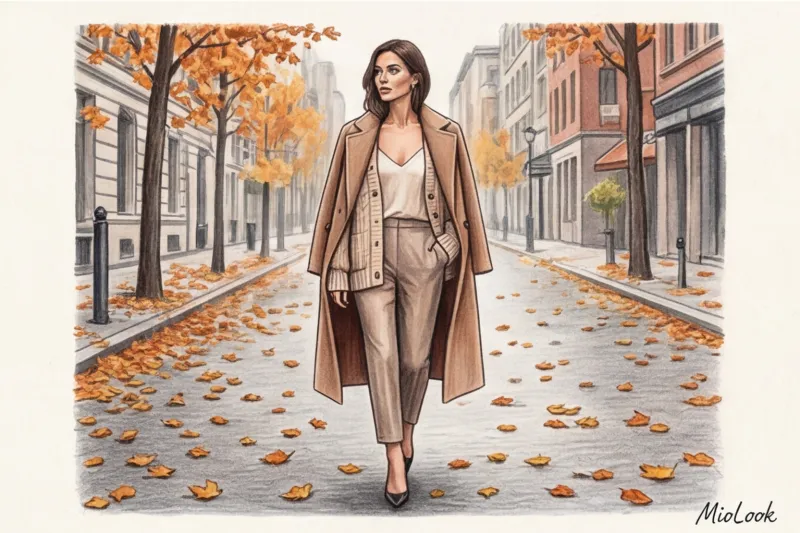
We have already discussed the basic principles of compatibility in more detail in our The Complete Guide to Creating a Capsule Wardrobe , but the autumn season requires a special, almost engineering approach.
The Architecture of Comfort: Why Fall Wardrobes Are Built Differently
Autumn weather is treacherous: 0°C in the morning, but the sun warms the air to 15°C during the day. The summer "put on a dress and go" mentality fails here. To avoid looking like a clumsy cabbage and still feel comfortable, I always advise my clients to borrow a rule from mountain climbers.
Outdoor gear uses a strict three-layer system: base (wicking away moisture), insulating (preserving warmth), and protective (protecting against wind and precipitation). Research agency WGSN noted in its 2024 report that the trend toward functionality ("gorpcore") has finally merged with everyday urban fashion. We no longer want to choose between style and health.
Layer 1: Base. The foundation we don't notice
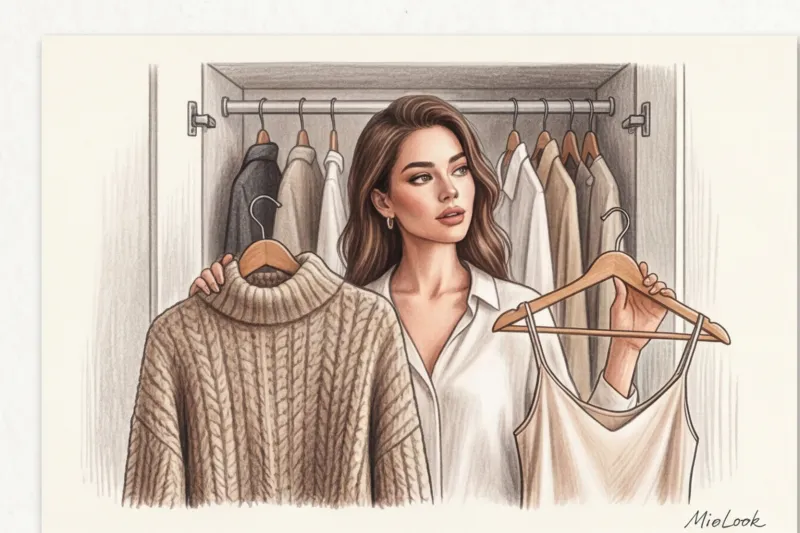
A base layer is your invisible armor. Its main job is to keep you comfortable and protect your precious base layer from skin impurities. As a stylist, I categorically forbid wearing good cashmere or merino wool next to your bare skin. Human skin produces oil and moisture, which are instantly absorbed by the delicate fibers of wool. As a result, the sweater needs to be washed frequently, and it loses its shape after just a month.
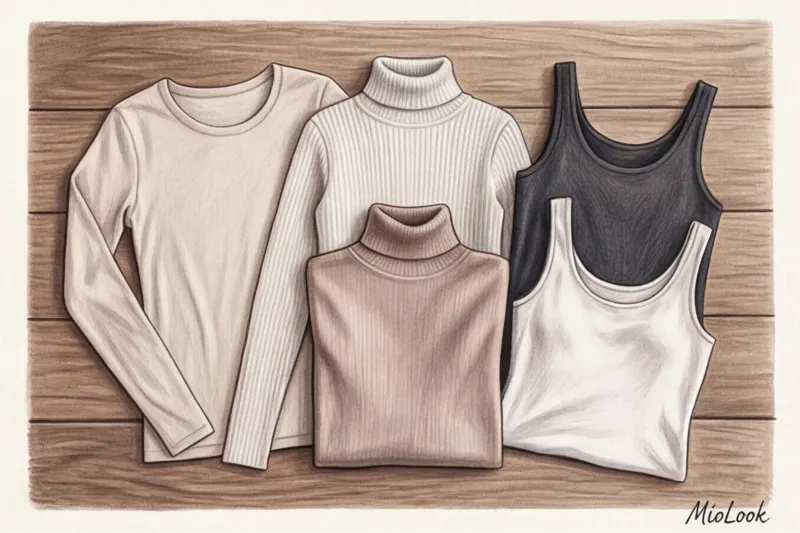
What should be in the basics? Silk tops with thin straps, high-quality long sleeves made of viscose or modal, turtlenecks made of the finest merino wool (so-called extrafine merino), and modern urban thermal underwear that looks like a regular top.
Fabrics that work for you
Did you know that cotton isn't the best choice for a fall base layer? Cotton absorbs sweat well, but dries very slowly. The slightest draft, and a damp cotton T-shirt under your sweater will start to feel chilly. Viscose (with 5-10% elastane added for a perfect fit) or silk are much more effective.
Another sore point is 100% acrylic. It's pure plastic. Wearing an acrylic turtleneck under a wool jacket is like creating a portable greenhouse. You'll sweat even at 10°C, and the slightest breeze will give you chills.
Digitize your wardrobe
Upload photos of your essentials to MioLook, and our smart AI algorithm will suggest how to pair them this fall.
Get access — €0.99 onceLayer 2: Insulation. Cozy Knit Look Formulas
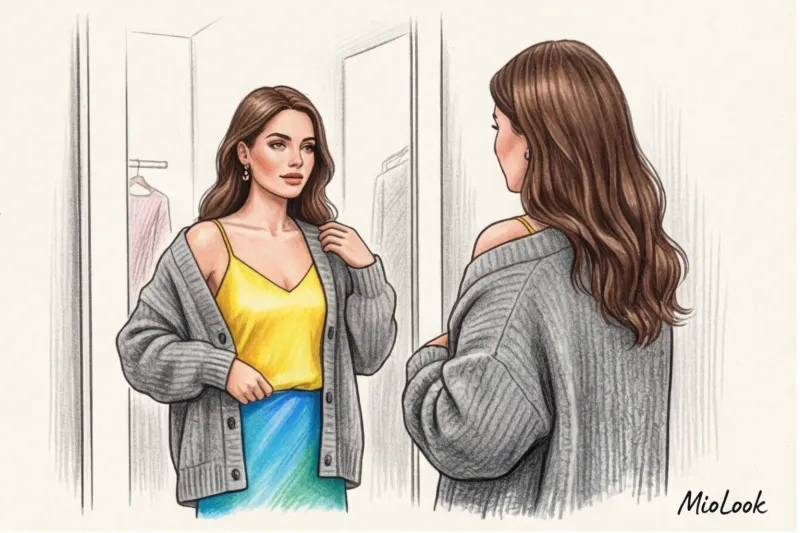
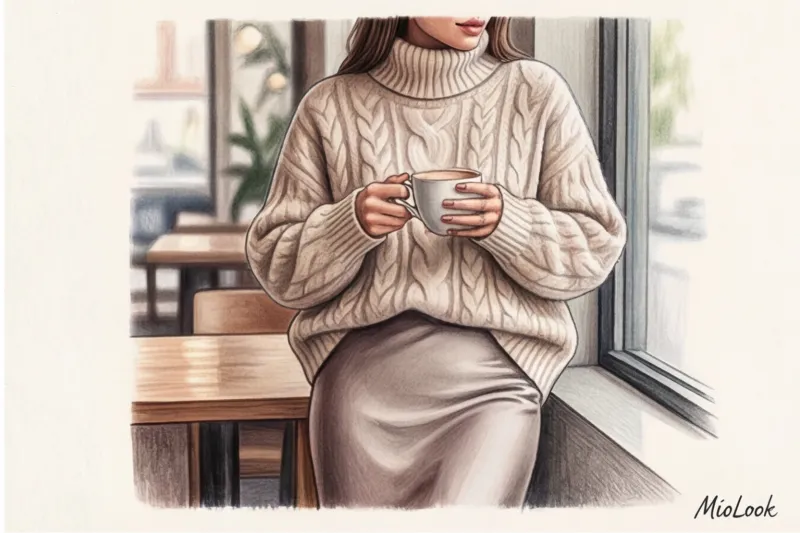
The second layer's job is to trap the warm air from your body and set the style tone for your day. This includes those voluminous chunky knit sweaters, thick cardigans, knit vests, and structured wool jackets.
The main rule of layering is to maintain proportions. If you choose a voluminous top (for example, an oversized sweater), keep the bottoms simple—straight jeans, a fitted slip skirt, or classic pleated trousers. And vice versa.
"Invest in quality, not quantity. One 100% wool sweater for $150 that you'll wear 50 times a season (cost-per-wear = $3) is a better value and more prestigious than three acrylic jumpers for $50 that will pill after the second wash."
Layer 3: Shield. The outerwear that makes all the difference.
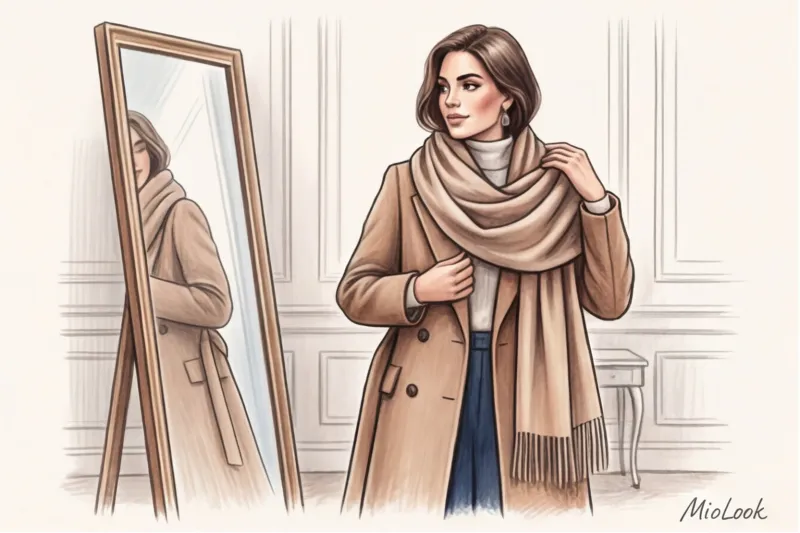
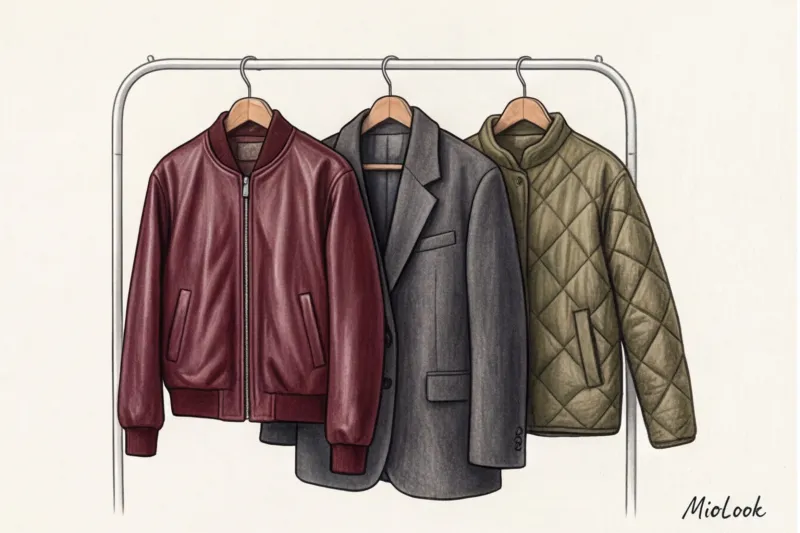
Outerwear is the frame for your picture. It pulls the whole look together. Robe coats, liner jackets, and well-fitting biker jackets are all great choices.
A tip from my experience: when shopping for a fall coat, always wear the thickest sweater in your collection. If the armhole (sleeve opening) is too narrow, you won't be able to lift your arms, and the fabric will stretch unattractively across your shoulders. Also, always check the lining composition. A viscose lining will glide easily over a knit, while a cheap polyester one will make you sweat on the subway and give you static in your hair.
The myth of the obligatory beige trench coat
Let's be honest: a classic double-breasted beige gabardine trench coat isn't flattering for everyone. It's a stiff, form-fitting piece that can visually widen those with an apple-shaped figure, and it's a total mismatch with oversized hoodies if you prefer a sporty chic look.
What to replace it with? Try a chunky felted wool bomber jacket (it's great for keeping you warm and looks ultra-modern), a heavy shacket for relaxed weekends, or a minimalist leather coat that will protect you from any downpour.
Tired of putting together looks in the morning?
Trust artificial intelligence. MioLook will create stylish outfits from your items, taking into account the weather outside.
Get access — €0.99 onceColor Palette: How to Incorporate Autumn into Your Color Palette
When we say "fall capsule wardrobe," mass-market stores immediately dump tons of ochre, mustard, rust, and warm terracotta colors on us. It's a beautiful palette, but as a certified colorist, I have to tell the truth: it suits only 30% of women, at most.
About 70% of women in our latitudes have cool skin undertones (Summer and Winter color types). If such a woman wears a warm mustard sweater close to her face, her skin will instantly take on a sickly, yellow, sallow hue, and the dark circles under her eyes will become more pronounced.

Cold Autumn: Alternative Shades
Autumn can be cool and refined. In their latest forecasts, the experts at the Pantone Color Institute are increasingly adding cool tones to fall/winter collections. Swap khaki for deep emerald. Instead of terracotta, try cool wine (burgundy) or plum. Warm chocolate easily transitions to graphite gray or dark chocolate (without the reddish tint).
What if you're madly in love with a color that's not your thing? Move it away from your face. Go for camel-colored pants, a terracotta bag, or suede ankle boots, and keep your complementary cool shade close to your face.
Textures: The Secret to an Expensive Autumn Look
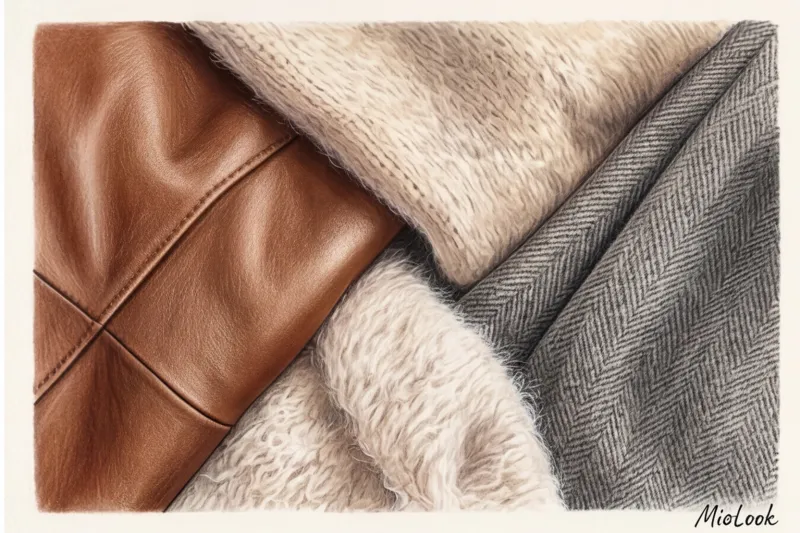
Autumn is a time for tactility. It's the contrast in textures that makes monochrome and minimalist looks visually rich and sophisticated. Smooth summer fabrics give way to textured materials.
The formula for perfect contrast works like this: combine smooth with fluffy, and matte with shiny. Recently, a client and I were sorting through her office wardrobe. She had a completely flat, boring look: black jeans and a sleek black turtleneck. We simply swapped the turtleneck for a fluffy mohair cardigan in the same color, added a smooth leather belt with a metal buckle, and polished leather ankle boots. The color remained black, but the look was a million dollars better.
Checklist: Putting together your personal autumn capsule of 15 items
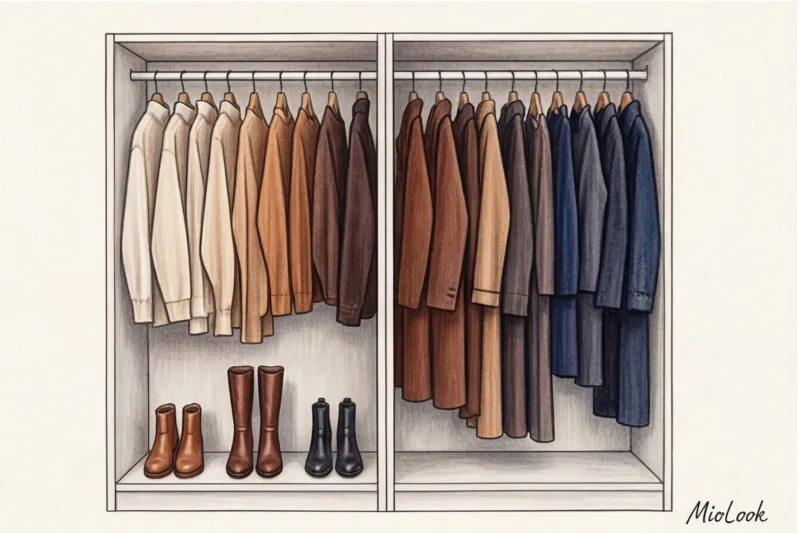
I don't believe in universal "must-have for everyone" lists, but I do believe in wardrobe math. Below is a matrix. You can (and should!) adapt each item to your lifestyle—from a strict office to freelancing.
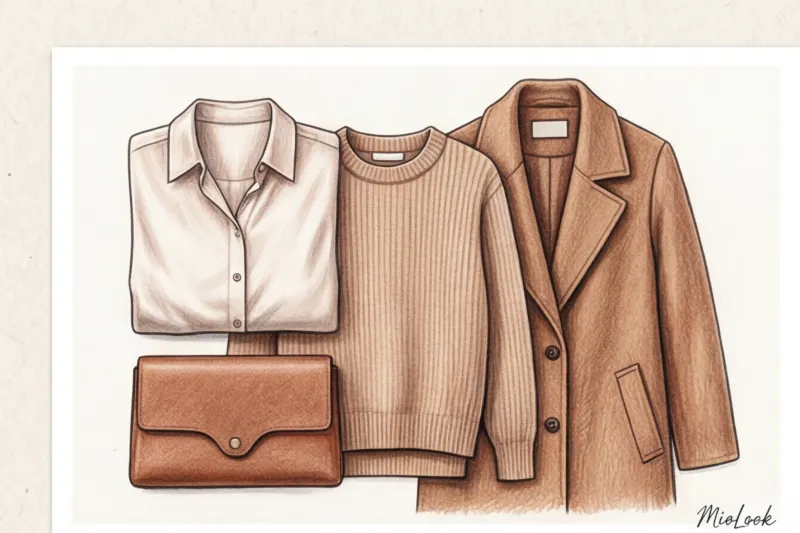
- Outerwear (3 pcs.): Light (for example, a leather jacket or blazer), medium (a wool coat or a thick bomber jacket), insulated (a quilted coat in case of frost).
- Bottoms (4 pcs.): Thick, straight-leg jeans without any fraying, wool trousers (wide or palazzo), midi skirt (silk or thick wool), statement bottoms (for example, leather trousers).
- Tops (5 pcs.): 2 basic long sleeve/turtlenecks, 1 thick shirt (cotton from 180 g/m²), 1 thick knit cardigan, 1 voluminous sweater.
- Shoes (3 pairs): Loafers with thick soles for warm weather, elegant ankle boots for feminine looks, rough lace-up boots (Chelsea or Martens) for slush.
Even from these 15 items, with the right combination of textures and adherence to the three-layer rule, you can create more than 30 unique looks.
Don't know where to start with your wardrobe audit?
Upload your items to the MioLook app—we'll help you create the perfect base and show you what items you're missing.
Get started with your wardrobeBottom line: invest in comfort and functionality
A fall capsule wardrobe is, first and foremost, an investment in your health and a stress-free morning routine. You don't need to buy every seasonal trend from Zara or H&M to look stylish.
Start by taking stock of what's already hanging in your closet. Carefully examine the tags: get rid of squeaky acrylic that doesn't keep you warm and thin cotton that won't hold its shape. Buy only those items that will fill the gaps in the three-layer rule and tie your existing pieces together.
Remember my main rule: it's better to have one perfect cashmere sweater that you wear with great pleasure every day than five compromised acrylic jumpers that alternate between being too cold and too hot. Plan a closet cleanout this weekend, make a strict shopping list, and let this fall be truly cozy.