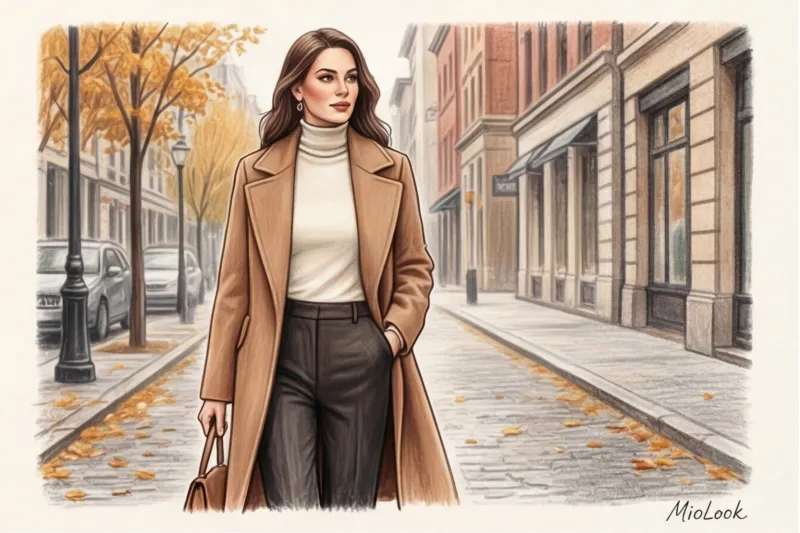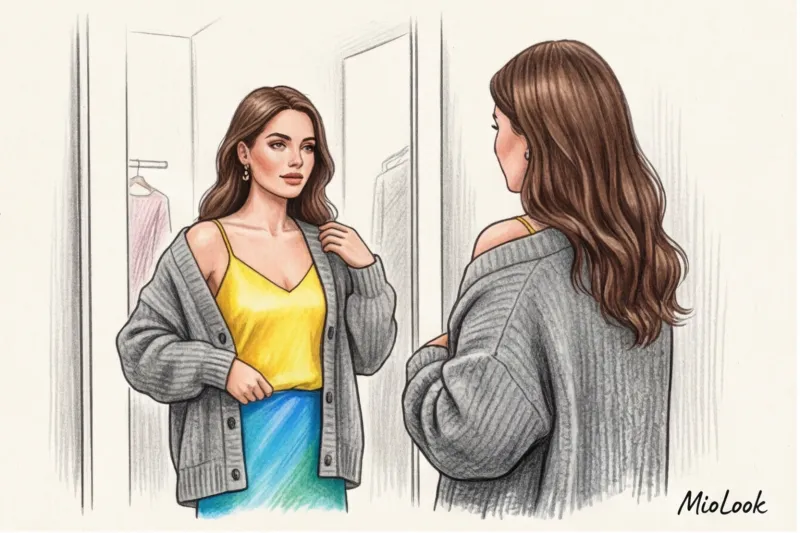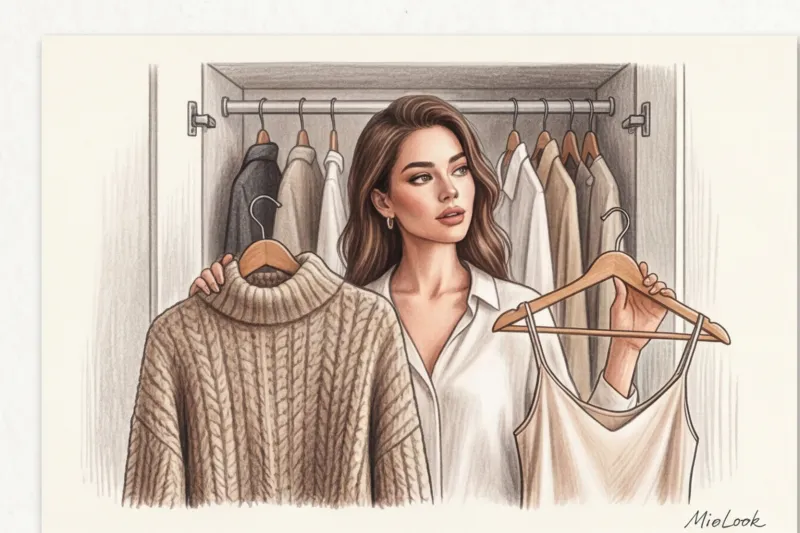
You leave the house at 8 a.m., your breath steaming, and you wish you had a down jacket. You return from lunch at 2 p.m., and the sun is so blazing you'll want to stay in just a T-shirt. Sound familiar? This is exactly what a typical October in the city looks like.
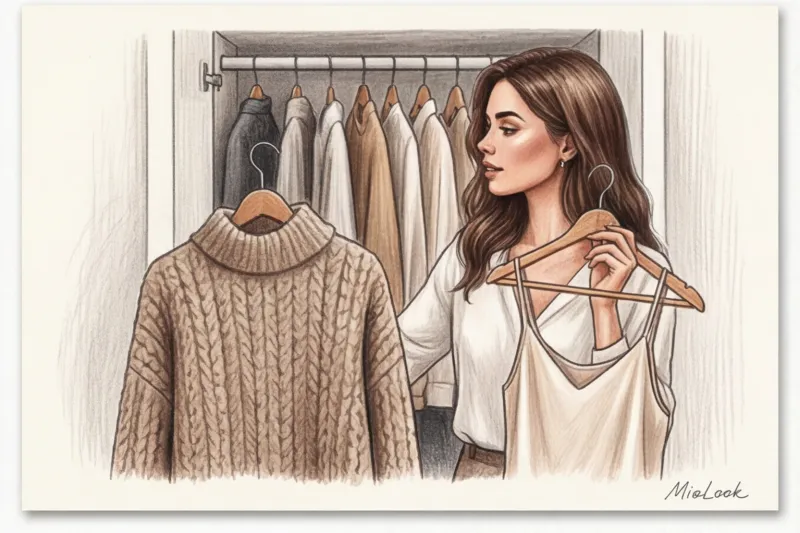
Assembling your ideal autumn basic wardrobe Many women make the same mistake: buying thick, warm sweaters and one heavy coat. We covered the basics in more detail in our complete guide: A woman's basic wardrobe: how to create the perfect foundation But today I want to show you a completely different approach.
I've been tracking my outfits in a tracking app for three years and made a surprising discovery: medium-insulation items have a 500% higher ROI than any outerwear. The secret to a comfortable autumn lies not in the thickness of the fabric, but in creating a smart "thermal matrix."
The Anatomy of the Off-Season: Why Your Standard Fall Basic Wardrobe Won't Work
According to climate data, during the transitional seasons (September-November), the difference between morning and daytime temperatures regularly reaches 15 degrees. This is what meteorologists call "diurnal amplitude," and stylists call a headache. A static wardrobe, where one item serves only one purpose (for example, a heavy wool sweater), is doomed to failure in such conditions.
"In autumn, we don't just dress warmer. We create a modular system that allows us to adapt to climate change hour by hour without losing our elegance."
Your fall wardrobe should function like a formula. Forget about searching for "universal warm pieces." Instead, focus on pieces that are easy to layer and just as easy to take off, fitting into a medium-sized tote.
Layering Algorithm: How to Assemble a Fall Basic Wardrobe Like a Construction Set
The three-layer concept originated with survival gear, but it's perfectly suited for urban chic. My clients' main fear of layering is the visual increase in volume. "I'll look like a cabbage!" is a typical objection during the first consultation.
A fair rule: layering really doesn't work and can make you look fat if each layer is oversized or textured. The rule here is strict: only one, or at most two, outer layers can be bulky. The base layer should always fit delicately to the body.
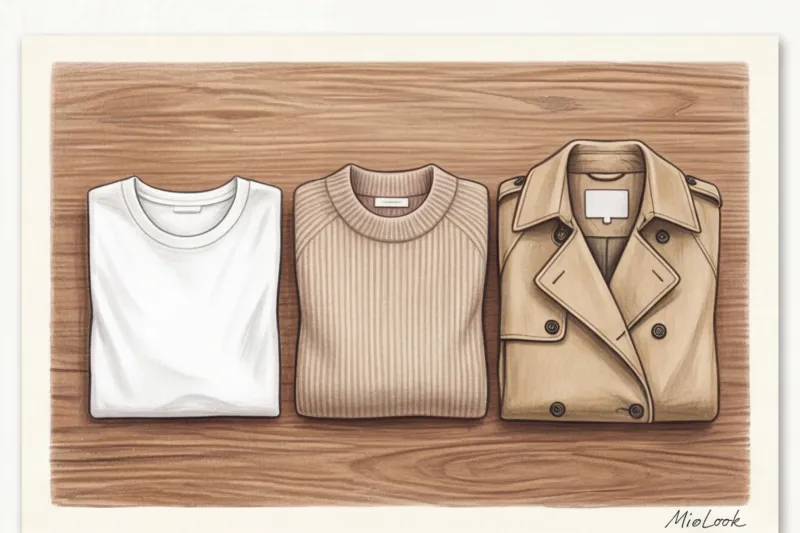
Base Layer: Moisture Control
Mercerized cotton T-shirts, thin turtlenecks, and silk tops with thin straps are recommended. According to research by The Textile Institute (2023), natural silk and high-quality long-staple cotton are the best at wicking away moisture. The purpose of this layer is to act as an "invisible" second skin. If you take off your cardigan at 2 p.m., the base layer should look like a standalone, aesthetically pleasing element of your outfit, not like underwear.
Insulating layer: heat retention
This is where the style magic happens. Cardigans, suit vests, thin cashmere jumpers, and thick shirts (shackets). The insulating layer traps your body heat. Stylistically, it's this layer that adds complexity and interest to the look. By unbuttoning the collar of a shirt over a jumper or layering a vest over a silk blouse, you create that textured effect.
Protective layer: shield from wind and rain
Classic trench coats, leather jackets, and oversized wool jackets. The key factor when choosing a protective layer is the armhole (the space under the arms and shoulders). Choose items with a little extra room in the shoulders, otherwise the insulating layer simply won't fit under the jacket without bunching up.
Access to MioLook for €0.99 — one-time payment
A smart AI stylist will select the perfect layered look from your items, taking into account the weather outside.
Get access — €0.99 onceThe Heavy Coat Myth: What's Really Worth Investing In
In 12 years of working as a stylist, I've realized one thing: the classic heavy autumn coat is a financial trap. One of my clients, a project manager in the IT sector, once spent $800 on a luxurious, thick camel coat. The result? It was unbearably hot on the subway in October, and too cold in December due to the piercing wind. She wore it twice that season, shivering in cheap acrylic sweaters the rest of the time.

Let's apply Cost Per Wear (CPOW) math. Let's say you buy a high-quality wool cardigan for $200 and wear it 50 times per season (to the office, on weekends, on a cool evening). Its CPOW is $4. A cheap acrylic sweater for $40 you'll wear only 5 times because you sweat in it and it pills after the first wash. Its CPOW is $8. High-quality basics are cheaper.
I redirected another client's budget: instead of one heavy coat, we bought three premium mid-layer pieces—a structured vest, a cashmere cardigan, and a heavy shirt-jacket. The number of possible combinations in her wardrobe instantly doubled.
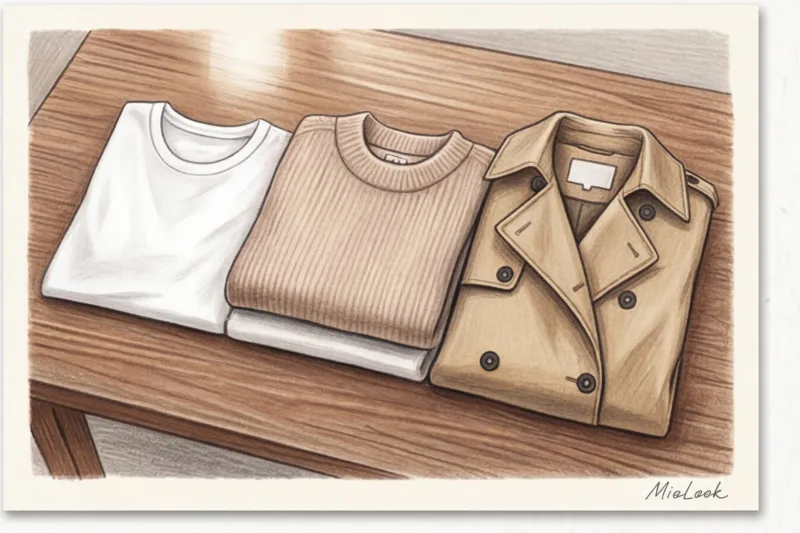
7 Essential Fall Wardrobe Investments for Women
Fall doesn't require a huge closet. It requires the right ingredients working together. Here's a 7-element matrix that will cover 90% of your needs:
- Structured wool blend jacket: Look for straight-cut styles. Unlike a soft cardigan, a jacket instantly ties your look together, making it more formal. It's perfect if you need business casual for women , but without unnecessary formalism.
- The perfect turtleneck without excess bulk: Choose a blend of merino wool and silk. It shouldn't be baggy or tight around the neck. This is your ideal base layer.
- Leather pants or midi skirt: Autumn is a time for texture. Smooth leather (or high-quality faux leather) creates a contrast with soft wool and cashmere, adding a touch of luxury to the look.
- Chunky knit voluminous cardigan: It serves as outerwear on warm days and as a cozy cocoon in the office.
- Classic loose-fitting trench coat: Important: not fitted! You can wear a jacket (item 1) underneath a loose-fitting trench coat, then layer it over a turtleneck (item 2). This is smart layering.
- Straight-leg jeans made of thick denim: Dark blue or graphite. Heavyweight denim retains heat better and doesn't warp in moisture.
- Long Sleeve Silk Blouse: Creates a balance between the ruggedness of heavy fabrics and femininity. Works perfectly as a base layer under a cardigan.
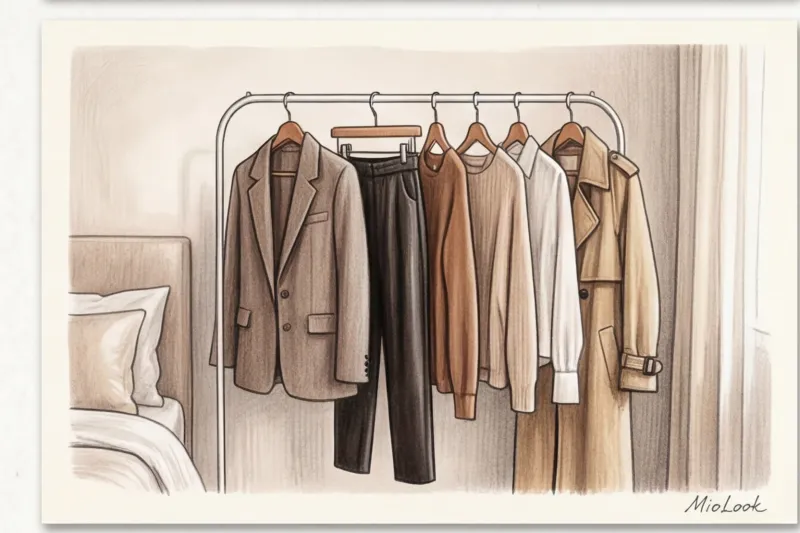
The magic of this list is its interconnectedness. A structured jacket (1) is worn over a turtleneck (2) and paired with jeans (6). A cardigan (4) is paired with a silk blouse (7) and a leather skirt (3). With just seven items, you have dozens of combinations.
Technology and Fabrics: Reading Labels Like a Professional Stylist
Acrylic is your worst autumn enemy. Have you ever noticed how some sweaters make you sweat indoors and freeze outdoors? This is a characteristic of 100% synthetic fibers, which lack micropores for temperature regulation.
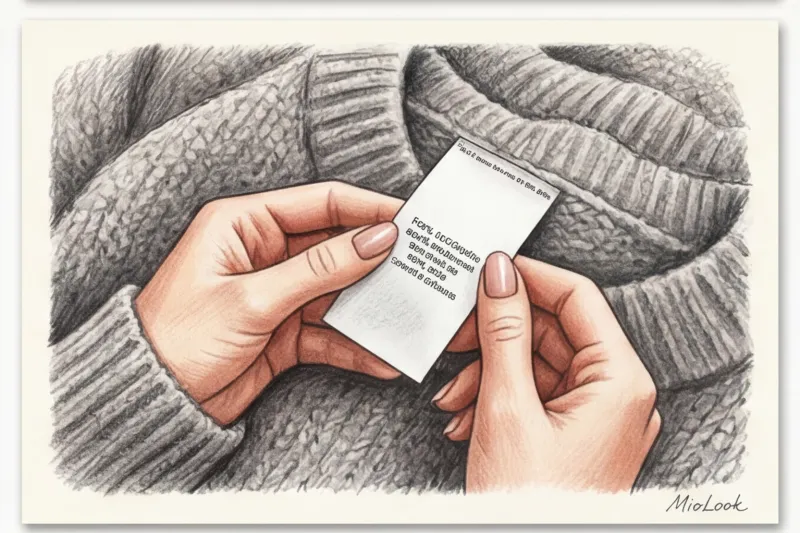
Mass-market marketers love this trick: write "CASHMERE BLEND" in large letters, then list on a microscopic tag 5% cashmere, 20% polyester, and 75% cotton. Cotton doesn't insulate in cold weather; it cools against the skin. For a garment to truly insulate, look for the golden ratio:
- For warmth and durability: 70-80% wool and 20-30% synthetics (polyamide or nylon). This amount of synthetics isn't harmful, but rather prevents the wool from stretching at the elbows.
- For the office: 100% merino wool. It has a dense, smooth knit, looks classy, and doesn't add bulk.
- For a relaxing weekend: Cashmere or alpaca. They're fluffier and trap more air (and therefore provide better warmth), but require careful care.
Your perfect look starts here
Join thousands of users who look flawless every day with an intelligent wardrobe planner.
Get access — €0.99 onceShoes and accessories: the stylistic glue of an autumn look
Basic pieces often come in neutral colors. Accessories are the connecting link that transforms a wardrobe into a personal style.
Ankle boots are the essential footwear of the transitional season. The shape of the toe and the geometry of the heel dictate the modernity of the entire silhouette. A round toe and hidden platform will visually transport you back to 2010. Choose a square, tapered toe or the clean lines of an architectural heel.
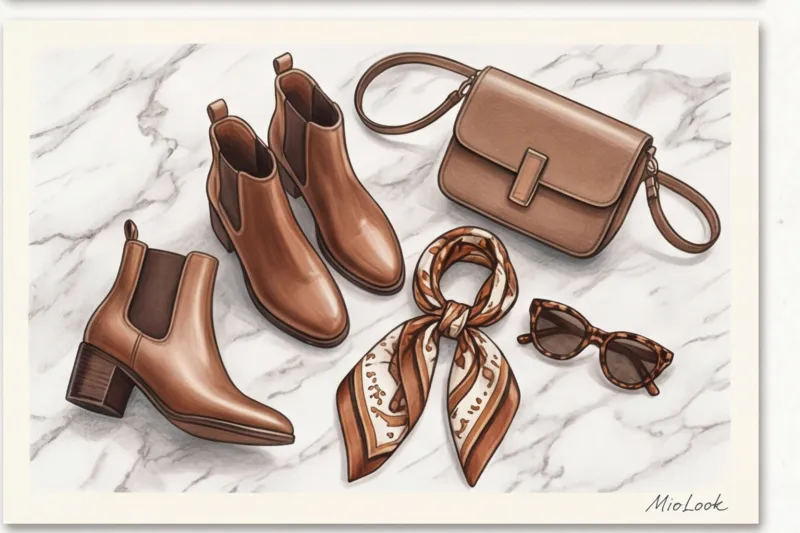
Tights are a separate topic that often gets debated. The rule for denier transitions is simple: while you're wearing lightweight fabrics (silk, thin cotton), tights should be translucent (20-40 denier). As soon as thick wool, leather, or heavy denim appear in your look, switch to thick, matte textures of 60 denier and above. Read our article about how to incorporate them into your work dress code. Winter office style for women.
Checklist: Audit your closet before the cold weather sets in
Before you hit the shops and buy the latest trends, conduct a ruthless audit. Here's the three-step process I use with every client:
- Merciless fitting. Get out all your fall clothes from last year. Wear each one. If a sweater was itchy in March, it will still be itchy in October. Sell it or recycle it.
- Searching for "gaps" in the matrix. Sort the remaining items into three piles: base layer, insulating layer, and protective layer. Typically, 80% of items end up in one category (for example, a pile of identical thin turtlenecks or five coats with no warm vests).
- Creating a list of "formulas". Don't write "black sweater" on your shopping list. Write "a thick cardigan to layer over a white shirt." Buy a solution, not just a thing.
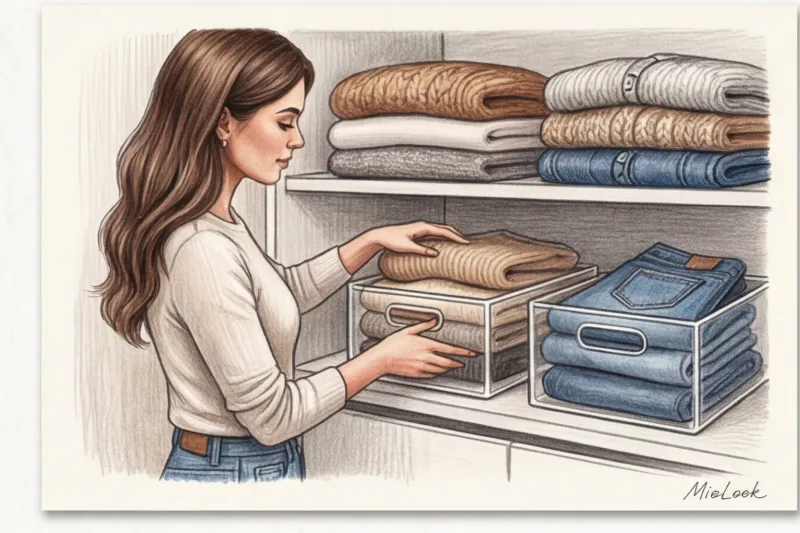
If this process seems tedious, delegate it to technology. MioLook You can digitize your entire wardrobe in a single evening. Artificial intelligence will analyze your database, show you which items you wear most often, and, most importantly, find those missing middle layer pieces that will tie together disparate pieces into dozens of new outfits.
Invest in the right midlayer, read the labels, and remember: mid-season comfort isn't a matter of luck, it's the result of a well-designed system.