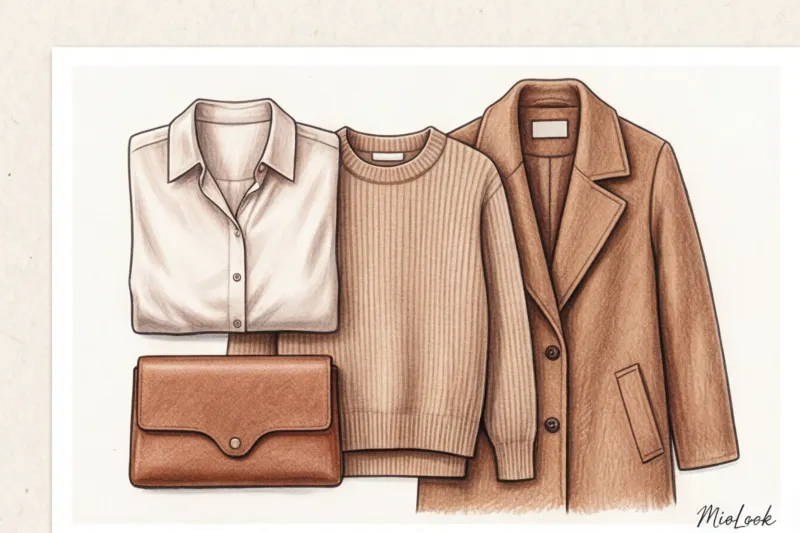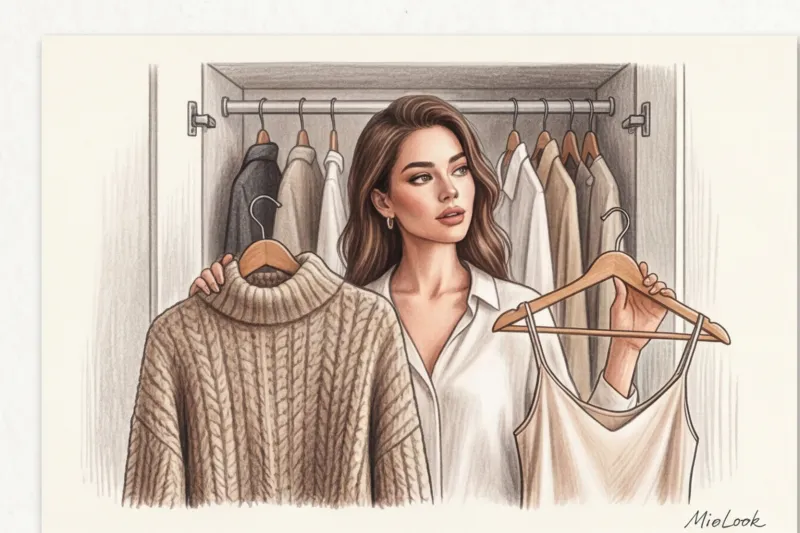
Have you noticed how, during the first week of September, the mannequins in the windows of all the mass-market brands suddenly change to the shades of fallen leaves? Mustard, terracotta, burgundy, olive... For years, marketers have been telling us that this is exactly what a perfect autumn capsule wardrobe should look like. And every year, thousands of women buy these "cozy" sweaters, only to look in the mirror with disappointment at their tired faces and pronounced dark circles under their eyes.
As a certified colorist and image consultant, I want to let you in on the biggest secret: a fall capsule isn't an excuse to buy items in typical seasonal colors and completely hide your summer wardrobe. We covered the architecture of a smart wardrobe in more detail in our complete guide to seasonal wardrobe and its adaptation to any weather In this article, we'll explore how to use clever layering and texture to transform your basic all-season wardrobe into a warm capsule wardrobe by adding just 3-4 strategic pieces.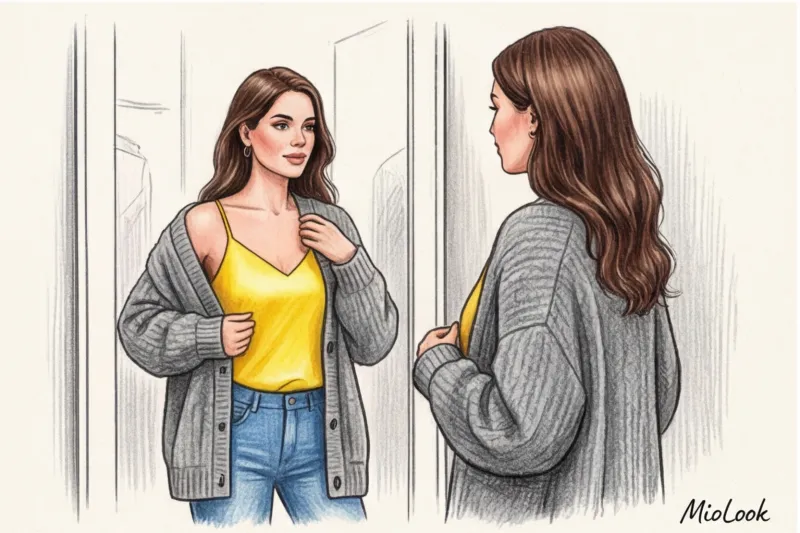
The 'Typical Fall Colors' Myth: Why You Don't Need Burgundy and Mustard
According to the PANTONE Color Institute's 2024 report, brands continue to rely on nostalgic earthy tones in fall collections because they encourage spontaneous purchases through associations with warmth. However, from a color perspective, warm earthy tones suit a maximum of 25% of women—primarily those with the Warm Autumn and Warm Spring color palettes.
If your natural undertone is "Summer" or "Winter" (and in our latitudes, that's the vast majority), a trendy mustard sweater is guaranteed to give your skin an unhealthy yellowish undertone. Your personal palette works year-round; there's no need to change it when September arrives.
How can you adapt your palette to the autumn mood without changing the color temperature? Increase the depth and saturation of your shades. For example, for "Cool Summer," a deep navy, dusty emerald, or a cocoa shade with a cool undertone would be an excellent autumn base. For "Pure Winter," go for a rich sapphire, a burgundy with a violet tint (not a red one!), or graphite.
The Transitional Wardrobe Formula: How Summer Pieces Work in Fall
The idea of having four completely different wardrobes for each season is expensive, unsustainable, and takes up too much space. According to a global McKinsey study (2024), conscious consumption in fashion boils down to maximizing the use of each item. In my experience, about 60% of summer items can and should be worn in the fall.
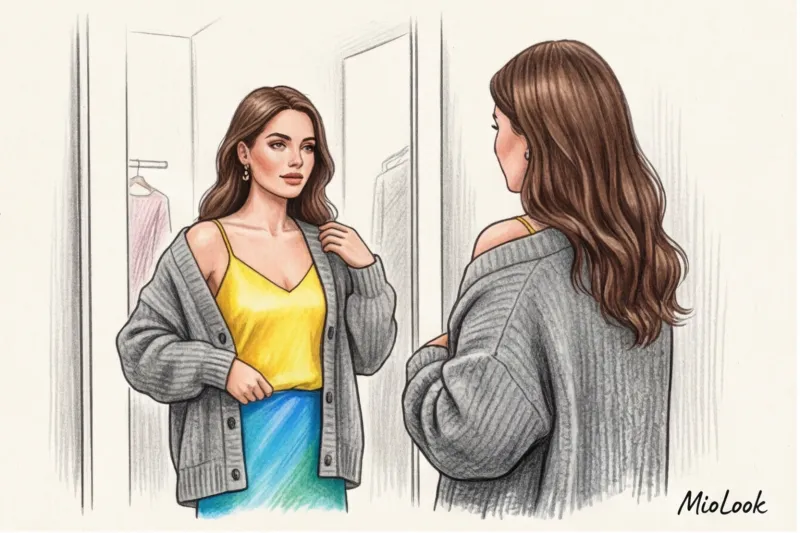
One of my clients planned to spend about €500 on updating her fall wardrobe, thinking she had nothing to wear. We didn't buy a single new dress. Instead, we applied the rule "summer base + autumn frame" Her favorite silk slip skirt from her July vacation became the basis for some stunning October looks when we paired it with a chunky knit sweater and thick matte tights.
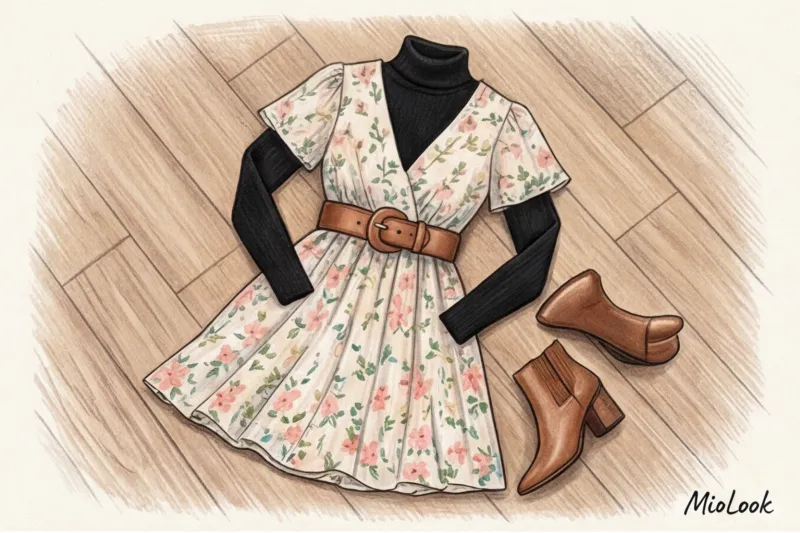
Speaking of tights, they're the ultimate transformation tool. Forget shiny lycra—it cheapens any look. Opt for thick, matte tights (40 to 80 denier) made of microfiber or cashmere. They instantly transform a lightweight chiffon dress into something "fall-ready."
Access to MioLook for €0.99 — one-time payment
A smart AI stylist will select the perfect look from your items, taking into account the season and weather.
Get access — €0.99 onceThe Art of Layering: Layering Without Visual Weight
The secret to stylish layering lies in the thin base layer rule. If you wear a thick cotton long-sleeve T-shirt under a shirt, you'll inevitably add 5 extra pounds to your appearance in the mirror.
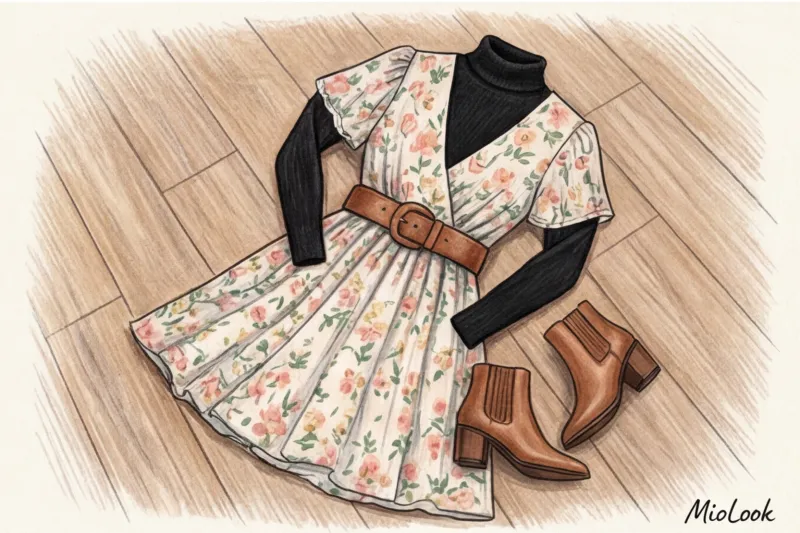
The ideal base layer is a turtleneck made of 120-150 g/m² merino wool or high-quality viscose. It should fit like a second skin. This is what we wear under summer slip dresses, oversized shirts, or classic vests.
"To avoid the 'cabbage' effect, follow the rule of three visible layers: a base layer (a turtleneck), a midlayer (a shirt or dress), and a structured top (a jacket or coat). A fourth layer always makes the figure look shapeless."
Fair Limit: This trick with a turtleneck under a slip dress doesn't work well on very full-busted figures (size D and up)—it creates a visual monolith in the upper body. In this case, it's better to wear a V-neck cardigan over the dress.
Basic Fall Capsule: 12 Pieces for 30+ Looks
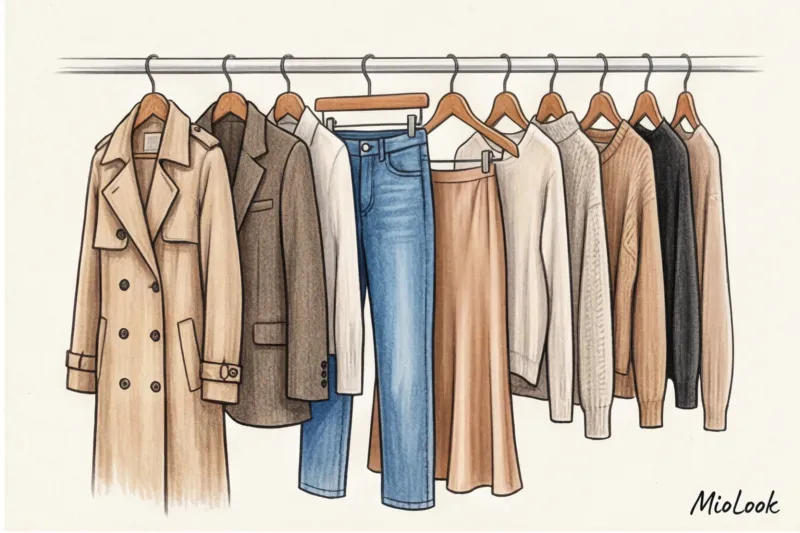
To forget about the "nothing to wear" problem on chilly days, you don't need a huge closet. You just need some proper math. Here's the core of the perfect fall capsule wardrobe, consisting of just 12 elements:
- Bottoms (3 pcs.): Ideal straight jeans made of thick denim (no elastane), straight-leg trousers with pleats made of wool blend, midi skirt (silk or thick cotton).
- Basic tops (2 pcs.): Thin merino turtleneck, loose shirt (cotton with a density of 180 g/m²).
- Accent tops (2 pcs.): Textured voluminous sweater, thick cardigan with buttons.
- Frame (2 pcs.): Structured wool jacket (holds the shape of the shoulder).
- Outerwear (2 pcs.): A classic trench coat (for early autumn) and a wool or cashmere coat (for late autumn).
- Dress (1 pc.): A versatile knitted or thick viscose midi dress.
These 12 items, chosen in your color palette, are easy to combine with each other, creating a matrix of looks: from a strict office look (pants + turtleneck + jacket) to a relaxed weekend brunch (jeans + a silk skirt over jeans as a trend + an oversized sweater).
When investing in outerwear, always consider the index. Cost-Per-Wear (cost per wear). For example, a $300 100% wool coat that you'll wear 100 times over two seasons will cost you $3 per wear. A cheap $80 acrylic coat that will pill after 10 wears (and end up in the trash) will cost you $8 per wear. A quality item is always cheaper in the long run. Calculating the return on your purchases is very easy with the wardrobe tracking feature in MioLook.
Knitwear: Why composition is more important than style
According to international textile industry standards, materials have different thermal conductivities. Acrylic (a polymer fiber) doesn't retain body heat and doesn't allow moisture to pass through. You'll sweat indoors and freeze outdoors. Furthermore, 100% cashmere, although incredibly warm, is prone to rapid pilling in areas of friction.
Look for ideal blends on the labels: 70% merino and 30% silk (provides durability and a slight sheen) or 80% wool and 20% polyamide (synthetics in this amount are not harmful, but act as reinforcement, preventing the sweater from stretching).
Play with textures: the secret to luxurious and cozy looks
Have you ever wondered why an all-black outfit looks like a security guard's uniform on one woman and like a Vogue cover on another? The answer lies in the difference in texture.
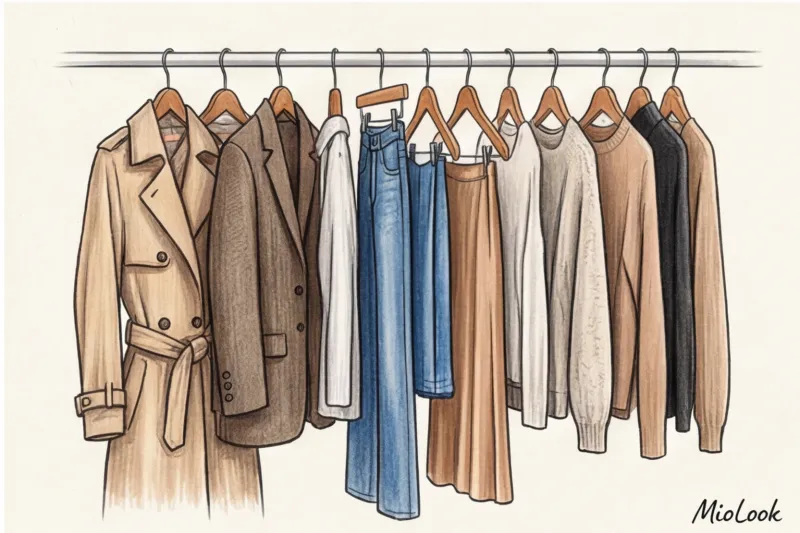
A fall capsule wardrobe simply demands contrast. Remember this rule: always pair smooth with fluffy, and matte with shiny. If you're wearing a smooth silk skirt, pair it with a fluffy mohair sweater. If you're wearing matte wool trousers, accessorize with a smooth, glossy leather bag.
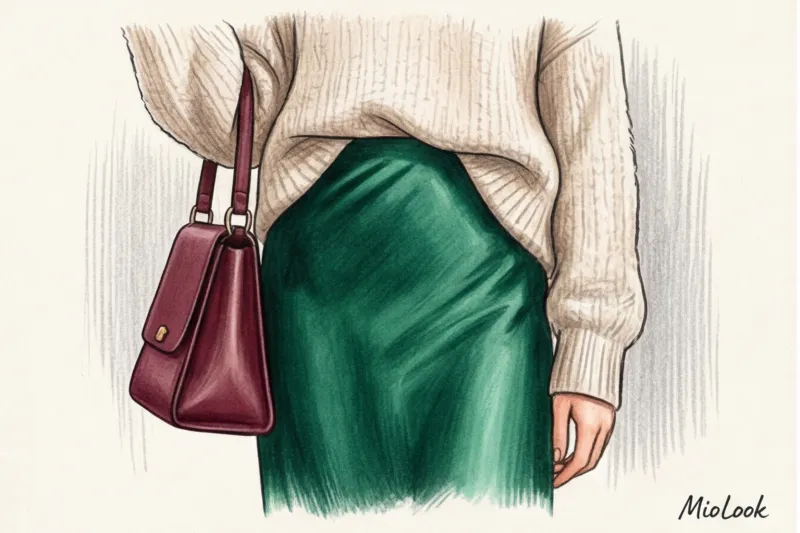
Insider Styling Trick: To visually elevate the overall look (even if the items are mass-market), place the most expensive texture in the portrait area. A suede jacket collar, a silk scarf, or a cashmere scarf will make your ordinary Zara jeans look premium.
Avoid clashing textures: a thin viscose jersey worn over a heavy cotton shirt will reveal all the buttons and seams of the underlying layer, creating an untidy, lumpy appearance. The top layer should always be thicker than the bottom layer.
Your perfect look starts here
Join thousands of users who look flawless every day with MioLook. Digitize your wardrobe in minutes.
Get access — €0.99 onceShoes and accessories: the key connecting elements of the autumn capsule collection
While in summer we can indulge in a relaxed look with fabric shoppers and open sandals, in autumn shoes and bags become the architectural foundation of our look.
The minimum footwear for a modern city woman includes three items:
- Ankle boots with a stable heel (5-7 cm) - elongate the silhouette when combined with midi skirts.
- Classic loafers with a thick sole - ideal for dry weather when paired with trousers and thick socks.
- High pipe boots (without hugging the calf) - indispensable for wearing with dresses and skirts in cold weather.
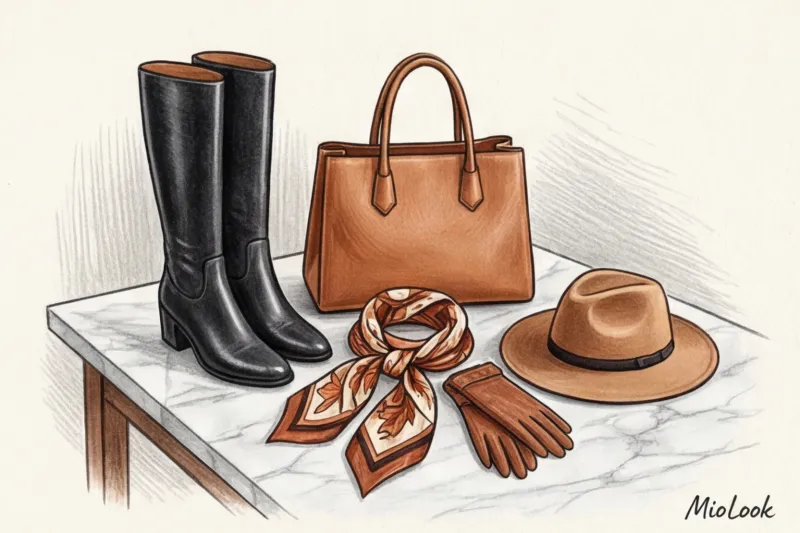
A practical tip for proportions: if you want to visually lengthen your legs, match your tights exactly to your shoes. Black ankle boots and black opaque tights create a single vertical line. If you wear black ankle boots with nude tights and a black skirt, you'll visually "cut" your legs into three shorter sections.
Checklist: Putting together your personal autumn capsule, step by step
Don't rush to the mall. Assembling your fall capsule always starts with your own closet.
- Step 1: Summer wardrobe audit. Remove slip dresses, chiffon skirts, thin shirts, and T-shirts. Store only overtly beachy items (linen, straw, bright tropical prints).
- Step 2: Checking the base layers. Take out your knitwear. Check it carefully for pilling and fraying. Ruthlessly discard stretched acrylic sweaters.
- Step 3: Create a shopping list. Write down only the missing links. For example: "I need a thick navy merino turtleneck to wear with my summer slip dress to the office."

Fall isn't a reason to radically change your style or buy mustard-colored sweaters. It's a time to see your familiar wardrobe in a new, more complex and textured form. By learning to work with layering and high-quality materials, you'll realize that style doesn't depend on the temperature. Take stock of your closet tonight, add two or three high-quality basics, and you'll be ready for any weather.
", "tags": [ "fall capsule", "capsule wardrobe", "fall style", "layering", "basic wardrobe", "stylist tips", "layering" ] }