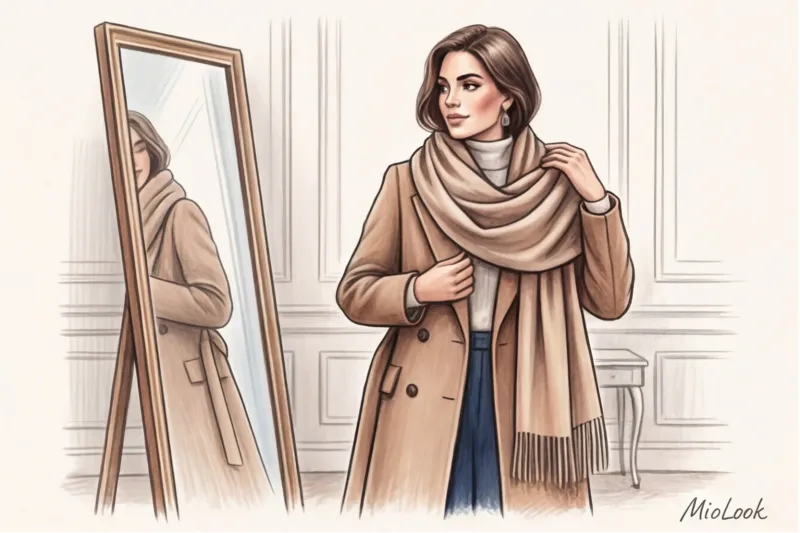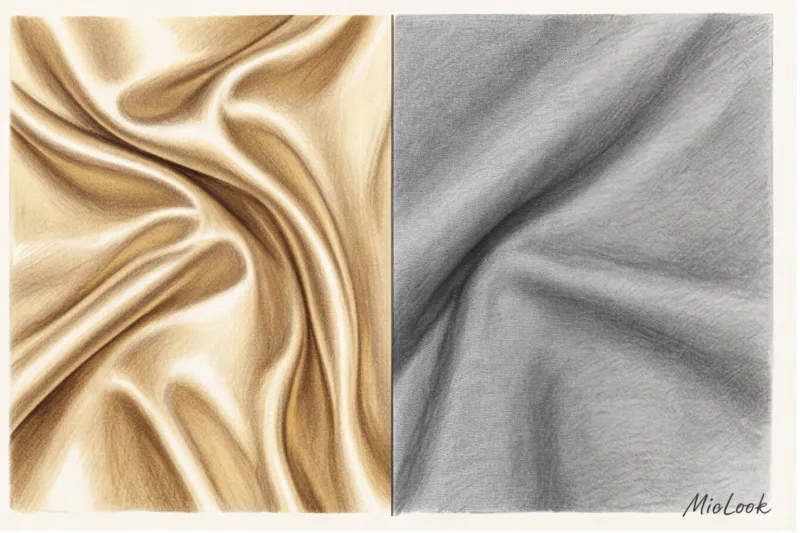
Over 12 years of working as a personal stylist, I've learned one ironclad rule: the status of your outfit isn't determined by the logo on the tag, but by how the fabric interacts with light. I once had a client—a top manager at an IT company—come to me. She spent hefty sums on basics from well-known brands, but complained that she looked "too plain." When we opened her closet, the diagnosis became clear: 90% of the hangers were filled with flat, matte cotton and fine knits.
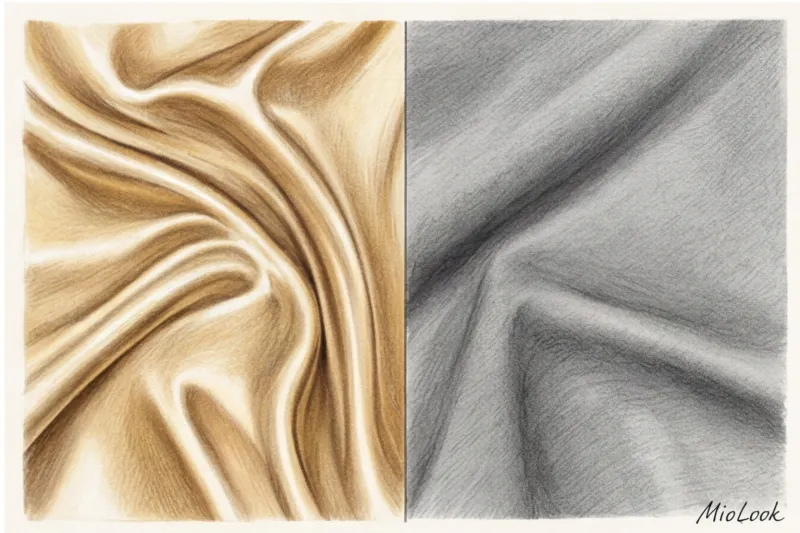
We didn't change her style radically. We simply replaced the flat materials with those fabrics that look expensive And the magic worked instantly. We covered the basic principles of creating visual depth in more detail in our guide. How to Create an Expensive Look: Combining Textures in Clothing , and today I want to analyze the specific physics of luxury.
The Physics of Luxury: Why Some Fabrics Look Expensive While Others Look Expensive
According to the analytical agency WGSN (2024), the vast majority of women unconsciously choose exclusively matte textures in their everyday lives: denim, basic cotton, smooth wool. This makes the look flat, as if cut out of cardboard. The main secret to this status symbol lies in a term professional designers call "fabric chiaroscuro."
The thing is, different materials absorb and reflect light differently. Smooth, glossy surfaces act like mirrors, illuminating the face, while loose and fuzzy surfaces greedily absorb the rays, creating an incredibly deep shade. If you learn to juxtapose these two opposites in a single outfit, you'll achieve that signature "quiet luxury."
But there's also an objective, measurable criterion for cost—density, or GSM (grams per square meter). A mass-market T-shirt with a density of 120 g/m² will always look cheap and flimsy because it doesn't hold its shape. But cotton weighing 180 g/m² or heavier viscose creates a more natural, contoured feel. Fabric weight always outweighs its thinness.
Texture No. 1: Heavy satin and cupro (liquid metal effect)
Let me debunk one of the biggest myths in the fashion industry. It's commonly believed that 100% natural silk is the pinnacle of luxury. In my experience, fine natural silk often plays a cruel trick on women: it's treacherously see-through, instantly wrinkles at the first glance, and becomes staticky.
If you're looking for a classy, flowing silhouette with a hint of Mediterranean chic, choose a dense cupro blend or heavy viscose satin. This fabric literally flows over the figure, reminiscent of liquid metal. It doesn't accentuate the contours of your underwear and has enough drape to allow the folds of your skirt or dress to move with your steps rather than cling to your legs.
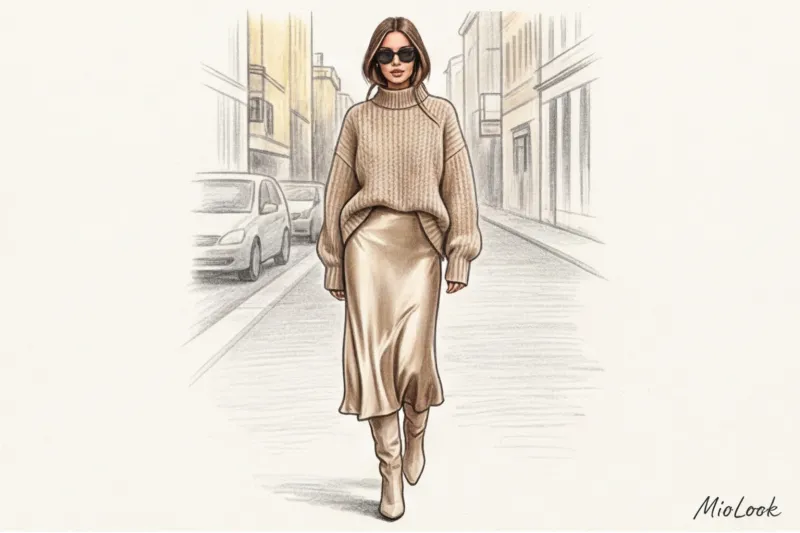
Stylist's formula: what to combine with glossy textures
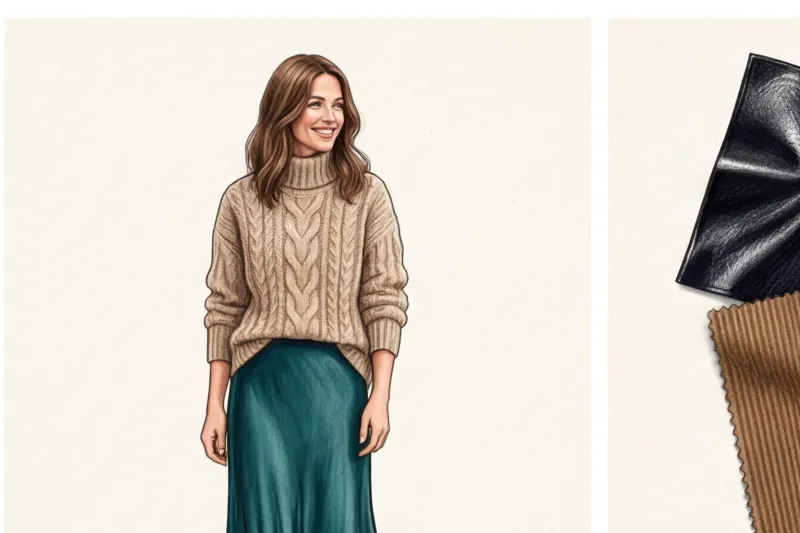
Gloss is always a statement piece. Overdo it and you'll look like a disco ball. My golden rule of balance is one glossy piece for every two matte pieces. Here's the perfect formula I use for clients heading out to a casual business lunch or date:
- Base: Champagne satin midi skirt.
- Contrast: Chunky knit oversized sweater (matte light absorber).
- Assembly point: Suede Cossacks or loafers.
This combination works flawlessly precisely because of the dramatic clash of textures.
Your perfect look starts here
Join thousands of users who look flawless every day with MioLook, the AI stylist. Upload your wardrobe and get ready-made formulas for every day.
Get access — €0.99 onceTexture No. 2: Loose bouclé and textured tweed
When we talk about the aesthetics of "old money," the legacy of Chanel immediately comes to mind. But why is it that bouclé is so captivating? The secret lies in the multicolored weave of threads of varying thicknesses. This uneven, knotted surface creates an optical illusion of depth: the eye is constantly drawn to the micro-shades, compelling one to examine the garment longer.
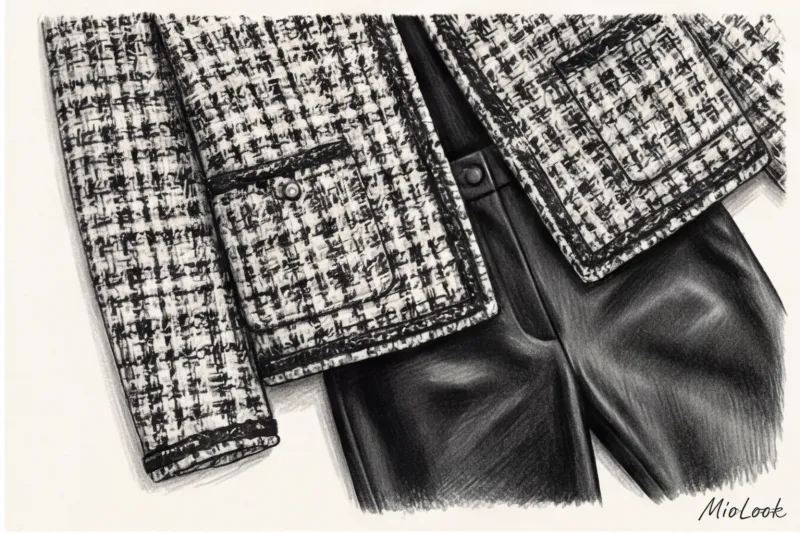
"Adding one piece with an intricate weave eliminates the need for bold colors or complex accessories. The texture speaks for itself."
I recently worked with the owner of a chain of clinics who loved wearing simple jeans with white T-shirts. We added just one milky-white bouclé jacket (priced around €150) to her wardrobe. Her style instantly skyrocketed: now, in those same jeans, she looked like someone who'd just stepped off a private jet.
But be careful, there is a limitation here. Tweed and bouclé don't work and are guaranteed to add 10 years to your age if you choose a retro cut (a short, fitted silhouette with a crew neck) and pair it with a classic pencil skirt. The modern way to wear these fabrics is with contrasting, relaxed pieces like denim, leather, or wide-leg palazzo pants.
Texture No. 3: Suede (light absorber)
While satin reflects light, suede greedily absorbs it. This property makes any shade, even the most mundane, ten times richer. Caramel, deep burgundy, and olive shades reveal themselves with incredible softness on suede. According to Lyst's 2024 global report, amid the return of the 70s boho-chic aesthetic, suede has become a key marker of "conscious luxury."
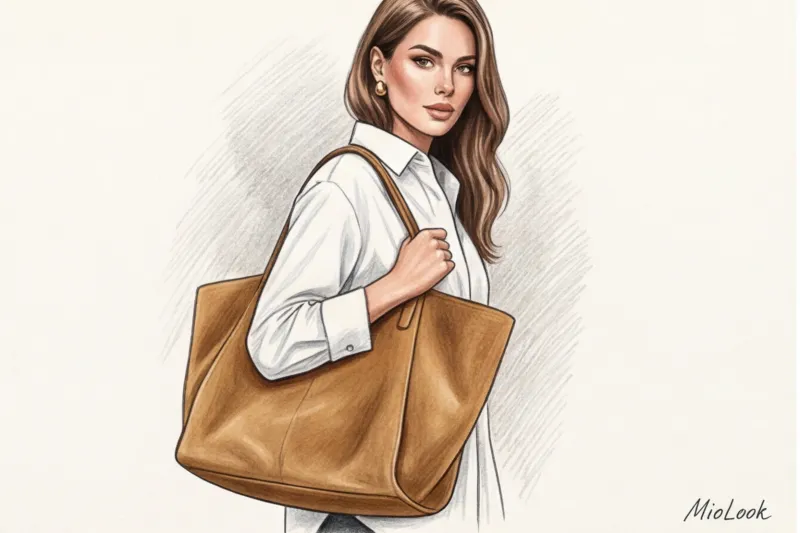
Many people are wary of natural suede because it's difficult to care for. But in today's urban lifestyle, high-quality eco-suede (Alcantara) on jackets or skirts is often a real lifesaver: it's rain-resistant and looks just as classy. Suede is the perfect balance for silk or smooth leather. It softens the look, making it more tactile and inviting.
Investing in the details: suede accessories
If you're not quite ready to integrate suede outerwear into your wardrobe, start with accessories. A voluminous suede hobo bag (it's quite possible to find decent options from Massimo Dutti or COS for €150-€250) or classic loafers can literally "pull together" even the most boring cotton suit.
Access to MioLook for €0.99 — one-time payment
A smart AI stylist will create the perfect look based on textures, colors, and your body shape. Forget about the "nothing to wear" problem.
Get access — €0.99 onceTexture No. 4: Wide-ribbed knitwear
How many times have you bought a thin, smooth jumper, only to have it sag after the first wash and start to reveal every wrinkle on your body or the contour of your bra? Thin, smooth knitwear often mercilessly cheapens a look.
My advice: switch to ribbed knit. This texture works wonders for proportions. The vertical grooves create natural shadows that visually elongate the silhouette and make you look slimmer. The ribbed texture also adds some much-needed complexity to the surface.
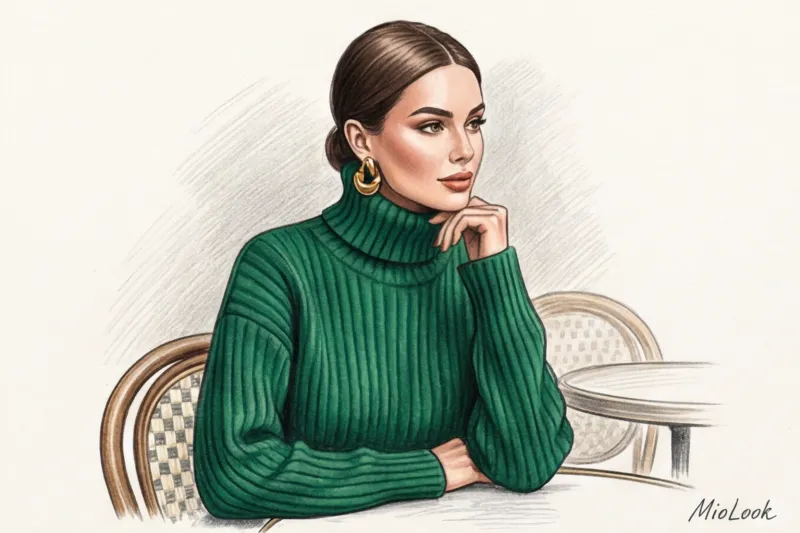
Here, the weight rule comes into play again. Expensive knitwear should never show through the outline of your underwear. Choose heavy merino or a dense cotton-cashmere blend. If the item feels pleasantly taut in your arms when you take it off the hanger, go for it.
Texture No. 5: Smooth architectural leather
A wardrobe built on soft textures (knitwear, suede, silk) requires a rigid frame. Smooth leather fulfills this role flawlessly. It conveys confidence, strength, and clean lines.
From a style psychology perspective, leather elements—for example, a structured jacket or a thick leather pencil skirt—evoke the archetypes of the Ruler and the Aesthete. They're the perfect choice for days when you need to feel as composed and authoritative as possible, such as during important negotiations or presentations.
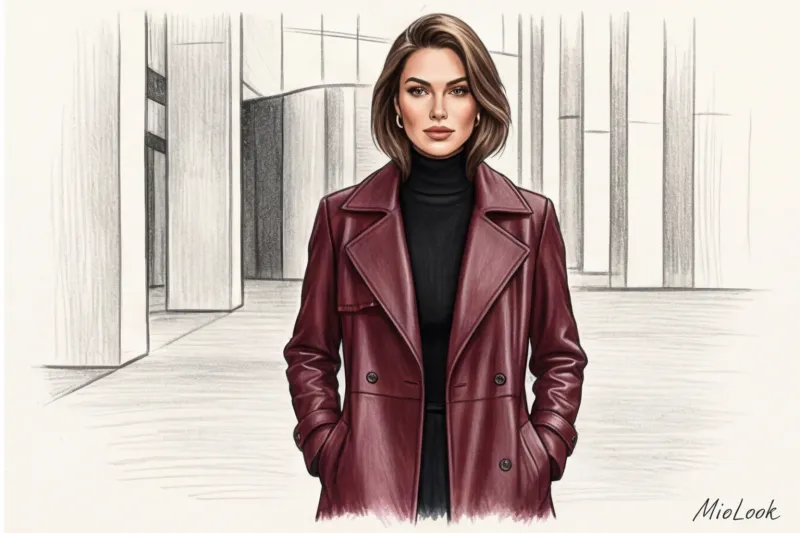
But remember the difference between a noble material and vulgar faux leather. Cheap polyurethane (PU) gives itself away with an excessive, almost plastic-like sheen and a characteristic creaking sound. Expensive leather (or high-quality faux leather) always has a muted, delicate matte finish and a soft underside.
Ready to start your wardrobe transformation?
Upload your items to the MioLook app, and algorithms will suggest which textures you need to create a status capsule.
Try MioLookThe Biggest Mistake: Why "Luxury" Fabrics Can Look Vulgar
In their pursuit of luxury, many people make a fatal mistake I call the "Christmas tree" effect. It occurs when several hyperactive, glittering textures collide in a single look. Silk, patent leather, an abundance of gold hardware, and, heaven forbid, sequins all at once.
Look at the reports from the red carpet - even A-list stars often look ridiculous when stylists forget the rule of dominant texture. The look can only one textured soloist.
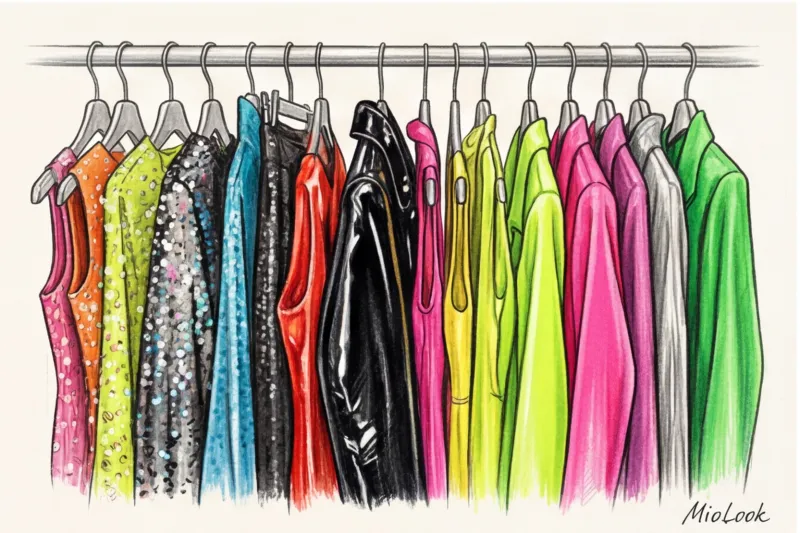
If you're wearing a sequin or velvet skirt during the day (which is very trendy right now), tone it down with a simple gray cotton sweatshirt or a men's matte wool blazer. All-over velvet or lace looks heavy and theatrical in daylight unless complemented with crisp denim or smooth leather.
Stylist's Checklist: 3 Fabric Tests to Try Before Buying
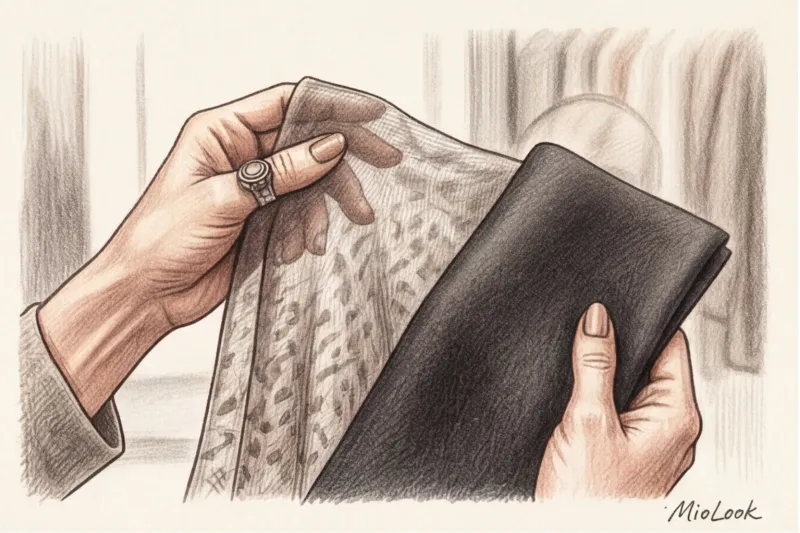
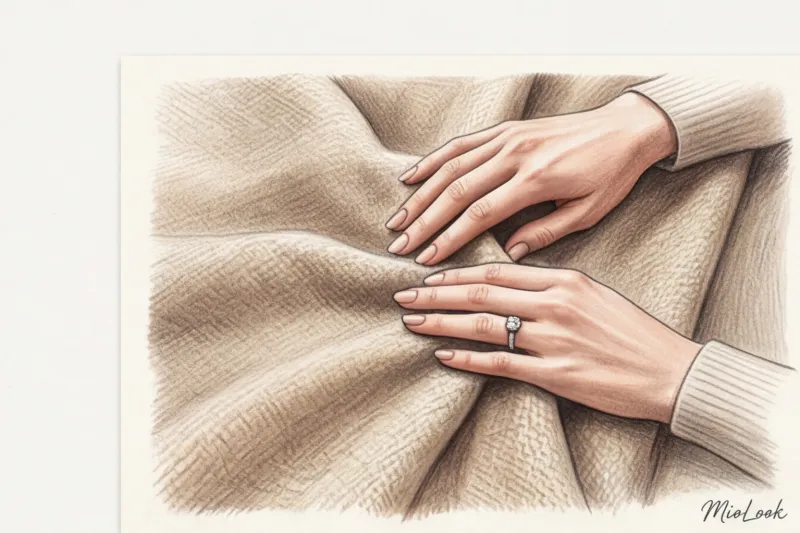
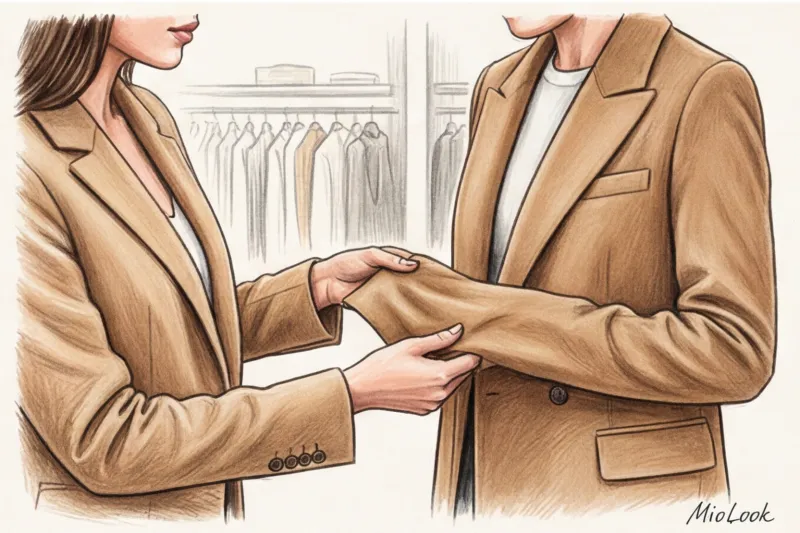
To avoid wasting money on items that won't look good in a month, I always conduct my signature express audit with my clients during shopping sessions. Here are three tactile tests to do right in the fitting room:
- Crease test. Firmly grasp the hem of the garment in your fist, hold for 5 seconds, and then release. If the fabric feels like paper, leave it at the store. High-quality fibers (even those with synthetic fibers) should spring back and straighten out.
- Light test. Go to a window or stand under a bright lamp. Twist the fabric at different angles. Cheap polyester will produce a sharp, glassy reflection. Expensive fabric (for example, high-quality viscose) will respond with a soft, diffused glow.
- Weight test. Take the garment by the hangers and shake it gently. Assess its drape (the heaviness of its fall). "Expensive" fabrics fall gracefully and heavily, while cheap ones bulge and stick out where they shouldn't.
True luxury doesn't scream logos. It whispers through the density of heavy silk, warms with the depth of suede, and supports your posture with smooth leather. Check your wardrobe today: how many are glossy and how many are matte? Add just one right texture, and you'll see your basics take on a whole new meaning.