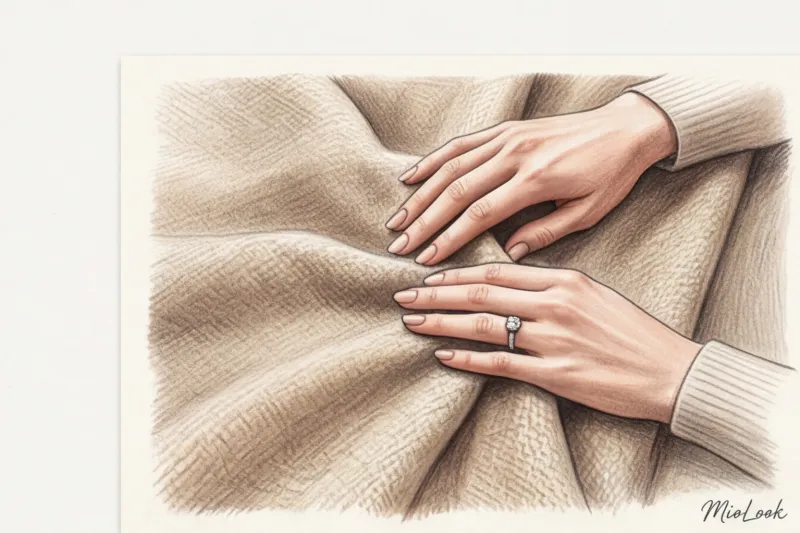
Have you ever wondered why two sweaters with the exact same "100% cashmere" tag can look like they're a million dollars apart? Or why one silk blouse makes you look aristocratic, while another, made from the same material, treacherously highlights every flaw and looks cheap?
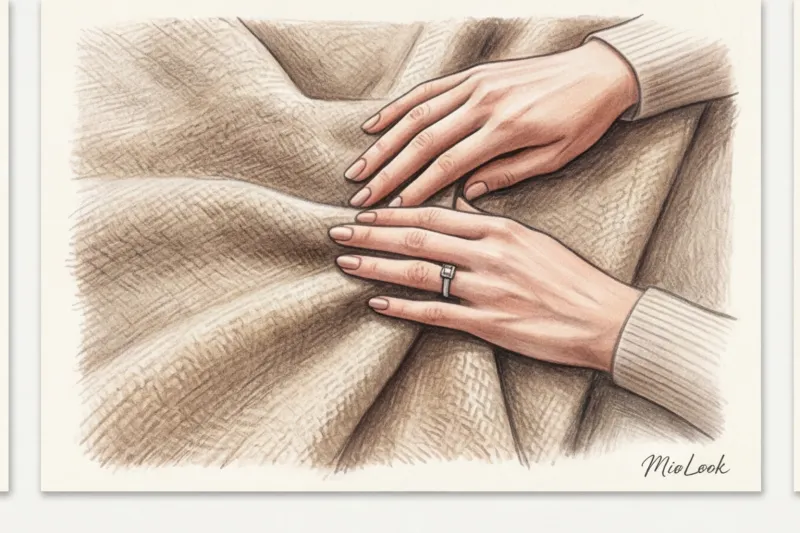
As a personal stylist working in the premium segment, I constantly encounter the same misconception: women believe that the label "natural ingredients" is an automatic guarantee of quality. We've already covered the basic principles of creating a long-lasting base in more detail in our the complete guide to creating a timeless wardrobe , but today I want to talk about foundation. About what you feel on your skin.
Unlike glossy articles that simply advise "buying natural," we'll take a look behind the scenes at production. I'll tell you how the weight, density, and twist of the thread determine a garment's true status, and how to learn to choose wisely. fabrics that look expensive , regardless of the brand name on the label.
The Label Illusion: Why Not All "Natural" Fabrics Look Expensive
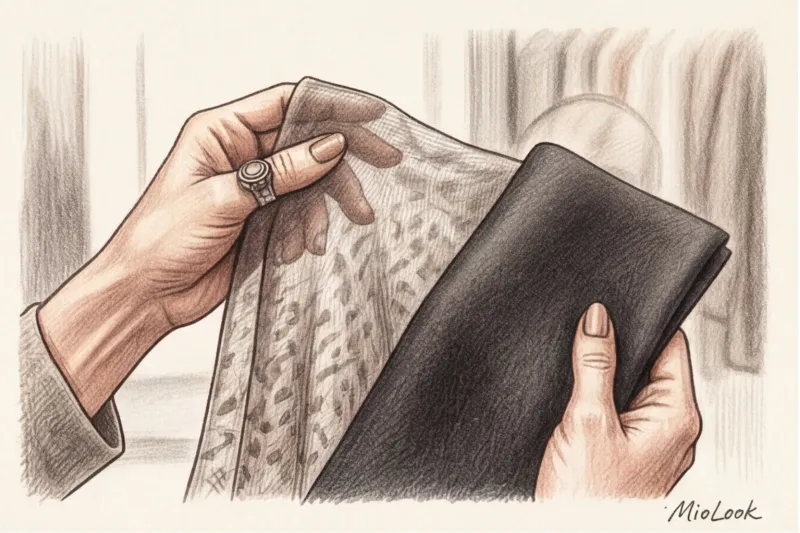
In 2018, I spent a week in the Biella region of northern Italy, a historic textile manufacturing center where fabrics for Loro Piana, Zegna, and Brunello Cucinelli are crafted. It was there that I saw how buyers for luxury brands evaluate samples. They close their eyes and simply touch the material. For them, it's not the composition on the piece of paper that matters, but the weight, texture, and drape of the fabric (the so-called drape ).
Mass-market products have mastered the art of manipulating our desire to wear natural products. A brand might advertise "100% wool," but they're using the cheapest raw material—short staple fibers, the ones left over after combing premium yarn. These short staples produce a loose, weak thread. A garment might look passable in the store, but after three washes, it turns into a shapeless rag.
The main rule for fabrics that look expensive is that they have the right weight. Lightness is only good when it's technical. A basic shirt, flowing trousers, or knitwear should have enough density to fall under its own weight, creating beautiful vertical lines, rather than clinging to the body.
Access to MioLook for €0.99 — one-time payment
A smart AI stylist will select the perfect look based on your wardrobe and preferences.
Get access — €0.99 onceSilk: from cheap shine to noble radiance
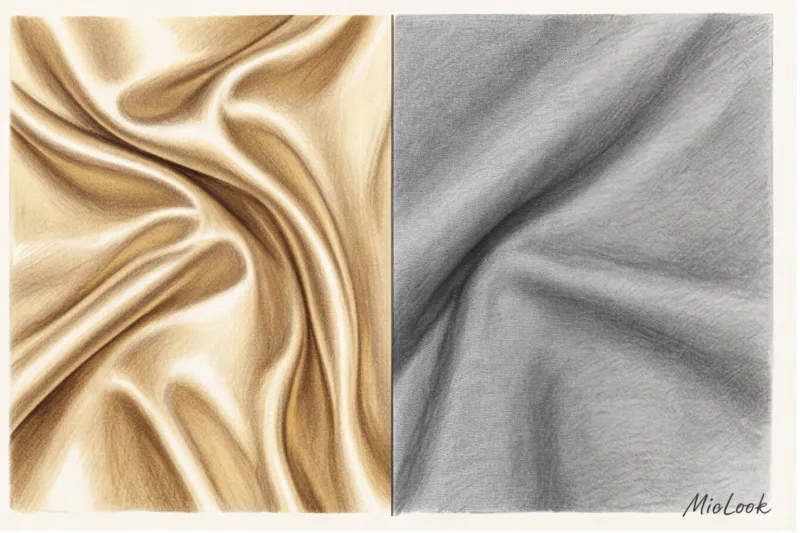
Thin, glossy, almost mirror-like silk is the main enemy of elegance. It reflects light so aggressively that it creates unnecessary volume and highlights the contours of lingerie. A prestigious wardrobe requires a completely different texture.
If you're investing in silk, look for crepe de chine, heavy satin, or sandwashed silk, which has undergone a special treatment to create a velvety, peachy surface. It absorbs light, creating a deep, muted glow.

Density Matters: What is a Momme?
According to the International Silk Association, silk quality is measured not in grams, but in momme (mm). This is the weight of a piece of fabric measuring 45 inches by 100 yards. The higher the momme, the denser, heavier, and more durable the silk.
- Up to 16 momi: It's only suitable for lightweight scarves or cheap underwear. For basic clothing, it's a waste of money—the fabric will quickly come apart at the seams.
- 19 momi: The minimum entry point into a classy wardrobe. Perfect for summer blouses.
- 22–30 momi: The perfect value for an investment-grade silk shirt, slip dress, or skirt. This fabric flows like liquid metal, is opaque, and lasts for decades.
If a brand doesn't indicate the silk density in momme either on the tag or on its website, that's a red flag. They likely have nothing to be proud of.
Cashmere: An investment that pays off for decades
A client of mine, a top manager at an IT company, once proudly showed me a stack of ten mass-market cashmere sweaters, bought for $100 each. "Why pay a thousand for one premium one when I can buy ten different colors?" she asked. After a month of heavy wear, eight of them had become covered in an impenetrable layer of pilling and lost their shape. We threw them all out.
The problem is that cheap cashmere is deliberately made fluffy right in the store. Manufacturers heavily comb out the short fibers to create a cloud-like appearance at first touch. But this fluffiness is a sign that the yarn isn't holding its structure. Premium cashmere, woven from long pile (staple length 34 mm or more), can even feel slightly stiff in the store. It only reveals its true softness after 3-4 proper washes.
Thread Count (Ply) and How to Recognize Quality Before Buying
Pay attention to the markings Ply (plying yarns). 1-ply is a semi-sheer knit, suitable only for summer evenings. 2-ply is the gold standard for a basic sweater. 4-ply or 8-ply are luxurious, dense winter knits.
According to a recent McKinsey (2024) report on consumer habits, the cost-per-wear of a premium cashmere sweater that lasts 10 years is 3.5 times lower than that of a mass-market equivalent that is discarded after a season.
Fitting room test: Gently tug the elastic on the sweater's cuff. Cheap cashmere will remain stretched. High-quality cashmere will spring back instantly.
Wool: The Architecture of Your Basic Wardrobe
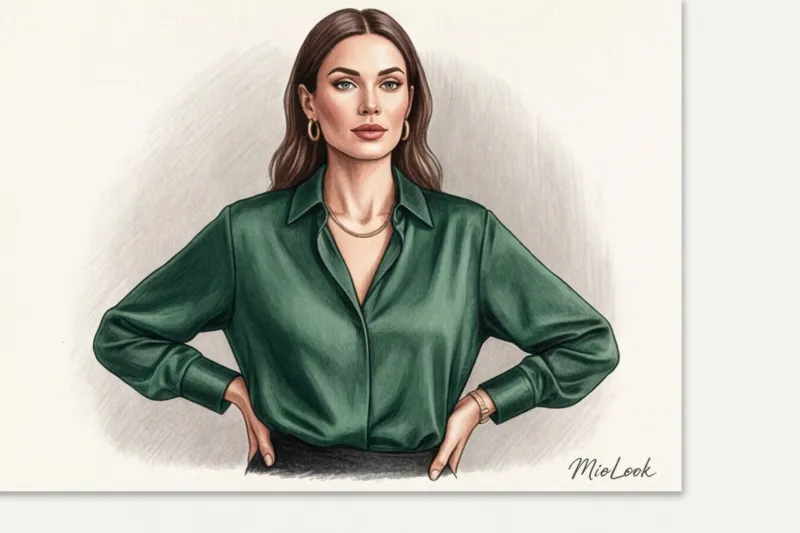
If cashmere is luxury and comfort, then wool is the architecture of your personal uniform. For perfect jackets, trousers, and skirts, you need smooth worsted wool. It undergoes a combing process that removes all the short fibers, leaving only the long, smooth ones.
In the Italian classification, you'll often see the indexes Super 100s, 120s, and 150s. These indicate the fiber's thickness (in microns). And herein lies the main trap. Many people think that the higher the number, the better. This is not true. Super 150s wool is incredibly fine and expensive, but it wrinkles at first glance and wears out within a season. For everyday office wear, Super 100s or Super 120s offer the perfect balance of durability and class.
Counterintuitive fact: when synthetics are in the composition, it’s a plus
There's a myth that synthetics are always bad. I often see women put down perfectly good pants with disgust just because they see 5% polyamide on the tag. This is a mistake.
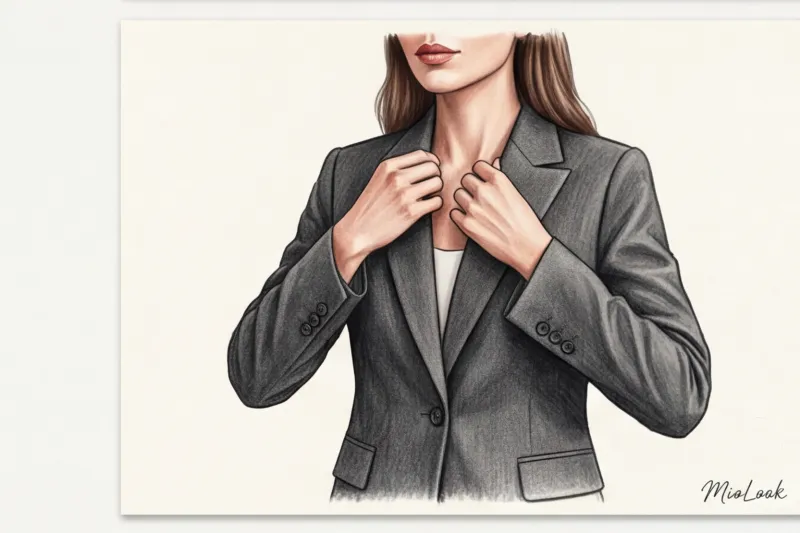
In suits (trousers, jackets, skirts), adding 2-5% elastane or high-tech polyamide to expensive wool is essential. These fibers act as a scaffold. Without them, 100% wool would stretch out at the knees and elbows by lunchtime on the first workday. The only difference is that cheap polyester (30% and above) creates a greenhouse effect, while high-tech additives in microdoses ensure dimensional stability, preserving the garment's class until late evening.
Your perfect look starts here
Join thousands of users who look flawless every day with MioLook.
Get access — €0.99 onceSmart Alternatives: Fabrics That Look Expensive But Cost Less
What if your budget doesn't allow for a capsule collection of Loro Piana and 30-mommie silk? Look for smart alternatives. The modern textile industry offers excellent materials in the mid-price range.
- Cupro: Often called "vegan silk," cupro is made from cotton fluff. Cupro drapes beautifully, is breathable, and has a luxurious matte sheen. Its only drawback (and a fair limitation) is that cupro wrinkles quite easily, making it not the best choice for long flights.
- Tense lyocell (Tencel): An eco-friendly fiber made from eucalyptus wood. Its tight weave gives it the appearance of heavy silk, but it's much less expensive and machine-washable. Ideal for summer suits.
- Blended fabrics: Wool with silk (combines warmth and a slight sheen) or cotton with cashmere (5-10% cashmere is enough to remove the stiffness of cotton).
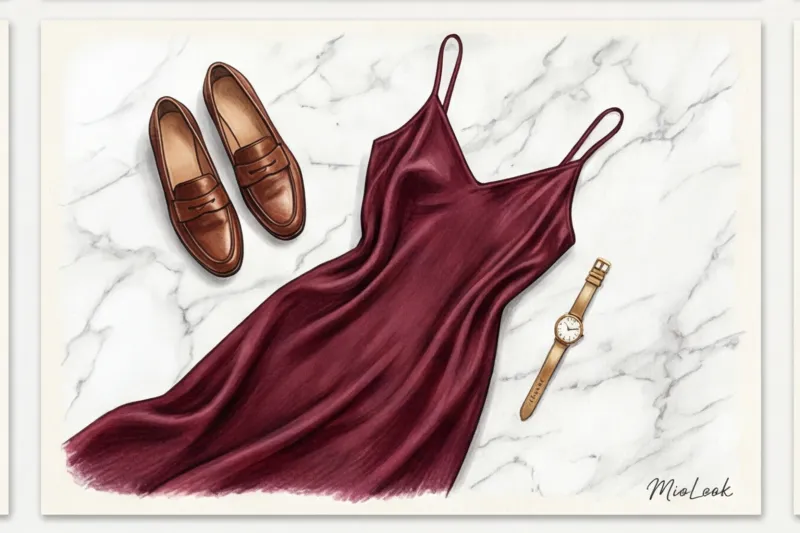
To avoid confusion and always understand which items in your closet work for you, I recommend digitizing your database. Add your best finds to the app. MioLook , you can analyze how often you wear a particular fabric and create stylish looks in a couple of clicks.
Stylist's Checklist: 4 Tests to Check Fabric in the Store
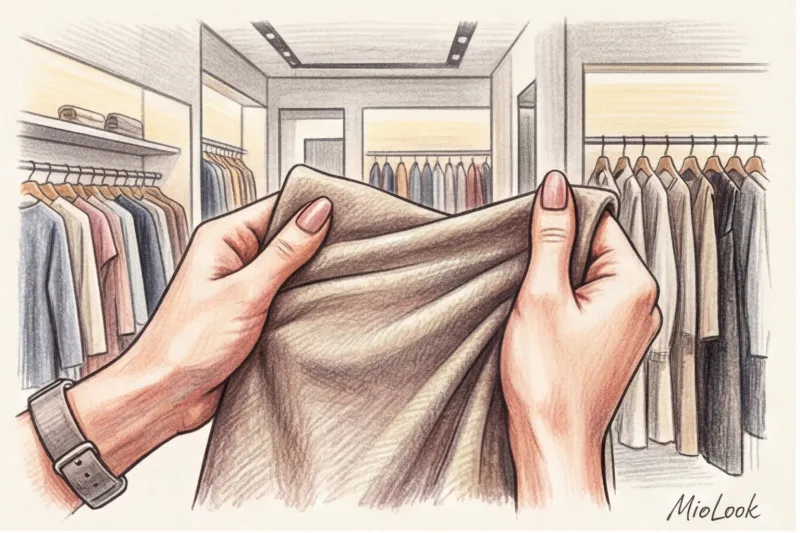
Over 12 years of shopping support, I've developed automatic habits for checking things out. Before you take an item to the checkout, run these four quick tests:
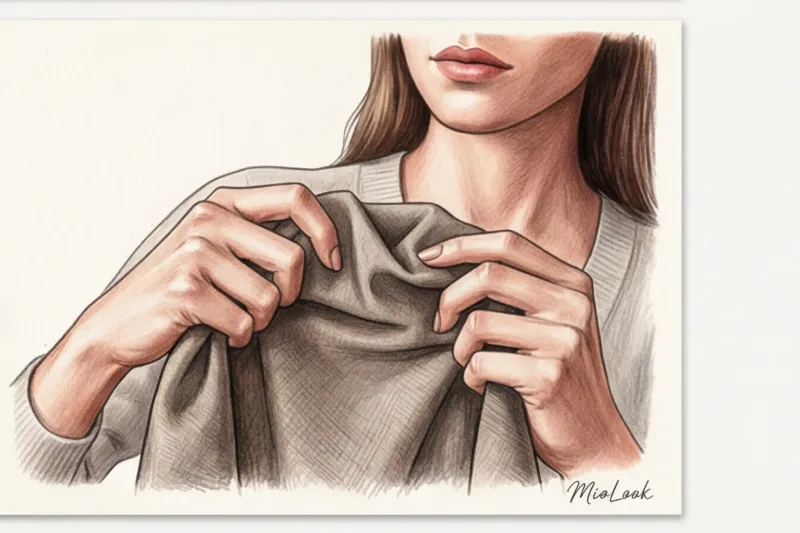
- Crumple test: Squeeze the edge of the fabric (for example, the hem of a shirt) in your fist for 10 seconds, then release. High-quality wool or thick silk will straighten out almost instantly, leaving only slight ripples. If the fabric remains crumpled like paper, return it to the hanger.
- Light test: Hold the fabric up to a bright light in the store. You should see an even weave with no thickening of the threads (unless this is the intended texture of the linen). Cheap knits will show uneven "bald spots" when held up to the light.
- Friction test: Gently rub the fabric against itself in an inconspicuous area (such as an inseam) for 10-15 seconds. If micro-fuzz has already begun to form, the garment will become pilled within the first week of wear.
- Evaluation of fittings and seams: Expensive fabric will never be sewn with cheap threads. Look for a French seam (closed) on silk blouses. Pay attention to the buttons: horn, mother-of-pearl, or fabric-covered buttons are a sure sign that the manufacturer didn't skimp on materials.
Caring for premium fabrics: how to maintain the status of your items
Even the most expensive fabric will look like a rag from a subway station if not cared for properly. Wardrobe investments don't end at the checkout.
Contrary to popular belief, cashmere hates dry cleaning. Chemicals dry out the natural fibers, making them brittle. Cashmere loves water! Hand wash it in cool water using a special shampoo with lanolin (animal wax). Lanolin moisturizes the fibers, and the sweater will become softer with each wash.
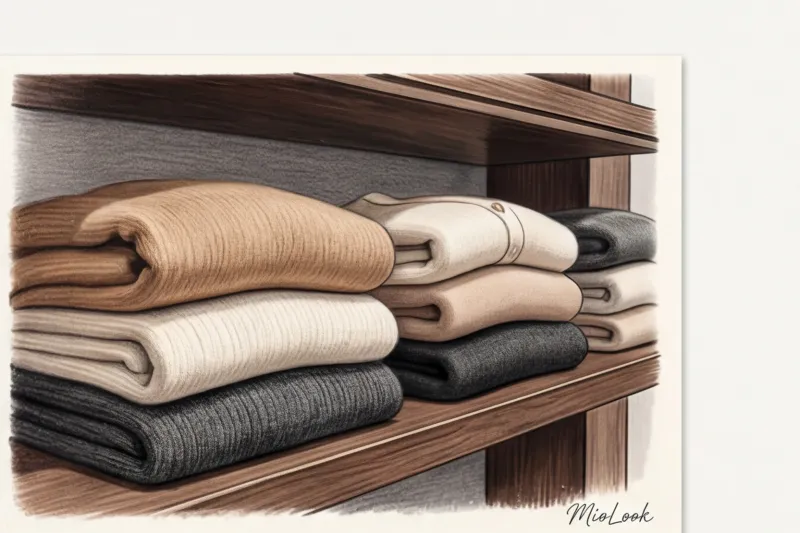
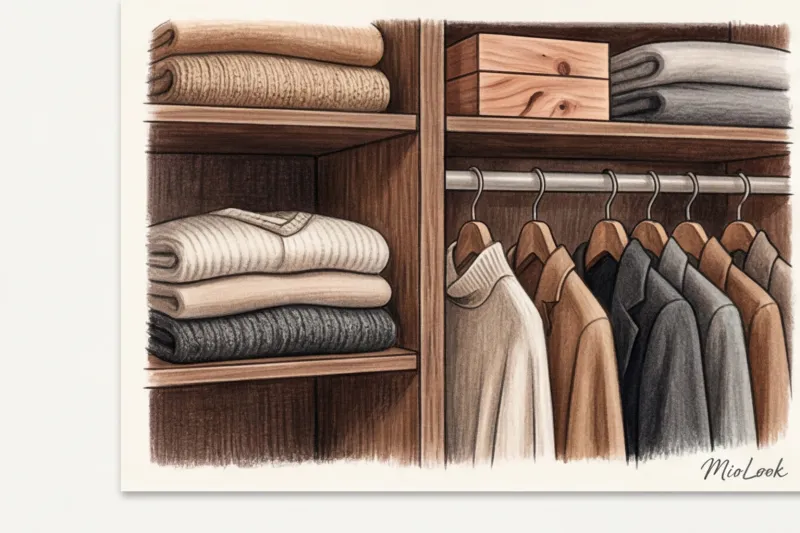
Storage rules are equally important. Never hang knitwear on hangers—it will stretch under its own weight. Store it folded on shelves, interleaved with natural cedar blocks (it repels moths and absorbs excess moisture). For wool suits, use only wide wooden hangers that follow the shape of the shoulder, and let the garments "rest" for at least 24 hours between wearings to allow the fibers to regain their shape.
Choosing fabrics that look expensive isn't snobbery or a blind pursuit of luxury. It's a sign of respect for yourself and your money. When you wear something with the right density, with the perfect balance of texture and weight, it changes your posture, your gait, and your sense of self. And this is an effect that no logo can fake.