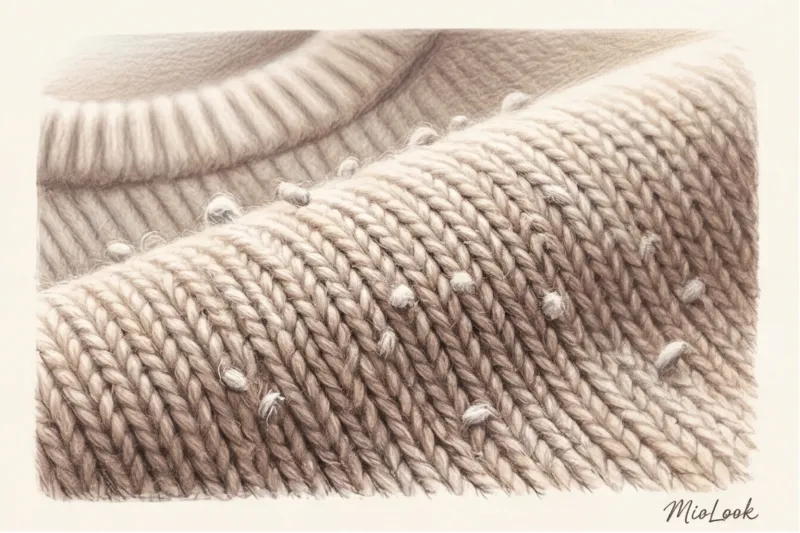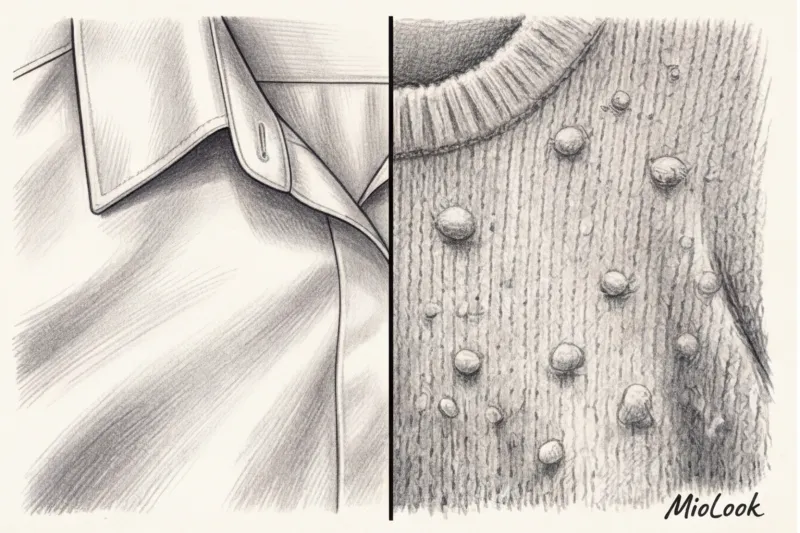
Did you know that a €500 sweater can turn into a cheap rag faster than a €50 turtleneck? In twelve years of working as a personal stylist, I've heard this story hundreds of times. One of my clients, let's call her Anna, decided to invest in a basic wardrobe and bought a 100% cashmere jumper from a well-known brand. Exactly one week later, after three trips to the office with a crossbody bag, the sides of the sweater were covered in a thick network of untidy pilling. Anna was horrified: "But it's real cashmere, why does it look like cheap junk from the subway?"
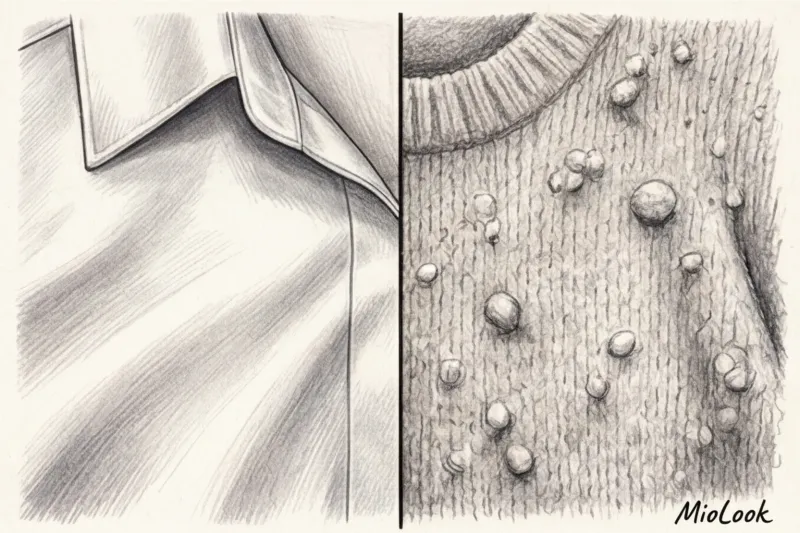
The answer lies in the fact that we've become accustomed to blindly trusting labels. We've been taught for decades to look at the ingredients, but no one taught us to look at architecture threads. We've already covered the basic rules for reading labels in more detail in our a complete guide to choosing quality clothing However, today we'll go further and engage in some forensic shopping. We'll examine the physics of fabrics and find out once and for all, What fabric doesn't pill? in fact, some are doomed to pilling while still on the factory machine.
The Anatomy of Pilling: Why Does Pilling Actually Form?
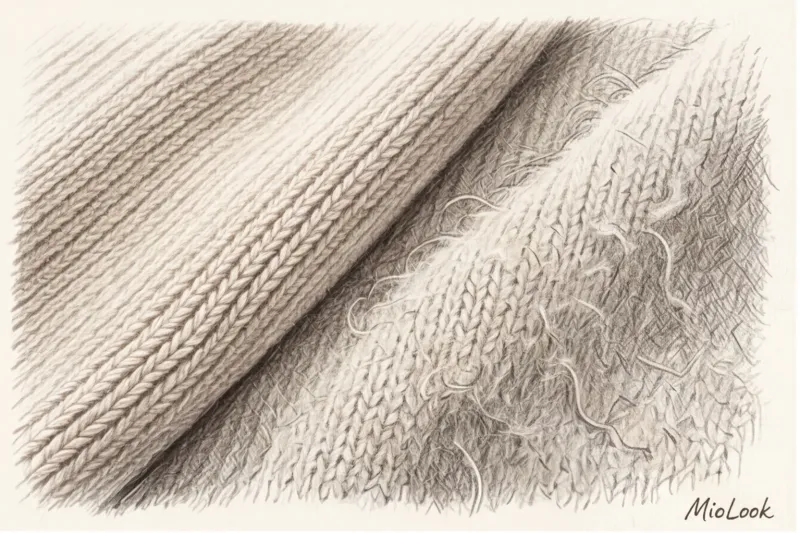
To defeat the enemy, you need to understand how it works. Pellets (or, in technological terms, peeling ) is not a sign of cheapness in the material; it's a result of simple physics. When fabric is subjected to friction, the shortest and weakest fibers are pulled to the surface. There, they tangle with each other, forming dense balls.
Have you noticed that pilling always appears in specific places? These are strategic friction zones: underarms, inner thighs, and areas where your car seatbelt or bag strap touches. You can wear a piece of clothing for years without a problem, until you swap your smooth leather shopper for a textured canvas backpack, which will shave off your favorite cardigan in a day.
"In the textile industry, there's a standard—the Martindale test. A special machine rubs a fabric sample in a circular motion, after which experts rate the pilling on a scale from 1 (complete pilling) to 5 (perfectly smooth). The problem is, these numbers are never printed on customer labels," according to a report by the International Textile Institute (2023).
That's why simply reading the composition no longer works. You need to evaluate not only the fiber percentage but also the fiber length itself and the twist density.
The main myth: "Natural is good, synthetic is bad"
The biggest misconception that causes women to waste hundreds of euros is a blind belief in naturalness. The truth is, 100% wool or cashmere from mass-market stores will pill instantly. Why? Because for their budget lines, brands source the cheapest, and therefore shortest, raw materials.
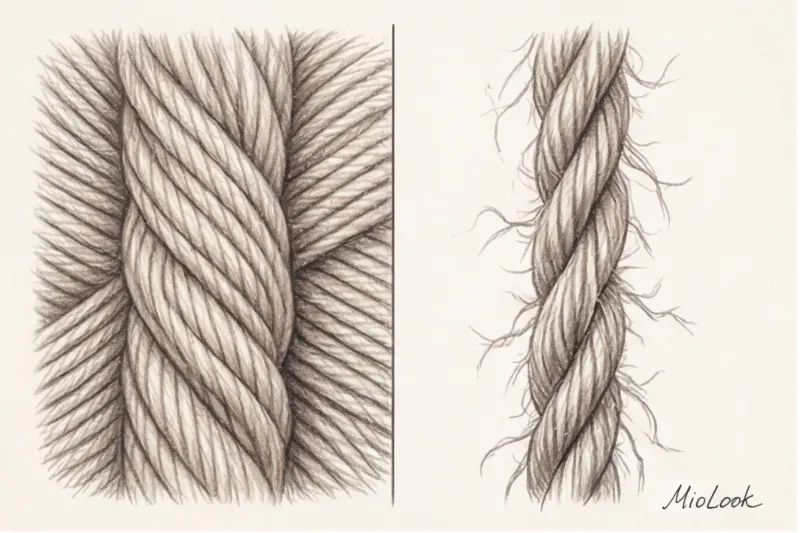
In spinning, there are two concepts: short fiber (staple) and long fiber (filament). The short, fluffy hairs of cashmere are loosely held in the thread. They come loose at the slightest friction. Meanwhile, tightly twisted, high-quality nylon or premium viscose will remain perfectly smooth for years. Quality determines twist The tighter the thread is twisted, the more difficult it is for the fibers to break free.
What fabric doesn't pill: a list of excellent materials
When I form clients capsule wardrobe I always incorporate items made from fabrics that are physically resistant to pilling into my base. If you look at them under a microscope, you'll see long, perfectly smooth ropes with nothing to snag on.
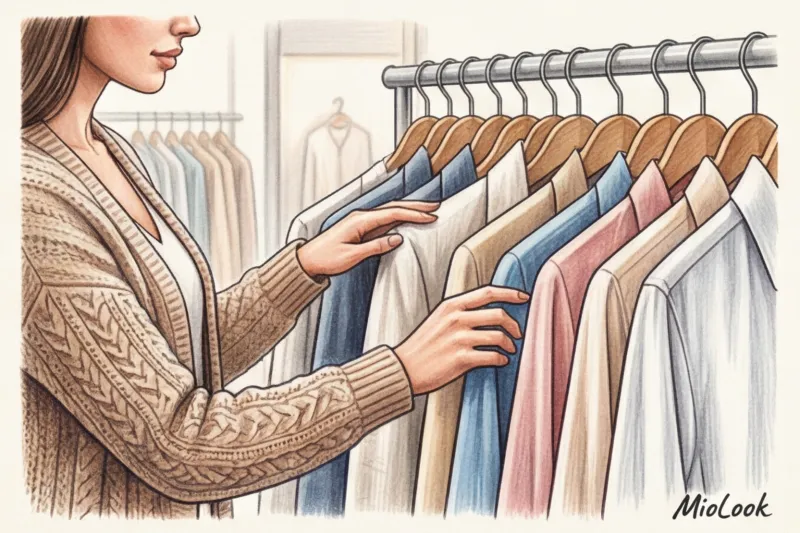
- Silk and linen. These are absolute record-breakers. Silkworm fiber can reach a kilometer in length! These threads have no short ends that could tangle.
- Denim and thick cotton (poplin, satin). Cotton on its own can pill (especially cheap knits for T-shirts), but when woven into a tight weave (as in jeans or dress shirts), it becomes invulnerable.
- Fine merino wool with a high twist. It's the material used to make luxurious men's suits. The fibers are combed to a perfect smoothness and tightly twisted. Such a garment, priced between €150 and €300, will last for decades.
Synthetics that will surprise you
Don't be afraid of modern synthetic fabrics. Tencel (lyocell) and cupra are next-generation materials made from cellulose. They have a smooth, flowing texture, are more breathable than cotton, and are completely pilling-free. High-tech polyester, used by sportswear and premium brands, also undergoes a special anti-pill finish.
My favorite formula for a status image: A silk blouse + trousers made of thick viscose or lyocell = instant shine and no pilling, even after long flights.
Wardrobe enemies: fabrics that will pill after the first wash
Now let's talk about the traitors. A 2024 study by the WGSN agency confirms that fabrics composed of a blend of three or more different fibers are 70% more prone to pilling than mono-materials. I call them "Frankenstein fabrics."
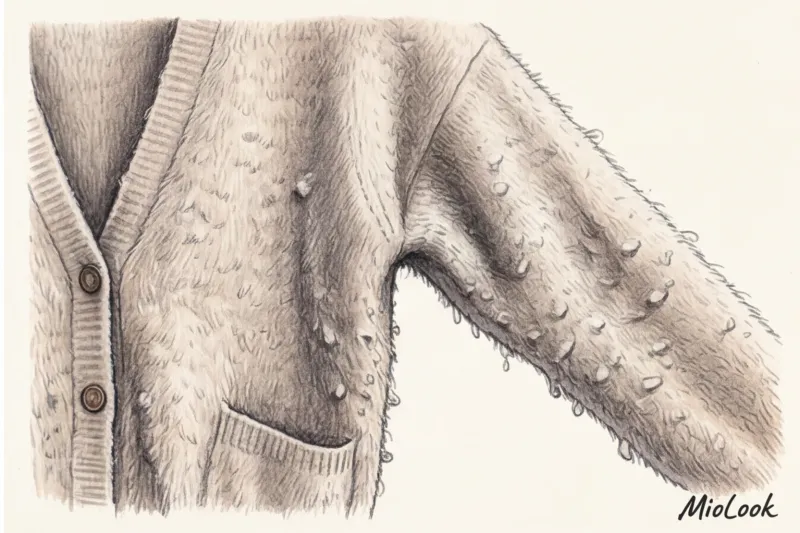
Imagine the composition: 30% acrylic, 30% polyester, 20% wool, 20% cotton. These fibers, each with different strengths, literally kill each other when washed. The strong polyester holds onto the broken short fibers of the wool and cotton, creating a death grip—a pilling that's impossible to remove without damaging the garment.
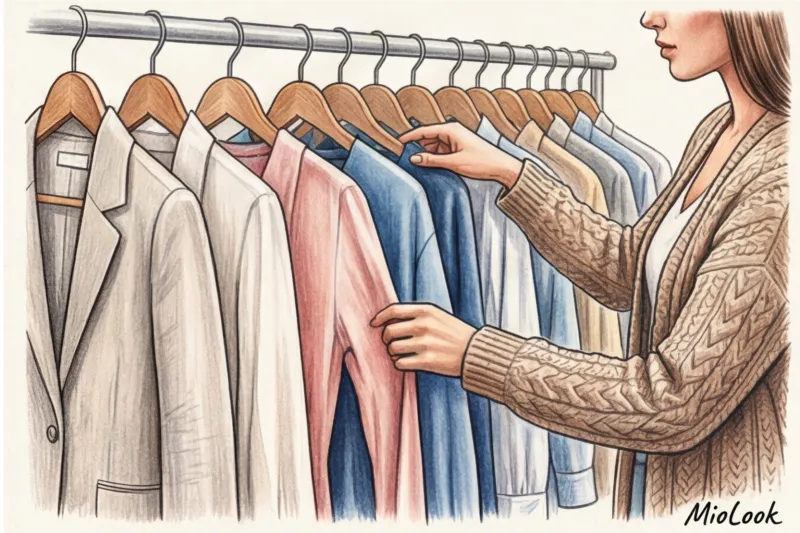
- Acrylic is the king of pilling. In the store, an acrylic sweater looks fluffy, soft, and voluminous. It's a trap. The volume is achieved by fluffing up the short synthetic fibers, which will pill at the elbows by the evening of the first day.
- Fleece and cheap flannel. Their incredible softness is the result of brushing (a special process of pulling the fibers to the surface). You're buying something that's already been half-destroyed by the factory for the sake of its tactile sensation.
One day, we were sorting through a client's wardrobe, and she showed me a stunningly beautiful cardigan for €200. Composition: 50% acrylic, 40% nylon, 10% alpaca. Alpaca has a delicate, warm pile, but the harsh acrylic simply smothered it, turning this once-luxurious piece into a sloppy mess of pilling.
Your perfect look starts here
Join thousands of users who look flawless every day and manage their wardrobe intelligently with MioLook.
Get access — €0.99 onceDetective Shopping: How to Check Fabric Right in the Store
While studying with Italian tailors, I adopted their habit of evaluating fabrics by "mano" (literally, by hand, by touch). They don't read tags until they touch the material. Here are three tests that will save you money:
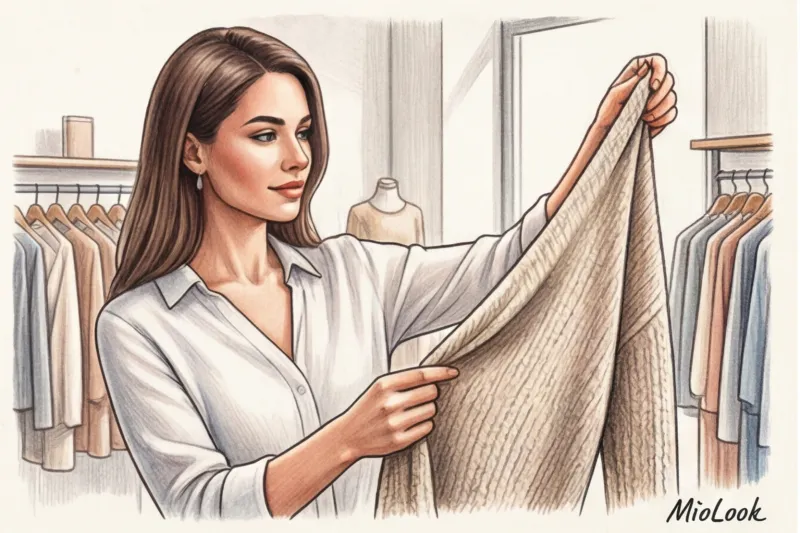
- Friction test (invisible). Take the edge of the garment (preferably from the inside) and rub the fabric vigorously but gently against itself for 5-7 seconds. If a light fuzz immediately forms on the surface, the garment won't survive more than a month of wear.
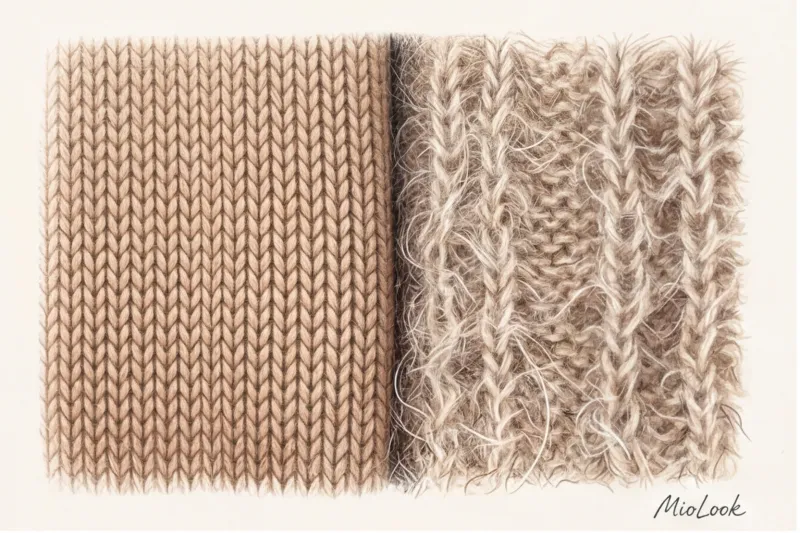
- Translucent test. Hold the knitwear up to a bright light in a boutique. Assess the consistency of the knit. If the thread is thick in some places and translucent and thin in others, it's a cheap, loosely twisted yarn. A quality piece has an even, architectural stitch pattern.
- Pinch test. Lightly pinch the fuzzy surface of the sweater between your thumb and index finger. Don't pull too hard! Just close your fingers and release. If any clumps of fibers remain, leave the item on the hanger.
Of course, this method has its limitations. You can't aggressively rub the finest cashmere in a premium boutique without risking damaging the item or angering the sales associates. Therefore, use tests with discretion and combine them with visual analysis.
Knitwear without surprises: choosing the perfect winter sweater
Since 80% of pilling problems occur in knitwear, the risk increases in winter. If you're looking for a statement piece, pay attention to the thread count.
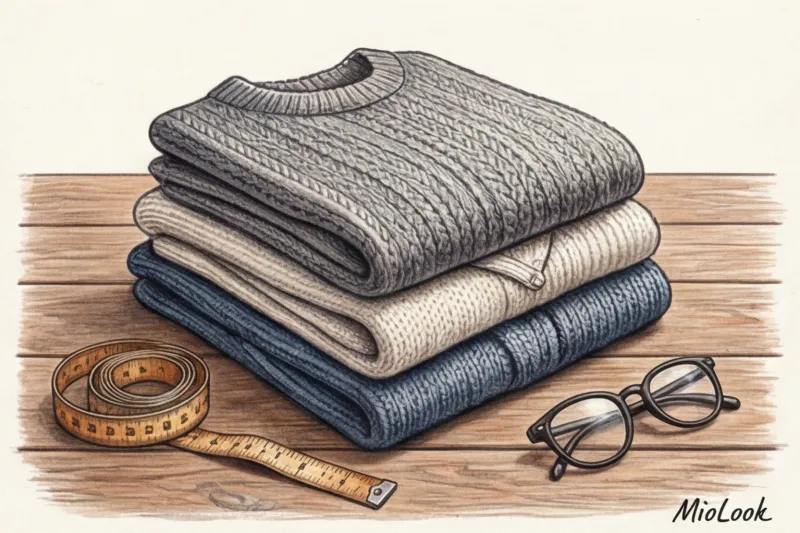
Look for markings on the tags 2-ply or 3-ply (double or triple twist). This means that two or three thin strands are tightly twisted into one. This yarn is much more resistant to abrasion than single-ply yarn, even if they are the same brand.
For everyday office wear, I always recommend merino wool over cashmere. Merino has a longer fiber and holds its shape better. And if you see the inscription on British brands worsted wool (combed wool) – don't hesitate to choose it. This means the yarn hasn't just been carded (like carded yarn used to make fluffy, soft sweaters), but has been combed with special combs, removing all the short hairs. It's smooth, slightly cool to the touch, and practically lasts forever.
To make planning easy winter office capsule and keep track of which brands wear best, I recommend digitizing your basics. By adding a sweater to MioLook smart wardrobe feature , you will be able to see the real cost per wear and understand whether the purchase was worth your money.
If the pellets have already appeared: a rescue plan and proper care
Even the most expensive natural fabric may exhibit slight pilling during the first month of wear. This is normal—it's just the excess fibers that aren't secured in the threads coming out. The key is to remove them properly.
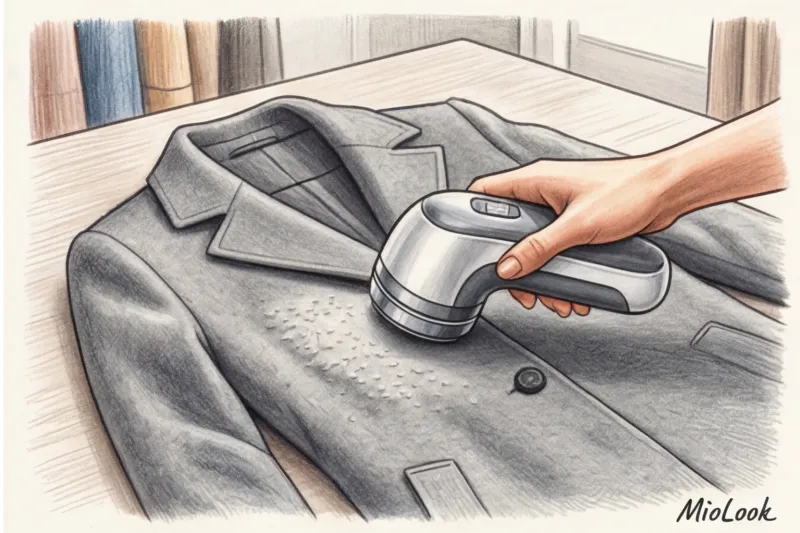
Forget the popular internet myth that you can remove pilling with a regular razor! This is the worst advice floating around the internet. A razor not only removes loose fluff but also damages the structural threads of the knit. As a result, after a couple of washes, a hole will appear in the affected area.
Your salvation arsenal:
- A high-quality fabric shaver with an adjustable mesh height to prevent cutting through delicate knits.
- Special pumice stones and combs for cashmere are an environmentally friendly and gentle alternative to expensive fluffy pile.
And another less obvious fact about care. According to the Cotton Incorporated research center, fabric softener aggravates Pilling. We think it softens the fabric, making it look better. In fact, the silicones in fabric conditioner act as a lubricant. They relax the threads, allowing short fibers to slide more easily to the surface due to friction. Wash knits inside out, use liquid detergents for delicate fabrics, and skip the fabric conditioner.
Checklist: 5 Steps to a Pilling-Free Wardrobe
The quality of your look isn't determined by a flashy logo, but by the smoothness of its textures. Let's summarize and put together a practical checklist:
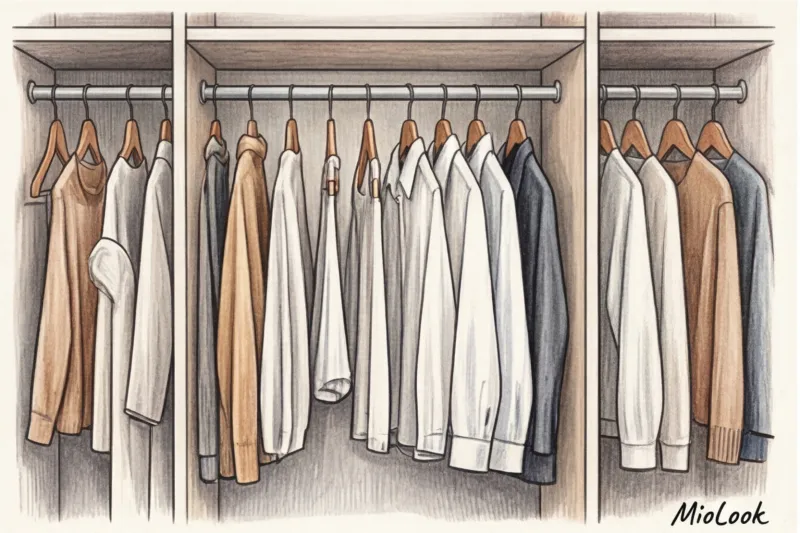
- Rule of pure composition: Avoid Frankensteins. A maximum of two or three fibers per composition. No combinations of wool, acrylic, and polyester in one item.
- Investments in spinning: Hold the fabric up to the light. A tight, tight thread is always better than a fluffy, loose cloud.
- Smart Friction: Analyze how your items interact. A stiff coat lining or canvas bag will ruin even premium merino wool.
- Digital control: Upload your favorite durable items to the app MioLook , so that AI can help you create the maximum combinations from them. What doesn't slip should work for you every day.
- Proper care: Wash inside out, avoid fabric softeners, and regularly use a lint remover rather than a razor.
Ready to get started?
Try the MioLook free plan—no commitments required. Our smart AI stylist will help you find the perfect looks for every day.
Get access — €0.99 onceRemember: clothes don't have to be expensive to look luxurious. They simply need to obey the laws of physics. Choose long fibers and tightly spun yarns, and your wardrobe will always look like it just stepped out of a boutique.