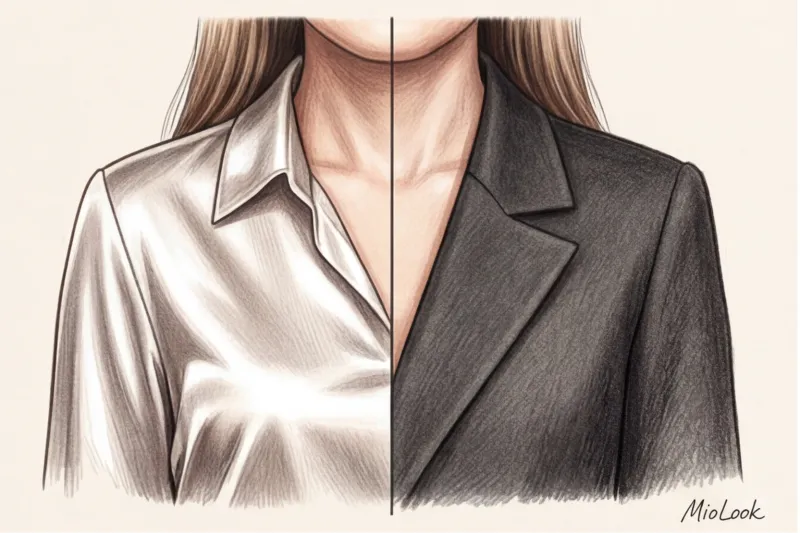
Have you ever noticed how one black dress makes your silhouette look chiseled, while another, of the exact same cut and color, insidiously accentuates every extra millimeter? Most of us blame the fitting room lighting or last night's dessert. But as a textile expert and stylist, I'll tell you the truth: it's not about your figure. It's about the physics of the fabric.
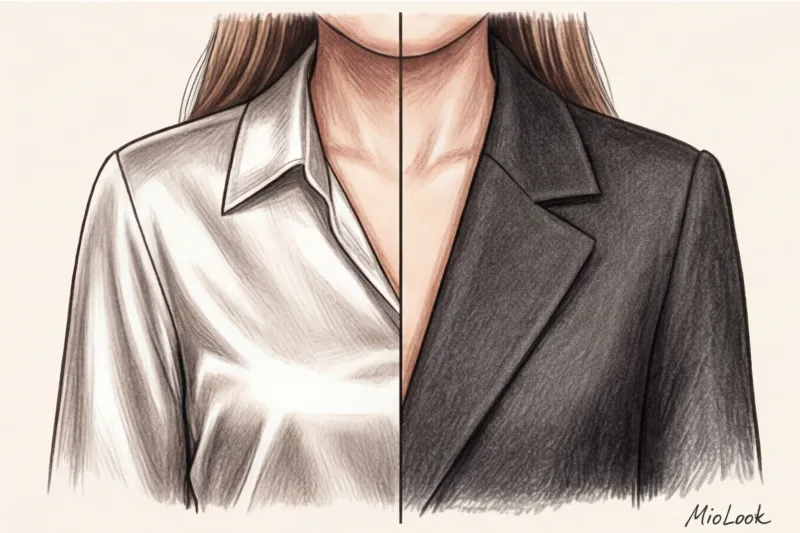
We're used to building our wardrobes based on styles and color palettes, forgetting about the third, most powerful dimension—texture. The way a material's surface interacts with light and space determines whether a garment will add two sizes to your figure or, conversely, make you look more like you. We've covered in more detail how different materials can complicate an outfit in our A complete guide to creating an expensive look and combining textures in clothing.
Today, we'll address many women's biggest fears and discover which fabrics actually make you look fat. But we won't simply ban velvet or sequins. We'll learn how to use the optical properties of materials as a sculpting tool, turning the so-called "flaws" of textures into your greatest stylistic advantage.
The Physics of Style: How Texture Changes Our Proportions
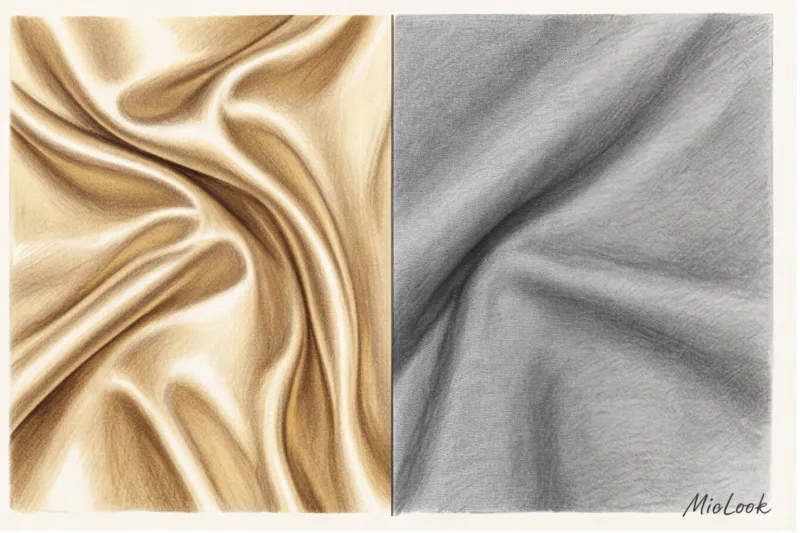
Any fabric is, first and foremost, the architecture of its threads. And how you look in your clothes is governed by the laws of textile optics. When a ray of light falls on your outfit, it is either absorbed by a matte surface or reflected by a glossy one. Black velvet and black satin are the same color, but they create silhouettes in completely different ways. Matte velvet absorbs light, creating a deep, tapering contour. Satin acts like a mirror, reflecting glare and visually bringing the object closer to the viewer.
The second important metric is the material's density, or GSM (Grams per Square Meter). According to a 2023 study by the Institute for Textile Technology in Aachen, materials with a density above 250 GSM physically add volume to the silhouette simply due to their thickness. Extra millimeters of yarn around the waist inevitably translate into visual weight. By understanding these two parameters (reflectivity and density), you'll never make a mistake in the fitting room again.
Optical illusions: which fabrics make you look fat and why
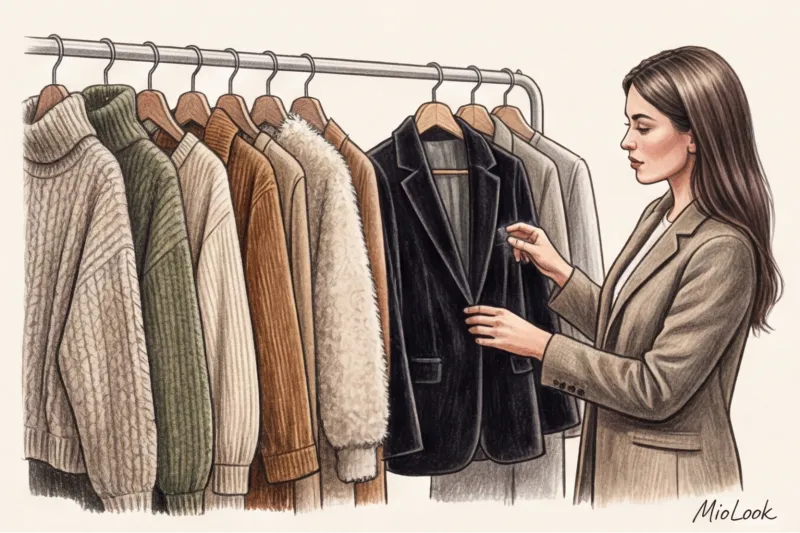
To control your silhouette, it's important to distinguish between the two types of volume created by clothing: physical and optical. Physical volume is created by thick, napped fabrics—they actually take up space around you. Optical volume is created by smooth, shiny textures—they create an illusion of perception.
Your perfect look starts here
Join thousands of users who look flawless every day with MioLook. A smart AI stylist will analyze your clothes.
Get access — €0.99 onceShiny and reflective textures (satin, silk, sequins, leather)
Any shimmery fabric works like a cosmetic highlighter. Where do we apply highlighter in makeup? On the areas we want to highlight and enhance. A satin skirt or patent leather pants do the same: they create highlights on the most prominent parts of the figure (stomach, hips, chest), visually enlarging them.
Moreover, a glossy surface mercilessly highlights the slightest imperfections in the silhouette. There's a huge difference between a cheap, synthetic sheen and a refined glow. €30 polyester "silk" from a mass-market store has a harsh glare and cheapens the look, while natural mulberry silk has a delicate, diffused glow that exudes class.
Pile and voluminous materials (corduroy, boucle, velvet, fur)
These materials honestly add 1-2 centimeters to your original measurements. Wide-ribbed corduroy is one of the most dangerous materials for the hip area. The horizontal stretch of the ribbed fabric when you step instantly visually widens your pelvis.
The famous Chanel-style bouclé also requires caution. Due to the loose, voluminous structure of the yarn, this jacket requires a perfect, rigid cut. If the bouclé is cut shapelessly (which is common in the budget segment under €80), it will instantly transform the upper body into a massive "box."
Stiff and standing fabrics (taffeta, organza, thick cotton)
Organza and starched cotton don't drape. They sit upright, falling not along the curves of the body, but from the widest point, creating a bell shape.
It is important to note one hard limitation here. This technique absolutely does NOT work for women with large breasts (size D+) A stiff shirt made of thick cotton or poplin will rise like a tent from the highest point of the chest, completely concealing the waist and adding visually 10 kilograms. In this case, the stiffness of the fabric works against you.
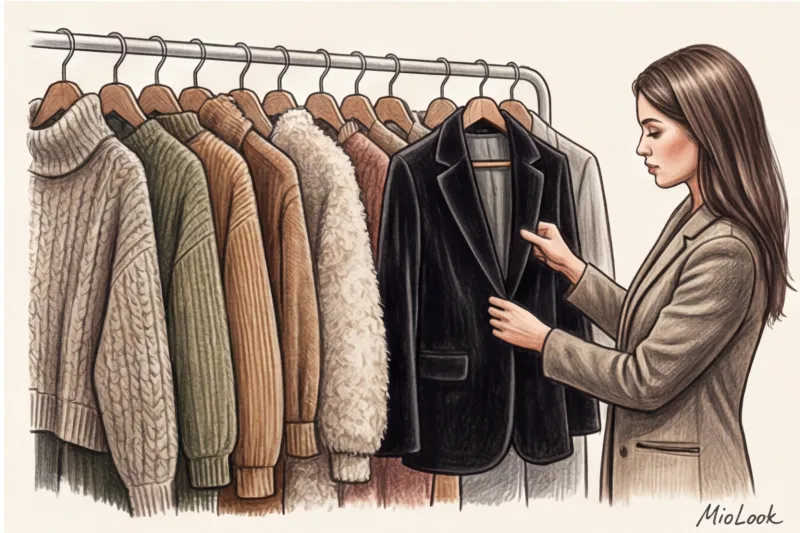
Debunking the myth: When smooth fabric is worse than textured fabric
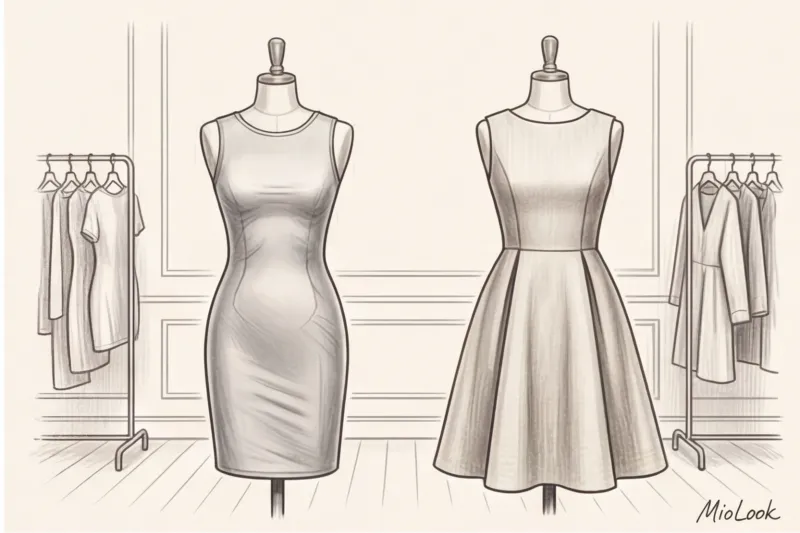
There's a steadfast stereotype: if you want to appear slimmer, you should only wear thin, smooth, form-fitting clothes. Over 12 years of practice, I've learned that this is the most damaging fashion misconception.
Last month, a client named Anna (size 48) came to see me. She persistently tried to "hide" her figure in thin turtlenecks and dresses made of smooth viscose knits, believing that thick fabrics would make her look enormous. In reality, we were getting a "caterpillar" effect: the thin, non-densifying material clinged to every fold, the contour of her underwear, and the slightest unevenness of her skin.
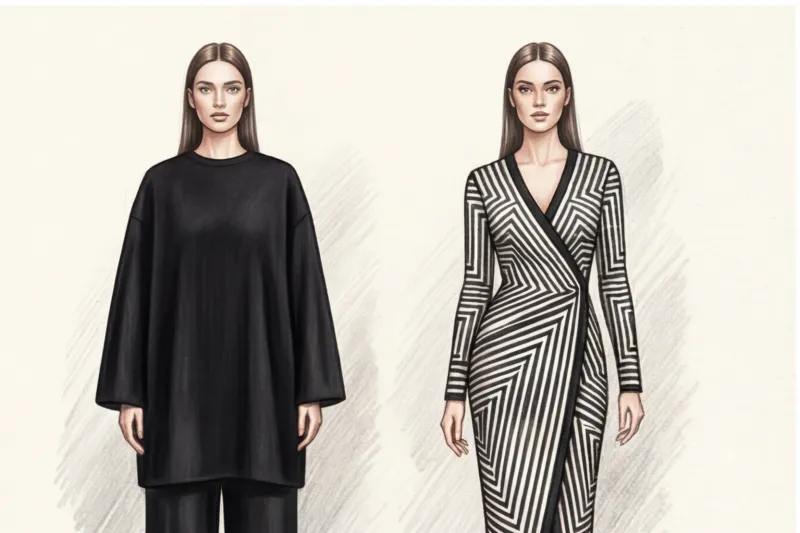
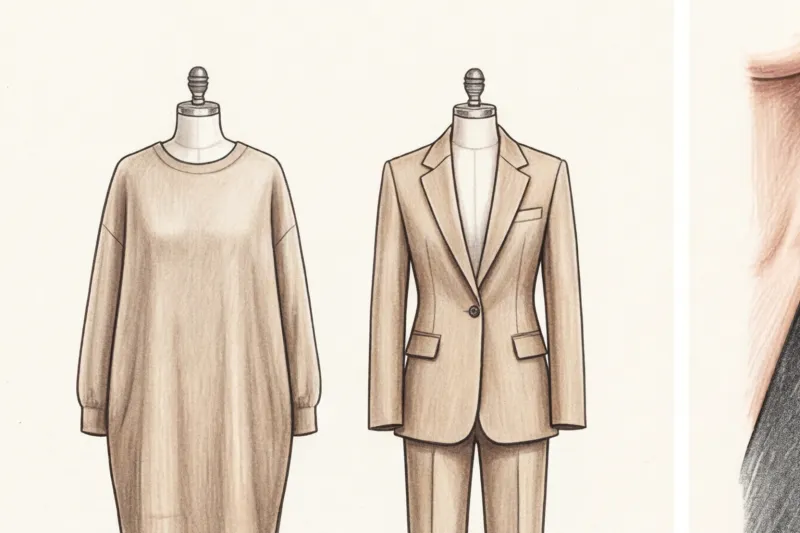
The secret of body architecture is simple: to appear fragile, you need not thin tissue, but a dense framework.
When we dressed Anna in an A-line dress made of dense, structured linen (around 280 GSM), a miracle occurred. The stiff fabric created an independent, clear contour. The material held its own shape, and within this architectural cocoon, Anna's figure began to appear significantly more graceful and compact.
Strategic Volume: How to Use Plump Fabrics for Body Shaping
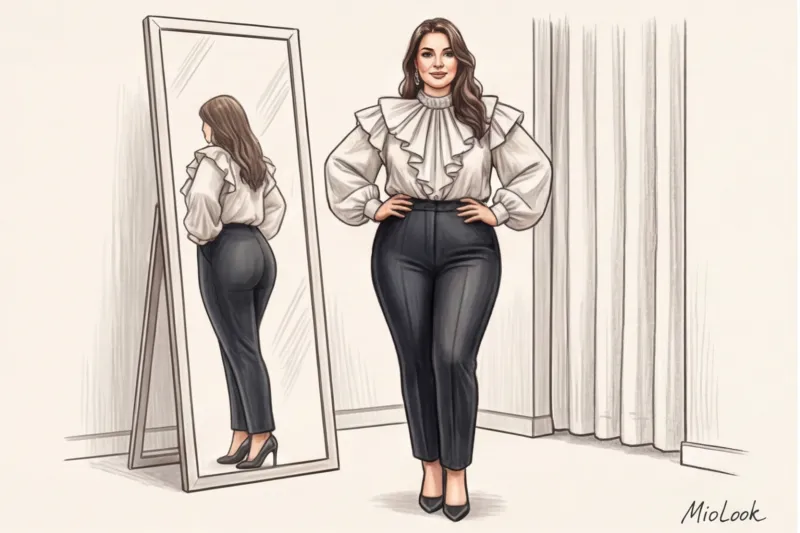
Knowing which fabrics make you look fat means we have the perfect optical correction tool at our fingertips. There's no need to throw out corduroy or sequins. Simply place them where your silhouette needs volume.
Ready to get started?
Create the perfect capsule wardrobe based on your proportions and favorite textures using the MioLook app.
Get access — €0.99 onceBalancing the Pear and Hourglass
If you have a heavy bottom and narrow shoulders, use textured, reflective, or stiff materials on your upper body. An organza blouse with puff sleeves, a thick bouclé jacket, or a shiny silk top will visually broaden your shoulders. For your bottoms, choose matte, heavy, yet flowing fabrics that absorb light: thick crepe, cold-spun wool suiting, or heavy matte viscose.
Softening the Inverted Triangle and Apple
Here, the task is reversed. We tone down a bulky shoulder girdle or abdominal area with matte textures—fine, smooth wool, matte cashmere, or thick but not stiff cotton. Meanwhile, we add strategic volume to the hips: light corduroy trousers, pleated faux leather skirts (which provide the desired shine), or thick, textured denim. The difference in texture instantly evens out the proportions.
Sustainable Alternatives: Smart Fabrics for a Perfect Silhouette
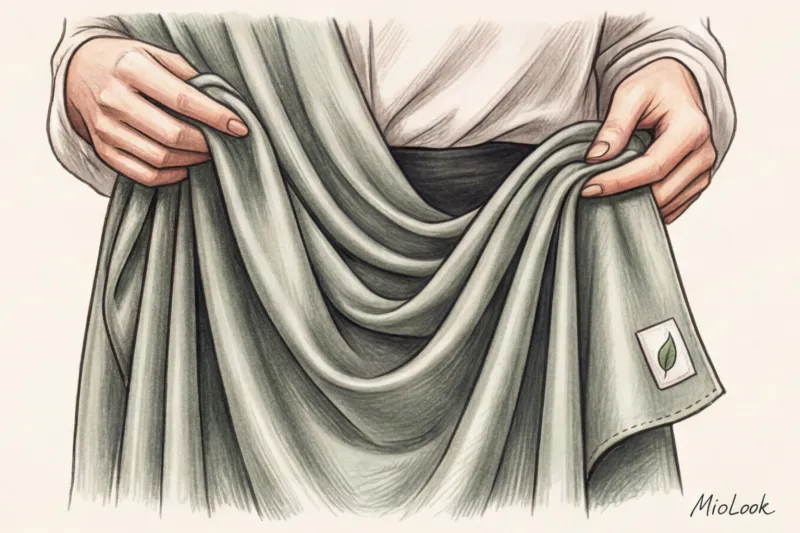
As a proponent of sustainable fashion, I always pay attention to the composition. One of the main reasons why cheap clothes fit poorly and add excess bulk is the properties of synthetics. 100% polyester doesn't breathe and accumulates static electricity. This causes a skirt or dress to literally stick to your legs, breaking the silhouette and creating bulk where the fabric is caught.
According to McKinsey & Company's 2024 report on the future of eco-textiles, innovative synthetic fibers made from cellulose are solving this problem. Replace cheap polyester with tencel (lyocell) It's an incredibly "smart" fabric: it's heavy enough to fall in beautiful, slimming folds (tails) without clinging to the body.
If you are looking for a replacement for the atlas that insidiously makes you look fat, pay attention to cupro This eco-friendly material is made from cotton fluff. It has a refined, delicate, velvety sheen. Cupro doesn't shimmer like cheap satin, but softly diffuses light, elongating the silhouette. Yes, a cupro blouse will cost between €80 and €120, but it's an investment in a flawless fit for years to come.
Stylist's Checklist: How to Test Fabric in the Store
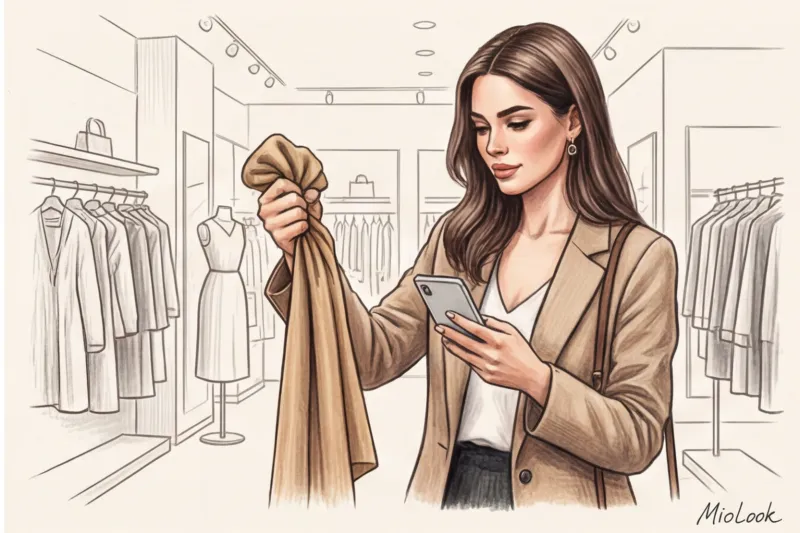
As a personal shopper, I never look at just the color of an item. Before bringing a garment into the fitting room, I always conduct a quick tactile audit right there in the room. Here's my personal 4-step checklist:
- Crush test: Squeeze the edge of the fabric tightly in your fist for 5 seconds. If it starts to crease, discard it. Hard creases in the crotch area of your pants will instantly add visual weight.
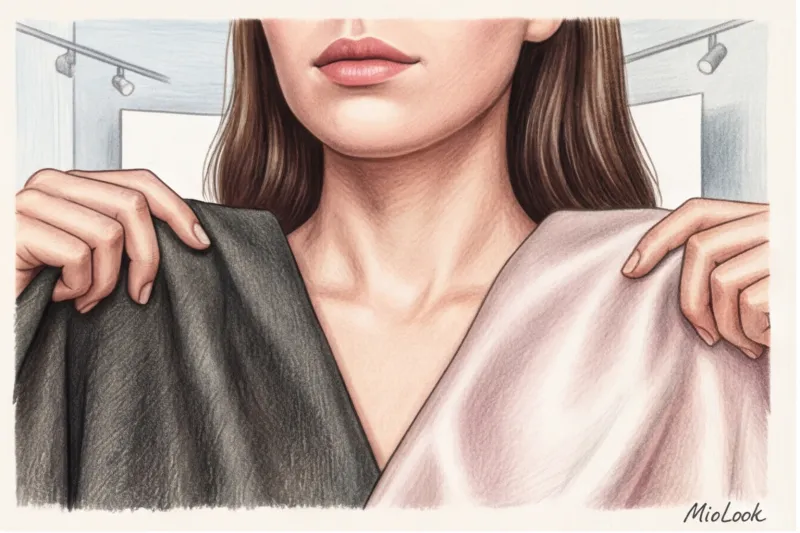
- Drapery Test: Drape a pant leg or dress hem over your forearm. Observe how the fabric behaves under its own weight. Does it form soft, flowing folds, or does it stick out at an angle?
- Light test: Fitting rooms often use directional warm lighting to reduce shine. Stand with the garment near a window or the brightest lamp in the room. If the fabric begins to shimmer with a cheap sheen, it will add volume.
- Density rating: Feel the seams. If the fabric is too thin (low GSM), the seams will be pulled together, and the garment itself won't hold its shape on the body.
Summary: Invoice as a Tool for Impression Management
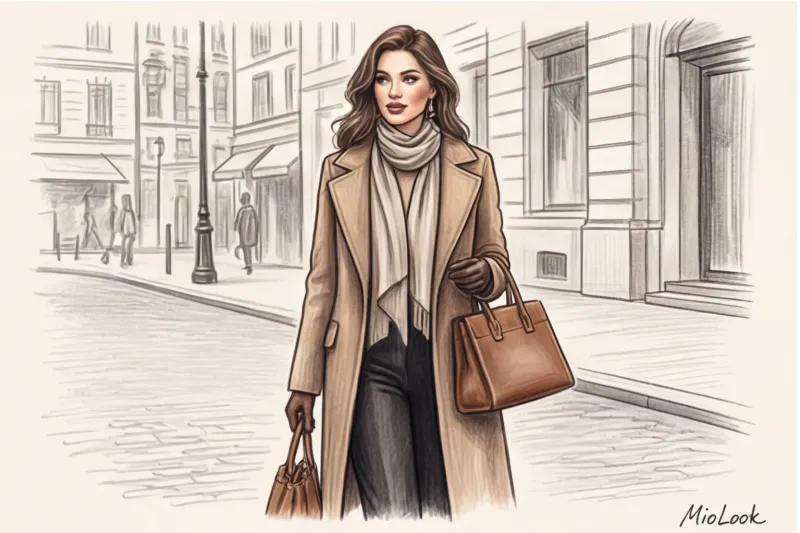
Fabrics that make you look fat aren't your enemy. They're a powerful sculpting tool that you just need to know how to use properly. Remember: a prestigious and expensive look is always built on contrasts. Combine the absorbent and reflective, the smooth and textured, the rigid and the flowing.
I recommend taking a look at your closet today and assessing its tactile diversity. Take photos of your favorite items and upload them to MioLook — a smart AI algorithm will help you create new, unconventional combinations of matte and shiny textures that you never even thought of.
Access to MioLook for €0.99 — one-time payment
A smart AI stylist will select the perfect look for you, taking into account textures, cuts, and your individual measurements.
Get access — €0.99 onceDon't be afraid of volume if you know how to manage it. Let your clothes work for you, rather than letting you adapt to their whims.