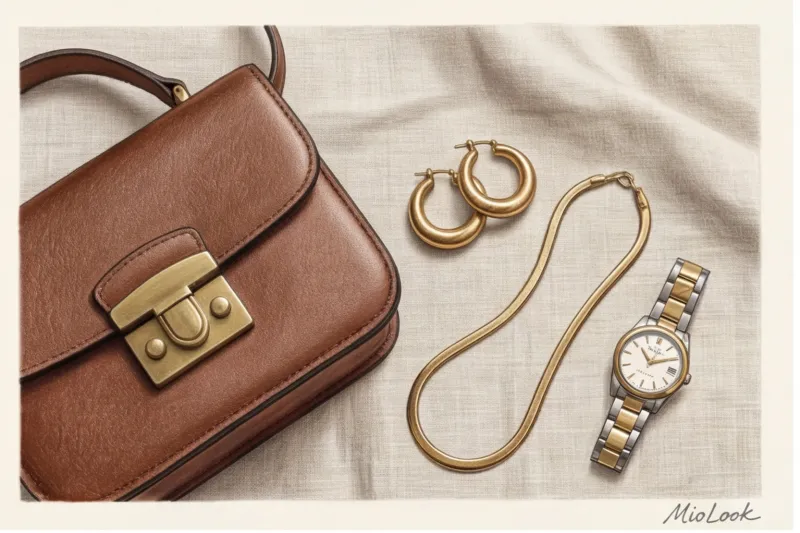
About three years ago, a client came to me requesting a complete wardrobe overhaul. But the first thing I noticed wasn't the dated cut of her jacket, but a persistent red mark on her neck that she persistently covered with foundation. "It's contact dermatitis; my skin just can't handle metal," she sighed. After fifteen minutes of sorting through her jewelry box, we discovered the true culprit: her beloved chunky chain from a mass-market store, the gold plating worn away, revealing a harsh nickel backing.
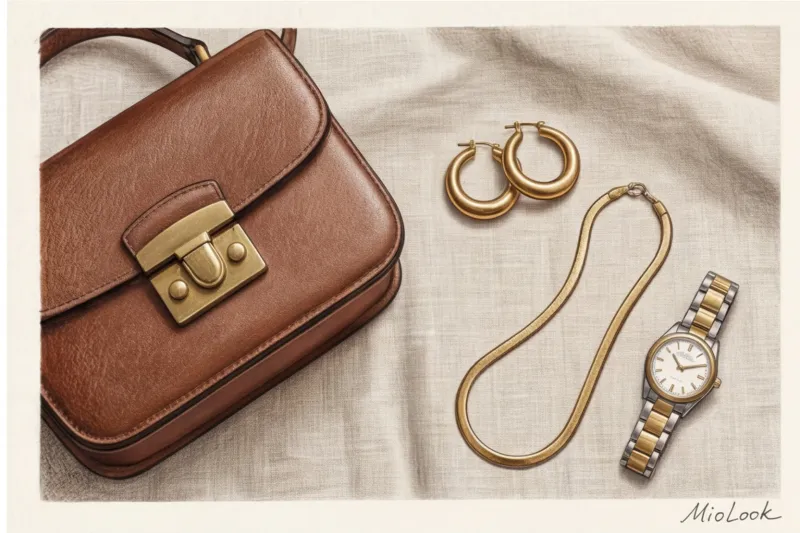
This story perfectly illustrates the main problem of the modern accessories industry. When we discuss basic jewelry for every day Most stylists limit themselves to lists of shapes: buy pearls, stud earrings, and a thin chain. But as a materials scientist and sustainable fashion advocate, I'll tell you something else: the right jewelry foundation isn't built on brand or even design. It's built on the physics of the alloy, micron thickness, and the quality of the coating.
Your everyday jewelry is as much a foundation as a quality leather bag. We've covered this in more detail in our The Complete Guide to Investment Bags , where we examined in detail how hardware reveals a piece's status. Today, we'll apply the same analytical approach to a jewelry wardrobe.
Investment Architecture: Why Basic Everyday Jewelry Isn't Consumable
Let's draw a direct parallel with investment bags. What makes a bag last forever? High-quality full-grain leather and heavy, cast brass hardware. The same rule applies to your jewelry capsule. The heaviness of the metal in your hand and the dull, confident click of the lock are the first and most reliable indicators of quality.
In styling, there's a strict concept called Cost-Per-Wear. If you buy a $15 costume jewelry ring and throw it away after two months because it's peeling, its real value is incredibly high. If you invest $150 in a high-quality vermeil ring and wear it every day for three years, it's costing you next to nothing.
"Buying cheap, fast-fashion jewelry isn't just bad for your wallet because you have to constantly replace it. It's a real environmental disaster. Most of these items are made from non-recyclable alloys that sit in landfills for decades, emitting toxic oxides," reads my speech at a panel on sustainable fashion.
Access to MioLook for €0.99 — one-time payment
A smart AI stylist will select the perfect look for every day and help calculate the cost-per-wear of your purchases.
Get access — €0.99 onceMaterials Science for the Stylist: How to Read Jewelry Compositions
To stop blowing your budget on jewelry that loses its luster by the end of the season, you need to learn to read labels as meticulously as you would the composition of a wool coat. The main problem with "fast jewelry" lies in the base. This is usually brass or copper, coated with a thin layer of gold using a galvanic process.
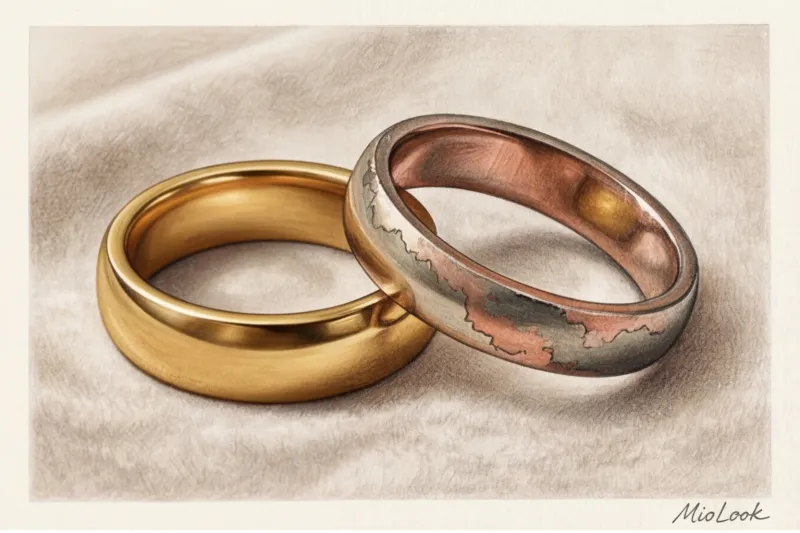
What does "thinnest" mean? Standard mass-market gold plating is only 0.3–0.5 microns thick. Now for the hard numbers: with daily contact with skin, sweat, and fabrics, one micron of classic gold plating wears away in about a year. So, your 0.5 microns is a waste of money; after a couple of months, the oxidizing base will show through.
The myth of "hypoallergenic" mass-market products and contact dermatitis
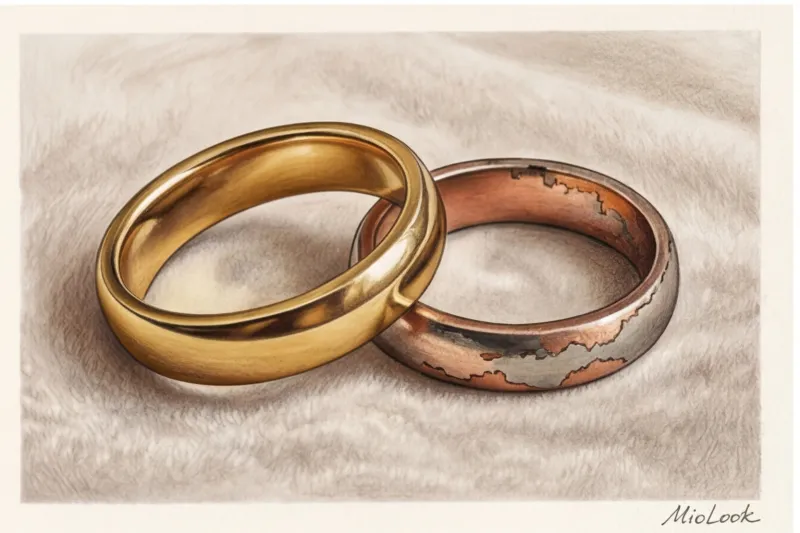
Now let's get back to my client's story. Why does her skin react so violently? To improve the adhesion of gold to brass, manufacturers of cheap jewelry often use an intermediate layer of nickel. When the top half-micron layer of gold disappears, your skin comes into direct contact with the nickel.
According to the European Society of Contact Dermatitis (ESCD) in 2023, up to 20% of women have a clinical allergy to nickel. Familiar symptoms? Green skin, itching, redness. Many people think it's a "pH issue." No, it's a simple chemical reaction of copper oxidation and exposure to nickel.
The Golden Mean: Vermeil and PVD Coating
Herein lies my favorite insight, which often surprises my clients: you don't need to buy exclusively pure gold (14K or 18K) to build a decent base. There are two excellent alternatives.
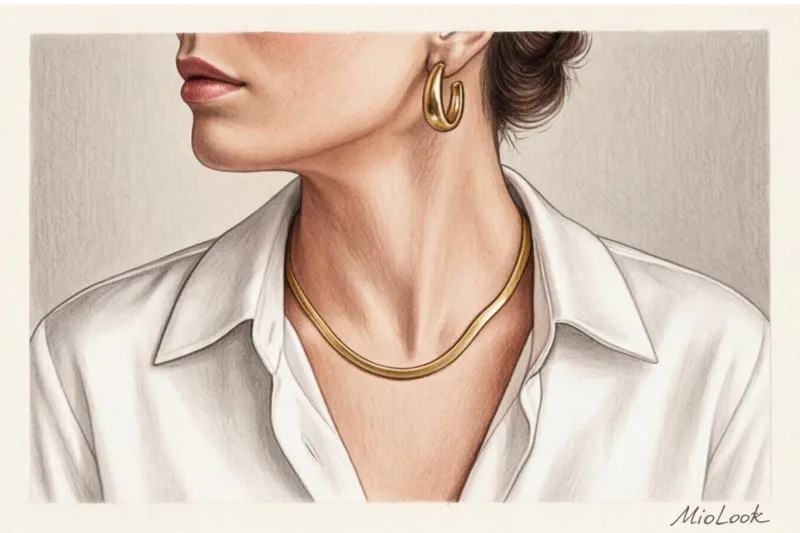
- Gold Vermeil (Vermeil): It's the perfect balance of price and quality. The US Federal Trade Commission (FTC) strictly regulates this term. To be considered vermeil, a piece of jewelry must have a sterling silver base (925) and be plated with a gold layer at least 2.5 microns thick. That's five times thicker than mass-market jewelry!
- PVD coating (vacuum deposition): If you're looking for a durable base, Physical Vapor Deposition technology creates a coating on titanium or medical steel that fuses with the base at the molecular level. This coating lasts 10 times longer than galvanic coating. You can work out, swim, and apply perfume in it.
The formula of a jewelry capsule: 4 elements that put together a look
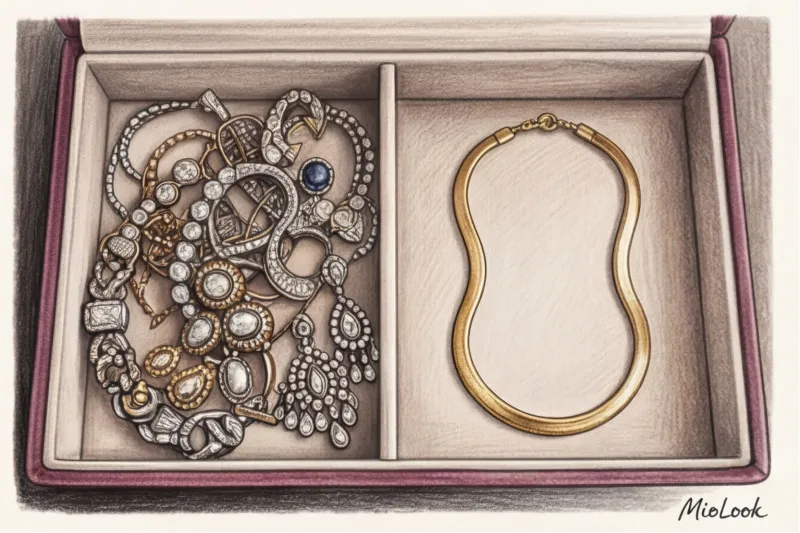
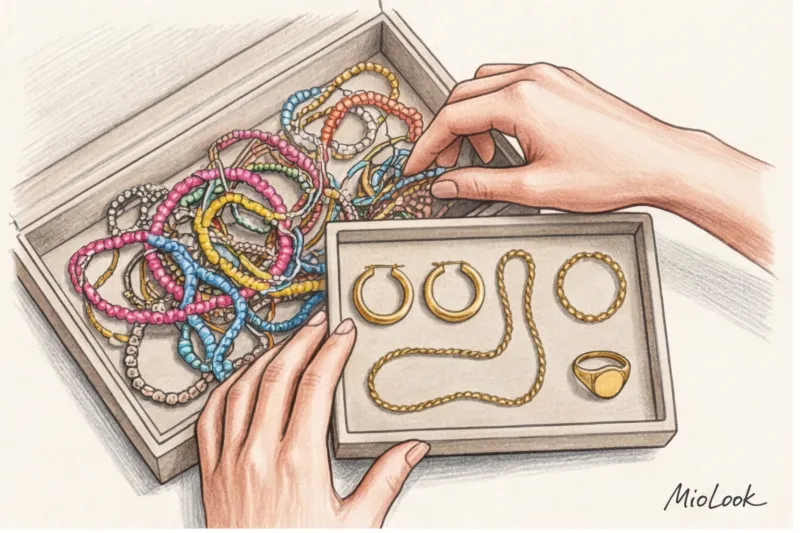
My philosophy: it's better to have four flawless pieces than an overflowing jewelry box of junk you can't wear with anything. Basic everyday jewelry should be architectural, versatile, and ergonomic.
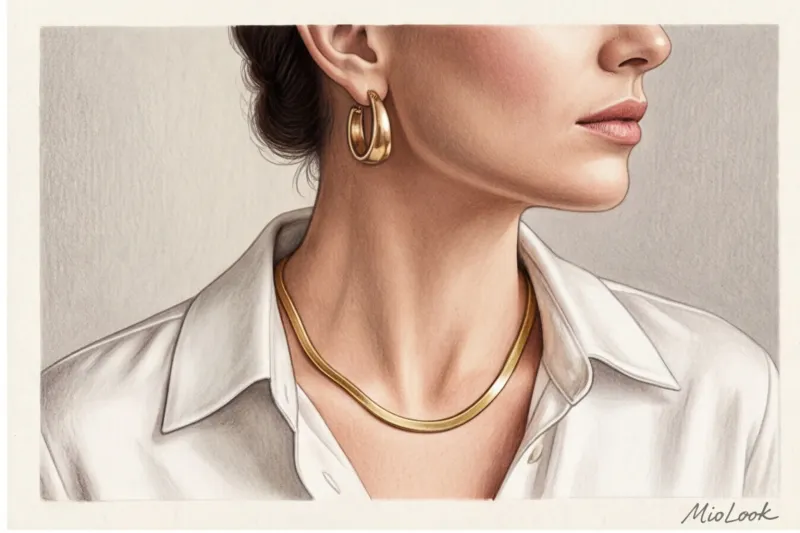
- Architectural hoop earrings (rings) of medium diameter. The shape of the tube is important here. Choose hollow but thick-walled designs (tubular hoops). They provide the desired visual volume without weighing down the earlobe by the end of the workday.
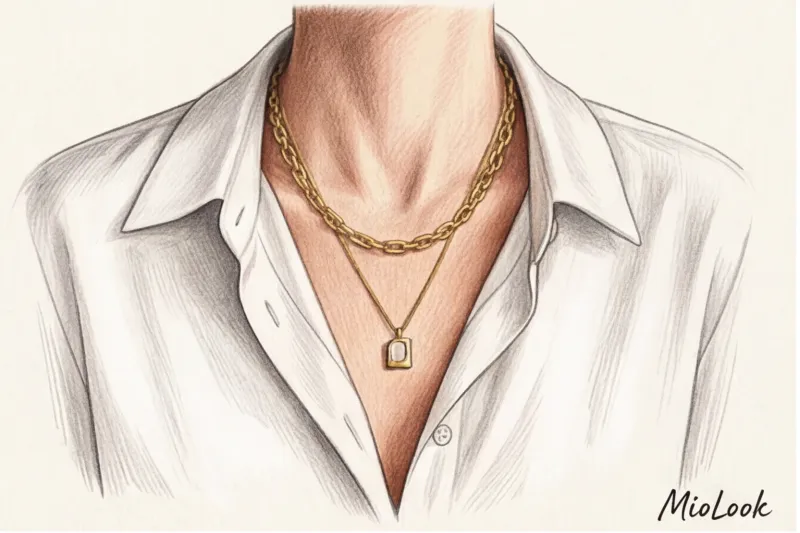
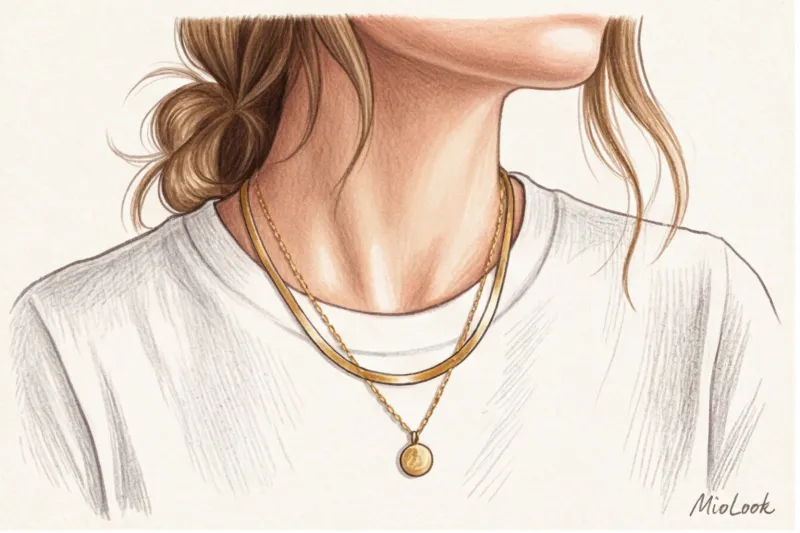
- Correct weaving chain. The ideal choice is a snake chain 3-5 mm wide. It lays flat and creates a liquid metal effect. Alternatively, a classic large-link cable chain is an option if you enjoy wearing pendants.
- Base ring. A signet ring with a smooth band or a band with a light texture. The main criterion here is ergonomics. A ring for everyday wear shouldn't have protruding claws that will snag your cashmere sweaters or silk blouses.
- Laconic watch. An anchor status element that brings the entire look together and adds a businesslike stance.
Stylist's Rule of Proportions: Always match the chain's thickness to the fabric's density. Fine, flowing silk tolerates delicate threads, but thick winter cashmere or tweed will visually "swallow" a thin chain—what's needed here is volume and the visual weight of the metal.
Try MioLook
A smart AI stylist will create the perfect look for you. Upload your jewelry and see what outfits it pairs best with.
Get access — €0.99 onceThe Art of Combining Metals: Breaking Outdated Rules
How many times have you heard, "Never mix gold and silver"? Forget it. Today, this rule is hopelessly outdated. On the contrary, skillfully mixing metals reduces formality and adds a more vibrant touch.
I had a client, a top manager at an IT company, complain that pure gold looked too "heavy" for their casual dress code, while silver was too casual. The solution? We introduced the "bridge piece" rule.
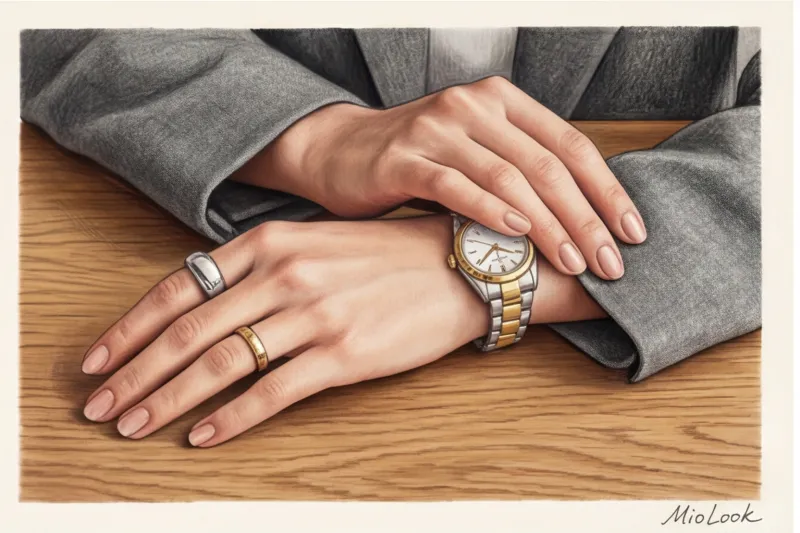
What is the bridge rule? You choose one bi-alloy piece of jewelry that already contains both yellow and white metal. Most often, this is a bicolor watch or a Cartier Trinity combination ring. This element legitimizes the presence of both metals in your look. Now you can confidently wear gold chuppahs and a silver necklace.
And another secret is the temperature of the metals. Cool, pale yellow gold (14K) blends with white rhodium-plated silver much more naturally than rich, orange-yellow 24K gold. If you're just starting to experiment, I recommend uploading your accessories to MioLook — the app will help you visualize how different shades of metal will look with your clothes before you leave the house.
A Stylist's Checklist: How to Test Jewelry Before Buying
I never let clients buy jewelry simply because it looks pretty. Before you take it to the checkout (or click "Checkout"), run these four quick tests:
- Lock test. Pay attention to the type of clasp on the chain. Avoid cheap spring (round) clasps—their springs fail in 90% of cases within the first year. Look for a reliable lobster clasp.
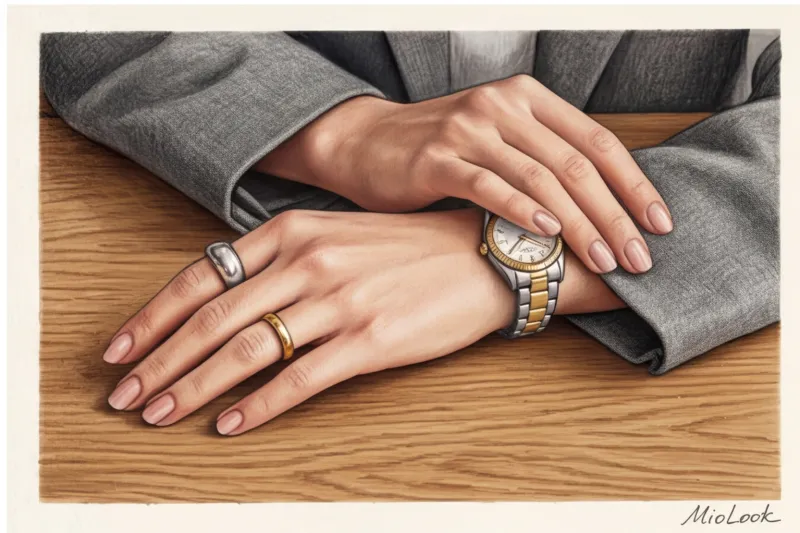
- Sound and weight test. As we mentioned at the beginning of the article, a high-quality alloy has a noticeable weight. Drop the ring gently onto a wooden table. It should produce a dull, solid sound, not the high-pitched ringing typical of tin.
- Compression test. This is critical for sterling silver. Silver is a soft metal. A friend of mine once bent a wide ring simply by gripping the steering wheel too tightly. Make sure the silver piece is thick enough or rhodium-plated (this adds rigidity and protects against scratches).
- Search for certificates. When shopping online, ignore marketing rhetoric about "star-shine." Scroll to the very bottom of the page, to the "Specifications/Composition" section. If it simply says "gold plated" without specifying the microns or base metal, close the tab.
Limitation: To be fair, the compression test doesn't work for adjustable rings. But I generally don't recommend such rings for basic wardrobes—they break most easily at the bend.
Daily Base Care: Extending the Life of Metal by 3 Times
Even high-quality vermeil can be ruined within six months if basic chemical principles are violated. Remember the stylist's golden rule: "Jewelry is the last thing to put on and the first thing to take off.".
They should only come into contact with your skin after body lotion has been absorbed and perfume has dried. Alcohol and chemical filters in cosmetics are the main enemies of any spray-on product.
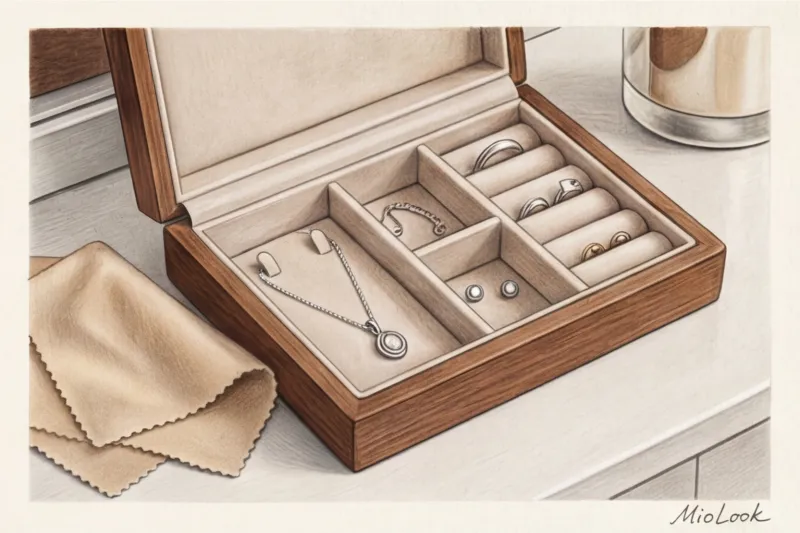
Now for a bit of boring but useful physics. Why does silver tarnish? It's a reaction not with oxygen, but with hydrogen sulfide, which is present in trace amounts in the air. Therefore, leaving beautiful open-topped jewelry stands on your vanity is the worst thing you can do for your jewelry. Store your jewelry in a closed box lined with soft fabric, preferably with a packet of silica gel inside to absorb excess moisture.
Never use abrasive pastes or toothbrushes to clean PVD and vermeil. Use only warm soapy water and polish with a lint-free microfiber cloth. This is sufficient to remove sebum and restore the original shine.
When putting together your jewelry capsule, remember this: basic jewelry isn't just a finishing touch. It's an investment in your everyday sense of quality. Choose your density, study the microns, and let your accessories speak louder than brand logos about your taste.