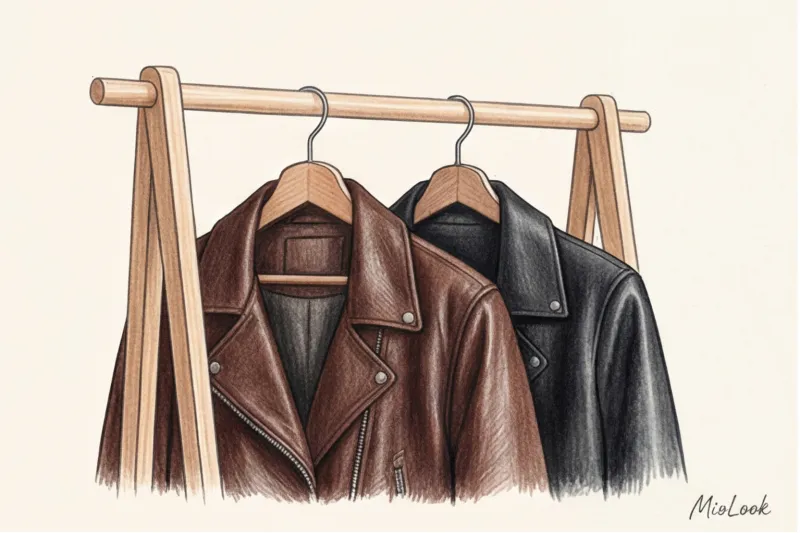
One day, a client of mine, trying to save her beloved €200 Massimo Dutti faux leather trench coat, made a fatal mistake. Noticing the material was slightly dry, she generously coated it with premium beeswax-based shoe polish. The result? A week later, the polyurethane coating began blistering and peeling off in layers. The trench coat had to be thrown out. This story is a classic illustration of how misunderstanding the nature of materials can cost us hundreds of euros.
I, Darina Marchenko, have learned one thing over 12 years as a stylist: proper care saves you much more money than buying at sales. If you want to know how to care for faux leather and genuine leather, forget everything you've been told by those selling universal sprays "for all types of leatherette." These materials are complete opposites.
We've covered the basic principles of caring for your clothes and creating a smart wardrobe in more detail in our a complete guide to proper clothing care Today, we'll delve into pure chemistry and explore why eco-leather and genuine leather require radically different approaches.
Wardrobe Chemistry: Why Faux Leather and Genuine Leather Are Sworn Enemies in Care
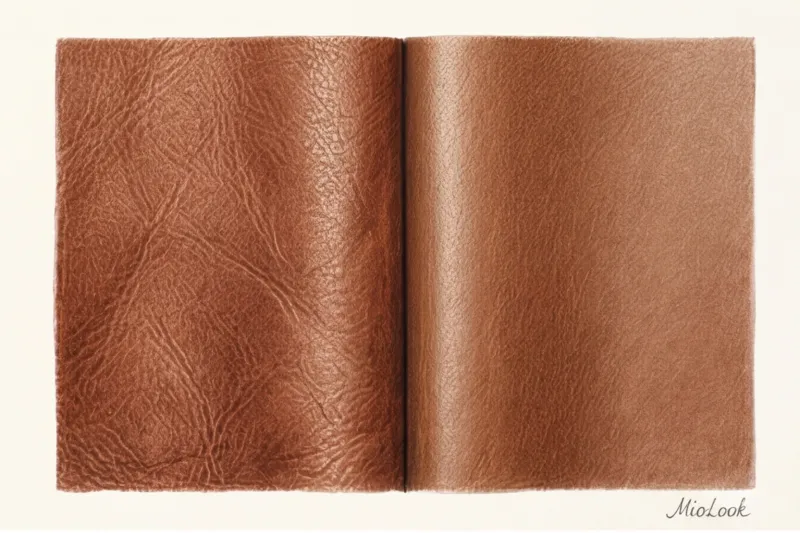
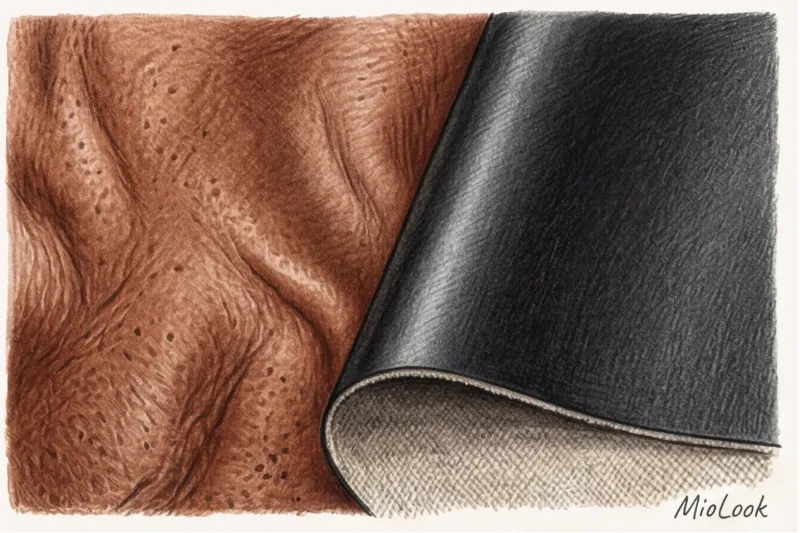
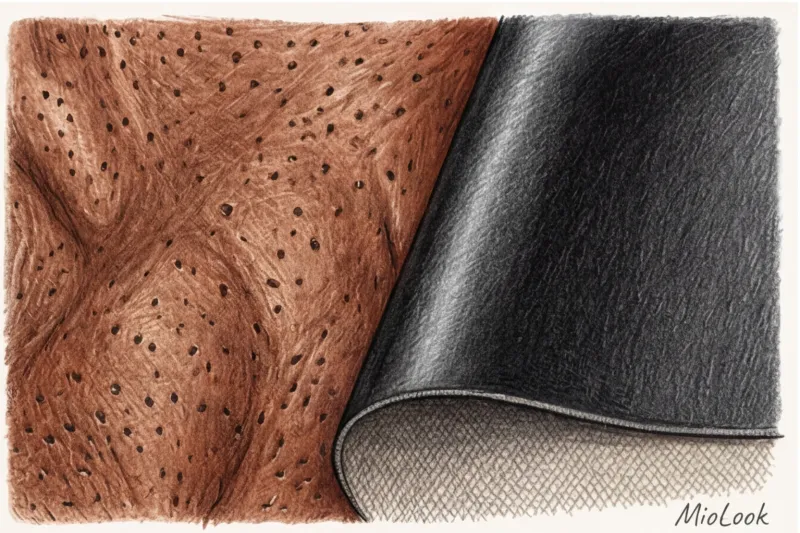
- Genuine Leather It's a porous biomaterial. It "breathes," absorbs moisture, and requires organic fats to prevent it from becoming brittle like old parchment.
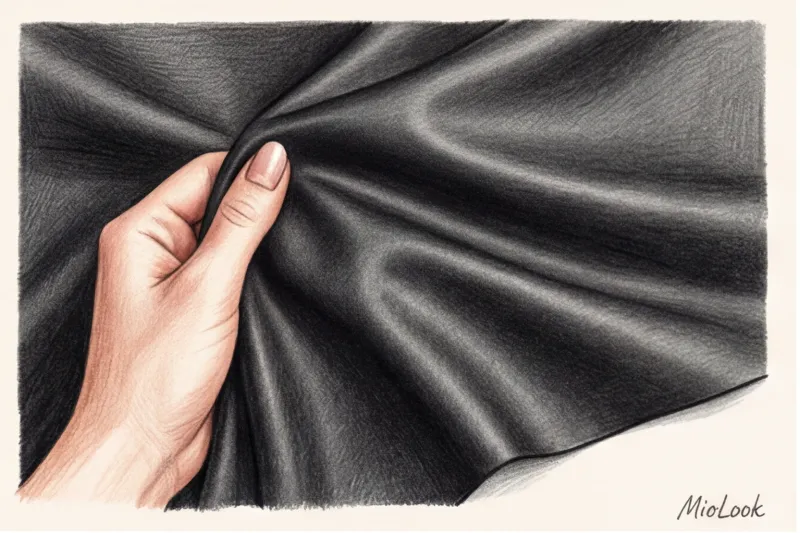
- Eco-leather (In 90% of cases, it's polyurethane, or PU)—a textile base (cotton, viscose, or polyester) coated with a layer of elastic plastic. It's non-porous. It has nothing to "absorb" your expensive creams with.
The main counterintuitive insight that shocks many of my clients is that using natural oils (mink, castor) or beeswax on faux leather is destructive. What nourishes natural hides acts as an aggressive solvent for the plasticizers in faux leather. The polyurethane softens, loses its bond with the fabric base, and begins to peel off in chunks.
According to textile engineering, high-quality genuine leather, when properly cared for, lasts from 20 to 50 years. The standard chemical lifespan of polyurethane eco-leather is 3–5 years. However, this lifespan can be extended to 7–8 years with the right "plastic" care.
How to care for eco-leather so it doesn't crack after a season
Polyurethane's main enemies are hydrolysis (breakdown under the influence of moisture and salts) and simple drying out. Have you ever noticed that jackets from mass-market stores (like Zara or H&M) crack primarily at the collar and cuffs? This happens because polyurethane comes into contact with salts from our sweat and sebum.
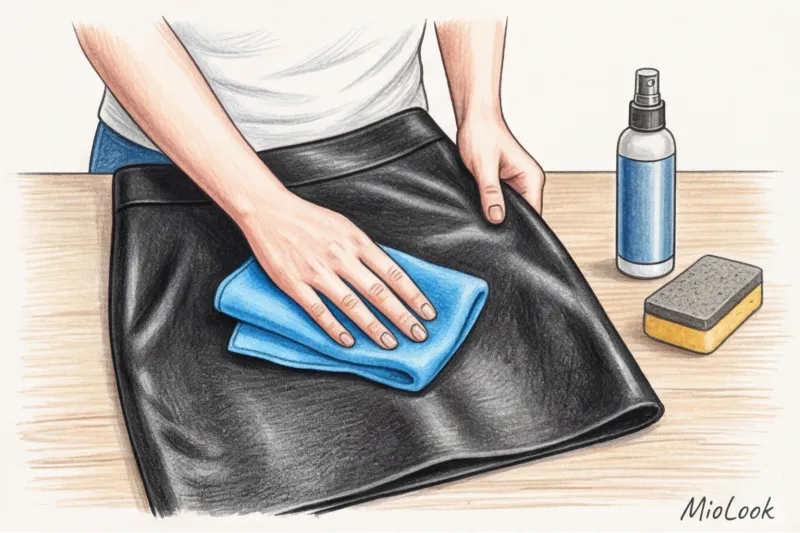
Your eco-leather cleaning kit should consist exclusively of synthetic components. Look for these in the product's ingredients. silicone oils They create a microfilm on the surface that protects the polyurethane from drying out and cracking, without reacting chemically with it.
Daily Routine: Cleansing Without Damage
Another fatal mistake is wiping faux leather bags or pants with regular wet wipes. Most of them contain alcohol or harsh surfactants. Alcohol instantly dries out the top layer of polyurethane, making it brittle.
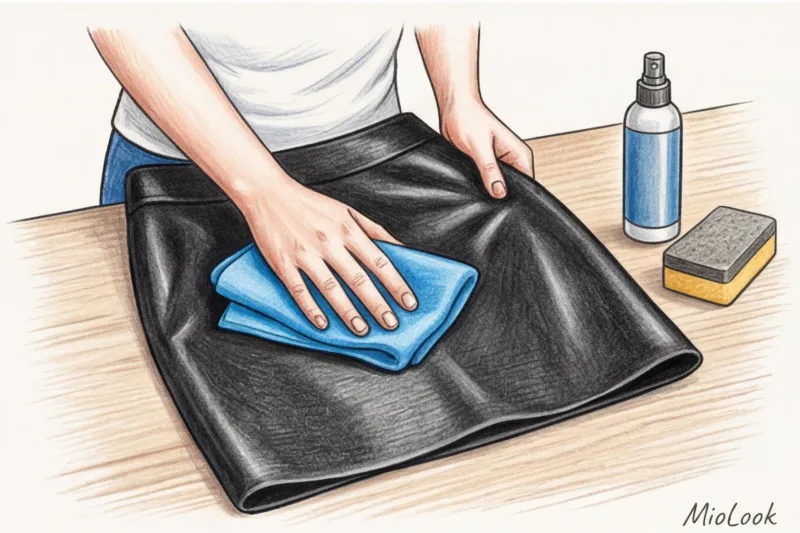
Microfiber Rule: After being outside, wipe down eco-leather items with only a slightly damp microfiber cloth (it won't leave micro-scratches, unlike paper towels). Apply a silicone impregnating sponge once a month—it takes two minutes but will prolong the life of the item for years.
Organize your wardrobe smartly
Forget which items need dry cleaning or special care? Add them to the MioLook app and create capsules with one click.
Get access — €0.99 onceSpa Treatments for Natural Skin: Investing in Decades
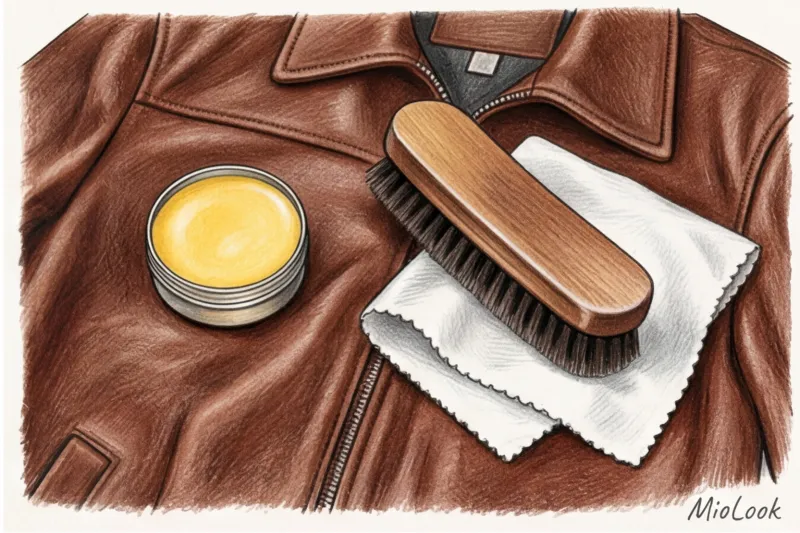
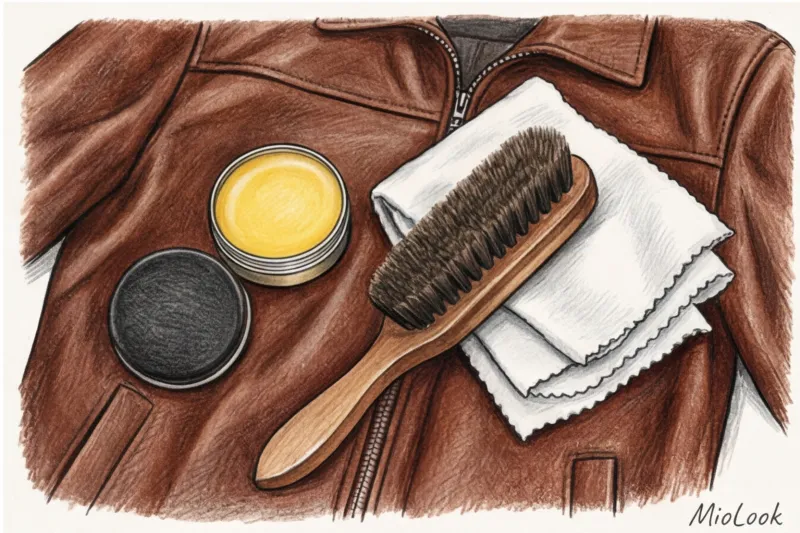
I have a vintage leather jacket hanging in my closet that's 15 years old. It looks luxurious, as if it just came from a boutique. The secret is simple: every six months, it gets a generous dose of lanolin balm.
According to the Leather Working Group (LWG) 2023 standards, proper preservation of genuine leather is directly dependent on its moisture level. If the leather becomes too dry, it will be impossible to restore damaged fibers.
How to choose the right care:
- Cleansing: Only special saddle soaps or foams with neutral pH.
- Nutrition: Look for mink oil, beeswax, or lanolin in the ingredients. Apply the product with a soft cotton cloth using circular motions and leave overnight for complete absorption.
- Protection: Water-repellent sprays (based on fluorocarbon resins). Important: apply them 24 hours before going outside, not 5 minutes before you leave the house. The polymer mesh needs time to cure.
Water routine: can you wash leather at home?
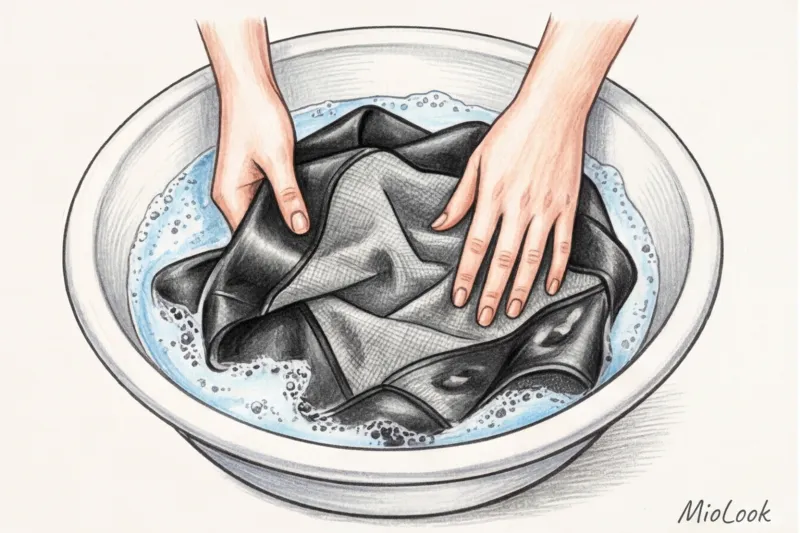
This is where things get interesting. Manufacturers often hedge their bets and slap a "Dry Clean Only" label on everything. But let's think like technologists.
Genuine leather and water are a definite no-no. Excessive moisture leaches its natural oils. If you're caught in a heavy downpour, never dry your leather jacket with a hairdryer or on a radiator. Hang it on a wide hanger away from heat sources at room temperature. Yes, it will take two days to dry, but the jacket will retain its shape.
But eco-leather can and should be washed! I personally tested washing polyurethane trousers from COS (around €150) that were marked with a "do not wash" sign. Proper home care is often safer than dry cleaning, which uses harsh perchloroethylene solvents that dissolve the PU film. Proper home care saves an average of €300 per year on dry cleaning costs for a basic five-piece capsule.
Step-by-step instructions for washing eco-leather:
- Turn the item inside out. We wash the fabric lining, not the plastic outer.
- Use cool water (not higher than 30°C) and liquid gel (powder leaves micro-scratches).
- Lightly squeeze the item with your hands, do not rub the stains locally with a brush.
- The "towel roll" method: Never wring or twist faux leather, as this will leave creases. Place the wet item on a terry towel, roll the two together into a tight roll, and press gently. The towel will absorb excess water.
Closet Architecture: How to Store Items to Keep Them in Shape
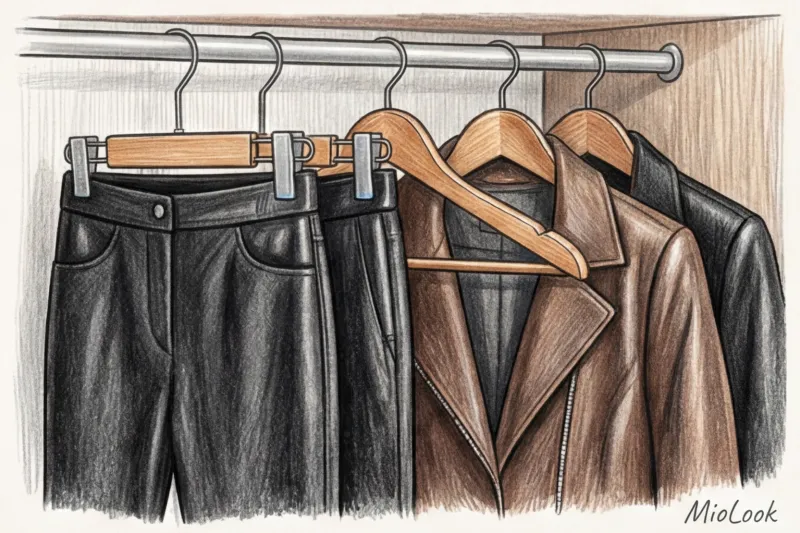
The most common image I see when I'm sorting through my wardrobes is leather skirts and leggings folded tightly into a pile, topped with jeans. For faux leather, this is a death sentence: the creases in the polyurethane, left like this for a month, are impossible to iron out.
Status storage rules:
- Free space. Leather items shouldn't rub against each other. Air should circulate between them. To easily plan outfits without constantly having to sort through your closet, I recommend digitizing them. MioLook — a smart AI stylist will help you create outfits on your smartphone screen.
- The right hangers. Throw away thin wire hangers—they'll stretch the shoulders of a heavy jacket within a week. Use wide, contoured hangers made of wood or high-quality plastic. For skirts and trousers, use only clothespins with silicone pads inside (bare metal will leave permanent dents).
- Covers. Genuine leather will suffocate in a plastic vacuum bag or synthetic case (it may even become moldy due to condensation). Use only cases made of breathable cotton. A stable temperature is essential for eco-leather: storing it on a balcony in winter or in direct sunlight in summer will cause the film to peel off.
Your perfect look starts here
Upload photos of your items to MioLook, and the algorithm will suggest dozens of stylish combinations, taking into account fabric textures and colors.
Get access — €0.99 onceStylist's Checklist: First Aid for Wrinkles and Stains
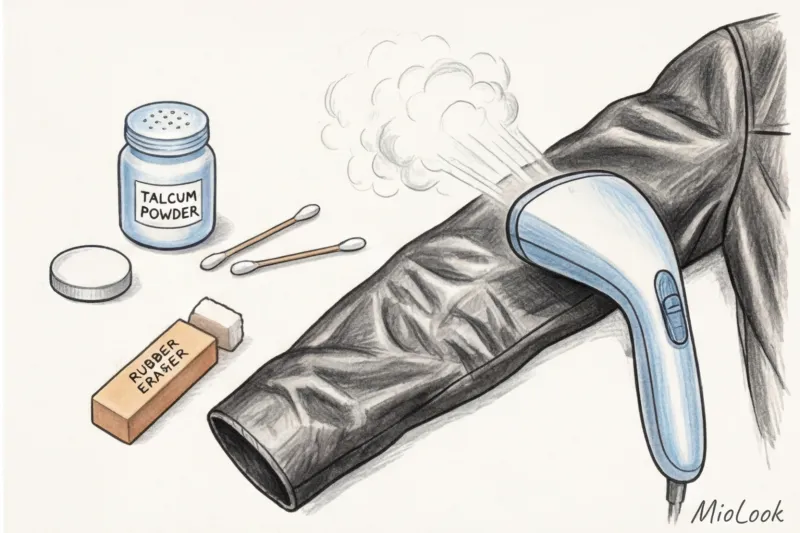
Panic before going out? This action plan has saved more than one of my clients' dates and business meetings.
Creases on eco-leather
Don't iron the front side of the garment—the polyurethane will melt and stick to the sole. Turn the garment inside out. Use a steamer 10-15 cm away from the fabric, or iron at the lowest temperature through a thick cotton cloth. Steam is less harmful to genuine leather, but a special press is better.
Fresh greasy stains
Soap and water will only push the grease deeper into the pores of natural leather. My tried-and-true method: generously sprinkle the stain with regular baby powder or crushed chalk. Leave it for 12–24 hours. The powder will act as an absorbent and draw out the grease. Then simply brush it off with a soft brush.
Scratches
I'll be completely honest with you here: there are situations when magic won't work. Light scuffs on smooth genuine leather are easily concealed with matching creams. Small snags on faux leather can be covered with liquid leather. However, if the polyurethane is torn down to the fabric lining, no liquid leather will make it invisible (the texture difference will be visible). In this case, the only solution is professional restoration or, unfortunately, replacement.
Treat materials with respect for their nature. Genuine leather requires nourishment, just like your own skin, while eco-leather requires gentle cleaning and protection, just like the screen of an expensive smartphone. Separate them into different shelves, use different "cosmetics," and your wardrobe will look luxurious season after season.