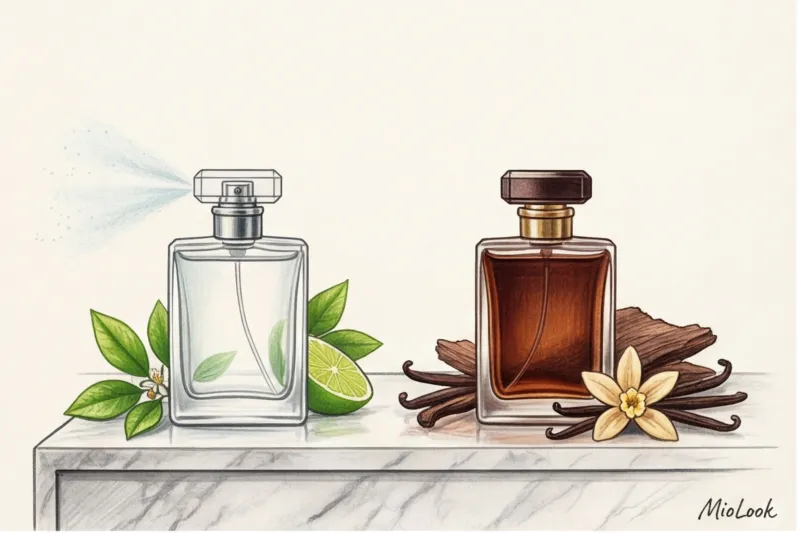
The main difference between eau de parfum and eau de toilette: it's not just about durability
One of my clients, a top manager at an IT company, once complained, "Emily, I bought the most expensive bottle of a popular niche perfume in the highest concentration, but my colleagues are literally opening the windows in the conference room. Shouldn't an expensive scent smell elegant?" The problem wasn't the price or the scent itself. She'd simply "worn" a heavy velvet evening gown for a morning meeting.
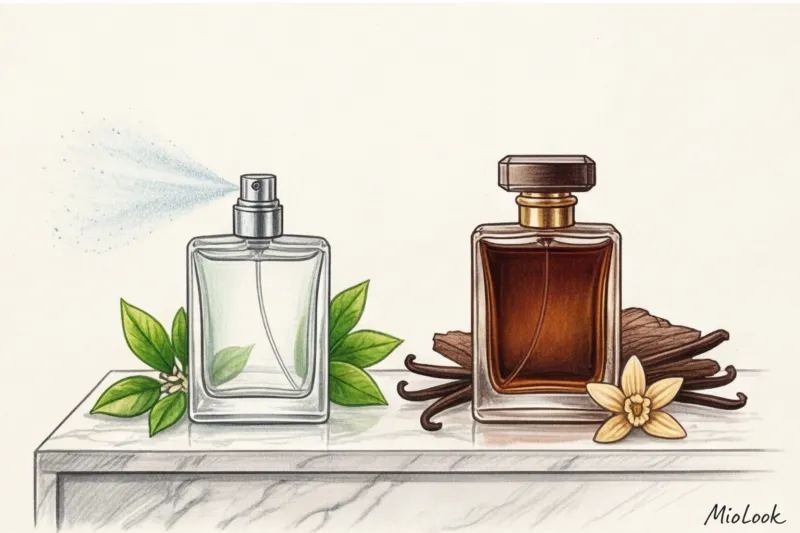
We've already discussed in detail how to find your olfactory signature in our a complete guide to the secrets of the perfume "I" But today I want to talk about the technical side of things, which directly impacts your image. Over 12 years of working as a stylist, I've learned one thing: a wardrobe doesn't end with clothes. Fragrance is your invisible accessory, and it, too, has its own dress code.
Fundamental the difference between perfume water and toilet water The difference lies in the architecture of the fragrance itself, not just the amount of alcohol added. Most people believe that the brand takes the same liquid and simply dilutes it with water to make it cheaper. This is a complete myth.
Let's look at the numbers. According to the strict standards of the International Fragrance Association (IFRA), concentrations are distributed as follows:
- EDT (Eau de Toilette): contains from 5% to 15% aromatic substances.
- EDP (Eau de Parfum): contains from 15% to 20% aromatic oils.
But these percentages are just the tip of the iceberg. The real magic (and physics) begins the moment the liquid touches your skin.
The 'Diluted Version' Myth: Why the Formulas Differ
When a perfume house releases a fragrance in a new concentration, it doesn't simply change the proportions. The formula is rebuilt from scratch. As legendary perfumer Jean-Claude Ellena aptly noted: "Eau de toilette and eau de parfum are often two completely different stories told with the same words.".
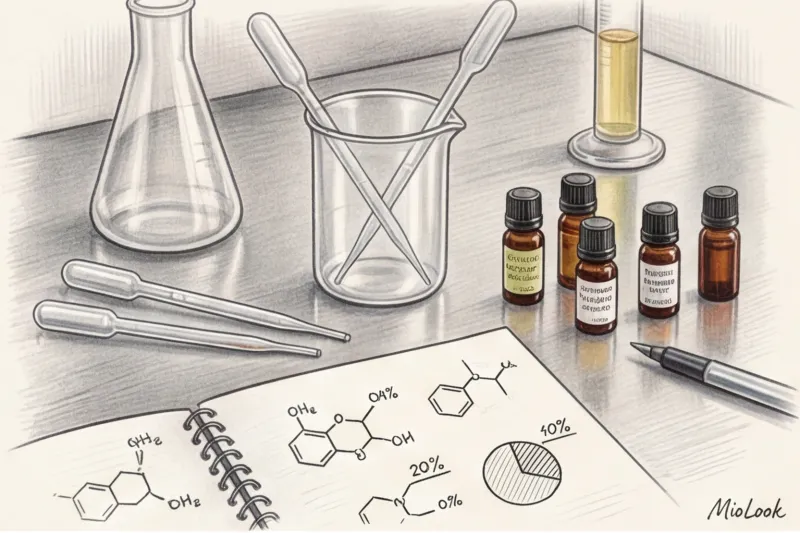
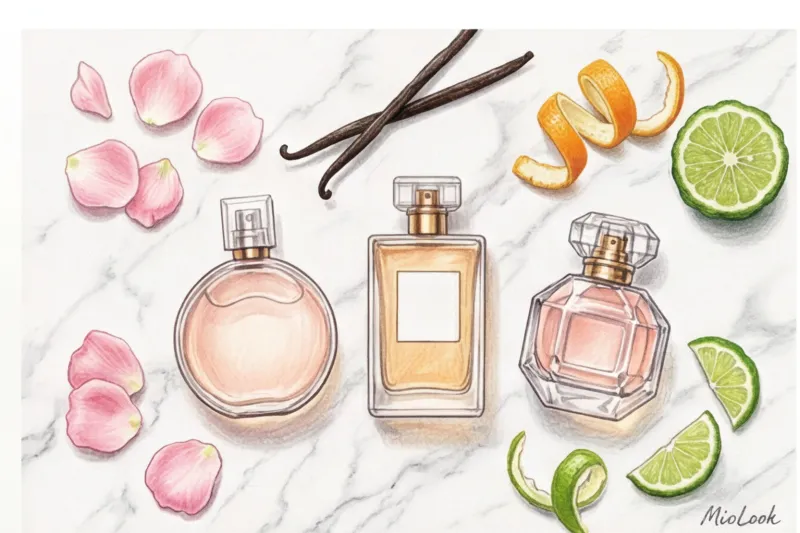
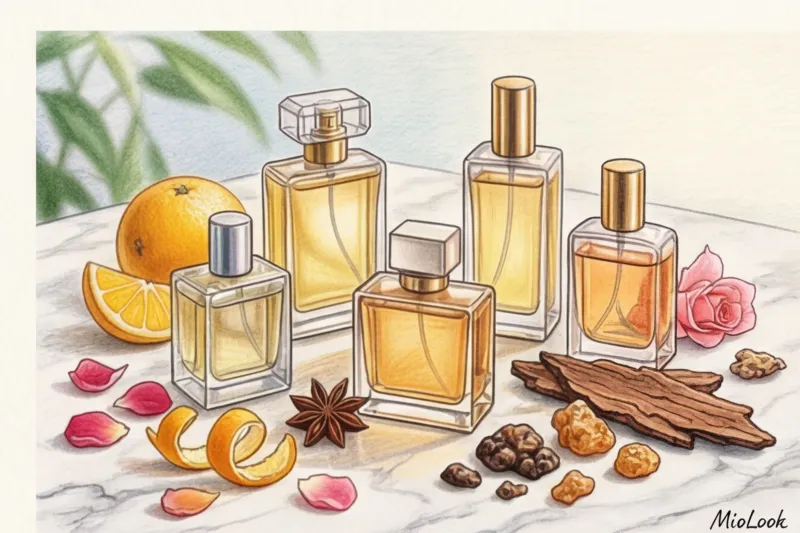
To make eau de toilette sound light and airy, more citrus, green, or aldehyde notes are artificially "built in." They sparkle and sparkle. When creating eau de parfum, however, the emphasis shifts to heavier molecules: resins, amber, patchouli, and dense woods. This is why your favorite fragrance might smell like fresh bergamot in the EDT version, but suddenly turn into heavy vanilla in the EDP version.
Access to MioLook for €0.99 — one-time payment
A smart AI stylist will create the perfect look, to which all that remains is to add the right fragrance.
Get access — €0.99 onceEau de Toilette (EDT): Your Smart Casual Perfume
Translating the language of perfume into fashion, eau de toilette is like a flawless white poplin shirt or a classic beige trench coat. It's always appropriate, never irritating, and creates a feeling of freshness and poise.
The volatility curve of the EDT is designed so that the fragrance releases approximately 50% of its energy in the first two hours. It has a very bright, cheerful opening. You spray it on and immediately feel a burst of energy.
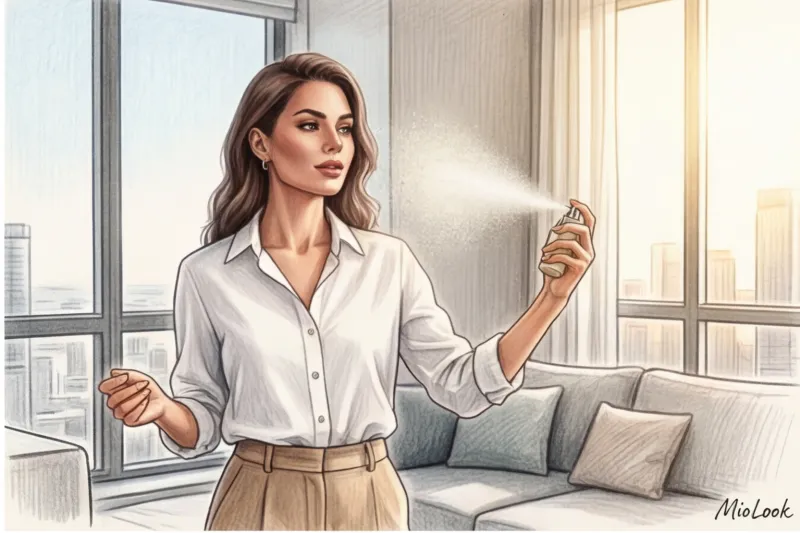
In my experience, EDT is the perfect tool for high-energy days. I often use this trick: I apply a light eau de toilette in the morning before the gym and commute to the office. By 3:00 PM, it fades gracefully, leaving me with a clean canvas. In the evening, I can apply a completely different, more sensual fragrance before dinner, and they won't clash.
What tasks and images is EDT ideal for?
This eau de toilette is designed for dynamism. It won't overwhelm those around you in confined spaces. Choose EDT for:
- Work in open spaces and coworking spaces.
- Morning meetings, brunches and car rides with colleagues.
- Flights (on a plane, the sense of smell becomes more acute, and heavy perfume becomes unbearable).
Stylistically, EDT pairs beautifully with light textures: fine cotton, linen, flowing viscose, and basic knitwear from brands like COS or Massimo Dutti.
Eau de Parfum (EDP): status "business formal" and evening silk
Eau de Parfum is a whole new level of play. In the wardrobe world, EDP is a perfectly tailored wool jacket with a crisp shoulder or a luxurious slip dress in thick silk. This concentration requires posture, context, and confidence.
Here, the emphasis is shifted to the heart and base notes. The fragrance starts off more subdued, without any sharp citrusy bursts, but then develops smoothly and long-lastingly over 6-8 hours. It fits like a second skin, creating a dense, intimate cocoon.
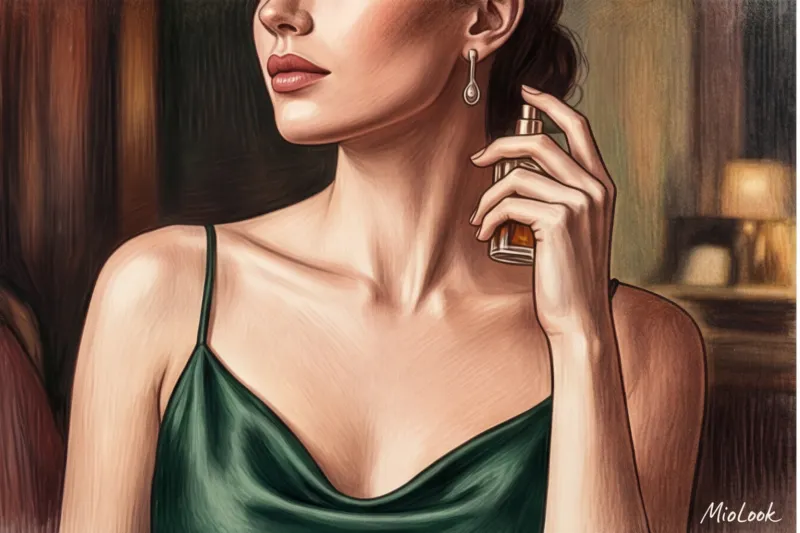
There's an unspoken rule in business etiquette: in high-status negotiations, fragrance shouldn't take center stage. EDP conveys stability and solidity. This is especially important if you're building a expert image - a dense, expensive aroma works to build your authority.
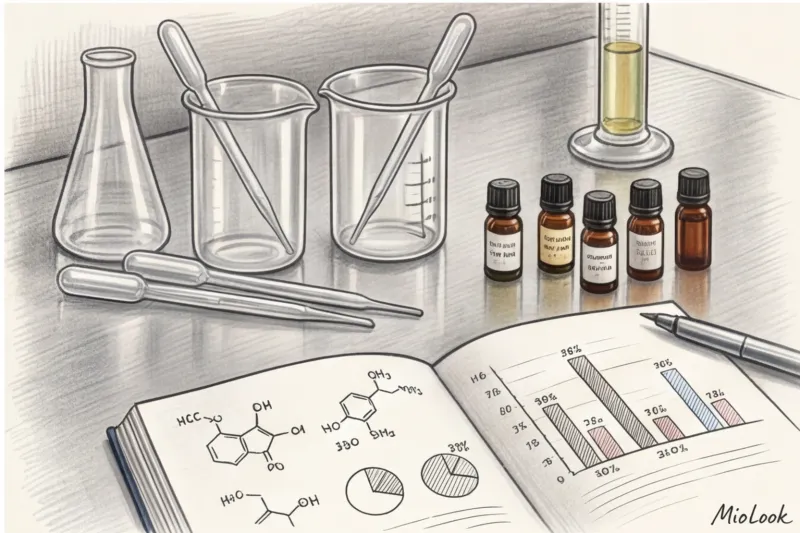
When Eau de Parfum is the Best Choice
Use EDP when you need armor or when you can't refresh your perfume during the day:
- Long strategic sessions and conferences.
- Evening outings, premieres, dates in restaurants with dim lighting.
- Stage performances (here the scent works as your internal anchor of confidence).
Textures that EDP “loves”: thick suiting wool, cashmere, natural leather, velvet and heavy silk.
Your perfect look starts here
Join thousands of users who look flawless every day with MioLook.
Get access — €0.99 onceLongevity vs. Sillage: The Counterintuitive Secret of Perfumers
Now get ready to bust the biggest perfume myth. Ask yourself: which concentration leaves the longest sillage in the hallway? Most people will answer, "Of course, eau de parfum—it's more powerful!" But they'd be wrong.
In the physics of perfumery, alcohol acts as an elevator for aromatic molecules. It is what "pushes" the scent into the air. Because EDT (Eau de Toilette) contains more alcohol, the scent becomes incredibly volatile and diffuse. It fills the room, leaves a long trail as you walk down the hallway, and loudly announces your presence.
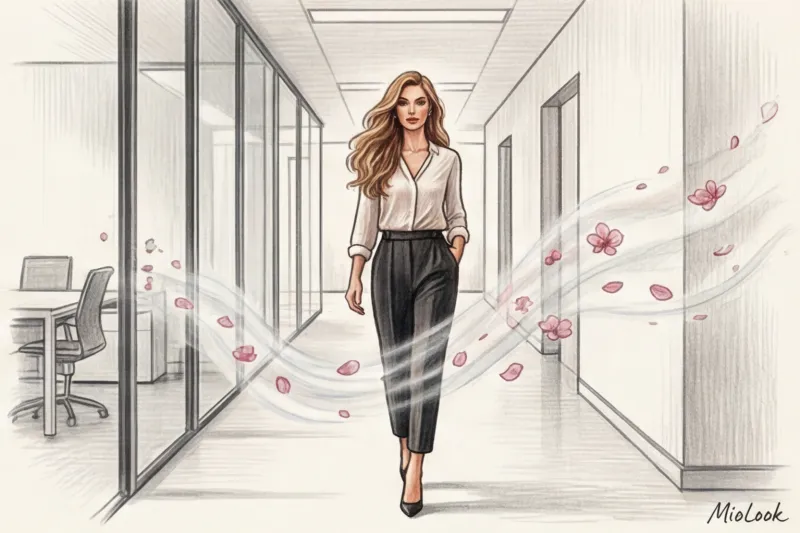
Eau de Parfum (EDP), on the other hand, contains more heavy oils. Oils are lazy. They don't want to float around the room. They settle on your skin and warm up from it. Therefore, EDP sits very tightly, but close. To smell your Eau de Parfum, someone needs to violate your personal boundaries—to come up for a handshake, a hug, or a kiss.
A practical takeaway from a stylist: If you want to be noticed upon entering a meeting room, choose an EDT. If you want your scent to become an intimate secret for the person sitting next to you at dinner, choose an EDP.
How to choose between EDT and EDP to suit your wardrobe and schedule
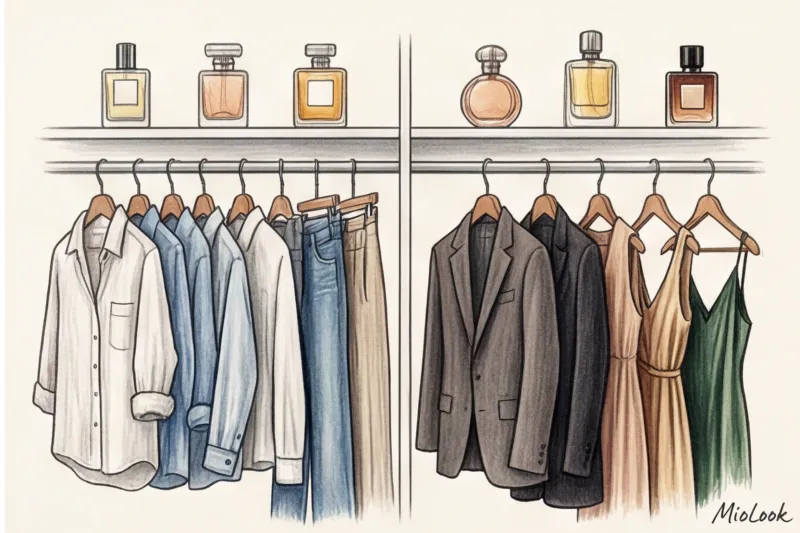
Building a perfume wardrobe is no different from putting together a clothing capsule. You don't need 20 random bottles. You need a system.
Analyze your typical day. If you spend 80% of your time in an air-conditioned office, surrounded by other people, an eau de toilette should be the base of your capsule. If your schedule consists of short meetings, trips, and evening events, opt for an EDP.
Temperature plays a huge role. This is a limitation that is often overlooked: Eau de parfum can literally "suffocate" you in the summer In temperatures above 25°C, heavy oils begin to evaporate too aggressively. Conversely, a light eau de toilette will shrink and disappear within 20 minutes in -10°C temperatures because cold skin lacks the warmth to open up the citrus notes.
The perfect minimalist capsule includes one fresh fragrance in EDT concentration for the morning and weekdays, and one deep fragrance in EDP concentration for the evening and cold seasons.
Stylist's checklist: testing fragrances before buying correctly
Beginners often make the same mistake in perfume shops: they spray EDP on their left wrist and EDT on their right, and try to compare. It doesn't work. The stronger scent will instantly overwhelm your senses, and the lighter version will taste like "tap water."
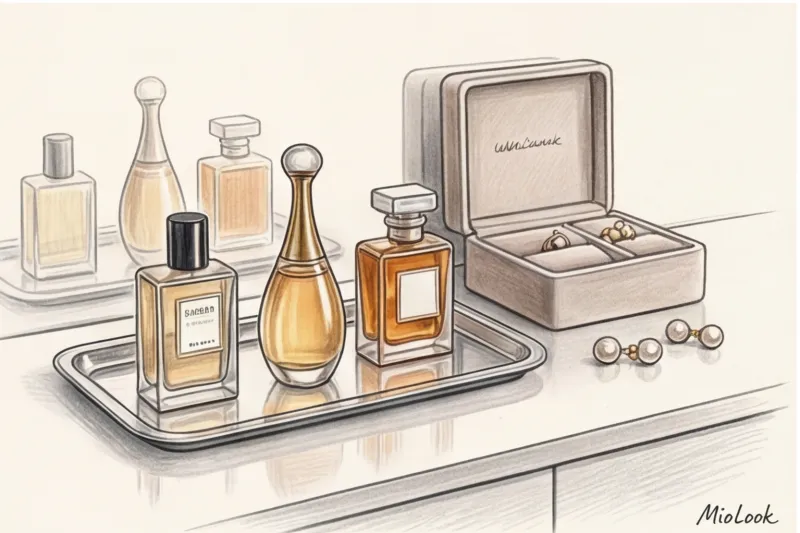
Here are 3 professional testing rules that will save you from impulse purchases:
- Blotter's rule: the paper lies. This is especially true for eau de parfum. Paper is cold, while heavy resins and wood in EDP require body heat. On cardboard, you'll only detect 30% of the fragrance's potential. Always test on your skin.
- Test drive 8 hours. I recently conducted a personal experiment: I sprayed the same fragrance in both EDT and EDP versions on different fabrics (silk, cashmere, and heavy cotton). After eight hours on the cotton, the EDT left only a subtle musky lingering note, while the EDP on the cashmere was just as vibrant as the first hour. Before buying a bottle, spray the fragrance on your neck and wear it all day.
- Train assessment. Spray the fragrance on your wrist, step out of the store into the fresh air, and lower your arm. If you can smell it just walking down the street, the scent diffuses well.
Results: Assembling a perfume capsule
So, let's sum it up. Eau de Toilette (EDT) is created for space, dynamism, and lightness. It trails behind you and is ideal for daytime wear. Eau de Parfum (EDP) is created for time, density, and status. It sits close to the skin, lasts long, and requires matching textures in clothing.
Review your perfume shelf. You might not need a completely new scent. Sometimes, simply buying a different concentration of your favorite fragrance will be enough to make it work in new life scenarios.
To avoid getting lost in your looks, start digitizing your style. In the app MioLook You can not only create capsules of clothes, but also add notes to your outfits about which perfume worked best for a particular meeting. A smart approach to wardrobe saves time and always pays off with a flawless appearance.