One day, a client of mine from Vienna bought three identical "black" cashmere sweaters on sale at COS (a great deal on basics, she thought). A surprise awaited her the next morning: in daylight, one sweater turned out to be dark blue, the second graphite, and the third a deep brown undertone. The problem wasn't her vision or the store itself. It was the lighting in her apartment's walk-in closet.
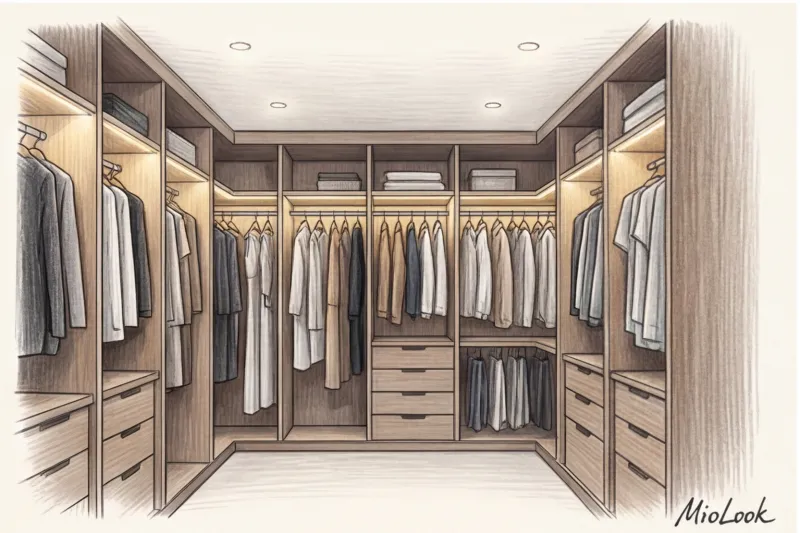
Unlike interior design articles, where lighting is viewed purely as a decorative element ("to make a closet look expensive"), I approach this issue as a stylist. For me, lighting is a working tool. It determines whether you can distinguish the textures of fabrics, how you assess the fit of trousers, and, ultimately, the mood with which you leave the house. We discussed basic ergonomics in more detail in our complete guide to ideal wardrobe room layout , but today we will analyze the invisible, but most important element of your style.
Why furniture lighting isn't the same as dressing room lighting
Over 12 years of wardrobe remodeling, I've seen hundreds of expensive projects. The most common and frustrating mistake is when a client spends €10,000 on a luxurious veneer storage system but completely entrusts the lighting to the cabinet makers. The result is flickering, dim lighting that hurts the eyes.
"The job of furniture manufacturers is to sell you a pretty aluminum profile for an LED strip. They don't care how your face or the shade of your silk blouse will look in the light."
Lighting needs to be designed only after Once you've digitized your wardrobe and figured out where everything will hang, it's time to get started. The popular trend of LED strip lighting embedded into every shelf around the perimeter is visual noise. It dazzles the eye instead of illuminating the clothes themselves. According to the Retail Lighting Guidelines (2023), which are used by premium boutiques, functional lighting should be directed at the merchandise, and the light source should be hidden from the customer's view. Your dressing room is your personal boutique, and the rules are the same.
Color Rendering Index (CRI): The Secret Electricians Don't Tell You
If you remember only one thing from this article, let it be the acronym CRI (Color Rendering Index) or Ra.
This is a color rendering index that measures how natural colors appear under artificial lighting compared to sunlight. The scale ranges from 0 to 100.
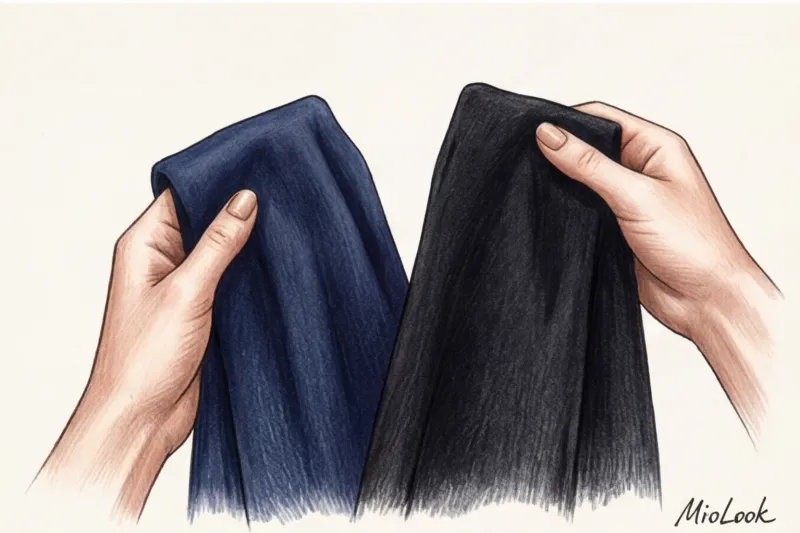
- CRI< 80: Budget lamps. Emerald, burgundy, and dark blue merge into a single, indistinct black.
- CRI 80–89: Standard lighting for offices and hallways. Not enough for a wardrobe.
- CRI > 90 (ideally 95+): Your gold standard.
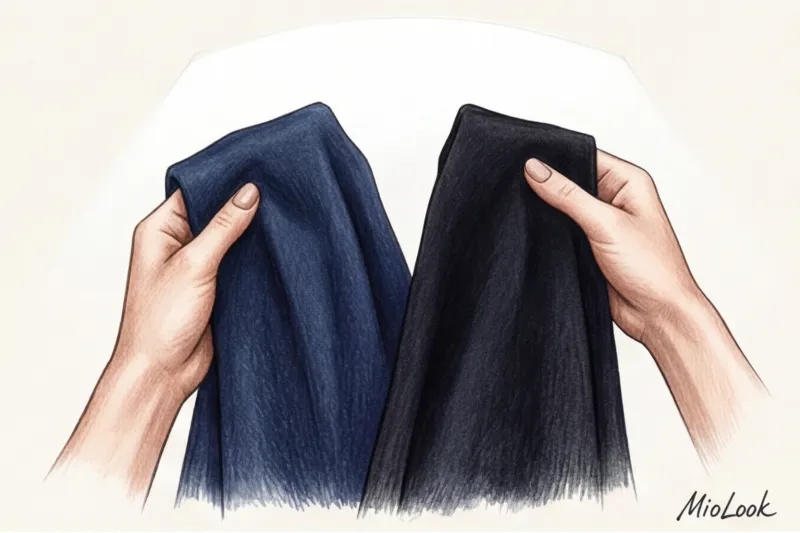
Have you ever worn what you thought was a perfect monochrome outfit, stepped outside, and realized with horror that your dark blue pants clashed with your black jacket? This is a classic example of low CRI. Always check the labels on the boxes of your bulbs and LED strips. Does it say "CRI 80"? Save that for the vacuum cleaner closet.
Access to MioLook for €0.99 — one-time payment
A smart AI stylist will select the perfect look from your items, taking into account color combinations.
Get access — €0.99 onceLight Temperature: Finding the Perfect Balance for Try-Ons
If you've ever tried on items at a high-street store like Zara and a premium one like Massimo Dutti, you know how different it can look in the mirror. The answer lies in the temperature of the light (measured in Kelvin).
Warm light (2700–3000K) — cozy, relaxing light for the bedroom. But it's dangerous in the dressing room. It inevitably "yellowing" white shirts (you might throw out a perfectly good item, thinking it's washed out) and distorting your makeup. You'll end up applying more blush than necessary because the warm light counteracts redness.
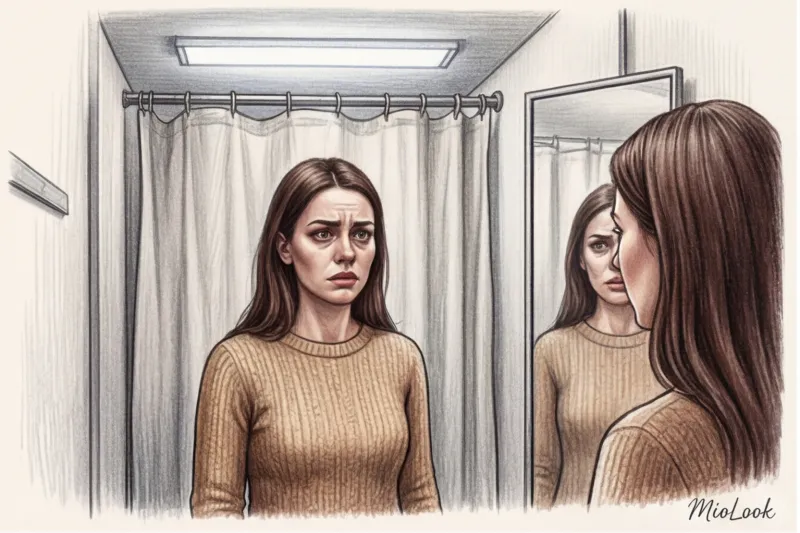
Cold light (5000–6000K) — causes what I call "fitting room depression." It highlights even the slightest imperfections in your skin, dark circles under your eyes, and makes your face look sickly pale. In such a light, you won't want to wear anything but an oversized hoodie.
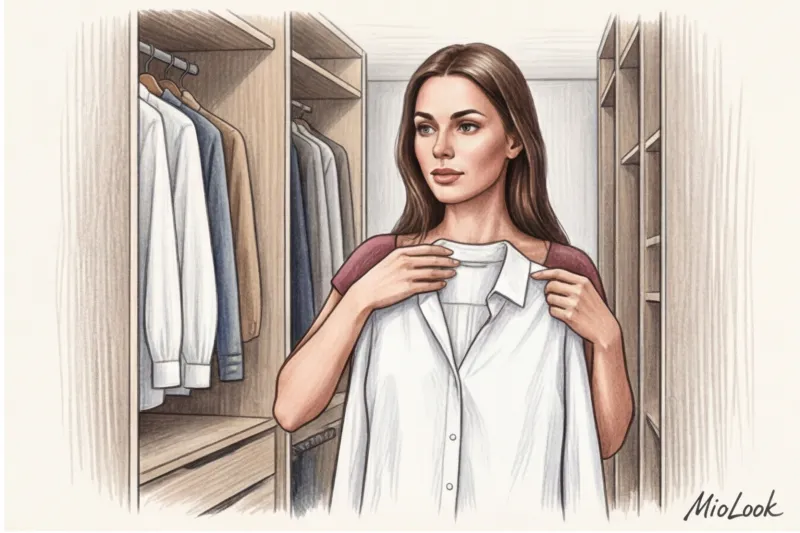
The golden mean is 3500–4000K. This is a neutral white light that mimics natural morning sunlight. According to the Pantone Color Institute, this is the temperature at which you should select clothing shades that complement your complexion and match your color type.
To be fair, this advice doesn't work for everyone. If your walk-in closet isn't a separate room, but an open alcove right in the bedroom, you'll have to find a compromise. Using bright 4000K light in the sleeping area will disrupt melatonin production. In such cases, I recommend installing dimmers or using smart bulbs with adjustable temperature settings.
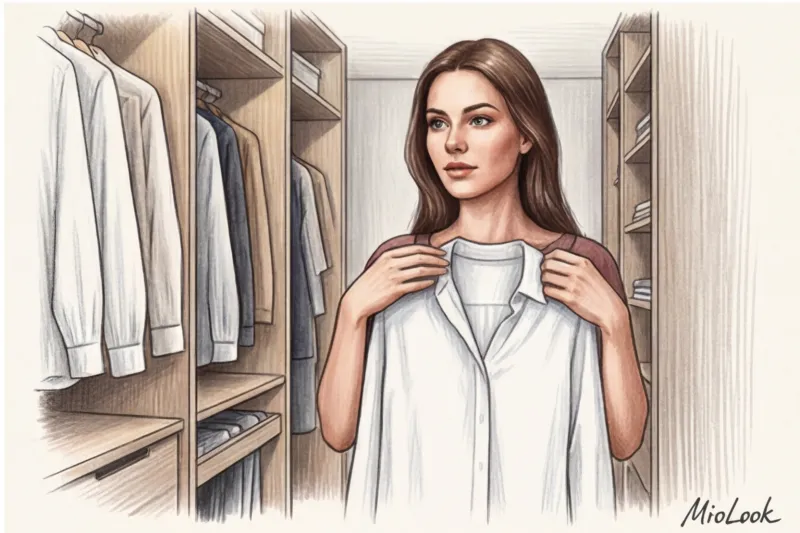
The Anatomy of Good Light: 3 Essential Levels
To make lighting work for you, it needs to be divided into three independent zones (according to standards, the illumination level should be 300-500 lux for the storage area and 500-750 lux for the mirror).
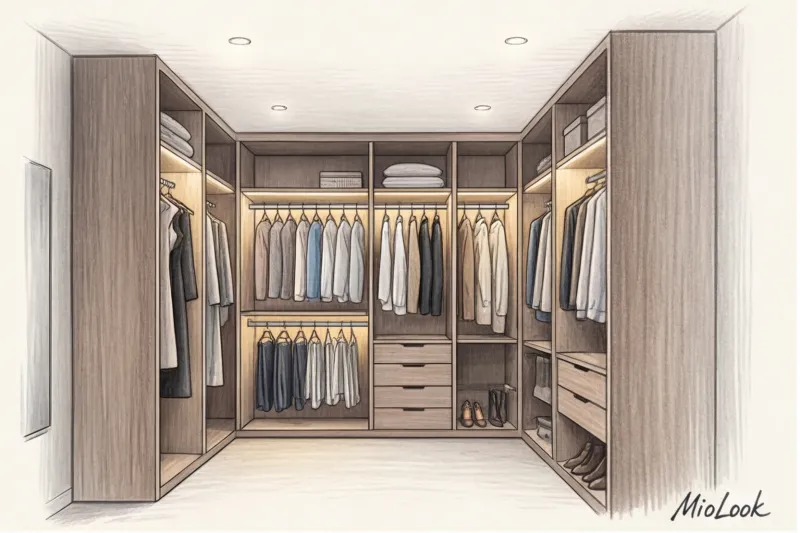
- General (ceiling) lighting. The light should be soft and diffused. Use lamps with a wide beam angle (at least 120 degrees) and matte shades. Their purpose is to provide basic visibility and avoid creating harsh shadows on the floor and faces.
- Navigational shelf lighting. The main rule: the tape must cut into front part of the shelf (closer to the front) at an angle of 45 degrees, directing light into the closet, onto the clothes.
- Lighting for the fitting area. We will talk about it separately, since it is the epicenter of decision-making.
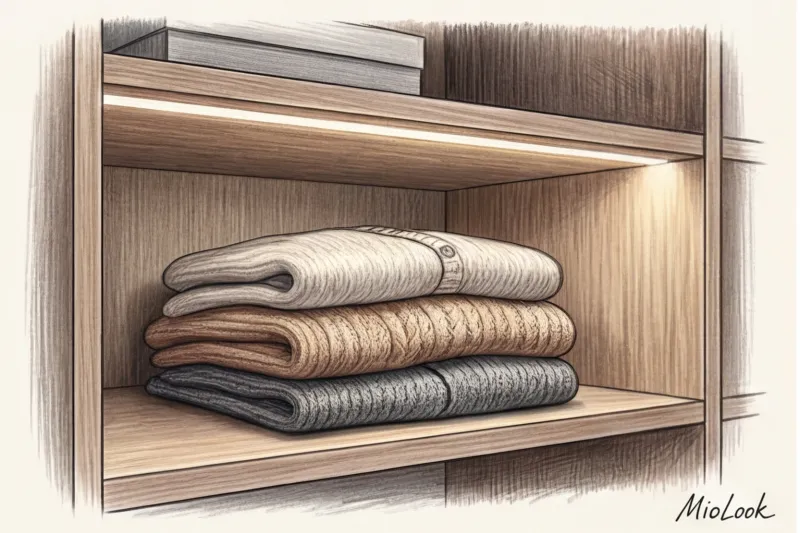
Technical advice from a stylist: Always use matte screens (diffusers) for LED strips. If the strip is exposed, its LEDs will reflect off glossy fabrics—silk, satin, polished leather, etc.—creating a cheap "Christmas tree" effect.
Your perfect look starts here
Join thousands of users who look flawless every day with MioLook. Digitize your wardrobe in just a few clicks.
Get access — €0.99 onceThe mirror area: the most critical area of your dressing room
I will never tire of repeating this: A ceiling spotlight directly above a mirror is a disaster for your self-esteem. Light falling directly from above creates deep shadows in the eye sockets (hello, bags under the eyes), emphasizes the nasolabial folds, and makes cellulite appear even in areas where you have perfect skin tone.
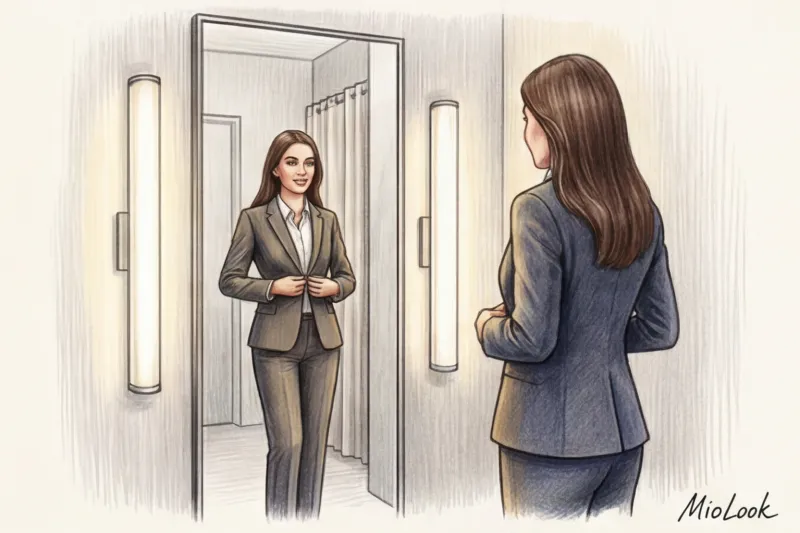
Use the "two-vertical rule." Light should fall on you frontally (from the front) and to the sides of the mirror, evenly illuminating your entire body. The ideal solution is two tall sconces with frosted shades on either side of the mirror, or built-in front lighting on the mirror itself (but not decorative backlighting on the wall!).
Key mistakes: how dressing room lighting can ruin your figure and mood
Let's debunk the biggest myth: "the more light, the better." Excessive, harsh light can be taxing on the nervous system during morning preparation. Here are three mistakes I regularly encounter:
- Mistake 1: The "interrogation" effect. Using only bright, directional spotlights on the ceiling. You feel like you're on stage under the spotlights; things cast harsh shadows on each other, and nothing is found in the closets.
- Error 2: Shelf lighting from behind. Designers love this technique for its dramatic effect. But in practice, your clothes turn into dark silhouettes against a light background. You see a beautiful glowing wall, but you can't see the color of the sweater lying on the shelf.
- Error 3: No dimmer. Imagine: it's 6:30 a.m. on a winter morning, you're getting ready for work, and you turn on the lights at 700 lux. It's physically painful. A dimmer switch for your ceiling light is a must-have investment (costing between €40 and €120) that will save your morning mood.
A stylist's checklist: checking your lighting plan before renovation
Don't take contractors at their word. Before approving a repair estimate, go through this checklist. You have every right to demand replacement of equipment if it doesn't meet your needs.
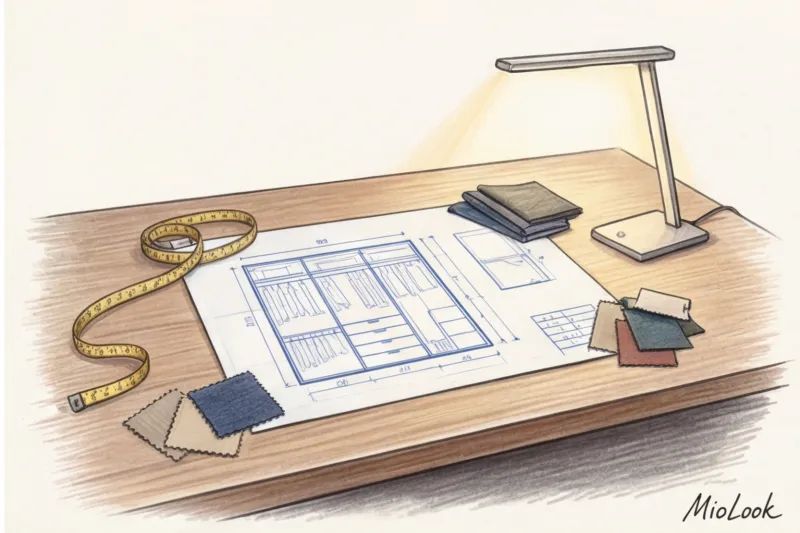
- The specifications for lamps and LED strips indicate CRI (Ra) > 90.
- The color temperature of all light sources in the fitting area is the same and is 3500–4000K.
- The project includes a minimum three different switches: for the ceiling, for cabinet lighting and for the mirror area.
- The light in the cabinets falls on the front of the garment (on hangers), not for them.
- When opening the cabinet fronts, light does not hit you directly in the eyes (45° corner profiles are used).
Ready to get started?
Try the MioLook plan for free—no commitments required. Create your first capsule in the smart app.
Get access — €0.99 onceProper lighting in your dressing room isn't a luxury, but rather a basic requirement for your style. You can buy premium, perfectly tailored pieces, but if you view them in a distorted light, you'll never be 100% confident in your look. Invest in the right lighting, and your wardrobe (even one assembled from mass-market brands) will always work for you, not against your self-esteem.