
Have you ever noticed how some days you're ready to move mountains, while on others you feel like hiding from the world, and often this mysteriously coincides with what you're wearing? You know what irritates me most about glossy articles about dopamine-fueled wardrobes? They all offer the same advice: "Wear fuchsia, add yellow sequins, and the autumn blues will be gone!" Spoiler alert: if you're an introvert or a stressed-out executive, neon fuchsia will simply give you a headache.
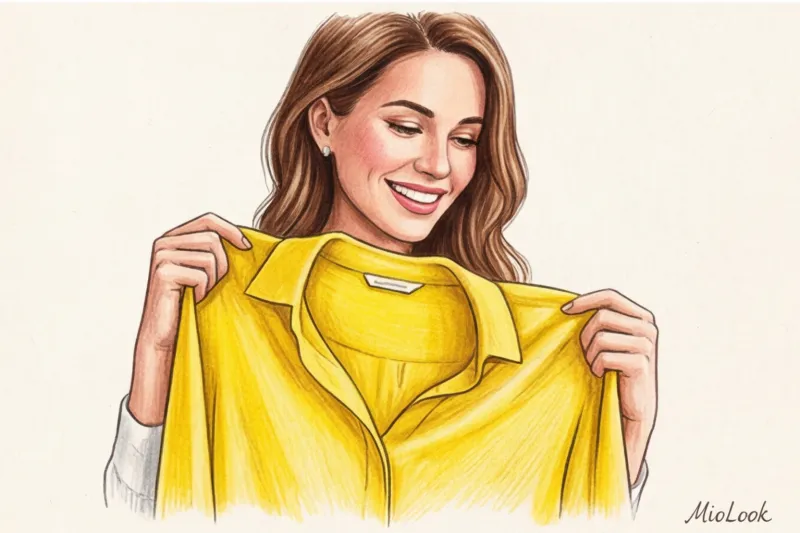
Over 12 years of working as a fashion coach, I have realized one immutable truth: dopamine wardrobe — it's not about the colors of highlighters at all. It's about deeply personalized neuro-associations and physiological comfort. We discussed the mechanics of this process in more detail in our The complete guide "The Psychology of Style: How Clothes Change Your Mood and Brain" Today, we'll explore the purely practical side: how to assemble a wardrobe that will act as your own personal, legal antidepressant.
What a Dopamine Wardrobe Really Is (and Why It's Not Just About Neon)
In 2020, when the world was stuck at home in identical gray sweatpants, fashion psychologist Dr. Dawnn Karen coined the term Dopamine Dressing The original idea was to use clothing as a tool to intentionally alter one's emotional state. But media and social media quickly simplified this concept to the simplistic "bright equals cheerful."
In fact, science points to far more complex processes. Back in 2012, researchers at Northwestern University (USA) published a groundbreaking study on the "enclothed cognition" effect. They demonstrated that clothing functions as an interface: our brain reads the symbolic meaning of an item, connects it with physical sensations on the body, and triggers a cascade of neurotransmitters.
Roughly speaking, if you associate a beige trench coat or a formal suit with poise and success, then wearing one will make you physically feel more confident. Your posture changes, your voice becomes firmer. And the acid colors have absolutely nothing to do with it.
Access to MioLook for €0.99 — one-time payment
A smart AI stylist will select the perfect look based on your personal preferences and wardrobe.
Get access — €0.99 onceThe Anatomy of Joy: 3 Hidden Dopamine Wardrobe Triggers
The mood we derive from clothing doesn't just come out of nowhere. It's based on three fundamental principles. And herein lies the main pitfall for beginners: there are simply no universal "cheerful" solutions; your personal background determines everything.
Color and associative memory
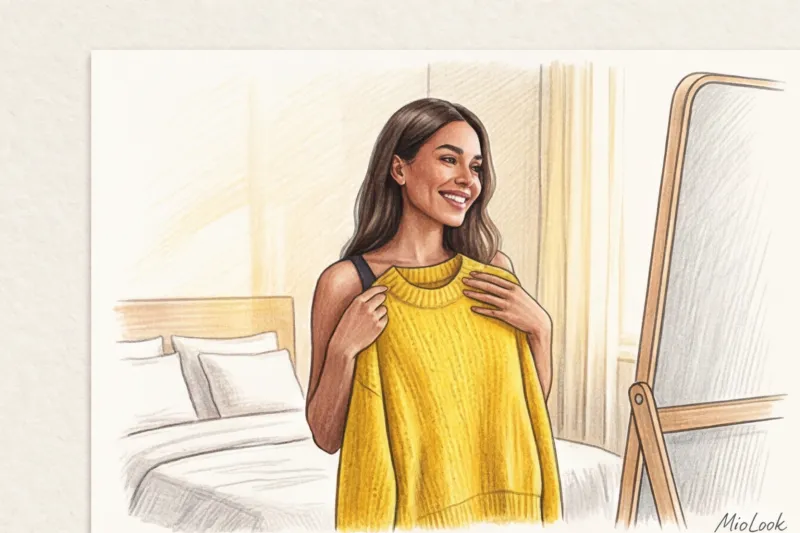
Yes, chromotherapy has its basis. Warm hues can indeed slightly increase your heart rate, while cool hues can slow it down. But the power of personal visual anchors always outweighs general color theory. If you felt absolutely safe in your grandpa's old mustard-yellow sweater as a child, that color will still trigger a dopamine rush today.
Conversely, the trendy shade Peach Fuzz (PANTONE Color of the Year 2024) might make you feel inexplicably anxious simply because it resembles the faded wallpaper in your unloved dentist's office. When creating a palette, it's incredibly helpful to study 12 color types of appearance , to understand your contrast, but the final word always remains with your associative memory.
Tactility: How Fabric Embraces the Nervous System
According to a study published in the Journal of Fashion Marketing and Management (2021), the tactile sensations of clothing directly correlate with cortisol levels. Ask yourself: How does this fabric engage my nervous system?
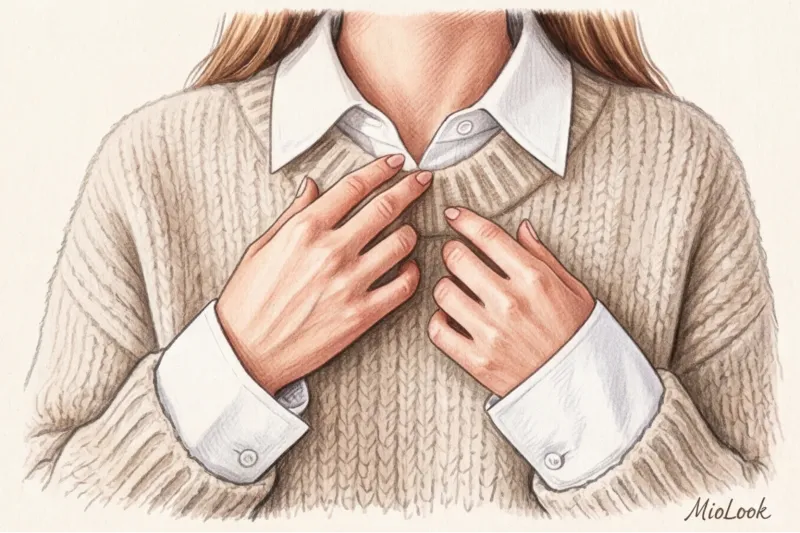
Thick cotton (from 180 g/m²), soft Mongolian cashmere, heavy, flowing silk—these are sensory comfort. But rough seams, scratchy synthetics in an acrylic sweater, or a stiff tag that scratches your neck subconsciously keep your brain on high alert. You may look like a million dollars, but your brain will be silently signaling, "We're uncomfortable, we're in danger." The dopamine boost of a stylish look is negated.
Position and micro-confidence
From my personal experience: 74% of women report an immediate change in their posture when putting on a perfectly fitting garment. Dopamine is released not only from joy, but also from a feeling of confidence and control.
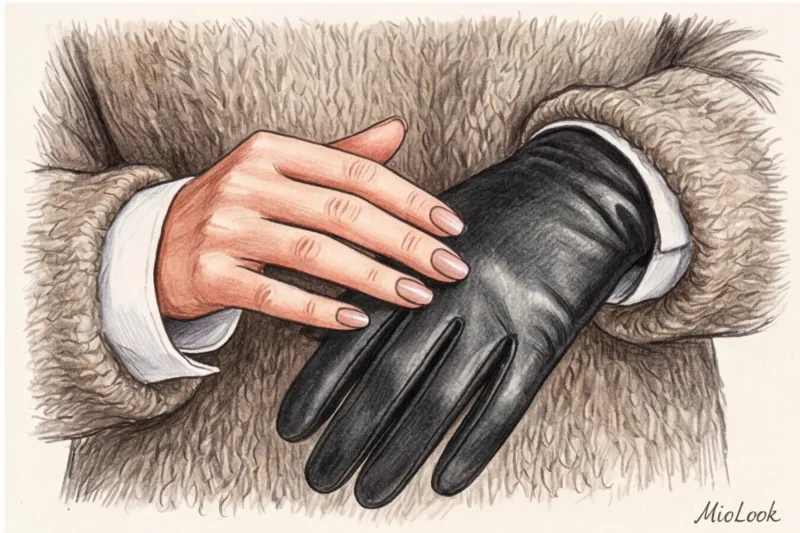
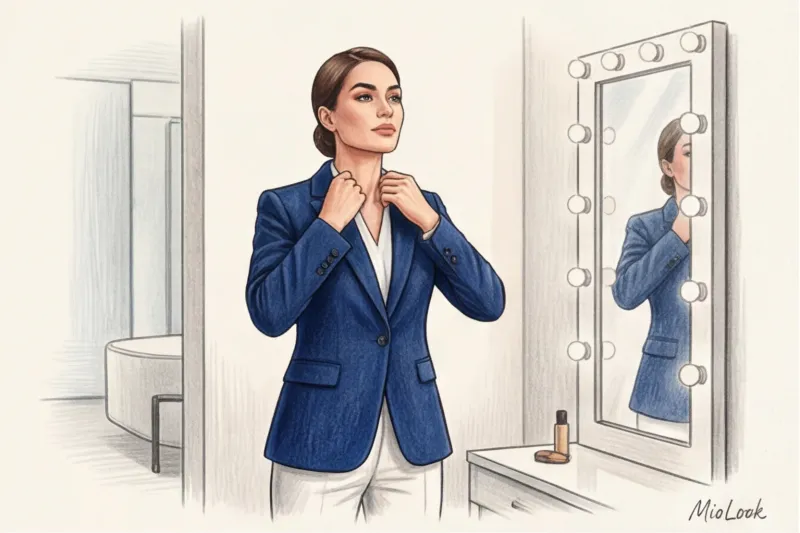
A garment that doesn't require constant tugging, adjusting a slipping strap, or sucking in your stomach saves a tremendous amount of cognitive resources. The architectural cut of a good jacket acts as an exoskeleton for complex tasks. You stop thinking about how you look and focus all your energy on what you're doing.
Busting the Myth: Why Black Generates Dopamine
And now for a counterintuitive insight that many theorists dispute, but which is confirmed daily in practice. Black can be an absolute joy generator. The concept of "quiet dopamine" is a salvation for minimalists and introverts.
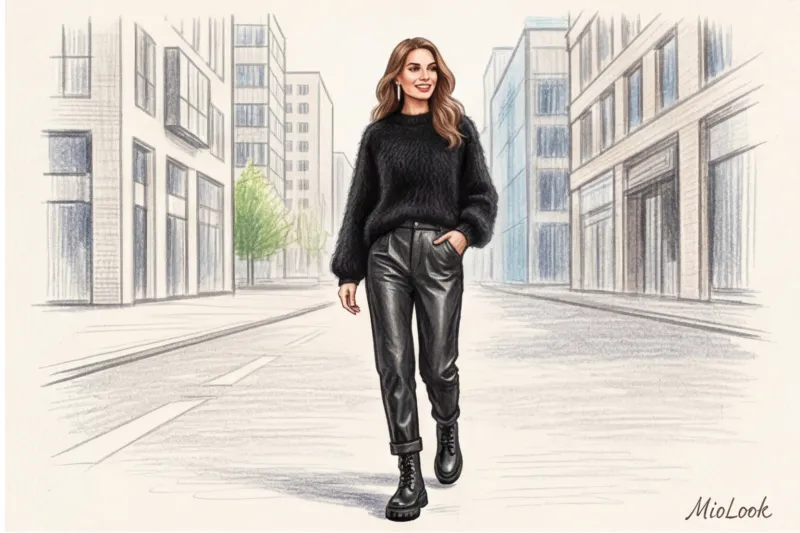
One of my clients, a top manager and lawyer, had been trying unsuccessfully for years to implement bright colors in office style , because that's what the fashion blogs recommended. Every morning, she'd look at the red and emerald silk blouses, feel irrationally guilty, and... put on an old gray cardigan. She felt physically ill in bright colors.
We experimented: we removed all color and created a monochrome capsule wardrobe for her, using complex, luxurious textures. Black matte leather, anthracite cashmere, and graphite heavy silk. Her productivity skyrocketed. Why? Because she associated black with security, professionalism, and the elegance of brands like The Row or Jil Sander. Dopamine is released when you feel like yourself, not when you're trying to play someone else.
Mood Digitization: How to Identify Your Antidepressant Items
The main problem when finding your style is that we often deceive ourselves. We think a new trendy skirt makes us happy, when in fact, the endorphins are released simply from the purchase itself (pure shopaholism). A week later, that skirt settles into the depths of our closet like dead weight.
As a geek and data enthusiast, I decided to apply the A/B testing method to my own style. I tracked my looks for six months using MioLook applications , marking your energy level from 1 to 10 at the end of each working day.
The numbers don't lie. The data revealed something I didn't want to admit to myself: on days with important calls, my productivity was always higher in structured, neutral-toned clothes. But in bright, printed dresses, I was tired by three o'clock—they drained my energy. I figured out my true "antidepressant clothes," and they turned out to be perfect white T-shirts and cashmere cardigans, not pink suits.
Workshop: Building a Dopamine Wardrobe Without Impulse Buying
How can you transfer this knowledge to your closet without cluttering it with yet another batch of “mood-boosting items”?
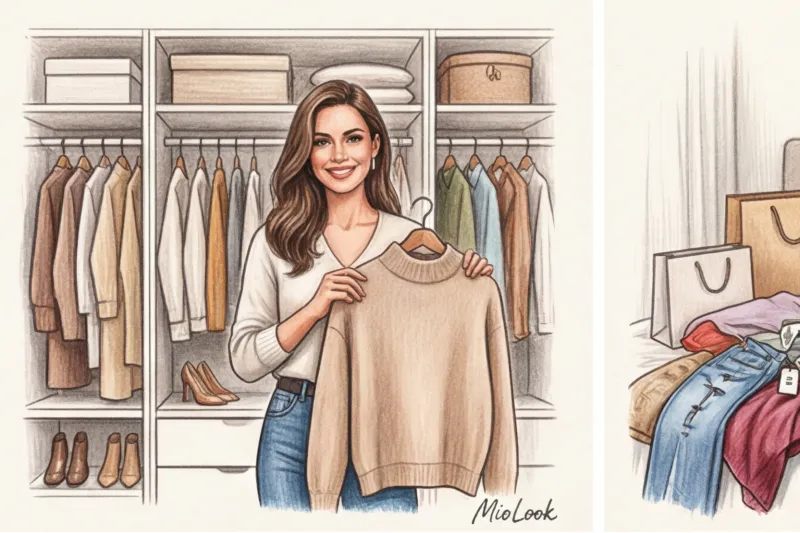
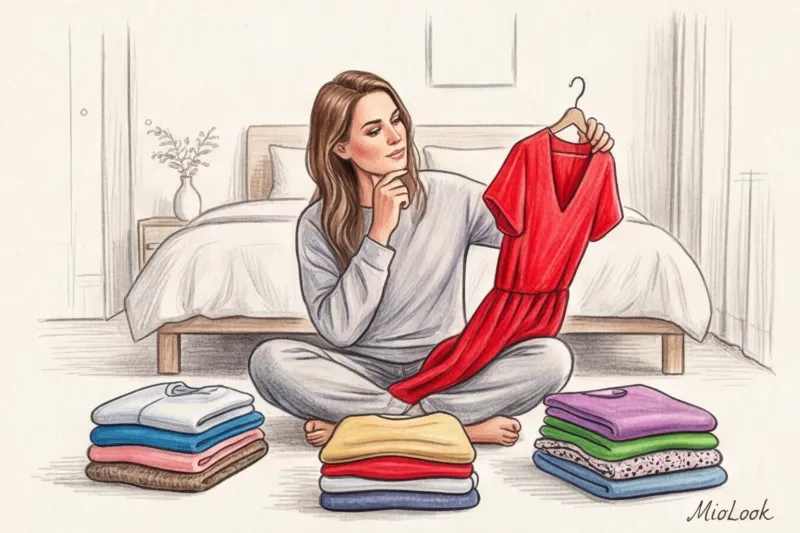
Start by understanding the 80/20 rule: we wear 20% of our clothes 80% of the time. This fifth of our wardrobe should be made up of our dopamine-inducing anchors. Conduct an audit of your current closet—it's similar to Marie Kondo's method, but with a neuroscience twist. Pick up a piece and listen to your body. Not to logic ("it's a basic black skirt, I need it"), but to your physiology. Does the fabric feel comfortable? Does it relax your shoulders? If not, remove it ruthlessly.
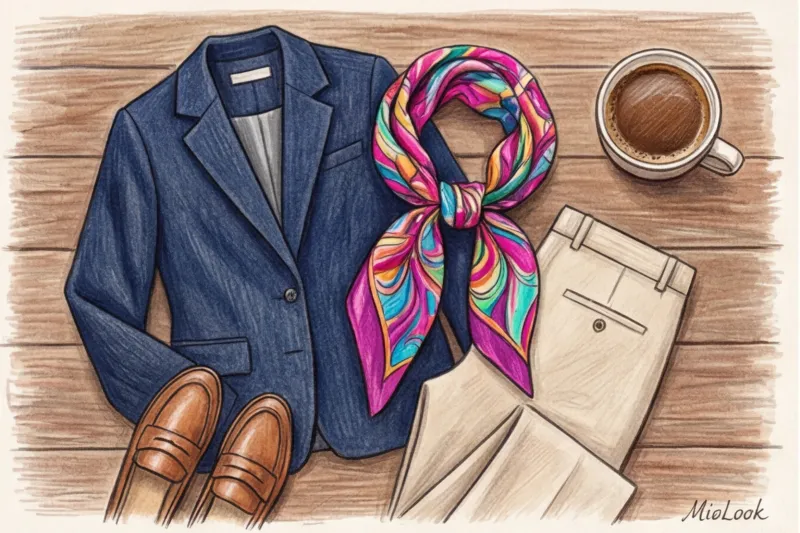
My working formula for the ideal proportion: 70% high-quality base and 30% dopamine activators. Within one look, it looks like this: 1 basic item (impeccable palazzo pants) + 1 background layer (cotton long sleeve) + 1 dopamine anchor. This activator can be accessories in the style of quiet luxury , statement shoes like wine loafers, or a favorite cashmere scarf.
Your perfect look starts here
Join thousands of users who look flawless every day with MioLook. Digitize your wardrobe in just a few clicks.
Get access — €0.99 onceMistakes That Turn a "Joyful" Wardrobe into Visual Noise
It's important to note: the dopamine approach doesn't work if you lose your sense of proportion. There are three main mistakes that ruin the effect:
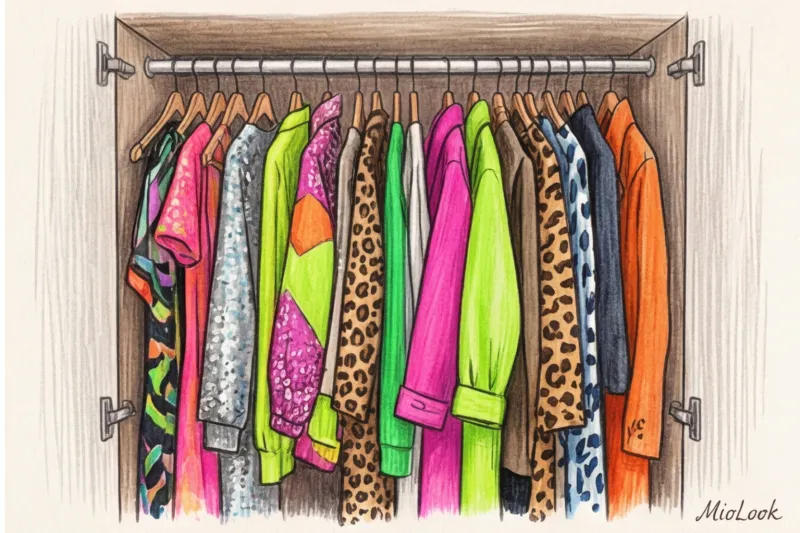
- Too many accents. When everything in an outfit screams, your brain becomes overloaded. If a leopard-print skirt, a neon sweater, and chunky earrings clash in one outfit, you don't experience a boost of energy, but cognitive fatigue from the visual noise.
- Ignoring your natural contrast. Trying to wear trendy, loud colors when your look calls for soft, muted tones will result in your clothes wearing you instead of you wearing them.
- Dopamine tolerance. As with any stimulant, there's a habit-forming effect. If you dress in sequins and feathers every day, rebel archetype , your receptors become dulled. The holiday that lasts forever becomes routine.
Summary: Your Personal Algorithm for Style and Happiness
To summarize, a dopamine wardrobe isn't a universal, brightly colored pill for sadness or a fleeting social media trend. It's a tool for self-discovery. It's tied to your personal memories, pleasant textures, and the perfect fit that inspires confidence.
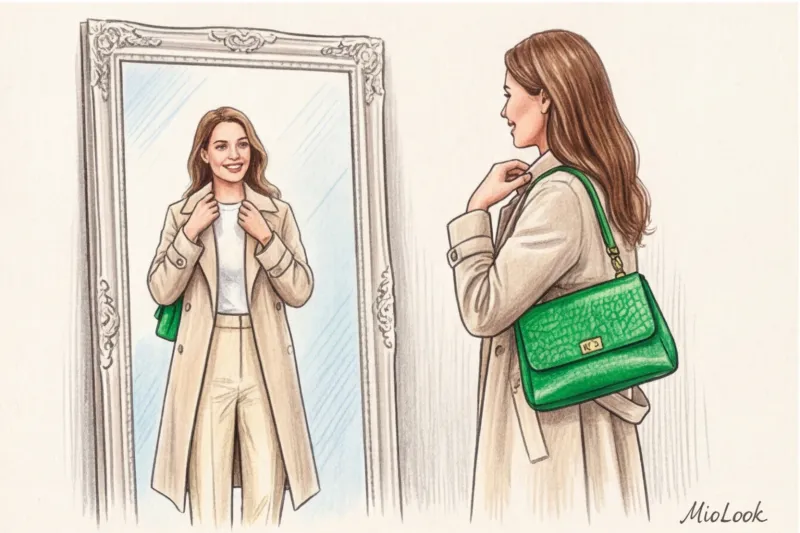
Take one simple step: choose your outfit for tomorrow this evening. Consciously include everything in it. one Something that makes you smile—whether it's the perfect cut of trousers or the softness of cashmere. Track your mood throughout the day. And to avoid wasting money on dubious experiments in stores, use AI. MioLook app You can virtually try out hundreds of combinations and find the dopamine-boosting combinations that work best for you.