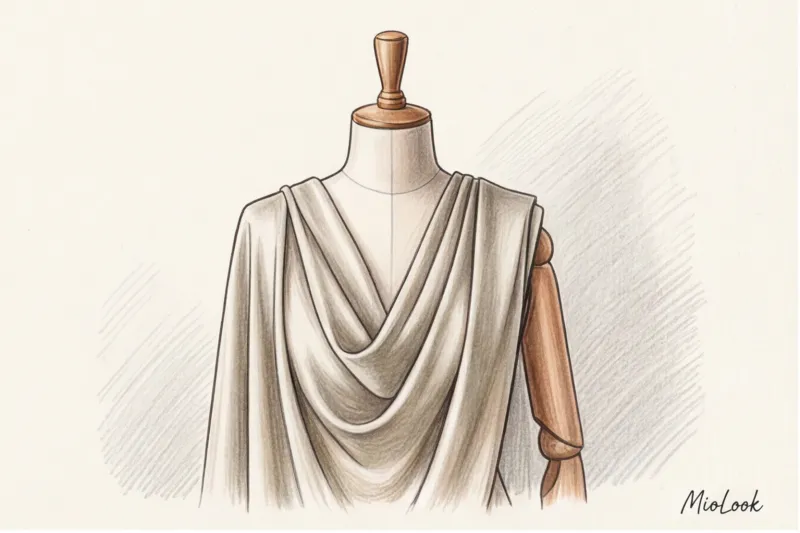
When new clients come to me asking for a "statement wardrobe that doesn't require ironing," I usually offer them two options. Either we buy thick, squeaky polyester that will make you feel like you're in a plastic greenhouse, or we learn to distinguish between elegant creasing and cheap sloppiness.
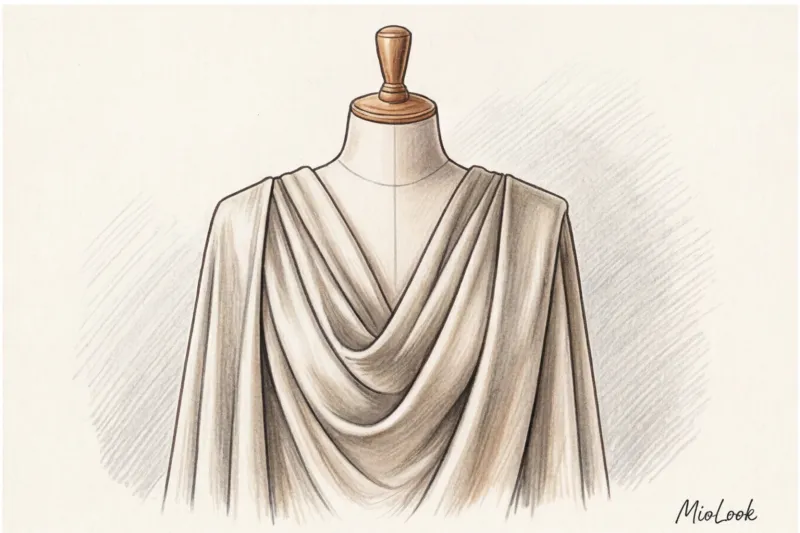
Over 12 years of working as a stylist, I've realized that fear of natural wrinkles drives women to invest in low-quality items. The most common question during fashion reviews: Does Tencel wrinkle? In real life? Spoiler: yes, it wrinkles. But it does so in a completely different way than cheap viscose or stiff linen. We've already discussed the origins of these materials in more detail in our complete guide. Eco-friendly clothing fabrics: Tencel, modal, and lyocell , and today I propose to examine exclusively their practical side.
Does Tencel Wrinkle? Debunking the Main Myths About Lyocell
Let's define some terms right away. Tencel is the commercial name for lyocell, patented by the Austrian company Lenzing AG. Essentially, it's eucalyptus wood processed into a super-soft fiber. Since it's a derivative of natural cellulose and not plastic, physics can't be fooled—the fabric will react to mechanical stress.
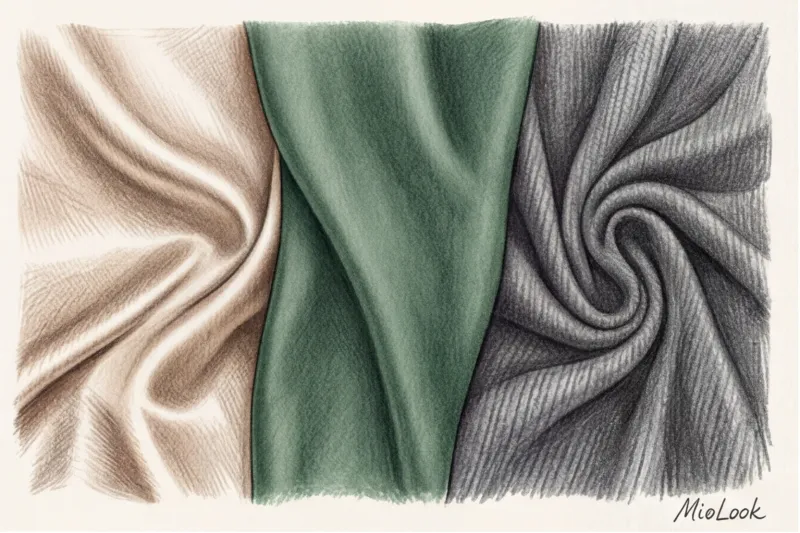
But there's a huge difference between "cheap creases" and "soft creases." Cheap viscose or thin cotton break into sharp, pointed corners. Tencel, on the other hand, thanks to its smooth fiber structure, forms gentle waves. In the report Textile Exchange Preferred Fiber Report (2023) There has been a rapid growth in the use of lyocell, particularly in the premium segment – luxury brands value this fabric for its ability to imitate heavy silk.
The degree of wrinkling of Tencel directly depends on the type of weave:
- Tencel twill (diagonal weave): Dense and heavy, it's used for trousers and jackets. It's virtually wrinkle-free, and the slight creases under the knees smooth out under the weight of the fabric.
- Tencel denim: A great alternative to stiff cotton for summer. It retains its shape but feels softer.
- Tencel batiste: A delicate lingerie option. Yes, it will become covered in a fine mesh of wrinkles, but it will retain its elegant silky shine.
Fitting Room Test: How to Check Fabric for Give
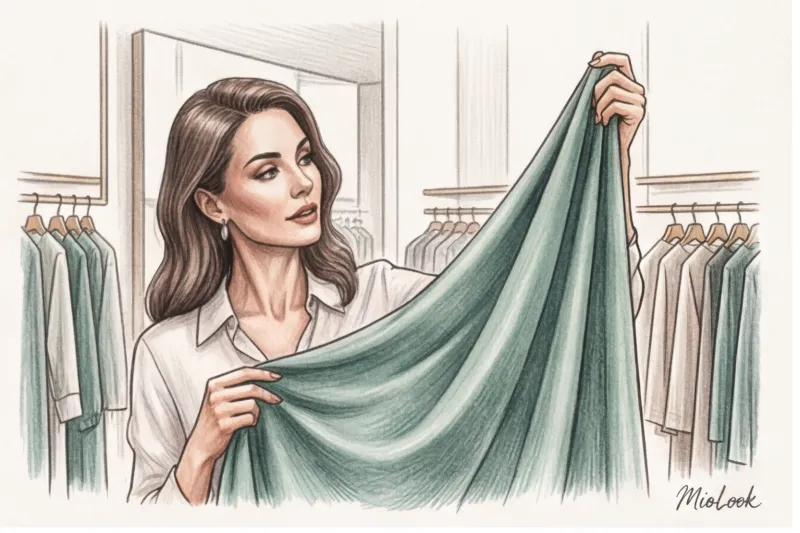
I never let clients buy an item priced between €150 and €300 without my signature "crash test." In the fitting room, firmly squeeze the edge of the garment in your fist, hold it for exactly 10 seconds, and then release. If it's premium lyocell of the correct density, the fabric should spring back, and any remaining soft waves should dissipate within a couple of minutes right on the hanger. If the fabric remains crumpled, leave it in the store.
By the way, to remember which brands have passed your personal quality test, it’s convenient to use inventory function in MioLook — just save your successful finds with notes on the fabric composition.
Access to MioLook for €0.99 — one-time payment
A smart AI stylist will select the perfect look based on your favorite textures and fabrics.
Get access — €0.99 onceCupra: Why is it called the "artificial silk" for business class?
If Tencel is the workhorse of the modern wardrobe, then cupro exudes a quiet luxury aesthetic. It's made from the cotton fluff left over after the main harvest. The result? A stunning "peach skin" effect and a flowing texture that looks like it costs thousands of euros.
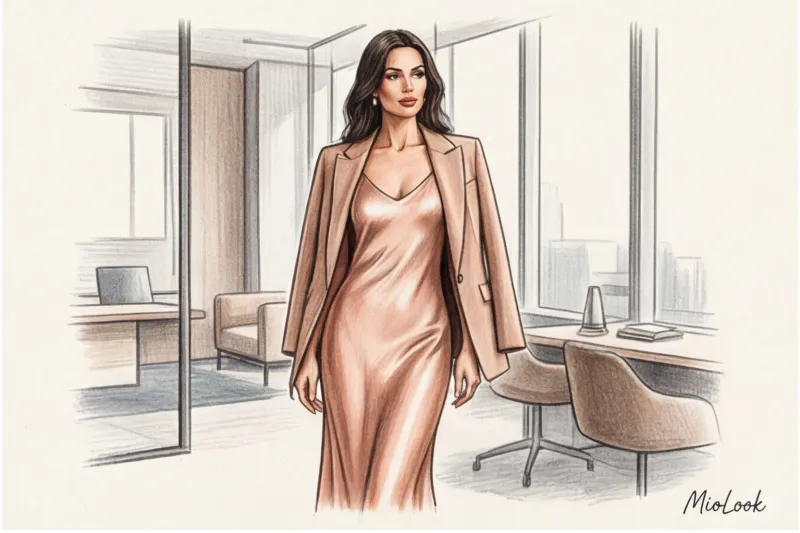
One of my clients, a top manager at an IT corporation, frequently speaks at conferences. Previously, she wore thick, semi-synthetic suits to look "impeccably pressed," but under the spotlight, the fabric turned into a greenhouse. We completely replaced her stage outfits with blends of cupra and viscose (priced between €250 and €450 per suit). Yes, by the end of a three-hour performance, the pants naturally develop creases in the groin area and behind the knees. But they look like expensive, living garments, not armor.
"Recognizing the fabric's right to a slight wrinkle is the first step toward a truly luxurious, relaxed style. An overly perfect, rigid shape today betrays insecurity and cheap mass-market appeal." Giulia Rossi
Cupra is ideal for slip dresses, loose blouses, and relaxed trousers. It wrinkles delicately without losing its matte sheen.
Modal and Micromodal: The Champion of Sleekness in Your Basic Wardrobe
If you're looking for something for basic T-shirts, turtlenecks, and underwear, forget Tencel and look for modal on the label. This is also a viscose fiber (usually made from beechwood), but its structure is modified at the molecular level.
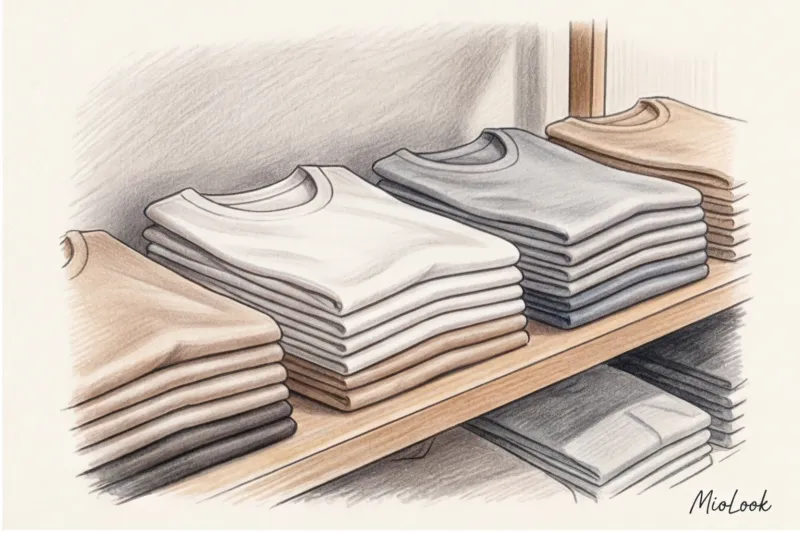
According to Lenzing AG's own technical specifications, modal is 50% more hygroscopic (absorbs moisture better) than cotton. What does this mean for us?
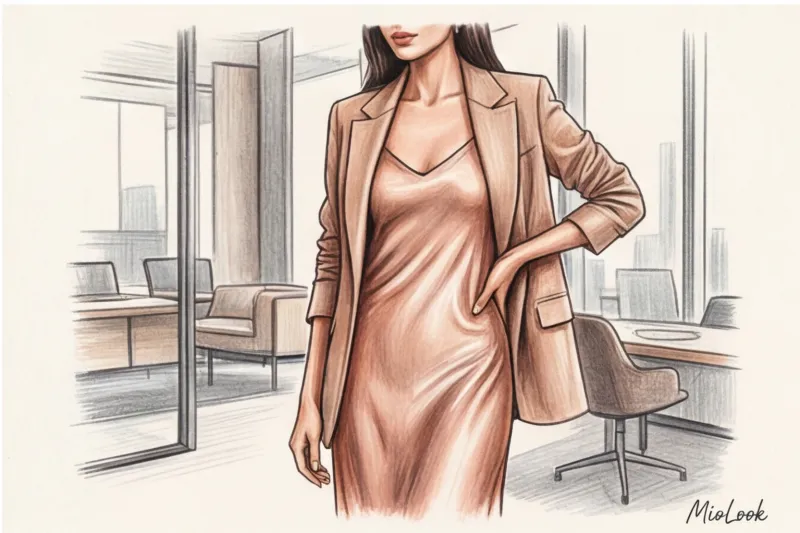
- Ideal form: A €40 modal T-shirt will look three times more expensive than a cotton one for the same price because it's heavier, drapes beautifully, and doesn't stick out like a peg.
- Color fastness: Modal holds dye incredibly well. A black modal long sleeve will remain jet black after 15 washes, while cotton will turn gray.
- Minimum iron: Modal practically does not wrinkle when worn and is highly resistant to pilling.
Your perfect look starts here
Join thousands of users who look flawless every day with MioLook. Digitize your modal and tencel database in minutes.
Get access — €0.99 onceThe Hidden Truth: Why Tencel's Totally Wrinkle-Free Appearance Should Be a Warning
Now here's a counterintuitive insight that manufacturers rarely mention. If you buy a 100% Tencel shirt, say, on sale for €25, and it doesn't wrinkle at all, that's a bad sign.
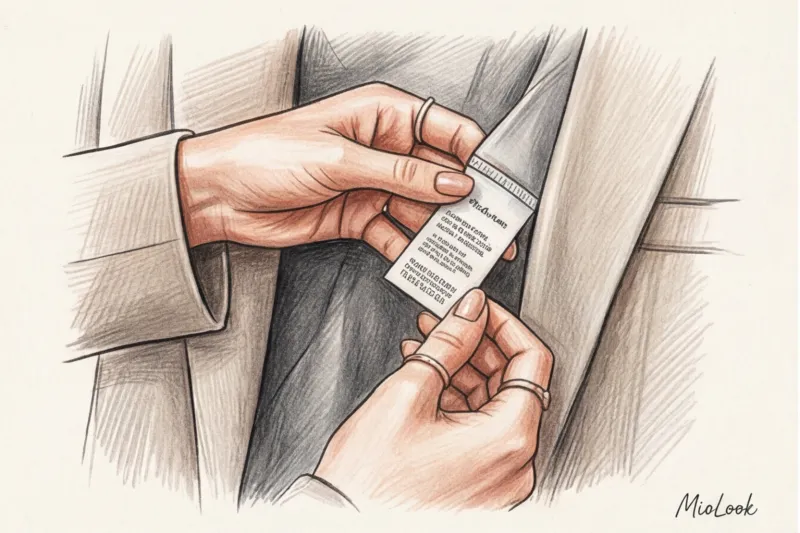
In an attempt to please the mass consumer demanding "non-iron" clothing, cheap manufacturers treat cellulose fibers with aggressive formaldehyde resins. The fabric does indeed stiffen and wrinkle, but at what cost? This chemical film permanently clogs the pores of the fabric. You buy eco-friendly materials to allow your skin to breathe, but end up with the properties of cheap acrylic.
True 100% Tencel obliged Be alive. If you want uncompromising smoothness without chemicals, look for blends. My favorite formulas for a status wardrobe:
- Tencel (70%) + Wool (30%): The ideal fabric for demi-season suits. Wool provides springiness, Tencel provides silkiness.
- Tencel (60%) + Silk (40%): a luxurious option for evening outings.
Crash test from a stylist: how eco-fabrics perform in real life
Let's step off the runway and into real life and look at cost-per-wear in different scenarios.
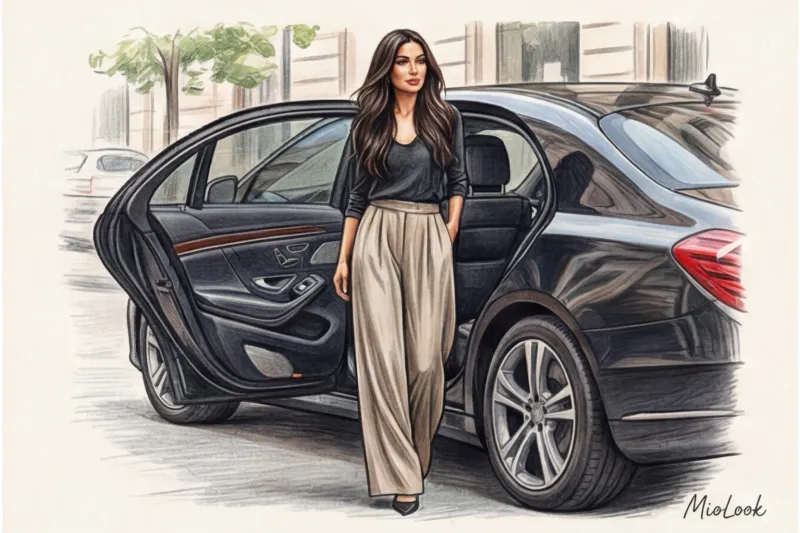
Scenario 1: 8 hours in the office (Tensel twill trousers).
By lunchtime, you'll have folds in your groin. It's inevitable. But unlike linen, which looks like you slept in it by evening, heavy Tencel won't distort at the knees and buttocks. Your silhouette will remain defined.
Scenario 2: Driving (Cupra Dress).
You're driving 40 minutes to an event. When you get out of the car, the back and hem will be wrinkled. My advice: gently shake the hem with damp hands (cupra isn't affected by drops of water, unlike natural silk). After 10 minutes of exposure to air, the fabric will relax under its own weight.
Scenario 3: Speaking to an audience.
Tencel and modal are a public figure's best friend. They instantly wick away moisture. Even if you're nervous, sweat stains won't be visible (especially if you avoid the dangerous shades we discussed in detail in the article). Maternity capsule for the office: a stylish business wardrobe , where comfort and thermoregulation are critical).
Proper care: how to wash and iron clothes to reduce wrinkles
The main mistake I see clients make is trying to iron eco-fabrics at maximum temperatures. High iron temperatures literally flatten the molecular structure of lyocell, depriving it of its signature shine.
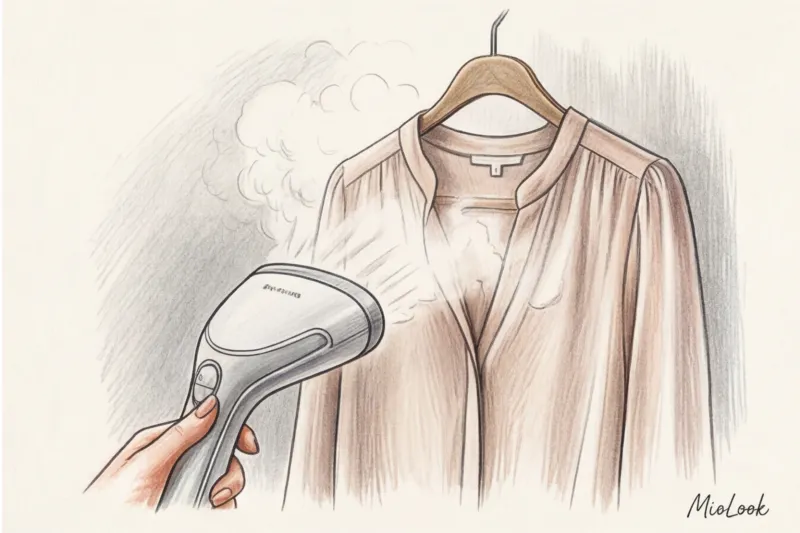
Here are three golden rules that I have discovered through experience:
- Just steam, no press. A handheld or stationary steamer is the only thing that should touch cupra and tencel. The steam penetrates between the fibers, causing them to swell and straighten naturally.
- Spin maximum 600 rpm. If you spin dark Tencel pants at 1000 rpm, whitish creases will appear. These are micro-tears in the fiber, and they are irreversible. Wash on a delicate cycle with liquid detergent.
- Drying on hangers. Remove the damp item from the machine, shake it out thoroughly (with the cotton swab still in it), and hang it on wide hangers. In 80% of cases, basic items won't even need a steamer after this drying process.
Pre-purchase checklist: choosing a practical and stylish item
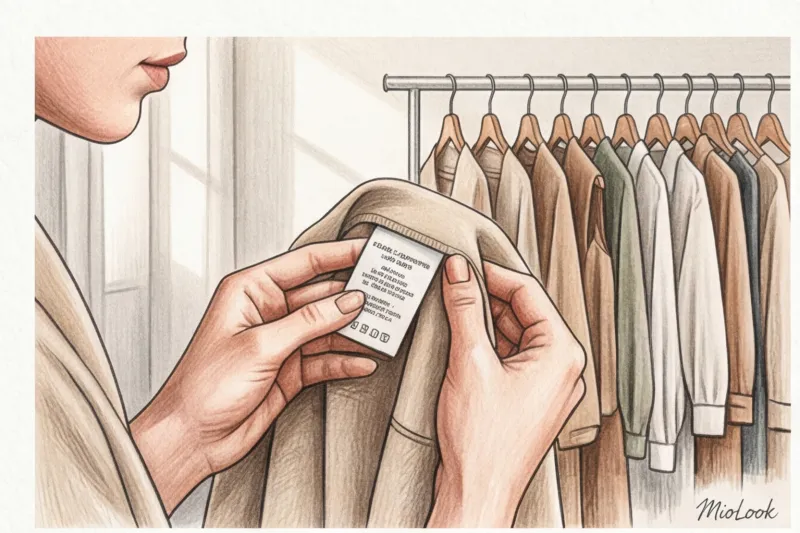
To sum it up, I want to say: new-generation eco-friendly fabrics are worth every hundred euros invested in them if you know how to choose them. Next time you're in the fitting room with a piece made of Tencel, Cupra, or Modal, check these four points:
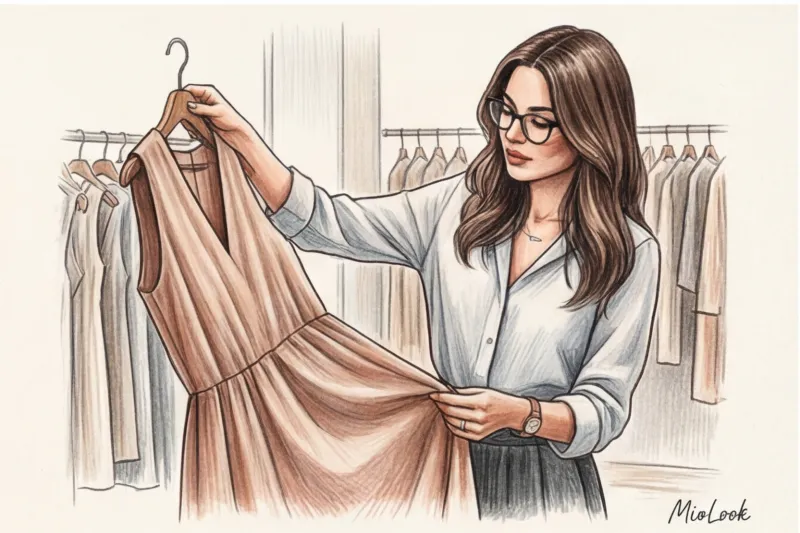
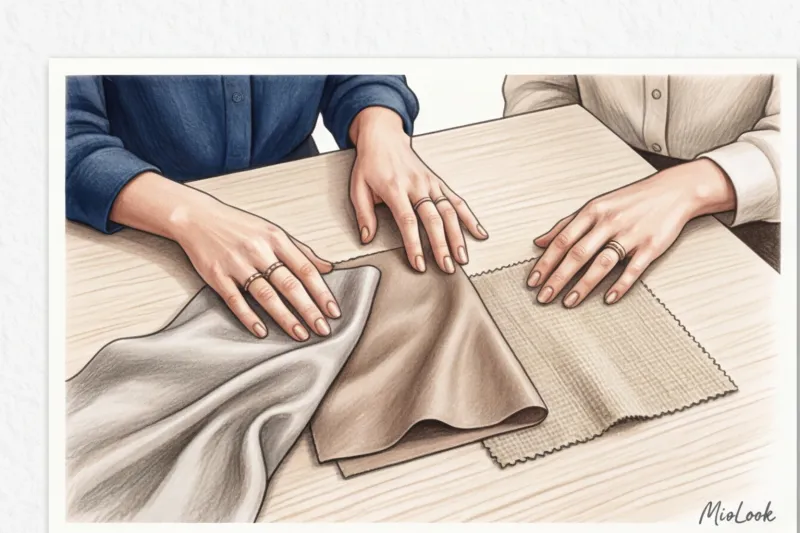
- Density: The fabric should not be see-through (except for summer cambric shirts). The heavier the Tencel, the better it drapes and the less it wrinkles.
- Compression test: Hold it in your fist for 10 seconds. Look for a quick "rebound" and soft waves.
- Seam quality: When tensioned slightly, the fabric should not “creep” at the stitching points (a common problem with cheap cupra).
- Shine: It should be lining-like and matte. If the fabric has a shine like cheap synthetic lining, don't buy it.
Invest in comfort wisely. Remember that the casualness of expensive natural fabrics is a sign of your status and self-confidence, not a cause for stress.