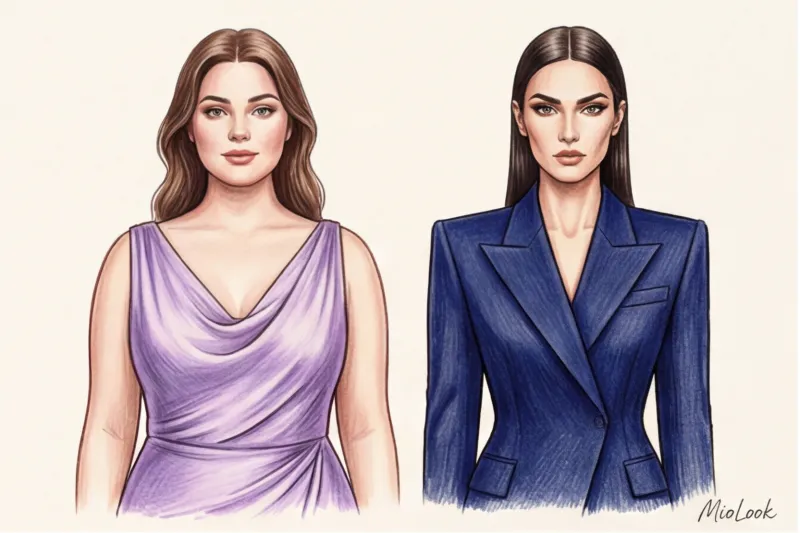
One of my clients, Elena, spent almost €3,000 on flowing silk dresses with ruffles and soft cardigans. She was absolutely certain she was a "Romantic" type, given her feminine figure and soft features. But every fitting ended in tears: in these expensive, luxurious garments, she looked not elegant, but as if she were wearing someone else's clothes two sizes too big.
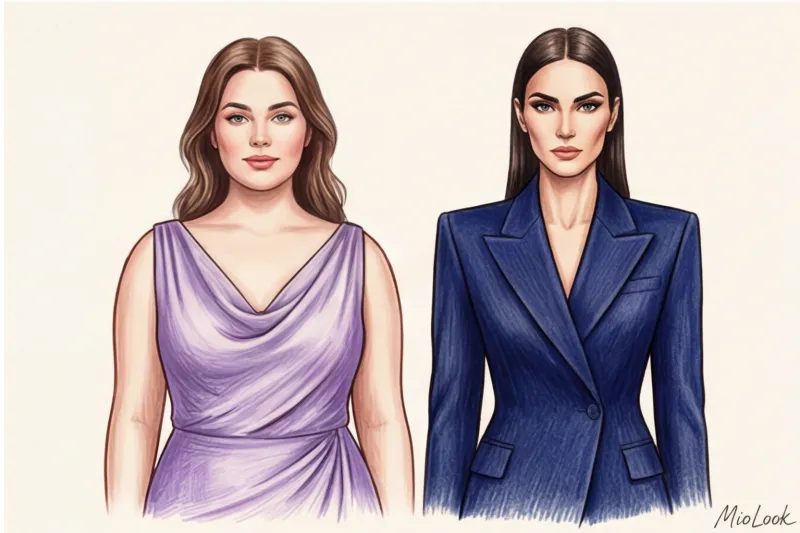
Everything changed when we decided to put emotion aside and entrust the analysis to machine vision algorithms. The impartial machine delivered its verdict in seconds: Elena is a "Flamboyant Natural." She has a broad bone structure and a long vertical linen. As soon as we dressed her in a relaxed, premium, oversized linen from Loro Piana, her appearance literally "sounded." This story proves one simple truth: the human eye is the worst instrument for self-analysis. We see our insecurities in the mirror, not our true proportions.
Today Determine Kibby type from a photo using a neural network It can be many times more accurate than a stylist with a measuring tape. Moreover, understanding your geometry is closely linked to your natural colors—I talked about this symbiosis in more detail in our A complete guide to determining your color type using AI Let's figure out why algorithms are better at interpreting your appearance than you are, and how this can save you from poor wardrobe investments.
The Architecture of Your Appearance: Why Yin and Yang Theory Is Made for Algorithms
When David Kibbee released his groundbreaking book Metamorphosis In 1987, he thought not like a typical fashion designer, but like an architect. His concept of the balance of yin (softness, circles, flesh) and yang (sharpness, angles, bones) is not an esoteric metaphor. These are strict mathematical variables.
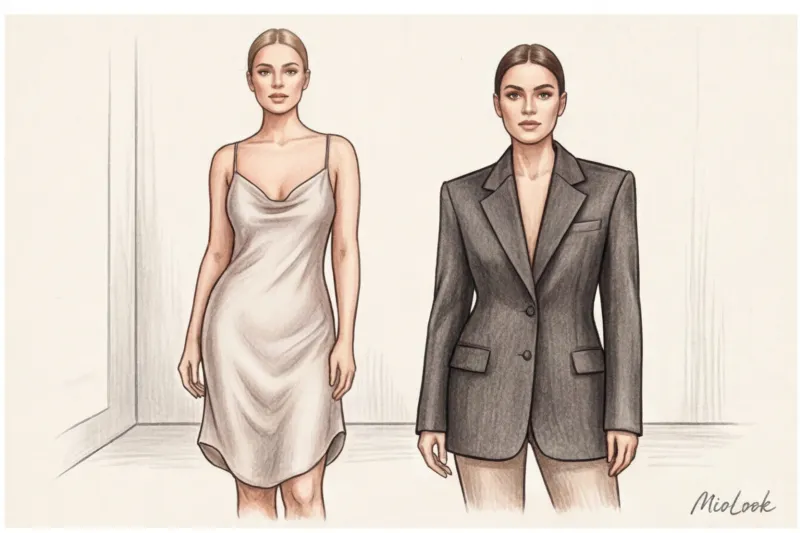
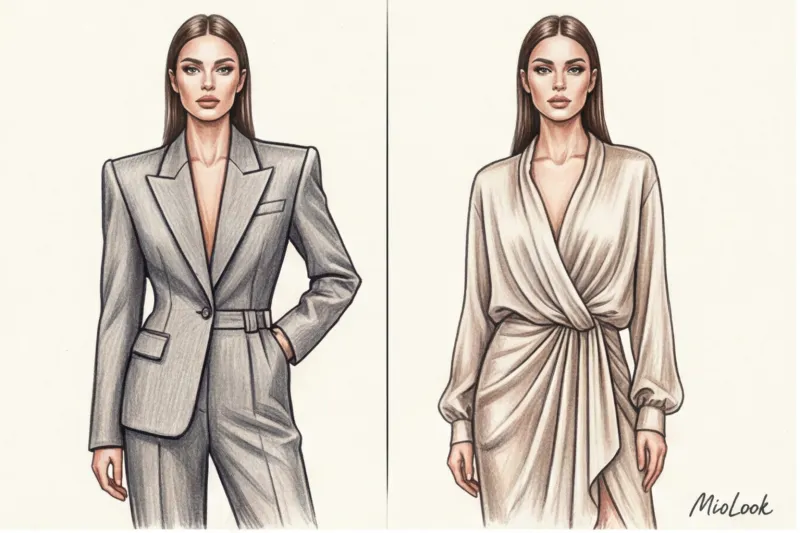
In my practice, I constantly encounter this when working with luxury patterns. Consider the difference between a classic Saint Laurent jacket and a Giorgio Armani blazer. Saint Laurent builds its silhouette on a strong, angular shoulder (pure Yang)—it demands a correspondingly sharp bone structure from the wearer. Armani emphasizes a soft, sloping line and the absence of rigid padding (Yin)—this cut will mercilessly hang on a Dramatic type, but will make a goddess out of a Soft Natural type.
The bone structure of the face and body forms what the industry calls the "essence" of appearance. And it's this geometry that algorithms can measure down to the millimeter, without being distracted by eye color or a trendy haircut.
How to determine Kibbe type from a photo: neural networks versus the human eye
In fashion circles, it's generally accepted that typing requires the proverbial "perceptual expertise" and intuition of a stylist. Let me be frank: intuition without objective measurements is simply reading tea leaves. A study by the Fashion Tech analytical agency WGSN (2024) confirms that visually assessing proportions by humans has an error rate of up to 15%.
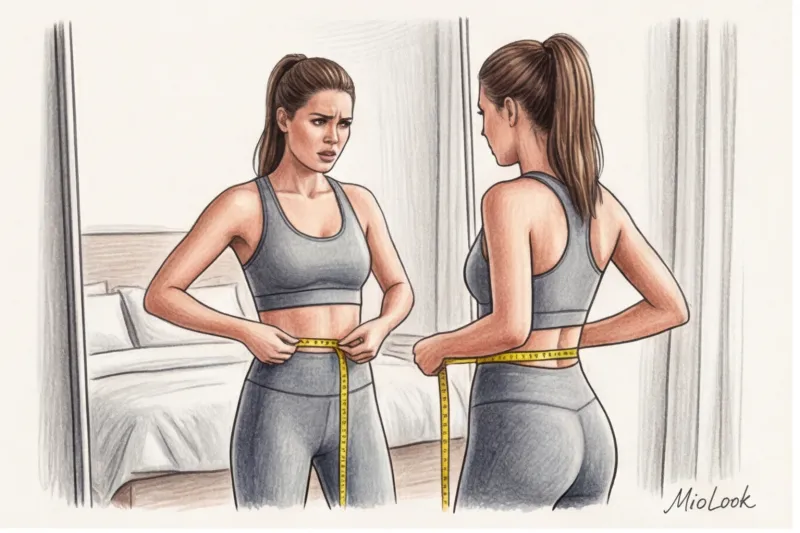
Why do nearly 80% of women misidentify their own body type? We're subjective. A woman with a pear-shaped figure will endlessly focus on her "wide hips," completely ignoring her graceful shoulders and sharp cheekbones. Furthermore, we're pressured by Instagram standards: today, everyone wants to be either a curvy "Romantic" or a daring "Dramatic."
Artificial intelligence is completely blind to trends. It doesn't judge you by Victoria's Secret standards or "old money" aesthetics. Computer Vision technologies built into MioLook , see you as a matrix: a set of vectors, angles and distances.
The Impact of Focal Length: Why Selfies Are Ruining Your Proportions
The most common mistake I see is trying to determine a person's body type based on a mirror selfie. A smartphone lens (usually a wide-angle lens of 24–28 mm) creates monstrous optical distortions. Areas closer to the center of the frame (like the nose or stomach) are unnaturally exaggerated, while the edges (like the shoulders) are narrowed.
For machine vision, such distortions are fatal. That's why professional algorithms require images taken from the correct distance—only then can they obtain a realistic picture of your vertical.
Your perfect look starts here
Join thousands of users who look flawless every day with MioLook. Discover your exact body type and wardrobe essentials.
Get access — €0.99 onceHow exactly does artificial intelligence scan your body?
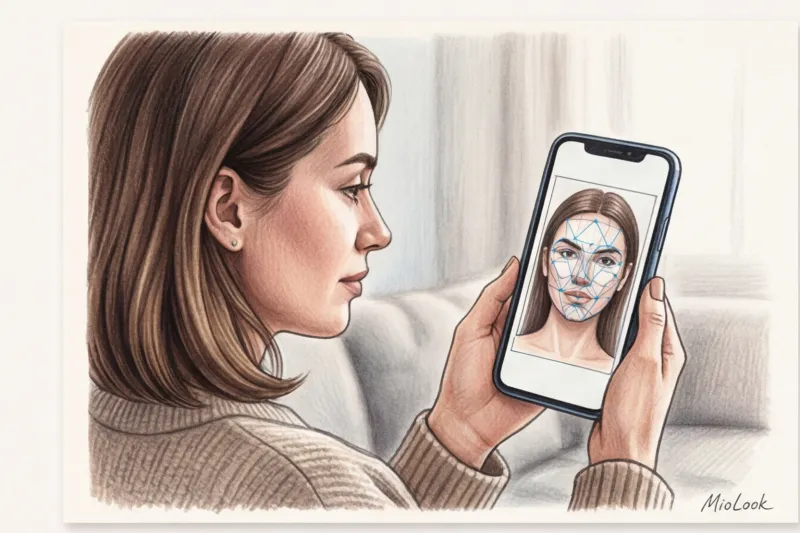
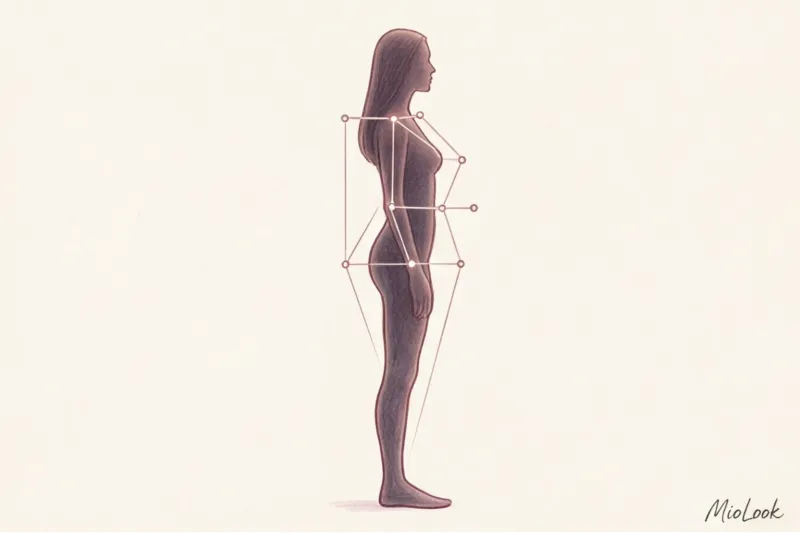
The process of typing through a high-quality neural network is not an entertaining test from a magazine. It is a complex computational process based on the recognition of so-called facial and body landmarks (control points).
The algorithm divides the analysis into two key streams:
- Analysis of bone structure (skeleton): The AI calculates the ratio of your limb length to your torso, the width and shape of your shoulder girdle, and the size of your hands and feet. This determines your vertical line—whether you appear taller or shorter than your actual height.
- Soft tissue distribution: How does the flesh cover the bones? Does it form taut, muscular lines or soft, rounded curves?
- Facial geometry: The angle of the lower jaw is scanned (sharp, blunt, rounded), whether the cheekbones protrude, and what is the distance between the eye points.
By collecting this data together, the system produces an objective result, devoid of human emotion.
The Biggest Myth: "The machine can't see your individuality and essence."
Old-school stylists often criticize technology, claiming that machines can't capture your "essence"—your natural character and charm. It's a beautiful, but deeply flawed, assertion.
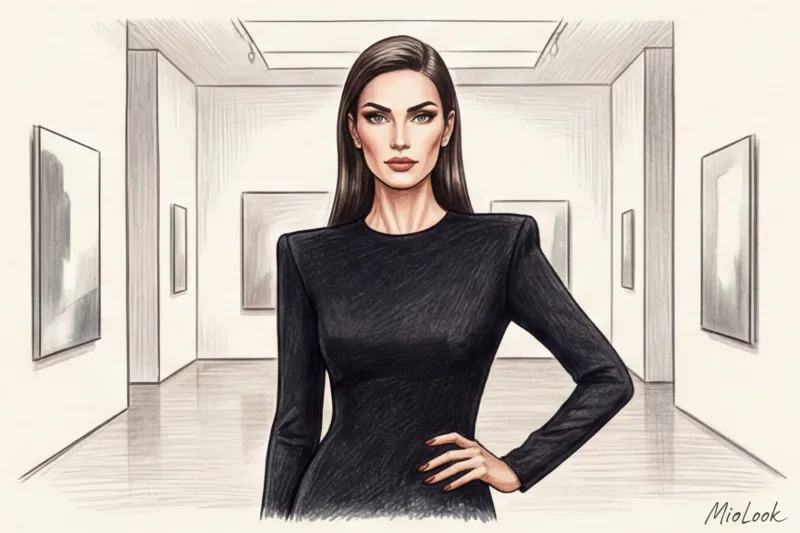
In the Kibbie system, Essence (whether it's the majestic Dramatic or the playful Gamine) isn't your current mood. You don't become a Dramatic simply by putting on a leather jacket and applying severe makeup. Essence is a direct physical manifestation of your lines.
As a practicing consultant, I can say: AI does not take away the stylist's work, it frees me from the routine of using a measuring tape. When MioLook Provides me with a precise mathematical profile of the client, giving me the perfect "canvas." And on this canvas, like an artist, I begin to select specific shades and textures, adapting them to the woman's lifestyle.
Wardrobe Investment: How Knowing Your Kibbe Body Type Saves You Money
We've come to the most important thing - money. My philosophy is based on this indicator. Cost-per-wear (cost per outing). A €30 polyester blouse worn once costs you more than a perfectly fitting €400 cashmere sweater worn 100 times (only €4 per outing).
The problem is that clothes that don't suit your personality hang in your closet for years with their tags still attached. You can't explain why they make you uncomfortable, but you can't reach for them.
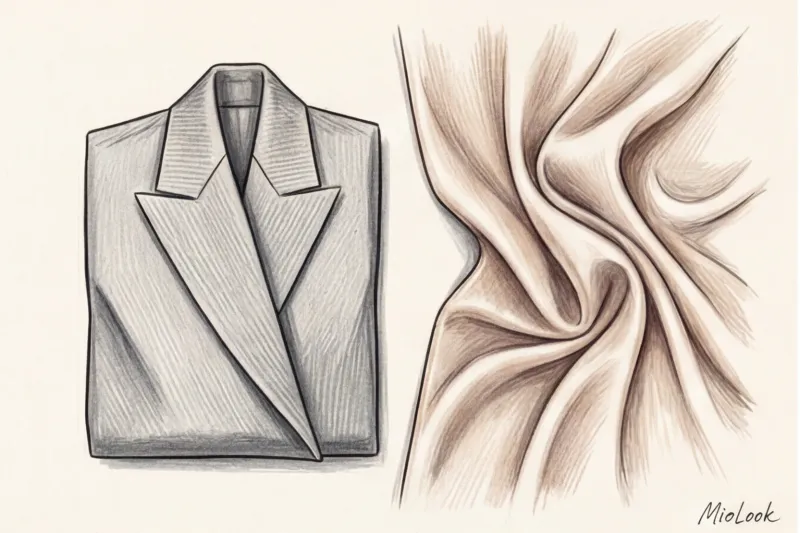
"The secret to a luxurious look isn't the logo on the lining, but how the texture of the fabric resonates with your bone structure. Soft on sharp looks sloppy, and hard on soft looks bulky."
Let's return to my client Elena (Bright Natural). She used to buy dresses with small floral prints and delicate lace. For her wide, open frame, such detailing was too fussy. Now, the foundation of her wardrobe is thick silk palazzo pants and oversized chunky knit sweaters.
Or take the Dramatic Classic type. Shapeless, oversized hoodies are a no-no for these women. Their go-to pieces are thick wool, gabardine, and fabrics that hold their shape. A tailored jacket instantly pulls their look together, lending it a touch of class and polish.
Access to MioLook for €0.99 — one-time payment
A smart AI stylist will select the perfect look for you, taking into account your figure and body type.
Get access — €0.99 onceChecklist: How to take the right photo for the MioLook neural network
For the AI to accurately calculate your type, you must provide it with high-quality initial data. This is a critical step. Here's a step-by-step guide, tested on hundreds of my clients:
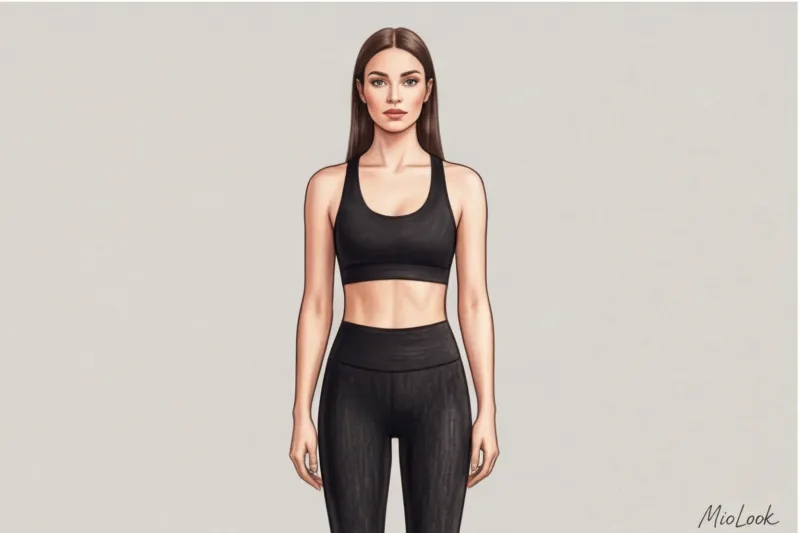
- Fitted silhouette: No oversized clothes, sweaters, or dresses. The ideal choice is black leggings and a tight-fitting top (or a swimsuit without push-ups). The algorithm should be able to detect the contours of your shoulders, waist, and hips.
- Light: Stand facing a window in daylight. Side or harsh overhead lighting (like from a chandelier) creates deep shadows that the neural network may mistake for depressions or muscle definition.
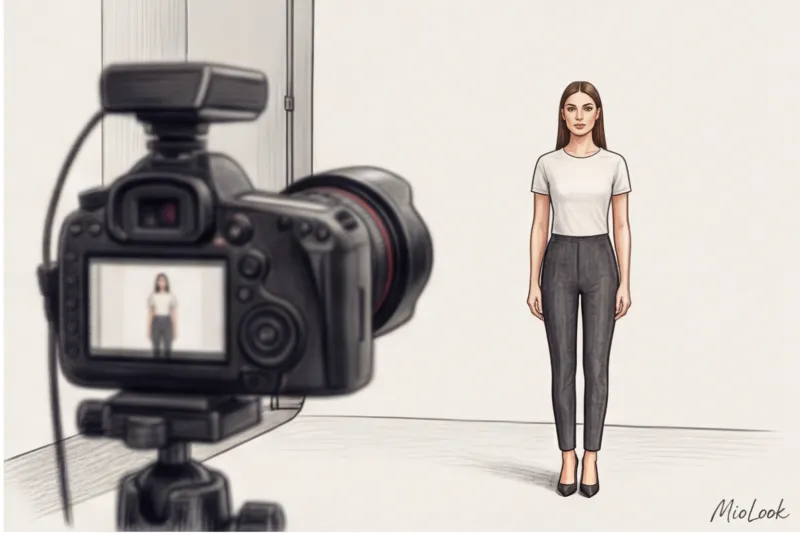
- Angle: Ask someone to take your photo or use a tripod. The camera should be positioned exactly at chest level. Shooting from below will make your legs seem endless; shooting from above will make you look like a gnome.
- Distance: The lens should be strictly parallel to the floor at a distance of 2-3 meters from you.
- Pose: Stand straight with your arms relaxed at your sides (don't press them tightly against your hips, leave a small gap).
Life after diagnosis: how to integrate your personality type into your style
Every system has its limitations. It's important to understand when the rules don't work. The Kibbe system was created in the 1980s, when fabrics were different. It doesn't take into account modern, high-tech materials with added elastane, which shrink differently. That's why I always say: Kibbe is a compass, not a prison.
If your style calls for clean lines but you're dying to wear romantic ruffles, go for it! Just make some adjustments. Choose ruffles made of thick taffeta or cotton rather than soft chiffon, so they maintain their architectural shape.
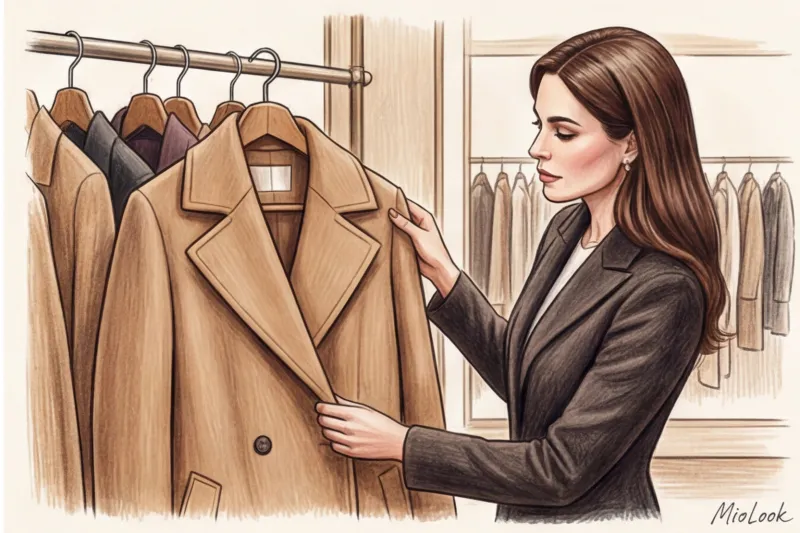
Knowing your geometry gives you incredible freedom. By combining your Kibbe shape with an understanding of your color type, you create an absolutely invincible capsule. You no longer need to buy every trend in sight. You walk into a boutique (or open a smart wardrobe app) and know for sure: this textured tweed jacket will make me look like a queen, and I'll leave this smooth silk top on the hanger.
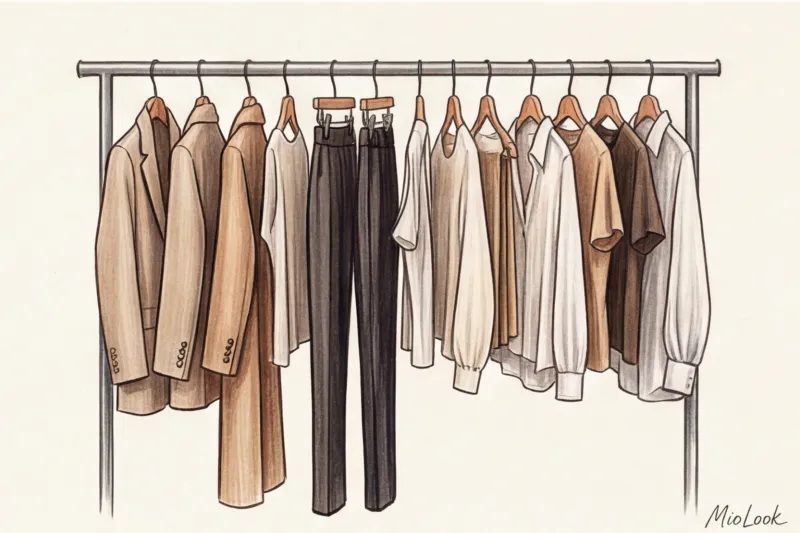
Entrust the basics to technology to preserve the most interesting part: the art of self-expression. After all, a conscious style begins with an honest look at yourself, and today we have the tools to provide this honesty without distortion.