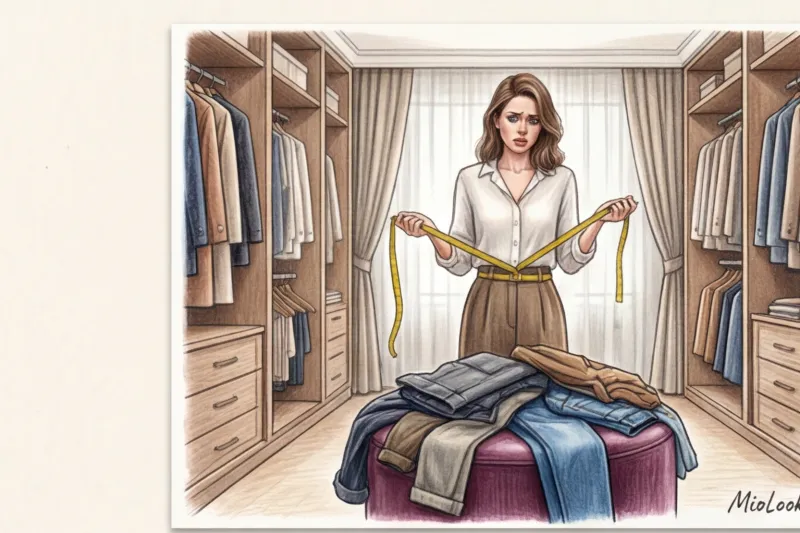
One of my clients once asked, "Julia, why are my waist measurements 90-70-98, but I wear anything from a size S to an L, depending on which store I go to?" My answer usually shocks those who are used to relying on numbers: throw away your measuring tape When shopping online, it's your worst enemy.
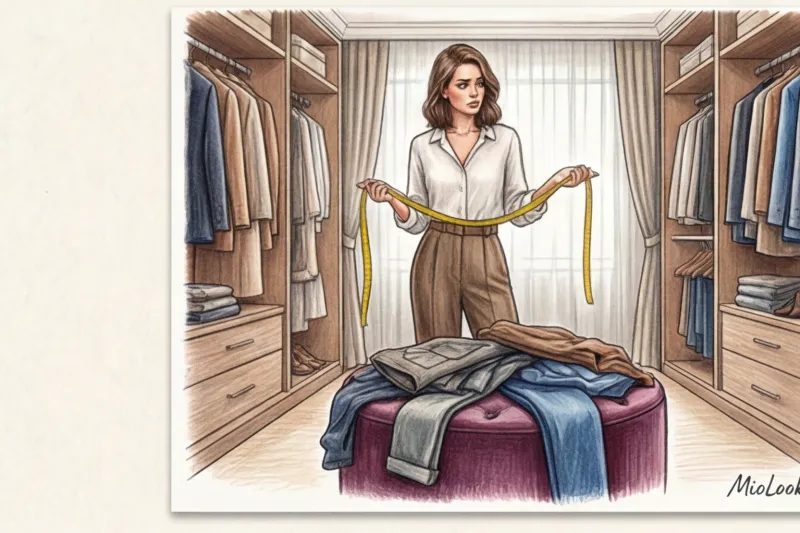
This advice sounds like fashion heresy, but after 12 years of working as a stylist and luxury wardrobe consultant, I've learned one rule. Knowing your measurements down to the millimeter won't help you buy the perfect piece. How a garment fits your body depends on the pattern design, grain direction, and the hidden mathematical formulas of a specific brand. We've written more about this paradigm shift in our A complete guide to choosing clothes for your body shape using AI.
Let's explore why traditional methods for determining clothing sizes online are hopelessly outdated, and how artificial intelligence is bringing back the luxury of custom tailoring without the need for a tailor.
The Tape Measure Illusion: Why Classic Methods for Finding Clothing Size Online Fail
According to the analytical agency WGSN (2024), over 70% of returns in fashion e-commerce are due to ill-fitting sizes and fit. Consider this: we all know how to use a tape measure, and size charts are available on every website, yet 7 out of 10 items end up back in the box. Why?
The thing is, your parameters are just flat 2D coordinates. They don't tell you anything about topography Your body. A hip circumference of 100 cm can mean protruding buttocks with a flat stomach, or sloping hips with a completely flat buttocks. A centimeter doesn't matter. But a silk slip skirt does.
"The main secret that online store charts don't tell you is the tailoring term 'ease allowance.' Two blouses with a stated bust measurement of 90 cm may actually measure 92 cm (for a slim fit) and 110 cm (for a fashionable oversize). You're not buying girth, you're buying volume."
Let's not forget about the phenomenon Vanity sizing (flattering sizes). Research shows that over the past 20 years, the standard "M" size at most mass-market giants has increased in waist circumference by 5-7 cm. Brands want you to feel slimmer by squeezing into a smaller size. As a result, the size chart has become a marketing sham.
Access to MioLook for €0.99 — one-time payment
A smart AI stylist will select the perfect look and the right size without stress or returns.
Get access — €0.99 onceThe Hidden Architecture of Brands: Why Your Regular Size "M" Doesn't Fit You
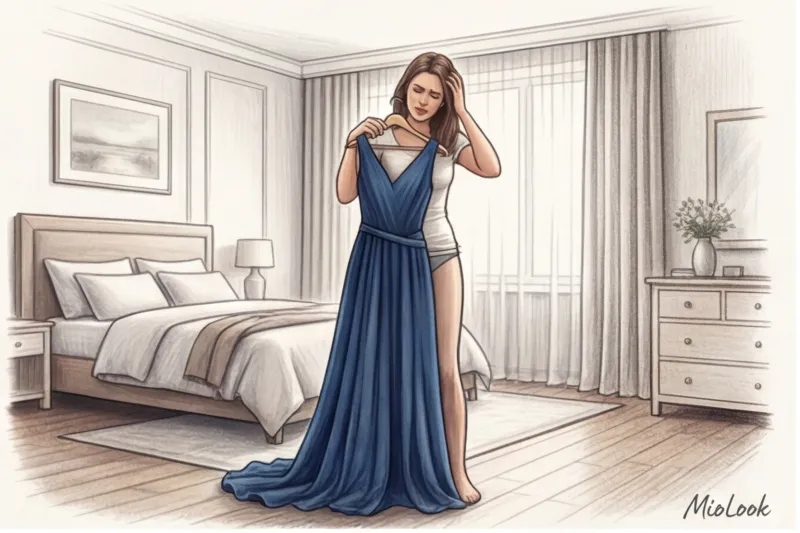
I remember my client Anna crying in the fitting room of a Milan boutique. She was trying on a stunning pair of thick wool palazzo pants for €350. They were her classic size M. But the pants cut mercilessly into her hips, while bulging at the waist. "I've gained weight," she condemned herself with despair.
I stopped her: "Anna, it's not about your body. It's about the patterns."
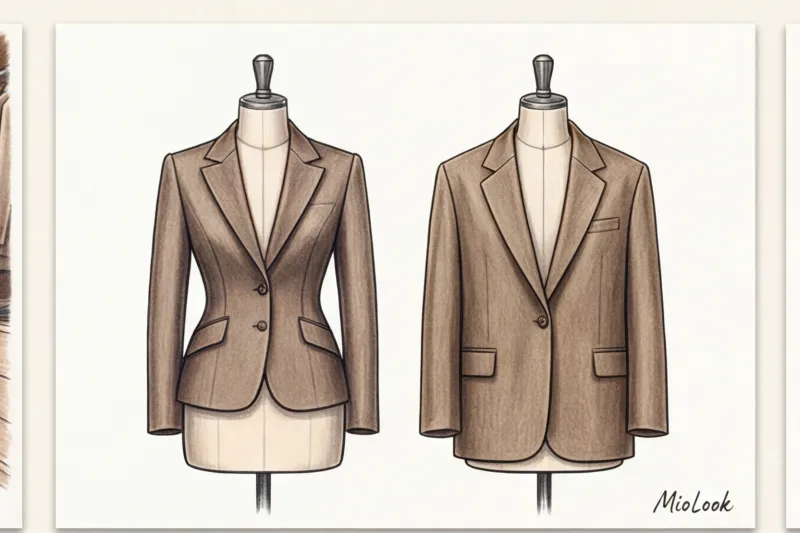
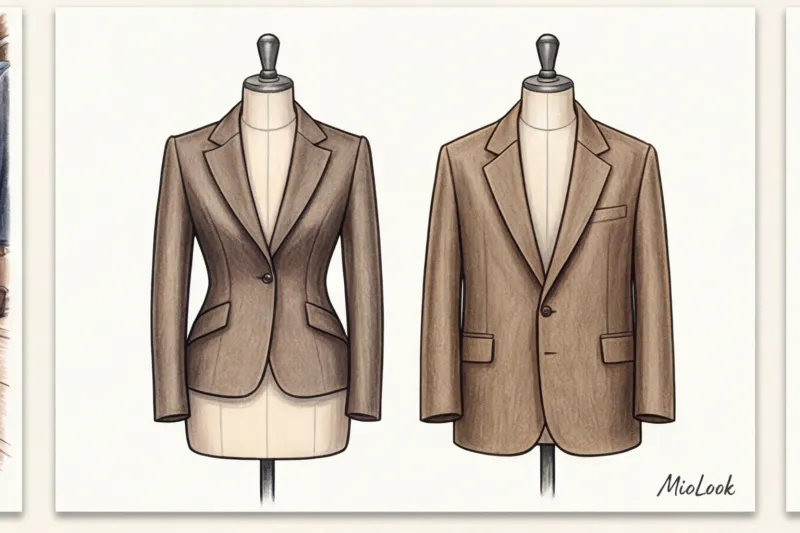
Each brand has its own "national" cut architecture. Italian labels (for example, Marni or Max Mara) often design their cuts for a narrow chest and a less pronounced waist-to-hip difference. American mass-market and premium brands (from Tommy Hilfiger to Calvin Klein) tailor their clothes for a more athletic build: broad shoulders, defined hips. We tend to blame our figures, when in reality, we're simply trying to squeeze a Slavic or Scandinavian body type into cuts designed for a Mediterranean body type.
Industrial Standard vs. Individuality: A Brief History
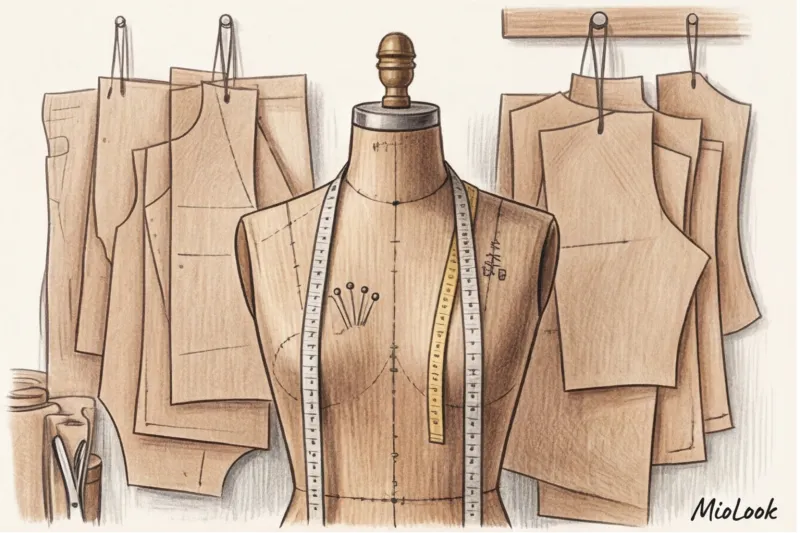
To understand the scale of the problem, we need to look back to the 1940s. That's when modern sizing charts were invented—for the mass production of army uniforms. Factories needed to standardize millions of bodies to reduce production costs.
What was an economic compromise for factories is now sold to us as the norm. But Haute Couture has never operated within the "S, M, L" standard. True fashion has always been built around the architecture of the individual body.
Algorithms Instead of Tape Measures: How to Determine Your Clothing Size Online with MioLook AI
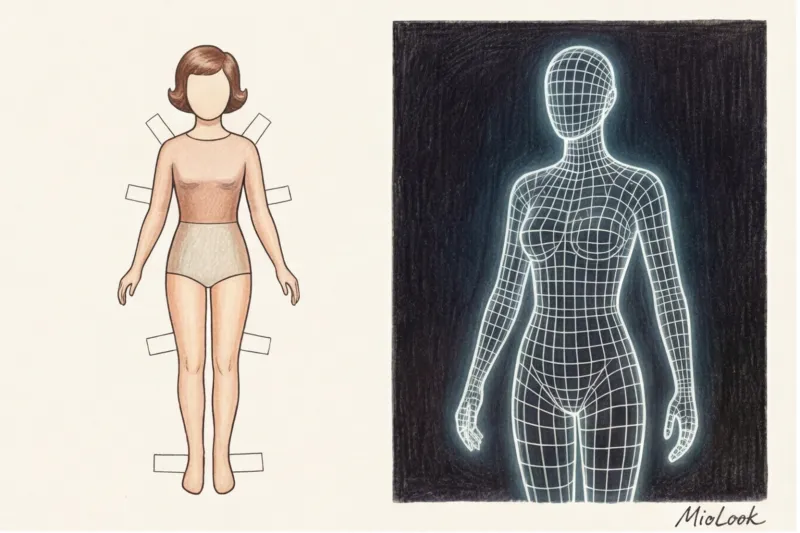
This is where body scanning and AI technologies come into play. MioLook's algorithms don't just look at your waist measurement in an Excel spreadsheet. They work like an experienced tailor with a trained eye.
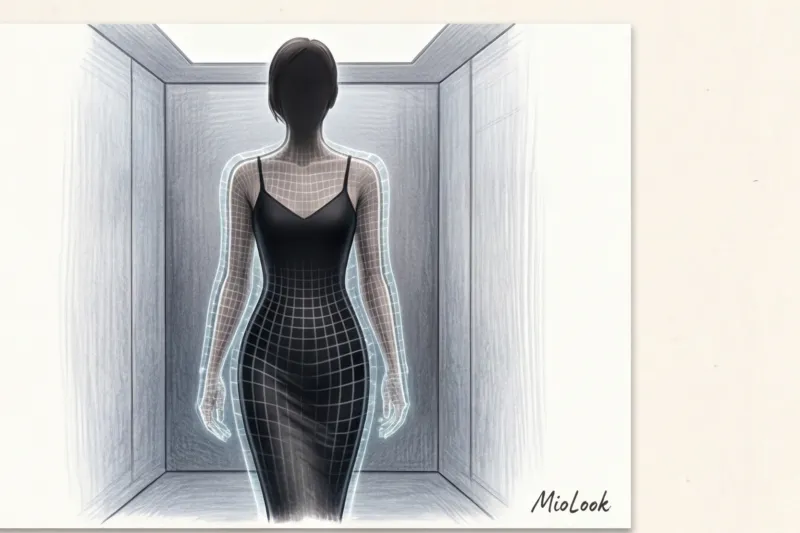
How does it work in practice? The AI analyzes your body proportions, silhouette, and geometry from a photo. Then the magic happens: the system matches the technical parameters of a specific garment (its length, allowances, armhole height) with your unique 3D profile. This happens before you click the "buy" button.
This is the end of the size dictatorship. You stop buying "the number on the tag" and start choosing the perfect fit. If you need a size 42 for the perfect oversized jacket from COS, but a size L for a slim turtleneck from Zara, artificial intelligence will simply tell you, eliminating the need to order three adjacent sizes "for fitting."
Your perfect look starts here
Join thousands of users who look flawless every day with the MioLook virtual fitting room.
Get access — €0.99 onceThe Fabric Factor: How Silk, Cashmere, and Denim Are Changing the Game
My personal styling nightmare is when a woman buys a stretchy garment a size too small to achieve a "slimming" effect. Remember: stretched elastane instantly cheapens a look. Wrinkles and pulled seams scream "too small," even if you fit into it.
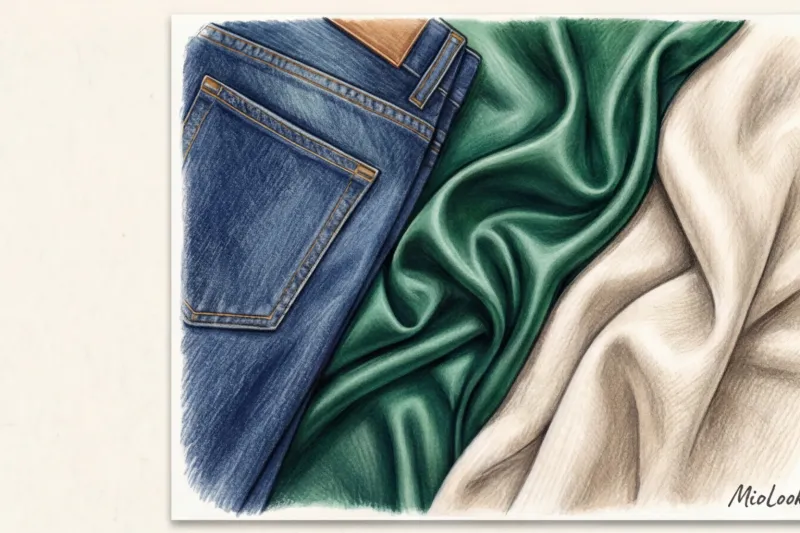
The same pattern made in Japanese raw denim (14 oz) and flowing silk (19 momme) will require different measurements. Denim is unforgiving of hip measurements; it's stiff and requires a perfect fit down to the millimeter. Silk, especially when cut on the bias, is flexible but will treacherously accentuate any contours of the body if you don't leave a gap of air between the fabric and the skin.
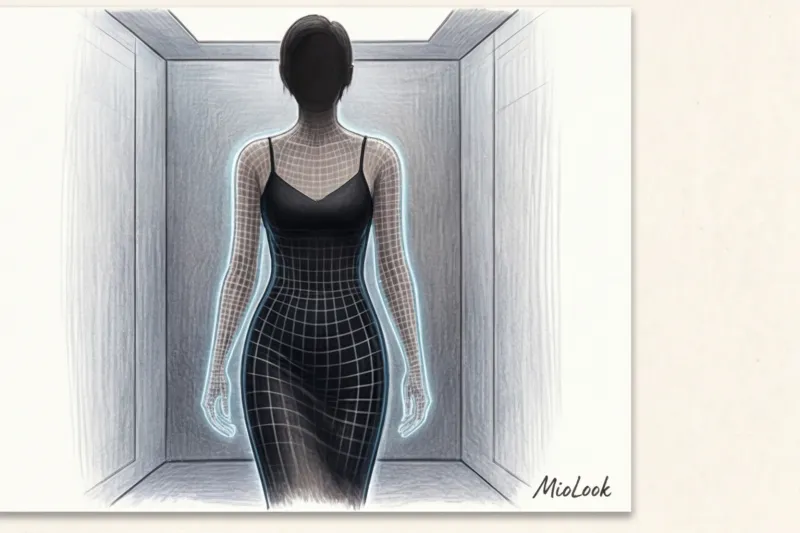
When choosing a wardrobe AI stylist MioLook He takes this material science nuance into account. He knows how viscose drapes and how well cotton gabardine holds its shape, adjusting his recommendations accordingly.
Checklist: 4 steps to a perfect fit without the fitting room with MioLook
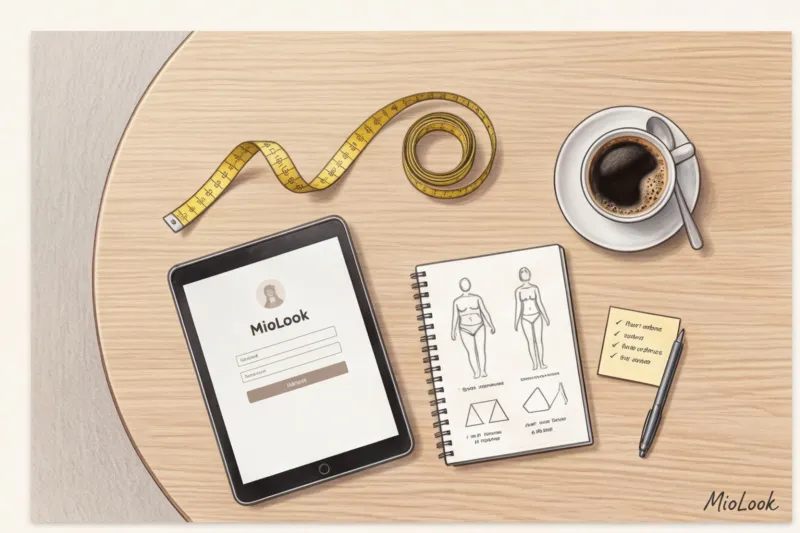
To avoid returning packages to online stores, I recommend the following steps to my clients:
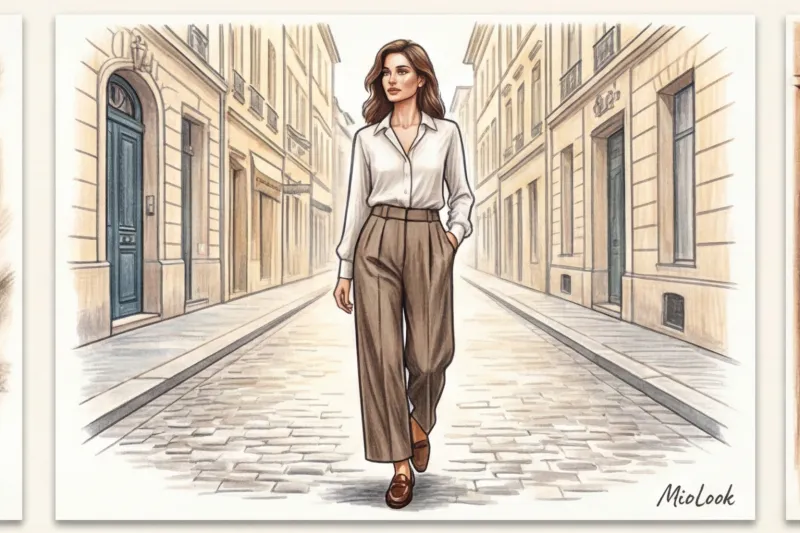
- Step 1: Digital profile. Upload your data to the app to create an accurate body topography. Be honest with the algorithm—it's not here to judge you.
- Step 2: Determine the desired effect. Unlike tables, you can ask the AI a question: do you need a slim fit, regular fit, or relaxed oversize?
- Step 3: Brand scouting. Check the system's recommendations for specific brands. The AI will take into account their "architectural DNA" and suggest where you're best off with the familiar European 38 and where you should step up to 40.
- Step 4: Forming the capsule. Collect items that are guaranteed to match not only by color but also by volume. (A wide sweater won't fit under a tight coat, even if they're both the same size—the AI predicts this.)
Fair Limit: Does this work 100% of the time? No. If you're hunting for vintage denim (like Levi's 501s from the 1990s), whose sizing has lived its own life for decades, or buying complex avant-garde pieces from Comme des Garçons, physical fitting is still necessary. But for 95% of your basic and premium wardrobe, technology works flawlessly.
The Cost of Mistakes: Why a Perfect Fit Is the Ultimate Fashion Investment
Let's talk about money. In the world of premium styling, we measure the value of items not by the price tag at the checkout, but by the cost-per-wear formula.
Imagine you bought a luxurious wool jacket for €400. If it fits perfectly, doesn't restrict your shoulders, and allows you to layer a thin cashmere sweater underneath, you'll wear it 80 times over two seasons. The price per wear is €5.
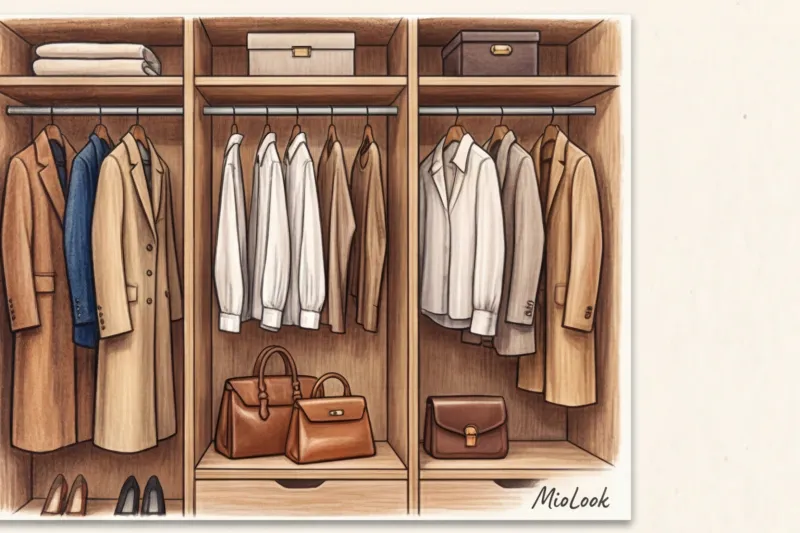
Now let's take a mass-market dress for €40, bought online at random. It's a bit tight across the chest, and the armhole cuts into your armpit. You wear it once, feel uncomfortable, and hang it in the back of your closet. The final price: €40. The cheap item turns out to be eight times more expensive than the luxury one.
Ready to get started?
Try the free plan—no commitments. Create your perfect wardrobe with AI.
Get access — €0.99 onceHow many of these "mistaken items" are hanging in your closet right now, freezing hundreds, even thousands, of euros? Emotional comfort and self-confidence don't start with a flashy logo. They start with clothes that allow you to breathe, move, and forget about them the minute you leave the house. Don't force your body into factory molds—use modern tools to make clothes work for you.