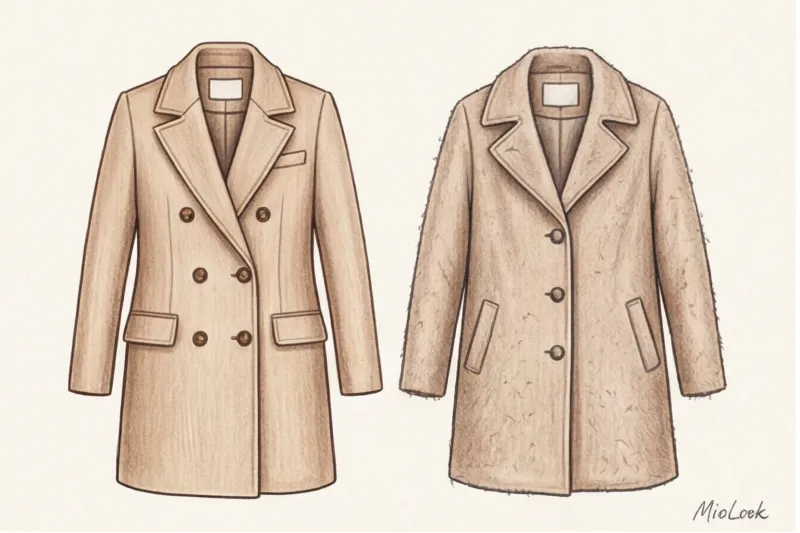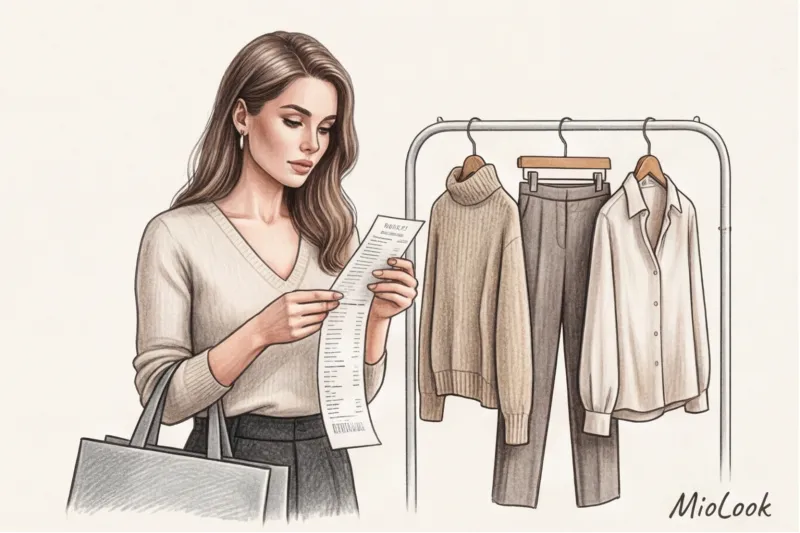
The most expensive items in your closet aren't designer bags, jewelry, or even a cashmere coat. They're those 990-ruble T-shirts and those sale dresses you bought on a whim, only to wear once. If you subtracted these "bargain" purchases from your budget over the past five years, you could easily afford a luxury wardrobe.

Over 12 years of working as a personal stylist in Europe, I've conducted hundreds of wardrobe audits. And every time, I see the same picture: 80% of my clients' budgets are literally frozen in items with uncut tags or clothes that have lost their shape after the first wash. To break this vicious cycle, you need the right cost per wear formula (price per entry). We've covered more details on how to lay a long-term foundation for your style in our complete guide. Wardrobe Investment: How to Build the Perfect Essentials And today we'll do some pure mathematics.
The Cheapness Trap: What Cost Per Wear Really Is
Our brains love sales. When we see a red "70% off" price tag, our reward center is activated. We think we've cheated the system: we bought a trendy jacket for next to nothing. But the system has long since tricked us.
According to a large-scale study by the British organization WRAP (2021), the average woman regularly wears only 20% of her wardrobe. The remaining 80% is simply wasted space. One of my clients had 15 thin polyester dresses hanging in her closet, bought in a fit of desperation, "at least they were cheap." Collectively, they cost the same as one impeccably tailored wool suit, which she could have worn for years. But she didn't have a suit, and instead faced the daily problem of "I have nothing to wear."
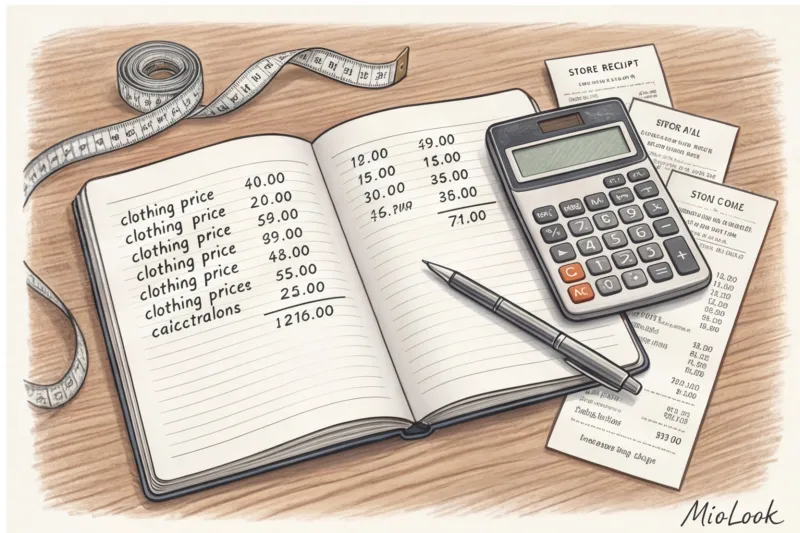
The Cost Per Wear (CPW) concept is meant to sober us up. It's a calculation of the true cost of owning an item based on how often it's used. The difference between the sticker price and the actual cost is colossal.
Your perfect look starts here
Join thousands of users who look flawless every day with MioLook. Digitize your wardrobe and discover the true CPW of every item.
Get access — €0.99 onceThe Classic Cost-Per-Wear Formula and Why It's Lying to You
Gloss often offers a standard formula: Cost of the item / Number of wears Sounds logical, right? Bought a pair of jeans for 5,000 €, wore them 50 times—each wear costs 100 €.
But this calculation is naive. It creates the illusion of an infinite service life and zero maintenance costs. Therefore, in my practice, I use an expanded version, which I call "Katarzyna's Formula":
(Price of the item at checkout + Tailor's fitting + Cost of dry cleaning and care for the entire period) / Realistic number of wears before it loses its marketable appearance
Let's do the math. You buy a light-colored trench coat from a mass-market store for 8,000 €. The fabric is thin, untreated cotton. It gets dirty easily, wrinkles easily, and needs to be shortened.
Fitting in the studio: 1500 €.
Dry cleaning (at least twice per season, as washing is not possible): RUB 4,000 per year.
After two seasons (about 40 outings) it loses its shape and becomes covered with permanent stains.
Real CPW: (8000 + 1500 + 8000) / 40 = 437 € per exit.
Now let's take a thick mid-range gabardine trench coat for 25,000 €. It's water-repellent, dirt can be brushed off, and the pattern fits perfectly from the start. You'll wear it for four years (about 120 outings), dry cleaning it once a year.
Real CPW: (25000 + 0 + 8000) / 120 = 275 € per exit.
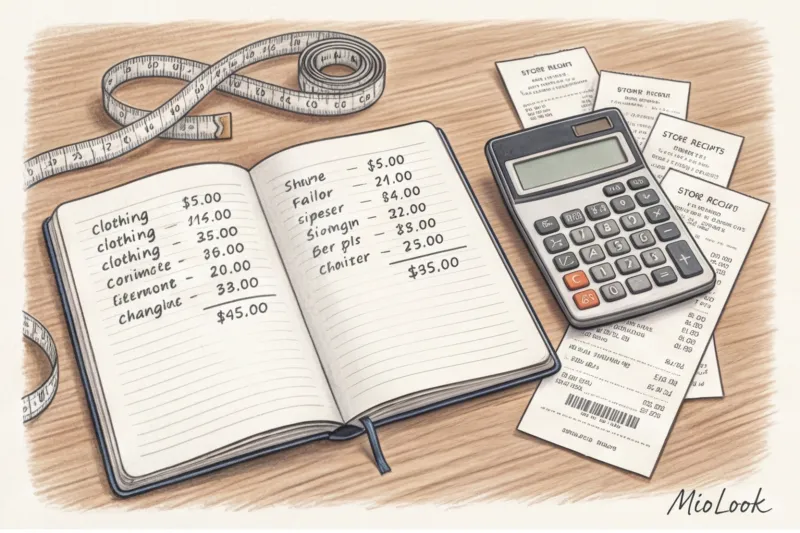
Brand Mathematics: Zara vs. Massimo Dutti and COS
The European mass market and mid-market segments are two different universes in terms of the life cycle of materials. According to fabric testing standards (for example, ISO 12945-2 for pilling), synthetics behave completely differently than natural fibers.
Let's take knitwear. A 3,000-ruble acrylic sweater starts to look cheap after just three washes: it's covered in stiff pilling that's impossible to remove with a washing machine without damaging the threads. It'll survive a maximum of 10 washes. Its CPW is 300 €.
A cashmere or heavy merino sweater for 15,000 €, with proper care, will last 100+ wears. Its CPW is 150 €. It's half the price in the long run!
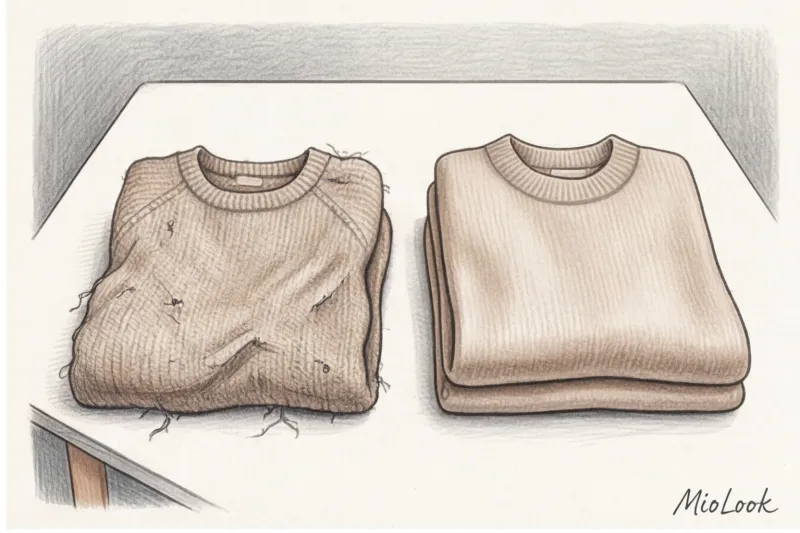
Or basic T-shirts. A thin T-shirt from H&M for 1,000 € starts to warp at the side seams after three washes (because it's cut on the bias to save fabric at the factory). A thick cotton T-shirt from COS for 4,000 € keeps its shape for years. The CPW of the first is about 330 €. The CPW of the second is 80 €. The conclusion is obvious.
Closet Clearing: What Items Are Really the Most Expensive?
According to a terrifying but accurate 2017 study by the Ellen MacArthur Foundation, the average modern mass-market item is worn only seven times before it's thrown into a landfill. Seven times!
The paradox is that the highest CPW in wardrobe history is for so-called "special occasion items." One of my clients bought a luxurious silk dress for a friend's wedding for €400. She wore it once. That same year, she bought a classic wool coat from COS for €250, which she has worn for four seasons in a row, almost every day (about 300 times).
The dress cost her €400 per outing. The coat cost 80 cents.
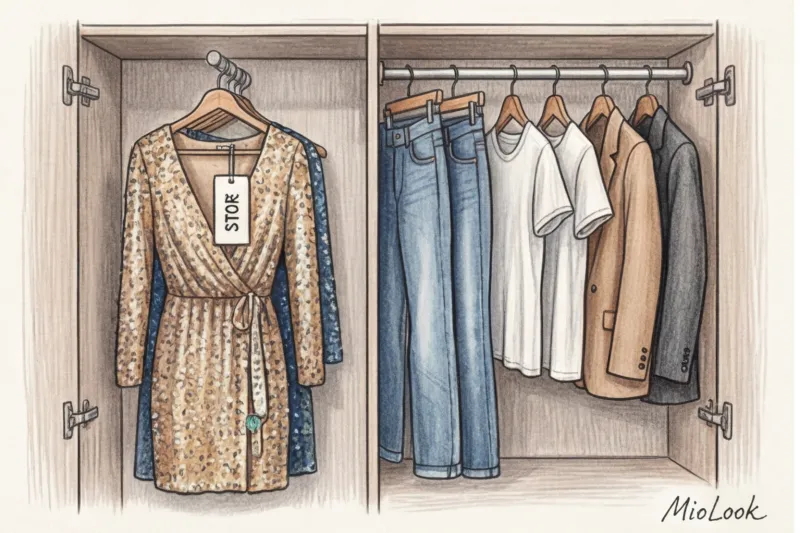
This is the problem of "dressing for a fantasy life." We buy clothes for that ideal version of ourselves that goes to exhibitions and cocktail parties every evening, while our real life consists of an office, a car, walks with the kids, and the occasional trip to a cafe.
This also includes ultra-fashionable, cheap, one-season trends and shoes that rub. If shoes cost 3,000 € but you can only sit comfortably in them, they're a dead asset. Throwing money away on discomfort is for those who can't count.
Access to MioLook for €0.99 — one-time payment
A smart AI stylist will select the perfect look to suit your real-life rhythm, combining items so that their CPW approaches zero.
Get access — €0.99 onceHow to predict Cost Per Wear before you checkout
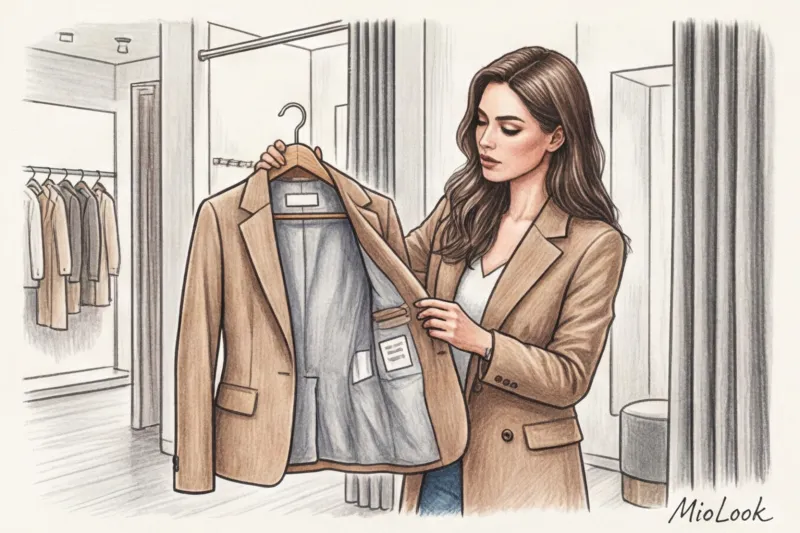
To make the cost-per-wear formula work for you, you need to learn to evaluate items in the fitting room. I always have my clients turn their clothes inside out.
- Analysis of seams and fabric. Cotton should be at least 180 g/m², and viscose should contain at least 5% elastane to prevent wrinkling. If the seams are wrinkling while still on the hanger, the garment will turn into a rag after washing.
- The rule of three images. Can you create three different outfits with this item right now, without buying anything new, using what's already hanging in your home? If not, put it aside. To automate this process, I recommend clients upload their items to the "smart wardrobe" feature in MioLook — the app will immediately show whether the new product is compatible with your database.
- Estimating the cost of care. See a "Dry Clean Only" tag on your everyday pants? Add half that amount to their price. Are you willing to pay this monthly maintenance tax?
Checklist: 5 tough questions from a stylist before purchasing
I don't allow clients to go to the checkout until they answer five questions honestly. Save this checklist on your phone and pull it out every time you reach for your wallet.
- Does this replace something I already love, or is it a duplicate of it? (You don't need a fifth white shirt if you only wear your favorite one all the time.)
- Am I willing to pay time or money to care for this item?
- Would I wear this right now if it weren't for the 50% off? (A discount doesn't make a bad thing good.)
- Does this item fit into my current lifestyle? (And not the life I dream of).
- What is my optimistic and pessimistic CPW forecast for this purchase?
The Secret to Real Investment in Your Style
Let's be honest: there are situations where the CPW rule doesn't apply. This doesn't apply to wedding dresses, specialized sports gear for occasional mountain hikes, or historic vintage collections. Different laws apply there.
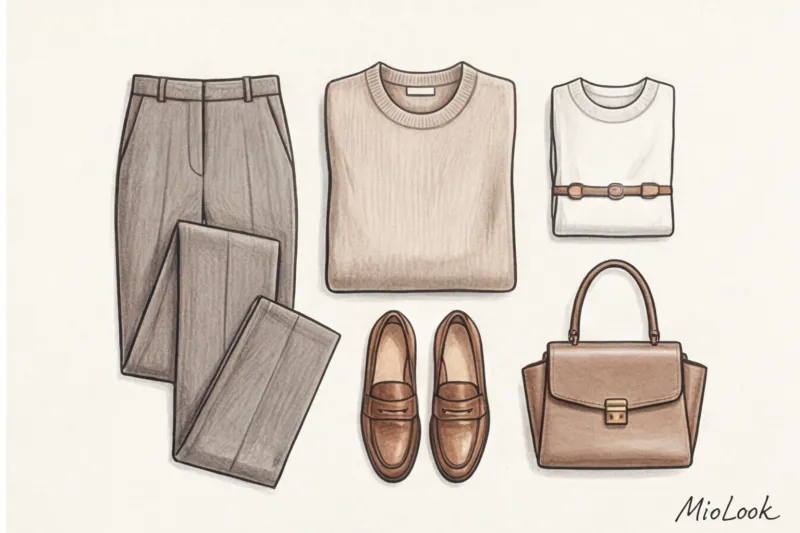
But for 95% of our closet, the math is inexorable. The key to investing in your wardrobe is that there are no universal must-have lists from glossy magazines. You need to invest in what you spend 80% of your time in.
If you work remotely from home, your perfect cashmere suit and joggers are the best and most profitable investment, while a tailored double-breasted blazer for the same price will simply gather dust. If you're a new mom, your sneakers and perfect down jacket should cost more than your silk blouses.

Buying cheap and low-quality items is a luxury most of us can't afford. Smart shopping doesn't start with sales. It starts with self-honesty, basic math, and the understanding that the true value of an item isn't found in the money you spend at the checkout, but in how much it makes you more confident and happy.
Ready to get started?
Try the MioLook plan for free—no commitments required. Organize your closet, calculate the cost of your looks, and start investing in your style wisely.
Get access — €0.99 once