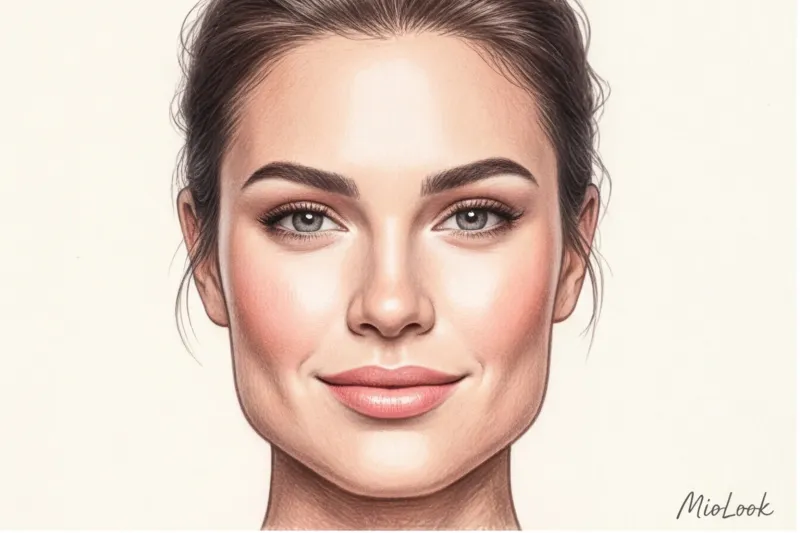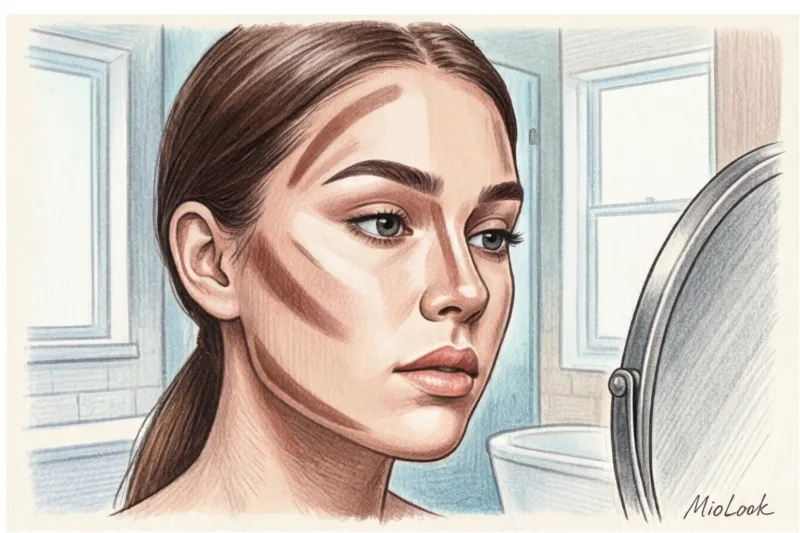
Recently, the CFO of a large corporation came to me for a wardrobe review. She was wearing an impeccably tailored heavy wool suit costing around €800, a silk blouse in a perfect pearl shade, and… heavy, graphic, brick-red cheekbones. This aggressive makeup from 2016 instantly negated the status of the outfit, creating a dirty effect under the fluorescent office lights. It was then that I was once again convinced: the right contouring according to face shape It's not about covering up imperfections. It's about architecture and lighting, which should be as precise as the cut of your jacket.
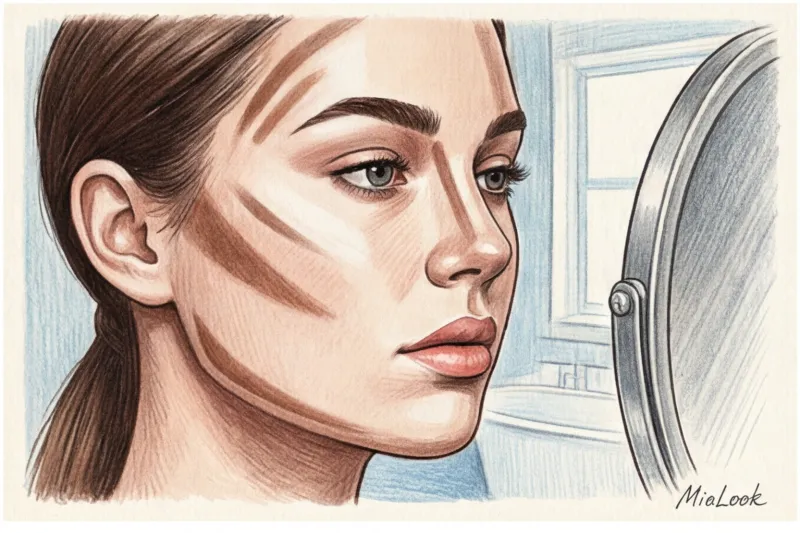
For decades, the beauty industry has been pushing the idea that an oval shape is the absolute ideal, to which any other appearance must be "corrected" with harsh shadows. Prominent cheekbones? Smooth them out. Wide jawline? Hide them in the shadows. But facial perception studies from Vision Research (2022) proved the opposite: the human brain perceives as "expensive" and attractive not the one that is reduced to an average oval shape, but the one in which natural contrast and bone structure are skillfully emphasized.
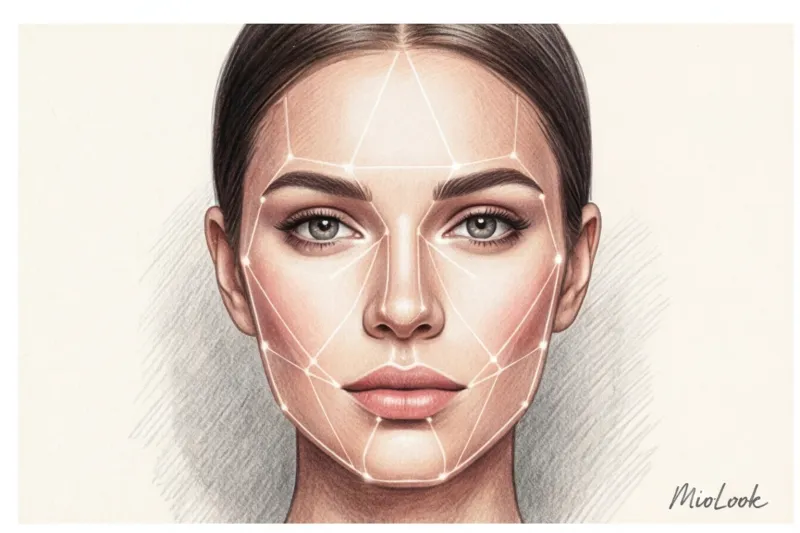
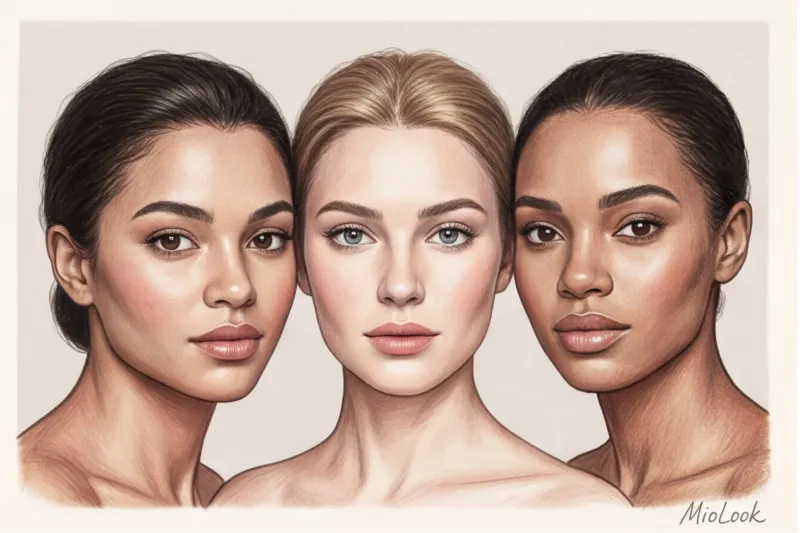
To understand your architecture, you first need to study the base. We covered this in more detail in our The complete guide on how to determine your face shape In this article, as a stylist, I'll share a professional approach to sculpting that complements a modern wardrobe and looks appropriate in daylight.
Why classic face contouring no longer works
The era of the Kardashian family's harsh Instagram contouring is gone forever. What looked great through smartphone filters and under ring lights now looks like a thick mask in real life.
Our face isn't a flat pancake to be painted with a stencil. It's a 3D architecture, where the volume of bones and soft tissue constantly interacts with the ambient light. When you try to "narrow" a wide face with active dark stripes on the sides, these stripes become apparent dynamically as you turn your head. People around you don't see a "thin face"; they see dark spots.
The modern approach is based on the soft enhancement of natural shadows. We no longer strive to visually cut off the corners of a square face or suck in the cheeks of a round one. We give them the right frame that highlights their individuality.
Anatomy Instead of Geometry: Basic Rules of Sculpting
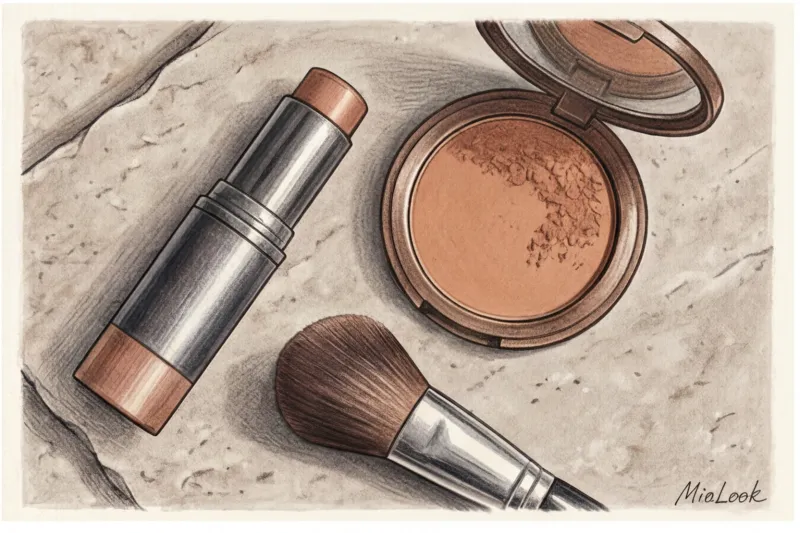
The biggest pain point I encounter in my hands-on workshops is the total confusion between contouring powder and bronzer. According to an NPD Group analytical report from last year, approximately 80% of women use a warm bronzer to highlight their cheekbones. This is a fatal mistake.
- Sculptor (proofreader) It mimics the natural shadow cast by the bone. A true shadow on the face cannot be red or brick-red. It has a cool, grayish, taupe, or neutral olive undertone.
- Bronzer It mimics the sun's kiss and a light tan. It has a warm, terracotta or golden undertone and is applied to the high points of the face that tan first (the forehead, bridge of the nose, and the top of the cheekbones).
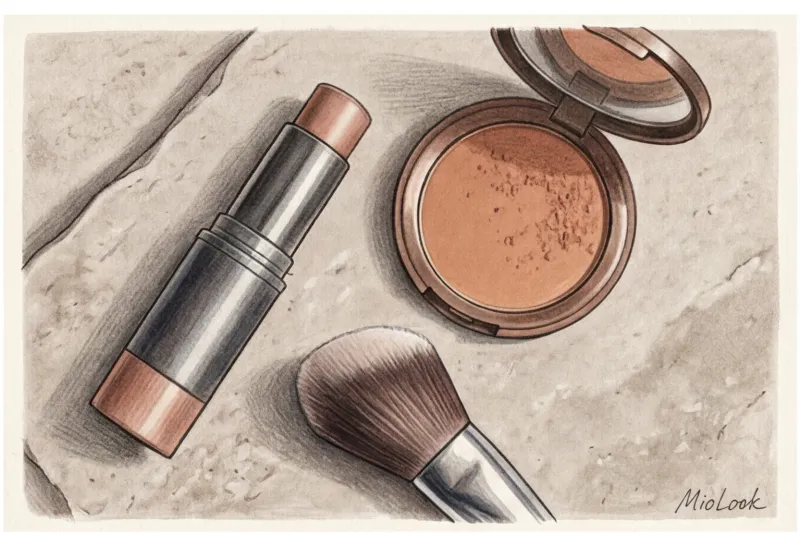
If you wear a sharp jacket in a cool steel shade and apply a warm red bronzer to your cheekbones as a shadow, it creates a clash. Your face seems separate from your overall look. For a business wardrobe, always choose a cool, sculpted shade.
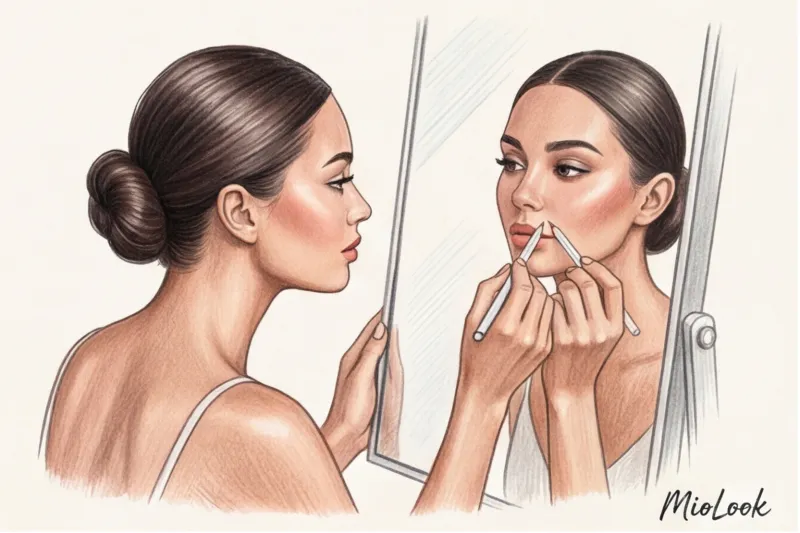
To find the right application area, stand in front of a window in natural light. Tilt your head down slightly. You'll see a natural shadow under your cheekbone. This is where you should apply the product, moving the brush. from the periphery (from the ear) to the center of the face , not the other way around. The first brush stroke leaves the brightest spot, and it should be hidden at the hairline.
Virtual makeup try-on
Not sure which sculptor shades are right for you? Upload your photo to the MioLook smart wardrobe and experiment with color types without risking your wallet.
Find a look in MioLookContouring for a Round Face: Create a Subtle Shadow Instead of Sunken Cheeks
Those with round faces and soft cheeks are often advised to draw aggressive diagonal lines from the ear to the corner of the mouth. Forget it. This creates a "skeletal" effect that clashes with the soft, natural lines.
Soft cheeks are the main sign of youth (a baby face). Our goal is not to eliminate them, but to visually tighten their contours. Use the "lifting lines" technique.
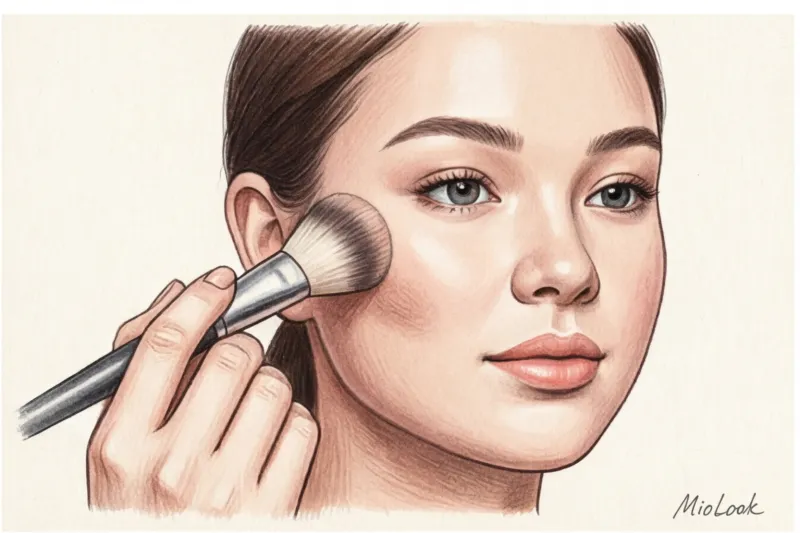
How it works in practice: Find your cheekbone and apply the contouring highlighter not directly into the hollow beneath it, but exactly 1 centimeter above, right on the lower border of the bone itself. Blend it straight up, toward your temples. This will instantly lift your face.
Now, the physics of light: to draw attention away from the rounded edges of your cheeks, add highlights to the center. Apply a light matte concealer (one shade lighter than your skin tone) in a vertical line down the center of your forehead, across the bridge of your nose, and down the center of your chin. This light vertical highlight will visually elongate your facial proportions much more elegantly than dark spots at the edges.
Architectural contouring for a square face: emphasizing your pedigree
Here's a counterintuitive tip that revolutionizes the way many of my clients think about makeup: stop filling in the corners of your jaw with dark concealer, trying to turn a square into an oval. A defined jawline is a modern marker of aristocracy, confidence, and strength.
Look at Angelina Jolie, Keira Knightley, or Margot Robbie. None of their makeup artists hide this geometric shape. On the contrary, they make it the main focus.
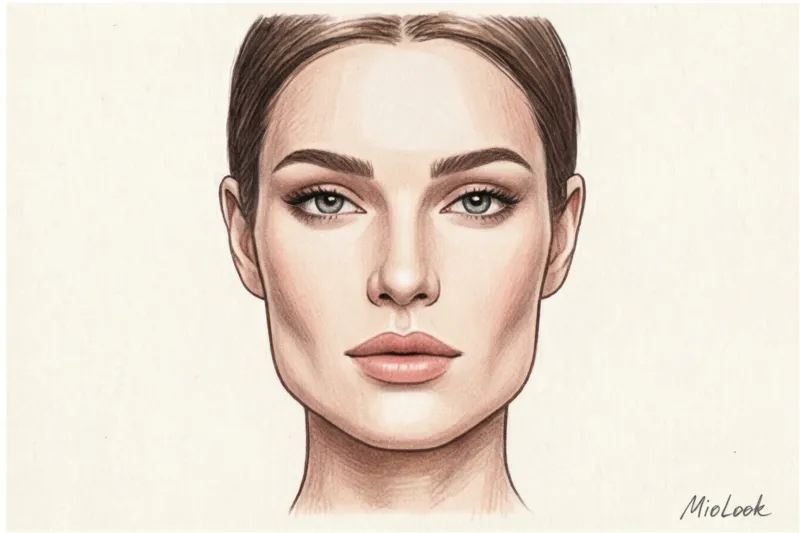
I always draw a parallel with clothing. The structured shoulder line on a €300 jacket enhances the effect of a square jaw, conveying authority. To harmonize this strict geometry, we need balance in the center of the face. Instead of sculpting your jaw, apply a refreshing cream blush to the apples of your cheeks, gently sweeping them toward your temples. A subtle flush will soften the look while leaving your noble bone structure intact.
When this advice does NOT work: If, in addition to a square jaw, you have noticeable swelling in the lower third of your face, a light shadow under (not on!) the jawline will help define the boundary between your face and neck.
Your perfect look starts here
Join thousands of users who look flawless every day by choosing makeup and clothes with the AI-powered MioLook app.
Get access — €0.99 onceOval Face: Delicate Accents and Common Mistakes
There's a pernicious myth that "oval-shaped faces don't need contouring." This is only true if you don't use foundation at all. But as soon as you apply a thick foundation, your face becomes a blank slate—it looks flat.
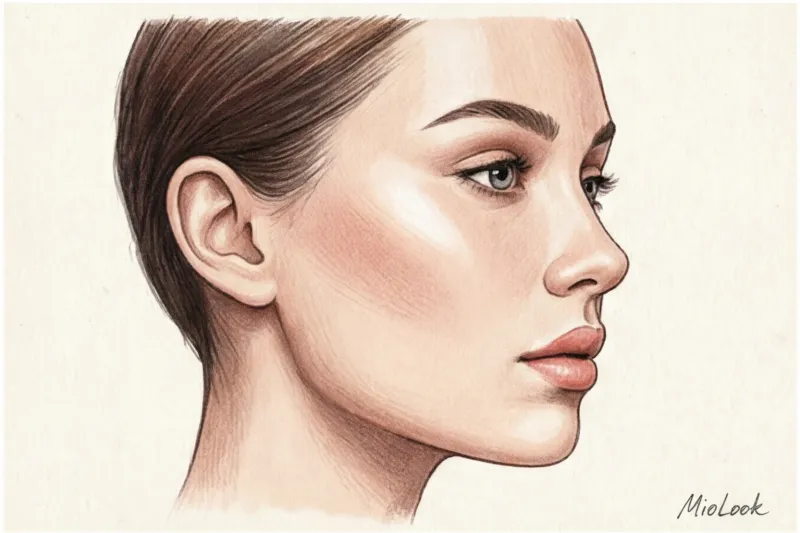
For an oval face, horizontal blending is crucial. If you apply the shadow too steeply downwards, the face will appear overly elongated and gaunt. Apply the contouring powder strictly parallel to the jawline.
A professional life hack that I use on set, especially when we're putting together images for a business photo shoot Studio lighting mercilessly eats away at volume. To bring life back to your face, add micro-accents of sculpting along the hairline on your forehead and a barely noticeable drop under your lower lip. This will create a subtle plump effect without injections and restore your face's natural contours.
Textures: Creamy or Dry Sculpted? A Stylist's Take
As a textile expert, I always pay attention to how textures interact with each other. The same principle applies to makeup: the texture of your contouring should not only "cling" to your skin but also echo the textures of your wardrobe.
- Matte, dry textures (powder sculptors) They perfectly complement dense, light-absorbing fabrics such as tweed, wool, and heavy cotton. They provide durability and a matte finish.
- Creamy textures (sticks, liquid sculptors) create the effect of moist, radiant skin, which goes perfectly with reflective fabrics: silk, satin, viscose.
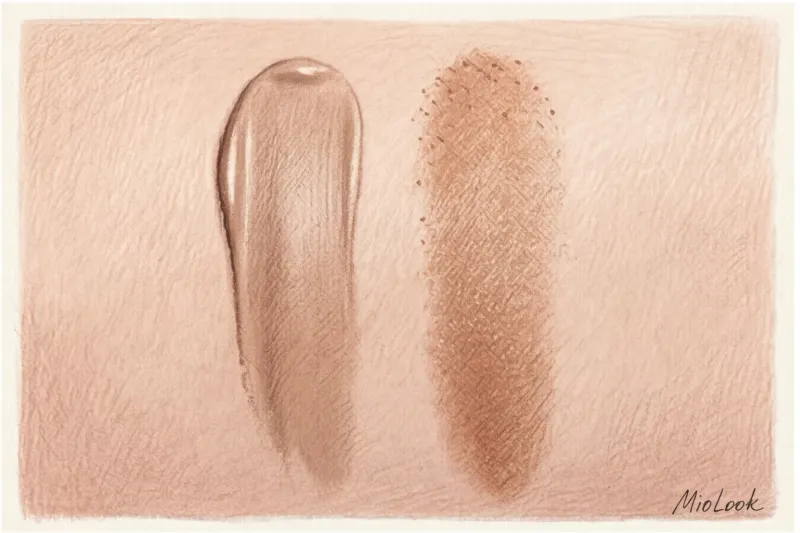
For daylight and especially for mature skin, I highly recommend cream products. They don't accentuate wrinkles and fine lines. Try this technique. Underpainting (inner glow), which was made trendy by celebrity makeup artist Mary Phillips. The idea is to apply creamy contouring to Foundation. You create shadows on bare skin, then apply a thin layer of translucent foundation. The result is a shadow that appears to be coming from beneath the skin. No blotches, absolutely natural.
But be careful: if you're performing on stage under spotlights, cream contouring without the firm hold of translucent powder will simply "run" within half an hour. For such events, use dry textures or follow up with a powder product.
Checklist: 5 Steps to Perfect Everyday Contouring
Applying your makeup in the morning before work shouldn't take half an hour. Here's my proven routine that takes exactly 3 minutes and guarantees flawless results.
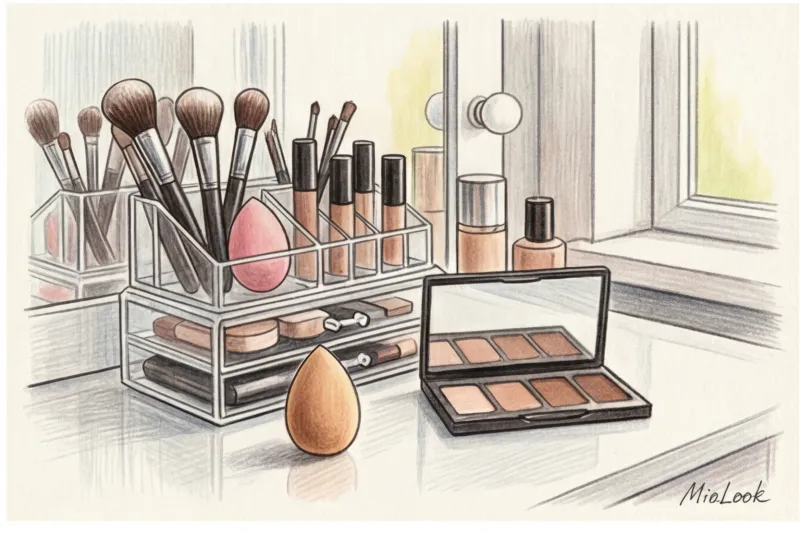
- Step 1: Preparation (sliding). Never apply the sculpting product to dry skin. A primer or moisturizer will ensure the product glides on perfectly, preventing caked-on spots.
- Step 2: Tool. Set aside tightly packed brushes; they leave streaks. Use a damp sponge (for cream) or a fluffy, angled brush made of soft synthetic bristles (for powder).
- Step 3: Spot application. The golden mean rule: it's better to add than to remove. Apply three small dots of creamy highlighter to your cheekbone, one to your temple, and one under your jaw.
- Step 4: Feather vector. Always put out upward and diagonally towards the temples. Downward movements will make the face look tired and sagging.
- Step 5: The 3-Second Rule. Take a step away from the mirror and move toward a window with natural light. If you can clearly see where your contouring begins and ends within 3 seconds, the product isn't blended well. The shadow should blend seamlessly into the skin.
The secret to truly "expensive" makeup isn't the number of palettes on your vanity, but understanding your own anatomy. Stop fighting your natural lines, trying to draw someone else's face. Embrace your own structure, add a few subtle shadows in the right places, and you'll see how your look will acquire that noble harmony that speaks for itself.
Ready to update your style?
Try the MioLook free plan—no commitments required. A smart AI stylist will analyze your appearance and select a wardrobe that will perfectly complement your new makeup look.
Get access — €0.99 once