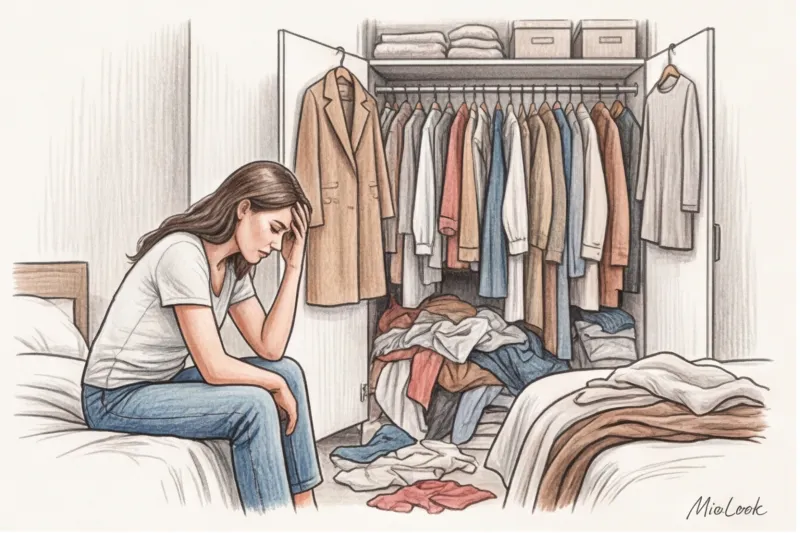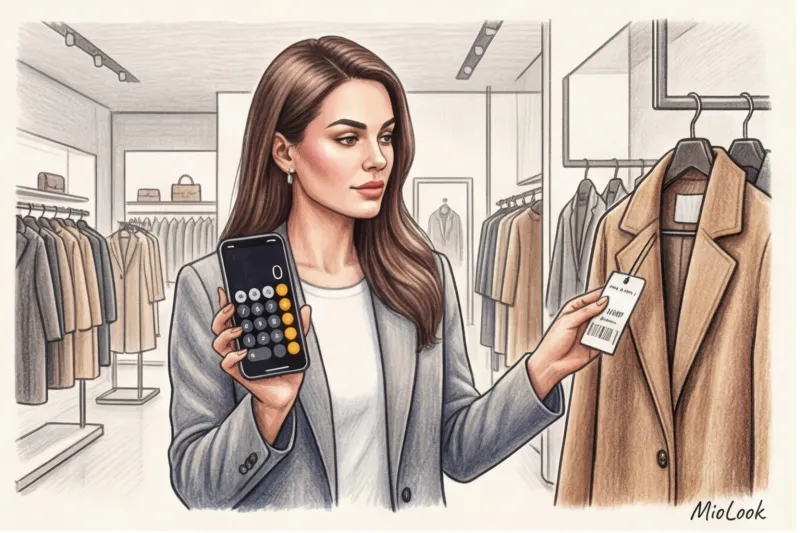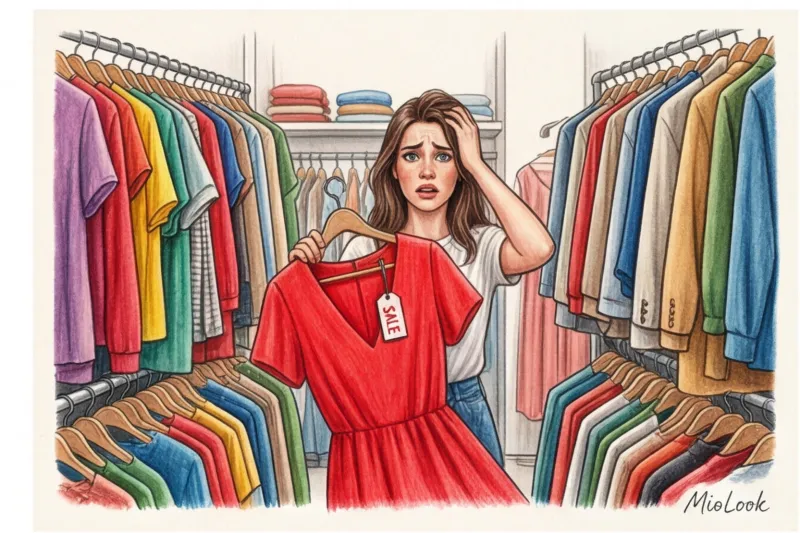
Last Friday, my client Anna texted me in desperation: "Isabella, I just bought my fifteenth black jacket. And you know what? I have absolutely nothing to wear to dinner tomorrow again." Sound familiar? You open your closet doors, and an avalanche of fabrics spills out, with literally nothing to wear.
We are used to thinking that mindful shopping rules Often dictated by austere minimalism—it's all about strict restrictions, melancholy, and endless identical beige turtlenecks. But as a personal stylist with a southern temperament, I see it differently. Your wardrobe isn't a warehouse of random items or a dull uniform. It's your exclusive private boutique. And every item in it must undergo a rigorous casting process before finding its place on the hanger. In Italy, they say: we're not so rich as to buy cheap things. And this rule applies not only to price, but also to the value of each item.
We discussed the origins of this approach in more detail in our complete guide: Conscious Fashion: How to Build an Eco-Friendly Wardrobe Today, I'll share specific tools that will help you stop buying unnecessary things and start investing in your personal style.
The Anatomy of an Impulse Buy: Why Your Closet Fills Up, But You Have Nothing to Wear
Let's be honest: when you stand at the checkout with your latest spontaneous find, you're not buying fabric and stitching. You're buying dopamine. You're buying the fantasy of a "new version of yourself" wearing that flowing dress on the waterfront (even if you currently live in a cold climate and work five days a week in an office with a strict dress code).
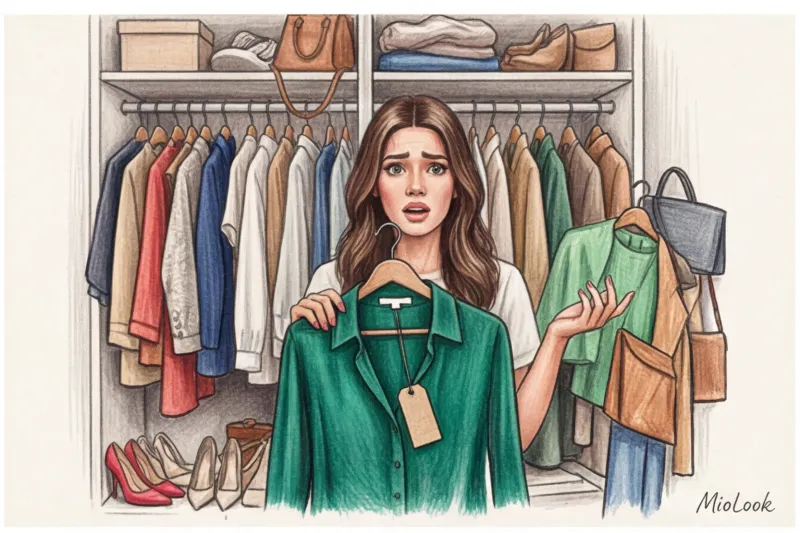
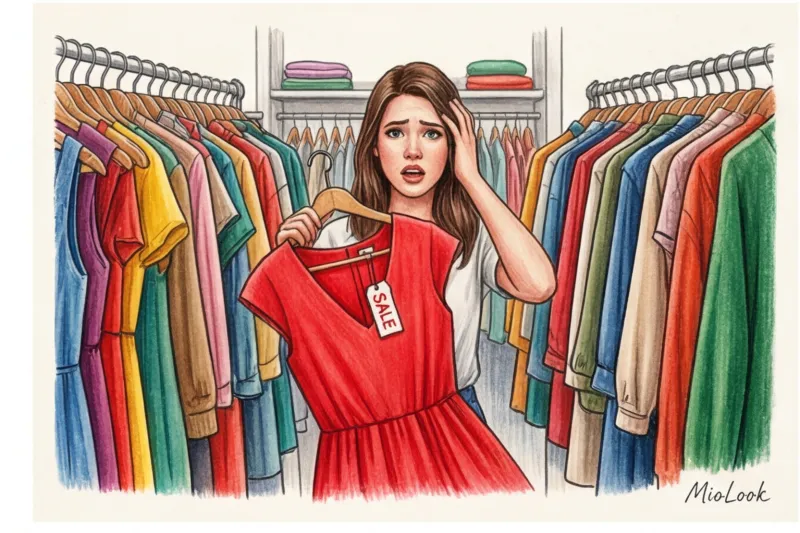
The fast fashion industry understands neurobiology well. Brands release 52 micro-collections a year to maintain a constant sense of fashion hunger. Sales are the main catalyst for this illusion. Huge red price tags disable critical thinking. I once sorted through a girl's closet, where three shelves were filled with items with intact tags. "But it was 70% off," she justified herself. But listen: saving money on something you'll never wear isn't saving. It's wasted money.
The perceived savings from sales are the biggest cost to our style. You're buying compromise, not a perfect fit.
According to shocking data from the Ellen MacArthur Foundation (2023), today we wear each item we buy 36% less often than in the early 2000s. And in our closets, the Pareto principle holds true: we wear the 20% of our favorite, tried-and-true items 80% of the time. The rest simply collects dust, making us feel guilty.
The illusion of a "new life" with a new dress
Over 12 years of practice, I've identified a clear pattern: impulse shopping peaks during moments of extreme stress, burnout, or just plain fatigue. We go to the mall not for new wool pants for the winter, but for comfort after a tough conversation with the boss.
As soon as you reach for the card, stop for a second. Ask yourself: "Do I really want this bag, or am I just dead tired after a challenging project?" By learning to recognize this emotional trigger, you'll save your budget. Better yet, go for a massage—you'll get more dopamine and won't lose any closet space.
Access to MioLook for €0.99 — one-time payment
A smart AI stylist will select the perfect look from your items so you can stop buying unnecessary items.
Get access — €0.99 onceThe Golden Rules of Mindful Shopping: A Stylist's Method
Building a filter for unnecessary purchases is much easier than it seems. I use three ironclad tools that I make all my clients learn. And they work flawlessly.
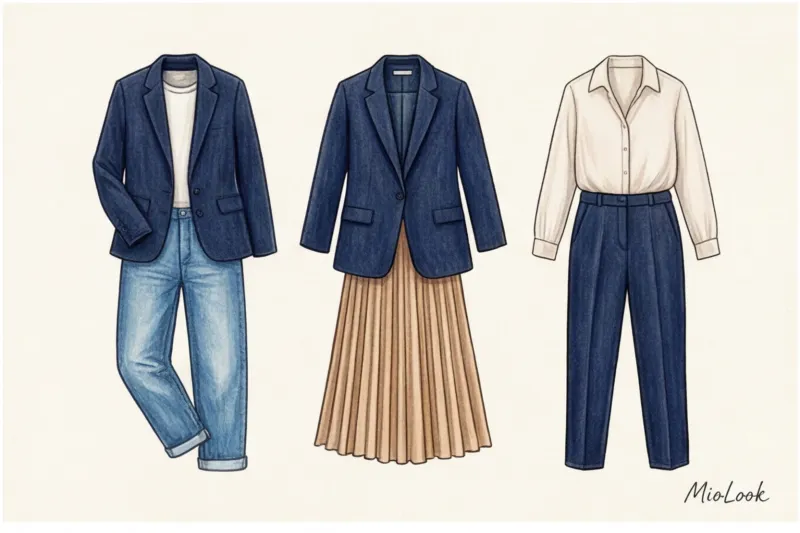
First - rule of three images Never take an item to the checkout if you can’t mentally create at least three outfits with it right there in the fitting room. already hanging at your home. Did you like the accent pink midi skirt? Great. What will you wear it with? With a basic white tee and sneakers – one. With an oversized gray sweater and Cossack boots – two. With a denim jacket – three. Can't think of anything else? Leave it in the store.
The second is the formula Cost Per Wear (CPW) , or the actual cost per output. This is what mathematically proves that expensive cashmere is often cheaper than acrylic. Let's break it down with numbers:
- A trendy mass-market top for $30. You wore it twice (until the first wash, after which it became pilled and lost its shape). Cost per wear = $15.
- A high-quality double-breasted wool coat costs $300. You wear it every day in the fall and spring for three years (about 150 times). The cost per wear = $2.
Fair Limit: This formula doesn't work for evening or wedding attire. A dress for a black-tie event will always have a high entrance fee, but the importance of the occasion and your emotions justify this.
The third tool is - 24-hour method It saves you from late-night online shopping. If you've filled your shopping cart on a marketplace, simply close the tab until tomorrow morning. According to my personal statistics, 8 out of 10 women delete half the items the next day because the initial obsession wears off.
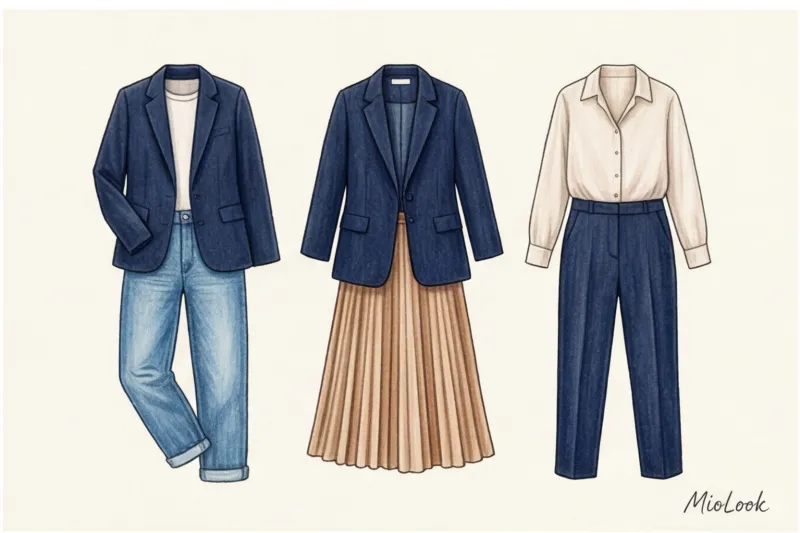
Try MioLook
Start creating perfect images with the help of artificial intelligence.
Get access — €0.99 onceWhy the "Buy Only the Basics" Advice Doesn't Work (and How to Actually Buy Them)
I'm going to say something that classic fashion guide authors can't stand me for: there are no universal lists of "10 essential basic items."
For years, women have been told that the perfect wardrobe must consist of a white shirt, a classic beige trench coat, black pumps, and a straight pencil skirt. But if your personality demands drama, complex textures, or relaxed Mediterranean boho chic, these proverbial "basics" will hang like dead weight in your closet. You'll look at your perfectly balanced beige wardrobe and yawn with boredom.
The concept of your personal base is closely related to archetypes in style A strict white shirt will be a fatal style mistake for a girl whose personality is revealed through flowing fabrics, floral prints, and asymmetry.
Your personal essentials are the pieces you can throw on with your eyes closed and feel fabulous. For one of my clients, a spirited gallery owner, her most versatile essential is a red velvet jacket. She wears it with jeans, over silk slip dresses, and with wide-leg palazzo pants. My favorite formula for her: red jacket + dark denim + loafers = instant chic without the effort. Find your own formula, don't copy someone else's.

Audit and preparation: what to do before leaving home
A professional stylist never goes shopping without a strict list. But such a list can only be compiled after a thorough inventory.

I'll share a personal life hack. Before the start of each season, I conduct an inventory of my closet's "hot zone." The hot zone is the rod at eye level in the center of your closet. It's where you instinctively reach in the morning. Remove everything that's out of season, anything that needs dry cleaning or repair, and anything that's objectively too small for you right now. Keep only 100% functional pieces. You'll immediately spot any gaps.
Then we create a shopping list. The main rule: we fill specific holes in the capsule, not create clones. If you already have two pairs of blue jeans, you don't need a third, even if they're "a slightly different shade." For a systematic approach to this process, read the guide. Capsule Wardrobe: A Complete Guide to Creating One.
To avoid having to keep everything in your head, use modern technology. Digitizing your wardrobe with AI is a complete game-changer. In the app MioLook You can take photos of your items, and a smart algorithm will remove the background, create your personal virtual fitting room, and suggest exactly which elements are missing to complete dozens of new looks.
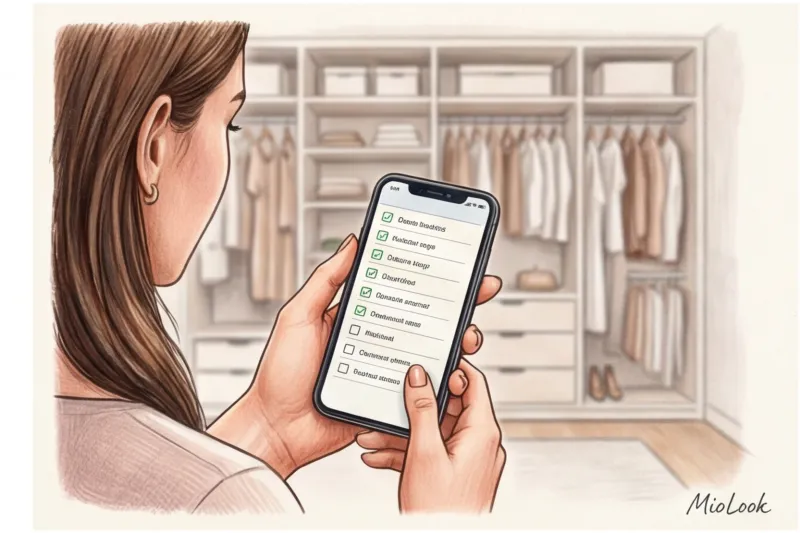
Your perfect look starts here
Join thousands of users who look flawless every day with MioLook. Digitize your wardrobe in just a few clicks.
Get access — €0.99 onceInstructions: How to Behave in a Fitting Room (Stylist Checklist)
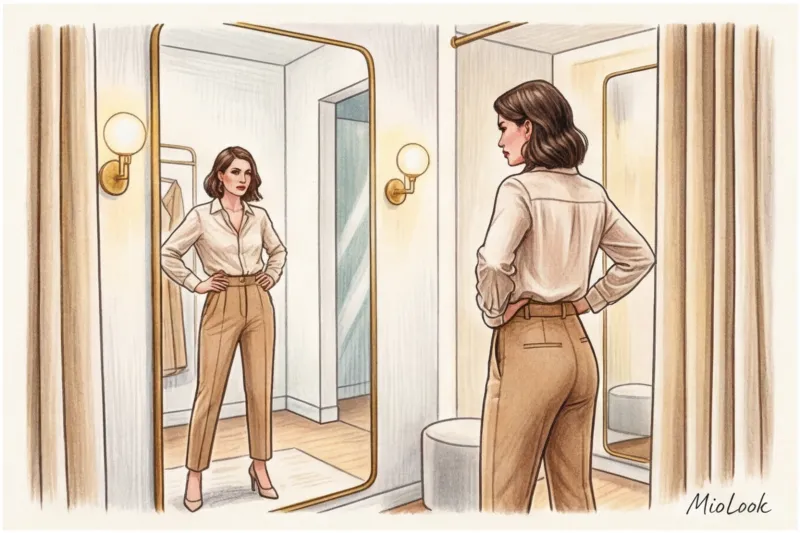
You're in the store. The item you've been wanting is in your hands. How do you know if it's truly worthy of a place in your closet? I've put together a strict fitting room checklist to help you avoid disappointment:
- Remove the street context. Never judge a thin silk dress without removing heavy winter boots and a bulky sweater. You won't see the true silhouette. Wear basic shoes (many boutiques have them available) or wear socks but remove any bulky shoes.
- Conduct a comfort crash test. Standing still in front of the mirror isn't enough. My mandatory test: sit on the ottoman in the fitting room. Raise your arms. Bend over as if tying your shoelaces. If your tight pants dig into your stomach when you sit down, you won't wear them to the office for eight hours straight, no matter how stunning they make your waist look when you stand.
- Study the DNA of the tissue. Read the inner label. Look for eco-friendly and breathable materials: lyocell (Tensel), cupro, organic cotton with a weight of at least 180 g/m², high-quality viscose with 5% elastane for shape retention. Squeeze the fabric in your fist for 10 seconds: if it's deeply creased, you'll look unkempt within an hour of leaving the house. Avoid 100% thin polyester—it's insulated in winter, creates a greenhouse effect in summer, and quickly pills.
- Take an honest selfie without filters. Commercial lighting in fitting rooms at major brands is often adjusted to flatter the figure and conceal flaws in fit. Take a photo of yourself in the mirror with your phone. In a static photo, you'll immediately notice crooked seams, warped fabric, or awkward lengths that your emotion-blurred eyes might have missed.
Life After Shopping: Grooming as Part of Conscious Fashion
Buying a great item with the perfect composition is only half the battle. The other half is proper care. The United Nations Environment Programme (UNEP) points out that a colossal percentage of microplastics and the enormous carbon footprint of clothing are generated in our homes, during the washing and drying process.
The most common mistake that ruins items in a single season is obsessive washing. Expensive wool sweaters, cashmere turtlenecks, and heavy jackets don't need to be washed after every wear. Simply air them out in the fresh air or steam them with hot steam (steam is excellent for killing bacteria and odors).
Storage is also critical. Hang a heavy, bulky cardigan on a thin metal hanger? A month later, your shoulders will be permanently elongated. All knitwear should be folded and stored on shelves. High-quality business jackets require wide wooden hangers. Leather bags should be stored in dust bags and stuffed with paper to maintain their shape. I wrote more about the status approach to accessories in the article " The Perfect Leather Business Bag for Women: A Guide to Choosing ".
Where to start right now?
You don't need to rush to the store to find the perfect new capsule collection. Your first step: go to your closet right now and pull out five items you haven't worn in over a year. Try them on in front of the mirror with unexpected shoes or accessories, and try to incorporate them into your current style. And if you don't find love, honestly set them aside for charity or a resale platform. True mindfulness always begins not with buying new items, but with an honest inventory of what you already own.