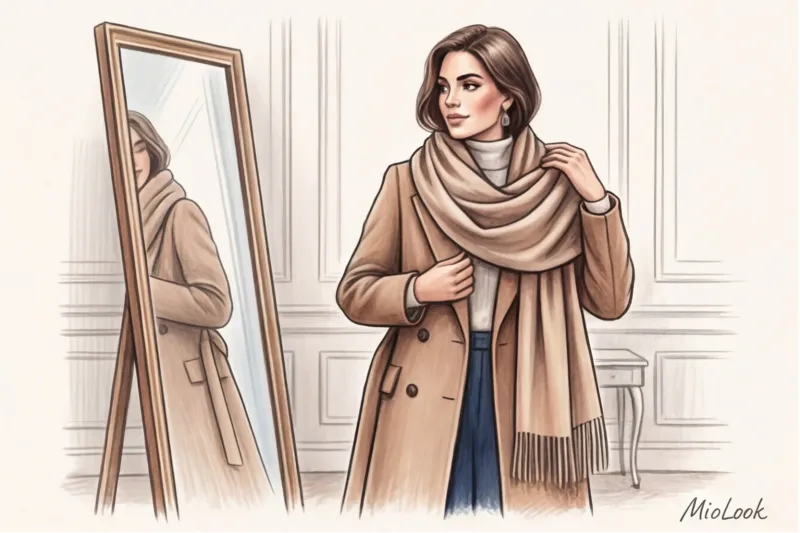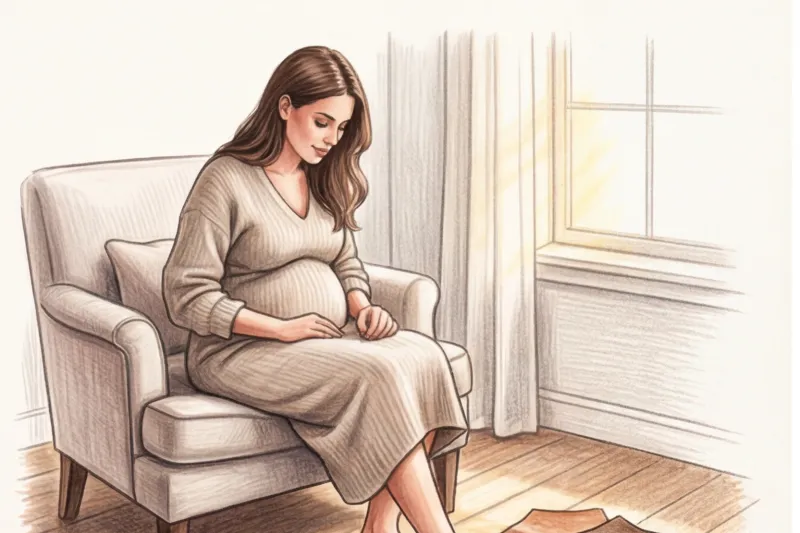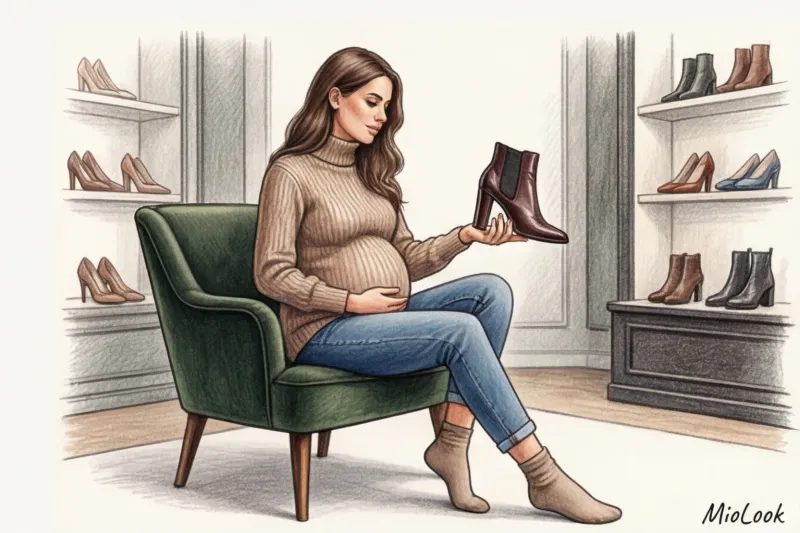
It's September 2022, Paris Fashion Week. My client, a fashion editor for a major glossy magazine and six months pregnant, is rushing to a show. She's wearing trendy but stiff ankle boots, which, following popular internet advice, she bought "just two sizes too big." The result? She trips on the smooth Parisian sidewalk, her foot slips inside the oversized boot, and we narrowly avoid a serious ankle sprain.
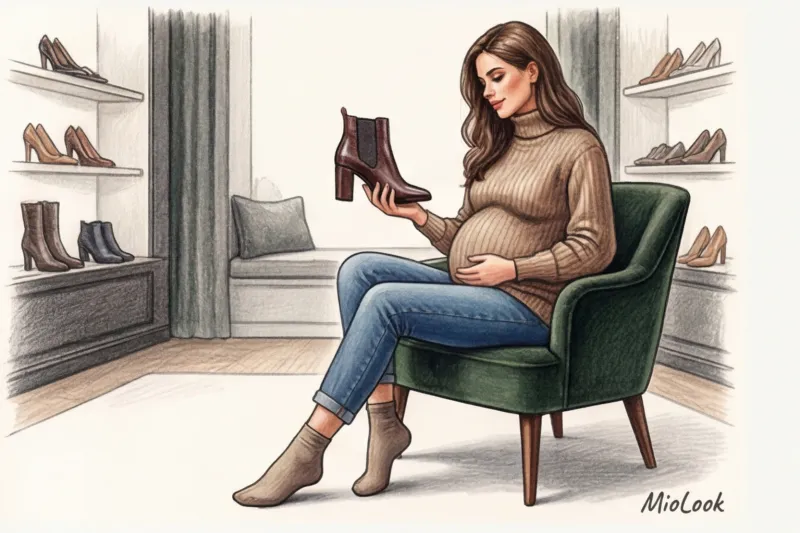
This situation once again proved to me that choosing the right autumn footwear for pregnant women isn't a matter of aesthetic compromise, but rather a matter of safety and biomechanics. We discussed foot physiology during this period in more detail in our The complete guide to comfortable maternity shoes: style and foot health Today, I, Camille Durand, want to dispel the stereotype that orthopedic support means sacrificing style. We'll explore how to adapt runway trends to your body's new needs.
Biomechanics of Style: Why Autumn Shoes for Pregnant Women Require a Special Approach
Have you ever noticed that around the second trimester, your favorite leather ankle boots suddenly start to feel like torture devices, even if you haven't gained much weight? The reason isn't so much swelling as hormones. Your body actively produces relaxin, a hormone that softens the pelvic ligaments in preparation for childbirth.
But relaxin doesn't act selectively. According to the American Foot and Ankle College (ACFAS, 2023), it relaxes ligaments throughout the body, including the feet. As a result, the arch of the foot flattens, and the foot flattens under the increasing body weight. By the third trimester, the width of the foot can increase by 1–1.5 full widths.
The second problem is "pregnancy lordosis." A growing belly shifts the center of gravity forward. To avoid falling, a woman instinctively leans backward, putting strain on the lower back. This is why completely flat soles (ballet flats, Converse sneakers with thin rubber) become your main enemy. According to podiatrists, to compensate for this shift, a slight difference in height between the heel and toe (a drop) is necessary—about 2–3 cm. This automatically aligns the pelvis and relieves tension in the lower back.
A Dangerous Myth: Why You Can't Just Buy Boots a Size Bigger
The most harmful advice I constantly hear is: "Just go a couple of shoe sizes bigger." This is completely wrong and even dangerous. During pregnancy, the foot lengthens slightly (by a few millimeters), but it becomes significantly wider.
When you put on a size 40 shoe on a size 38 foot, you get a gap in the toe box. This disrupts your gait pattern—you instinctively start to dig your toes into the sole or shuffle. Worse yet, the anatomical curve of the last (the arch support) shifts and begins to put pressure on the wrong part of the foot, inevitably leading to knee pain.
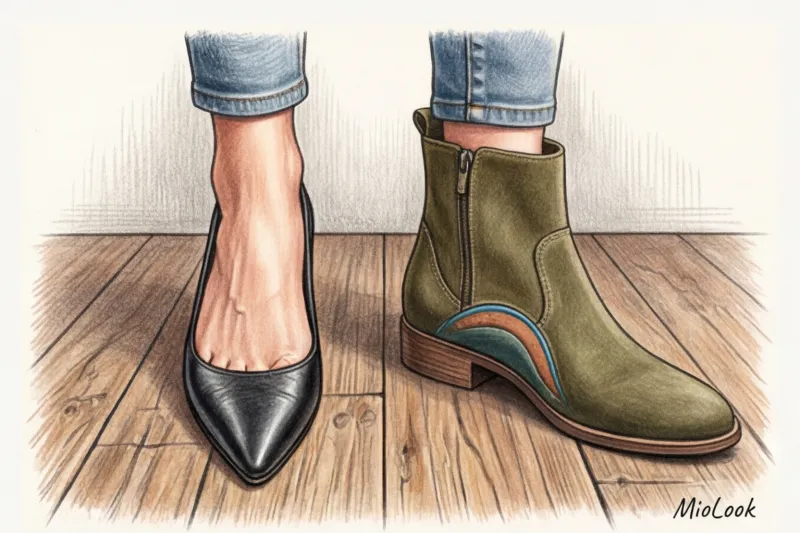
Stylist's conclusion: You need to look for shoes with markings, not longer ones. Wide Fit (wide last) your natural size.
Your perfect look starts here
Join thousands of users who look flawless every day with MioLook. Our smart algorithm will select shoes to complement your capsule wardrobe.
Get access — €0.99 onceA stylist's checklist: criteria for choosing the perfect pair for the off-season
In my practice styling pregnant clients, we always follow three golden rules for mid-season footwear. And fortunately, modern trends fit these requirements perfectly.
- Depreciation: A thick yet flexible sole (like that of trendy chunky boots) is your best friend. It absorbs micro-shocks when walking on hard pavement, protecting your joints.
- Tread: Autumn rains and the first morning frosts require perfect traction. Choose a pronounced tractor-like tread made of soft rubber rather than slippery, smooth polyurethane.
- Ease of putting on: By the seventh month, tying shoelaces becomes an Olympic skill. Look for models with side zippers, elastic bands, or a hands-free system.
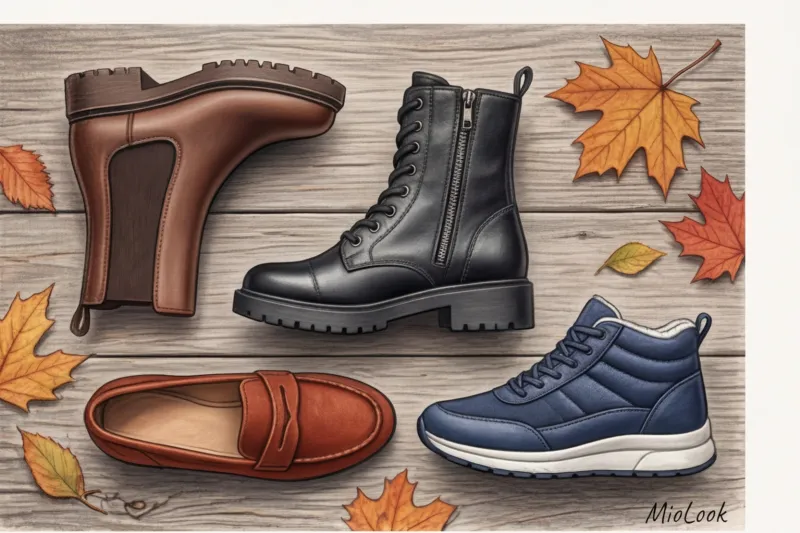
Top 4 Trending Styles: Comfortable Autumn Shoes for Pregnant Women
WGSN analytics for 2024 confirms: the trend towards comfort and so-called ugly shoes The aesthetic (set by The Row and Bottega Veneta) is here to stay. This is great news, because chunky silhouettes address all the physiological needs of expectant mothers.
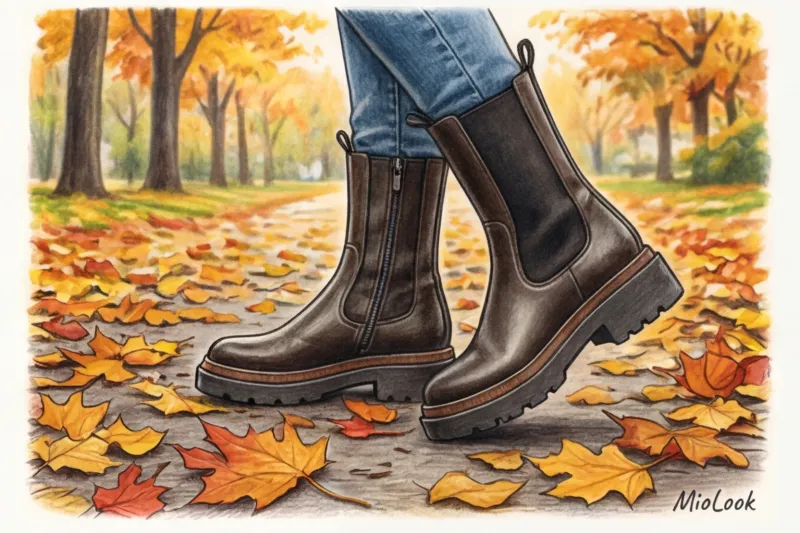
Chunky Chelsea Boots
This is an absolute must-have for the fall capsule collection. Their main advantage is the wide elastic panels on the sides. Unlike a rigid zippered shaft, the elastic adjusts to your ankle size, which can fluctuate throughout the day (due to evening swelling).
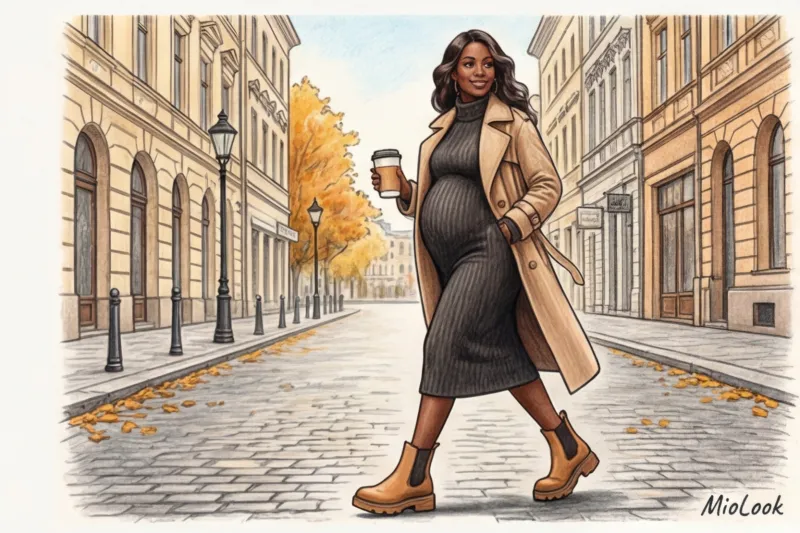
Furthermore, modern Chelsea boots feature a wide, round or square toe, giving your toes plenty of room. And most importantly, they can be put on while standing, using a long (50–70 cm) metal shoe horn, without bending over.
Combat Boots
Love grunge or '90s style? Combat boots are still trendy. A stylist's secret: look for styles with a side zipper and lacing. You can adjust the boot shaft and instep width once at the beginning of the season using the laces, then use the zipper exclusively throughout the season.
These boots provide phenomenal ankle support, which is critical for ligaments weakened by relaxin.
Insulated high-tops and smart sneakers
For warm autumn or late spring, urban sporty chic is essential. Choose high-top sneakers with a thick sole. They often feature built-in arch support, borrowed from running shoes.
Life hack: If you've found the perfect sneakers, but they have laces, invest €5 in high-quality silicone elastic laces. They'll turn any shoe into a slip-on.
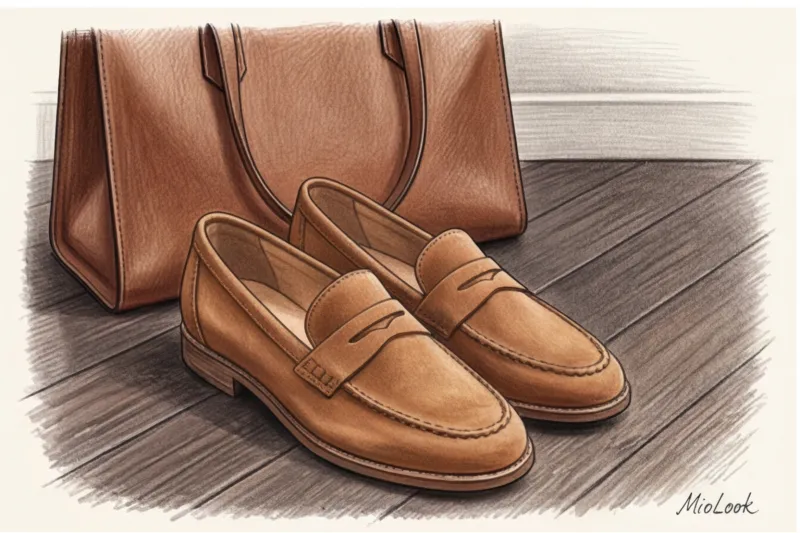
Chunky-soled loafers for warm weather
When it's already cold in ballet flats, but still hot in boots, a chunky sole protects your foot from the chill of the autumn ground and creates just the right amount of height difference (2-3 cm drop). Choose models made of soft materials to prevent the upper from digging into your instep.
Try MioLook
A smart AI stylist will create the perfect look for you. Upload your items, and the app will create dozens of stylish outfits to pair with your new, comfortable shoes.
Get access — €0.99 onceMaterials that “understand” your body
Over 12 years of working as a stylist, I've learned that design doesn't matter if the material doesn't breathe. During pregnancy, the body's thermoregulation changes, women feel hotter more often, and their feet sweat more. The greenhouse effect of cheap polyurethane shoes can lead to fungal infections.
Quality shoes in the €120–€250 range are an investment in your well-being. Avoid stiff patent leather—it doesn't stretch or fit your foot properly. Your choice:
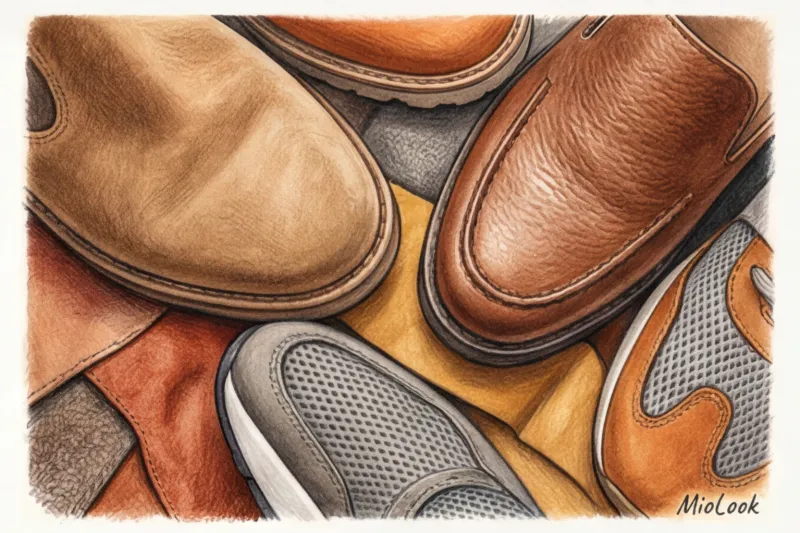
- Soft suede and nubuck: have the highest natural elasticity.
- Pebble leather: Due to its textured finish, it is softer than smooth calfskin and hides creases better.
- Membrane fabrics (eg Gore-Tex): The perfect solution for rainy November. They keep water out but wick away moisture from the inside.
Instructions: How to properly try on demi-season shoes
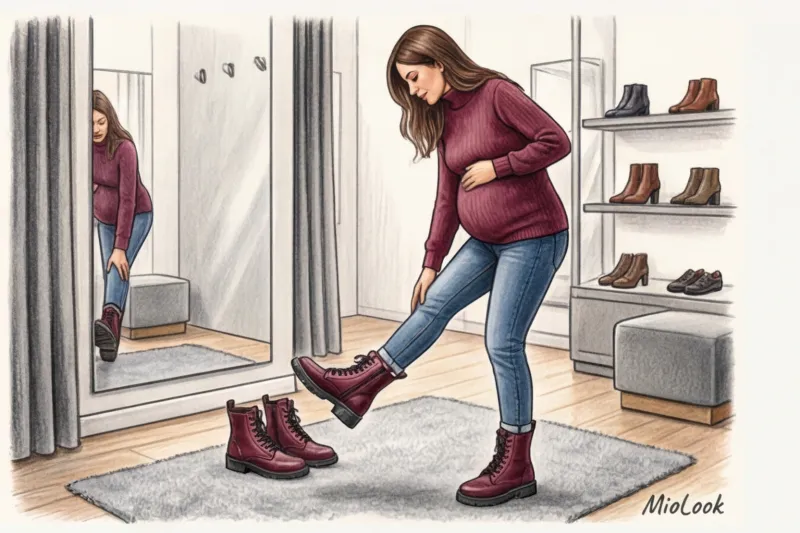
Buying fall boots requires a strategic approach. Save this checklist before you hit the mall:
- Afternoon Rule: Always go shopping after 4:00 PM. By evening, feet swell and reach their maximum volume. Shoes that fit perfectly at 10:00 AM may feel tight by evening.
- Warm sock test: Try on shoes with the socks or thick tights you plan to wear them with. Thick cashmere socks can add up to half a size.
- Sole flexibility assessment: Take the shoe in your hands and try to bend it. It should bend in the front third (where your toe joints are), not in the middle. If the sole doesn't bend at all ("wooden"), your calves will be strained with every step.
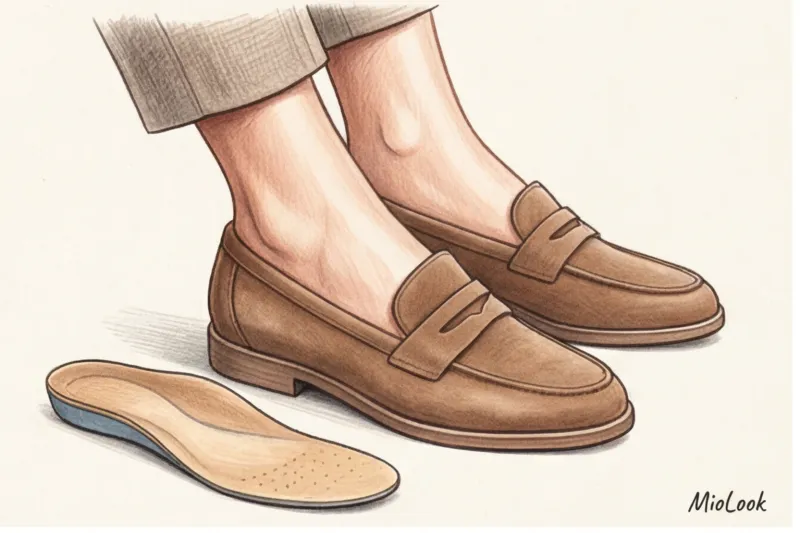
It is important to understand the limitation: Even the most expensive and ergonomic soft suede shoes won't solve the problem if you've been diagnosed with grade III flat feet or severe pain. In this case, purchasing shoes with a removable insole that can be replaced with a custom orthotic is your only sure option.
What to wear: Integrating comfortable boots into your fall wardrobe
One of my clients, an IT manager with a strict smart-casual dress code, was very worried that chunky boots would make her look too heavy. In fact, chunky shoes are a brilliant visual enhancement tool.
When you develop a belly, your figure's center of gravity shifts visually upward. Sleek, narrow ankle boots with thin soles can create a "hut on chicken legs" effect—a chunky top and a too-fragile bottom. Rough boots, on the other hand, ground the look and restore harmony to proportions.
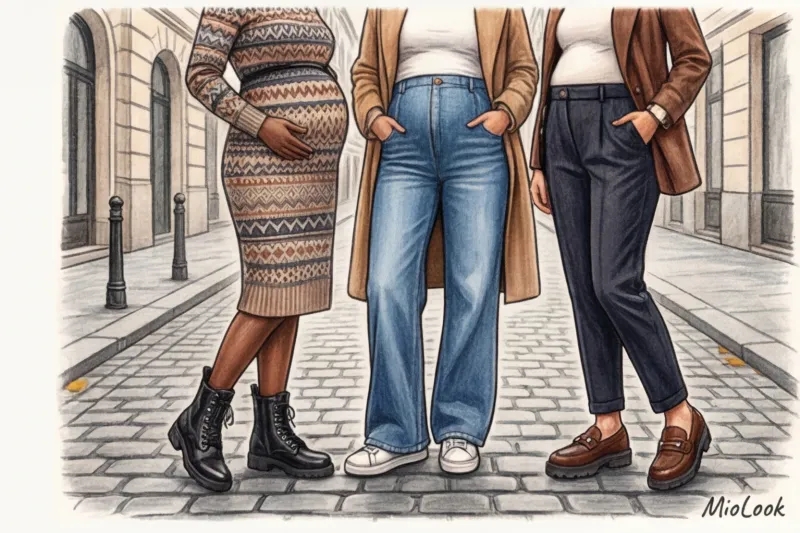
- Playing on contrasts: Pair chunky combat boots with flowy midi-length knit noodle dresses. It looks feminine yet modern.
- Urban classics: Chelsea boots with a tractor sole look great with thick maternity leggings and a voluminous trench coat or an open wool robe.
- Office chic: Loafers with thick soles are ideally combined with cropped straight-leg trousers (with an elastic insert at the stomach) and voluminous cashmere sweaters.
By the way, if you're unsure what to wear with your new pair, I recommend uploading a photo of it to the app. MioLook Artificial intelligence will analyze your virtual wardrobe and suggest dozens of fresh combinations based on your proportions.
Summary: Healthy feet are the foundation of your style
Shoes are literally your foundation, especially during this period when that foundation bears double the load. The right autumn footwear for pregnant women isn't something to skimp on or compromise on for the sake of fleeting microtrends.
The main takeaway I want you to take from this article is: don't buy shoes two sizes too big, look for a wider fit, and pay attention to cushioning and natural materials. Comfort and fashion are no longer mutually exclusive. Take stock of your fall footwear today, before the long rains arrive, and treat yourself to the luxury of a light, confident gait.