
The Psychology of Color in Clothing: Why Magazine Clichés Don't Work
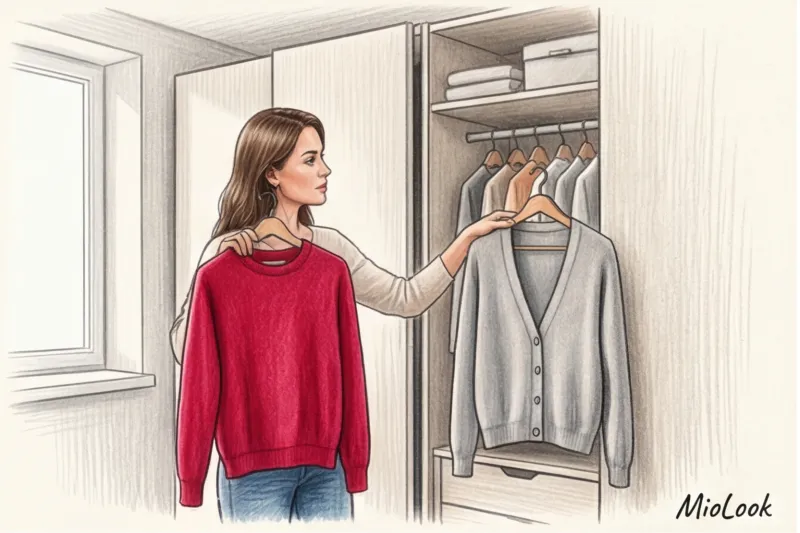
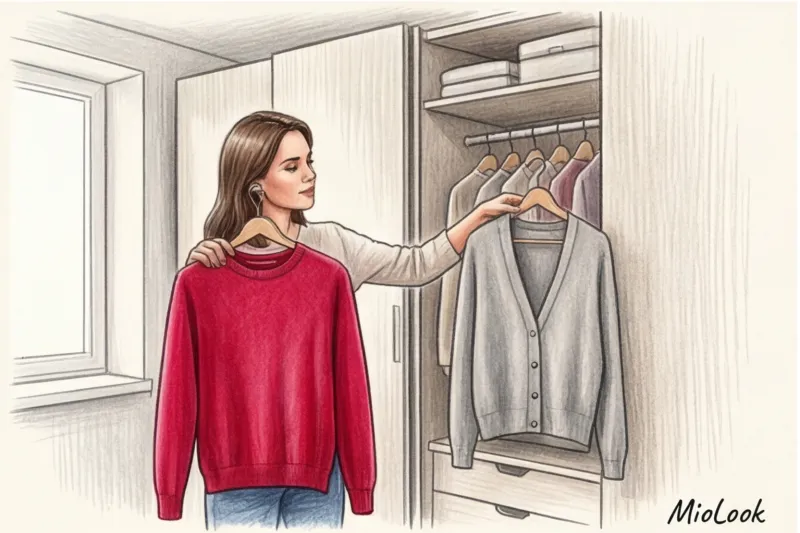
You're standing in front of an open closet filled with dozens of items. But for some reason, your hand keeps reaching for the faded gray hoodie instead of the luxurious coral sweater. Ever noticed this? As a practicing stylist and colorist, I see this in 9 out of 10 new clients. We often explain it away as a banal "I'm not in the mood to dress up," but in reality, a powerful mechanism is at work here— psychology of color in clothing.
The problem is that most articles on this topic offer us hopelessly outdated pop psychology cliches. "Red is aggression and passion," "green is calm," "blue is intelligence." Forget it. If it were that simple, anyone in a red dress would instantly become a fatal leader.
In fact, our reaction to color is determined by physics and neurobiology. Long-wavelength colors of the spectrum (reds, rich oranges) physiologically increase heart rate and blood pressure. Short-wavelength colors (cool blues and light blues), on the contrary, slow the pulse. Moreover, in 2012, researchers at Northwestern University coined the term Enclothed Cognition (clothed cognition). They proved that the color and shape of clothing alter a person's cognitive processes depending on the symbolic meaning they assign to the item. We discussed how this mechanism works in more detail in the article about the psychology of style and the influence of clothing on the brain.
Temperature, Saturation, and Lightness: Hidden Mood Controls
The main secret of professional colorists, which is rarely written about in fashion blogs: it is not the color itself (red, blue, or green) that influences us, but its basic characteristics.
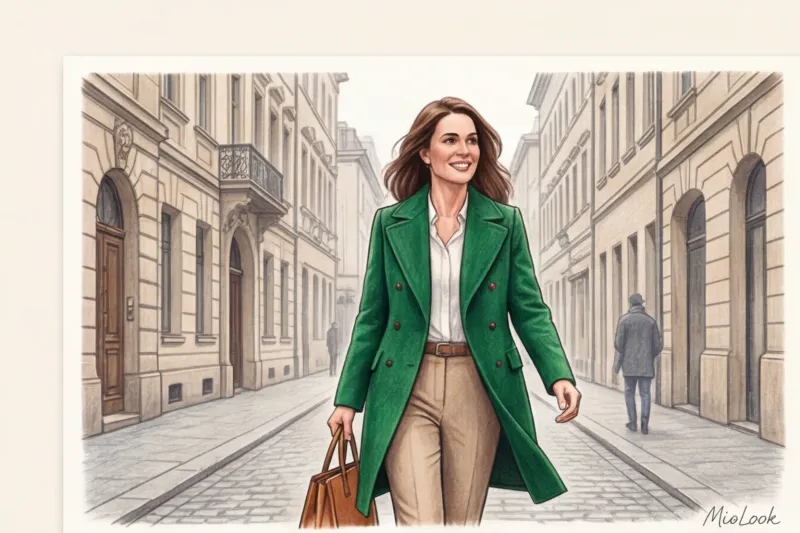
Based on the color theory of the Swiss artist Johannes Itten, I always draw my clients' attention to temperature Shade. Warm yellow-green (the color of spring grass) invigorates and evokes a surge of energy because it is associated with the awakening of nature. Cool emerald, on the other hand, creates a sense of distance, coolness, and maximum focus. Although technically, both are green.
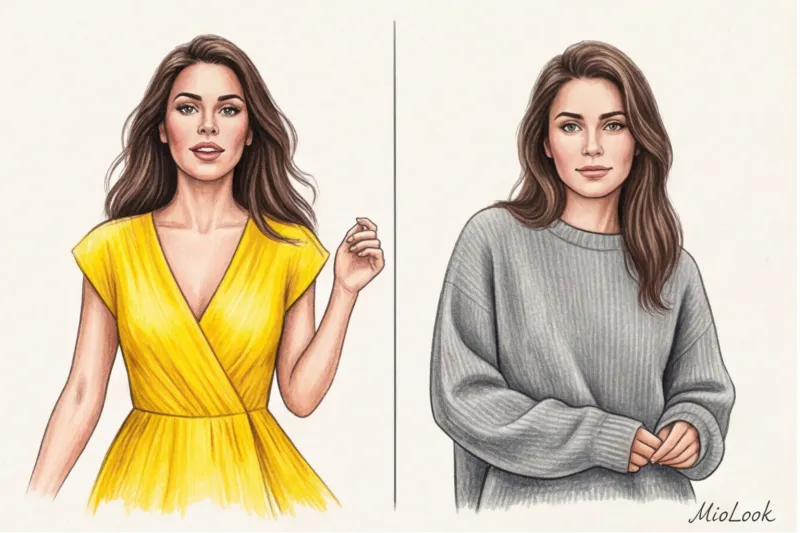
The second lever is saturation Pure, vibrant colors (without a hint of gray or black pigment) act as a visual energizer. Muted shades are grounding and calming. If you wear pure red, you'll project a sense of defiance. Tone down the same red with a touch of gray, and you'll get a sophisticated, elegant wine shade that communicates status, not rebellion.
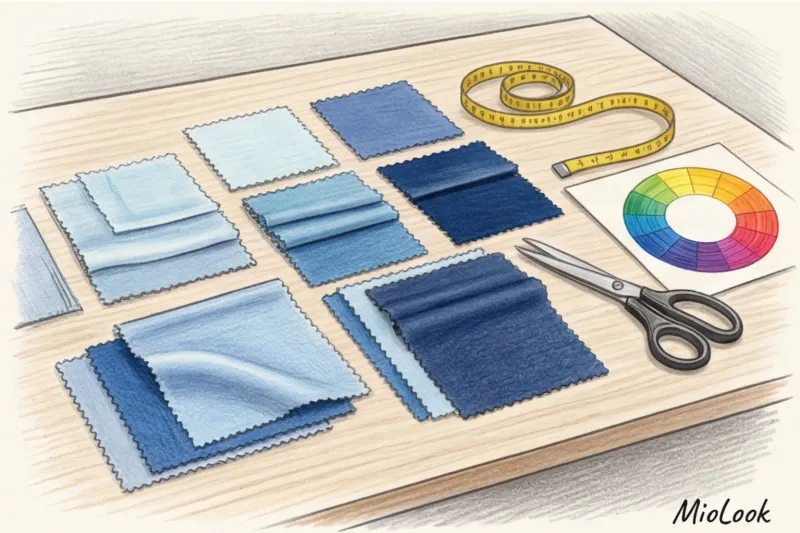
And finally, lightness Pastel, deeply bleached tones are the best way to reduce internal tension. When you feel yourself boiling over with stress, a milky or soft blue cashmere jumper will literally soften your mood.
Your perfect look starts here
Join thousands of users who look flawless every day with MioLook. Our intelligent AI stylist will select a palette to match your mood.
Get access — €0.99 once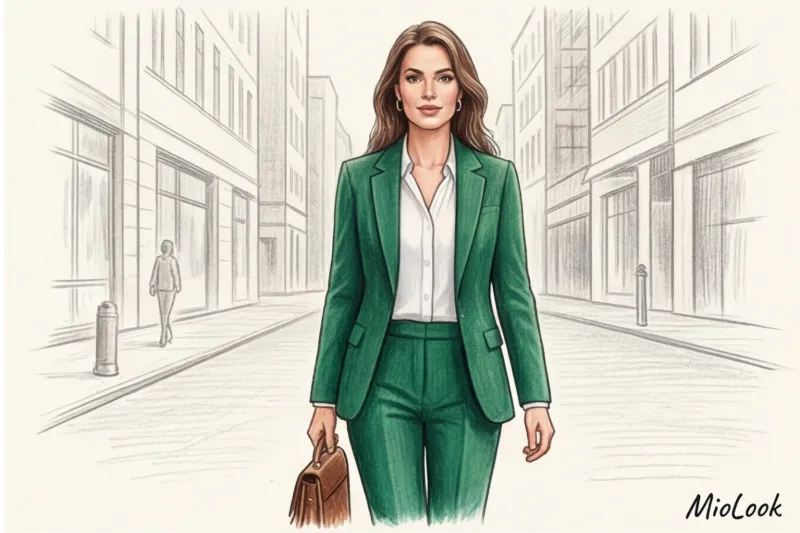
Dopamine Dressing: When Bright Colors Really Heal
Term dopamine dressing has taken the industry by storm since the pandemic. The idea is that consciously choosing neon or deliberately clear shades stimulates the release of dopamine. Bright fuchsia, tangerine, and electric blue—they really do help pull you out of a mild funk.
But there is one critically important limitation here that stylists usually keep silent about. Dopamine training doesn't work if you're overstimulated or under a lot of stress. If you haven't slept for two days, are handing in a challenging project, and are on edge, a bright yellow Zara jacket will only cause sensory overload and irritation. On days like these, you need a visual "cocoon," not a megaphone. I recommend reading our guide: Bright Colors in Office Wear: How to Wear Them Without Going Overboard.
Instructions: How to choose the right color for a specific task
Let's move from theory to real-world scenarios. As a stylist, I often prepare experts for public speaking engagements and important negotiations. We never choose a color based on the principle of "just looks good."
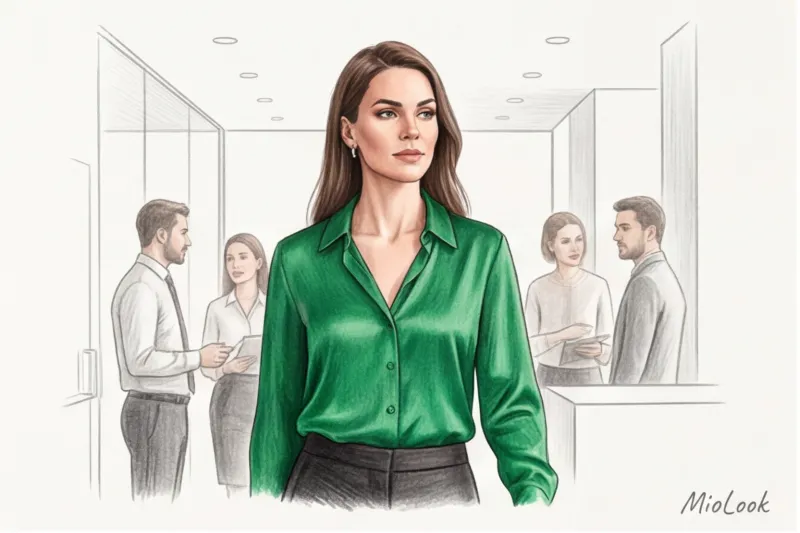
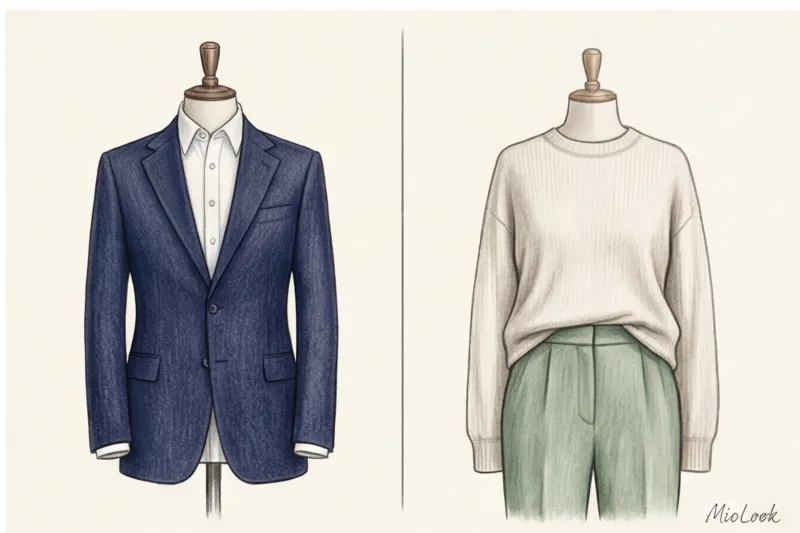
- Days of Maximum Focus: Complex graphite gray, deep navy, and cool emerald. According to corporate image research, people in dark blue suits are perceived as 30% more trustworthy and competent. These colors reduce fuss and help maintain boundaries. Ideal for interviews or budget defense.
- Days of manifestation and energy: Terracotta, rich orange, carmine red. Over 12 years of practice, I've developed a rule: if a speaker needs to "wake up" a morning audience, we wear a warm coral or rusty-brick suit (for example, made of thick viscose or wool). The audience's pulse quickens microscopically, and attention is more easily held.
- Reboot Days: Sage, dusty rose, milky, cappuccino. Remember how the Pantone Color Institute chose Peach Fuzz as the 2024 color of the year? It's a global macrotrend for reducing anxiety. These colors are enveloping and create a sense of security.
Breaking Stereotypes: Why Black Doesn't Always Mean Confidence
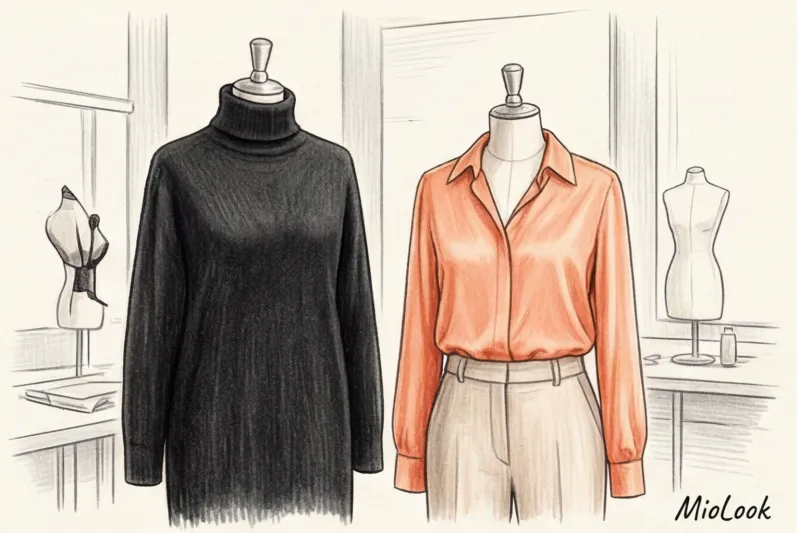
"When you don't know what to wear, wear black. It's always stylish and gives you confidence." Have you heard this phrase? It's one of the most harmful myths in modern fashion.
The psychology of black is highly ambivalent. Yes, it looks graphic on the runway. But in everyday wear, all-black often acts as a dull visual shield. Subconsciously, it's a marker of isolation and a reluctance to express oneself.
"We hide in black when we don't want to be judged. But the paradox is that black requires a perfect cut and flawless texture, otherwise it simply looks sloppy."
But the most important thing is physiology. Black absorbs light. If you're tired, sleep-deprived, or sick, a black turtleneck worn close to your face acts as a merciless filter. It will draw out all the shadows, highlighting the nasolabial folds and dark circles under your eyes. You walk to the mirror, see a haggard face, and your self-confidence instantly plummets.
I once had a client whose wardrobe consisted of 90% black. She believed it conveyed status and security. We replaced the black around her face with deep chocolate and navy. A month later, she admitted, "I no longer look constantly tired." If you want a touch of status without the "washed-out" look, choose alternatives: dark chocolate, deep burgundy, inky blue, or graphite. More on this in the article. What colors in business attire inspire confidence?.
How to Create a Personal Color Anchor (Enclothed Cognition Practice)
Cultural codes are secondary to your personal experience. If you were harshly criticized as a child when you wore a red dress, no amount of red will give you a sense of power now. Your brain has already associated this color with stress.
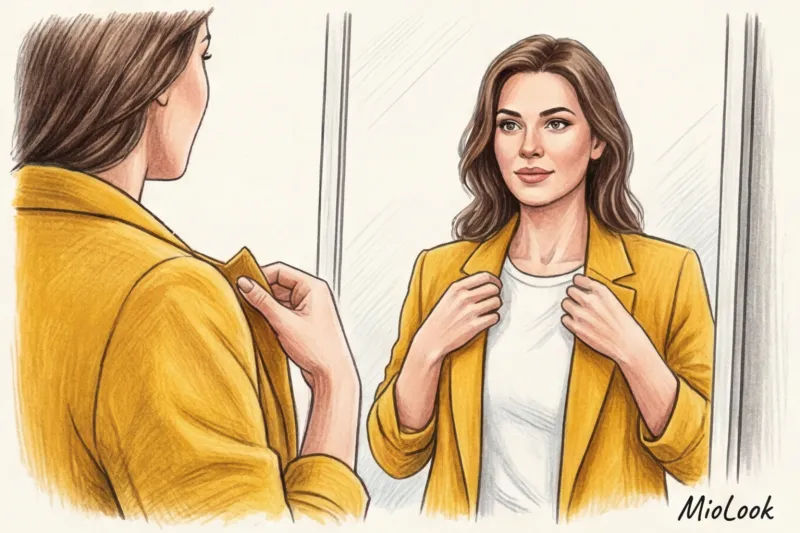
That's why I teach my clients to create personal color anchors I had a client who felt invisible in a total beige look (a classic minimalist aesthetic), but was terrified of bright fuchsia. We compromised and found a muted coral jacket. Wearing it in moments of triumph (successful deals, pleasant meetings), within a few months she literally "anchored" the connection in her brain: coral = I'm successful and safe.
How to repeat this?
- Think back to a day when you felt absolutely happy and confident. What were you wearing? What color was it?
- Buy a wardrobe item in the same shade. If you're hesitant about bulky pieces, start with a belt, bag, or silk top (as a base layer under a tailored jacket).
- Wear this thing only when you have something pleasant coming up or when you need to quickly return to a resourceful state.
By the way, to avoid making mistakes with combinations when introducing new shades, try the "smart wardrobe" feature in MioLook — the app will suggest ideal color combinations based on your items.
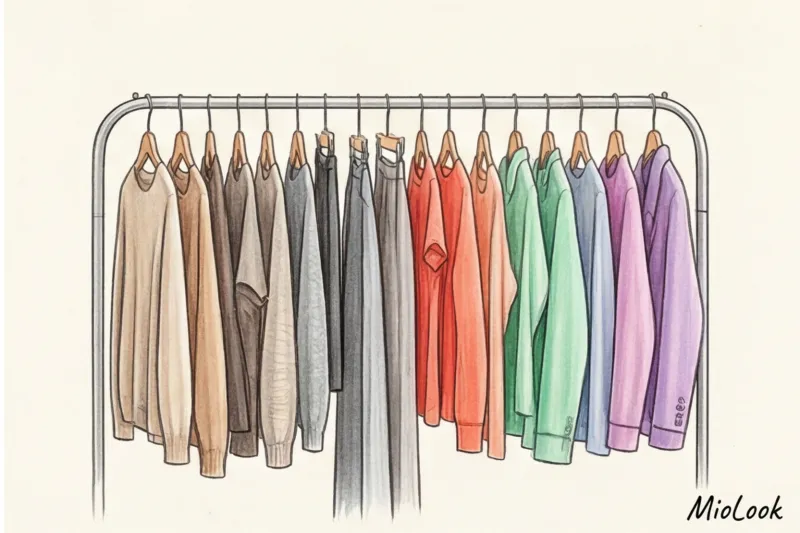
A stylist's checklist: incorporating color therapy into your wardrobe
To make sure your knowledge doesn't just remain text, I suggest you audit your closet today:
- Find your "power color": Think about what color you wear and receive compliments like "how fresh you look" (as opposed to "what a beautiful dress"). This is your ideal shade for important meetings.
- Determine your "color of peace": Rely on muted shades from your natural palette. For contrasting brunettes, this could be deep emerald, or for light browns, dusty wormwood.
- Conduct a database audit: Keep black items away from your face unless they're made of expensive textures (silk, velvet, or thick suit wool). Replace them with sophisticated dark tones.
- Check the temperature: The color should complement your skin tone. Read more about how this works in our A guide to the 12 color types of appearance.
Ready to get started?
Try the free plan—no commitments required. Digitize your items, and MioLook will organize them into stylish capsule collections based on color psychology.
Get access — €0.99 onceColor isn't just paint on fabric. It's a tool for managing your own state of mind. When choosing your clothes tomorrow morning, ask yourself just one question: "What emotion do I want to experience today?" And let your wardrobe work for you, not against you.