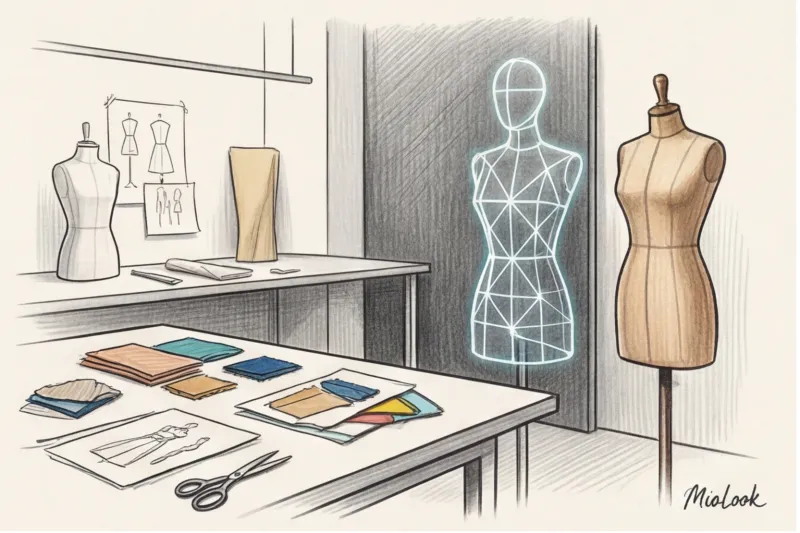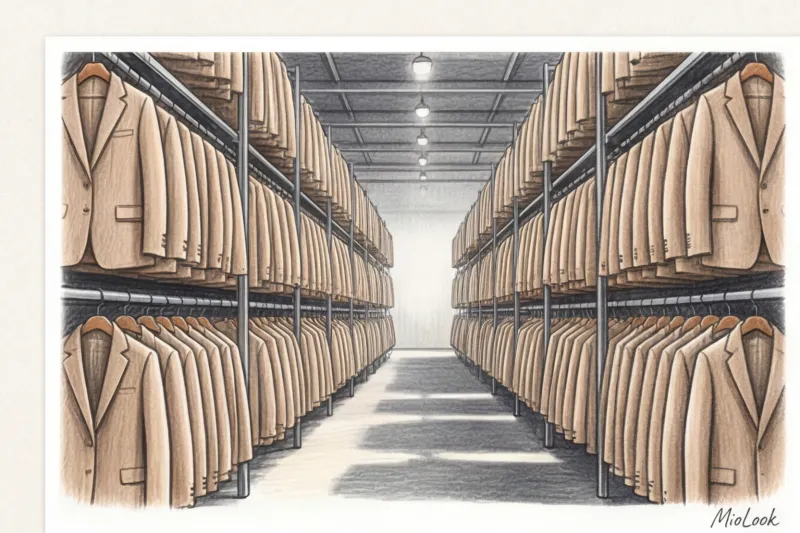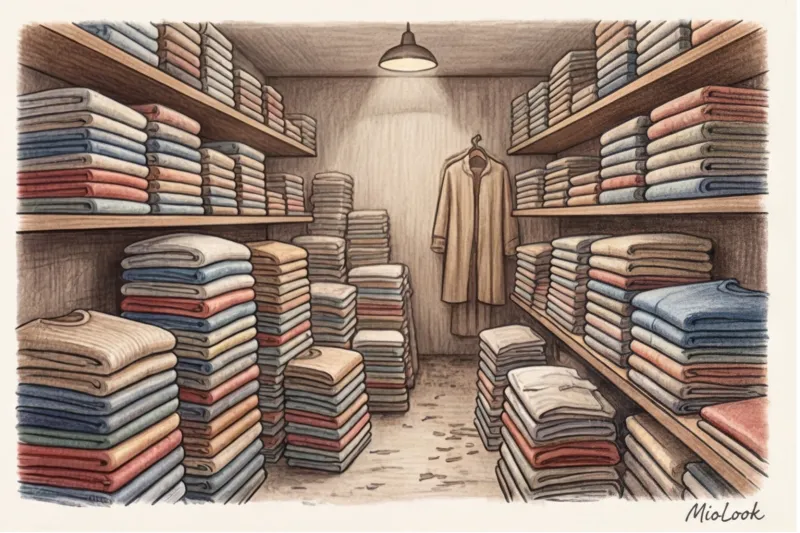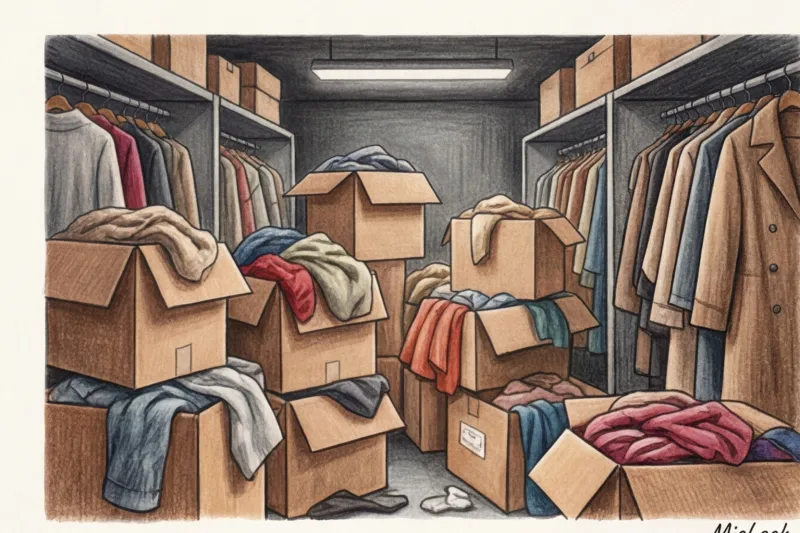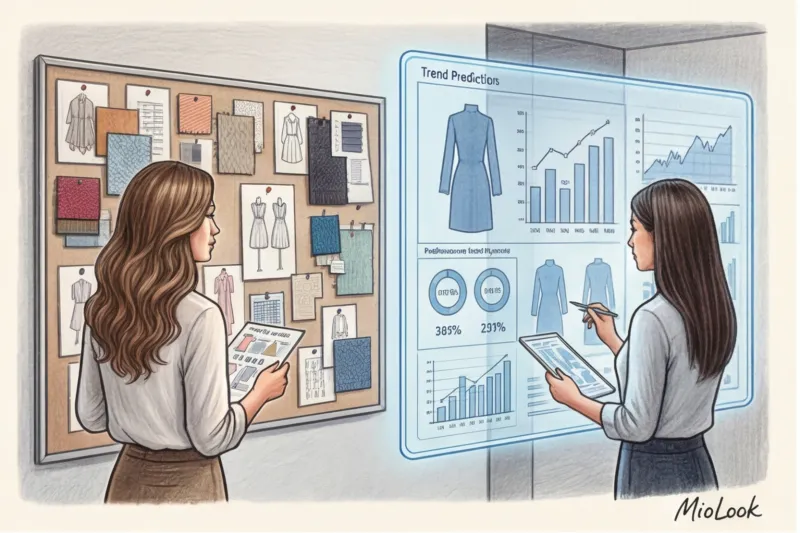
Remember the days when buyers would fly to trade shows in Florence or Paris with notebooks, secretly photographing competitors' rails and estimating fabric compositions by eye? Forget it. In 2024, such an approach looks like trying to outrun a sports car with a horse-drawn carriage. Today, a smart competitor analysis of a clothing store — this is not intuition, but gigabytes of structured data that neural networks process in a fraction of a second.
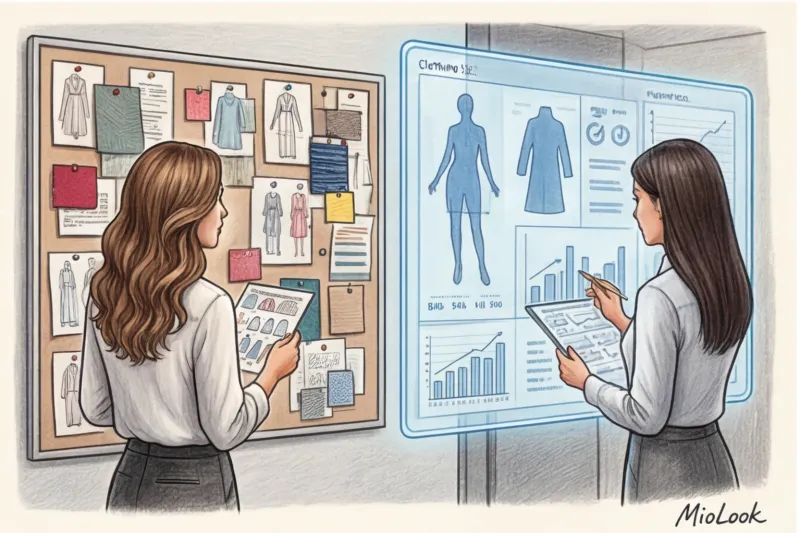
Over 12 years of working in fashion journalism and consulting, I've observed the industry shift from a "I'm an artist, this is how I see things" mentality to a rigorous data-driven approach. And this shift is no accident. We covered the industry's global transformation in more detail in our The Complete Guide to Analytics for Fashion Business: AI and Trend Forecasting AI-powered tools are no longer the preserve of giants like Zara or H&M; today, they are available to brands of all sizes, and they determine which collections will sell at full price and which will be forced to sell their remaining stock at a discount.
From Intuition to Data: Why a Clothing Store Needs AI-Based Competitor Analysis
Traditional benchmarking, where your marketer scrolls through the websites of your three main competitors once a month, is officially dead. The human eye is physically incapable of tracking thousands of stock keeping units (SKUs), price changes, size range additions, and hidden promotions. You're only seeing the tip of the iceberg—what the brand wants you to see on its homepage.
Why is this critically important now? According to the report McKinsey State of Fashion (2024) The fashion business's profitability is steadily declining due to the catastrophic problem of overproduction (overstock). Around 30% of clothing produced globally never finds a buyer and ends up in landfills or warehouses.
"AI analytics allows brands to move from a reactive model (guessing a trend and hoping for sales) to a proactive one (knowing exactly what's missing in the market right now and producing exactly that in the right volume)," emphasize analysts at Business of Fashion Insights.
Artificial intelligence reduces the time spent on competitive intelligence from three weeks of grueling manual scraping to 2-4 hours. You get not just a snapshot of the market, but a dynamic picture: what exactly the competitor uploaded to their website last night, which sizes were sold out by morning, and which categories they quietly lowered their prices on.
How neural networks are changing the rules of the game: from product range to pricing
The true magic of AI in fashion retail lies in computer vision technology. Algorithms no longer rely on text product descriptions, which are often garbled or incomplete. They "look" at clothing photographs just like a professional stylist, but with the speed of a supercomputer.
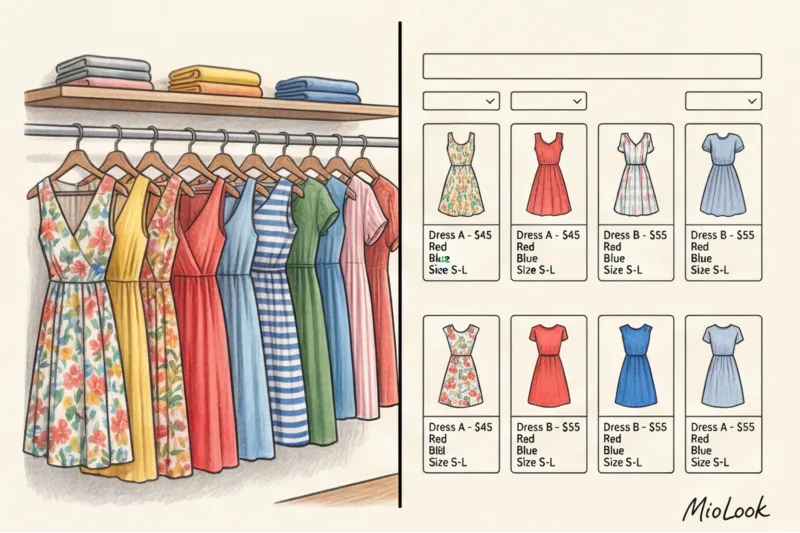
The neural network can recognize over 50 attributes of a garment from a single photo in a competitor's catalog. The algorithm doesn't just see "jacket." It also records whether it's double-breasted or single-breasted, whether the lapel is peaked or notched, whether there's a vent, and the texture of the fabric. Furthermore, the AI clearly distinguishes between a simple "straight fit" and an exaggerated "oversize" by analyzing the pixelated shoulder seam drop.
Your ideal image begins Here
Join thousands of users who look flawless every day with MioLook. Digitize your wardrobe and receive smart recommendations.
Get access — €0.99 onceParsing the product range matrix in detail
When we run an AI scraper on competitors' websites, we're not just looking for pretty pictures. Our goal is to break down their product range into its component parts. The algorithm reveals the exact percentage of basic, trending, and risky (statement) models in the market leader's current inventory.
For example, we might see that brand X is focusing on knitwear this season. But which kind? The AI will provide specifics: 60% of their sweaters are plain knit viscose with 5% elastane, and only 10% are textured, dense cotton. Now, the most important thing: we look for gaps in their assortment. If market leaders are overstocking their shelves with basic turtlenecks, perhaps your brand should launch statement chunky knit cardigans to fill the void.
Dynamic monitoring of pricing policy
Manually tracking prices is an illusion of control. You see the recommended retail price (RRP), but you don't see the actual sales picture. AI tools capture not only the base price but also any hidden fluctuations.
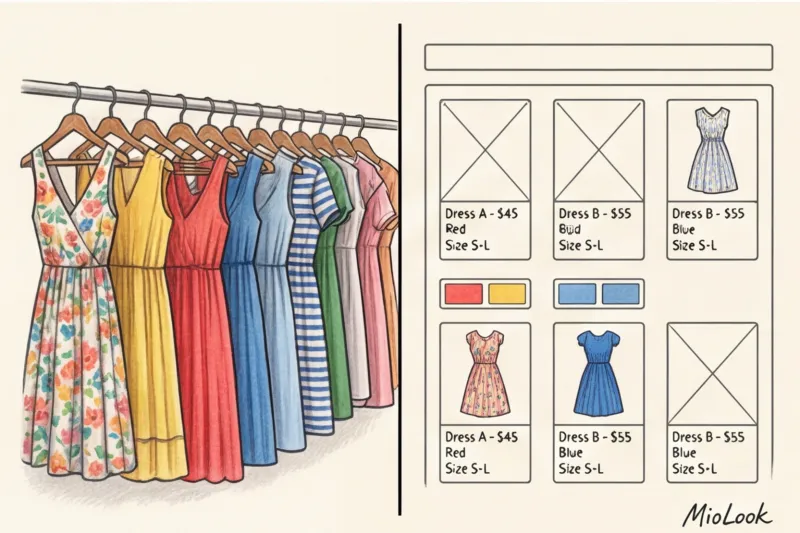
Algorithms detect subtle patterns: for example, competitor Y regularly discounts slip dresses by 15% every two weeks on Thursdays, dropping the price from €120 to €102. This is a signal that the category is selling below expectations, and you shouldn't enter the slip dress segment with a price tag above €100 unless you offer a fundamentally different level of quality.
Buyers' Biggest Mistake: Why Blindly Copying Hits No Longer Works
Over the years of consulting, I've learned one ironclad rule. The industry's biggest myth is: "Analyze your competitors' bestsellers and do the same." This is the trap that 8 out of 10 new brands fall into.
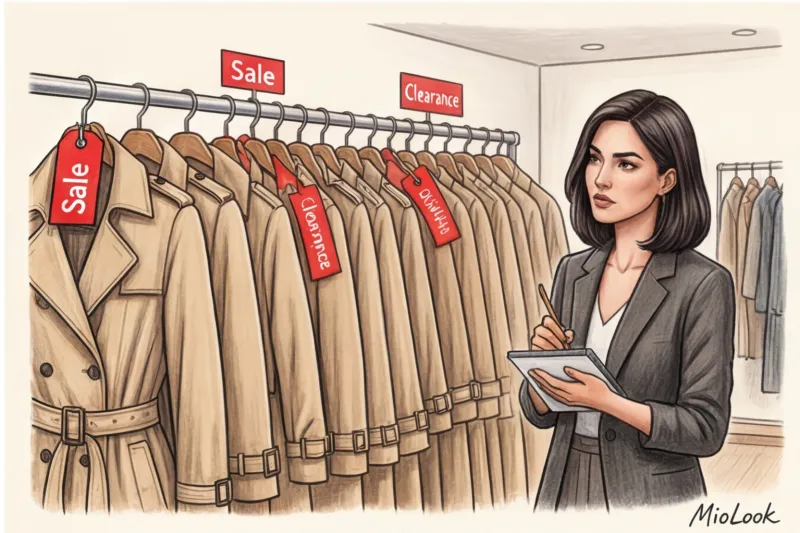
The "bestseller" paradox is that if a competitor is already successfully selling a certain model in large quantities, the market is likely saturated. By the time you produce a copy, the trend will have subsided, and the original will already be hanging in the Sale section.
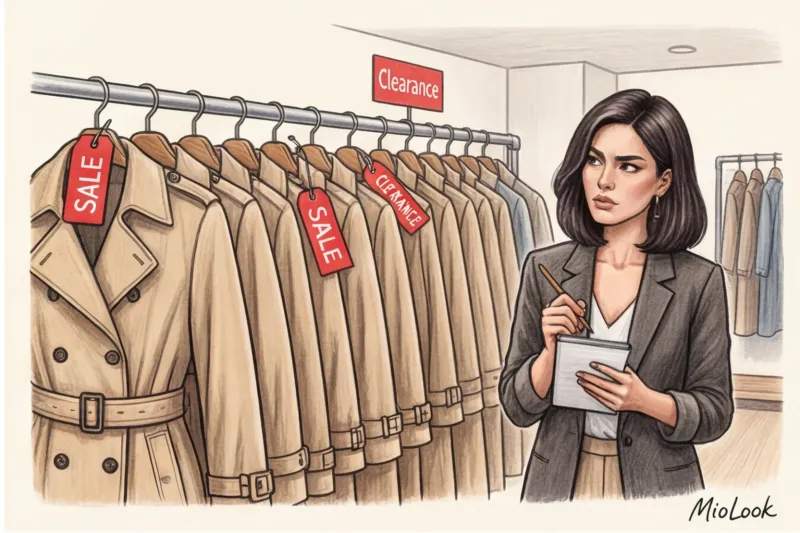
Let me tell you a real story from my experience. One of my clients, the owner of a successful mid-up brand, almost finished a batch of 1,500 classic beige trench coats. Her argument was ironclad: her main competitor was aggressively churning out these coats at Target. "Look at the crazy demand!" she said.
We connected AI analytics and ran a test on a competitor's website. The data revealed a shocking picture: these trench coats had been sitting in the warehouse (with no size changes) for three months. The aggressive advertising wasn't a sign of a hit, but a panicked attempt by marketers to dump dead stock. We canceled the order at the factory and saved the client tens of thousands of euros.
That's why a clothing store's in-depth analysis of its competitors should focus on their underperformers. Studying the mistakes of others (items that quickly went on sale or were out of stock in all sizes) brings businesses much more profit than trying to copy their success.
Turn-Based AI Strategy: What Competitor Metrics to Look For
Artificial intelligence can give you a million-row Excel spreadsheet that will simply give you a headache. A key skill for a modern fashion analyst is the ability to fine-tune filters and separate information noise from truly important business metrics.
Don't try to analyze everything at once. Tune your parsers to your current needs. If you're preparing a summer capsule collection, you're not interested in your competitor's overall strategy—you're only interested in the density of their linen and the price range of their lightweight dresses (for example, from €45 to €90).
Size chart depth and Out-of-Stock (OOS)
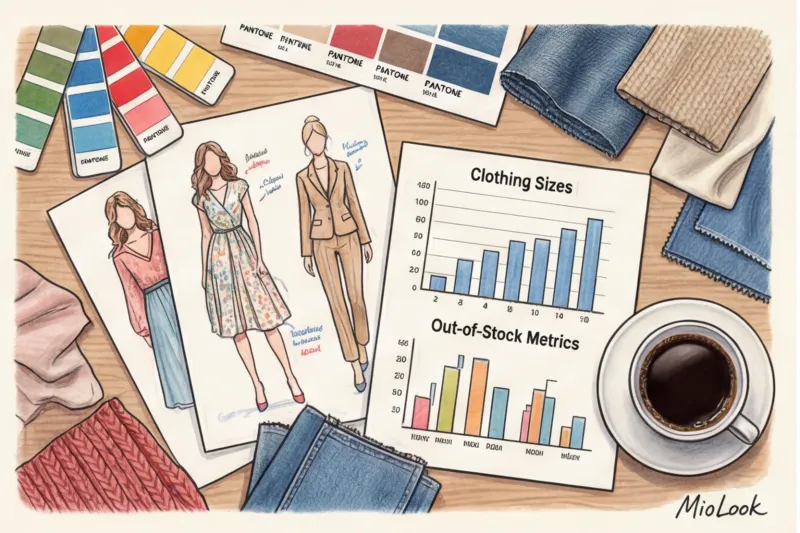
The most valuable metric in fashion retail is the rate of size loss. Tracking the out-of-stock rate (items that are out of stock) gives you a direct map of demand.
If AI shows that a competing brand's new wide-leg trousers are out of stock in sizes XS and S within three days, while L and XL have been out of stock for a month, this is a clear signal to adjust your own sizing when ordering similar silhouettes. You stop tying up money in slow-selling sizes and increase your purchasing depth in areas where your competitor is losing sales due to stockouts.
Access to MioLook for €0.99 — one-time payment
Start creating perfect looks with AI and systematize your approach to style.
Get access — €0.99 onceSpeed of implementation and adaptation of microtrends
Another critical metric is time-to-market. Neural networks can measure how quickly a runway trend appears on your competitors' shelves.
Take the burgundy trend, for example. AI analytics can show you a precise timeline: Brand A added 5 burgundy SKUs in September (priced at €80), while Brand B only added them in November (priced at €60). Meanwhile, Brand A's sales peaked in October, while Brand B was forced to put its models on sale in December due to the trend's decline. By understanding this dynamic, you know exactly when to embrace a microtrend and when to abandon it.
From Reporting to Action: How to Integrate Data into Strategy
To be fair, I should point out that this approach doesn't work for everyone. If your brand is conceptual avant-garde, deconstructed, or handcrafted (where you're creating demand rather than satisfying existing demand), neural networks will only show you what you need to distance yourself from. But for the commercial fashion segment, AI analytics is an absolute must-have.
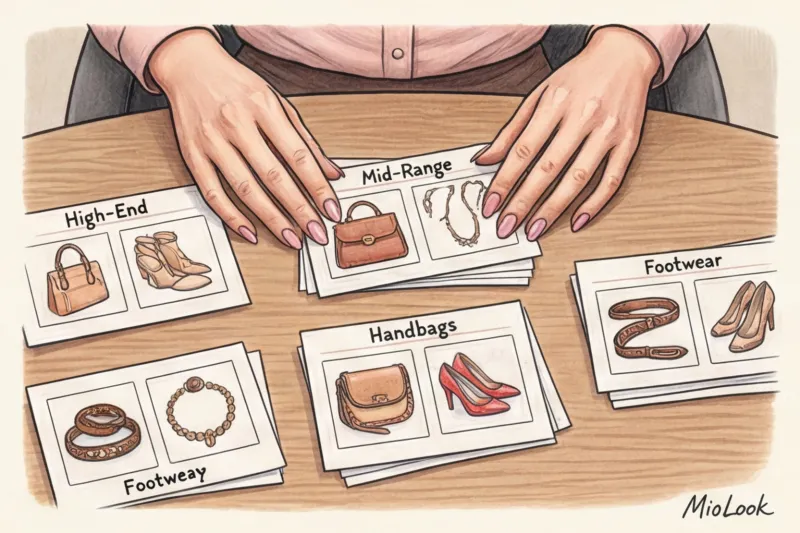
However, raw data alone doesn't sell anything. The trick lies in synchronizing AI's mathematics with a designer's creative vision. If an algorithm tells you there's a shortage of fitted jackets in the €150-€200 range, a designer must distill this information into your brand's DNA.
Moreover, competitor data can improve your customer service. If you know which silhouettes are currently in short supply on the market, you can highlight these models in your advertising campaign. To personalize offers on your website, we recommend implementing technologies like AI stylist for fashion e-commerce , which converts analytical insights into personalized recommendations for each buyer.
Checklist: Audit Your Fashion Brand's Competitive Landscape
To turn all this theory into real money in your account, auditing must become a regular hygiene procedure. Here's a step-by-step plan you can share with your analyst or buyer today:
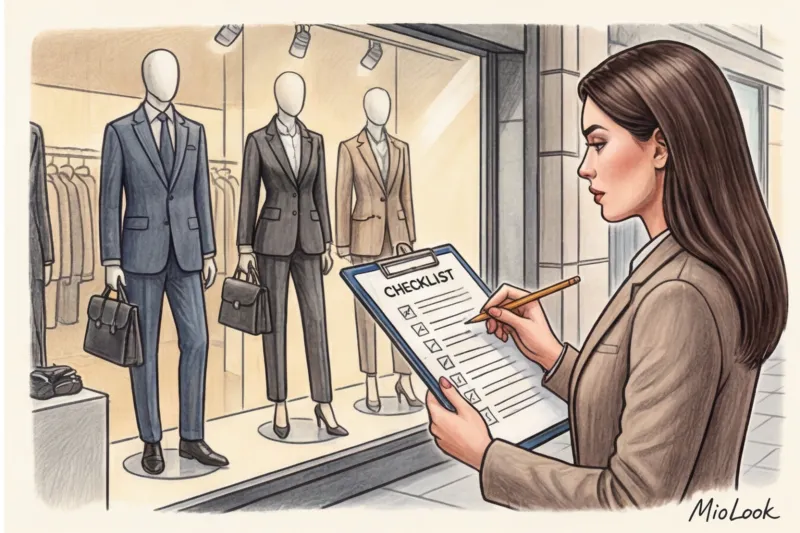
- Identify the "victims" for analysis: Select only 3-5 direct competitors. Don't look at mass-market giants if you're a local premium brand with an average order value of €250.
- Set key markers: Give the algorithm a clear task to parse specific categories (for example, only outerwear), track price dynamics, fabric compositions, and the rate of size erosion.
- Set the data collection frequency: For the fast-fashion segment, data should be collected at least weekly. For the mid-range segment, a deep cross-section once a month is sufficient.
- Integrate data into commands: Reports shouldn't sit in a drawer. The purchasing department adjusts volumes, the marketing department changes advertising offers, and visual merchandisers rehang items on the floor, highlighting categories where competitors have sold out.
Integrating AI into competitor analysis isn't an attempt to replace humans with soulless machines. It's a way to free your buyers from routine tasks so they can finally focus on what AI can't yet do: creating unique customer experiences and anticipating audience desires. Leave the data collection to algorithms, and the creativity to humans.