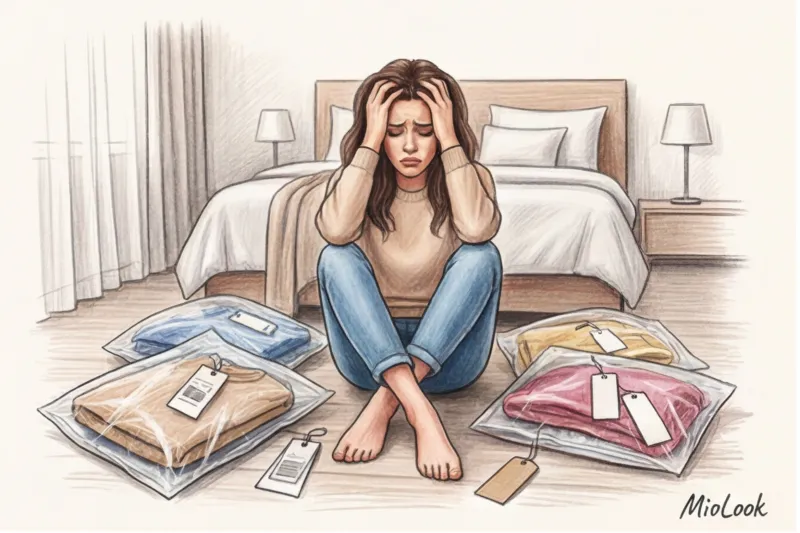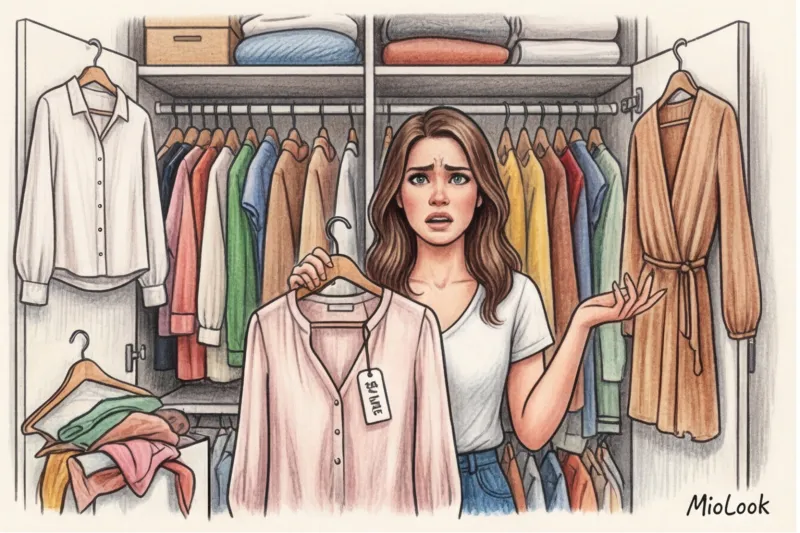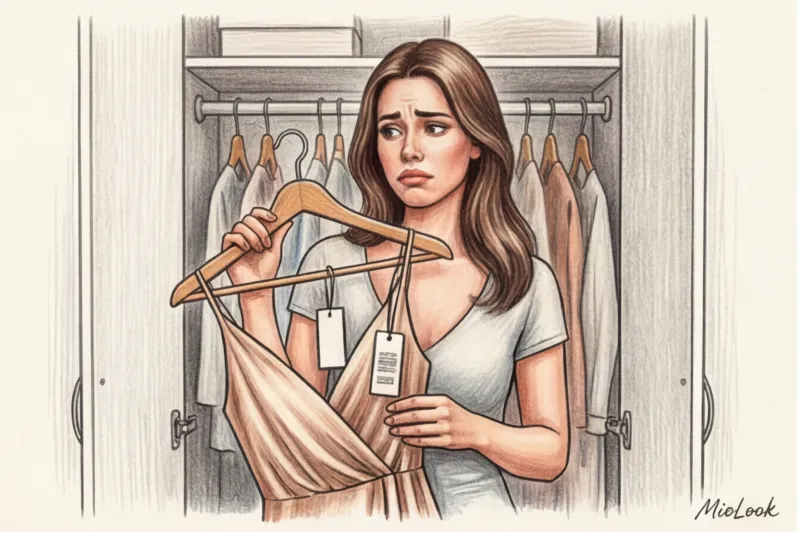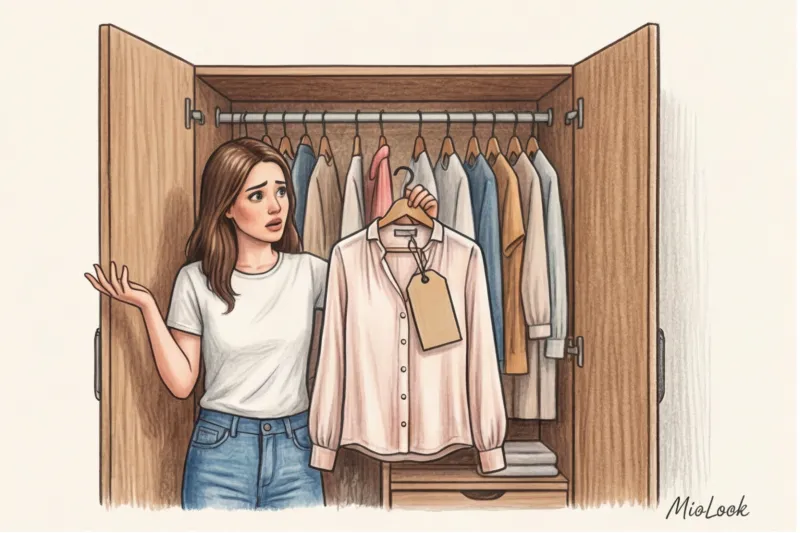
You open the closet door, pull aside your basic sweatshirts, and your gaze falls upon it. A perfect silk blouse in a deep emerald green for €120. It's perfect in every way, except for one thing: the cardboard price tag still dangles from the sleeve, a silent reproach to your financial decisions. Sound familiar? If so, things with tags in the closet If these are causing you a mild panic attack and a sharp feeling of guilt, I want to reassure you right away. You are completely normal.
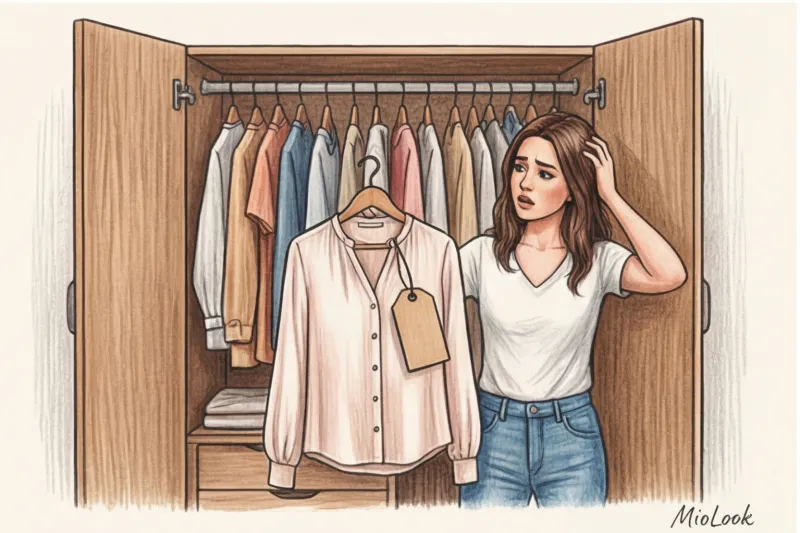
Over 12 years of working as a personal stylist and wardrobe organizer, I've seen hundreds of these "dead souls." And you know what? The worst thing you can do with them is continue to beat yourself up. We've covered why your hand instinctively reaches for your card at the checkout in our full guide. Emotional Shopping: How to Stop Buying Unnecessary Items Today, we'll talk about the consequences. We won't indulge in self-flagellation. We'll conduct a wardrobe autopsy, convert the mistakes into hard currency, and use it to create a smart capsule.
Why Clothes with Tags in Your Closet Cause So Much Anxiety (and Why You're Not Alone)
Every time you look at an untouched purchase, your brain registers a micro-defeat. It's not just a piece of fabric on a hanger—it's a realized prediction error. You weren't just buying a €150 Massimo Dutti jacket; you were buying a promise to become more put-together, confident, and successful. When an item sits in the closet, the psyche perceives it as an unfulfilled promise to itself.
Let's turn to the numbers. Digitizing user wardrobes and analyzing app statistics MioLook Studies show that 8 out of 10 women own at least 3-5 unworn items that have been sitting there for over a year. It's a classic dopamine loop in action. The moment you place an order at Asos or tap your phone to the payment terminal at Zara, you experience a powerful rush of happiness hormones. But as soon as the store doors close, the magic wears off. The dopamine drops, and the item remains.
"The Pareto principle in fashion works mercilessly: 80% of the time, we wear only 20% of our wardrobe. The remaining 80% of clothes, including those with tags, are dead weight, robbing you of your energy every day when choosing an outfit."
Wardrobe Autopsy: What Your Unworn Clothes Really Say
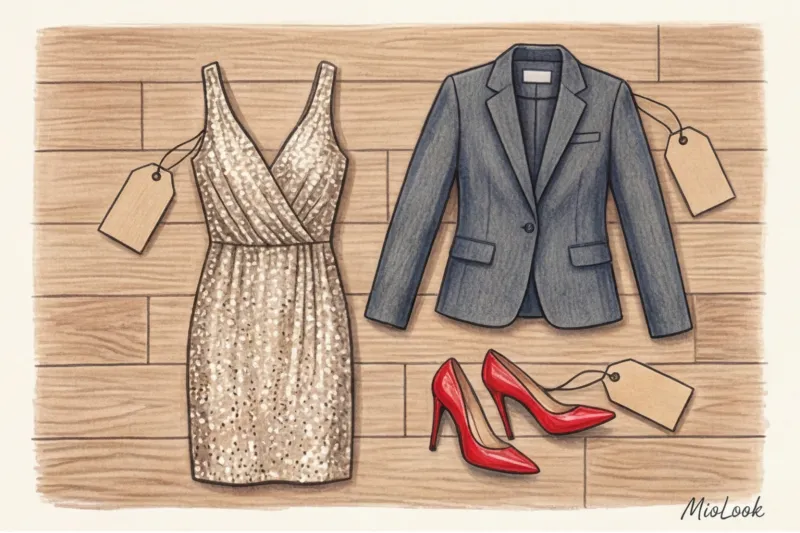
I propose a radical paradigm shift. Stop viewing these items as wasted money. Start treating them as valuable analytical data. In my experience, analyzing unworn clothes provides the most accurate answer to the question: "What is my true style?" I call this process a "wardrobe autopsy." We take each item, including its price tag, and dissect the reason for its purchase.
The Fantasy Self Trap
Dr. Carolyn Mair, a cognitive psychologist and author of the seminal book "The Psychology of Fashion" (2018), brilliantly described the concept of the "Fantasy Self." We often buy clothes not for the life we currently live, but for the one we dream of.
One of my clients, Marina, had almost €2,500 worth of tagged clothes in her closet. When we started sorting through them, it turned out they were impeccable, formal three-piece suits, pencil skirts, and pumps. The problem was that Marina worked remotely as an art director at a creative agency. Her real uniform was jeans, high-quality knitwear, and sneakers. But her "Fantasy Self" saw herself as the strict boss from the TV series "Suits." Once we acknowledged this gap between fantasy and reality, Marina stopped buying office armor.
The illusion of a profitable investment at sales
The second common autopsy finding is victims of red price tags. When you see a cashmere sweater marked down from €180 to €45, rational thinking shuts down. You're not buying the item, you're buying the discounted size. This also includes clothes "to grow into" or, more often, "to lose weight." Buying clothes in a smaller size in the hopes that it will motivate you to go to the gym is the most toxic fashion habit, guaranteeing nothing but an eating disorder and a negative balance.
Access to MioLook for €0.99 — one-time payment
A smart AI stylist will find the perfect look based on your measurements and what you already have in your wardrobe. Stop guessing in front of the mirror!
Get access — €0.99 onceAnti-crisis plan: what to do with accumulated baggage right now
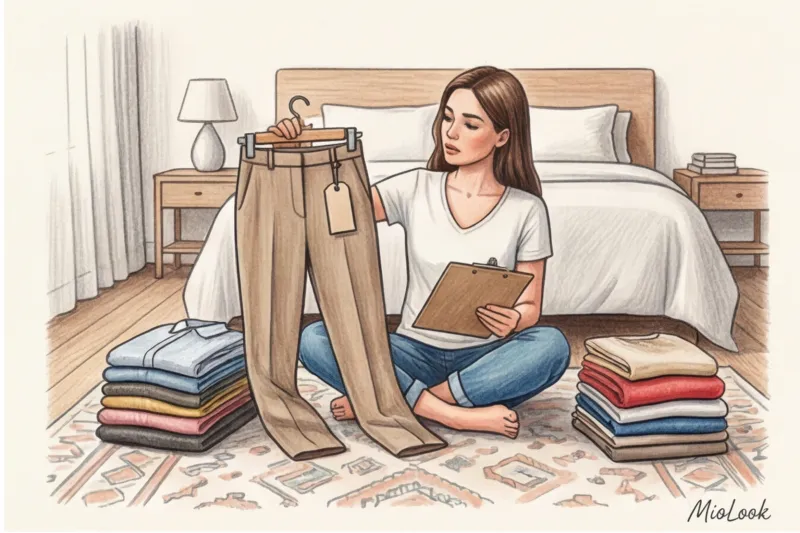
If you're currently browsing the new items aisle, we need a clear course of action. First, implement the "24-hour rule." Collect all clothes with tags and check your receipts immediately. By law (and according to most online retailers), you have 14 to 30 days to return items. Yes, sometimes it's embarrassing to go to the store and return a mountain of bags. Believe me, the salespeople don't care, and your €200 on your card will be more valuable than the embarrassment.
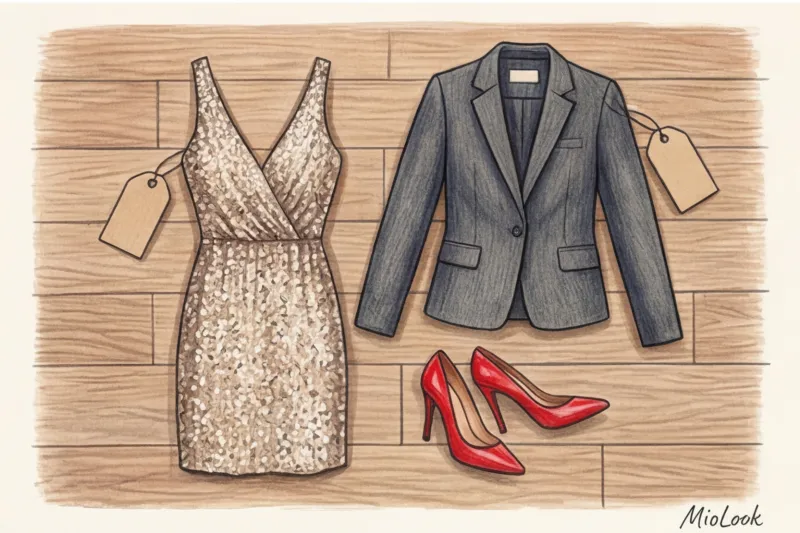
We divide everything that can no longer be returned into three strict categories:
- Return/Resale: things that are physically small, objectively do not fit in color or lifestyle.
- Integration: things that you like and that suit you, but you simply forgot about them or didn’t know what to combine them with.
- Charity: Mass-market items that cost less than €20 are unprofitable to sell on resale, given the commission and delivery time.
Herein lies my main, counterintuitive advice. Never rip off the tag in the hopes of forcing yourself to wear an uncomfortable item to "justify" the expense. In behavioral economics, this is called the "sunk cost fallacy." The money has already been spent. If the item itches, doesn't fit, or causes psychological discomfort, wearing it will only bring you pain. Keep the cardboard on the string—it's your ticket straight to the resale market.
The Secondary Market: How to Eco-Friendly Monetize Shopping Mistakes
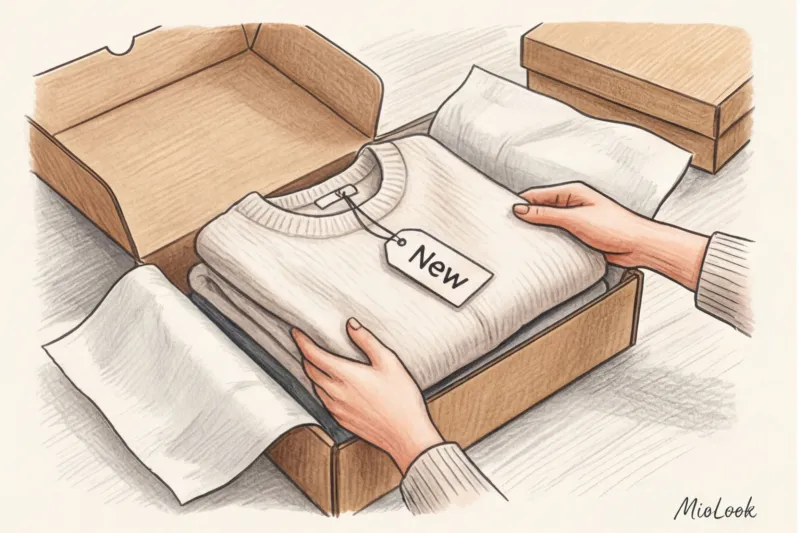
If you think reselling clothes is a fringe activity, consider the numbers. According to the annual ThredUp Resale Report (2024), the global resale fashion market is growing three times faster than traditional retail. And here, your unworn items are becoming a golden asset.
In the world of resale there is a status NWT (New With Tags) The presence of this cardboard seal magically increases the liquidity of the item. According to platforms like Vinted and Vestiaire Collective, items in NWT condition sell for an average of 30-50% more and twice as fast as similar items in the "worn once" category. You haven't lost money; you've simply frozen it in the fabric.
How to get your investment back wisely:
- Choose the right platform: For mass-market brands (Zara, H&M, Mango), local classifieds work great. For premium and luxury brands (COS, Arket, Acne Studios), choose specialized fashion resellers like Oskelly or Vestiaire Collective.
- Take the right photos: Forget the yellow light from the hallway lightbulb. Shoot in natural daylight. Show the item full-length, take a close-up photo of the tag to show the fabric composition and size, and take macro shots of the texture.
- Add exact measurements: Please indicate your pit-to-pit, back, and sleeve length in centimeters. This will reduce the number of stupid questions in private messages by 90%.
Psychological trick: create a separate virtual account (or envelope) and put all the money from selling "dead souls" into it. This will be your dedicated investment fund for creating the ideal capsule wardrobe of basic items.
Ready to get started?
Try the MioLook plan for free—no commitments required. Digitize your wardrobe today and stop buying duplicates.
Get access — €0.99 onceHow to integrate the remaining new items into your style

Let's say a complex jacket with a complex cut has passed your rigorous selection process. You've decided to keep it. How can you ensure it doesn't hang around for another year? Use the stylists' ironclad rule: The rule of three combinations If a new item doesn't fit with the three "bottoms" or basics you already have in your closet, you don't need it.
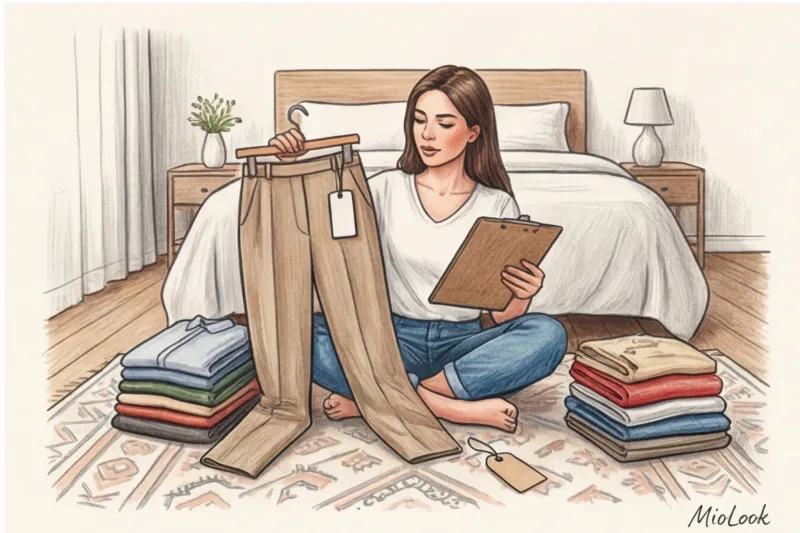
To avoid causing physical chaos in the bedroom, I always recommend using virtual wardrobe Take a photo of a new item, upload it to MioLook, and try creating 3-4 looks using the designer. For example, you could wear that same jacket:
- For office casual with a Friday dress code: with straight blue jeans and a white T-shirt (cotton density from 180 g/m²).
- For going to an exhibition: wear it over a silk slip dress with chunky boots.
- For dinner: with palazzo suit pants and a statement belt.
If the app helped you put together these looks in 5 minutes, go ahead and cut off the tag—you're ready to wear it.
Checklist: How to Prevent the Emergence of New "Dead Souls"
Treating the symptoms is helpful, but it's better to eliminate the cause. To eliminate tagged items from your life forever, introduce a few strict but effective filters into your shopping routine.
1. The "cooling off period" rule (48 hours). Seen a cool item online? Add it to your cart and close the tab. In a brick-and-mortar store? Ask them to put it on hold until tomorrow and leave. Within 48 hours, the dopamine rush will subside, and 90% of the items will seem completely unnecessary. (Fair disclaimer: this advice does NOT apply if you're hunting for unique vintage items at a Paris flea market—there you have to buy them right away. But for mass-market and modern brands, this rule is ironclad.)
2. Consider Cost Per Wear (CPW). Cost per outing is your primary metric. A €200 sweater you'll wear 50 times over the winter costs €4 per outing. A €60 sequin dress on sale that you'll wear to a single corporate event costs €60. Invest in the essentials, save on trends for a single evening.
3. Build an occupancy chart. If 70% of your time is spent working in an office without a strict dress code, 20% is spent walking the dog and kids, and 10% is spent going to the theater, then your shopping budget should be distributed in exactly the same proportions. Don't buy your tenth evening dress if your reality demands stylish joggers and cashmere hoodies.
A mindful wardrobe isn't asceticism or a complete abstinence from shopping. It's a system in which every dollar spent is transformed into daily comfort and self-confidence. Treat your closet like a luxury boutique, stocked only with the finest pieces. Then, cutting off the tags won't be a stressful act, but a pleasant ritual marking the beginning of a new, stylish journey.