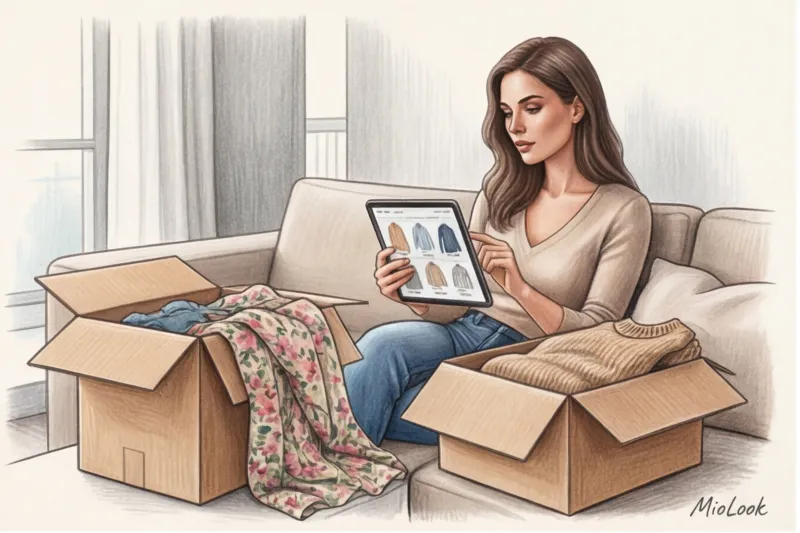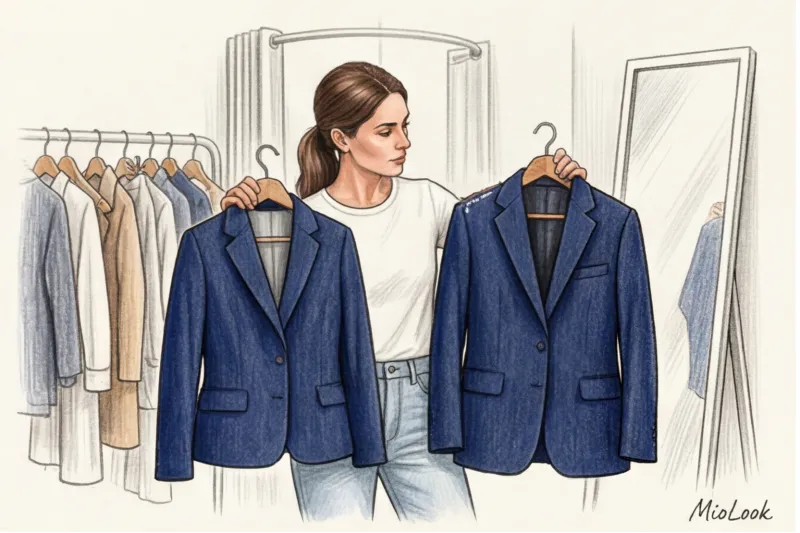
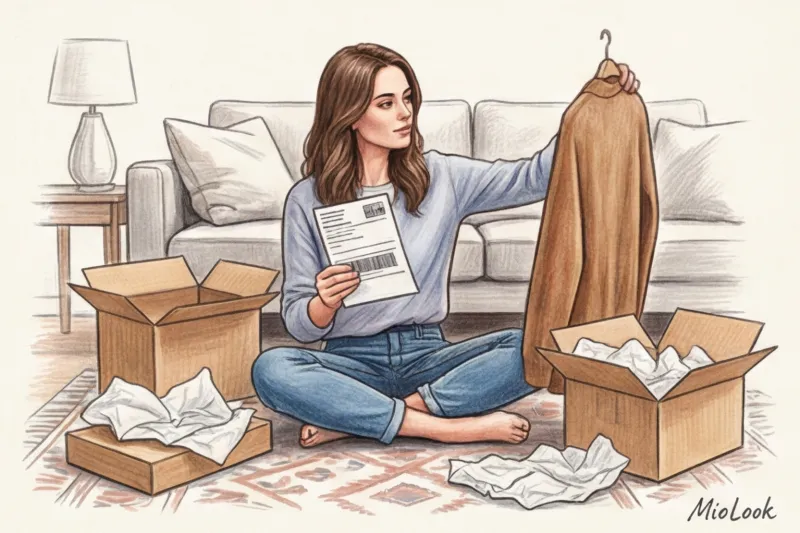
According to the National Retail Federation (NRF) in 2023, approximately 60% of online clothing returns are due to sizing issues. But you know what frustrates me most as a stylist? Those leftover items that clients don't return. They end up in the closet with the thought, "I'll take it to a tailor and get it adjusted," or "I'll wear it oversized." Ultimately, the item either sits around for years, or after alterations, it looks like it's been through a meat grinder.
When purchased the item is too big to be taken in without losing quality, and what's easier and cheaper than sending it back to the store? We discussed the fundamental architecture of cutting in more detail in our complete guide to Fitting clothes to your figure: the secret to a perfect fit Here, I want to give you a concrete, engineering-based approach to evaluating purchases. We'll diagnose fit the way professional tailors do.
The Anatomy of Clothing: Why Not Every Item Can Be Saved in a Dressmaker's Shop
The biggest mistake I've seen in 14 years as a stylist is treating clothes as flat pieces of fabric that can simply be "cut and re-sewn." In reality, a quality garment (even from Zara or COS) has a complex 3D architecture.
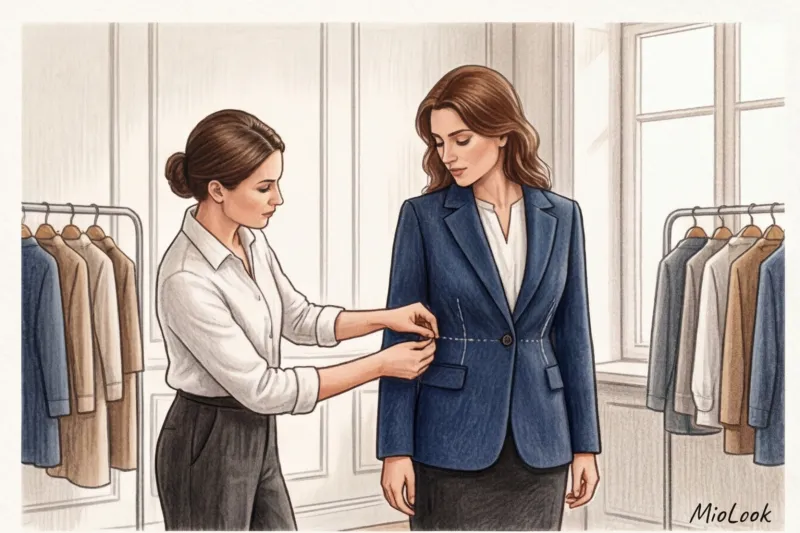
In philosophy Bespoke (Bespoke tailoring) clothes are constructed around the body's core points. If these points shift, the entire framework collapses. The difference between a "tailored fit" and a "complete redesign" is measured not only in hours of work but also in hundreds of euros.
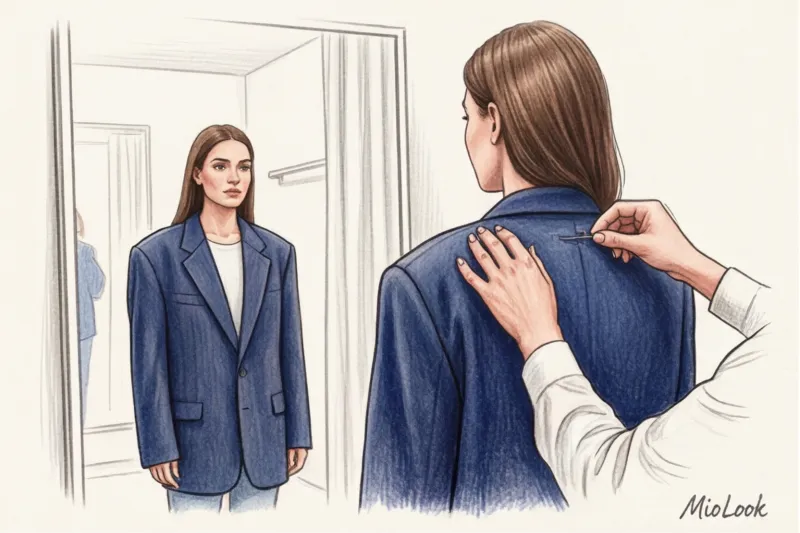
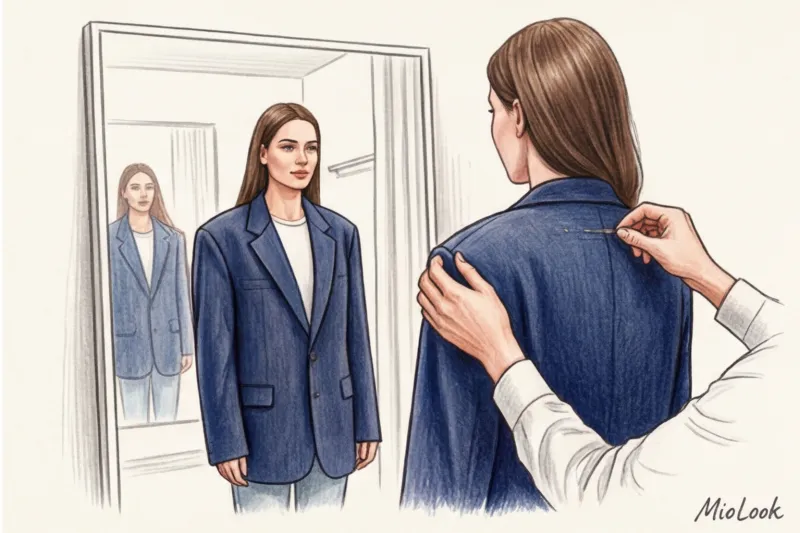
Shoulder girdle: red return line
Last year, a client of mine excitedly ordered a Stella McCartney jacket during the final sale. The discount was colossal—from €900 to €250. But it turned out to be two sizes too big. The shoulder seam hung on her bicep, and the armhole dropped almost to her waist. "They'll take it in!" she declared optimistically.
Spoiler alert: a good tailor asked €300 for moving the armhole and recutting the shoulder band. Why? Because to raise the shoulder, the tailor has to rip the sleeve, change the armhole radius, shorten the shoulder itself, recut the sleeve cap (which now doesn't align with the new armhole), and sew everything back in place while maintaining balance. It's technical hell. In 90% of cases, if the shoulder seam is out of place (and it's not the designer's intended dropped cut), the garment must be returned. No other options.
Your perfect look starts here
Join thousands of users who look flawless every day with MioLook. Artificial intelligence will help you create a capsule wardrobe where all your items coordinate perfectly.
Get access — €0.99 onceIf an item is too big: what can be taken in quickly and with a wow effect?
Now for the good stuff. If the shoulders and neckline fit like a glove, but the item is too big to be taken in so that your investment pays off 100%? There are several gold transactions.
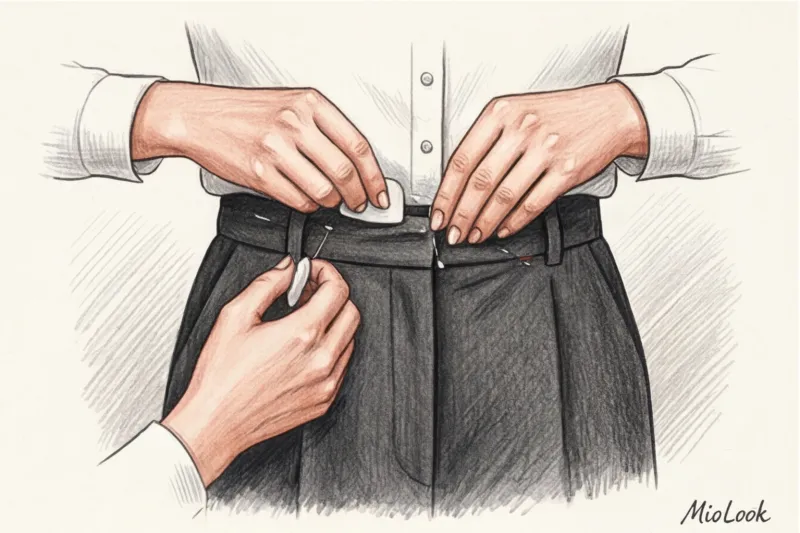
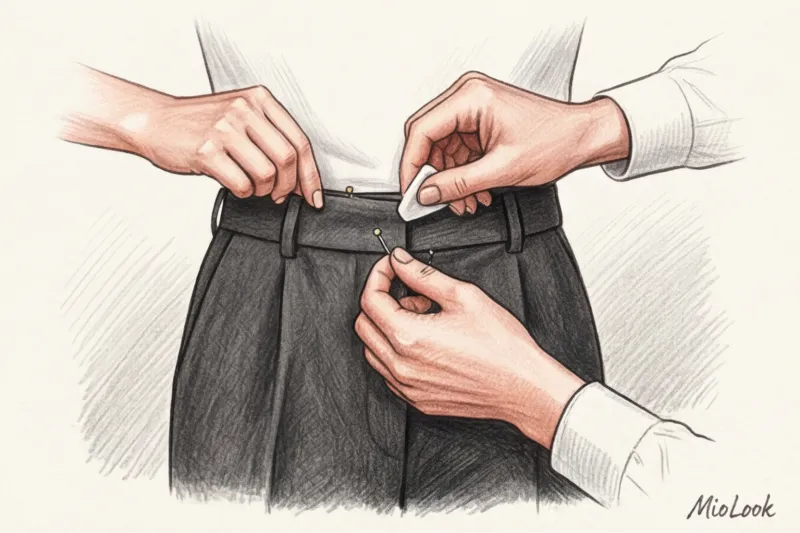
- Waist on trousers and jeans. Removing volume along the center back seam (the seat seam) or creating darts is a simple and ingenious procedure. It costs an average of €15–€30, and the effect is stunning: that unsightly bulge at the waist disappears.
- Shortening the length. This is the basics. The right cut of the trouser bottom (taking into account the height of your everyday shoes) visually lengthens your legs by several centimeters.
- Side seams on simple slip dresses or blouses. If the item doesn't have complex draping, removing 2-3 centimeters on the sides is inexpensive and quick.
"Personal experience: I once bought a basic midi skirt made of thick viscose at Massimo Dutti for €60. It fit perfectly at the hips, but was loose at the waist. We had the buttons repositioned and the darts taken in at the atelier for €18. The next day, my fellow stylists were seriously asking me which Prada collection it was from. A perfect fit always looks expensive."
The "-2 sizes" rule
There's a strict limit that tailors call the "-2 sizes" rule. You can't buy a dress in a size L and ask for it to be made into a size S. The most you can expect without completely ruining the fit is a shrinkage of one, or at most one and a half sizes (approximately 4-6 cm in circumference).
Why? Because radical tailoring shifts all proportions. Trouser pockets "slip" back onto the buttocks, chest darts end up somewhere under the armpits, and the back vents on a jacket begin to fan out. The garment loses its balance.
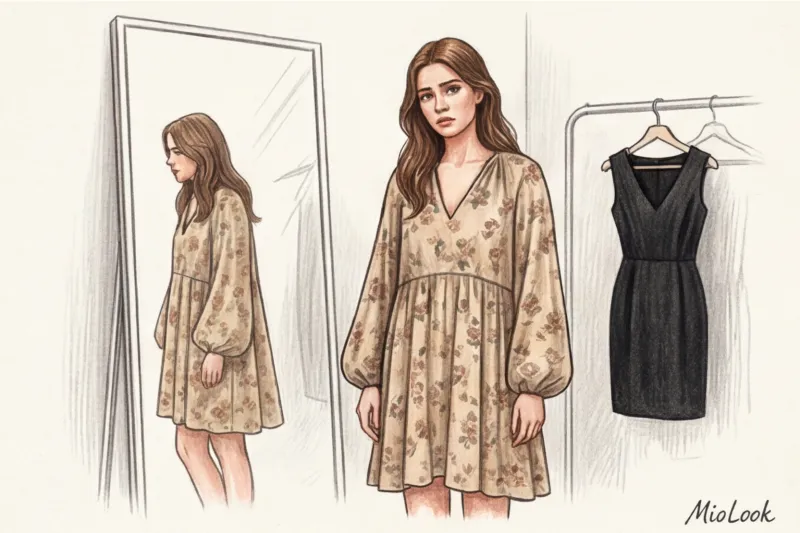
The Illusion of Oversize: Why You Can't Just Leave a Piece "Oversized"
"Oh well, I'll keep it and wear it as an oversize" is the most insidious phrase I hear during wardrobe reviews. Let's get this straight once and for all: an item three sizes too big and an oversized piece are fundamentally different constructions.
Take a look at The Row or Balenciaga collections. Their oversized jackets have enormous volume in the body and sleeves, but the neckline is always tailored to the actual neck size, and the shoulder pads are angled correctly. This means the design sits comfortably on the body.
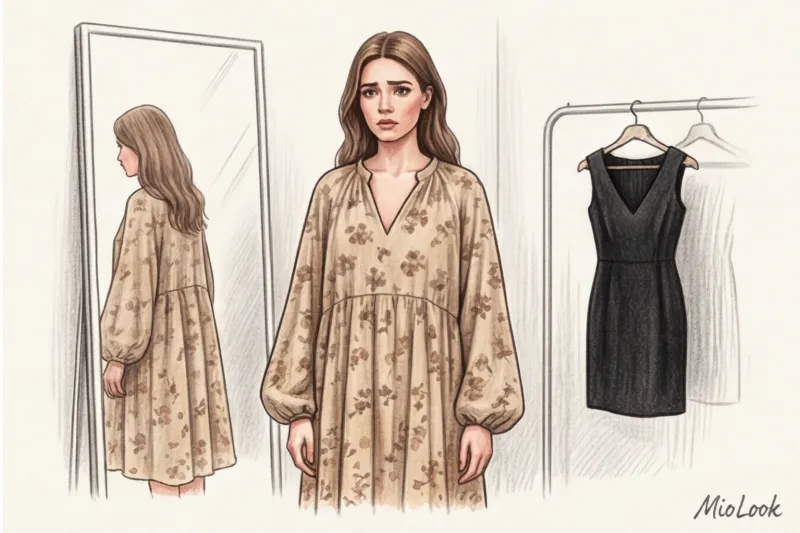
When a petite size 42 woman wears a men's size 50 sweater, she doesn't just gain the trendy bulk. The neckline sags (revealing a tank top or bra), the armholes drop to the ribs (making it impossible to raise her arms without lifting the sweater), and the sleeve length makes her hands look like flippers. Instead of bohemian casualness, we get the "I borrowed this from my older brother and look 20 pounds heavier" effect.
Access to MioLook for €0.99 — one-time payment
A smart AI stylist will select the perfect look from your items and suggest which cuts are best suited to your body type.
Get access — €0.99 onceFickle Fabrics: What Even a Genius Tailor Wouldn't Want to Work With
Even if a piece requires minimal adjustments, the material can ruin the whole project. Here's a list of textures that make experienced craftsmen sigh heavily:
- Chunky knits. Taking in a knitted cardigan at the side seams means cutting the stitches. Gathering them back together without creating a stiff, thick scar is virtually impossible.
- Bias cut silk. Those flowing slip dresses. Their fabric is cut at a 45-degree angle to the grain (hence the beautiful fit). If the seamstress simply tucks the excess into the side seams, the fabric will lose its flow and develop ugly diagonal creases.
- Symmetrical prints. Large tartan checks or wide stripes. If you take in the back or sides, the pattern will be ruined. Re-arranging the checks requires a huge amount of fabric, which the finished garment doesn't have.
- Pleating and complex decoration. A pleated skirt can only be shortened at the top by unpicking the waistband (cutting it from the bottom will ruin the pleat edge). And if the dress has sequins, the seamstress will have to manually rip out each bead along the seam before stitching, otherwise the machine needle will break. This requires hours of very expensive hand labor.
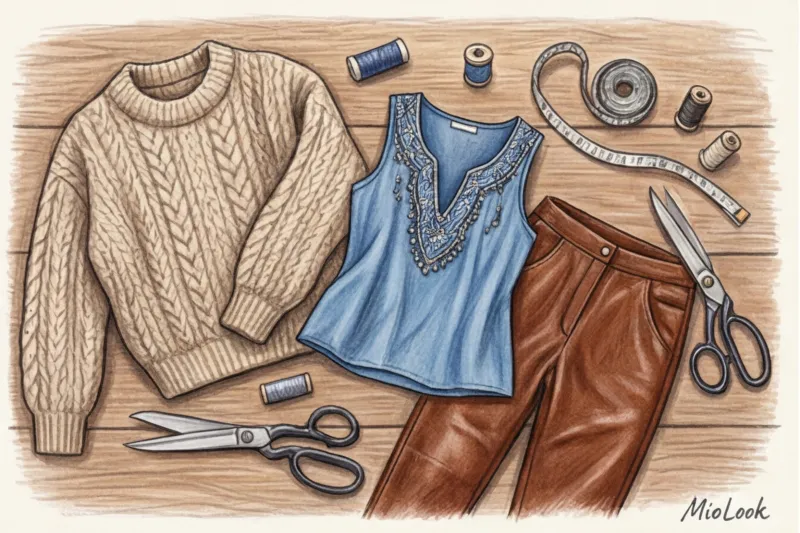
Pre-Return Checklist: 5 Questions from a Stylist
To avoid piling up "studio projects" in your closet, I give my online shopping clients a simple process. Before cutting the tags off an item that doesn't fit perfectly, answer these five questions:
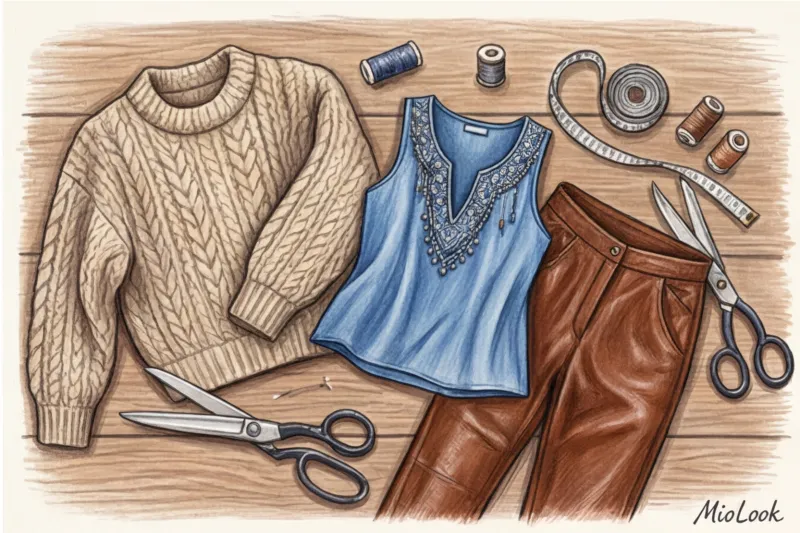
- Is this a staple or a micro trend? Investing €40 to alter a pair of basic wool trousers that you'll wear for five years is reasonable. Spending the same amount of money on taking in a neon top for one season is a financial crime.
- Are the shoulder line and neckline in place? If not, please issue a return.
- Does the cost of alteration exceed 30% of the price of the item itself? If you bought jeans on sale for €25 and it costs €20 to have them taken in at the waist, the math is against you.
- Will I be able to wear it if my weight changes by 2-3 kg? Sometimes a piece of clothing looks too big in the morning and fits perfectly in the evening (this is especially true for linen trousers and stiff denim).
- Does this fabric provide tactile pleasure? If the material is itchy, staticky, or makes you sweat, don't waste your time at the tailor's. A perfect fit won't save poor fabric.
A perfect fit is the secret to a luxurious look.
Italians call it sprezzatura — the art of looking flawless, as if you didn't try at all. But behind this apparent ease there's always precise calculation and an excellent tailor.
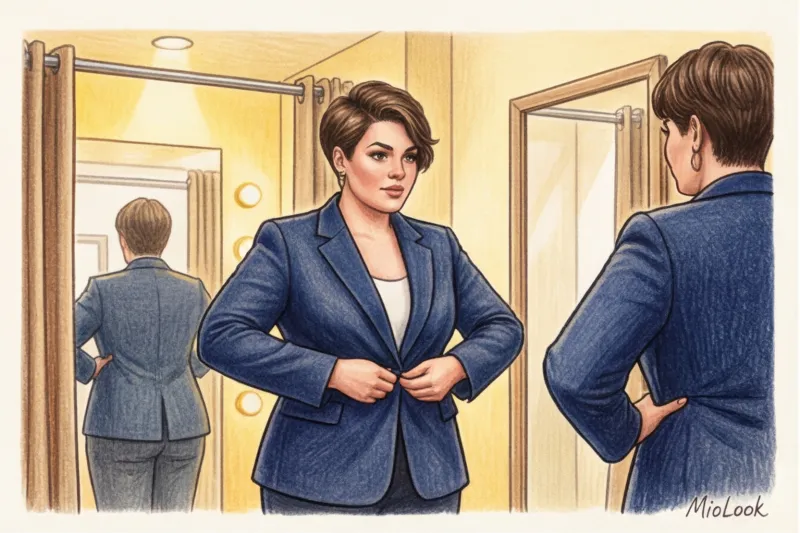
Don't be afraid of tailoring. Customizing ready-to-wear from the mass market is the secret that makes €50 items look like they cost €500. But you need to approach this with a cool head. Clothes should flatter your figure, highlighting its best features, not you should adapt to an unflattering cut, convincing yourself that "it'll look good with a belt."
It's better to return an uncomfortable item without regret and invest your time in finding something that requires only minimal, elegant touches from a tailor. And you can always manage your perfectly fitted wardrobe in the MioLook app, so you know exactly which items fit you perfectly.
Ready to get started?
Try a free plan—no commitments required. Upload your wardrobe to MioLook and create looks in one click.
Get access — €0.99 once