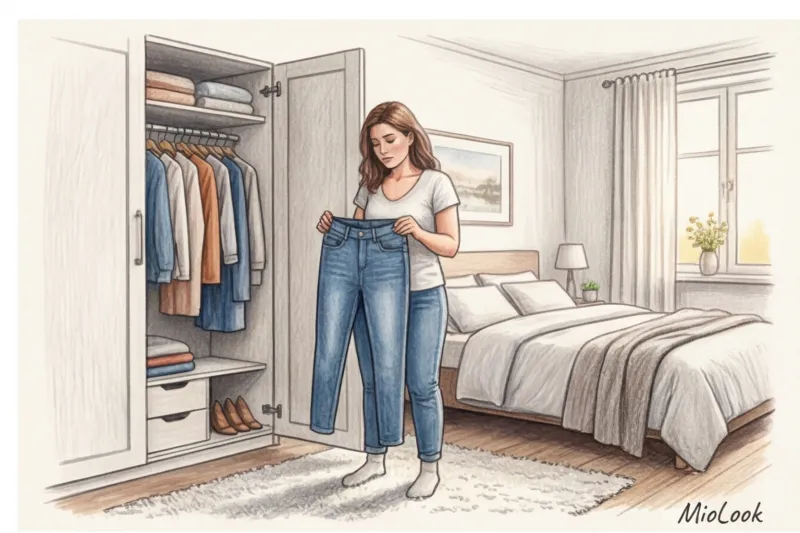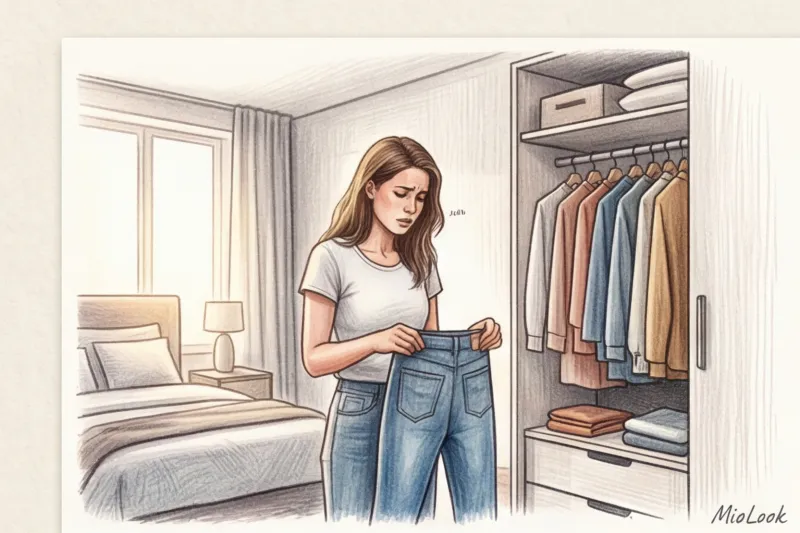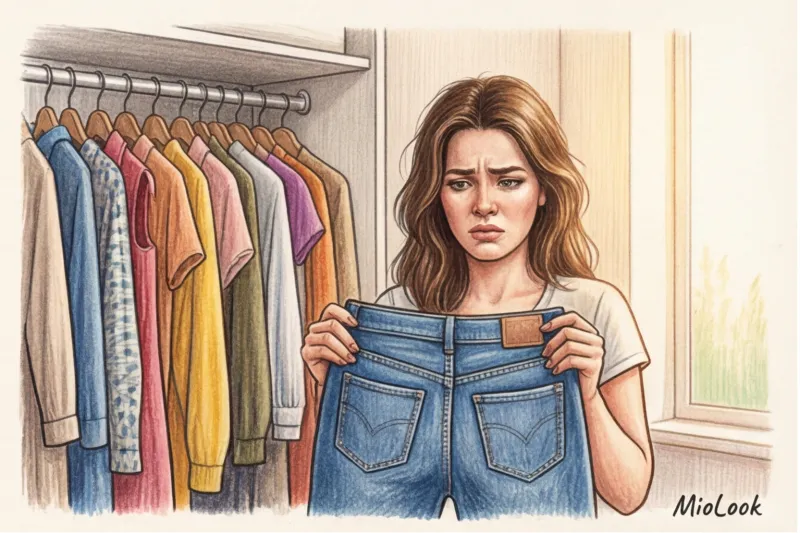
One of my clients, a successful marketer named Anna, started every morning with a micro-stress. Opening her closet door, the first thing she saw was the perfect, expensive Acne Studios jeans she'd worn before pregnancy. Four years had passed. The jeans were hopelessly unbuttoned, yet they hung there, like a silent reproach. Sound familiar?
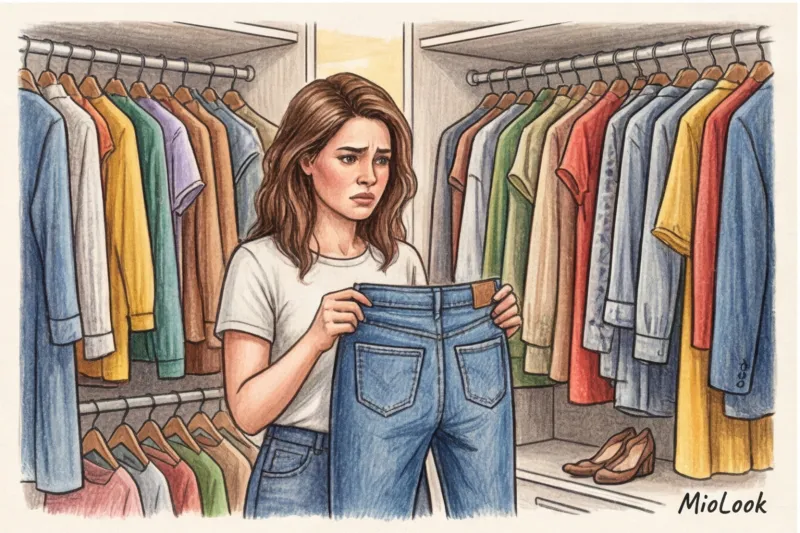
That's exactly it clothes in case I lose weight transforms from a harmless fabric into an instrument of daily psychological torture. We think we're saving things for a future, better version of ourselves, but in reality, we're only draining energy from our present selves. We've covered more about why we cling to irrelevant things in our the complete guide to the psychology of shopping.
As a stylist and advocate of a data-driven approach to wardrobe, I suggest we stop listening to clichéd advice like "just love yourself and throw everything away." Let's look at undersizing as a technical glitch in our wardrobe management system. Today, I'll share how to use the quarantine method and cognitive load metrics to reduce morning stress and start dressing beautifully right now.
Dead weight on the shelves: how clothes for weight loss are sabotaging your style
Let's use IT terminology: your wardrobe is an operating system that needs to launch quickly and smoothly every morning. Clothes you physically can't put on right now are just broken legacy code that slows down the entire system.
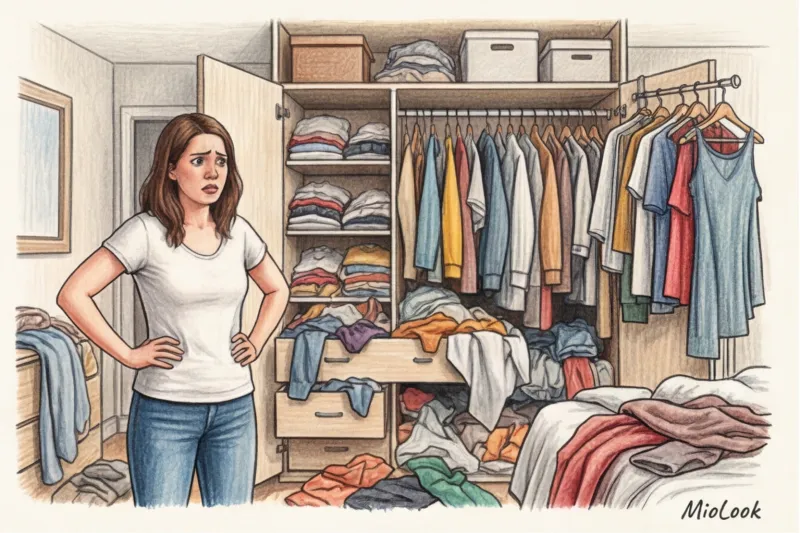
I conducted an experiment: I digitized and tracked my looks for six months. The statistics were merciless. Those same "motivational" skirts and trousers were worn exactly 0 times a year, but they took up 30% of the visual space on the rail. According to a study by behavioral psychologist Barry Schwartz (2004), the phenomenon overchoice (Overchoice) paralyzes our decision-making ability. When you look in your closet, your brain processes every item. If 40% of them are too small, you're wasting cognitive resources.
"Keeping things you don't need adds an average of 12 minutes to your morning routine each day. Over the course of a year, that adds up to 73 hours of wasted time sorting through things you don't need."
A closet should be a tool for living in the here and now, not a time machine that takes you back to 2018.
Three Types of "Slim" Clothes: An Audit Through the Eyes of a Professional Stylist
Before changing anything, you need to classify the problem. Over 12 years of working as a stylist, I've identified three clear categories of ill-fitting clothes. Understanding the pattern you're facing is half the solution.
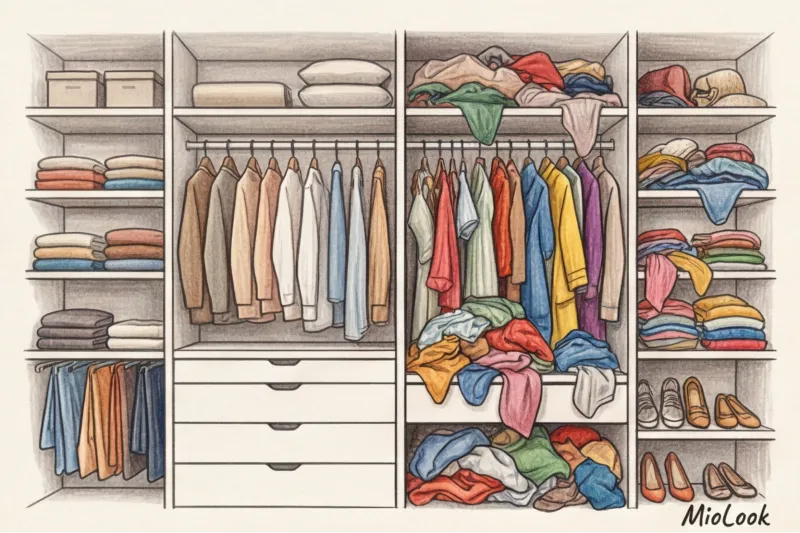
Motivating Things (and Why They Don't Work)
"I'll leave this tight dress behind; it'll make me go to CrossFit." Sounds logical? Neuroscience strongly disagrees. In 2007, Roy Baumeister introduced the concept ego depletion - depletion of the ego (or willpower resource).
Visual cues of not living up to your ideal drain your willpower right from the start. A motivational dress isn't inspiring; it acts as a daily reproach, triggering guilt. And guilt is usually eaten away with sweets rather than burned off on the treadmill.
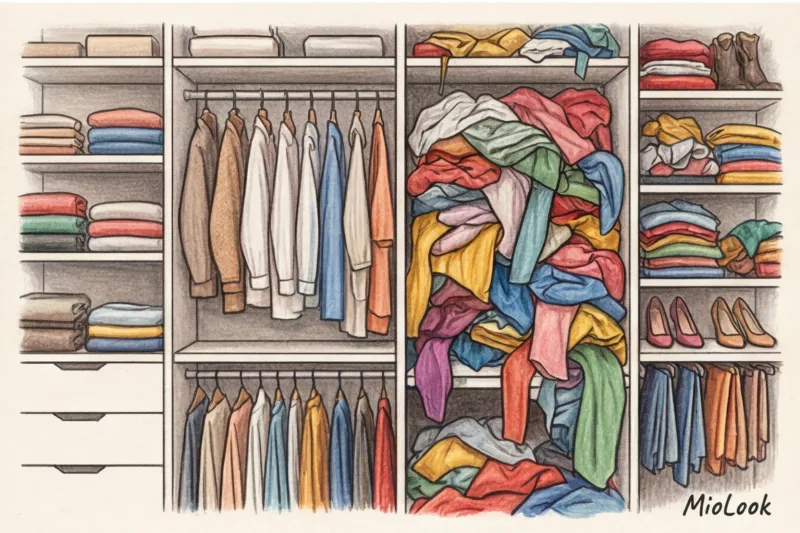
High-end investments and luxury brands
Here we are faced with a classic sunk cost fallacy (Sunk cost fallacy). Let's say you bought a silk top from Khaite for €450, wore it twice, and now it's too small. Getting rid of it feels like a crime against your wallet. The pain of wasting money makes you keep the item with the tag, even though its utilitarian value to you is now zero.
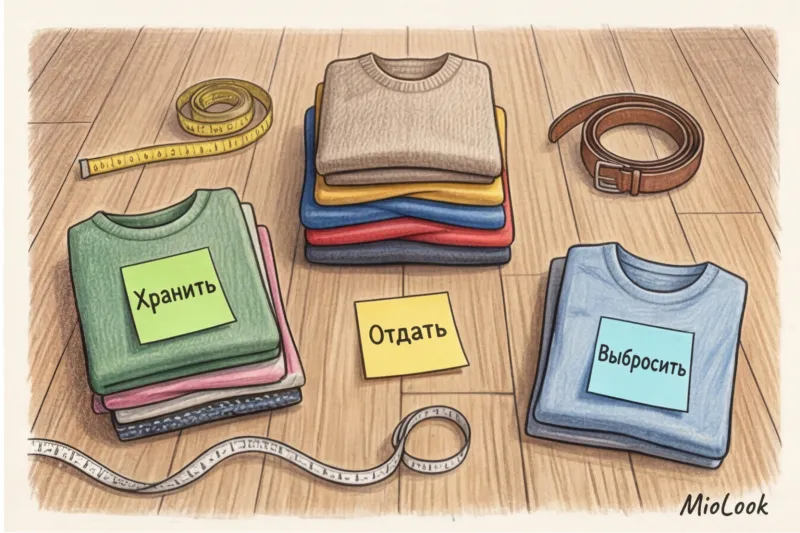
Emotional baggage and memory anchors
This category includes jeans from your first date, a dress from your college prom, or a jacket from your best vacation in Italy. It's important to make a clear distinction: clothing is a utilitarian item. If you can't wear it, it's not clothing anymore. souvenir And souvenirs belong in a box with memorabilia, not on a hanger next to a trendy office blazer.
Access to MioLook for €0.99 — one-time payment
A smart AI stylist will select the perfect look from your current items and help you analyze your wardrobe statistics.
Get access — €0.99 onceWhy Hard Decluttering Is a Bad Idea (and What to Do Instead)
Now here's some counterintuitive advice. If you're expecting me to tell you to collect all your small items in black bags and take them to the trash, you're mistaken. The popular advice of radical minimalists, "just throw everything away," often leads to disaster.
In my experience, when clients, in a fit of self-criticism, got rid of their entire wardrobe "before losing weight," they inevitably experienced the "wardrobe rebound" effect. Two weeks later, they began to panic over their empty closets and a sense of loss of identity. The result? A spontaneous shopping binge and the purchase of €300-500 worth of low-quality fast fashion to somehow numb the anxiety.
Instead of a traumatic breakup, I use the gentle quarantine method. We don't say goodbye forever, we simply put the relationship on hold.
The Quarantine System: A Step-by-Step Guide to Oversized Items
This method allows you to reduce the cognitive load in your closet without the stress of losing your favorite items.
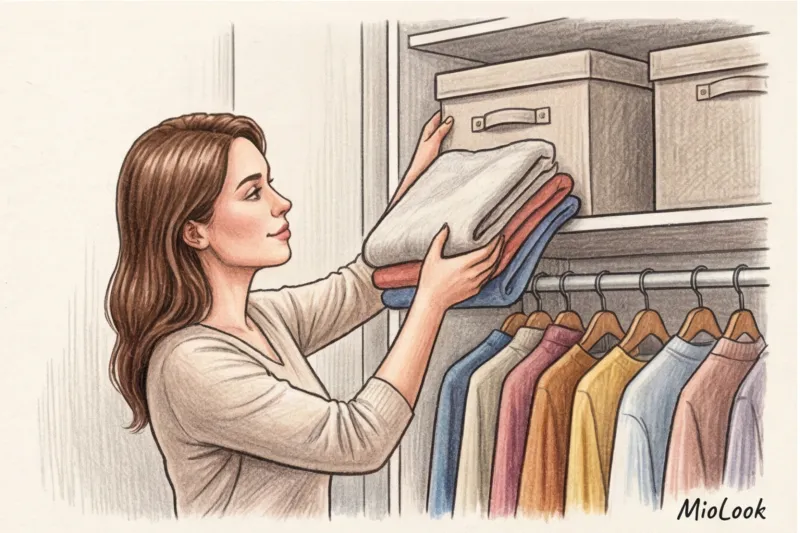
- Step 1: Remove from line of sight. Remove anything from the hangers that's too small, too tight, or that causes discomfort. Your goal is to keep only the tools that are 100% functional on the rails.
- Step 2: Packing in "Purgatory". Place these items in opaque boxes or vacuum-sealed bags. The key word is opaque. You shouldn't be able to see them. Store the boxes on the highest shelf or under the bed.
- Step 3: Set a deadline. Put a date sticker on the box. The ideal rule is 6 or 12 months. If you haven't opened the box within a year, it means you don't need the items.
- Step 4: Digital archiving. Before putting things away, take a photo of them. In the app MioLook My clients create hidden capsules. You maintain a database of your investments, so your items are physically out of sight, but still under control.
Fair Limit: This method does NOT work if you are in the active, controlled phase of medical weight loss under the supervision of an endocrinologist and are losing a size per month. In this case, reference items may still be available.
Transitional Wardrobe: How to Dress Luxuriously at Your Current Weight
The main rule of style that I try to convey to every woman: clothes should serve your body today , not a body from the past or future. The worst thing you can do is punish yourself by dressing in shapeless, baggy clothes "for standby mode."
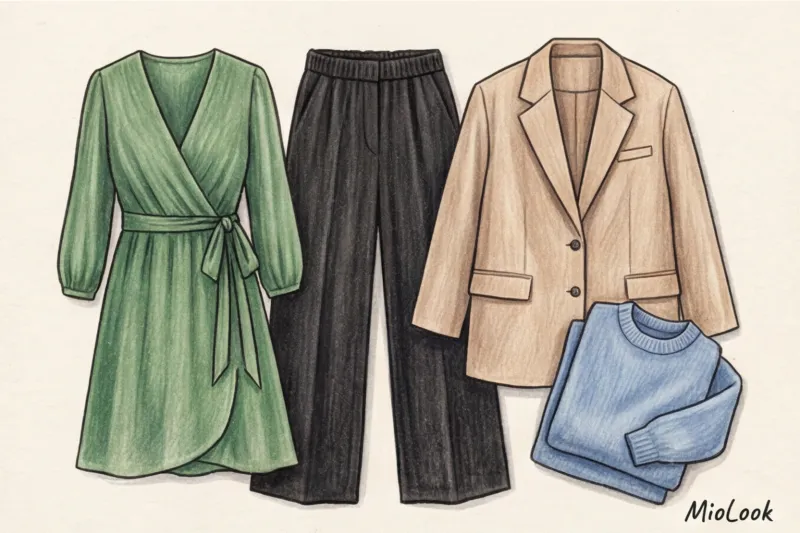
A transitional wardrobe doesn't have to be huge. 10-12 well-chosen mid-priced items (for example, Massimo Dutti or COS, where trousers cost around €80-120) are enough. You deserve to look put-together and confident right now, even if you're planning to lose 5 kilograms by summer.
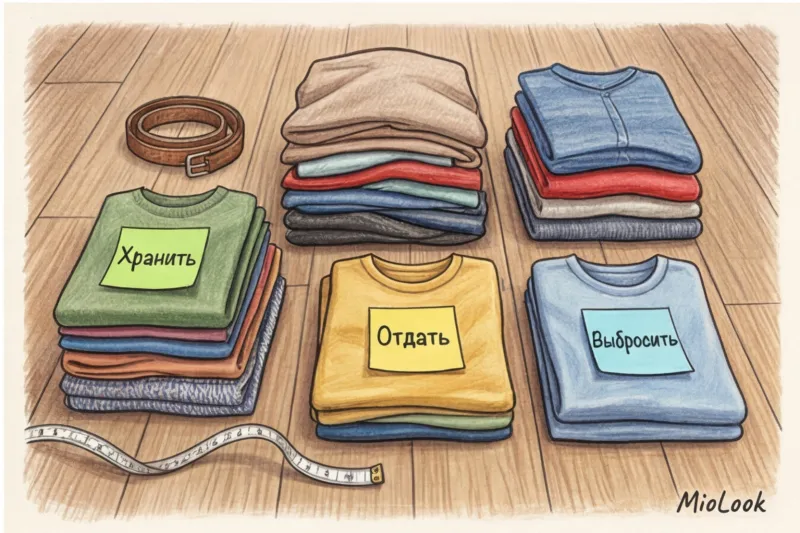
Adaptive silhouettes that forgive weight fluctuations
Ditch the stiff waistbands and non-stretchy fabrics in favor of architectural yet flexible cuts:
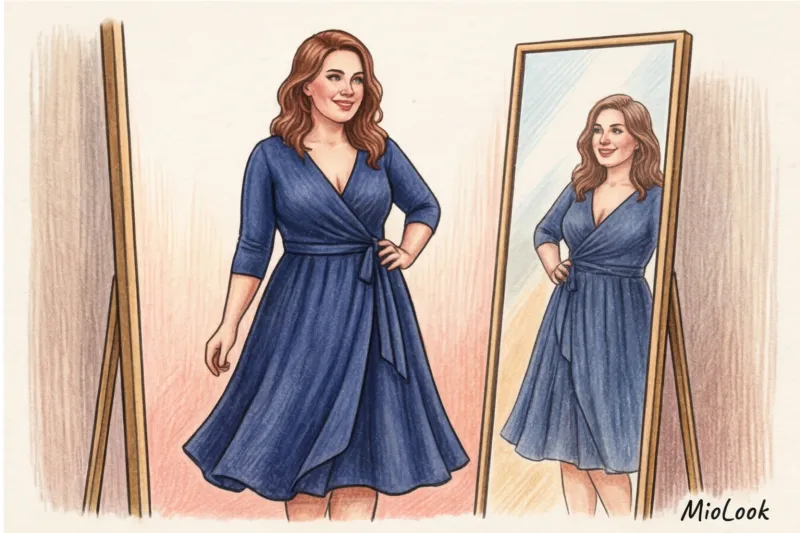
- Wrap dresses: Diane von Furstenberg's invention is a brilliant tool. They adapt to body shapes within two sizes, accentuate the waist, and don't dig into the sides.
- Slip skirts with hidden elastic: Choose styles made of thick satin with an elastic waistband rather than a built-in one. Cut on the bias, they gently hug the hips without constricting.
- Correct fabrics: Avoid thin, flimsy knits. Look for cotton with a weight of at least 180 g/m², Tencel, cupra, and viscose with 5% elastane. They retain their shape but allow freedom of movement.
- Loose Structured Blazers: A straight jacket with a crisp shoulder line brings any relaxed look together, creating vertical lines and concealing any figure nuances you don't want to highlight just yet.
Your perfect look starts here
Join thousands of users who look flawless every day with MioLook's smart recommendations.
Get access — €0.99 onceLife after quarantine: how to monetize your past self
What should you do when your "Purgatory" has expired (6-12 months have passed) and the size hasn't changed? It's time to face reality and turn the fabric into capital.
Send luxury investments and items in pristine condition to international resale platforms like Vestiaire Collective or local marketplaces. One of my clients, with a heavy heart, sold her skinny Sandro jackets and Maje skirts after three years. She earned about €420. We immediately invested the money in a single, yet perfect, structured Polène bag and a pair of perfectly fitting trousers in her current size.
Mass-market items can be taken to swap parties (exchanging clothes with friends) or donated to charities.
Your closet isn't a museum of missed opportunities or a torture chamber. It's a tool for your daily self-improvement. By clearing space of the illusions of the past, you free up the cognitive resources to enjoy the present you—stylish, confident, and not wasting your mornings battling your jeans.