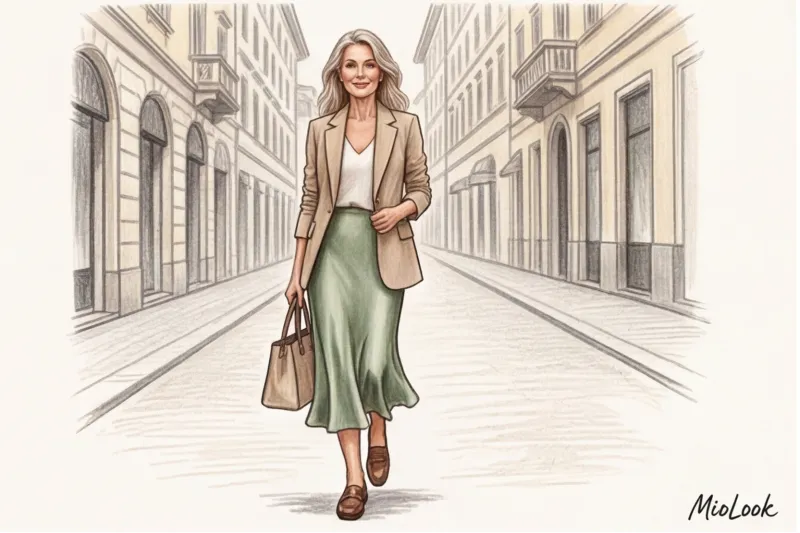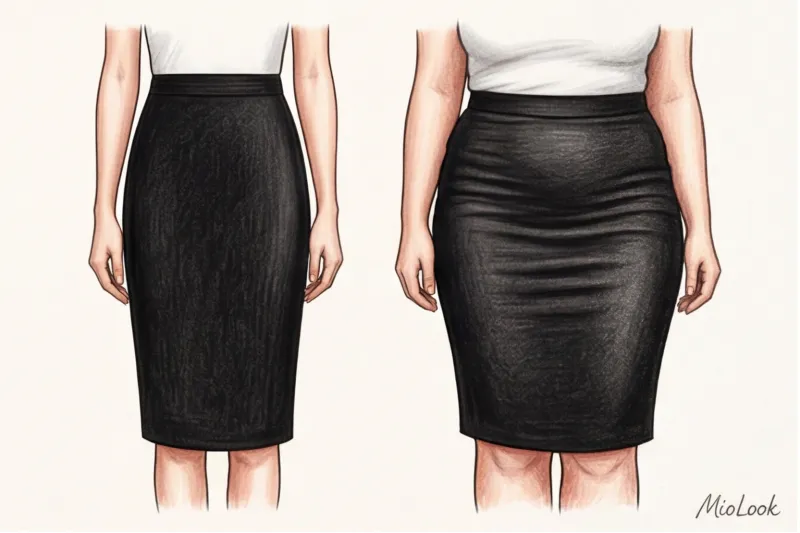
Over 14 years as a stylist, I've conducted hundreds of wardrobe analyses. And you know what I see almost every time? A forlorn black skirt with a sewn-in tag is hanging in the closet. My clients buy it because "that's what the magazine says," and then don't wear it for years, opting for their usual trousers. Statistically, 7 out of 10 women wear skirts of the wrong length and cut, visually cutting off 3-5 centimeters of height and adding unnecessary bulk to the hips.
Let's be honest: there are no universal things. The question is, How to choose a skirt based on your body type , has become overgrown with so many myths that it's time to put things in order. Today, we'll forget the outdated "apple" or "pear" classification and look at your wardrobe through the prism of body geometry, fabric physics, and common sense. And to ensure the process of introducing new items goes smoothly, I always recommend using image visualization function in MioLook - this saves you from impulse purchases.
The Biggest Myth: Why a Black Pencil Skirt Isn't a Universal Essential
Open any basic list of "10 things every woman should own," and you're guaranteed to find a black pencil skirt. It's the biggest fashion misconception of the last twenty years. Here's why.
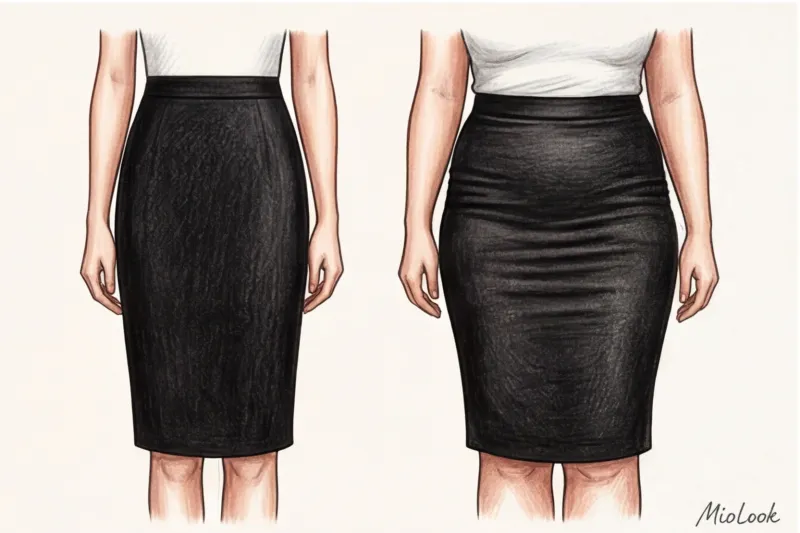
One of my clients, a top manager at an IT company, avoided skirts altogether for five years. Her figure had a pronounced difference between her waist and hips. Every time she wore a classic pencil skirt made of stiff suit fabric, it was a disaster: when she walked, the fabric bunched up into horizontal folds at her hips, and the waistband climbed up toward her ribs. It's pure physics: a rigid shape will always clash with smooth curves.
A pencil skirt only looks great on figures with a linear, straight silhouette, where the difference between the waist and hips is minimal. If you have soft fabrics, rounded hips, or a prominent tummy, such a skirt will make you look fuller and constricting. Furthermore, black at the bottom often looks heavy and contrasting, cutting the figure in half unless you complement it with dark shoes.
Your perfect look starts here
Join thousands of users who look flawless every day with MioLook.
Get access — €0.99 onceHow to choose a skirt based on your body type: Forget about apples and pears
The fruit typology is hopelessly outdated. It stigmatizes the body and doesn't provide a clear answer as to how exactly a garment should fit. To understand, How to choose clothes for your body type without stereotypes , you only need to look at one parameter: the difference in volume between your waist and hips.
According to research into mass-market patterns, the standard factory drop used by Zara, H&M, and Mango is exactly 24 centimeters. This means that if the waist on the pattern is 70 cm, the hip measurement is 94 cm. What happens in reality?
- If your height difference is more than 28-30 cm: Mass-market styles will bulge treacherously at the waist. You'll need to either have the belt tailored or opt for wrap-around or bias-cut styles.
- If your height difference is less than 15-18 cm: Skirts cut to standard lengths will cling to the waist but hang baggily on the hips. Drawstring skirts, elasticated backs, and straight silhouettes are your best bet.
Vertical Proportions: Finding Your Ideal Midi Length
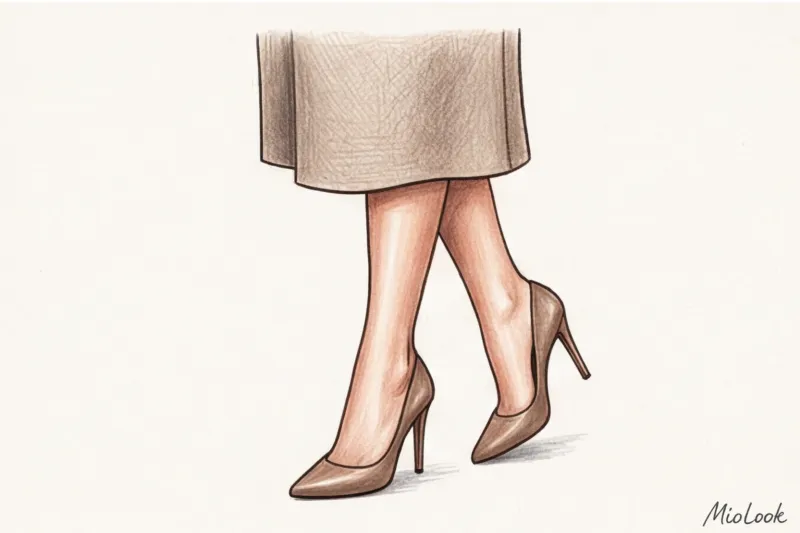
The most common mistake I see on the street is hemlines that end at the widest part of the calf. This "death zone" visually adds bulk to the legs and steals your height.
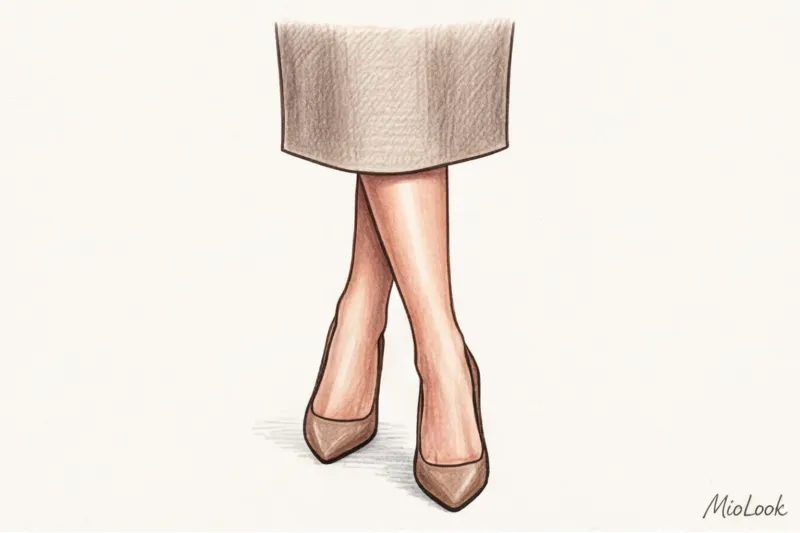
"Midi length isn't a specific number in centimeters. It's a mathematical proportion. The ideal skirt hem should always cross the leg at its narrowest point: either just below the knee or at the ankle."
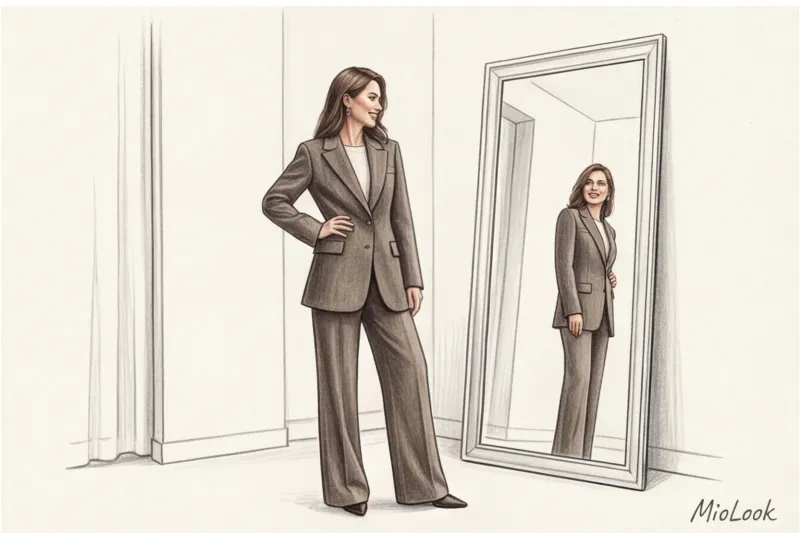
Remember the principles of Christian Dior's New Look silhouette: a voluminous hem was always offset by a graceful ankle. If you're unsure about the length, stand in front of a full-length mirror and slowly lift the fabric. You'll see for yourself the precise line where the leg appears most slender.
Basic Styles: How They Work in Real Life
If we cross out the "pencil", what remains? capsule wardrobe For my clients, I typically use three tried and tested styles that, in the €80-€150 range, provide value for money.
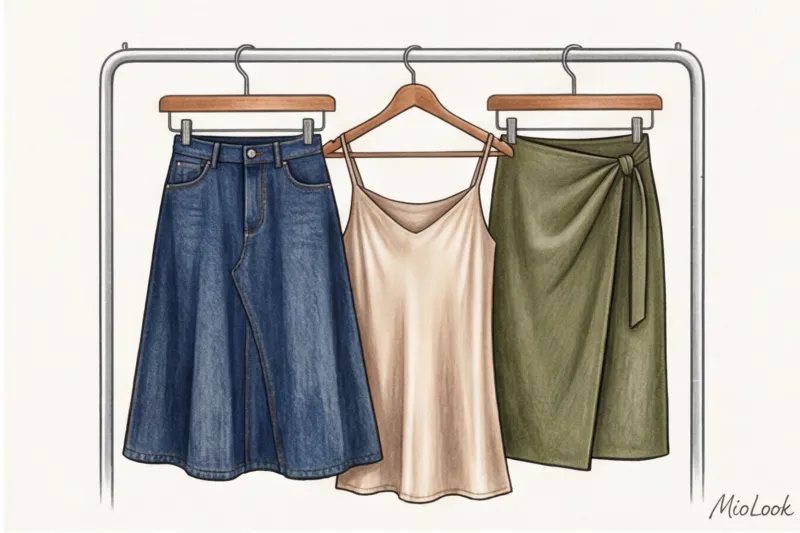
A-line skirt: fabric density is everything
The A-line silhouette is brilliant. It balances broad shoulders (creating a harmonious hourglass shape) and subtly conceals the true volume of the hips. But there's one strict limitation: the density of the fabric.
Thin, flimsy knitwear in an A-line silhouette is a fashion disaster. It will cling to every fold and highlight what you were trying to hide. The ideal basic skirt in this cut should hold its shape on its own. Look for heavyweight denim, structured cotton, or suiting wool with a minimum weight of 220–250 g/m².
Bias skirt (slip): a new classic
A silk or viscose skirt cut on the bias (at a 45-degree angle to the grain) is a sartorial marvel popularized by Madeleine Vionnet in the 1920s. The beauty of this cut is that it gives the fabric phenomenal flexibility.
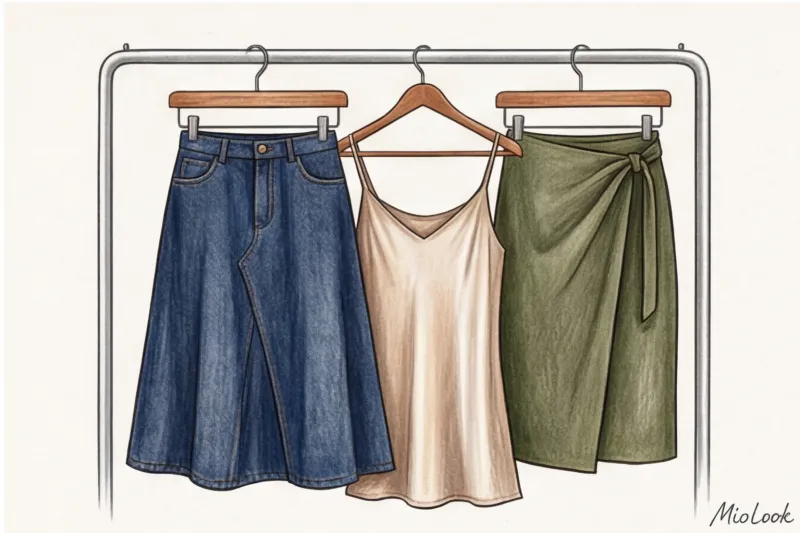
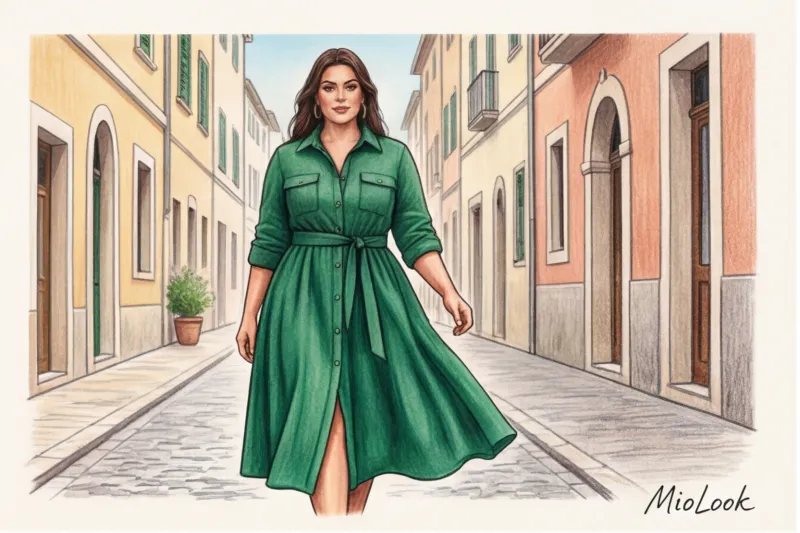
This skirt adapts to any waist and hip difference. It hugs the figure smoothly without creating any hard creases. It's a great option. office wear for plus size women , if styled correctly: for example, layered with a long, straight-cut jacket or a voluminous sweater that covers the groin and hips. Fair warning: seamless underwear is essential with these skirts, as the thin fabric will reveal any lace.
Wrap skirt: the best investment for silhouette correction
If I were asked to stick to just one skirt style in the world, it would be the wrap. The diagonal line cutting across the figure creates a powerful vertical line. It visually elongates the figure and trims volume.
A huge plus of the wrap style is its adjustable fit. If your weight fluctuates by a couple of kilograms over the course of a month (which is perfectly normal for women), this skirt will be just as forgiving. Simply rebutton a button or tighten the waistband a little looser.
Access to MioLook for €0.99 — one-time payment
A smart AI stylist will choose the perfect look for you.
Get access — €0.99 onceFabric and texture: the invisible architects of your silhouette
According to the analytical agency WGSN (2024), the tactility and texture of fabric are now paramount when choosing clothing. After 14 years of feeling seams in boutiques, I've discovered an ironclad rule: texture works like a sculptor.
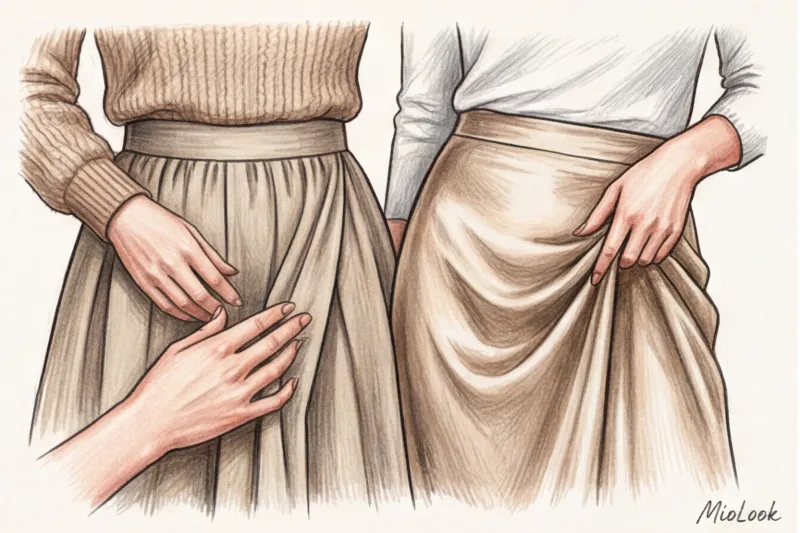
Shiny fabrics (satin, satin, and glossy leather) reflect light and add visual volume. If you want to make narrow hips appear wider, this is the choice. Matte fabrics (wool, heavy cotton, and suede) absorb light and visually "gather" the silhouette, making it appear more compact.
Elastane is a separate topic. Many people look for skirts with a high elastane content (5% or more), thinking it will ensure comfort. This is a mistake. Elastane in basic wardrobe fabrics (unless they're sports leggings) is a ticking time bomb. Yes, the skirt will fit perfectly in the fitting room. But after two months of wear, elongated "bubbles" will appear around the knees and buttocks. The ideal composition for a basic suit skirt is: 95-98% natural or synthetic fiber (wool, viscose) and a maximum of 2-3% elastane for elasticity.
Dress code and essentials: a skirt for the office and everyday life
How often do you find yourself in a situation where you need to look presentable for a meeting in the morning and then meet up with friends in the evening? A basic skirt needs to be a versatile piece.
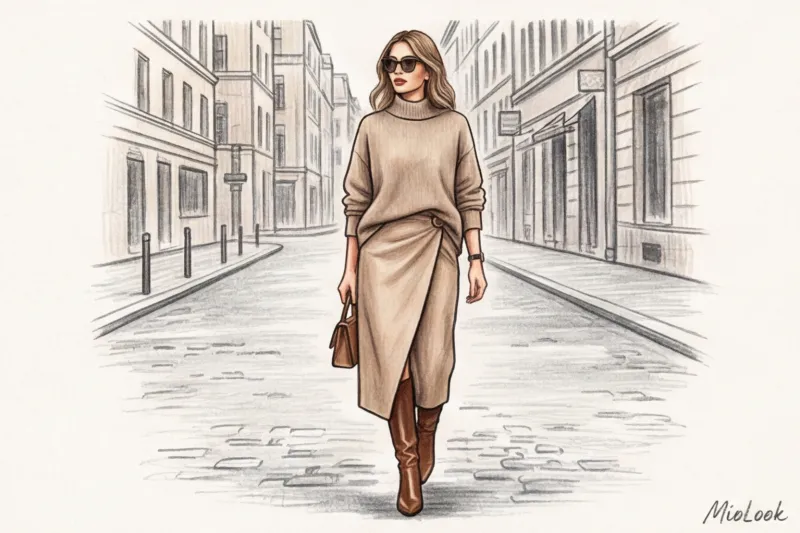
Instead of the usual black, consider deep, elegant shades: navy, burgundy, chocolate, or rich olive. In the €60–€120 range (for example, at Massimo Dutti or local premium brands), these colors always look more expensive than they are. A blue A-line skirt with a white shirt and loafers makes the perfect outfit. smart casual for the office And if in the evening you replace the shirt with a silk top, add accent earrings and hairpins, you will get a luxurious look. image for a date at a restaurant.
Stylist checklist: how to test a skirt in the fitting room
Never buy something just by twirling it in front of a mirror. In my practice, I make my clients do a rigorous crash test of every item before we go to the checkout.
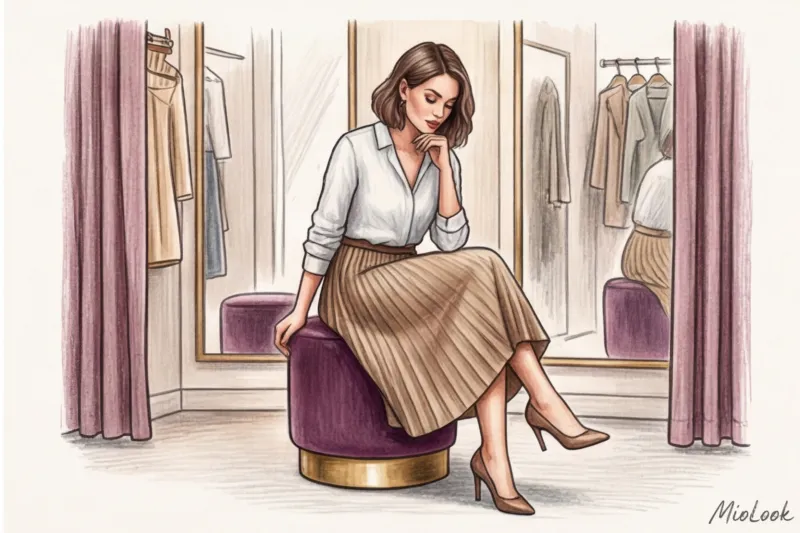
- The "sit on a chair" test. There's always a stool in the fitting room. Sit on it. Does the hem ride up uncomfortably high? Does the tight waistband dig into your stomach, cutting off your breathing? If you can't sit comfortably for two minutes, you won't last eight hours in the office wearing that skirt.
- Step test. Take a wide stride, mimicking climbing stairs. Is the vent (cut) deep enough? Does the fabric pull at your hips?
- Light test. Stand close to the light source. If the outline of your legs is clearly visible through the fabric (which is often the case with summer skirts costing €30–50), the garment absolutely needs a lining.
A basic wardrobe isn't a shopping list imposed by someone else's rules. It's the math of your proportions and the quality of its construction. The right skirt is one that doesn't make you constantly have to adjust the waistband, tug at the hem, or suck in your stomach. Find your shape, invest in a thick, matte fabric, and you'll forget about the "nothing to wear" problem for years to come.