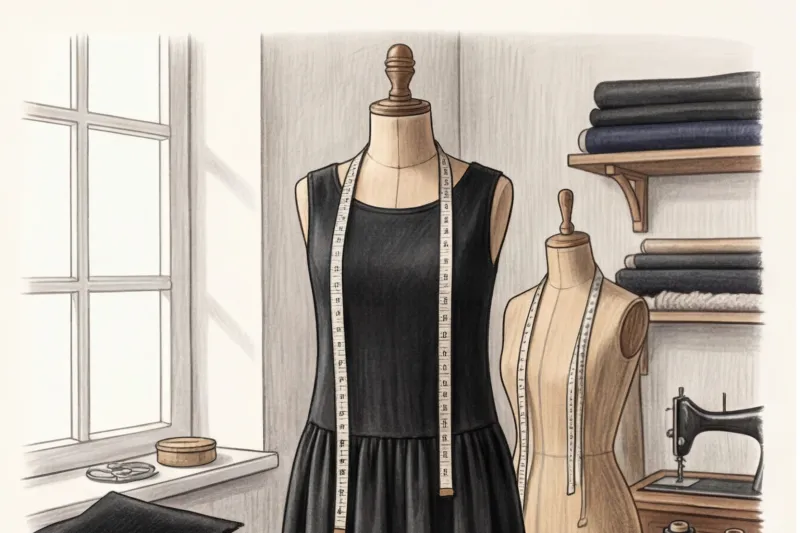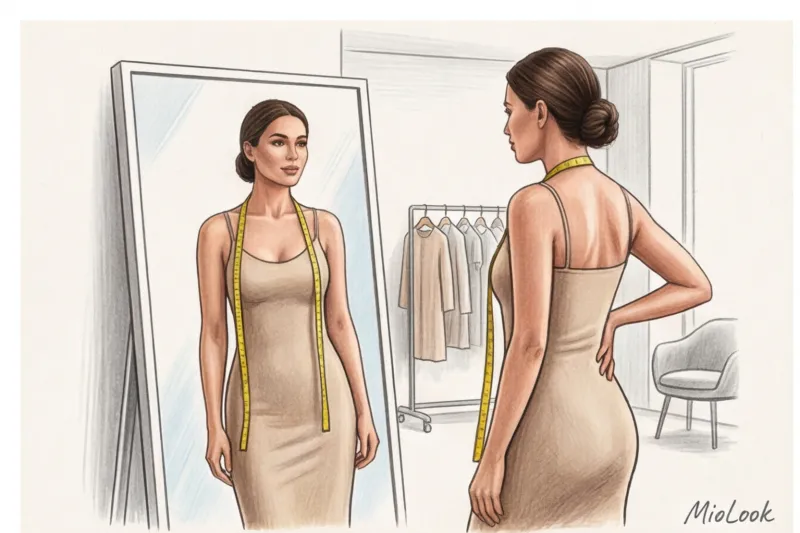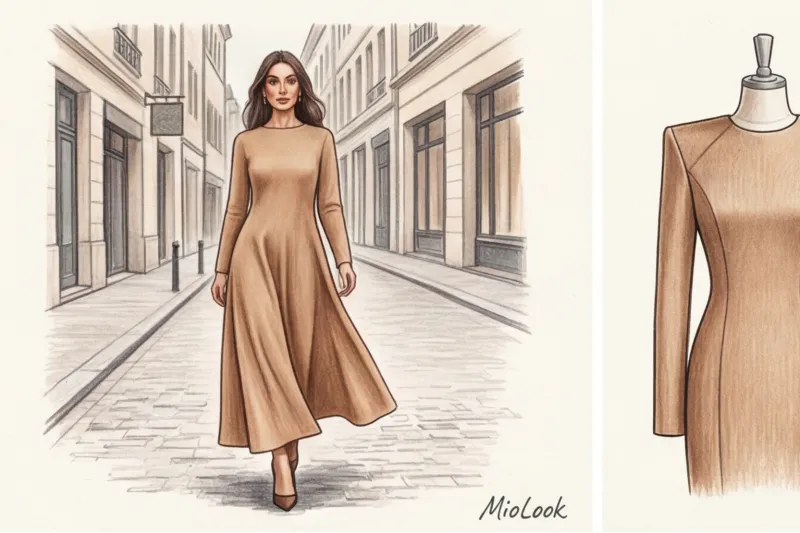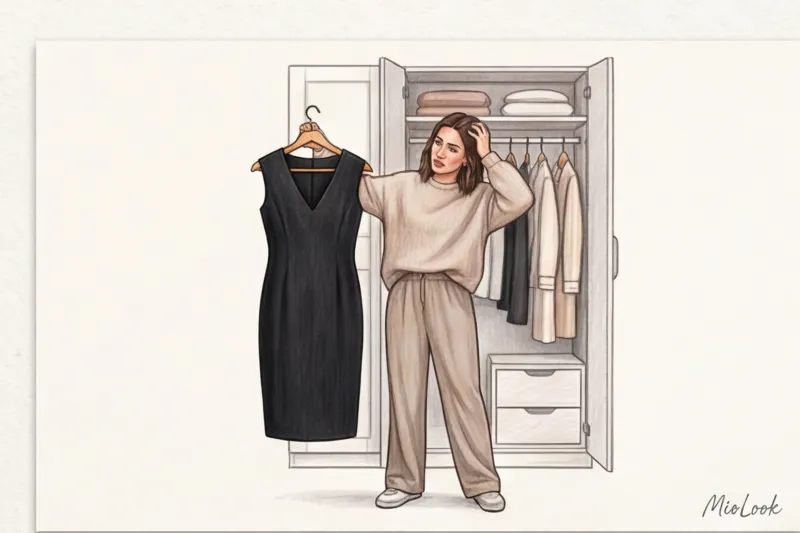
Have you ever wondered why an item that glossy magazines have called a "fashion must-have" for decades so often ends up gathering dust in your closet for years with its tag still intact? According to statistics, about 80% of women make the wrong choice when choosing a basic wardrobe, buying a silhouette that's too formal and unsustainable. We're obsessively searching for that perfect piece. the perfect little black dress , based on outdated lists from the 2010s, and as a result we get a “uniform for someone else’s life.”
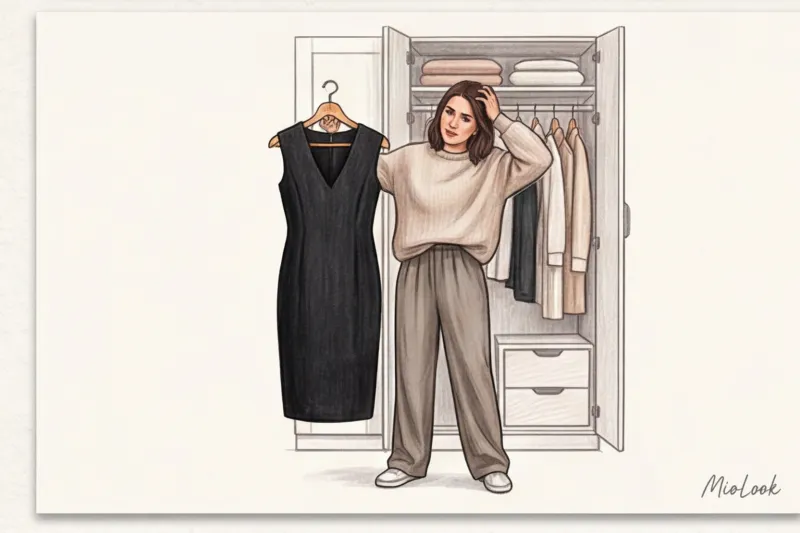
We talked about how to stop buying random trends in more detail in our complete guide about timeless style and creating an elegant wardrobe But today I want to offer you a completely different, engineering-based approach to choosing a dress. We'll forget about abstract "femininity" and analyze the purchase through an analysis of the fabric, the quality of the dye, and your actual schedule.
Why the classic sheath dress is the worst investment for 80% of women
Let's be honest: a classic sheath dress is the worst investment for a modern basic wardrobe. It's counterintuitive, since every other article online recommends starting a capsule wardrobe with one. But this style comes from the era of strict corporate dress codes. It dictates an overly formal tone, requires perfect posture, shapewear, and, usually, heels.
I had a client in my practice, a freelance graphic designer. She bought a stunning (and very expensive) wool sheath dress simply because "every woman should have one." The dress hung in her closet for three years. Why? It was completely uncomfortable to sit in front of her laptop at her favorite coffee shop, looked odd with her usual sneakers, and demanded a "special occasion" that simply never came in her relaxed life.
"A modern uniform should adapt to your hybrid life, not turn you into a red carpet mannequin."
We swapped out that rigid sheath dress for a black bias-cut slip dress in heavy silk. The result? She wears it three times a week: with a chunky knit sweater during the day and a blazer in the evening.
Your perfect look starts here
Join thousands of users who look flawless every day with MioLook.
Get access — €0.99 onceThe Anatomy of the Perfect Little Black Dress: A Textile Analysis
Cheap fabric will make any design, even the most ingenious, seem disposable. A sustainable approach to fashion doesn't start with green labels in mass-market stores, but with choosing materials that don't lose their shape or pill after three washes.
Fabrics That Last for Decades (and Those to Avoid)
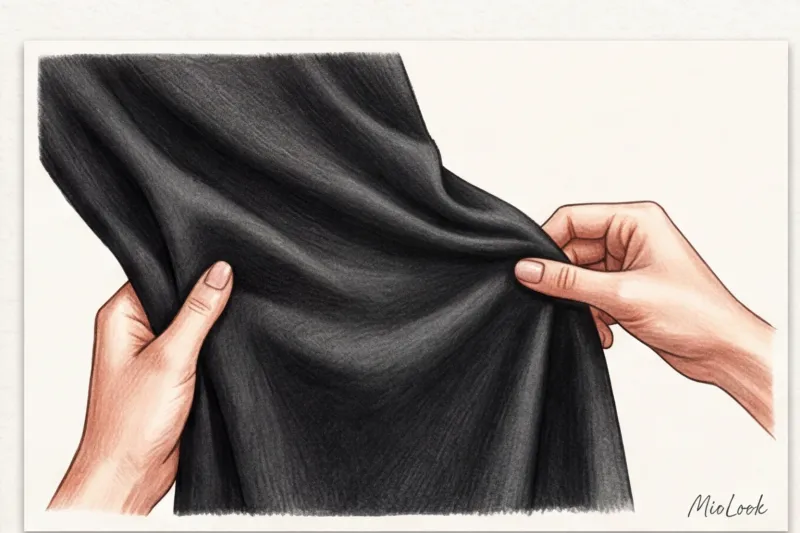
If you want your dress to last for years, pay attention to these three materials:
- Wool crepe with a density of 200 g/m²: Ideal for structured yet soft silhouettes, it's breathable, virtually wrinkle-free, and has a matte, luxurious finish that absorbs light.
- Cupro: This fabric is often called "vegan silk." It's made from cotton fluff, has a stunning flow, feels cool on the skin, and, unlike natural silk, is easier to care for.
- Triacetate: Don't be afraid of artificial fibers, as long as they're high-tech synthetics. Unlike cheap polyester, which creates a "greenhouse" effect, high-quality Japanese triacetate holds its shape perfectly, doesn't fade, and is wrinkle-resistant.
When it does NOT work: Natural, fine silk is wonderful, but if you tend to sweat a lot, frequently use public transportation in the summer, or aren't prepared to pay regular dry cleaning bills, consider switching to blended fabrics (such as viscose with 5% elastane).
Black and fading: how to check the quality of the dye
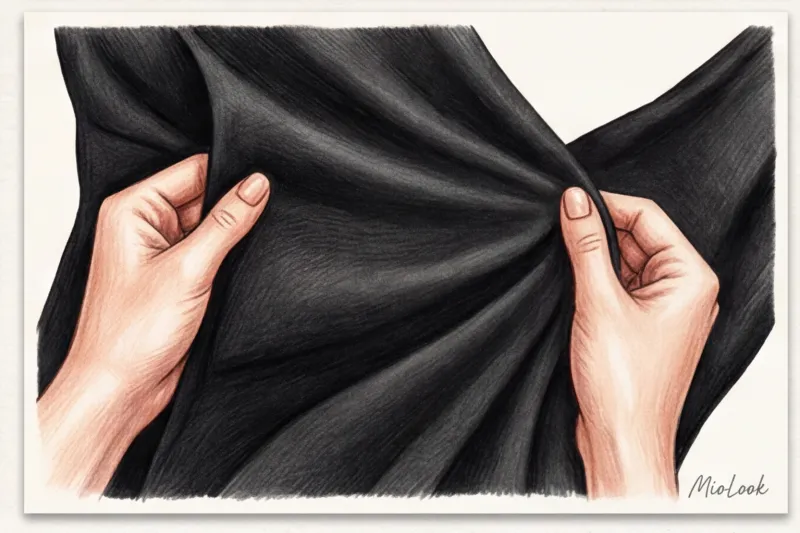
Have you noticed how some black items acquire a dirty greenish or reddish tint after a couple of washes? This is a sign of cheap pigment that hasn't bonded well to the fibers.
To check the color quality in the store, do the following: light test Hold the dress near a window (artificial store lighting distorts shades). Deep, high-quality black on natural fabrics will absorb the light, remaining a jet-black. If the fabric has a gray or brown tint in the sun, leave the item on a hanger.
To preserve the color, wash these items only with liquid detergents for dark fabrics. Regular detergents contain optical brighteners, which literally "etch" the black pigment from the fibers.
Access to MioLook for €0.99 — one-time payment
A smart AI stylist will select the perfect look for you, taking into account your body shape and existing wardrobe.
Get access — €0.99 onceThe Cutting Formula: How to Choose a Style to Suit Your Real Lifestyle
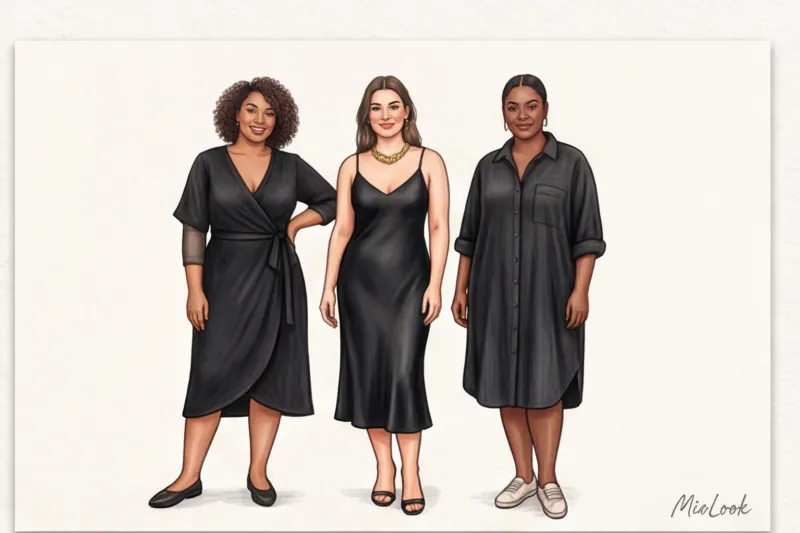
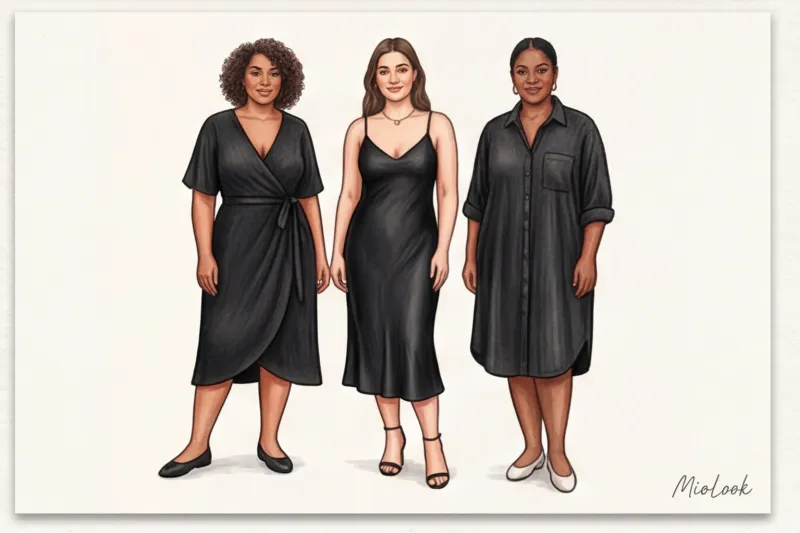
Before you head to the fitting room, consider your context. Where do you spend 80% of your time? Here are three versatile yet completely different silhouettes that work better than the classic sheath:
- Midi shirt dress: A lifesaver for IT professionals, teachers, and creative types. Choose heavyweight cotton or lyocell. Unbutton a few buttons and roll up the sleeves for a relaxed look. Button it up to the neck and add a belt for a smart, office-ready look.
- Wrap dress: The most adaptable style for weight changes. A woman's body changes depending on her cycle, stress, and lifestyle. This wrap dress made of dense viscose tolerates weight fluctuations of 3-5 kilograms and always fits perfectly thanks to the kinetics of the cut.
- Bias slip dress: A champion of layering versatility. The bias cut allows the fabric to flow smoothly across the body without clinging. It can be worn under a voluminous sweater (like a skirt), over a white T-shirt (for a '90s vibe), or on its own with a jacket.
Three subtle signs of an expensive dress (that you can check by touch)
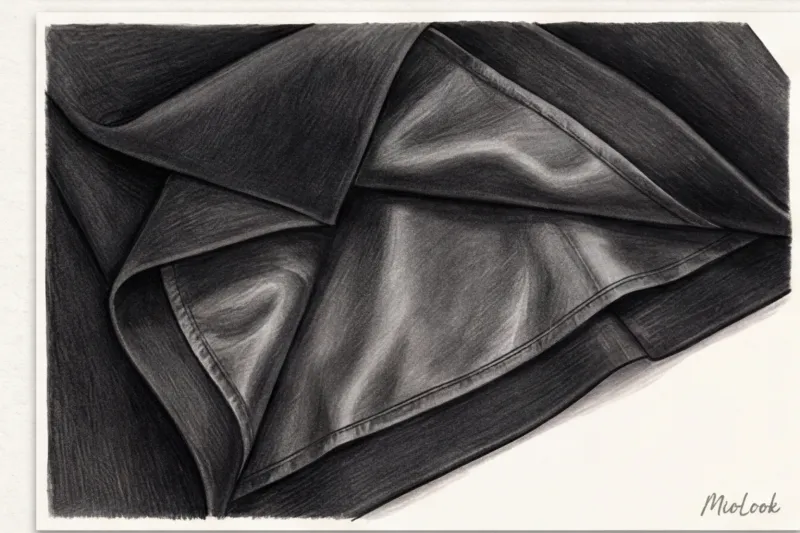
You don't need to be a professional tailor to determine the true quality of a garment in 30 seconds in the fitting room. Just check three areas:
1. Hidden seams and hem. Turn the hem inside out. A quality dress (especially one made of wool or crepe) will never have its hem stitched all the way through with a regular straight stitch that's visible from the outside. Look for a blind hem—the fabric is hemmed so that not a single thread is visible on the front.
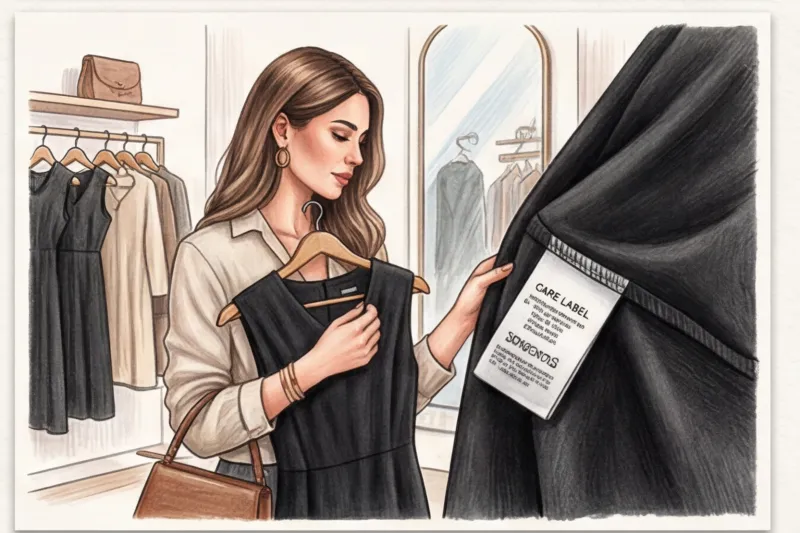
2. Quality of the lining. This is a common trick used by mid-range brands (like Massimo Dutti or Zara): they make a great dress out of natural wool, but then add a 100% polyester lining. The end result is a "thermos." The lining of a high-end garment is always made of breathable materials like viscose, cupro, or acetate.
3. Sewn-in zipper. Run your hand along the hidden zipper on the back. It should lie completely flat. If the fabric around the zipper is billowing or bubbles, it's a design flaw that can't be corrected even by a reputable tailor.
Ready to get started?
Try the MioLook free plan—no commitments required. Upload your items and get ready-made look formulas.
Get access — €0.99 onceFrom the office to the theater: a test drive for versatility
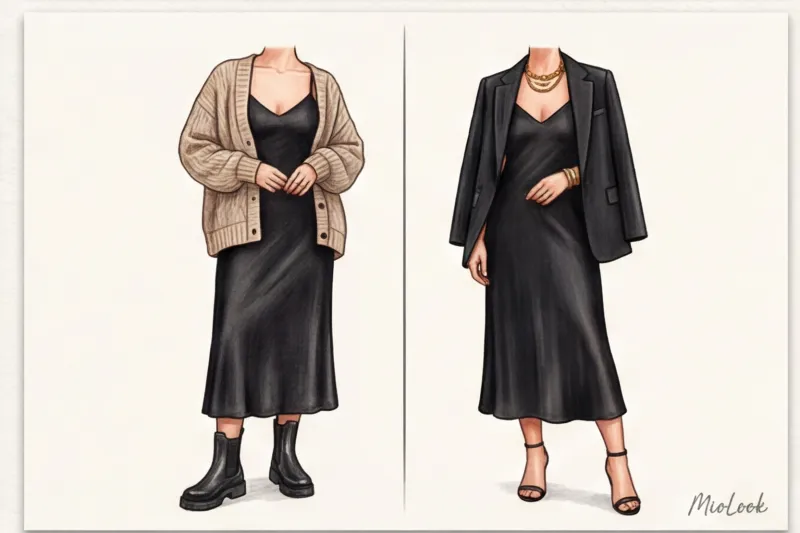
In styling, there's a strict "Rule of Three Contexts." If you're standing in the fitting room and can't immediately come up with three completely different looks with a given item from what's already in your closet, put it back on the hanger.
Let's take a test drive with a black midi dress made of thick viscose:
- Daytime scenario (for brunch or a walk): We layer thick matte tights underneath, chunky Chelsea boots with chunky soles, and throw on a voluminous chunky knit cardigan. The textured contrast (smooth dress + fluffy wool) adds a sophisticated touch to the look.
- Business scenario (for a meeting or in the office): Add a structured menswear jacket in Prince of Wales check, flat loafers, and a rigid tote bag.
- Evening scenario (theater or date): Remove excess layers. Add statement earrings (like vintage gold), red lipstick, sheer black tights (15 denier), and kitten heels.
Pre-purchase checklist: 5 questions that will save your budget and the planet
According to a major report by the Ellen MacArthur Foundation (2017), today the average item is worn only 7-10 times before being thrown away. This is an environmental and financial disaster. To avoid adding to these statistics, use the Cost-Per-Wear formula.
A $300 dress you'll wear 50 times costs you $6 per outing. A $50 sale dress you'll wear twice to a corporate event costs you $25 per outing. An expensive, but well-made basic piece is always mathematically more cost-effective.
Before you take that perfect little black dress to the checkout, ask yourself these final questions:
- Can I wear this with flat shoes? If a dress requires only heels, you will wear it 5 times less often.
- Is it comfortable for me to sit in it with my legs crossed and can I raise my arms freely? Check it out right in the fitting room.
- Does it require special underwear? If you need a seamless strapless bra to go with your dress and you hate wearing it, the dress will stay in the closet.
Your perfect little black dress isn't a tribute to Coco Chanel or a checkmark on a shopping list. It's a highly precise tool for your personal effectiveness. When you find a style you can wear from a presentation in the morning to an exhibition in the evening, simply by changing your shoes, you'll know your search is over.