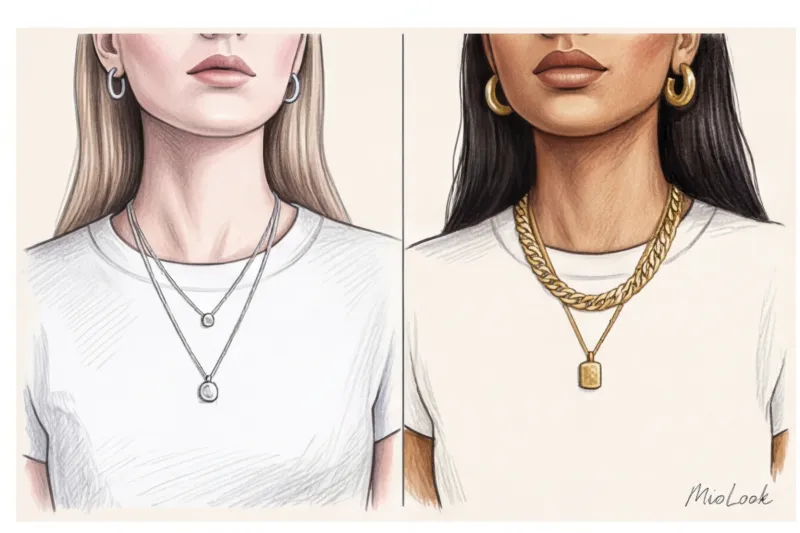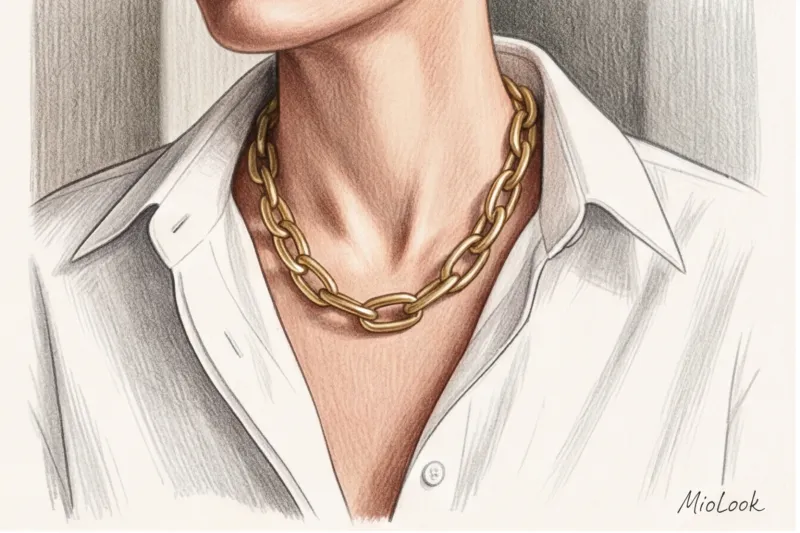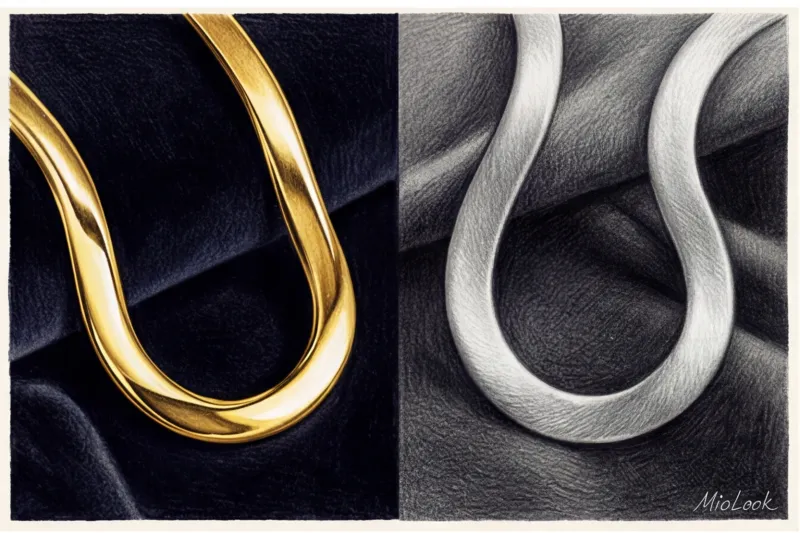
For decades, jewelry store salespeople and glossy magazines have been repeating the same rule: women with warm skin tones should wear gold, while those with cool skin tones should wear only silver. You know what I'm telling you? Over 12 years of auditing jewelry wardrobes, I've seen hundreds of jewelry boxes where 80% of the beautiful, expensive pieces sit idle. And the problem wasn't the color of the metal.
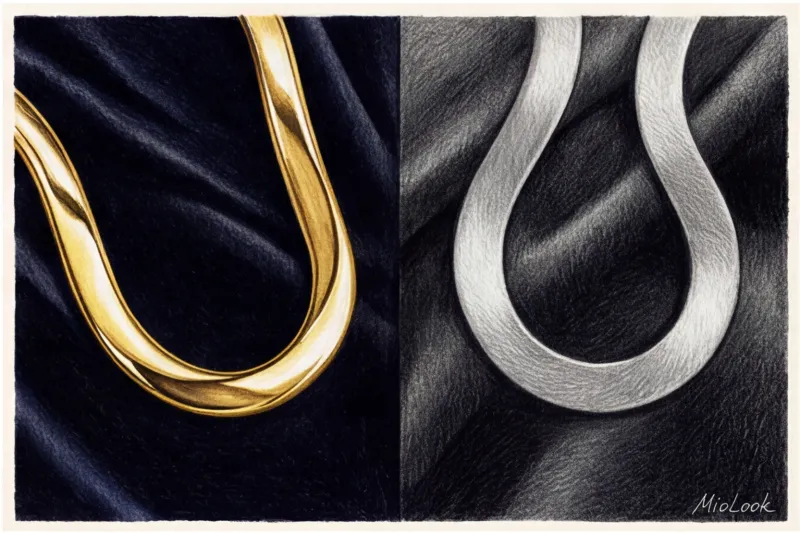
Selecting jewelry based solely on skin temperature is like choosing a car solely by its color, ignoring its engine power. The real magic lies in the physics of light. The way metal shines and the way a stone refracts light should resonate with your natural contrasts. In this article, we'll put the outdated myth of "gold is warm, silver is cool" to rest and learn how to choose jewelry based on the contrasts in your appearance, based on the laws of optics and gemology.
Light, shadow, and shine: why jewelry that contrasts appearance works better for color types
Let's turn to science. In gemology, there's a concept called the Refractive Index, which determines a stone's visual weight and its ability to "sparkle." Diamonds have the highest RI, while matte rose quartz has the lowest. The same applies to metals: the difference in light reflectivity between gold polished to a mirror finish (high polish) and metal with a satin finish (satin finish) is colossal. A high-gloss finish reflects up to 90% of the light, creating a harsh, sharp reflection. A matte finish reflects less than 40%, softly diffusing the light.
According to visual perception research (Journal of Vision, 2023), the correct scale and degree of shine on objects in a portrait keeps the viewer's attention on your face for 30% longer. If the shine on your jewelry clashes with the contrast of your face, the viewer will focus on your earrings, not you.
We've covered in more detail how the basic difference between light and dark in the face works in our A complete guide to contrasting appearance and color choices.
High-contrast appearance: geometry, drama and mirror-like gloss
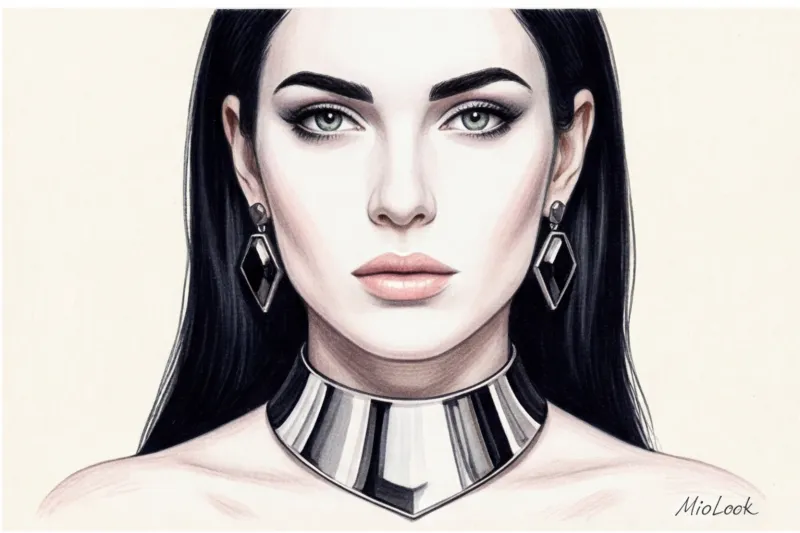
The high-contrast type includes women with very fair, porcelain skin and richly dark hair and eyebrows. This type of face naturally has a sharp outline, sharp shadows, and vibrant highlights.
One of my clients, the striking brunette Diana, avoided pearls and light metals for years, believing they aged her and made her look sallow. She wore classic matte silver, which simply faded against her vibrant complexion. Once we replaced matte textures with baroque pearls with a strong lustre (iridescent sheen) paired with black spinel and glossy white gold, her complexion literally lit up from within.
- Metals: High polish is essential. Matte, distressed, or brushed finishes will make a high-contrast look look tired and dull.
- Stones: Choose stones with a high degree of light refraction (diamonds, sapphires, emeralds, cubic zirconia) or absolutely dull, dense colors (black onyx, black spinel, smooth white enamel).
- Form: Clear geometry, sharp angles, asymmetry, large smooth surfaces.
High-contrast design has a unique superpower: it can withstand the most aggressive geometry and the most blinding glare without being lost in the background.
Your perfect look starts here
Join thousands of users who look flawless every day with MioLook. The smart algorithm takes your contrast into account.
Get access — €0.99 onceMedium contrast appearance: complex texture and richness of nuances
Medium contrast is characterized by soft transitions: brown-haired girls, light-haired girls with bright eyes, or tanned brunettes, where the difference between skin tone and hair is not extreme. This is my favorite Mediterranean aesthetic, where complex textures and tones reign supreme.
If you have a medium contrast, a pure, mirror-like gloss or a completely matte finish will be forgiving. Your element is a play of textures.
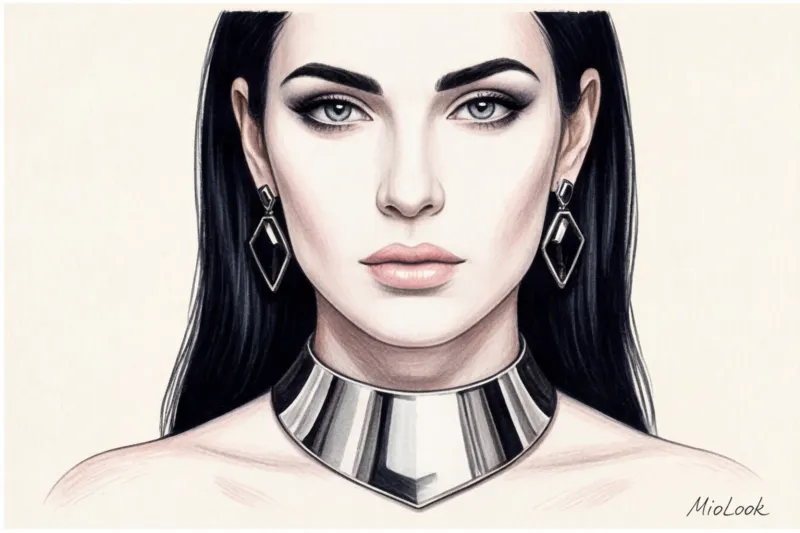
- Metals: Hammered metals, crinkled foil effects, and light brushing are ideal. Medium contrast is the most popular choice for the global bimetallic trend—a mixture of gold and silver in a single piece.
- Stones: Translucent, with internal inclusions, veins, and patterns. Agates, landscape jasper, tiger's eye, malachite, rutilated quartz (hair quartz).
- Form: Multi-layered, eclectic, a combination of several chains of different weaves.
By the way, in the app MioLook The "smart wardrobe" feature often suggests that women with medium-contrast complexions mix pendants on long chains with short chokers made of crushed metal—this creates the desired dynamic in the portrait area.
Low-contrast appearance: delicacy, watercolor and inner glow
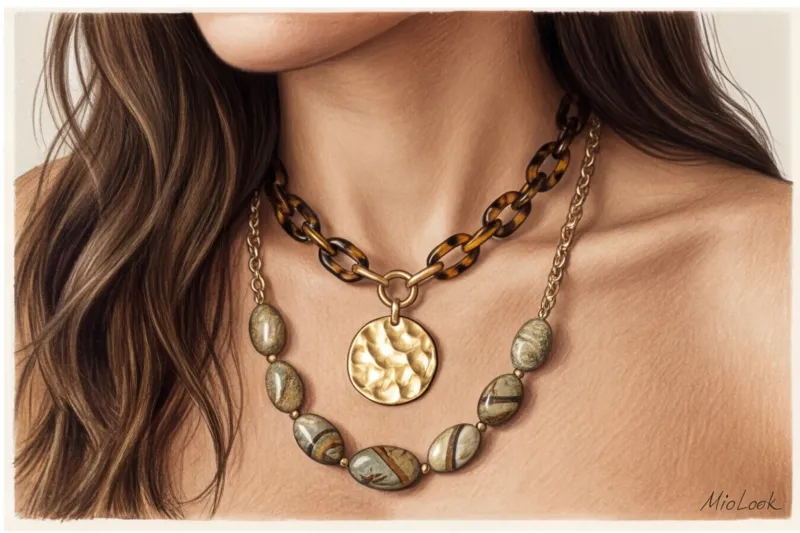
Low contrast is typical for fair-skinned blondes, pastel-toned fair-haired women, or, conversely, monochrome dark-skinned women, where skin, hair, and eyes blend into a single caramel-coffee tone. The biggest mistake I regularly see at corporate training sessions is when a fair-haired woman wears massive, glossy gold jewelry or large faceted rubies to an important presentation. The mirror-like shine instantly overpowers delicate facial features. The audience sees the prestigious jewelry but loses eye contact with the speaker.
Your aesthetic is watercolor, not gouache.
- Metals: Satin finish, matte finish, lightly oxidized (blackened silver). The metal should not produce harsh reflections in the sun.
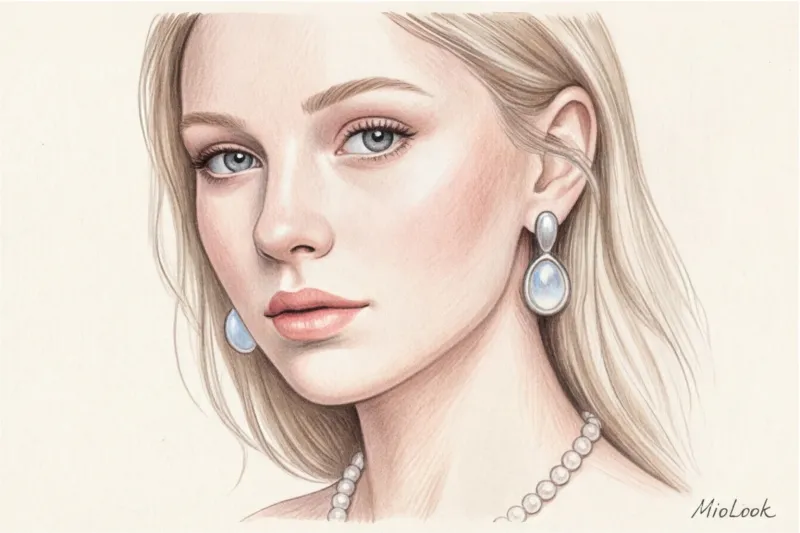
- Stones: Opalescent, matte, and porous. Moonstone, rose quartz, turquoise, opals, jade, and classic matte pearls are ideal.
- Form: Smooth, flowing lines, floral motifs, teardrop shapes, absence of rigid geometric frames.
When it does NOT work: I must add a disclaimer. Delicate matte textures are absolutely not suitable for evening events with dim lighting (black-tie, clubs, restaurants). Without directed light, they look like plastic or mass-market jewelry. For evening wear, low-contrast women will need to use the tricks discussed below.
Access to MioLook for €0.99 — one-time payment
A smart AI stylist will find the perfect look for your contrast in just a couple of clicks.
Get access — €0.99 onceThe Stylist's Matrix: How to Break the Rules and Wear "Other People's" Stones
What if you have low or medium contrast but adore diamonds, high-status geometrics, and dramatic style? Stylistics isn't a prison of strict rules; it's a toolbox. If you really want to, you can, but you need to use a compensating technique.
The "Lowering the Degree" Technique
Combine the incompatible. Choose a glossy, sparkling stone (such as a clear diamond), but order it in a matte, solid setting. This contrasting textures within the piece itself will tone down its overall aggressiveness.
Moving away from the face
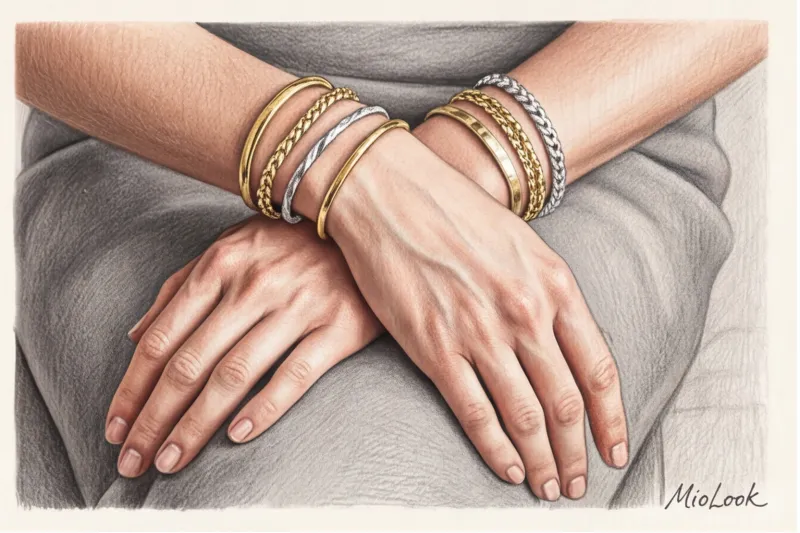
All the rules of contrast are critical only in the portrait area (earrings, necklaces, chokers). Hands are your free territory. Feel free to wear your favorite rings and bracelets, even if they're not perfect in texture, on your wrists. This is a great way to integrate accent pieces when going, for example, on a first date , where you want to shine, but not overload your face.
Artificial contrast enhancement
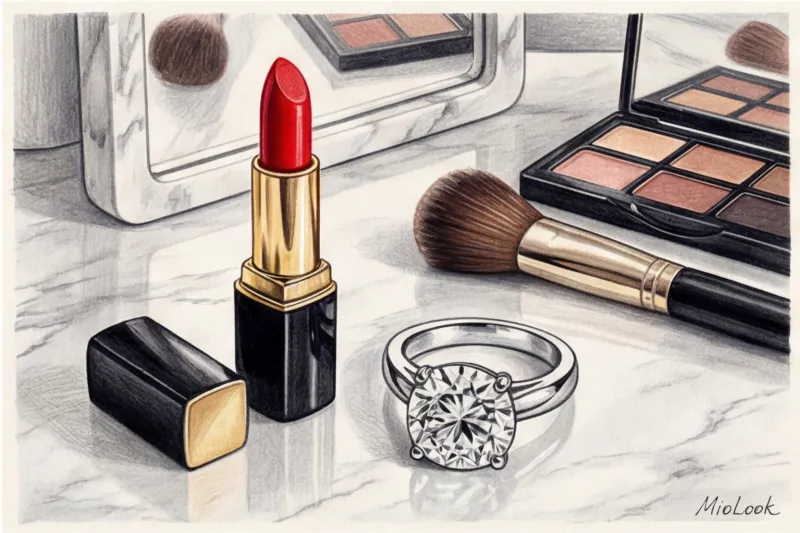
This is my favorite insider secret. If you need to wear a chunky, glossy necklace that's too big for your eyes, increase the contrast of your face! As the PANTONE Color Institute (2025) notes, dense pigments in makeup alter the visual perception of color. A bold red lipstick, bold, graphic eyeliner, or even a contrasting white shirt collar that fits close to your face will create the necessary backdrop to elevate chunky jewelry.
Beyond Jewelry: Apply Contrast to Glasses, Belts, and Bags
The laws of light reflection are universal. They apply not only to metals, but also to leather, plastic, and hardware. The difference between a smooth leather bag and a suede bag is the same as the difference between glossy and matte gold.
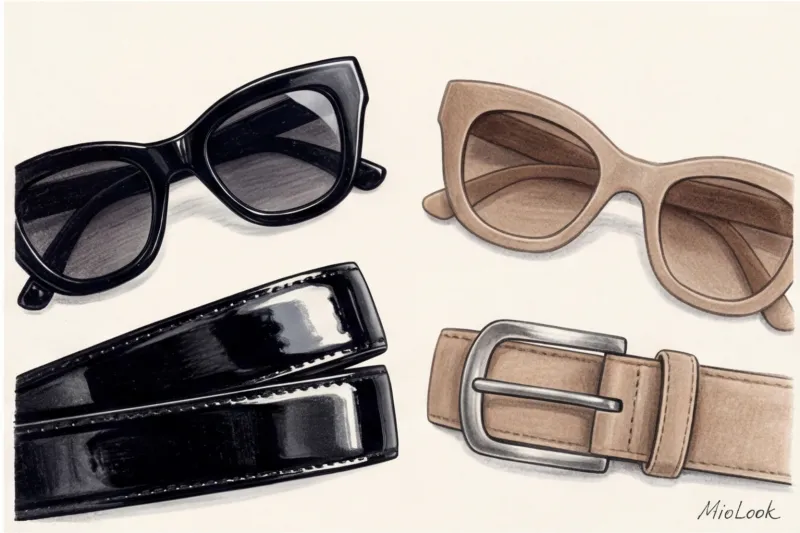
- Eyeglass frames: For high contrast, glossy acetate (like classic Celine models) and black polished plastic are ideal. For medium contrast, horn frames, gradients, and tortoiseshell finishes are ideal. For low contrast, matte metal (like Mykita) or translucent nude plastic are ideal.
- Leather accessories: Patent leather offers maximum shine and drama, perfect for high-contrast skin tones. Suede and grained leather absorb light, creating a soft feel for medium and low-contrast looks.
- Fittings: When choosing a basic bag (between €100 and €300, or a premium one), always pay attention to the buckles. A shiny gold chain on a bag requires your appearance to support it, while matte or enameled hardware will be much more discreet.
Auditing Your Jewelry Box: 5 Steps to the Perfect Collection
Now that you know the theory, it's time to practice. This evening, take out all your jewelry and conduct a thorough audit.
- Sorting by texture: Divide all items into three piles: glossy (reflect like a mirror), textured (crumpled, hammered, scratched) and matte/satin.
- Stone rating: Separate the transparent faceted type (sparkling) from the opaque ones (semi-precious, matte, pearl).
- Mirror test: Stand in front of a mirror in daylight, makeup-free. Hold the earrings to your face and honestly answer this question: "What do I see first: myself or this jewelry?"
- Quarantine zone: Set aside items that overpower your natural contrast. Don't throw them away! These are your reserves for evening looks with heavy makeup or for wearing away from your face (if it's rings or bracelets).
- Investment plan: Based on your actual contrast, create a shopping list. Even a basic €50 necklace from a mass-market brand like COS or Massimo Dutti will look like an expensive, exclusive item if its texture matches your body type.
Conscious consumption of jewelry doesn't start with saving money, but with understanding the physics of light. Stop buying jewelry just because you liked the design in the display case. Buy pieces that enhance your personality, not those that live a life of their own on your neck.