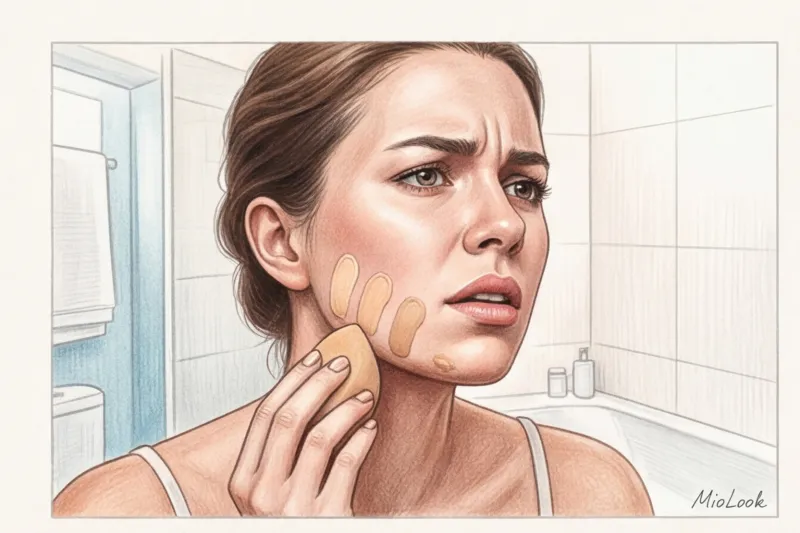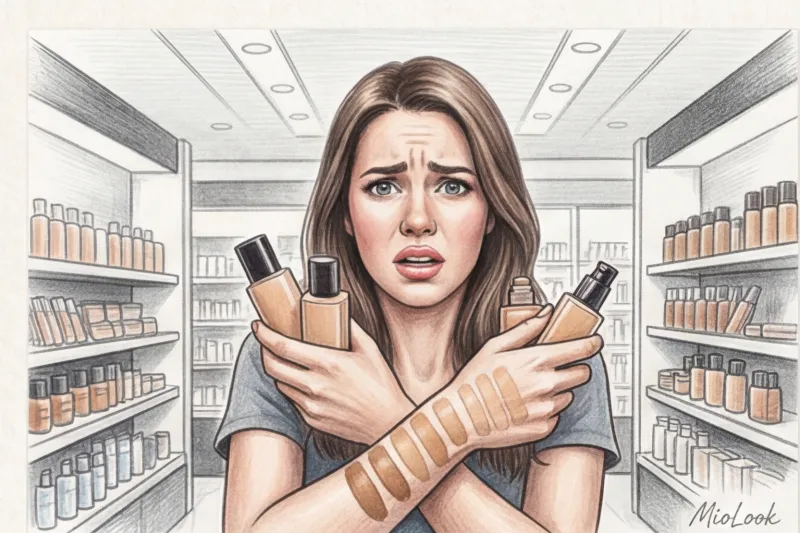
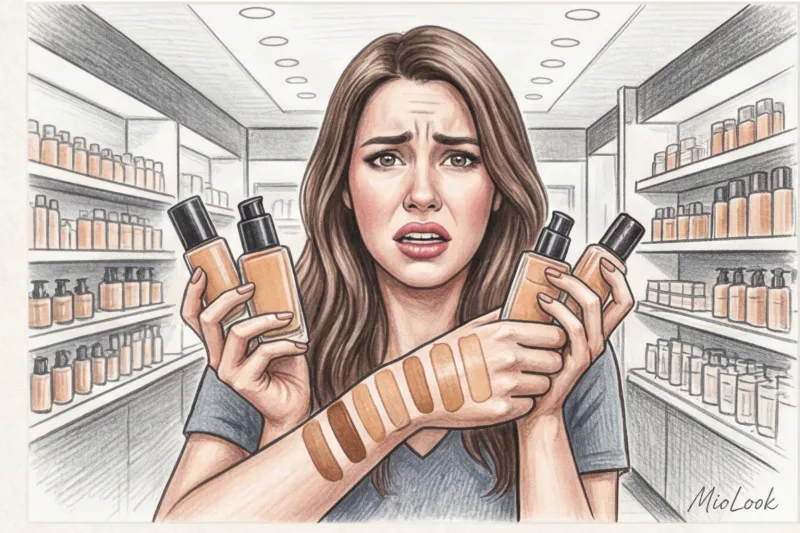
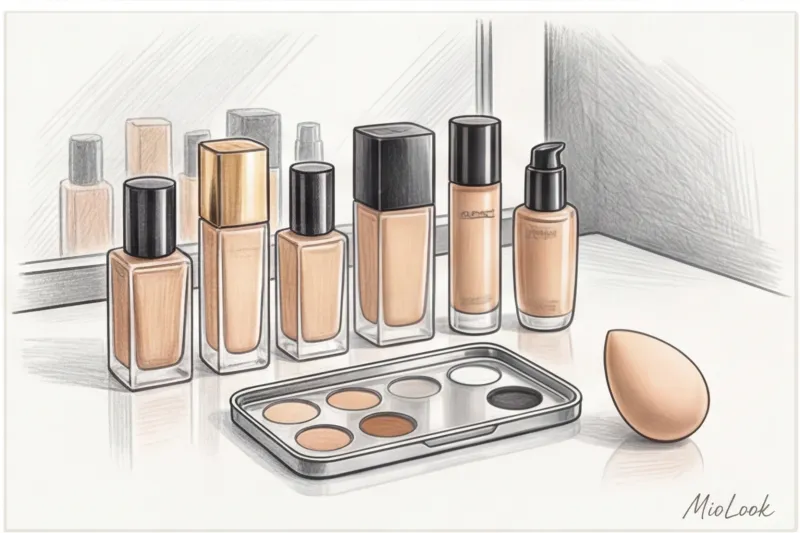
Do you know what 90% of the women's makeup bags I sort through during styling consultations have in common? A "graveyard" of foundation. I recently reviewed the wardrobe of an executive client. Perfectly tailored Massimo Dutti suits, impeccable silk, expensive cashmere... and five bottles of luxury foundation from Dior to Chanel, worth a total of nearly €300, none of which suited her. Ironic, right? We're willing to invest weeks in finding the perfect pair of trousers, but we buy foundation in five minutes under the lights of a shopping mall.
Spoiler alert: today, choosing a skin tone online using AI scanning at home in morning light produces results more accurate than those of a professional makeup artist. We've already covered how technology is changing our beauty routine in our complete guide: Virtual Makeup Try-On: AI-Powered Cosmetic Selection.
In this article, we won't discuss trivial advice from glossy magazines. I propose viewing color selection as a stylistic investment. We'll explore why in-store color testers are blatantly lying, how the physics of light distorts color perception, and why delegating this task to a neural network is the most rational decision for your budget.
Why Store Testers Lie: The Cost of Makeup Mistakes
Let's get back to my client. At a business photoshoot, her classy gray two-piece suit completely paled against her face, which, under the studio lights, took on a decidedly orange undertone. This isn't the brands' fault; it's a systemic flaw in the purchasing process.
According to a 2023 Mintel study, women spend an average of €350 per year on makeup, which ultimately ends up in the trash due to color mistakes. The main reason for this waste is the harsh fluorescent lighting in beauty stores, known as the "Sephora effect."
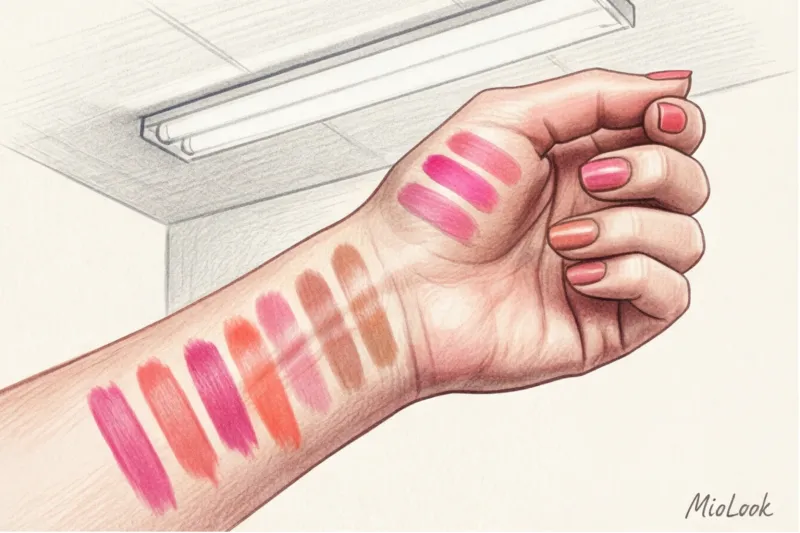
Fluorescent lighting in retail stores distorts skin color temperature by 20-30%. It "eats" warm tones and emphasizes redness, leading you to buy shades that are more yellow or dark than you actually need.
The second fundamental myth of the beauty industry is testing products on the wrist or jawline. The skin on the wrist is thinner, has a different level of melanin production, and visible veins can be confusing. And the jawline in stores is often in shadow from overhead lighting. The human eye is 80% wrong under these conditions.
Access to MioLook for €0.99 — one-time payment
A smart AI stylist will select the perfect look.
Get access — €0.99 onceHow AI helps you choose your skin tone online more accurately than a consultant
Forget the primitive Instagram masks of 2017 that simply overlaid a blurry filter over your face. Modern virtual makeup try-ons use advanced AR and micropixel analysis. Algorithms don't just "look" at color; they read real anatomy: pore depth, texture, and baseline melanin levels.
The main advantage of a neural network over a human consultant is its ability to ignore "color noise." People often confuse temporary superficial redness of the skin (such as rosacea or couperose) with a true pink undertone. The algorithm, however, can isolate the underlying pigment by analyzing thousands of micro-areas of the face simultaneously.
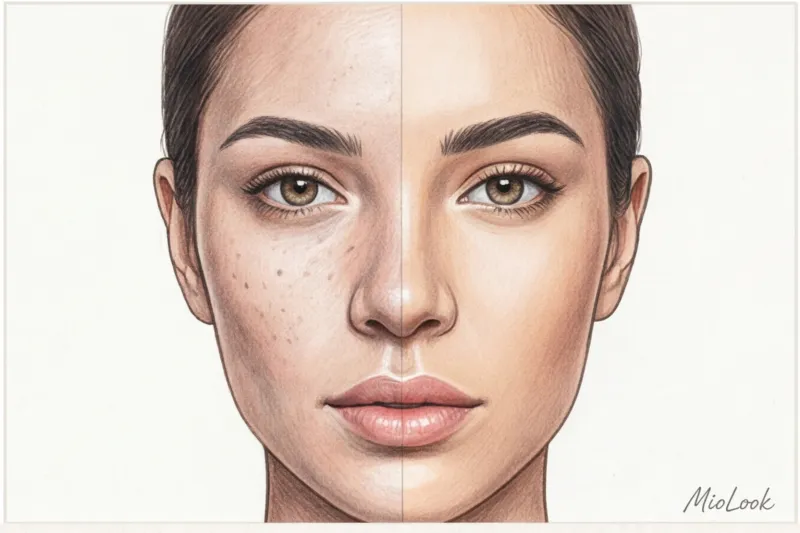
Of course, there are limitations here. No AI will ever find the perfect texture for you. (Determining whether you need a matte finish for oily skin or a hydrating one for dry skin is still up to you.) But the machines do a phenomenal job with coloring. MioLook and similar AR tools, you create the basis for conscious consumption: buy one perfect bottle for €40 instead of five compromised ones.
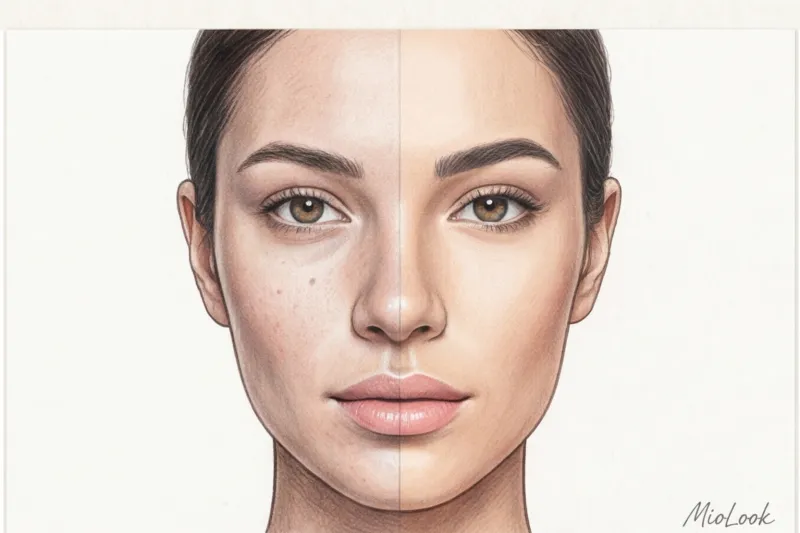
4 Steps: How to Properly Prepare for a Virtual Foundation Try-On
For the algorithm to work with maximum accuracy, it needs the right source. You wouldn't take a suit to the dry cleaner after rolling it in mud first, would you? The principle is the same. The preparation will take 5 minutes, but it will save you tens of euros.
The first rule: clothing. For the test, wear a white or neutral gray T-shirt. Bright fabrics (especially red, neon, or deep green) will reflect off your chin and neck. Your smartphone's camera will catch this reflection, and the algorithm will assume you have a different undertone.

Lighting and background: removing distortion
The gold standard for any coloristic work is diffused daylight from a window (ideally, a north- or east-facing one). Stand facing the window at arm's length.
- Prohibition #1: Ring lights. They flatten the face and add an artificial cool or warm temperature.
- Prohibition #2: Yellow light in the bathroom will warm any skin.
- Prohibition No. 3: Direct sunlight creates harsh shadows and highlights that blind the camera.
The background behind you should be neutral. Avoid bright wallpaper or colorful paintings so their color doesn't reflect on your cheekbones.
Skin condition before scanning
Skin should be absolutely clean, free of any traces of makeup from the day before. But there's an important detail that's rarely mentioned: don't scan your face immediately after washing. Water, cleansers, and the mechanical friction of a towel can cause micro-blood flow. Wait 15-20 minutes for the redness to subside and your skin to return to its baseline state.
Another common mistake: applying a day cream with physical SPF filters (titanium dioxide or zinc oxide) before the test. These components inevitably whiten the face by half a shade, distorting the scanning results.
Your perfect look starts here
Join thousands of users who look flawless every day with MioLook.
Get access — €0.99 onceSkin Undertone: How Neural Networks Solve the Main Problem of Makeup
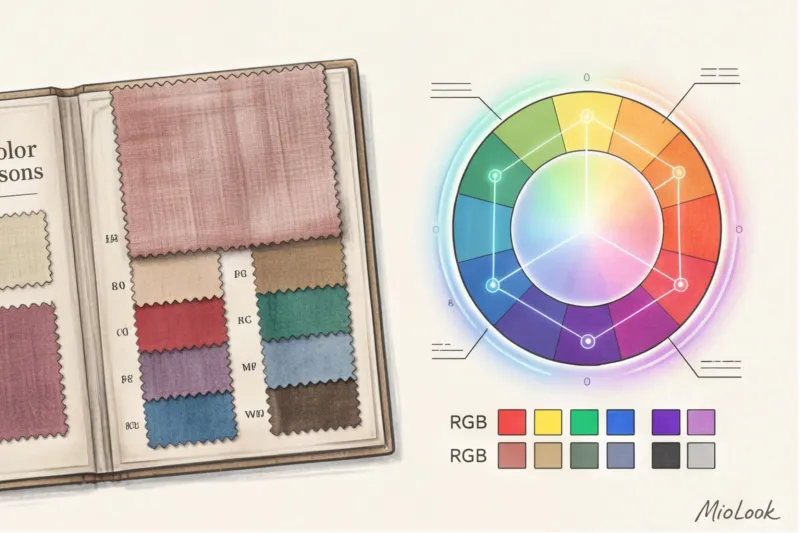
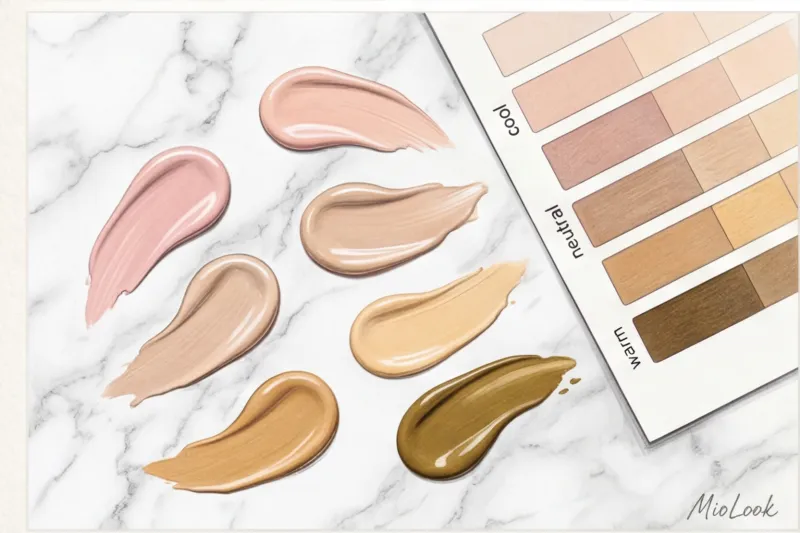
The depth of your color (how fair or dark you are) is only half the story. The real magic lies in your undertone. Generally, they are divided into warm (yellowish-gold), cool (pinkish-blue), neutral (balance), and olive (greenish-gray).

In my practice, I see the same mistake in women of both Slavic and European complexions. Due to thin skin and closely spaced blood vessels, the face often appears pinkish. The woman concludes, "I have a cool pink undertone," buys a matching shade (usually labeled C for Cool), and ends up looking like a porcelain doll whose head is sewn onto a yellowish neck.
The true undertone is determined not by superficial blood vessels, but by the ratio of melanin to carotene in the skin. The neural network reads precisely this depth.
Olive undertones are a particular pain point. It's a blind spot in the beauty industry. People with olive skin may be very fair, but regular neutral tones look reddish on them, and cool tones look gray. Artificial intelligence unerringly picks out this greenish pigment, suggesting products that truly blend with the skin.
From Virtual Testing to Purchase: The Oxidation Trap
So, the AI has given you the perfect matches. Professional systems often use labels similar to the MAC classification (NC – neutral-cool, which paradoxically has a yellow pigment to counteract redness, and NW – neutral-warm with a pink pigment). But before you click "buy," you need to know something about makeup chemistry that consultants don't tell you for the sake of a quick sale.
Oxidation rule: Any foundation will darken your skin by 1–1.5 shades within 15–30 minutes after application. This happens due to the pigments reacting with oxygen and your natural sebum.
My advice as a stylist: if an AI app or comparison chart gives you a borderline result between two adjacent shades in the same line, always take the lighter one After half an hour of wear, it will perfectly "settle" to your natural color. If you choose a tone-on-tone shade, you'll achieve a dark mask effect by lunchtime.
Checklist: Integrating the Perfect Tone into Your Status Image
Foundation isn't just cosmetics. It's the canvas for your look. You can wear a €400 thick silk blouse or a perfectly knit cashmere sweater, but if you're wearing a thick, oxidized orange mask on your face, the look falls apart. Expensive fabrics (silk, cashmere, fine wool) are incredibly demanding when it comes to skincare. They don't tolerate sloppy details.
To ensure your beauty wardrobe works as smoothly as your basic wardrobe, implement these three principles:
- Seasonal adjustment: Your skin tone changes at least twice a year. You need a winter and summer foundation capsule, or special adjuster drops (lightening and darkening) to vary the depth of color in one perfect bottle.
- Lighting on stage: If you're speaking at conferences or hosting webinars, your tone should be a half-tone warmer than usual, as the harsh, cold light from spotlights and webcams can drain the life from your face, leaving it looking sallow and gray.
- Neck Sync: Your complexion is always checked against your neck and collarbones, especially if your dress code includes revealing tops or V-necks.

Transitioning from impulsive purchases at beauty counters to conscious choices enabled by technology is a sign of style maturity. Using AI for shade selection allows you to create a minimalist yet 100% functional makeup bag. Stop guessing based on in-store swatches. Set the right lighting, put on a white T-shirt, and let the algorithms do what they were created for—saving you money, stress, and time.