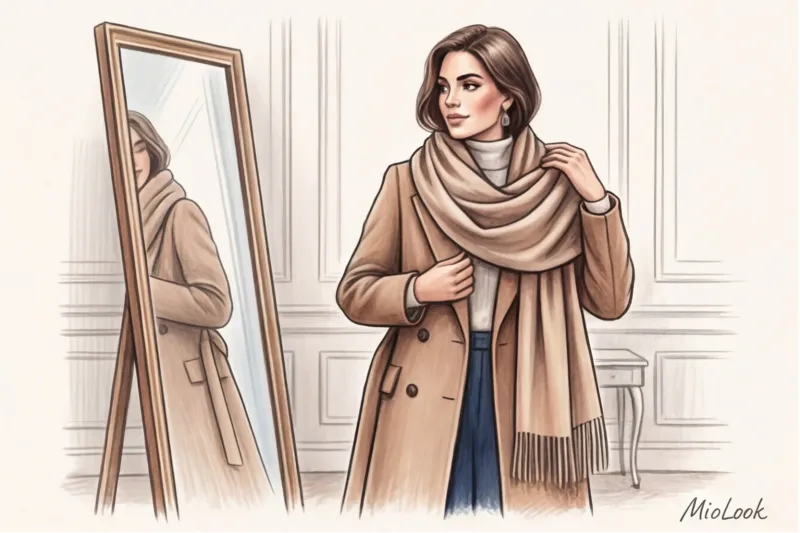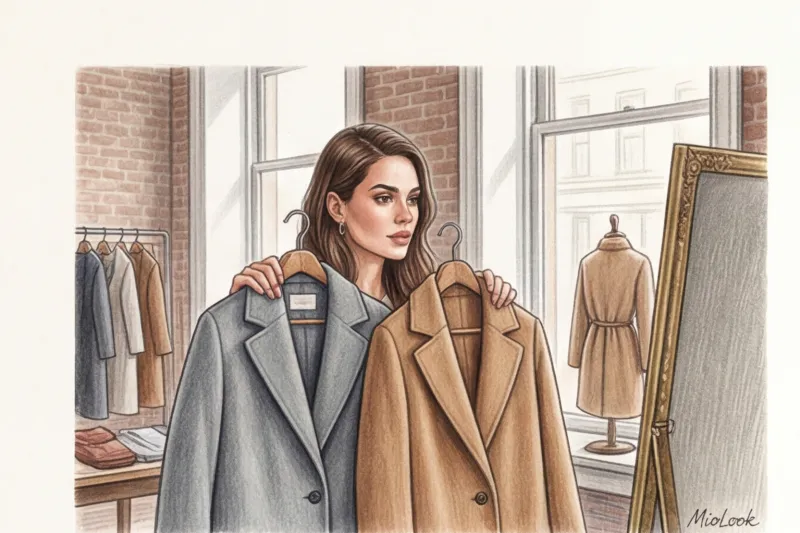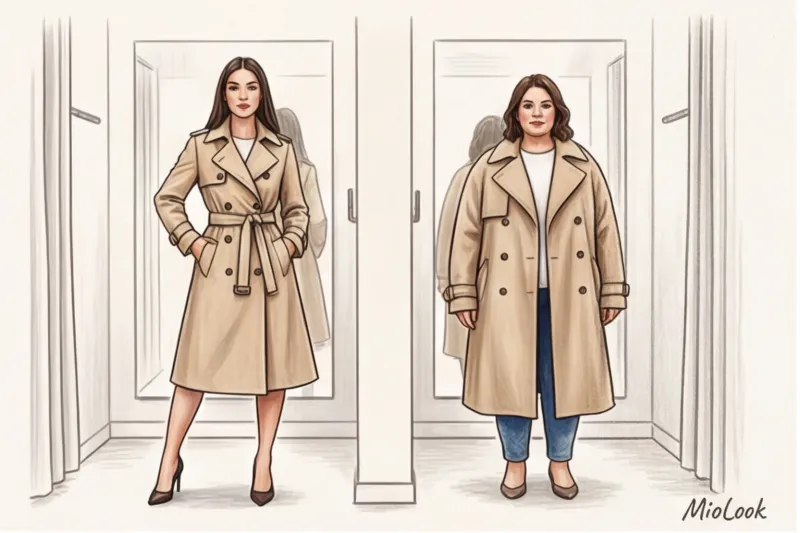
Let's get this out of the way: there are no universal "must-have" lists for outerwear. Every fall, glossy magazines urge us to buy "that perfect beige trench coat" or a classic straight coat, promising them to be an investment for life. But in practice, I see a completely different picture.
According to statistics, outerwear accounts for up to 40% of your visual impression during the cold season. It's more than just a layer of fabric to keep you warm. It's your calling card. A properly fitted coat reduces cost-per-wear (cost per outing) down to mere pennies, because you wear it for years, feeling flawless. And that's why the question of How to choose a coat based on your body type , requires an engineering approach, not blindly following trends. I talked in more detail about how to build a personal style foundation in our A complete guide to a basic wardrobe based on your body type.
In this article, we'll forget about outdated "apples" and "pears." As a practicing stylist, I'll teach you how to choose outerwear through the lens of cut architecture, shoulder statics, and fabric physics. And to start planning your fall/winter capsule collection right away, I recommend using smart wardrobe feature in the MioLook app , where AI will help analyze your bottom layers.
The Illusion of Versatility: Why a Classic Trench Coat and a Straight Coat Don't Suit Everyone
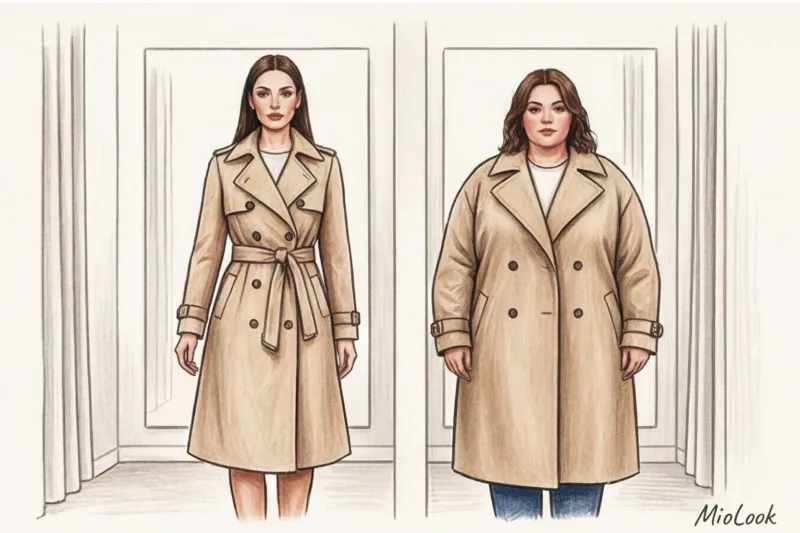
Let's start by debunking the biggest myth: a beige trench coat with a gabardine belt is NOT flattering for everyone. For 70% of women with subtle curves (rectangular body type), a tight belt creates a "constricted sheaf" effect, visually widening the waist and making the hips appear heavier.
I had a telling case in my practice. A client came to me in tears: she'd saved up about €2,000 for the iconic Max Mara robe coat because "everyone should have one." But when she tried it on, she looked, quote, "like she was wearing a bathrobe." The problem wasn't her weight. It was her sloping shoulders and straight frame. The soft fabric, without a stiff shoulder seam, simply flowed down, depriving her silhouette of structure. Once we replaced this style with a structured, double-breasted coat made of thick wool, she regained her regal bearing.
A coat is an architectural structure. It interacts with the geometry of your body. If you put a soft cocoon on the soft, rounded curves of your figure, you risk becoming a cloud. If you put a stiff square on pronounced curves, the fabric will bunch unattractively at your back.
Access to MioLook for €0.99 — one-time payment
A smart AI stylist will select the perfect look and help you avoid mistakes when buying outerwear.
Get access — €0.99 onceCut architecture: how to choose a coat based on your body type, based on geometry
In bespoke tailoring, stylists never think in terms of individual fruits. They look at the body's guiding lines: are they straight or smooth? Is your shoulder girdle rigid (static) or sloping (dynamic)? By answering these questions, you'll forever be free of the "nothing suits me" problem.
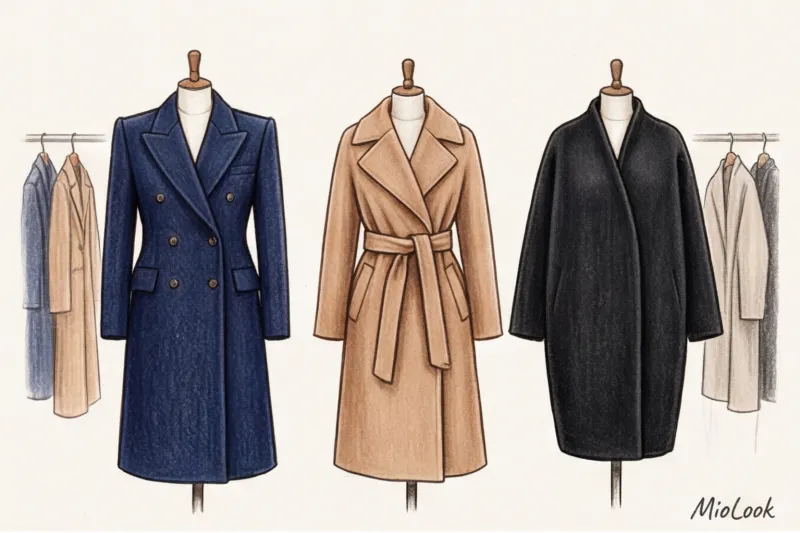
Straight Geometry (Rectangle, Inverted Triangle): Creating a Framework
If your shoulders, waist, and hips are roughly equal, or your shoulders are wider than your hips, your line is straight. You need crisp fabrics and crisp lapels. Your figure deserves a proper cut, like a diamond.
- Best choice: Double-breasted greatcoats, chesterfield coats, straight pea coats.
- What to avoid: Soft, buttonless robe coats will make your figure appear shapeless.
Stylist formula: Set-in sleeve (clear seam on the shoulder) + sharp English collar + thick drape = status posture.
However, there is one honest exception: a rigid set-in sleeve is categorically doesn't work If you have very broad swimmer's shoulders and don't want to accentuate them, we're looking for a compromise—a semi-raglan.
Smooth geometry (pear, hourglass): work with curves
You have a defined waist and rounded hips. A stiff, straight, men's-style coat simply won't fit you: it will puff out at the waist and stretch across the hips, creating horizontal folds.
Over 12 years of work, I've tested the raglan sleeve fit on over 50 plus-size clients. Raglan (where the sleeve is cut together with the shoulder section) is magic. It adapts to any bust size and shoulder slope, creating a soft yet controlled line.
Stylist formula: Flexible fabric (cashmere, blended with alpaca) + accent on the waist (sewn-in belt) + flared hem = dynamic elegance.
Volumetric Geometry (Apple and Plus Size): The Magic of Verticals
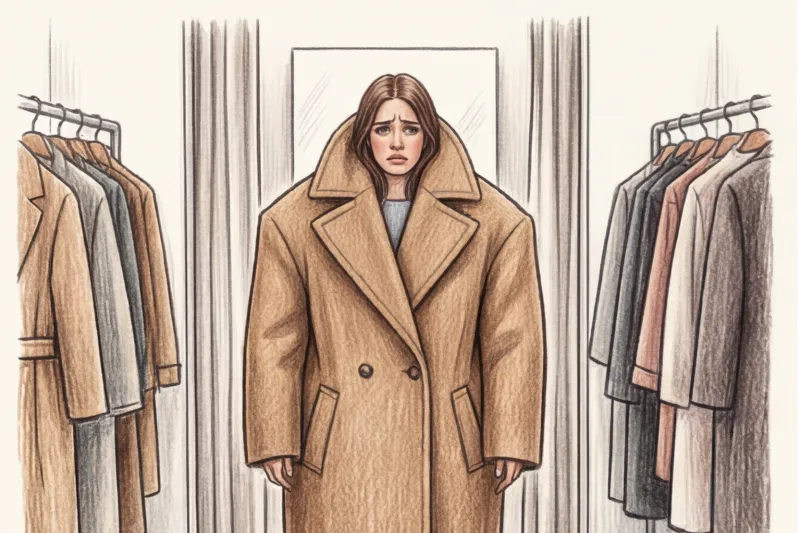
A counterintuitive fact that breaks hearts: oversized clothes and popular cocoon coats don't hide excess weight. On the contrary, they make a fuller figure appear monumental, turning it into a monolithic rectangle.
Your goal is to create a continuous vertical line. A semi-fitted cut (leaving 4-5 cm of air between your body and the fabric) and a deep V-neckline are ideal for this. Never choose double-breasted styles—two rows of buttons create a visual horizontal line across your stomach, adding two sizes to your figure. Look for single-breasted coats that fall below the knee.
Your perfect look starts here
Join thousands of users who look flawless every day with MioLook. Digitize your wardrobe today.
Get access — €0.99 onceFabric Physics: Why Composition Matters More Than Style
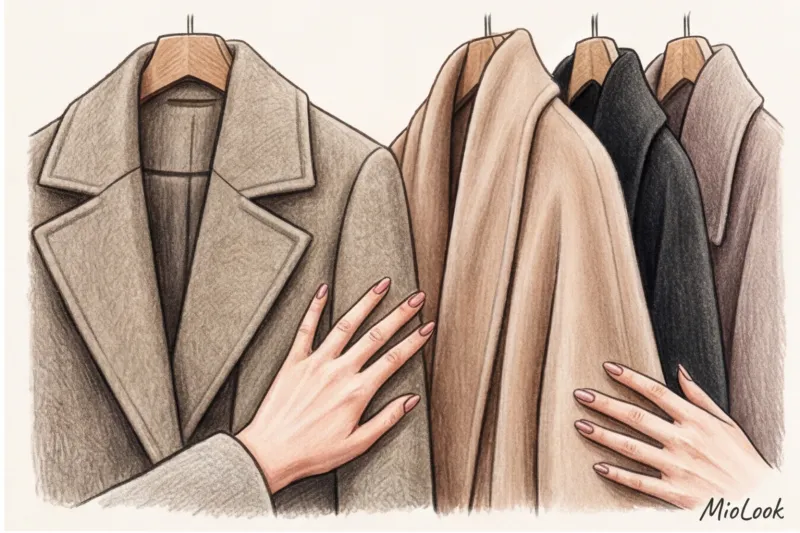
A perfect pattern won't save your look if the fabric doesn't match your geometry. In materials science, there's a metric called GSM (grams per square meter)—grams per square meter, or fabric density.
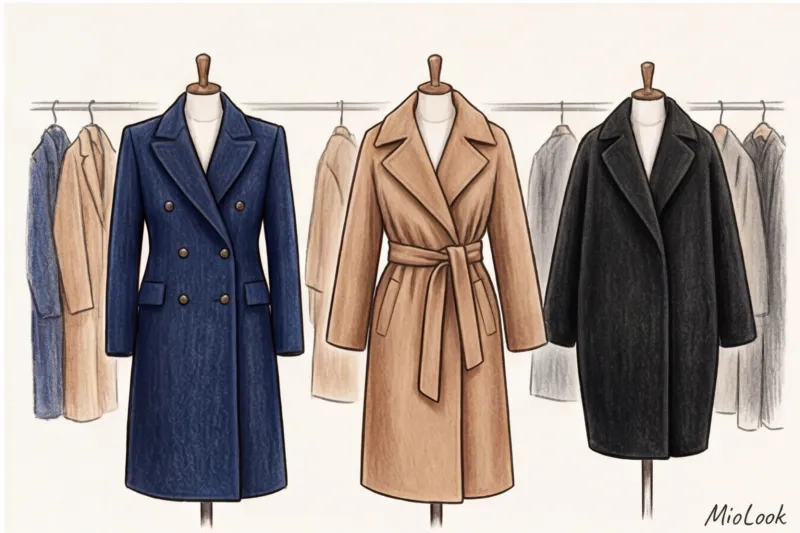
According to research by the international trend bureau WGSN (2024), the visual costliness of an autumn look depends 60% on the fabric’s ability to hold a given shape (drape).
Let's translate this into human language:
- Thick wool (600 to 800 GSM): It creates that very rigid frame. It's ideal for straight figures. If you buy a straight coat made of thin cloth (400 GSM), it will sag at the elbows within a month.
- Cashmere and alpaca: These are "flowing" fabrics. They hug the body. They're great for wrap coats, but if you made a military overcoat out of pure cashmere, it would look like a wrinkled shirt.
- Blended fabrics: Don't be afraid of synthetics in moderation. A composition of 70% wool / 30% polyamide or nylon is the gold standard. Polyamide prevents pilling and prolongs the life of the coat.
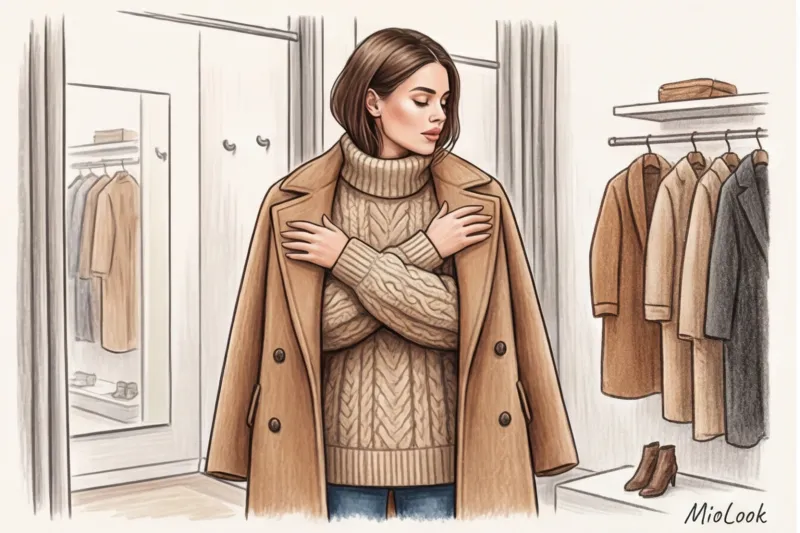
The biggest mistake when trying on clothes: the "naked sweater" syndrome
Do you know how most women buy coats? They run into a store (be it Zara with its €100 styles or Massimo Dutti for €300) in a thin T-shirt or turtleneck, throw the coat on, look in the mirror—"Oh, it fits perfectly!"—and head to the checkout. It's a disaster.
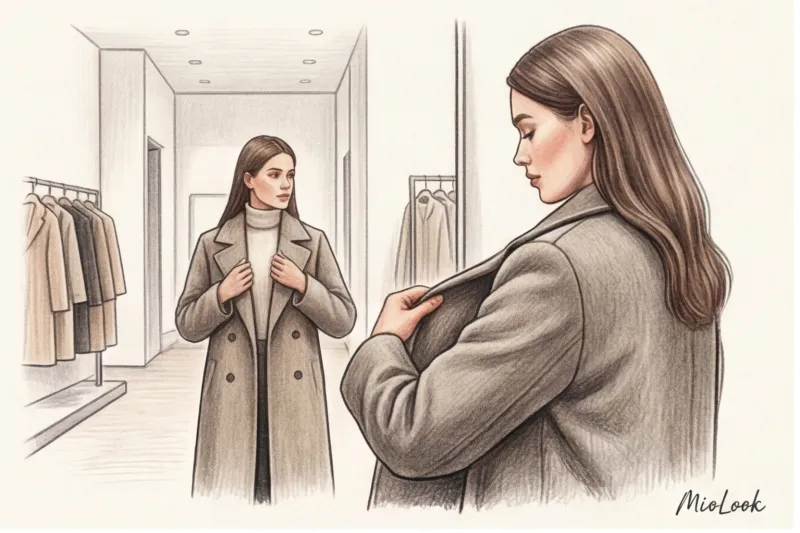
I call this phenomenon the "naked sweater syndrome." The real hidden enemy of any coat is armhole (the place where the sleeve attaches to the body). A tight armhole will ruin even the most expensive look when you try to wear a thick sweater or hoodie under your coat in winter. Your arms won't be able to lift, and a bulge of stretched fabric will form on your back.
Mandatory stylist drive test in the fitting room:
Always take with you (or pick up in the store) your thickest chunky knit sweater or jacket. Put it on. Put your coat on top. Button it up. Now raise your arms as if you were holding onto a handrail on the subway. Then hug your shoulders. If the fabric is ripping at the back or the collar is digging into your chin, take it off. It's not your size or the right fit.
Length Matters: Finding the Right Proportions for Your Wardrobe and Height
I often hear the rule: "A skirt shouldn't show through your coat." Let me reassure you—this rule is outdated these days, as long as the colors of the hem and coat match harmoniously. However, to avoid having to worry about proportions, I always recommend a length midi (to mid-calf) This is the safest and most flattering length for 90% of body shapes. It visually elongates the figure and covers most dresses.
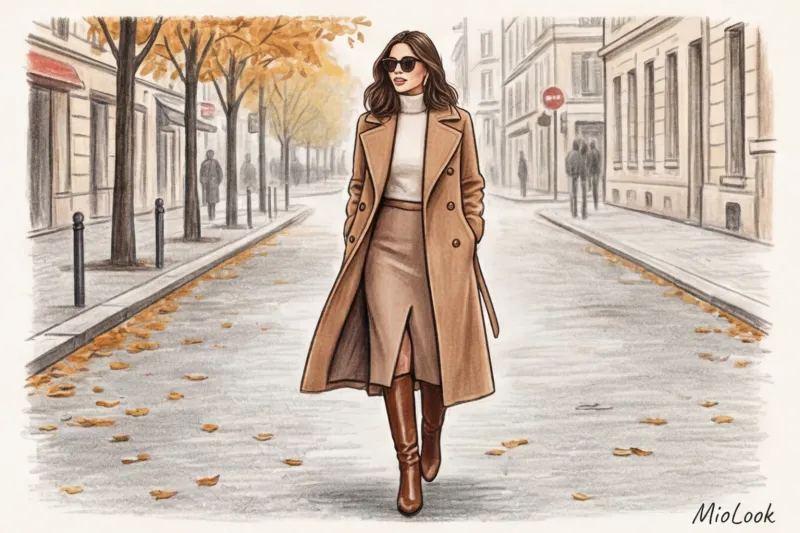
If you prefer cropped coats and pea coats (length to mid-thigh), be aware of the danger: they cut off the figure at its widest point. To maintain proportions, wear short pea coats only with wide-leg palazzo pants in the same color as the coat or straight-leg jeans. We wrote more about how to put together elegant outfits for different occasions in the article about Evening looks for women over 40: style and status.
Stylist Checklist: 5 Steps to Buying the Perfect Outerwear
Take a screenshot of this list and check it before you hand over your money at the checkout:
- Bottom layer analysis. What do you wear most often? If your closet is dominated by pantsuits, you need a loose coat with deep armholes. To analyze your current wardrobe, I recommend uploading your items to MioLook — the application will clearly show your color and stylistic dominant.
- Crease test. Squeeze the edge of your coat (where the hem is) in your fist for 10 seconds and release. If the fabric is still very chewed, imagine how it will look after an hour in a car or taxi.
- Checking the fittings and lining. A quality coat is identified by its interior. Look for a viscose or cupro lining. Cheap 100% polyester will create a greenhouse effect—you'll sweat outside and freeze indoors.
- Definition of geometric dominant. Ask yourself honestly: are your lines straight or flowing? Look for a silhouette that echoes nature.
- Full-length photo. Fitting room mirrors are often angled to elongate your legs (stores know this trick). Ask a friend or a salesperson to take a photo of you from chest height. Only then will you see your true proportions.
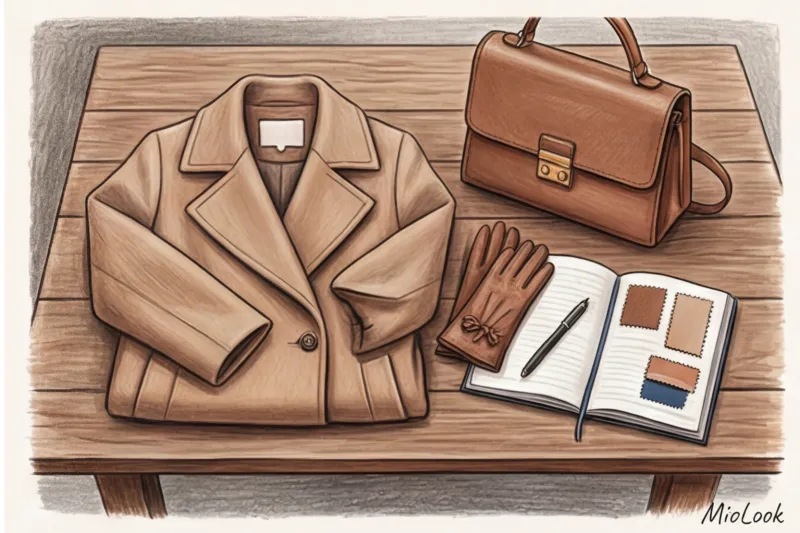
In conclusion: your ideal coat is your armor
Outerwear isn't just a way to escape the wind. It's an investment in your personal confidence. When you put on a perfectly tailored coat, it changes the way you walk. It solves the age-old morning dilemma of "I have nothing to wear over this gorgeous dress" and brings together even the simplest jeans and white T-shirt look.
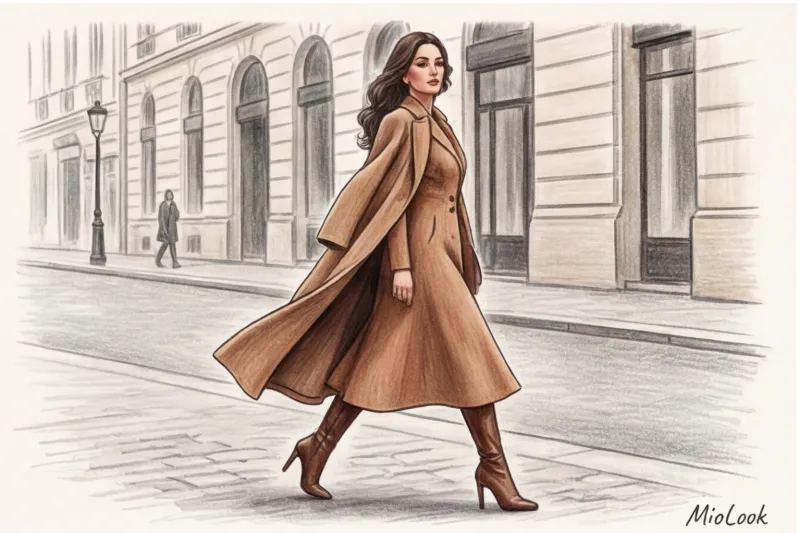
Stop chasing after one-size-fits-all lists. Look at your wardrobe right now through the lens of fabric architecture and physics. Find your lines, test armhole depth, and treat yourself to a coat that makes you feel like a star, not just an extra on a cold street.
Ready to get started?
Try the MioLook free plan—no commitments required. Artificial intelligence will help you create your dream capsule.
Get access — €0.99 once