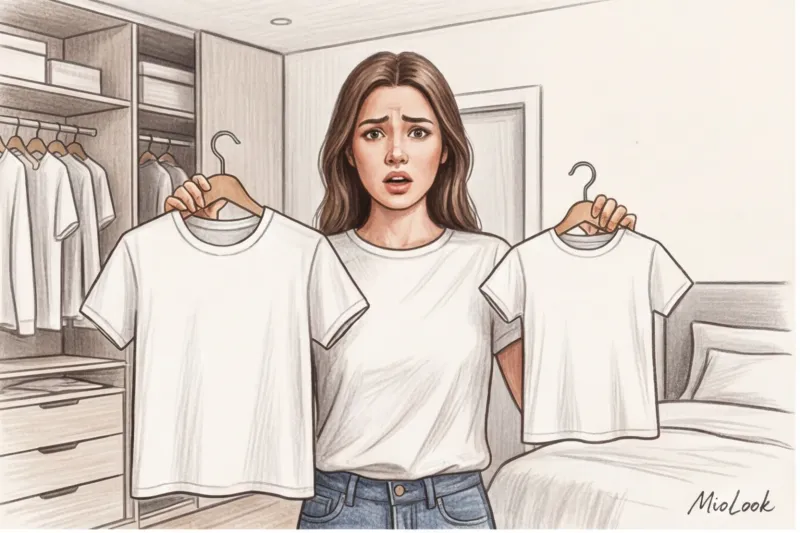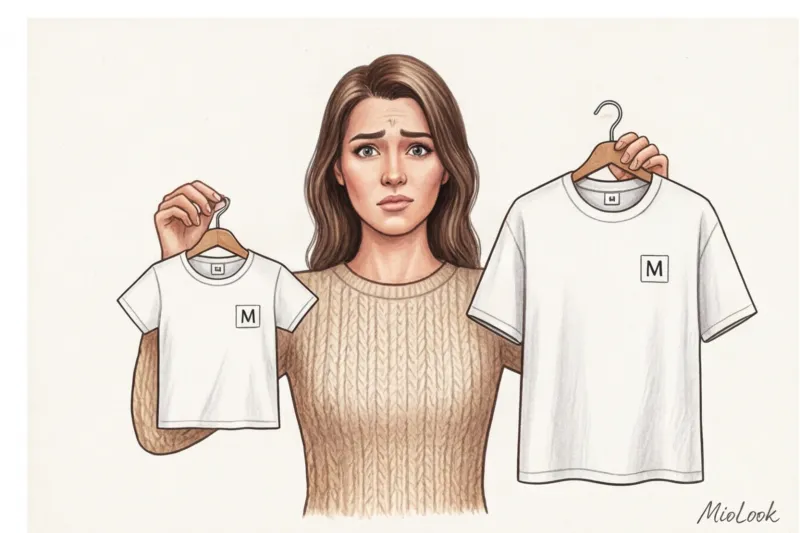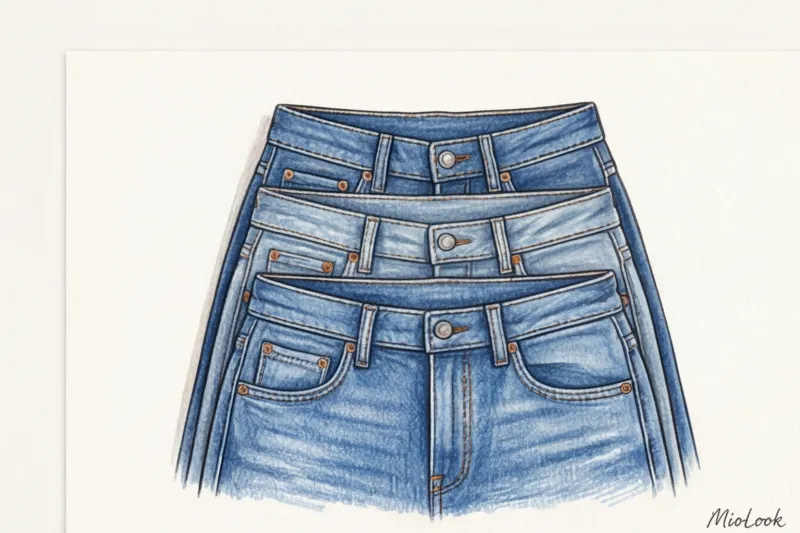
In 12 years of working as a personal stylist, I've noticed one paradoxical thing: 70% of women wear the wrong size simply because they stubbornly cling to the letter on the tag that fit them five years ago. When you try to figure out How to determine clothing size when shopping online The biggest mistake is trusting your "usual" size. In today's fashion industry, it simply doesn't exist.
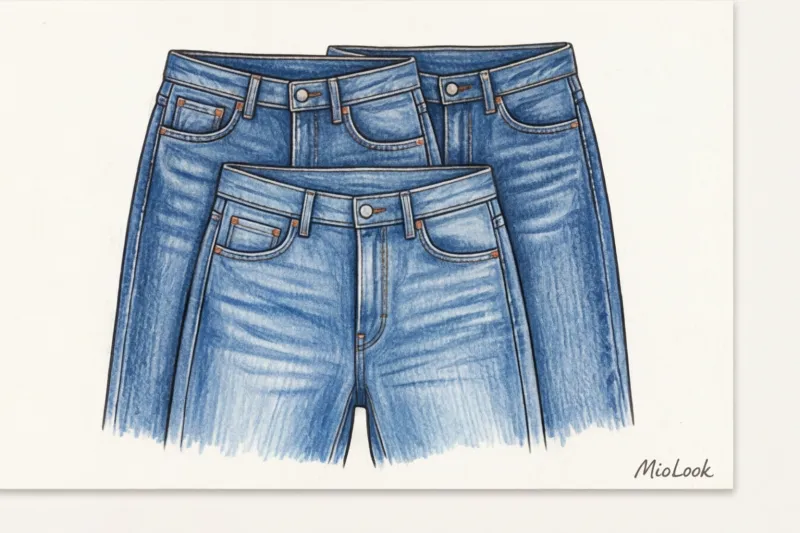
The mass-market clothing industry is based on average-sized mannequins. If your proportions deviate even slightly from this mythical standard, a blind purchase is doomed to failure. We've covered how brands work with non-standard figures in more detail in our article. A complete guide to the best plus-size, petite, and tall clothing brands But even within the standard line, there's a huge catch.
I tracked my clients' return rates and found that when we stop measuring their bodies and start measuring their favorite clothes, the rate of unsuccessful purchases drops by 85%. Let's figure out how to stop playing the guessing game with online stores and start reading size charts like a professional clothing designer.
Why Your 'Usual Size' No Longer Works When Shopping Online
The numbers don't lie. According to the 2023 Shopify eCommerce Returns Report, a whopping 70% of clothing returns are due to one reason: the item simply doesn't fit. And the blame lies not with the buyers, but with a phenomenon the industry calls Vanity Sizing (marketing increase in size).
Brands have long understood that a woman is more likely to buy jeans for €150 if they are labeled size S rather than L. Data from the analytics platform True Fit shows that physical sizing has shifted significantly over the past 20 years. A modern size M T-shirt is physically 5-7 centimeters wider than a similar size M from the 1990s.
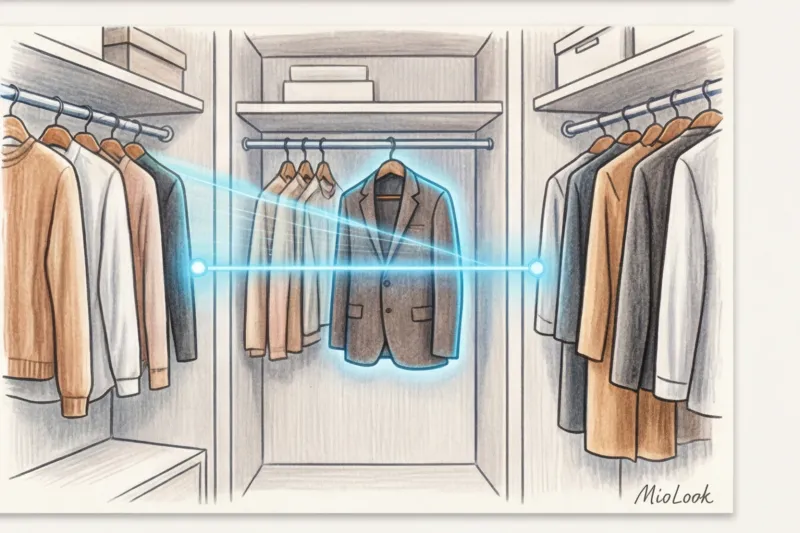
"When I connect new clients to the wardrobe digitization feature, they're often shocked. We upload their items into the system, and it turns out their closets perfectly accommodate sizes from S to XXL, all of which have exactly the same width and length."
Mass-market brands use linear grading. They simply add 2-3 centimeters to all measurements when going from S to M, distorting real human proportions. This is why "your size" at Zara, COS, and Massimo Dutti will be completely different.
Your perfect look starts here
Join thousands of users who look flawless every day with MioLook.
Get access — €0.99 onceTaking measurements like a stylist: why you should measure your clothes, not your body
Now I will say something that contradicts most articles on the Internet: Measuring your own body with a tape measure is the worst way to choose a size online..
A soft tape measure on a soft body can lead to a huge error. You take a deep breath, slouch slightly, measure your waist after a heavy dinner—and your measurements have changed by 4 centimeters. Furthermore, your chest measurement doesn't tell the website how tight a fit you prefer.
Secret Method: Measuring the Perfect Closet Item
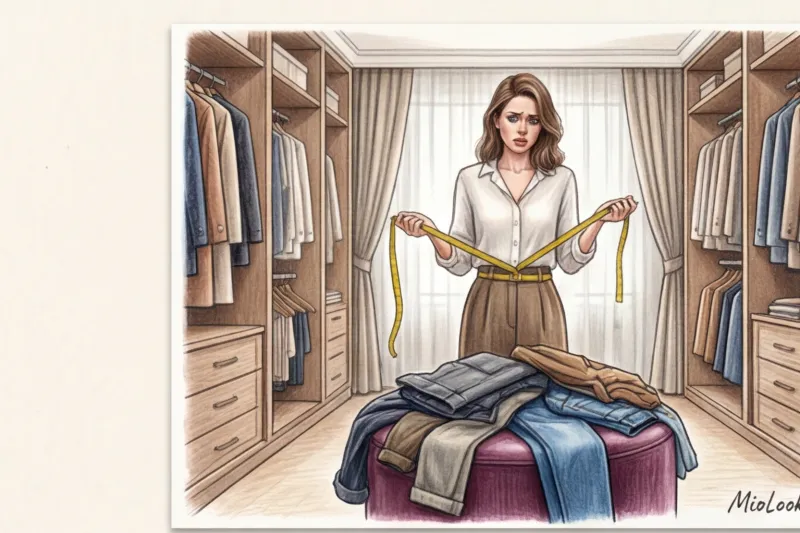
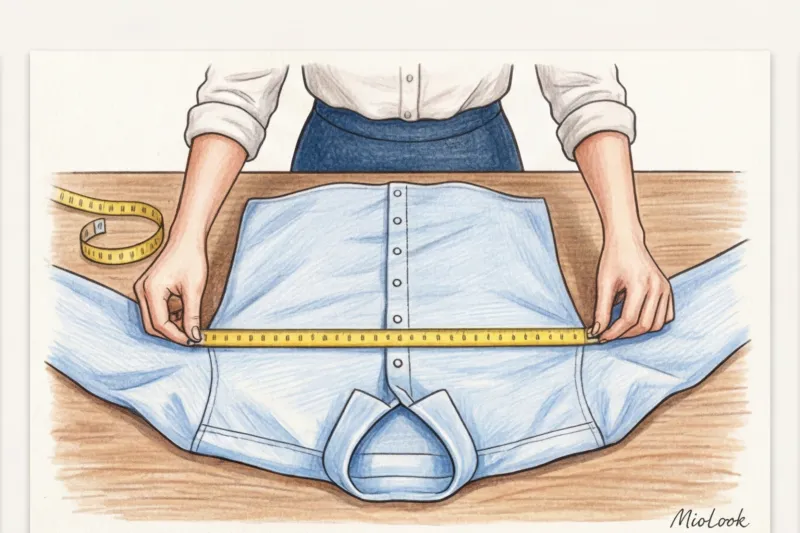
Professional stylists use this technique flat-lay garment measurement (flat measurement of the product).
- Choose something from your closet that fits you perfectly. If you're buying a shirt, choose a non-stretchy fabric. If you're buying jeans, choose jeans made of heavy cotton without elastane.
- Lay the garment flat on a table. Fasten all buttons and zippers. Smooth out any creases, but do not stretch the fabric.
- Measure the width from armpit to armpit (for top) or the waistband width (for bottom).
- Multiply the resulting figure by two to get the girth.
This method is brilliant in its simplicity because it automatically takes into account your personal preferences for comfort and fit. You're measuring not yourself, but your personal comfort standard.
Basic body measurements (for a starting point)
If you order from a brand that only provides body measurements, you'll still need to take your measurements. Do this in your underwear, standing directly in front of a mirror.
- Breast: at the most protruding points, keeping the tape strictly parallel to the floor.
- Waist: at the narrowest point (usually a couple of centimeters above the navel). Don't suck in your stomach!
- Hips: along the most prominent points of the buttocks.
- Inseam: From the crotch to the desired leg length. This is a critical measurement when buying trousers online.
A common mistake beginners make is pulling the tape too tight. You should always be able to fit your index finger under the tape.
How to determine your clothing size when shopping online: Reading brand charts
The main secret to successful shopping is to find the right chart. Most brands publish Body Measurement Charts (the body parameters for which the item is designed). But advanced brands such as Uniqlo or Arket provide Garment Measurement Charts (actual measurements of the product itself).
This is where the concept comes into play ease allowance This is the difference between your body circumference and the finished garment's circumference.
For example, if your chest measurement is 90 cm, your shirt will be bursting at the seams. For a classic semi-fitted fit (Regular Fit), the allowance is 6-8 cm. For a relaxed fit, the allowance is 10-12 cm. And in a hyper-oversized jacket, the allowance can reach 15-20 cm.
Access to MioLook for €0.99 — one-time payment
A smart AI stylist will select the perfect look based on your actual measurements.
Get access — €0.99 onceFabric, cut, and pattern: three factors that change fit
Even if you have checked the numbers in the table perfectly, the composition of the fabric can ruin all the calculations.
Rigid raw denim (100% cotton, 13 ounces or more) is completely unforgiving. If the waistband of your jeans is even a centimeter smaller than your waist, you won't be able to button them. Meanwhile, denim with 2-3% elastane will stretch with wear.
My golden rule for fabrics:
- Linen and viscose: When in doubt, always buy your true size or one size down. These fabrics stretch significantly (or "break down") after just two hours of wear.
- Structured wool (coats, jackets): Follow the measurements exactly. Wool holds its shape and doesn't adjust to your measurements.
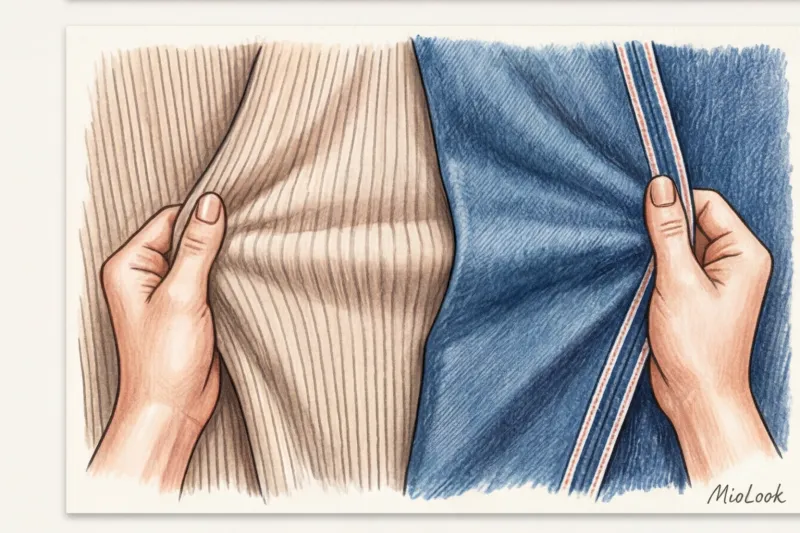
- Ribbed knitwear: It allows for a 1-2 size error due to its elasticity.
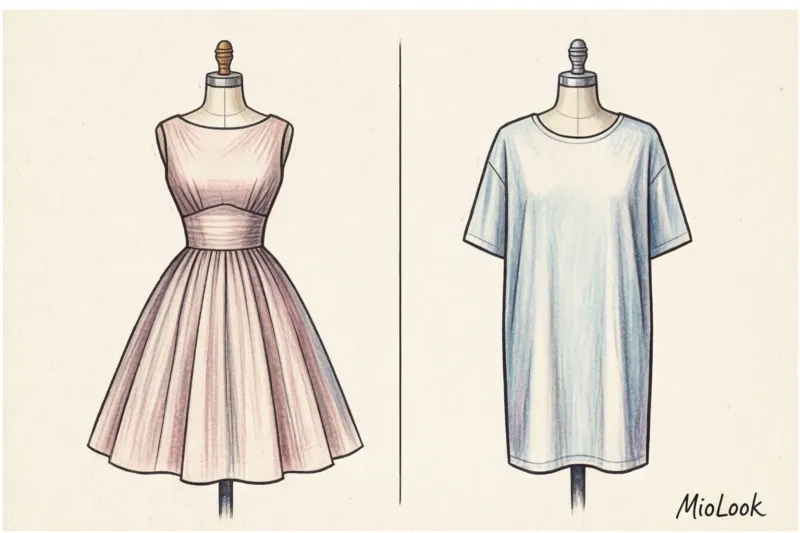
A separate story is the cut marking. If the item is declared as Oversize Buy your actual size! One of my clients wanted a super-voluminous jacket. She wears a medium but decided to buy an oversized XL. The result? Her shoulders slipped down to her elbows, making her look like she was wearing a tent. The designers had already factored the necessary gigantic allowance into the size M pattern.
Petite, Tall, and Plus-Size: When Regular Mesh Won't Save You
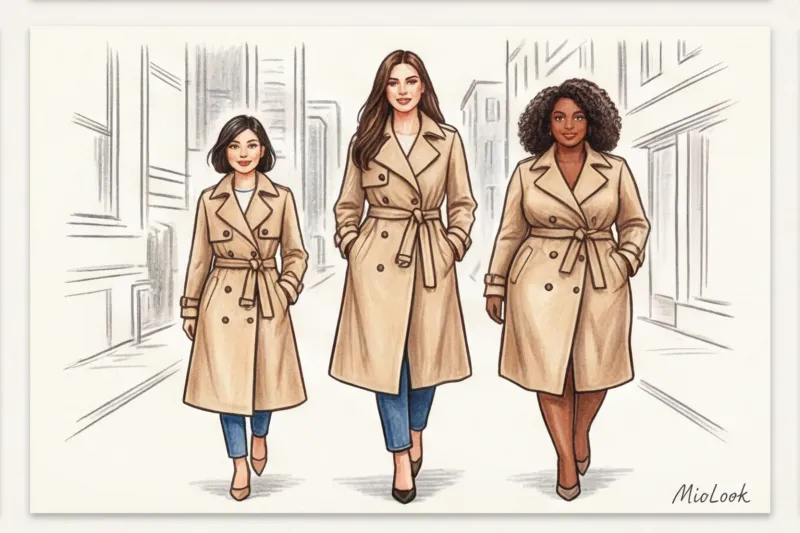
According to the extensive McKinsey State of Fashion (2024) report, over 70% of women do not fit the standard 168–170 cm (5’6″–5’7″) height of a standard mannequin. If you are 158 cm (5’5″), buying trousers in a standard size with a smaller diameter will not solve the problem.
Specialized lines (Petite for petite figures, Tall for tall figures) aren't just shortened or lengthened pant legs. They represent a completely different pattern engineering architecture.
The Petite line features a shorter torso. The armhole (sleeve opening) is higher, the waistline is raised by 3-5 centimeters, and the bust darts are shifted upward. If a petite woman buys a dress from the standard line, the waist will end up on the hips, and the neckline will be noticeably prominent. Don't try to compensate for your height by changing sizes—look for brands with specialized lines.
Ready to tidy up your closet?
Digitize your items and stop doubting sizes before buying.
Get access — €0.99 onceTechnology Guarding the Wardrobe: AI and Virtual Fitting Rooms
The era of manual measurements is gradually fading. Today, fit prediction algorithms (such as FitAnalytics or TrueFit), integrated into major retailers' websites, are coming to the rescue. They analyze millions of returns and compare your data with specific brand patterns.
A great example of a digital approach is the use of specialized apps. If you enter the parameters of your most successful items into the app MioLook , you no longer have to run around for a measuring tape every time. When shopping online, you simply open the card for your ideal T-shirt on your smartphone and compare its garment measurements with the online store's table. This completely digitizes the flat-measuring method, saving you hours of time.
To be fair, I'll point out that this method does NOT work for items with complex asymmetrical cuts, corsets with built-in cups, or dresses with intricate draping. Such items require a live fitting. But for basic wardrobe essentials—pants, T-shirts, shirts, knitwear, and outerwear—digital comparison works flawlessly.
Checklist: 5 Steps Before Hitting the Buy Button
Save this list. Following these five steps reduces the risk of returns to a minimum of 10-15%.
- Check the fabric composition. Does it contain elastane/spandex? If so (at least 2%), the garment will fit more smoothly. If it's 100% linen, cotton, or wool, be sure to pay close attention to the numbers; the fabric won't yield even a millimeter.
- Find the product's dimensions. Look for tabs on the site Item Measurements or Product Size Guide If they are not available, please contact customer support and request measurements (half-chest circumference and length) for your specific size.
- Take a flat measurement. Take out a similar item, place it on the table, and measure it. Compare the measurements.
- Study the model parameters. The description usually says, "The model is wearing a size S and is 175 cm tall." If you're 160 cm tall, the midi dress in the photo will be a maxi dress for you.
- Read reviews filtered by height and weight. Look for comments from women with measurements similar to yours. Phrases like "too small in the shoulders" or "the fabric is very stretchy" will provide more information than the official description.
Conclusion: Online shopping without returns is a reality
The era of choosing clothes by eye and relying on luck is over. Understanding how ease and linear grading work transforms online shopping from a lottery into an exact science.
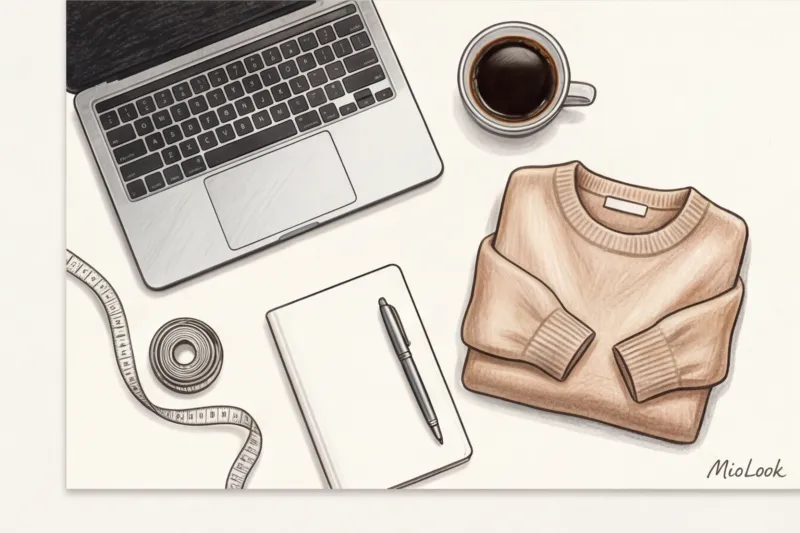
Take 15 minutes this weekend and grab your favorite, perfectly fitting pants, shirt, and jacket. Take their measurements flat and write them down in your phone. This simple step will save you from the frustration of unpacking packages and the tedious return process.
Try MioLook:
A smart AI stylist will choose the perfect look for you and help you organize your smart wardrobe.
Get access — €0.99 once