One of my clients, 32-year-old Anna, once confessed during a wardrobe review: "I bought five ultra-fashionable oversized jackets to look like the girls on Pinterest, but I work from home and have worn one of them exactly once in six months—to get coffee." She had a closet full of trendy pieces, but a forlorn stack of her favorite joggers and three washed-out T-shirts sat on a chair in the bedroom. Anna was facing a typical problem: her wardrobe had taken on a separate, imaginary life, while she herself struggled with the daily question of "what to wear?"
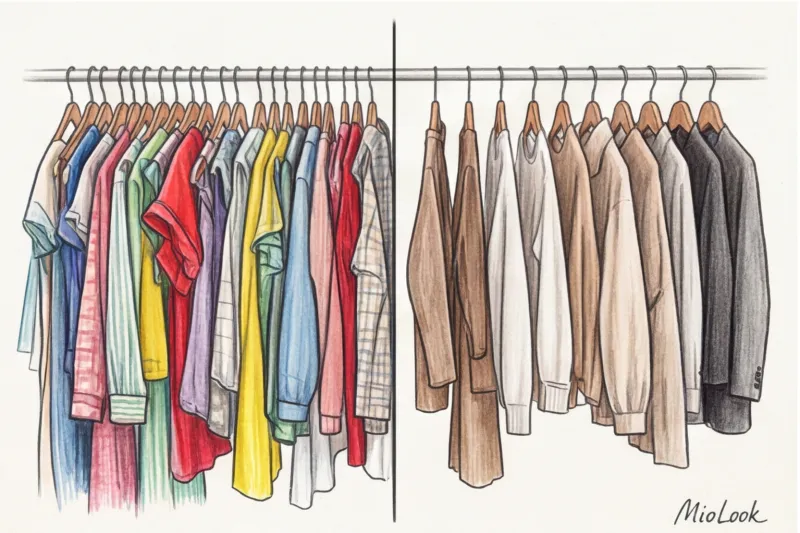
Assembling an everyday wardrobe for a woman in her 30s isn't about blindly following trends, but about creating an honest system of coordinates where clothes work for you, not you for them. We discussed the architecture of status and style at this age in more detail in our A complete guide to a basic wardrobe for a 30-year-old woman , and today I want to focus on the hardest part - the daily routine and giving up impulsive, random purchases.
Wardrobe Evolution: Why a 30-Year-Old Woman's Everyday Wardrobe Should Be Different
In my 14 years as a stylist, I've clearly seen the watershed that happens to women around 30. It's the moment when you suddenly stop tolerating uncomfortable shoes for the sake of beautiful legs and refuse to wear an itchy sweater, no matter how stylish. The focus finally shifts from quantity to quality.
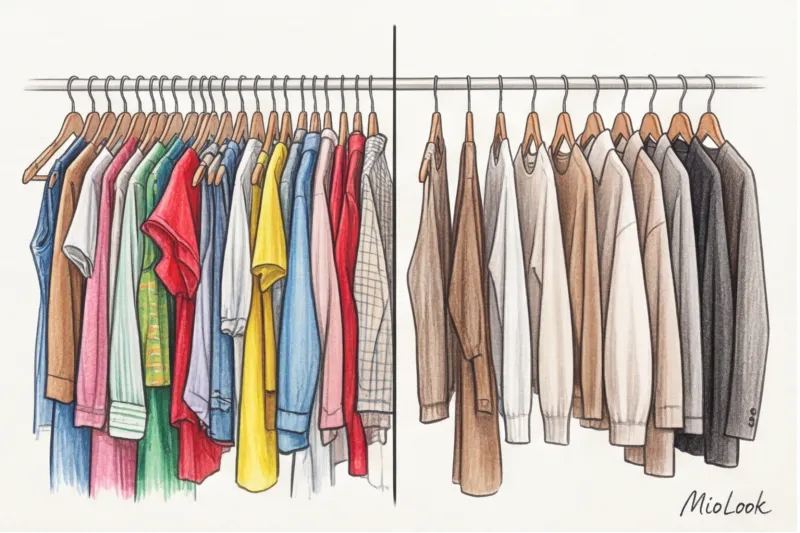
According to McKinsey's 2024 Consumer Behavior Report, women over 30 begin to experience severe burnout from fast fashion. Piles of mass-market clothing no longer bring joy; they cause anxiety. This is where Pareto's principle comes into play: we wear 20% of our clothes 80% of the time. The remaining 80% of our wardrobe is visual noise, which triggers so-called "decision fatigue" in the morning. Research in fashion psychology shows that panicking in front of a packed closet can reduce your productivity for the rest of the day, as your brain has already spent resources choosing the right T-shirt.
"Your closet shouldn't be an archive of your past mistakes, future fantasies, or ambitions. It should be a tool for your present, real life."
Comfort is directly related to your self-confidence. If your pants are digging into your waist after lunch and your blouse is staticky, your body language will betray it. You'll slouch, tug at the edges of your clothes, and subconsciously convey discomfort to others. Physical discomfort literally ruins people's impressions of you.
The Biggest Stylists' Myth: Why You Don't Need a "Universal Essentials List"
Open any article from ten years ago, and you'll see the same template: white shirt, pencil skirt, beige trench coat, black pumps. This is actively harmful advice that causes women to waste money. There are no universal lists. What's essential for a corporate lawyer will be dead weight for a freelance designer or a young mother.
Many women fall into the "Real Life vs. Fantasy Life" trap. We buy cocktail dresses for bohemian parties we'll never attend, but regret spending €150 on a premium cashmere hoodie or the perfect sneakers we'll wear 300 days a year.
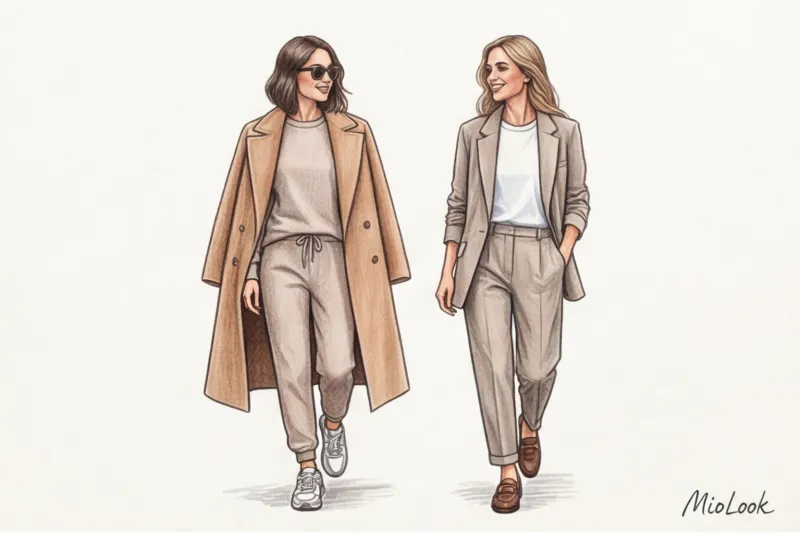
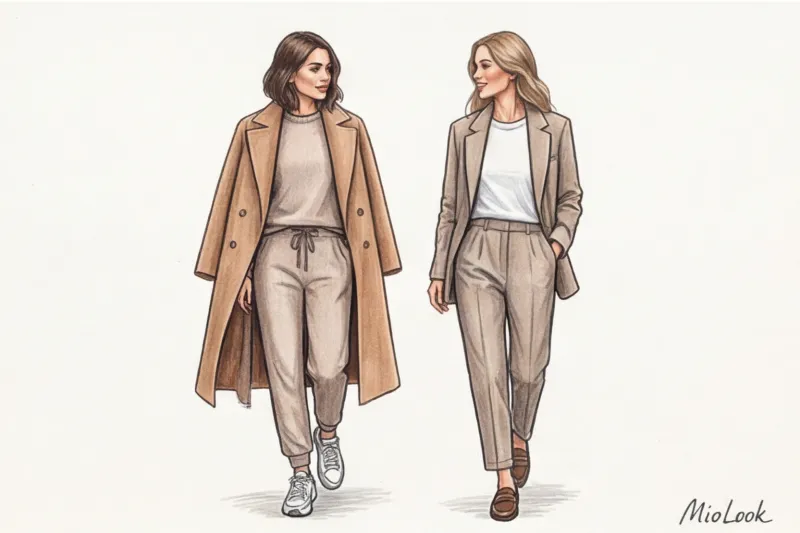
Ask yourself: What does a typical 14-day period look like? If you spend 80% of your time walking with your child and working on your laptop in a cafe, your basics would be high-quality joggers made of thick, unbrushed cotton, a voluminous cardigan, comfortable sneakers (like classic models from New Balance or Autry), and the perfect structured coat to pull together that relaxed look.
Digitize your wardrobe in 15 minutes
Tired of having nothing to wear? Upload your items to MioLook, and our smart AI stylist will curate dozens of stylish everyday looks for you, free of charge.
Get access — €0.99 onceThe formula for the perfect capsule: the rule of three "C"s (Cut, Comfort, Quality)
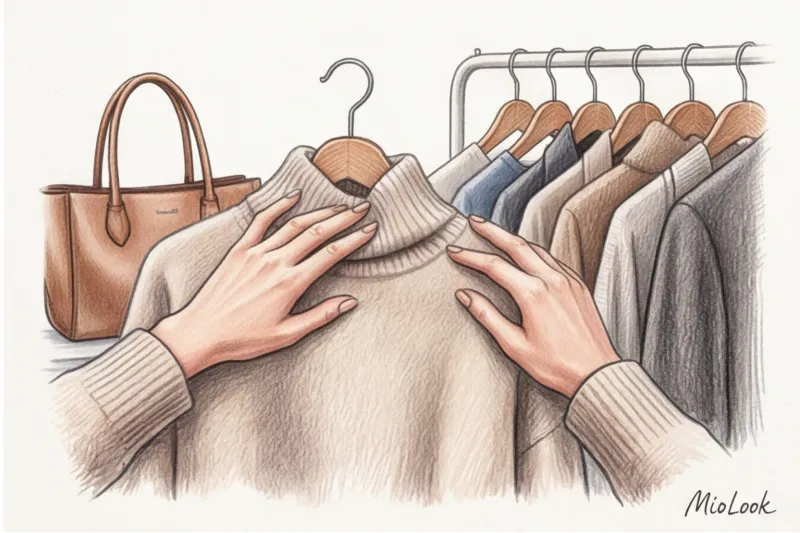
When creating a casual capsule collection, loud logos and flashy prints take a back seat. The architecture of the cut takes center stage. A good fit can make a mass-market T-shirt look expensive, while crooked darts will ruin a luxury brand piece. Look for the right proportions: the right length for trousers, the correct shoulder line for jackets, and sufficient volume (there should be some air between you and the garment).
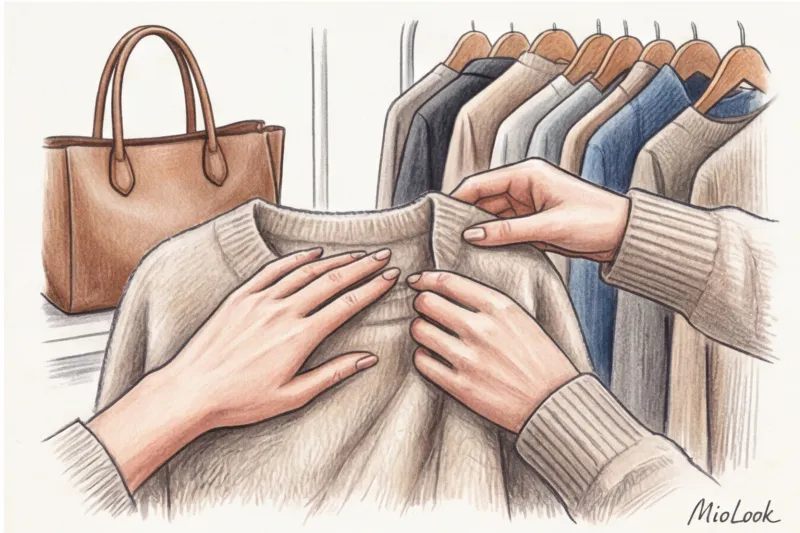
A separate point is the tactile filter. At 30, it's time to ruthlessly get rid of 100% acrylic and squeaky polyester. Not only do they look cheap, but they also prevent the skin from breathing. Pay attention to the labels: cotton with a weight of at least 180 g/m² (so the T-shirt is not see-through and holds its shape), viscose with added elastane, and wool blends.
And here the main economic rule of a smart wardrobe comes into play: CPW index (Cost Per Wear).
- You buy a trendy acrylic sweater for €40. It pills after the first wash. You wear it four times. The cost per wash is €10.
- You invest in a basic cashmere sweater in a neutral shade for €200. You wear it for three seasons in a row, at least 100 times. Cost per wear = €2.
An expensive but high-quality item always costs less in the long run.
Investing and Saving: Where to Cheat in Your 30s
Not every wardrobe has to be expensive. The secret to the perfect capsule wardrobe is a clever mix of premium brands and high-quality mass-market pieces. What's truly worth investing in (€150 and up)? These include outerwear (coats, trench coats, jackets), shoes, bags, and the "portrait" section—eyewear and jewelry. These are the elements that others notice within the first three seconds and set the tone for the entire look.
What can you safely save on? Basic white T-shirts (Uniqlo and COS have great options for €20-€40), trendy seasonal pieces (like a top in the PANTONE color of the year), and hosiery.
Important limitation: This investment approach does NOT work if you're currently undergoing active changes to your body shape (for example, in the first months after giving birth or during a targeted weight loss/gain). During such periods, it's better to put together a temporary, inexpensive capsule wardrobe of 5-7 items and postpone investing until your size stabilizes.
Algorithm: How to build an everyday capsule from scratch (and without panic)
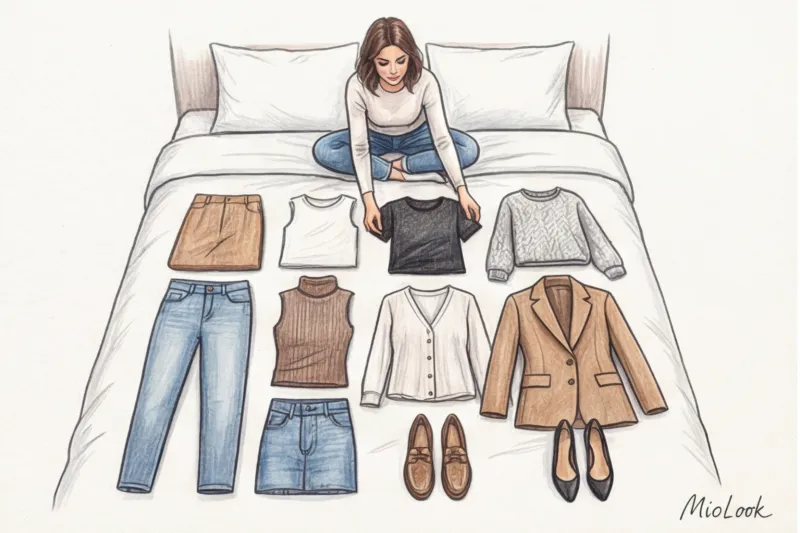
Assembling a capsule is math, not magic. To avoid stress, follow a clear algorithm.
Step 1: A rigorous audit and decluttering
Clear out everything in your closet. Ruthlessly get rid of items in the "when I lose 5 kilos" category, "it's a shame to throw it away, I'll wear it at the dacha," and "I'll wear it if I'm invited to the Oscars" categories. Keep only what looks great on you right now. Based on anonymous user statistics MioLook applications 68% of impulse purchases added to virtual closets are worn less than twice a year. Don't keep your closet a graveyard of unfulfilled ambitions.
Step 2: Selecting the Rod (Bottoms)
A capsule wardrobe is built from the bottom up. Find three or four perfect bottoms that flatter your body type. For example: straight-leg jeans in the right shade of blue, relaxed palazzo pants in a suiting fabric, a midi skirt (or joggers, if your lifestyle dictates).
Step 3: Adding Tops: The 1 to 3 Rule
This is a stylist's golden rule: for every bottom, there should be three matching tops. Why? We wash pants and skirts less often because they're less noticeable, while tops are worn close to the face and set the tone for the entire outfit. For a pair of jeans, choose a basic T-shirt (casual), a structured jacket (smart-casual), and a silk or high-quality viscose blouse (for evening).
Step 4. Unifying Elements
Complete the capsule with a second layer (cardigans, jackets, denim jackets) and the right shoes. With an ideal capsule of 12-15 items, you can dress in the dark and still look harmonious, because everything coordinates in color and style.
Create a capsule in one click
Not sure how to combine your items? MioLook will analyze your wardrobe and show you which essential pieces you're missing for the perfect capsule wardrobe.
Try a smart wardrobeRefusing random items: a stop-checklist before the checkout
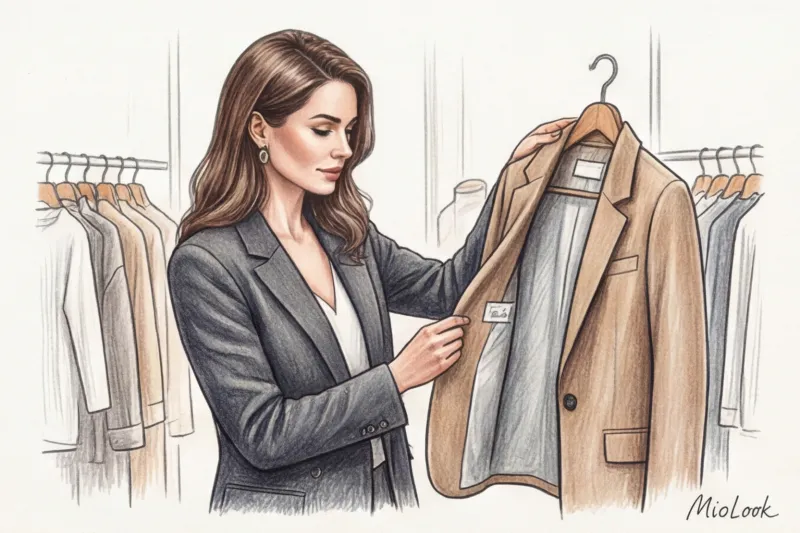
To prevent your new everyday capsule from becoming overgrown with random items again, establish strict shopping discipline. Every time you reach for yet another beautiful but odd item on the hanger, ask yourself three questions:
- Will I be able to create at least 3 outfits with this item right now, in my mind, from what is ALREADY hanging in my closet? If an item requires the immediate purchase of new shoes, a bag, or a special top, I don't take it. This is my ironclad personal rule, which has saved me and my clients thousands of euros.
- Where exactly will I wear this in the next 14 days? If the answer is “sometime later, on vacation on the Riviera” (and you don’t have tickets), put the item back on the shelf.
- Does this thing relieve headaches or create new ones? A blouse is gorgeous, but it requires dry cleaning only, a complex hour-long steam ironing, and the purchase of special seamless strapless underwear? For an everyday wardrobe, this is a disaster. A garment should serve you, not you.
Conclusion: An Everyday Wardrobe That Works for You
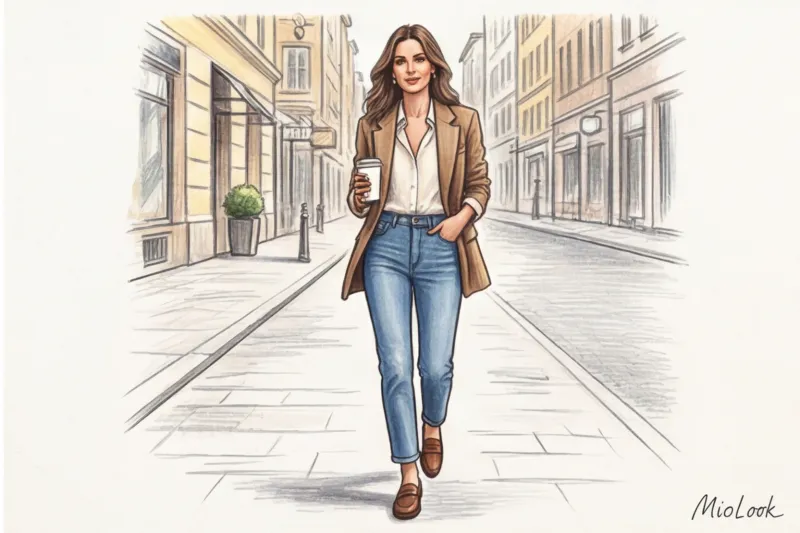
A capsule wardrobe at 30 isn't a story of boredom, restrictions, or giving up on fashion. On the contrary, it's a total liberation. It frees up your mornings, frees up your energy for more important things, and invests in your comfort. When you don't have to worry about your skirt riding up or your blouse wrinkling just by looking at it, you can focus on work, socializing, and life itself.
At this age, style truly becomes a tool for self-care, not a way to impress others. Start small: clean out just one shelf of sweaters or jeans today. Keep only what makes you feel confident and comfortable right now. And if you need help organizing, MioLook's smart algorithms are always ready to take care of the routine.