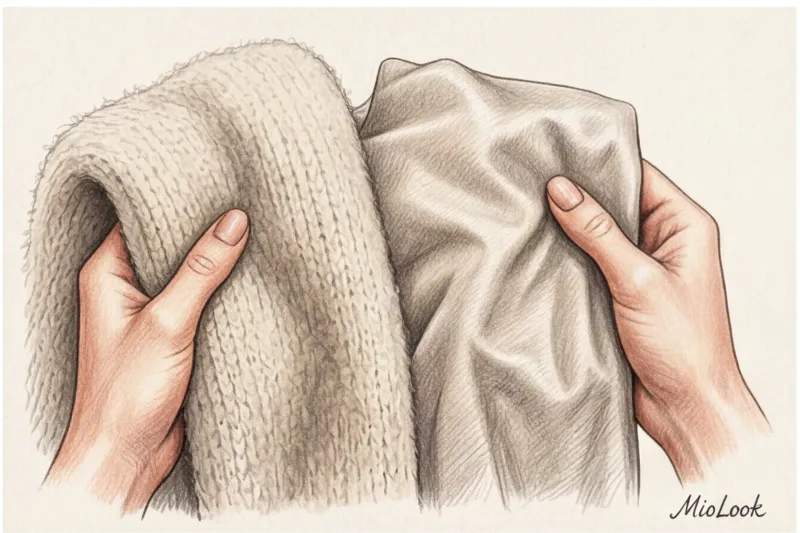
Last winter, my client Marina bought a luxurious cashmere sweater for 500 euros specifically for a trip to the mountains. She was convinced she'd invested in "the warmest thing in the world." Imagine her disappointment when, on her first long walk in -10°C, she was chilled to the bone. However, upon returning to the office, wearing an inexpensive wool-blend turtleneck from a mass-market store, she began sweating within an hour.
As a stylist with 14 years of experience, I encounter this paradox every fall. Women spend huge budgets on flashy labels without understanding the physics of the materials. We've already covered the anatomy of premium yarn in more detail in our a complete guide to choosing quality cashmere , but today I want to look at a specific and very practical problem.
What will really keep you warm this winter? To answer that question, we'll have to forget about marketing and look at how threads work. And trust me, the main difference between cashmere and wool — it's not just about the price.
The main difference between cashmere and wool: the anatomy of the fibers
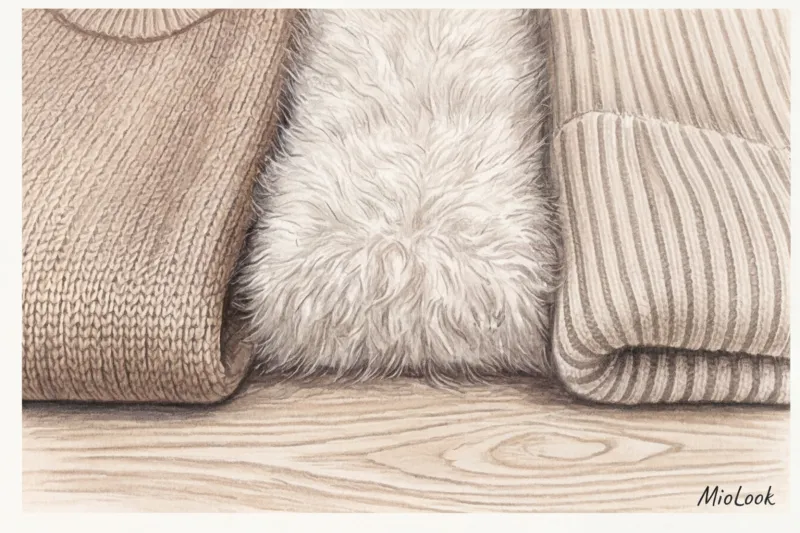
To understand why some things make us sweat on the subway, while others save us in the piercing wind, you need to understand the basic rule: knitwear itself doesn't keep you warm It warms the air that the fibers are able to trap between themselves and your body. The more microscopic air pockets the thread creates, the more reliable your personal "thermos" is.
The fundamental difference between cashmere and wool lies in their origin. Merino is the shorn hair of sheep. Cashmere is the hand-combed undercoat of mountain goats. According to the strict standards of the Cashmere Manufacturers Institute (CCMI), only fiber no thicker than 19 microns can be called true cashmere. For comparison, human hair is approximately 70-100 microns thick.
Merino: Smart climate control for every day
Merino wool is the foundation of any functional winter wardrobe. Unlike your grandmother's stiff wool that pricks your neck unbearably, merino (especially the one with the Extra Fine , about 19.5 microns) feels like thick cotton.
Its main superpower is phenomenal thermoregulation. Research by textile institutes shows that merino wool can absorb up to 30% of its own weight in moisture while remaining completely dry to the touch. It's the perfect choice for the classic urban scenario of "frigid street, stuffy subway, warm office."
Cashmere: weightless warmth and status
Why can a thin cashmere jumper cost as much as an airplane wing? The math is simple: one Capra Hircus goat produces only 150-200 grams of pure down per year. A classic sweater requires the down of 3-5 animals.
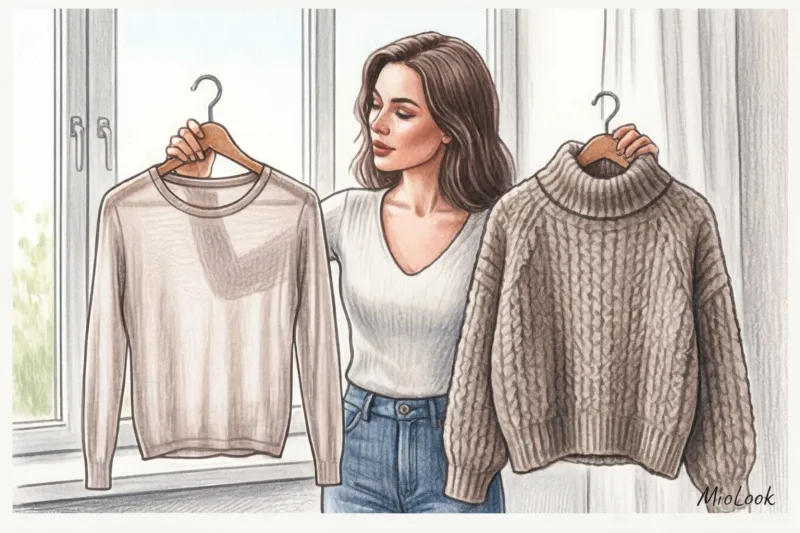
Cashmere's main advantage is its excellent warmth-to-weight ratio. It provides soft, enveloping warmth without adding bulk. However, this softness comes at the cost of delicacy: cashmere fibers are fragile and require a 24-48 hour rest period between wears to restore their springy texture.
Alpaca: The Hidden Champion of Warmth
If you're prone to cold, forget about sheep's wool and consider alpaca. According to fiber structure studies, alpaca hair has a hollow structure inside. These microscopic voids act as ideal air traps.
Thanks to this, alpaca is 3-7 times warmer than sheep's wool for the same weight. Furthermore, it is completely lanolin-free (animal wax), making it completely hypoallergenic and resistant to pilling and odor absorption.
Your perfect look starts here
Join thousands of users who look flawless every day with MioLook. Its smart algorithm will help you digitize your knitwear and create stylish winter capsule collections.
Get access — €0.99 onceDebunking the myth: Why fine cashmere won't save you at -20°C
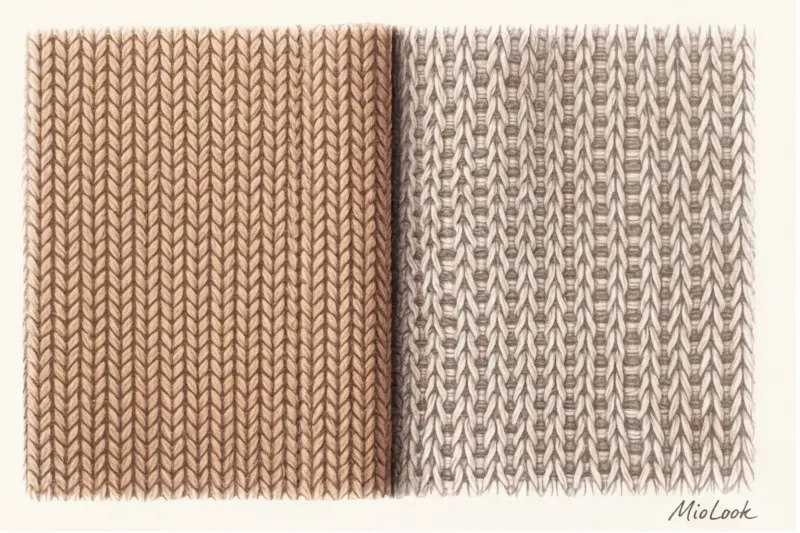
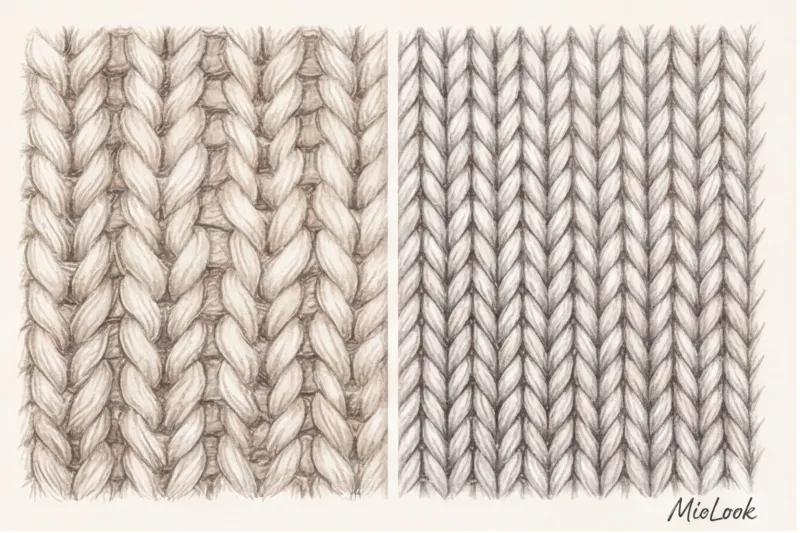
Let's get back to my client Marina. Why was she cold in a €500 sweater? Because the "warmth" of a garment depends 50% not on the type of wool used for the yarn, but on the technologies that buyers call Ply (thread addition) and Gauge (knitting density).
The vast majority of cashmere jumpers in the mass market and mid-price segments (for example, at Massimo Dutti or COS) are 2-ply cashmere, a rather loose knit. It's stunningly beautiful and drapes elegantly, but it has too little bulk to hold any significant amount of warmth.
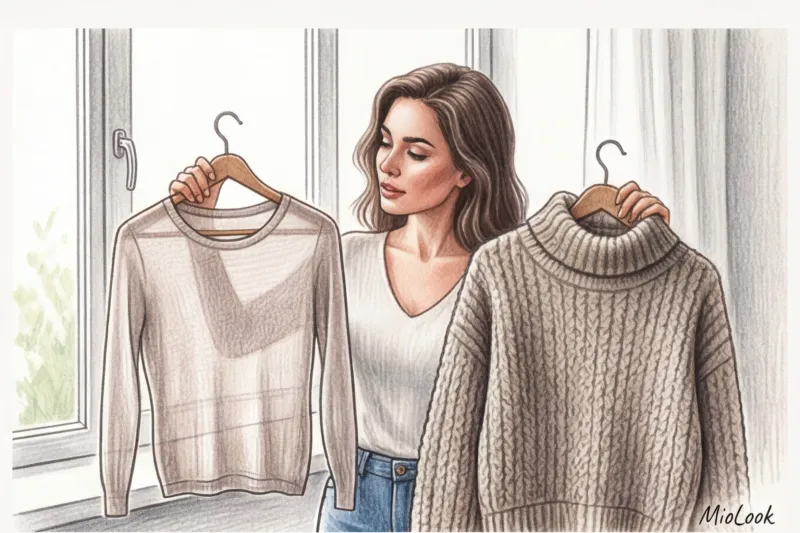
A fine 100% cashmere 2-ply will always be cooler than a bulky, tightly knit sweater made from a blend of 50% merino and 20% alpaca. Warmth comes from the volume of trapped air, not the magic of the price tag.
Don't expect protection from Siberian frosts from a smooth, translucent cashmere longsleeve. It's a status base layer, not weatherproof armor.
Stylist Test Drive: What to Choose for Your Lifestyle?
When we collect winter capsule in the MioLook app I always tell my clients: choosing knitwear isn't a question of "which material is best." It's a question of "where are you going to wear it?"
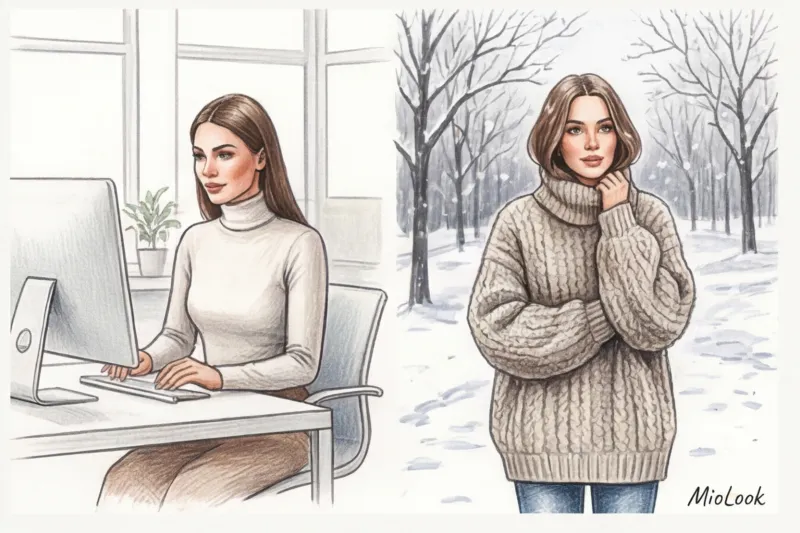
- For a warm office and layering (under a jacket): Choose smooth merino or fine cashmere. They won't bunch up under your jacket, and you won't get all steamy during a presentation. Ideal for winter office wear.
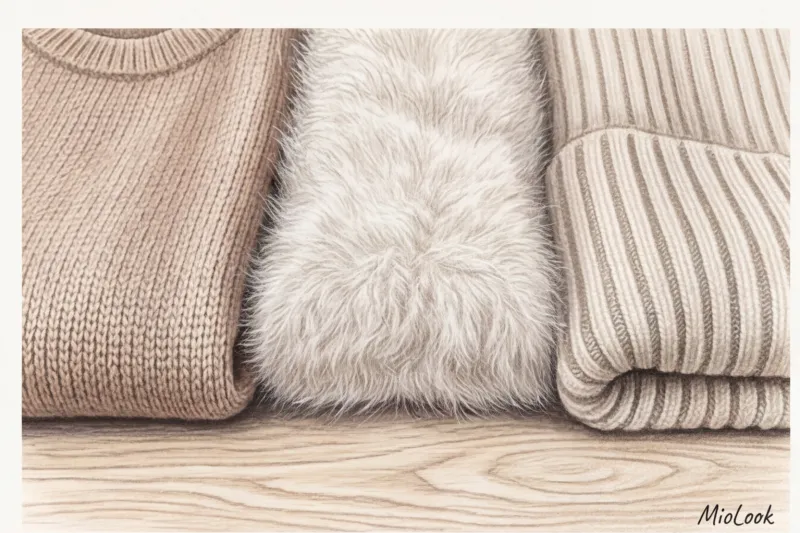
- For long walks with children or a dog: Choose from voluminous alpaca, mohair, or dense, chunky-knit 100% sheep's wool. Be sure to wear a thin cotton t-shirt underneath for extra breathability.
- For people with hypersensitive skin: If the mere sight of wool makes you itch, look for tags that say Baby Alpaca (first shearing of young animals, thickness up to 22 microns) or invest in premium multi-thread cashmere from trusted brands.

Ready to get started?
Try the MioLook free plan—no commitments required. Upload your winter pieces, and our AI stylist will show you how to pair chunky knits with classic wardrobe staples.
Get access — €0.99 onceHow to Read Labels: Secrets to Smart Investments in Knitwear
Over the years of shopping, I've developed a reflex: first I touch the item, then I look at the ingredients, and only then at the price tag. The word "blend" often scares shoppers, but in reality, not all synthetics are bad.
If you see an alpaca or mohair sweater that contains 15-20% nylon or polyamide, that's great news. Fluffy fibers lack elasticity, and the synthetic thread acts as a "frame," preventing the sweater from stretching to the knees after the first wash.
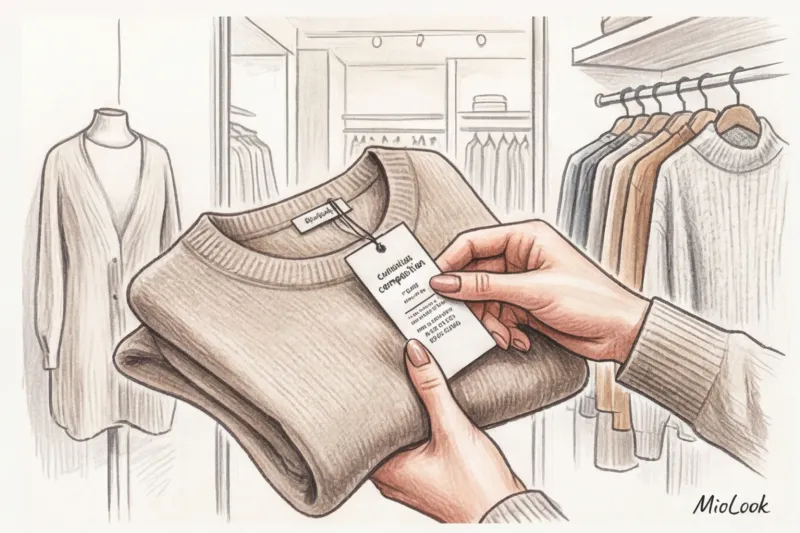
What you should absolutely avoid is acrylic (especially if it's more than 30%). Acrylic is a plastic. It creates a greenhouse effect: you sweat, the moisture has nowhere to escape, and the slightest draft instantly freezes you.
A stylist's life hack for the fitting room: Squeeze the edge of the sweater in your fist for 10 seconds, then release. High-quality wool with a good twist will instantly straighten out ("bounce back"). If the fabric is left with a hard crease, the garment will quickly become unsightly and covered in pilling.
Caring for your winter base: what will last longer in your closet?
Even the most luxurious cleaning products won't save you if you ruin an item with improper care. One of the most common mistakes my clients make is obsessively dry-cleaning their cashmere. Chemical solvents dry out the delicate down, making it brittle and dull.
- Cashmere: Loves water! Hand wash in cool water (no hotter than 30°C) using a special liquid detergent or regular baby shampoo.
- Merino: A true workhorse, most modern merino turtlenecks are machine washable on the "Wool" cycle (no spin or low cycle).
- Alpaca: It's virtually stain-resistant. If there are no obvious stains, simply hanging an alpaca sweater on a frosty balcony for a couple of hours is enough—it self-cleans and releases odors.
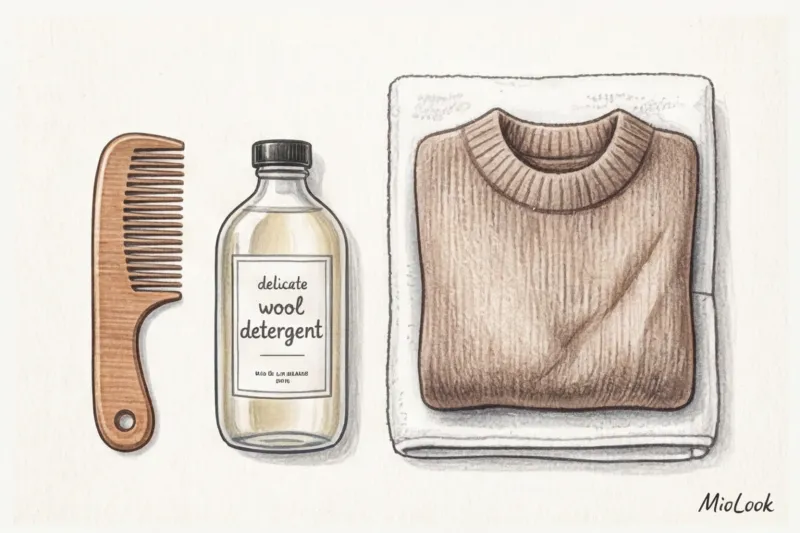
And here's another insider secret that glossy magazines rarely mention. The main enemy of any sweater, even the most expensive one, is your favorite crossbody bag. The constant friction of a stiff leather strap against knitwear will turn both $1,000 cashmere and $50 merino into an unpresentable felt boot. On days when you wear delicate knitwear, choose totes or backpacks made of smooth materials.
Checklist: Building the Perfect Warm Capsule Wardrobe
According to WGSN's 2024 data, the micro-capsule trend continues to grow: consumers prefer three or four perfect sweaters over a dozen mediocre ones. And I fully support this approach.
If I had to put together a basic warm wardrobe for a client from scratch, I would include three items that cover 99% of her winter needs:
- Basic turtleneck in smooth merino wool (black, chocolate or camel) - for office wear and as a base layer under shirts or cardigans.
- A classy cashmere jumper with a V-neck (loose fit, 2-3 threads) - for evening trips to restaurants, theaters and days when you want maximum comfort.
- Chunky textured knit alpaca sweater or blended wool - for weekends in the countryside, long walks and skating.
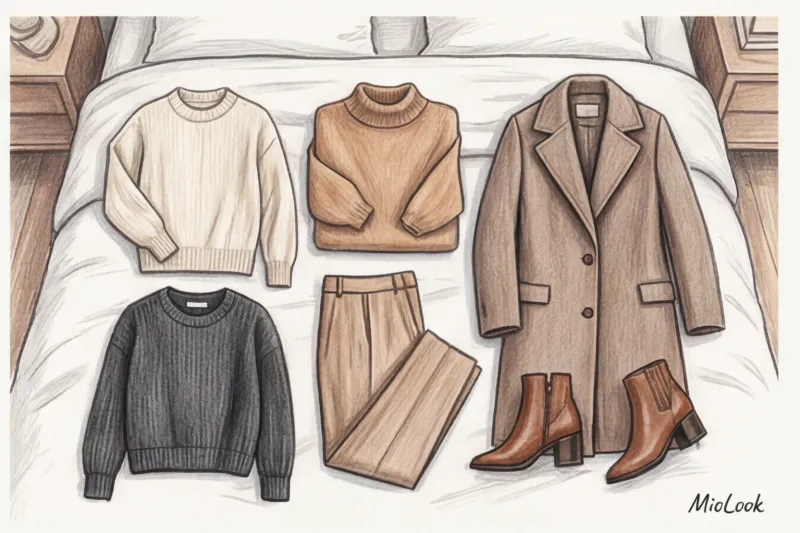
There's no such thing as a perfect, all-purpose warming material. The difference between cashmere, merino, and alpaca is the difference between a silk slip dress, a formal suit, and cozy pajamas. Each item has its own role. Learn to read labels, evaluate knit density, and match knitwear to your realistic daily plans, and you'll never again have to choose between "pretty" and "warm."