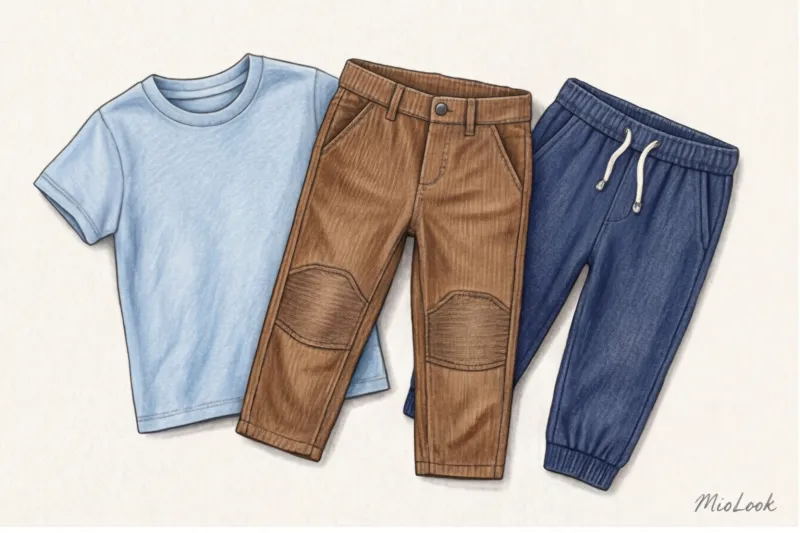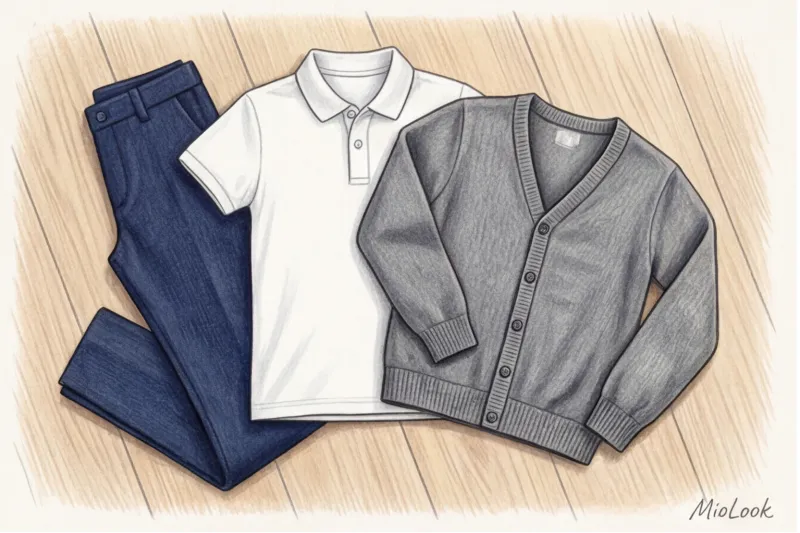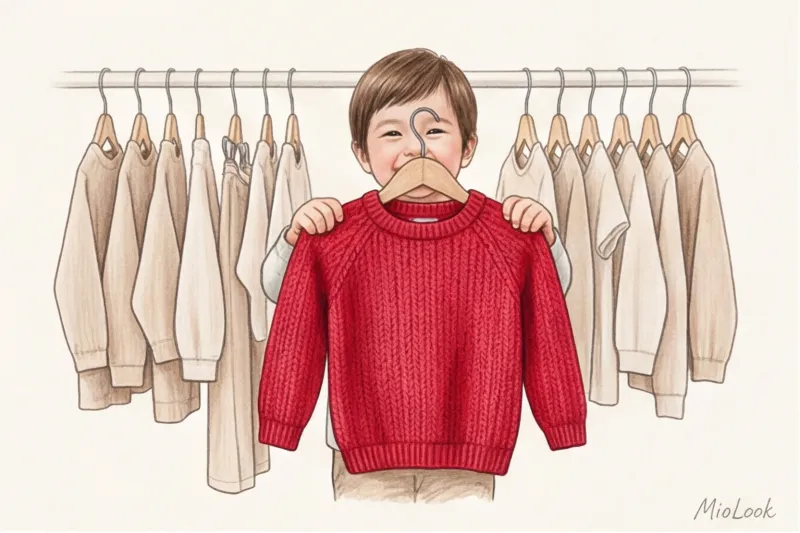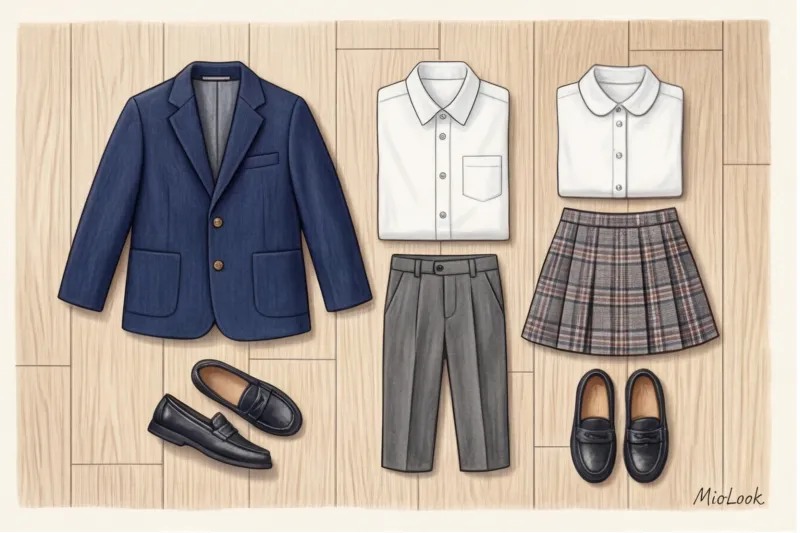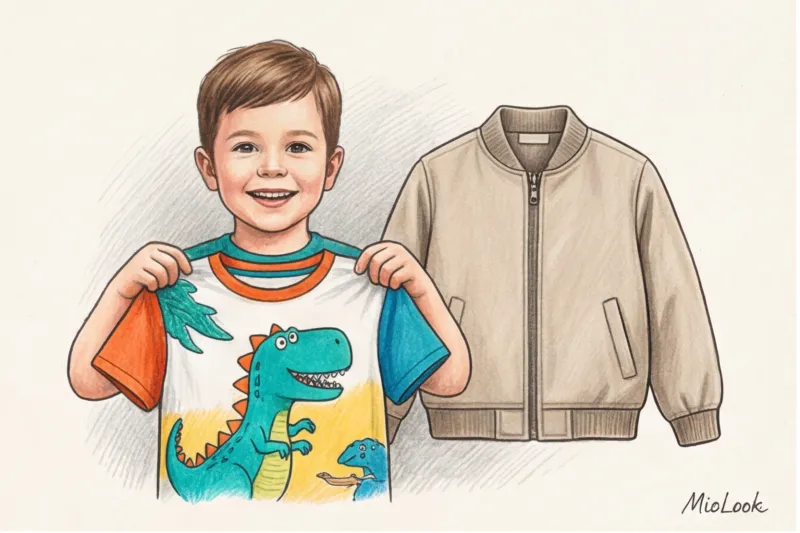
It's morning. You're running late again because your five-year-old son refuses to wear "those stiff pants" and screams for an acid-green dinosaur T-shirt that you have absolutely nothing to wear with. Sound familiar? I've been observing these morning battles with my clients for a long time. The secret to peace of mind lies in one solution: you need a well-written plan. capsule wardrobe for a boy — a system in which things work like Lego pieces.
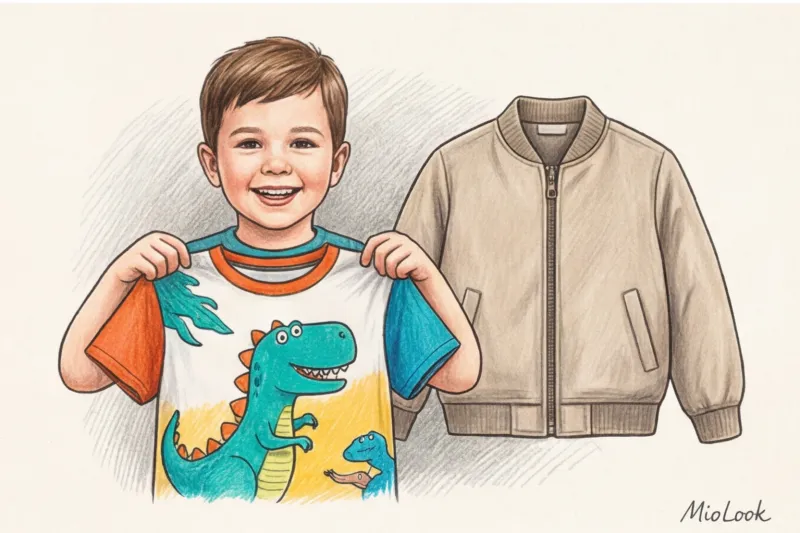
We talked in more detail about the basic principles and architecture of children's wardrobes in our The complete guide to a child's capsule wardrobe But today I want to talk specifically about boyish style. We'll shift the focus from "boring, restrictive gray clothes" to a smart Mediterranean approach, where beloved superheroes are mathematically precisely balanced with timeless essentials.
What is a capsule wardrobe for a boy and why is it not boring?
Let's bust the biggest myth right off the bat: a capsule collection isn't an army of identical beige, gray, and navy blue pieces. It's a "smart designer" approach, where any bottom can be paired with any top, eyes closed.
One of my clients, Elena, once came to me in utter despair. Her son, Mark, adored a Batman T-shirt and green plaid pants. When wearing them together, the child became a walking visual chaos. Moreover, as psychological research has shown (in particular, Barry Schwartz's 2004 concept of the "paradox of choice"), too many and inconsistent clothing choices cause sensory overload and morning tantrums in children. It's difficult for a child to make decisions when there are hundreds of options.
We created a capsule wardrobe for Mark. We kept the Batman outfit, but added indigo straight jeans, terracotta joggers, and a corduroy jacket. The tantrums stopped the very next day. Visual harmony in the closet gives a child a sense of control and security.
The Perfect Capsule Formula: The Mathematics of a Stylish Wardrobe
Over 12 years of working as a stylist, I've developed the ideal proportions for boys' wardrobes: 3:1 rule For every one "bottom" (pants, shorts), there should be exactly three "tops" (T-shirts, shirts). Why? Because boys get T-shirts dirty like crazy, while quality pants easily last 2-3 days of wear.
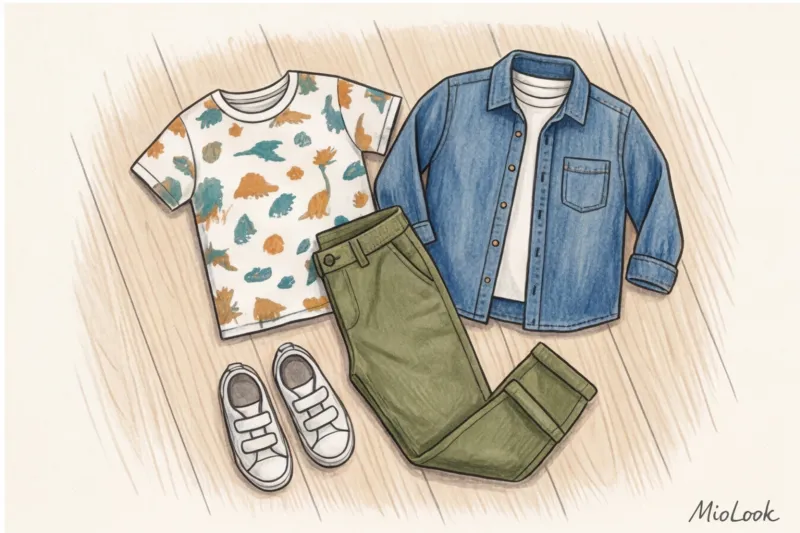
The basic image formula I use is: Neutral base + active print + comfortable shoes = stylish hooligan.
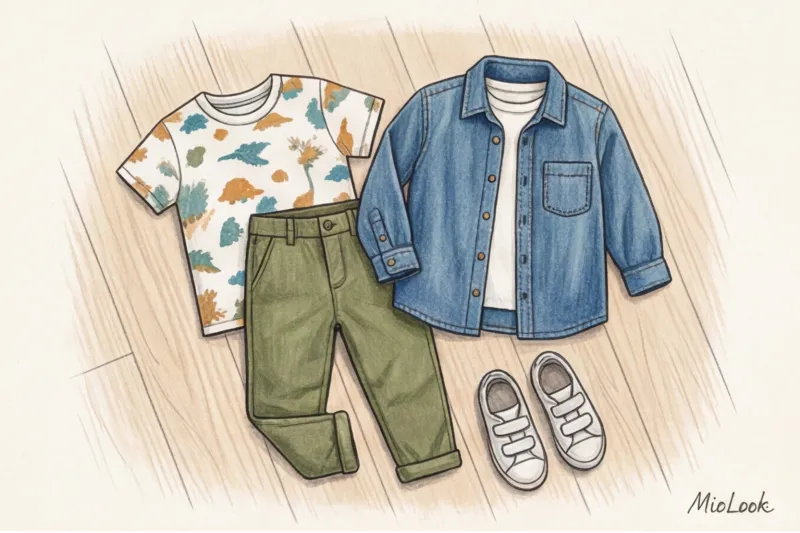
Stylist's secret: use the "sandwich" rule. If you're putting your child in bright mustard sneakers, incorporate this color into the top—whether it's a mustard cap, collar trim, or a small slogan on the T-shirt. The pants, in this case, serve as a neutral "filler."
Access to MioLook for €0.99 — one-time payment
A smart AI stylist will select the perfect look for you and your child, taking into account all your wishes.
Get access — €0.99 onceHow to Make Spider-Man Wear Dress Pants
No one is forcing you to deprive your child of their childhood and throw away their cartoon character t-shirts. The key is balance. A vibrant print requires a calm, luxurious background.
Also, pay attention to the design of the T-shirts themselves. Choose "licensed" prints in muted, lightly washed, vintage shades (these can often be found at Zara Kids for around €12-€15). A vintage Mickey Mouse on a gray melange background paired with khaki chinos looks more like Pitti Uomo street style than pajamas.
Fabric Selection: Durable, Indestructible Practicality
We're used to thinking that children should only buy 100% cotton. This is a dangerous misconception. Pure cotton on the lap of an active five-year-old wears through in exactly one week.
According to WGSN's textile reports (2024), the average lifespan of children's trousers increases by 40% if the fabric contains synthetic reinforcing thread. If you want long-lasting garments, look for 2-5% elastane or nylon on the tags. Look for fabrics that have passed the Martindale abrasion test. Twill weave with a diagonal rib is your best friend.
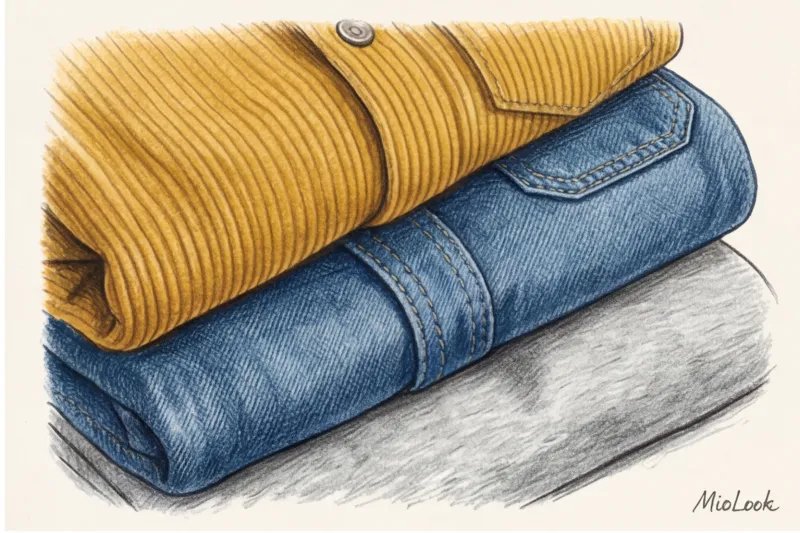
"The best fabrics for a boy's wardrobe have complex textures. Smooth fabrics show every blemish. Textured fabrics hide everything." — Isabella Garcia
Be inspired by Mediterranean style: heavy washed linen (it doesn't itch), chunky corduroy, and heavy denim. These pieces age beautifully. Even a little fading in the sun or a little wear and tear will add a casual chic feel rather than make them look sloppy.
Color palette: from Mediterranean base to vibrant accents
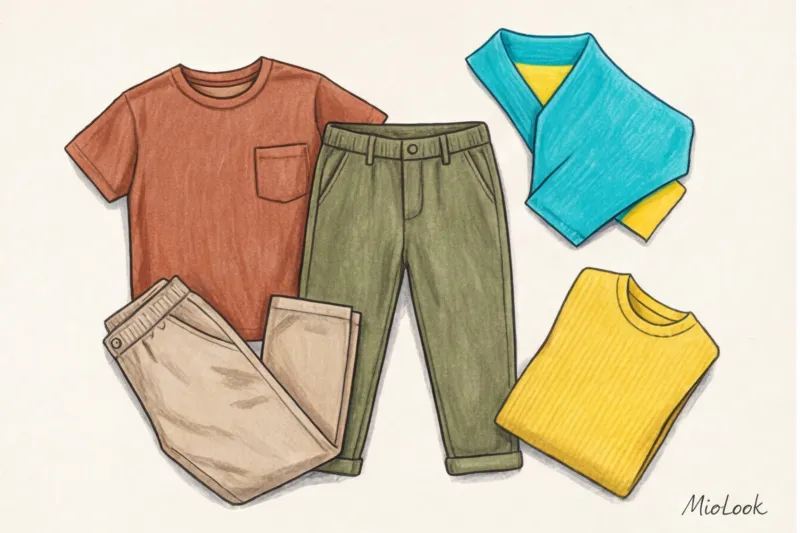
How to create a palette that works? Choose two or three base colors (for example, camel, khaki, and deep indigo). Then add two accent colors based on your son's preferences—terracotta, emerald, ocher, or mustard.
I strongly recommend avoiding stark white and jet black. Black attracts dust and fur, and white on a child lasts until the first puddle. Replace them with melange textures (light gray, oatmeal) and complex earthy tones. Melange is an optical illusion that perfectly hides small juice spills and dirt.
If you're looking to delve deeper into choosing the perfect shades to complement your child's appearance, I recommend exploring this topic in more depth: 12 Color Types of Appearance: A Guide to Choosing a Palette will help you avoid making mistakes with the color temperature.
Building a capsule wardrobe for a boy step by step
Building a wardrobe always starts with an audit. Empty everything from the closet onto the bed and apply the strict rule of three piles: "keep" (fits perfectly now), "donate" (no longer fits), and "rags" (stains, holes in the knees).
Then we build the core. Always start from the bottom. If pants don't fit well, restrict movement, or slip down, your child will be cranky all day. I had a wonderful boy, Leo, who hated getting dressed. It turned out he was simply pinched by the tight waistband of his jeans. As soon as we replaced them with jogger-style chinos (with a soft elastic waistband but a tailored leg), the morning dramas disappeared.
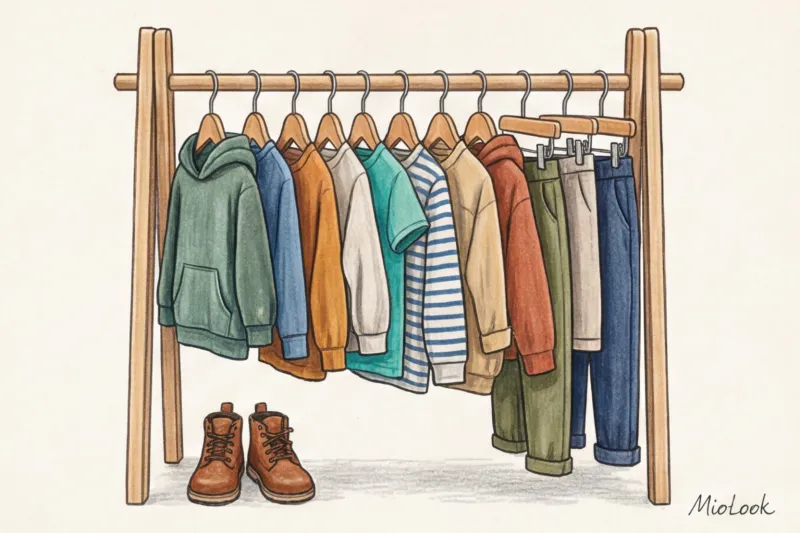
Once the bottoms are chosen, we add t-shirts and layering: flannel shirts worn open over t-shirts, zip-up hoodies, and light jackets.
Ready to get started?
Try the free plan—no commitments. Upload items to the app and create your first capsule.
Get access — €0.99 onceBasic checklist for the season: 15 items
You don't need a huge closet. You can assemble a great seasonal essentials for €150–€250 by mixing brands. Here's a list that yields at least 30 looks:
- 3 pairs of trousers of different cuts (joggers, classic chinos, straight jeans).
- 5-6 T-shirts and long sleeves (3 basic ones in neutral colors, 2-3 with your favorite print).
- 2 warm layers (chunky knit cardigan or textured hoodie).
- 2 pairs of shoes (universal leather sneakers and Chelsea boots or trainers).
- 1 heavyweight shirt (corduroy or denim) for layering.
- 1 outerwear according to the season.
Important limitation: This 15-piece approach does NOT work if your child is seriously involved in sports (such as soccer or swimming). Workout clothes should live in a separate drawer and not be mixed in with their everyday stylish capsule wardrobe.
The biggest mistake moms make: why buying clothes "to grow into" kills style
I understand the desire to save money. Children grow at an alarming rate. But buying pants two sizes too big is a counterintuitive move that hurts both your budget and your appearance.
Have you ever wondered what happens to long pants? They drag along the ground. By the time a boy finally reaches the waist, the hems are already irrevocably frayed, and the fabric at the knees is worn out because the baggy cut has displaced the anatomical fold zones.
Improper proportions make the look untidy. A child in an oversized hoodie looks like a gnome struggling to run on the playground.
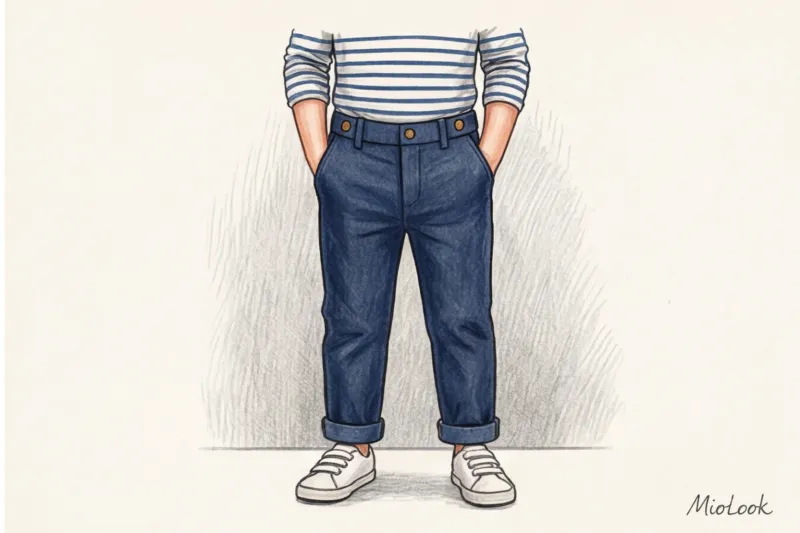
What's the alternative? Buy true to size, but be smart about it. Look for pants with adjustable waist (With an internal adjustable elastic band and buttons—most brands have these starting at €20). Choose a cut that looks stylish with a cuff. By buying a garment that fits, you instill in your child a taste for a good fit from an early age.
Checklist: How to teach a boy to dress himself
A capsule is only truly functional when a child can use it independently. The ultimate in space organization is the "blind selection" method. If everything in the closet matches, it's physically impossible for a child to dress poorly.
Switch to vertical storage (the KonMari principle) in drawers. Your child should be able to open a drawer and see all the available T-shirts and their prints from the top, like files in a filing cabinet. If the T-shirts are stacked in traditional piles, they'll inevitably pull out the bottom one and ruin the whole thing.
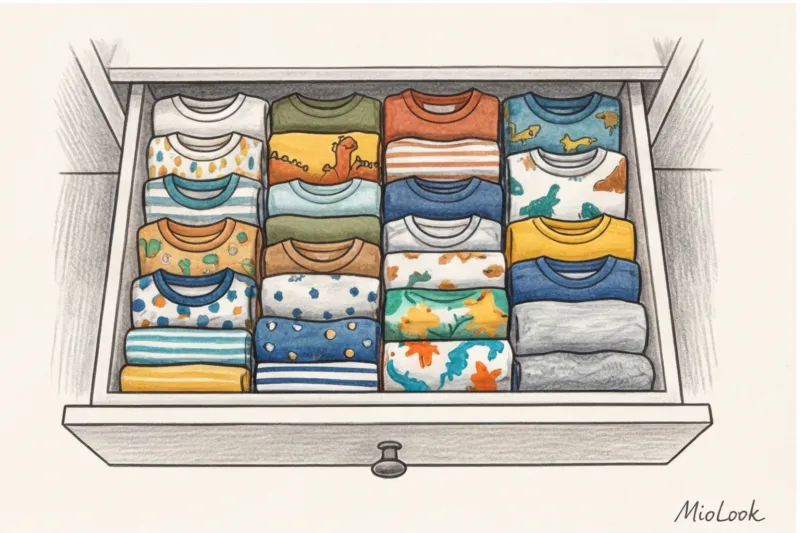
Use a psychological trick called the "two-choice rule." Don't ask, "What do you want to wear?" Instead, ask, "Will you wear green joggers or blue jeans today?" You give the illusion of control, while still being perfectly happy with both options.
Digitalization works great too. Take photos of your completed bows in the app. MioLook Give your child a tablet in the morning: let them swipe through pre-made outfits and choose their "look of the day." Boring preparations for preschool or school instantly turn into an exciting adult game.
Ultimately, a capsule wardrobe for a boy is an investment not so much in clothes as in your relaxed mornings and your son's self-confidence. Give him the tools to express his own style, and you'll be surprised at how independent and stylish he can be.