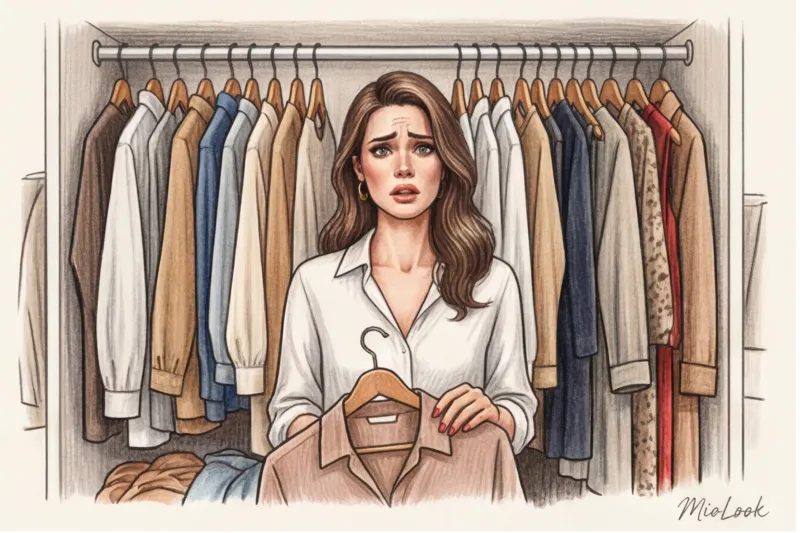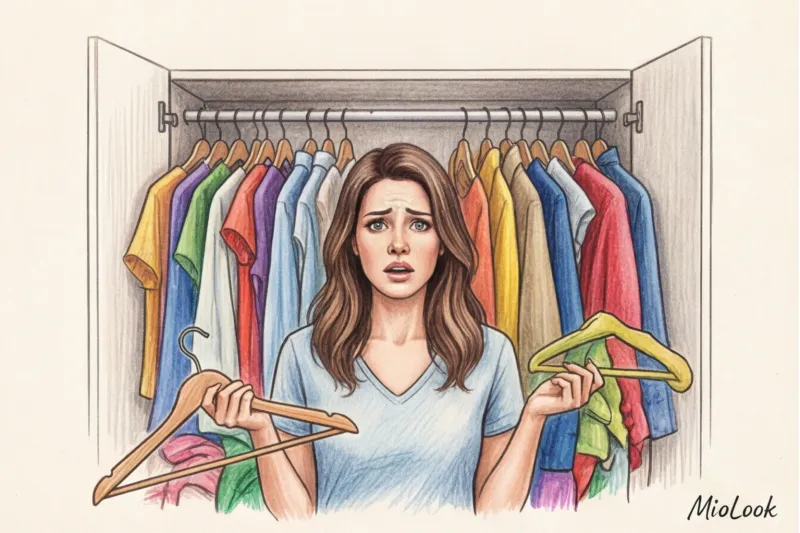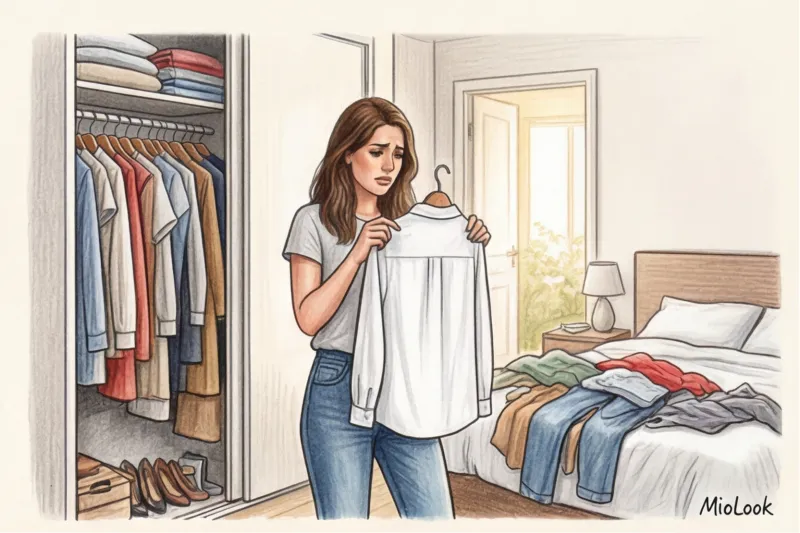
You know what phrase I hear most often from new clients during their first consultation? "Olena, I downloaded a great program, dutifully photographed my entire closet, spent the entire weekend doing it... and I still have absolutely nothing to wear!"
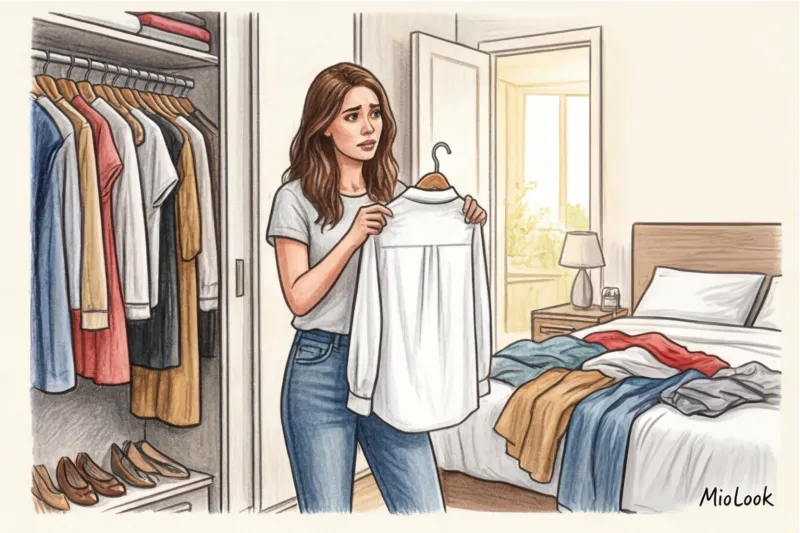
Over 14 years of working as a personal stylist, I've seen hundreds of such "digitized" wardrobes. Women sincerely believe that if they transfer a problem from a physical space to a smartphone, it will solve itself. But let's be honest: loading three hundred random, emotionally purchased items onto your phone doesn't create a stylish capsule wardrobe. You create a digital junkyard.
The real magic doesn't start where a program can erase the background from a photo. It starts where math comes into play. We discussed the basic principles of wardrobe building in more detail in our Guide to capsule wardrobe formulas , and today I want to explore the inside story. How exactly artificial intelligence analyzes your clothes and why smart algorithms are the best thing to happen to our style since the invention of the trench coat.
The Illusion of Order: Why Digitizing Your Closet Doesn't Mean Building a Time Capsule
One of my clients, let's call her Irina, is an IT specialist with an analytical mind. She took a radical approach: she photographed 250 items of clothing, carefully categorized them, and tagged them. When she proudly showed me the result, I saw a perfect catalog of completely incompatible items.
There were five leopard-print skirts of varying lengths, a dozen oddly printed T-shirts bought on sale, and exactly zero basic jackets. Irina's problem (and that of 90% of women starting to develop their style) was that a typical catalog app simply records the presence of an item. It won't tell you, "Hey, you're too much into statement bottoms, so you have nothing to wear with them!"
Digitizing chaos simply means transferring it to your phone screen. It won't make your morning routine any easier.
The main goal of a truly smart service (such as MioLook ) - not to act as a warehouse, but to build invisible stylistic connections between objects, finding those very "wardrobe holes" (missing pieces), by filling which you will revive dozens of things already hanging in the closet.
How the Capsule Calculator App Works: The Mathematics of Ideal Images
When I first started my practice, I drew compatibility matrices for clients by hand in a notebook. This took hours of painstaking work. Today, high-quality capsule calculator app does it in seconds, relying on rigid algorithmic vectors.
AI doesn't think in terms of "pretty" or "fashionable." It sees proportions, volumes, temperature contrasts, and textures. And the first thing it analyzes is balance.
The Golden Ratio of Wardrobe: The 3 to 1 Rule
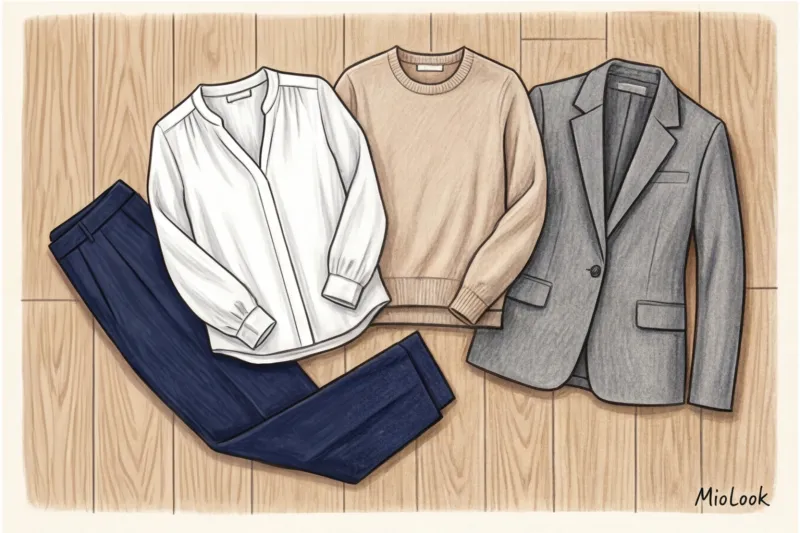
Have you ever noticed that we buy trousers and jeans much less often than blouses and tops? And this is a perfectly reasonable instinct. People around us (and we ourselves in the mirror) perceive our appearance primarily through the portrait zone.
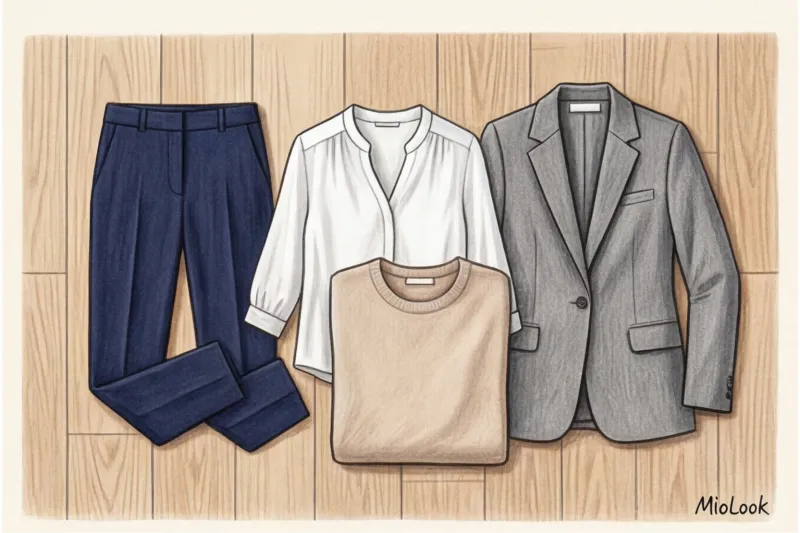
A mathematically verified capsule collection is always built according to the rule: for every bottom, there should be at least three (and ideally four) tops. If the algorithm sees 10 skirts and five sweaters in your virtual fitting room, it immediately flags a critical database error. You won't be able to create a sufficient number of diverse outfits, and you'll feel like you're always wearing the same thing.
Color matrix and compatibility algorithms
Color theory translates seamlessly into machine code. Smart algorithms categorize your uploaded photos into three groups:
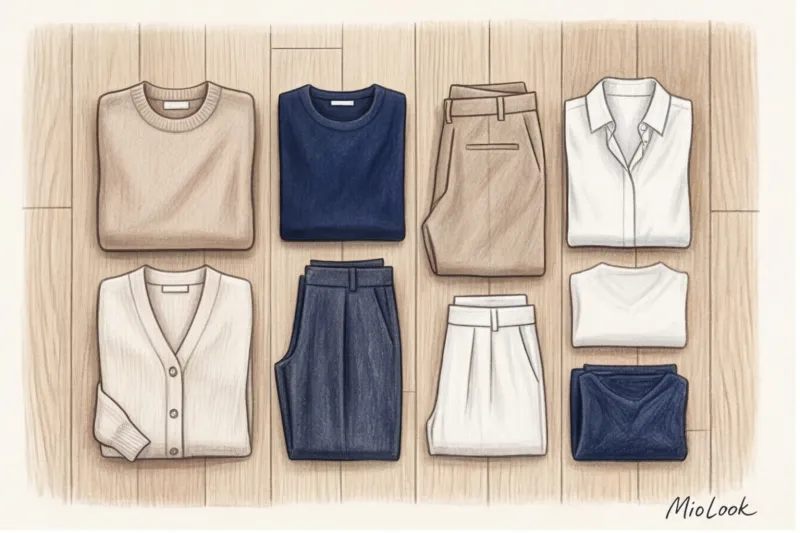
- Basic shades (background for your painting: black, beige, graphite, navy);
- Neutral ligaments (white, ecru, denim);
- Accent colors (berry, emerald, fuchsia - that's what sets the mood).
A limited palette isn't boring, as many people think. It's the key to maximum combinations. Here's some cold statistics: just 12 correctly color-coordinated items (for example, 2 bottoms, 6 tops, 2 pairs of shoes, and 2 layers) can generate up to 40 unique looks.
Tired of racking your brains in the morning?
Let algorithms do the grunt work for you. Upload your items, and the AI stylist will create dozens of stylish outfits.
Get access — €0.99 onceUsefulness Indexes: What Do Stylists' Algorithms Really Calculate?
According to a large-scale study by the British environmental organization WRAP (2023), the average woman regularly wears only 20% of her wardrobe 80% of the time. The rest is dead weight, "clothes for a special life" that will never come.
To break out of this statistic, top stylists and AI algorithms are using economic metrics. Cost Per Wear (CPW) – price per wear This is the most sobering calculation you can apply to your purchases.
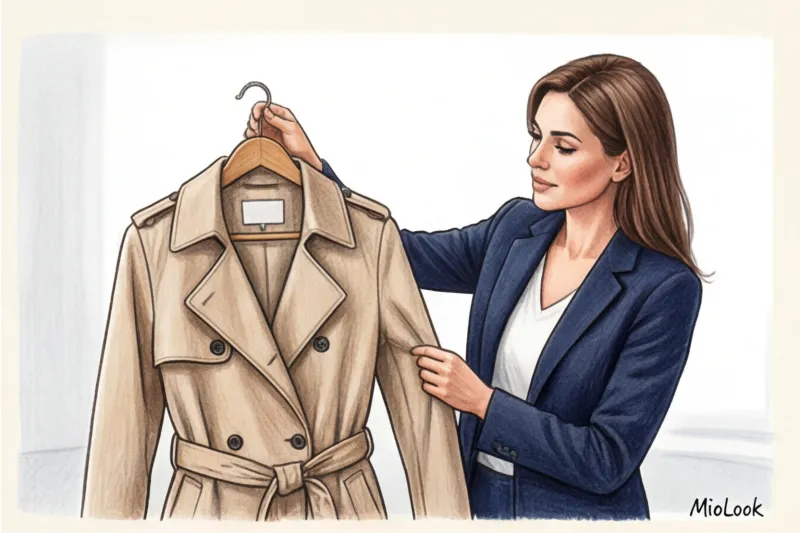
Let's do the math. You buy a luxurious, basic cashmere sweater for €200. Sound expensive? But you wear it all winter and spring, under a coat, with jeans, over a silk dress—around 100 times in total over a couple of seasons. Its CPW is only €2.
Now let's take a bright green blouse made of squeaky polyester, bought in a fit of shopping frenzy on sale for €30. You wear it once to a corporate event, realize it doesn't go with anything, and hide it in the back of your closet. Its CPW is €30. This "cheap" blouse cost you 15 times more than premium cashmere!
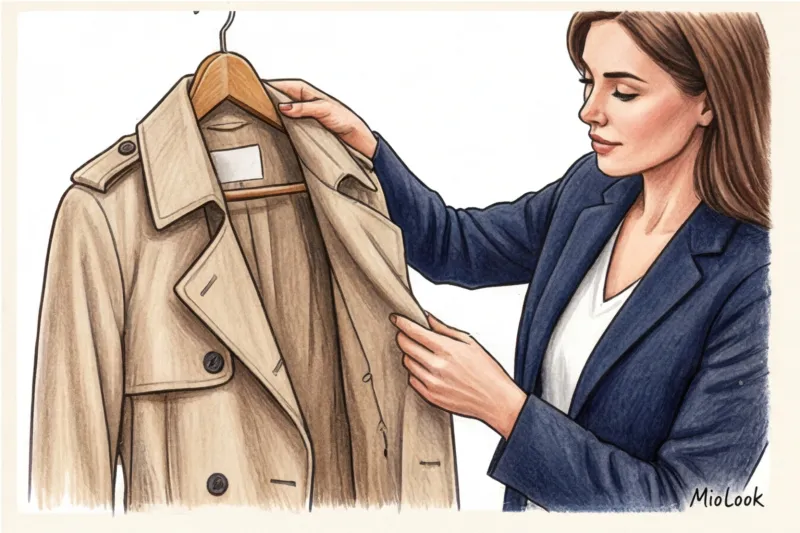
The second calculation is - Versatility Score The app analyzes how many other items in your closet a particular item can be paired with. If it can be paired with fewer than three, the algorithm will flag the item as problematic.
Preventative Protection: How AI Stops Impulse Buying
Emotional shopping is the biggest drain on our budget. Sales, brand marketing (from Zara to Massimo Dutti), stress at work—and suddenly you're standing at the checkout with your fifth white T-shirt (because "it's basic") or a ridiculous sequined skirt.
Smart wardrobe apps have my favorite feature, which I call "gate guard." It checks items before you buy them.
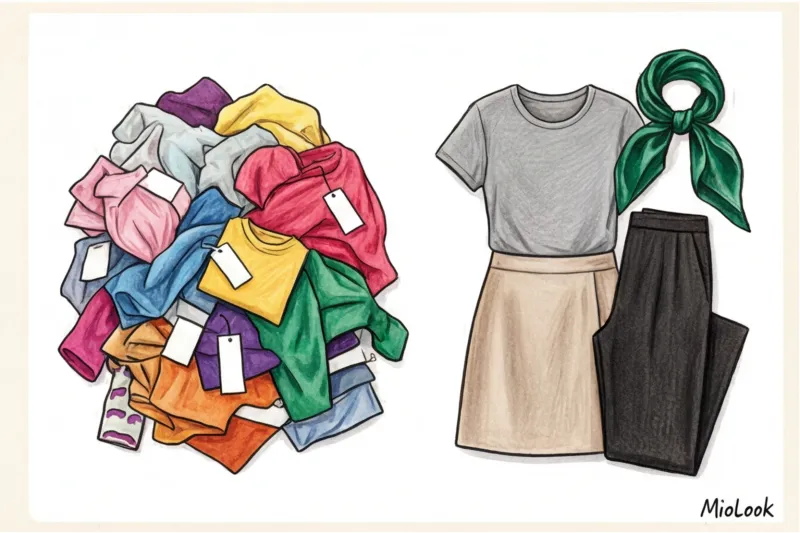
How does it work in practice? You're standing in the fitting room. You like a jacket. You take a photo, erase the background right in the app, and add it to your virtual database. Then the AI runs a stress test: does this new item generate at least 3-4 new complete looks with your... already existing trousers, skirts and shoes?
If the system shows that a jacket only goes with one pair of jeans, and the rest of your wardrobe requires a different texture or length, you can hang it back on the rail with peace of mind. You've just saved €150. The app pays for itself on your first trip to the mall.
Your pocket stylist-innovator
Stop wasting money on random items. MioLook's virtual try-on tool will show you if you really need that purchase.
Get access — €0.99 onceChecklist: How to properly load the database so the AI formula works
An algorithm is a tool. If you feed it corrupted data, you'll get useless recommendations (in programming, this is called GIGO—Garbage In, Garbage Out). To make style math work for you, follow this algorithm:
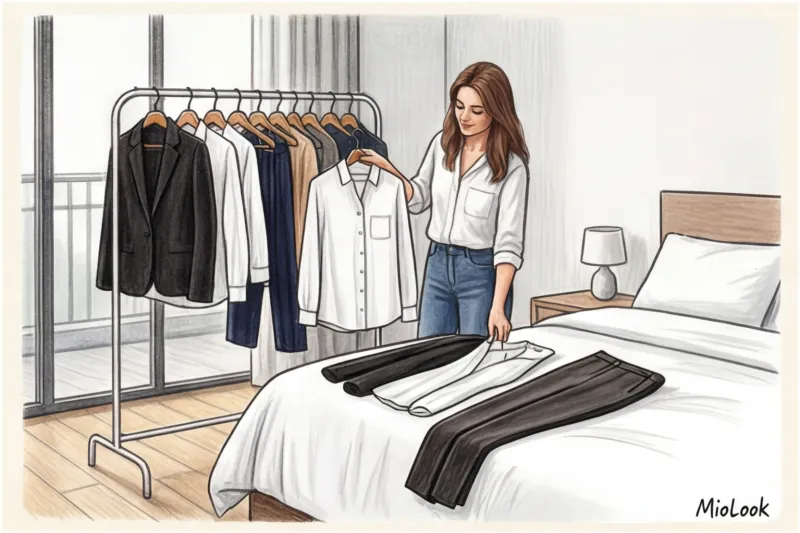
- Start with a "hard core". Don't photograph scarves and handbags first. Load up on the basics: jeans, dress pants, jackets, coats, and basic footwear (loafers, white sneakers, ankle boots). The framework is primary.
- Observe seasonality. Create separate capsule collections for summer and winter. Otherwise, artificial intelligence (no matter how smart it is) might happily combine your bulky wool down jacket with a lightweight silk slip top with thin straps.
- Light decides everything. Photograph items only in natural daylight, preferably near a window. A yellow lamp in the hallway will distort the color tone: your cool gray sweater will appear beige in the photo, and the algorithm's color matrix will break down.
- The stylist's ruthless rule: Never, under any circumstances, upload items to your virtual wardrobe that are too small for you and are "waiting for me to lose 5 kilograms."
"Slimming" clothes are anchors that drag your self-esteem down. They wreck the algorithm (the system will suggest looks with them, but you won't be able to wear them) and ruin your mood every morning.
From virtual calculations to real style: a stylist's resume
I often hear concerns like, "Olena, if an app does all the calculations for me, where's the room for creativity and self-expression?" Trust me: routinely choosing "what doesn't clash with what in length" isn't creativity. It's math, which is best delegated to a machine.

Capsule automation doesn't limit you. On the contrary, when the app MioLook By taking care of calculating temperature contrasts, compatibility indices, and 3:1 ratios, you free up resources—resources for adding an interesting brooch, choosing an unusual bag, or simply drinking an extra cup of coffee in the morning, confident that you look flawless today.
Don't digitize chaos. Digitize a system. And then your closet will finally start working for you, not you for it.