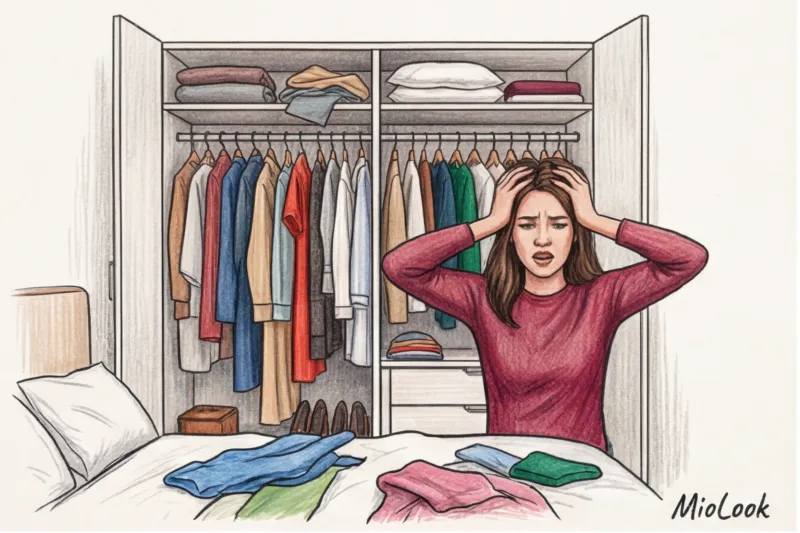
Imagine you bought an expensive, incredibly powerful laptop. You installed a perfect, stable operating system on it, but... you didn't download a single app. Sounds absurd, right? Well, that's exactly what's happening in the closets of 80% of my new clients. They buy the "perfect basics," but their wardrobes remain dysfunctional.
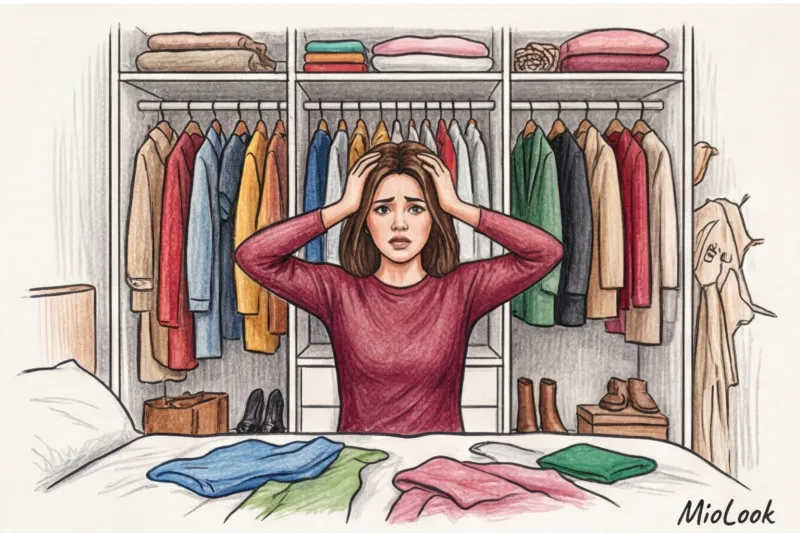
In this article I want to destroy the main stereotype of modern fashion: basic clothes are Not A ready-made style. The base is simply your operating system, unnoticeable but essential. A capsule, on the other hand, is a specific application tailored to your needs (office, vacation, dating). We've covered in more detail how technology helps connect these two concepts in our A complete guide to the MioLook AI-powered capsule wardrobe app.
Let's explore the differences between a capsule wardrobe and a basic one and understand why you need both approaches to permanently forget about morning panic in front of the mirror.
The Hidden Conflict in Your Closet: Why Basics Won't Solve the "Nothing to Wear" Problem
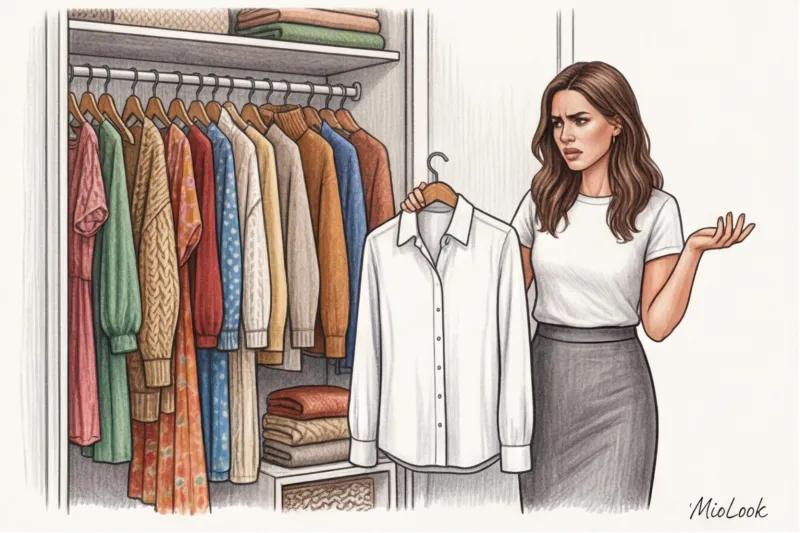
I often see the same scenario: a woman reads fashion bloggers' advice, throws out all her printed clothes, and fills her closet with beige turtlenecks, straight-leg jeans, and white shirts. She ends up with 150 items, but nothing to wear. Why does this happen?
It's all about neurobiology. Our short-term memory has strict cognitive limits. When you open a closet full of over 40 items of clothing, your brain goes into a stupor from the visual overload. It simply switches off and forces you to reach for that trusty pair of jeans sitting on the far side.
According to a large-scale study by the British organization WRAP (2023), the average city dweller regularly wears only 20–30% of their wardrobe. The remaining 70% are "blind spots" that we literally forget about.
"A perfect basic, coupled with closet chaos, yields zero stylistic results. You're simply investing in high-quality cotton storage."
A Basic Wardrobe: The Foundation of Your Stylish Architecture
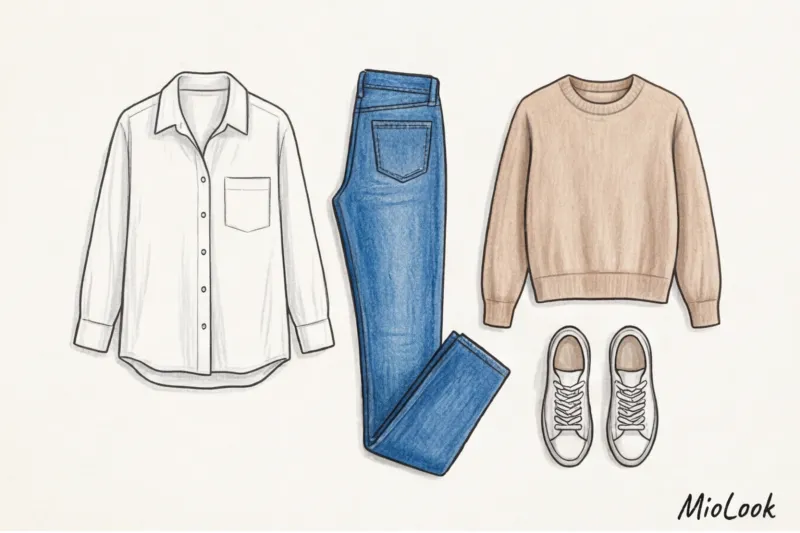
A basic wardrobe is a collection of neutral, functional pieces without overt embellishment. These are the connecting elements. Their main purpose is to calm the look and allow the accent pieces to shine.
It's important to understand: everyone has their own basic wardrobe. If you work as a corporate lawyer, your basic wardrobe will be wool suits, heavy cotton shirts, and loafers. If you're a freelancer working from a cafe, your basic wardrobe will be a quality hoodie, straight-leg jeans, and sneakers. We wrote about how to choose shades in the article. Basic Wardrobe Colors: Replacing Black and White.
The core of your budget should be focused on the basics, based on the CPW (Cost Per Wear) metric. A thick white T-shirt (made of 180 g/m² cotton or viscose with elastane) for €50, which you'll wear 50 times per season, has a CPW of €1. A cheap, trendy rhinestone blouse for €30, worn twice, will cost you €15 per wear. The math is merciless.
Why a base is not a ready-made style
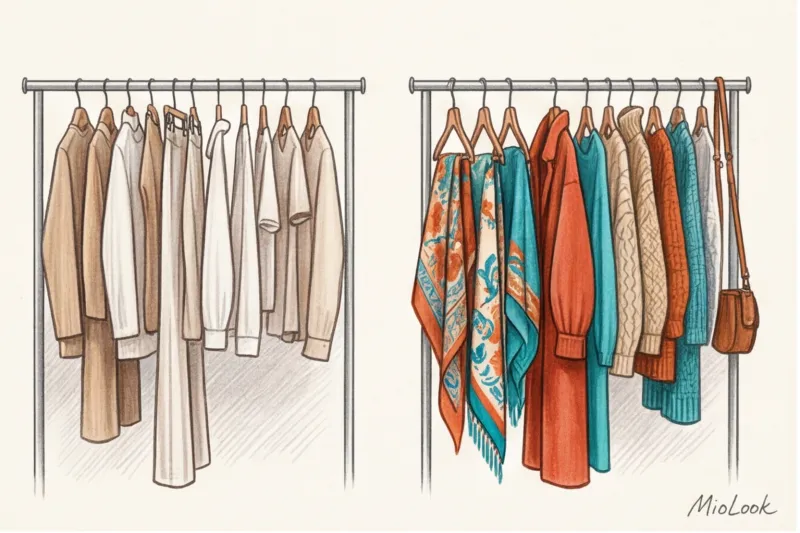
One of my clients came to me with 40 items from COS and Massimo Dutti. All excellent quality, all beige, gray, and black. The problem? She looked completely bland. Looks consisting only of basics often look bland, like a sterile ward.
The base is the eminence grise. It shouldn't dominate. It's there to prevent your bright silk scarf, statement bag, or complex jacket from turning you into a city nut.
Access to MioLook for €0.99 — one-time payment
A smart AI stylist will create the perfect look from your basic items.
Get access — €0.99 onceCapsule wardrobe: a designer for a specific life task
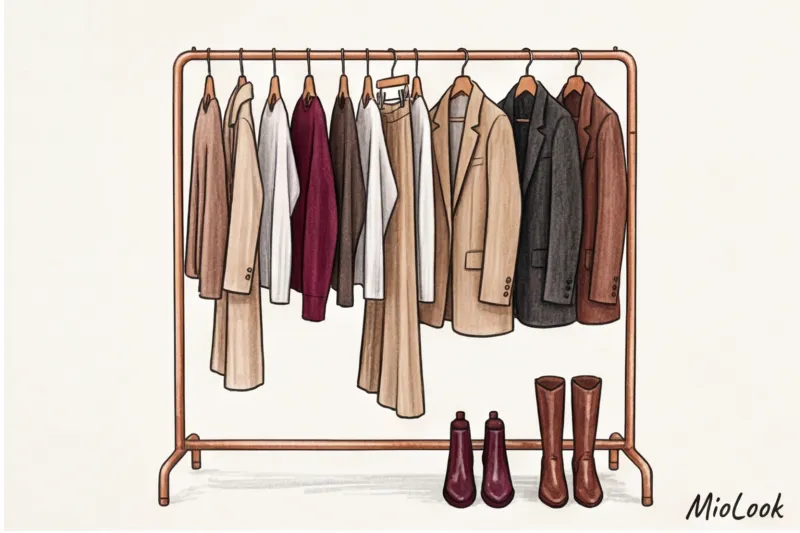
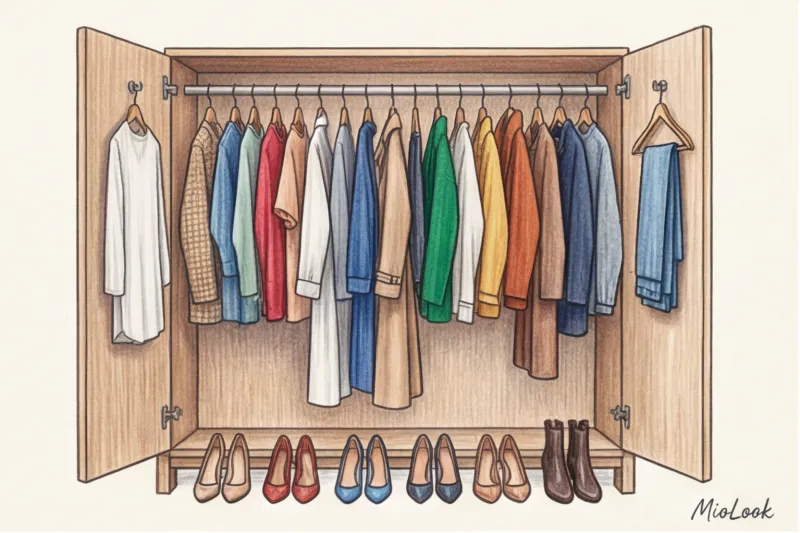
If a base is the foundation of your entire closet, a capsule is a closed micro-ecosystem. Typically, it consists of 10-15 items (including shoes and bags) that perfectly coordinate with each other.
The key to a capsule wardrobe is context. You don't create a capsule wardrobe "just for life." You create it for a specific purpose. For example, I recently created a travel wardrobe for a client who works in analytics. Using nine items (two bottoms, four tops, one jacket, two pairs of shoes), we came up with 14 unique looks. This was enough for two weeks of travel without any repetition.
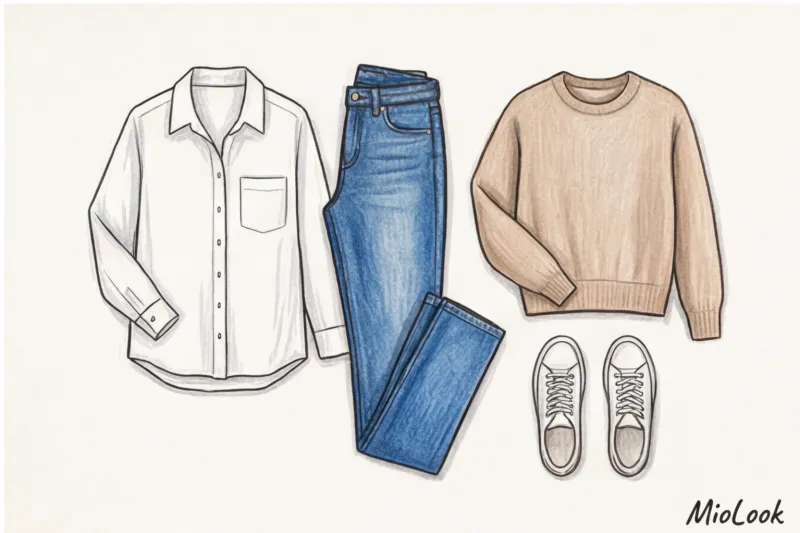
A good capsule wardrobe is built according to a mathematical formula of combination: for every bottom (pants, skirt), there should be at least three tops. This dramatically reduces your packing time—by about 40%, since you can literally pull out items in the dark, and they will still form a great outfit.
The main difference between a capsule wardrobe and a basic one
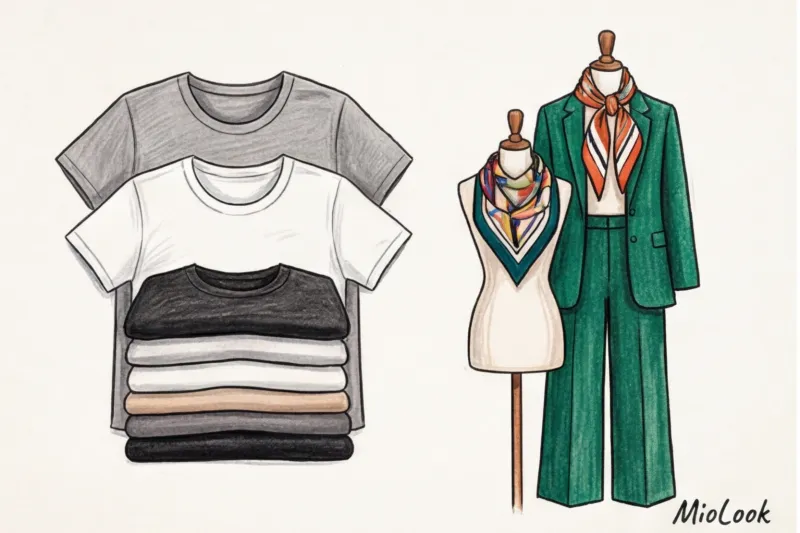
Let's break down the key differences between a capsule wardrobe and a basic one to settle this question once and for all. These concepts don't replace each other, but rather complement each other.
- Scale and purpose: The base covers your entire closet and covers all your practical needs. The capsule is designed for the following areas: maternity capsule , capsule for the gym, capsule for the office.
- Presence of accents: The base is neutral. The capsule collection should include 20-30% accent pieces—seasonal trends, complex prints, and bright colors that reflect your personality.
- Life cycle: You build your base layer over years, investing in cashmere and good leather. The capsule is dynamic: a vacation capsule lasts two weeks, a trendy capsule lasts one season.
The key idea: the same basic white T-shirt can be part of three of your capsule outfits at once (in a business outfit - with a formal jacket, in a sports outfit - with joggers, in a vacation outfit - with linen shorts).
The Myth of Universality: Why Classic Lists No Longer Work
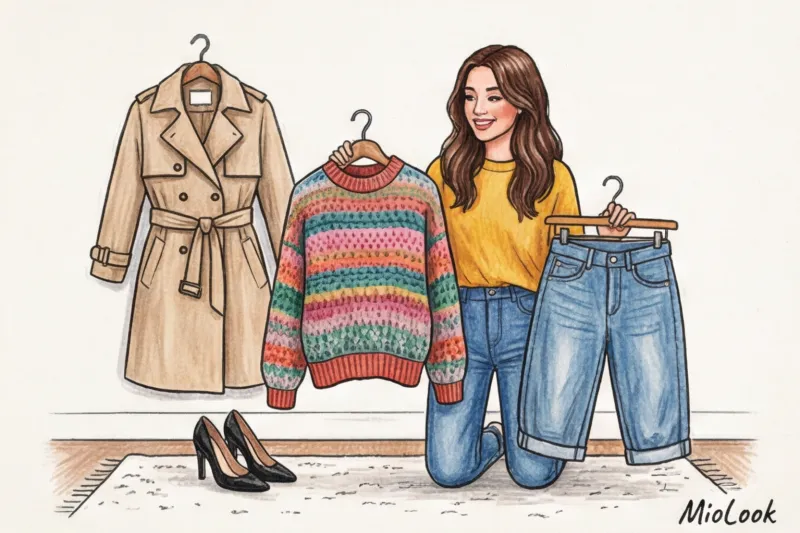
I hate articles like "10 Things Every Woman Must Have in Her Wardrobe." Research agency WGSN clearly outlined the trend toward hyper-personalization in its 2024 report: templates are dead.
A classic beige trench coat and black stiletto pumps, which are constantly recycled, often become dead weight. If you live in a climate where it snows for eight months and you commute to work by subway, a classic trench coat is simply not necessary. A technical parka or a high-quality wool robe coat will be your basic outerwear.
When the system is NOT working: I have to be honest. The capsule method is contraindicated for 100% maximalists and moody types who dress like punk rockers today and Victorian ladies tomorrow. For them, the rigid confines of a capsule will feel like a prison. But for 90% of working women who value their time, it's a salvation. Read our article. A Basic Wardrobe for a 40-Year-Old Woman: Style Without Rules to understand the principles of adaptation.
Your perfect look starts here
Join thousands of users who look flawless every day with smart wardrobe algorithms.
Get access — €0.99 onceWhat to choose and how to start: an algorithm for your closet
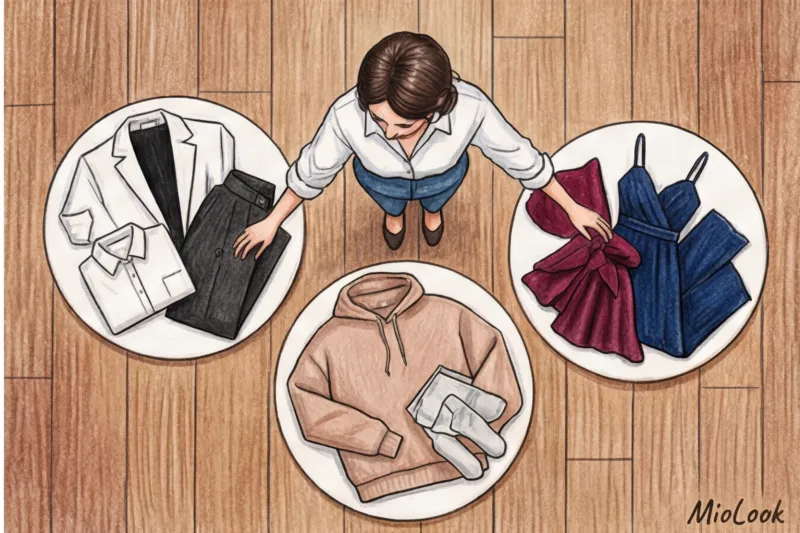
You don't have to choose between a base and a capsule. You need to create a base from which to assemble the capsules. Here's a practical three-step algorithm I give my clients:
- Step 1: Occupancy Chart. Draw a circle and divide it into sections: office (40%), walks with children (30%), sports (10%), and social events (20%). These are your future capsule wardrobes. The proportions of clothes in your closet should match these percentages.
- Step 2: Audit and core identification. Pull everything out. Find the pieces you wear constantly—these are your true core. Note what's missing (for example, you have three statement jackets, but not a single basic tee to go with them). If you're a stylist, our guide will help. Digitizing a Stylist's Wardrobe: How to Create a Database.
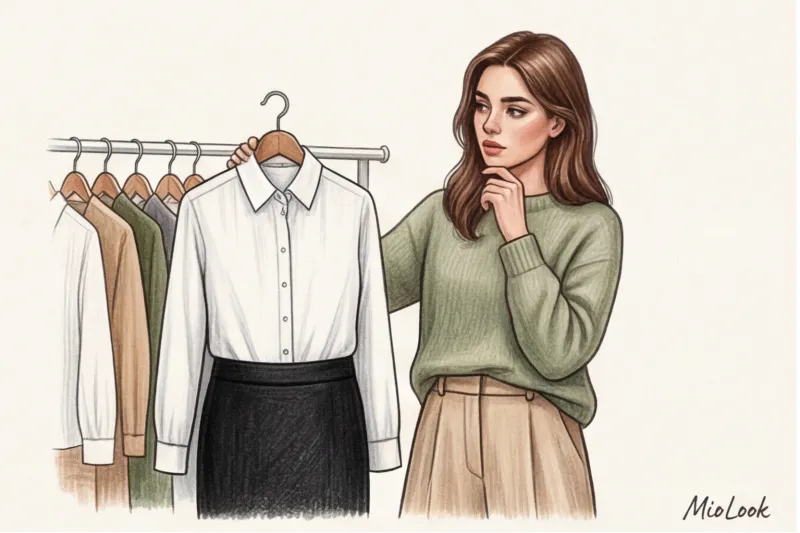
- Step 3: Completing the connections. Stop buying "standalone" beautiful pieces. Buy "bridges." Going pants shopping? Make sure they go with at least three tops from your current work wardrobe.
Digitizing Your Wardrobe: How Technology Is Solving the Problem of "Visual Noise"
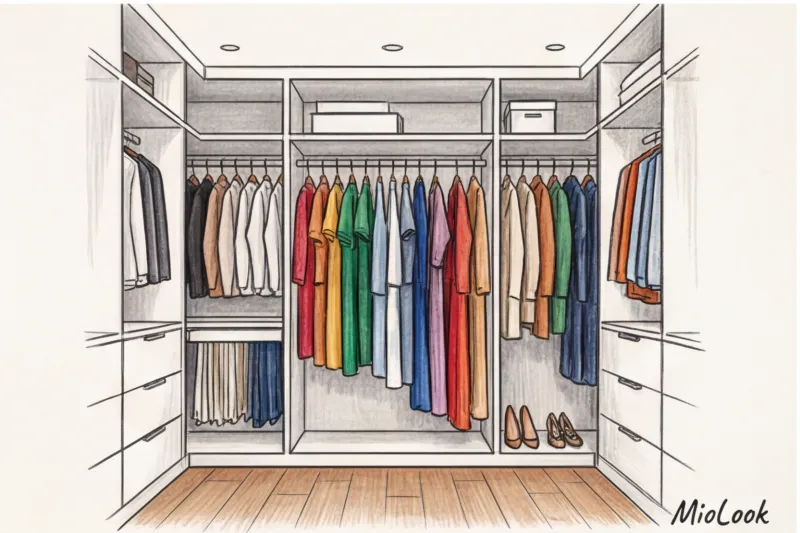
I personally conducted an experiment: I tracked my outfits for an entire year using a special app. The numbers shocked even me—82% of my outfits were based on a combination of 22 items, even though I had over 120 in my closet. My brain stubbornly followed the path of least resistance.
To overcome the cognitive limit, the closet needs to be digitized. When you take photos of your things and upload them to MioLook , the magic happens at the algorithmic level. You get rid of visual noise. You no longer stand in front of a physical mountain of clothes.
An AI-powered designer lets you create virtual capsule wardrobes on the subway or over your morning coffee. The algorithm will automatically suggest, "Look, this sweater pairs perfectly with this skirt, even though in real life they're at opposite ends of the closet." Technology protects you from impulsive, duplicate purchases and helps you get the most out of what you already own.
Stop collecting clothes in collections. Start building systems that work. Your foundation will give you confidence and comfort, and well-designed capsules will restore the joy of self-expression while saving you hundreds of euros a year.