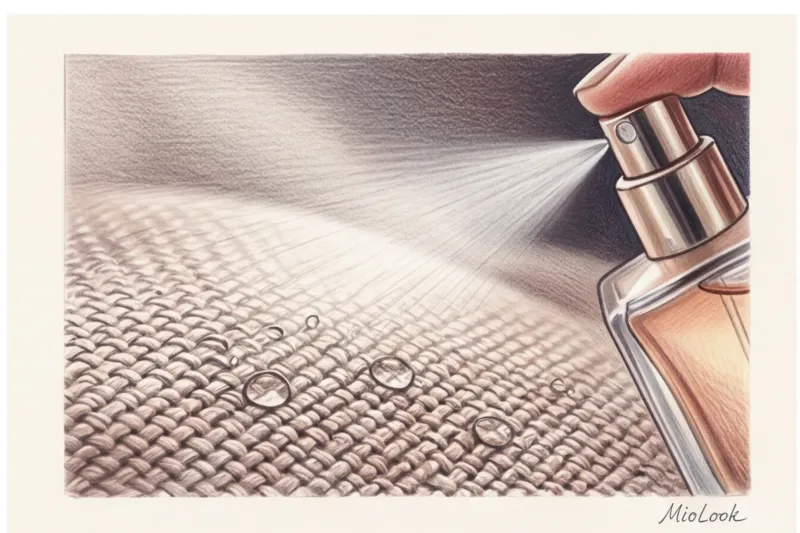
Can you spray perfume on clothes? Debunking the main myth.
One of my clients literally cried in the fitting room. She was wearing a luxurious beige Max Mara coat made of pure wool and cashmere, costing around $2,000, and there was a dirty, slightly yellowish oil stain on the right lapel. The dry cleaner refused to provide a warranty. The reason? She had generously sprayed her favorite Baccarat Rouge 540 on the collar before leaving the house.
In my 14 years as a stylist, I've seen hundreds of ruined items: from yellowed silk blouses to burn marks on fine cashmere. A ruined fabric instantly ruins the magic of even the most expensive and carefully crafted look. Our complete guide to... How to choose a perfume to match your clothing style: stylist tips We've already discussed how fragrance is your invisible accessory. But today, let's talk about physics and chemistry.
I am often asked: Can you spray perfume on clothes? Spoiler: yes, but only if you understand what your perfume is made of and how it interacts with the specific weave of the threads. Most people forget that perfume is a complex chemical cocktail. A standard Eau de Parfum (water of perfume) contains 15 to 20% concentrated essential oils and resins, and the base is an aggressive solvent—ethyl alcohol.
Why Alcohol and Oils Are the Enemies of Your Wardrobe
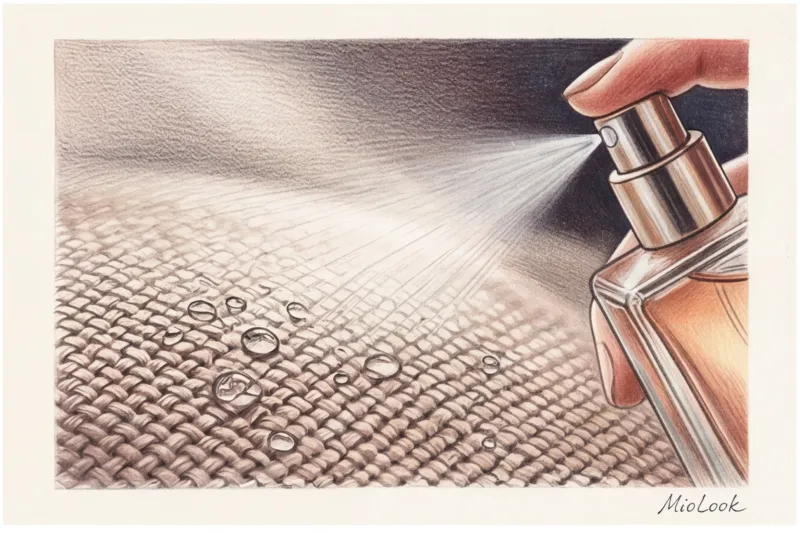
Let's face it: alcohol is a great solvent. According to the Drycleaning & Laundry Institute, high-concentration ethanol can dissolve up to 30% of modern disperse dyes upon direct contact. When you spray perfume directly onto fabric, the alcohol literally washes the pigment out of the fibers.
But if the alcohol evaporates, the essential oils and resins remain. These are what create those indelible greasy stains. Worse, many perfume components are phototoxic. Have you ever noticed unexplained yellow stains on white T-shirts or light-colored shirts? In 80% of cases, these are perfume stains that only appear after exposure to UV light outdoors or after you iron the area with a hot iron.
Access to MioLook for €0.99 — one-time payment
A smart AI stylist will select the perfect look and help you organize your wardrobe.
Get access — €0.99 oncePerfume Cloud and Other Dangerous Internet Advice
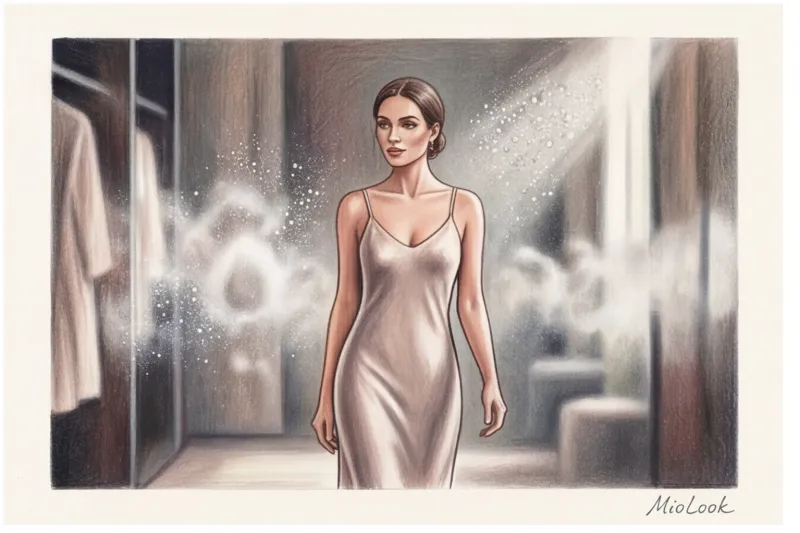
Open any glossy magazine from ten years ago and you'll find this advice: "Spray perfume into the air and gracefully step into the perfume cloud." As a practicing stylist, I declare: this is the worst thing you can do to your wardrobe.
Why is this counterintuitive fact so difficult to accept? It seems that microdroplets are safer than a direct spray. But premium dry cleaners confirm the opposite. When you enter a cloud, microdroplets settle unevenly on the fabric. The alcohol doesn't have time to evaporate in the air before it comes into contact with your clothing. As a result, microburns form on the fibers.
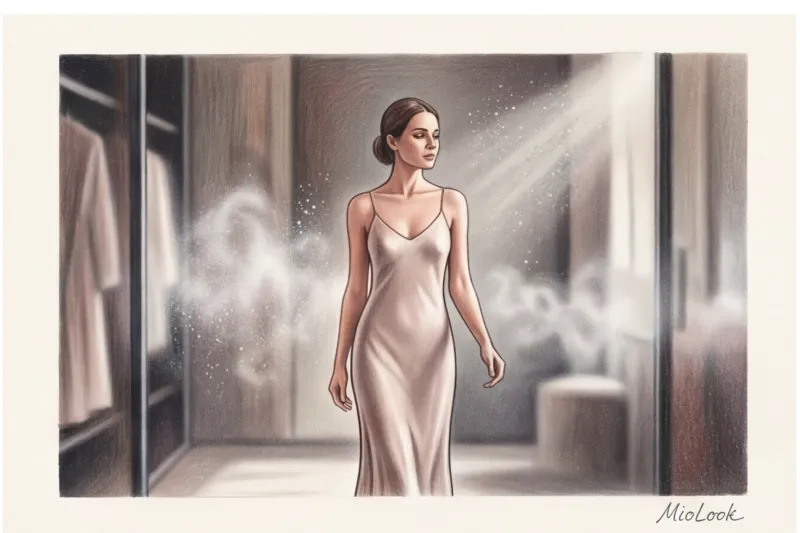
You won't see them right away. But after the first wash or professional cleaning, an inexplicable scattering of tiny yellow spots will appear on a light-colored blouse. The "cloud" method doesn't protect the fabric; it only makes the damage invisible for the time being.
Another popular myth is spraying from a distance of 30 centimeters. Yes, this is better than spraying point-blank, but this rule doesn't apply to all formulas. Heavy oriental fragrances with a high concentration of oils (extracts, perfumes) will still leave a trace even from half a meter away.
A Guide to Fabrics: How Different Materials React to Perfume
In my practice, there's a golden rule: the more delicate the fabric, the stricter the prohibition on direct contact with any perfume. But texture affects not only the durability of the item but also the fragrance's performance. For example, synthetic fabrics (polyester, acrylic) don't breathe. They often make expensive niche fragrances sound flat, revealing only harsh top notes and preventing the base from developing.
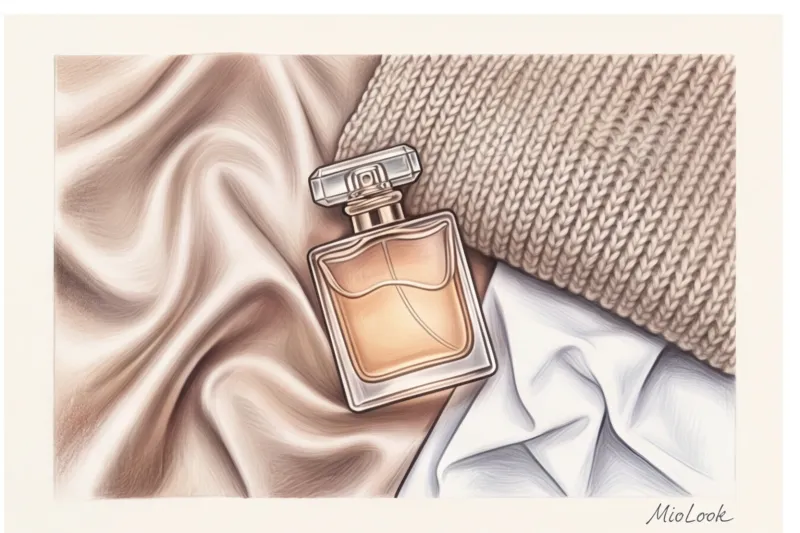
Natural silk, chiffon and leather (Red Zone)
Silk is a protein fiber. Contact with alcohol causes immediate denaturation of the protein at the micro level. The thread becomes brittle, loses its luster, and the dye in that area permanently changes its hue. If you spray perfume on a silk blouse, consider it ruined—it will be impossible to restore its original appearance.
Leather and suede are also in the red zone. Alcohol instantly dries out genuine leather, leaving a whitish stain, while oils penetrate the porous structure of suede, creating a greasy effect. Never apply perfume to leather jackets or suede trench coats.
Wool, cashmere, cotton and linen (Yellow and Green Zones)
Wool and cashmere are incredible conductors of fragrance. Thanks to their porous structure, they can retain their scent for weeks. However, there's a catch: heavy perfume oils can clog the delicate fibers of cashmere. Therefore, fragrance should be applied with caution and only using special techniques, which I'll discuss below.
Cotton and linen are considered green. They are fairly resistant to alcohol, but light shades (especially pure white) are prone to yellowing from essential oils. If you're wearing a basic white T-shirt with a weight of 180 g/m² or more, it's best to apply perfume only to your skin.
Your perfect look starts here
Join thousands of users who look flawless every day with MioLook. Upload your items and receive ready-made capsules.
Get access — €0.99 onceHow to Apply Perfume to Clothes: Safe Styling Techniques
Let's move from prohibitions to practice. How can you smell expensive, leave a beautiful trail, and still keep your clothes in perfect condition?
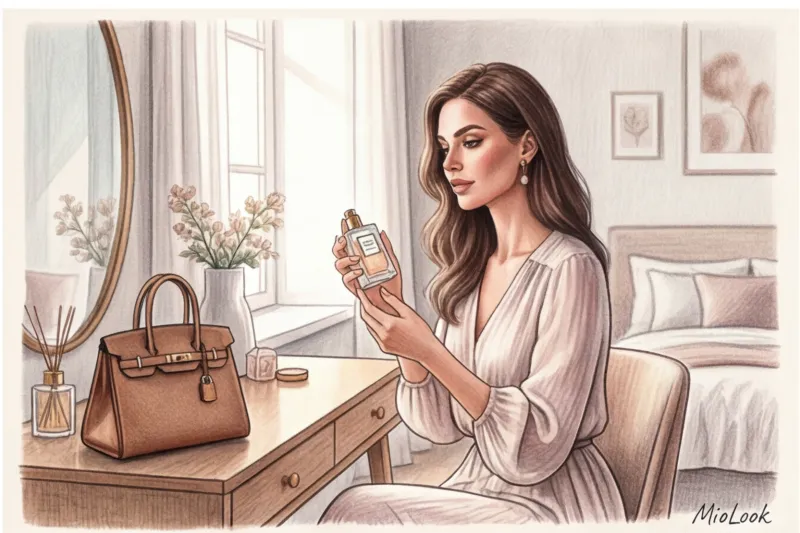
My main secret is 15-minute rule First, apply the perfume to clean, moisturized skin (pulse points: wrists, neck, elbows). Then wait exactly 15 minutes. During this time, the harsh alcohol completely evaporates, and the oils are absorbed and merge with your body chemistry. Only then can you put on expensive clothes. This ensures that the fabric is not damaged.
Hidden seam and reverse side technique
If you want the scent to be released directly from your clothing, use the "hidden seam" technique. Never spray perfume directly on the front of the garment.
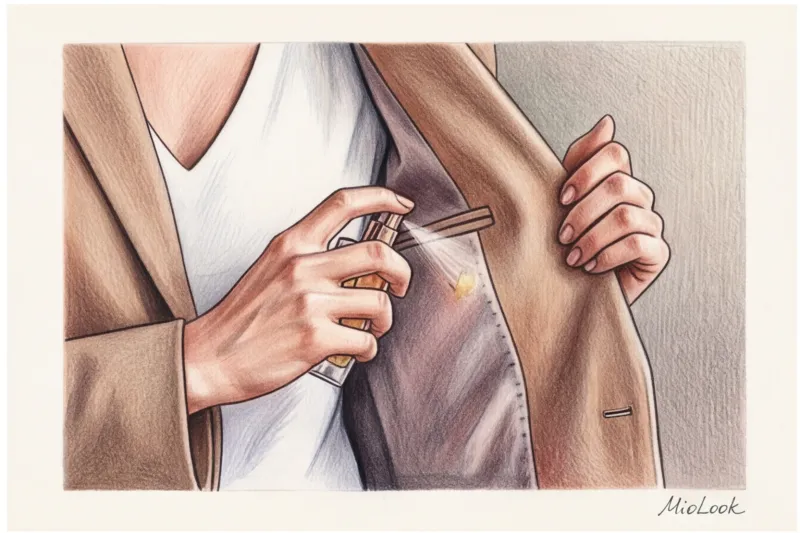
- Spray one spray onto the inside seam of trousers or the hem of a skirt. The fabric will sway as you walk, creating a stunning, subtle train.
- Scent the jacket's lining. If the lining is made of high-quality viscose or cupro (not silk), it will retain the scent perfectly without the risk of damaging the outer wool fabric.
By the way, it’s very convenient to plan such image nuances in the app MioLook When an AI stylist puts together your weekly capsule, you can plan ahead to choose which perfume will pair well with heavy wool garments and which is best reserved for light cotton shirts.
Alternative ways to create an olfactory trail
The safest way to scent clothes is to avoid spraying them at all. It may sound counterintuitive, but the best scent trails are created not by direct application, but by proper storage.
The Secret of Tissue Paper
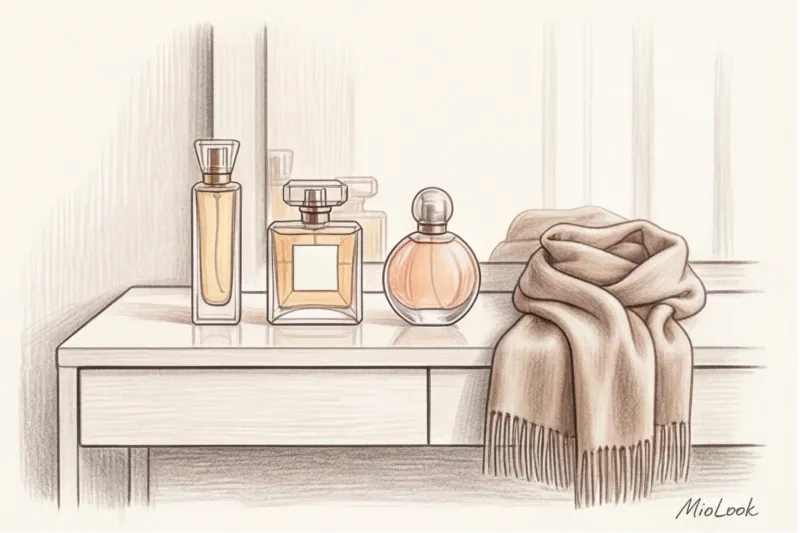
This technique is used in premium boutiques in Paris and Milan before packing purchases. I love using it for storing seasonal items, especially knitwear.
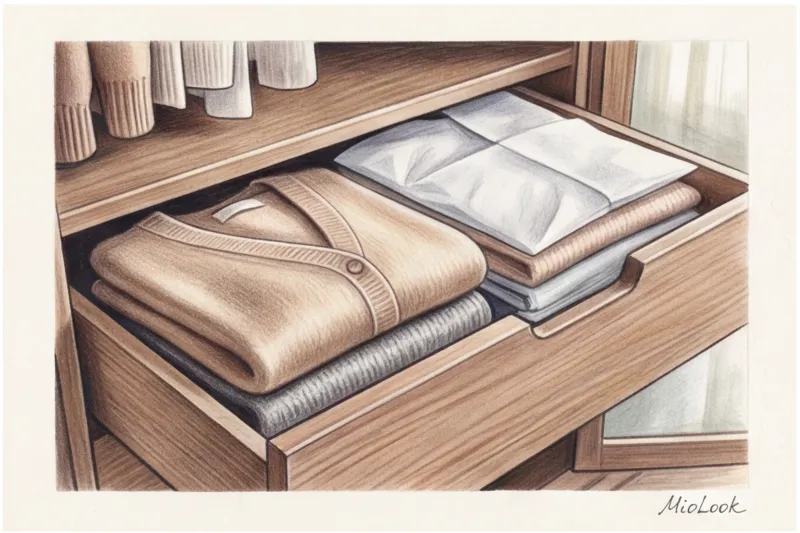
- Take several sheets of plain white tissue paper (no designs or prints).
- Spray them generously with your favorite perfume from a distance of 20 cm.
- Give it to the paper dry completely (about 10 minutes).
- Line your dresser drawers with these sheets of cashmere sweaters, silk tops, or lingerie.
"The fabric will absorb the scent gradually and evenly. The item will smell as if it were its natural scent, not the result of a morning rush with a bottle in hand."
Ceramic blotters or sachets soaked in your perfume also work great. Just hang them on a hanger next to your favorite coat.
What to do if there is already a perfume stain on the fabric
Let's imagine the worst-case scenario: you've hastily sprayed perfume on your favorite shirt, and it's stained. The main rule: no panic and no hot water!
Here's my checklist for saving something:
- Fresh stain: Immediately blot (do not rub!) with a dry paper towel to absorb excess oils.
- What you should absolutely not do: Forget folk remedies you find online. Vinegar, baking soda, or lemon juice can react chemically with the essential oils in your perfume and permanently set the stain in your expensive fabric. Ironing the stain is also strictly prohibited—the heat will set the oils in the fibers.
- Alcohol or oil: If the stain is whitish (an alcohol burn on silk), the item is ruined. If the stain is yellowish or translucent-greasy (oils), there's a chance it can be salvaged at a reputable dry cleaner.
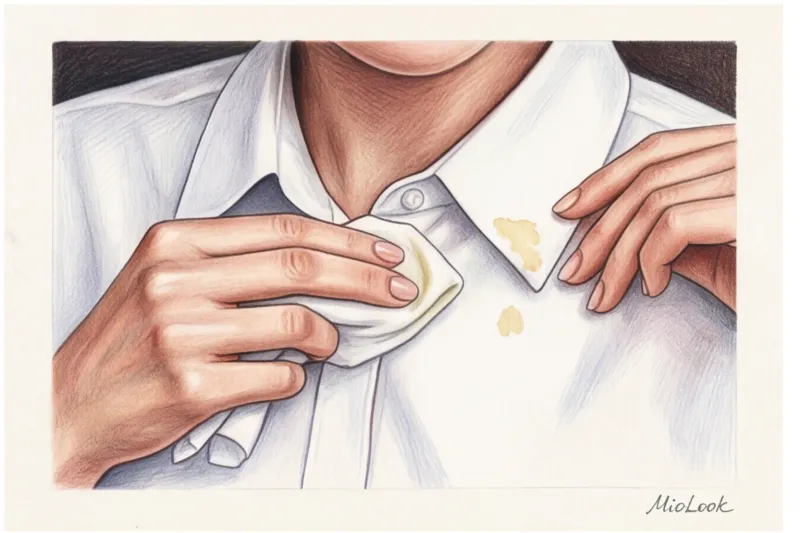
If you're taking an item to a dry cleaner, be sure to tell the technician the exact reason. Saying "it's a perfume stain" will help the technician select the right solvent (usually perchloroethylene-based) to remove resins and essential oils.
Ready to get started?
Try the MioLook free plan—no commitments required. Digitize your wardrobe and forget about the "nothing to wear" problem.
Get access — €0.99 onceSummary: Golden Rules of Olfactory Wardrobe
Style is always about attention to detail. You can spend hours choosing the perfect cut and color palette, but one unsightly stain on the collar will ruin all your efforts. Remember this basic principle: perfume is created to interact with the warmth of your skin, while clothing requires a light, subtle trail.
Use the 15-minute rule, applying fragrance only to the back or seams of heavy fabrics, and scent delicate silk and cashmere with tissue paper in the closet. A mindful approach to perfume is as important a part of your personal brand as well-groomed shoes or a perfectly fitting jacket. Take care of your clothes, and they will reward you with impeccable appearance.