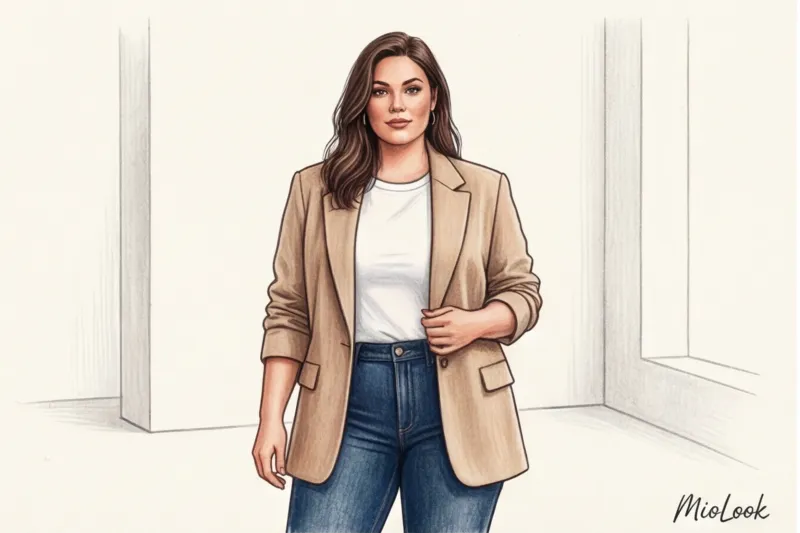
Introduction: Between Two Extremes
"Olena, take this off immediately, I look like a monument in it!"—that's how my consultation with Anna, a luxurious size 54 and a successful financial director, began. Her wardrobe contained fifteen identical thin turtlenecks, a dozen shapeless tunics, and not a single jacket. I literally forced her to try on a structured men's jacket made of thick wool, a size too big for her. Five minutes later, she was crying with joy, looking in the mirror at her petite, well-defined figure with its defined shoulders.
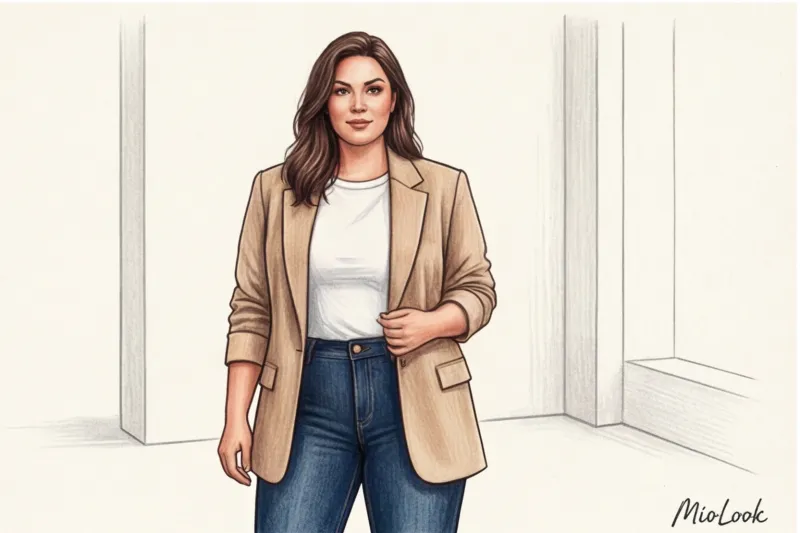
In my 14 years as a personal stylist, I've seen this picture constantly. About 90% of my new plus-size clients' wardrobes are extremes: either trying to squeeze themselves into a "corset" of thin knitwear or hiding in an oversized robe. The most common question I receive in direct messages and during fittings: Can plus-size women wear oversized clothes? , or will bulky items make your figure look even bigger?
My professional answer: it's not just possible, it's vital to creating a stylish silhouette. But on one condition—if we forget the word "hoodie" forever and introduce the concept of "cut architecture." We've already discussed the basic principles of wardrobe construction in more detail in our The complete plus-size style guide , and today I want to take a closer look at the mechanics of volume. A beautiful silhouette isn't a number on a tag, but the right balance of airiness, fabric density, and crisp lines.
Can plus-size women wear oversized clothes? Debunking the biggest myth.
For a long time, the fashion industry dictated one rule for curvy women: wear semi-fitted, black, and inconspicuous clothing. This has led to a persistent stereotype that Can plus-size women wear oversized clothes? — This is a question with a definitive "no" answer. It was believed that extra fabric inevitably added pounds.
This is a complete myth, based on a misunderstanding of the difference between "fashionable oversize" and "sad sacks." Contrary to popular belief, it's the right, structured oversize that makes a fuller figure appear more fragile. How does this work? It's all about visual contrast.
When you put on a stiff, mannish jacket or a thick cotton shirt, the garment maintains its own shape, independent of the curves of your body. Others see the garment's wide, defined lines, but your brain perceives your body as smaller than this outer frame. You appear fragile within the voluminous frame.
According to a 2023 study by the Fashion Institute of Technology (FIT), 70% of the visual perception of a person's size is determined by the presence of the so-called "air gap" between the body and the first layer of clothing, rather than by the nominal volume of the body itself.
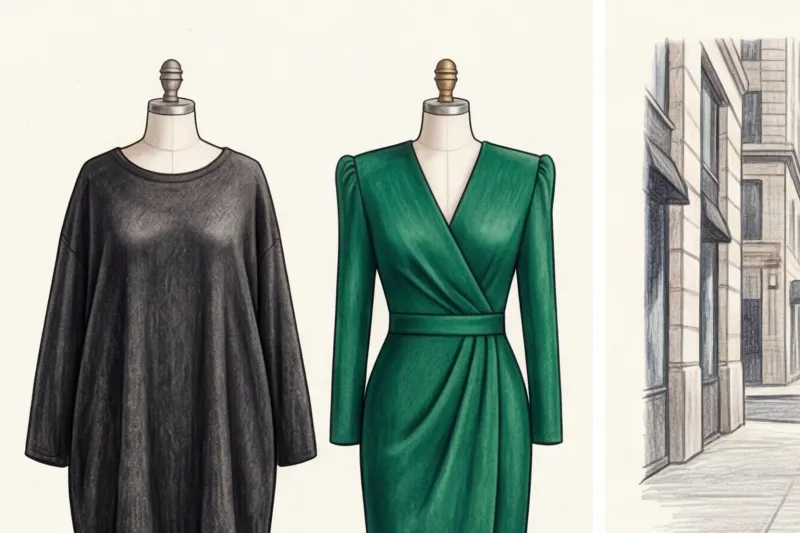
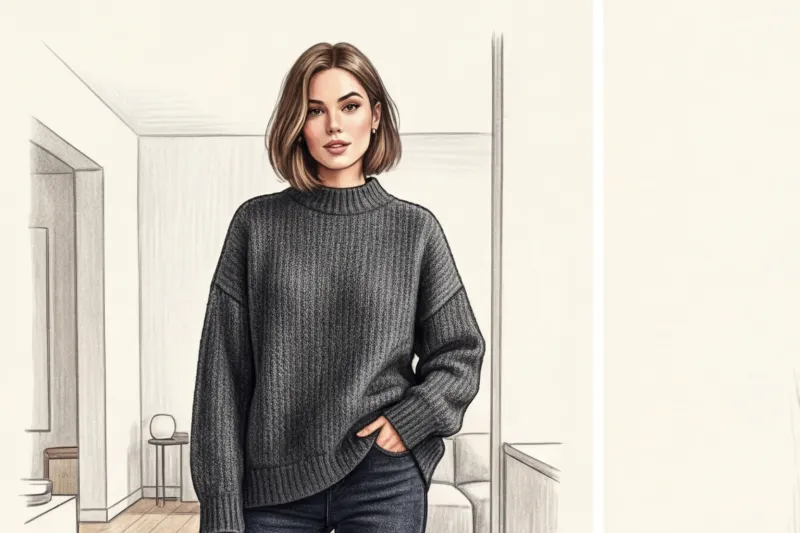
If you adopt the "hide everything" approach and buy a soft, flowing knit robe, the opposite effect occurs. The soft fabric clings to your most prominent point (usually the chest or stomach) and falls like a sheer wall. Visually, your entire silhouette becomes equal to this maximum width. You become a monolith.
Access to MioLook for €0.99 — one-time payment
A smart AI stylist will select the perfect look and help you incorporate the right oversized style into your wardrobe.
Get access — €0.99 onceThe Anatomy of Volume: How Clothing Builds or Breaks the Silhouette
To understand which pieces will be your best friends, we need to delve into the technical properties of fabrics. The secret to a perfect fit lies not in the brand, but in the density of the material and its texture.
The Skin Trap: Why Thin Knitwear Is Your Enemy
The biggest mistake I regularly clear out of my closets during wardrobe reviews is an overabundance of thin viscose tops. Flimsy knits (with a technical density of less than 200 g/m²) act like a second skin. They don't shape the figure; they conduct a merciless inventory on it.
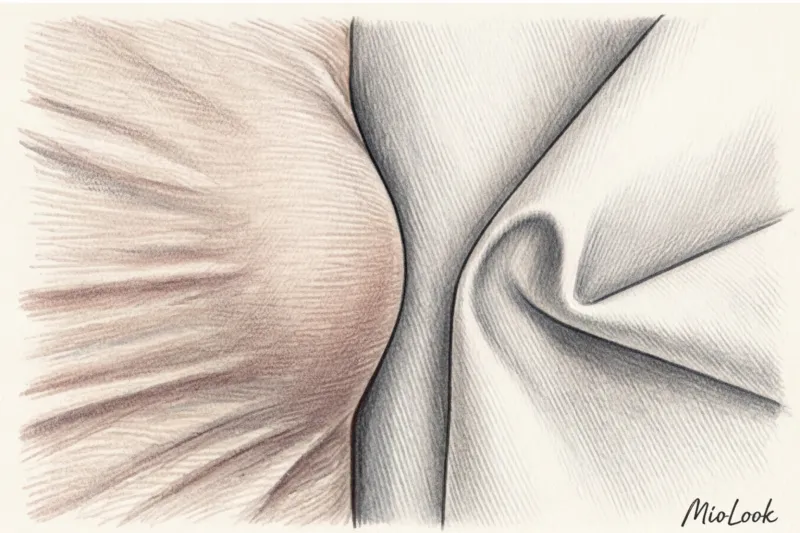
This fabric accentuates the slightest unevenness, reveals the contours of underwear, and highlights every fold on the back and stomach. The illusion of comfort ("it's not pressing on me anywhere") turns into a complete visual collapse of the silhouette. From a clothing design perspective, putting thin knitwear on a plus-size figure is like trying to build a multi-story house out of soft clay, forgetting the supporting steel frame.
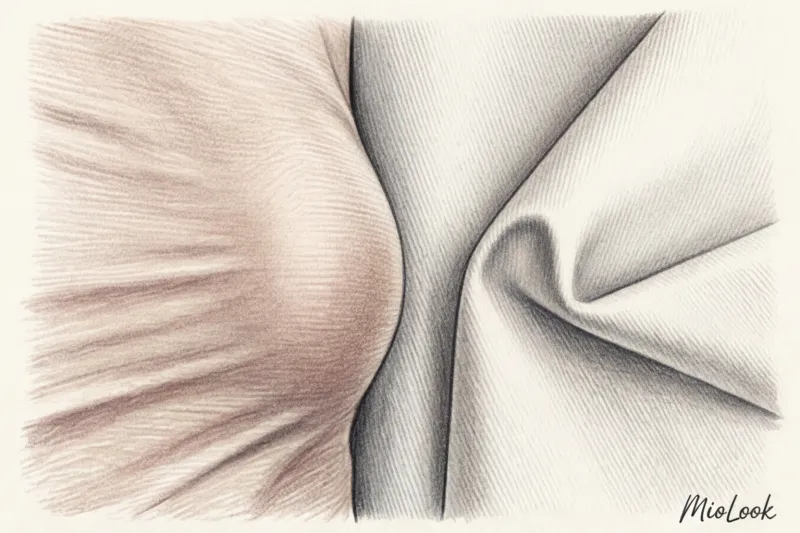
How can you check fabric in a store if you're not a textile technologist? Take the edge of a T-shirt or turtleneck and stretch it slightly in the light. If the outline of your fingers is clearly visible through the weave, return the item to the hanger. The only exceptions are basic brands with high-tech fabrics (for example, the Uniqlo U line), where the cotton has a density of 250 g/m² and retains its shape even after twenty washes.
The Tent Effect: How Shapeless Clothes Add 10 Kilos
The second extreme is clothing without darts, architectural seams, or sharp lines. When we're afraid of our bodies, we buy clothes that hide absolutely everything. But by hiding your belly or full hips, you're also hiding the most narrow and graceful parts: your waist (or under your breasts), your collarbones, and the arch of your back.
Without these visual "anchors," the figure becomes monumental and turns into a heavy rectangle. The difference between a loose fit and a shapeless garment is colossal. A loose fit implies that the garment is tailored to the figure, but with an allowance of 4-6 centimeters. A shapeless garment is simply a piece of fabric with openings for the arms and head.
By the way, I talked in detail about how to avoid falling into the trap of an “age-appropriate” wardrobe when buying such things in the article about Style mistakes for plus-size girls.
The formula for perfect balance: Air + Frame
So, we've established that tightness and bagginess don't work. So, what's left? The stylists' professional secret is called the "semi-fitted silhouette with a rigid frame."
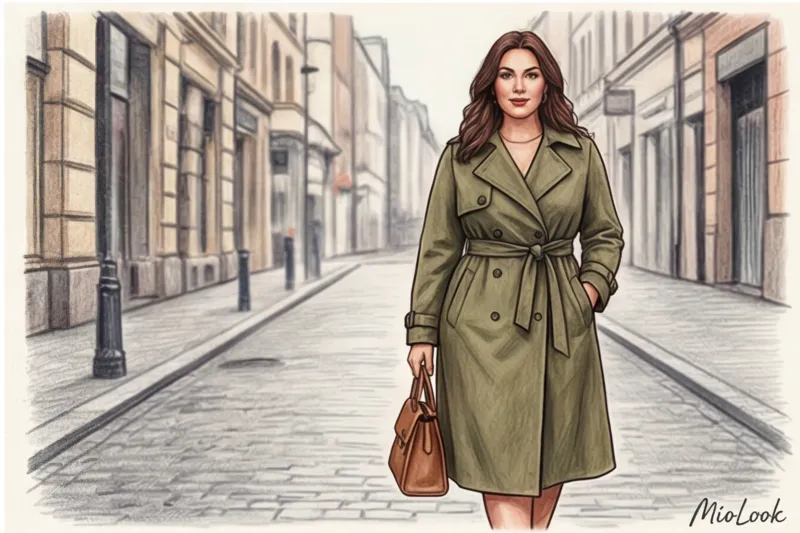
What is "air space"? It's the space that allows the fabric to stretch as you move. If you sit down and the buttons on your shirt spread out across your stomach, creating diamond-shaped patterns, there's no air space. The garment is too small, even if the tag says your size.
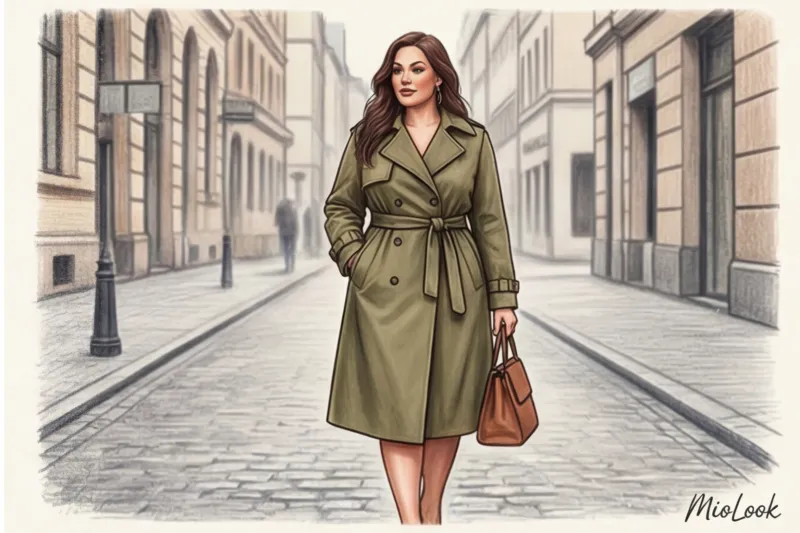
But air only works in tandem with the frame. Plus-size figures' best friends are high-density fabrics (250-350 g/m²). These include:
- Thick denim: Denim jackets and jeans with no more than 1-2% elastane. They act as a light corset.
- Gabardine and suit wool: materials that are ironed into arrows and hold the shape of the shoulder.
- Dimensionally stable cotton: shirts in the style of COS or Massimo Dutti, which stand up straight and create clear geometry.
Framed garments literally "frame" the figure, giving it clear, distinct boundaries. They soften the softness of the body and convey confidence, poise, and status to others.
The Golden Rule of "Three Bottlenecks"
This is perhaps the most powerful styling tool I give my clients. To prevent a voluminous jacket or oversized shirt from turning you into a cube, you must always show off your most delicate features. For women of any size, this wrists, ankles and neck (clavicle area).
As soon as we expose these three zones, the viewer's brain automatically reconstructs the proportions of the entire body, focusing on these subtle markers. This is called the 3/4 rule, and it visually reduces the overall volume of the figure by 1-2 sizes.
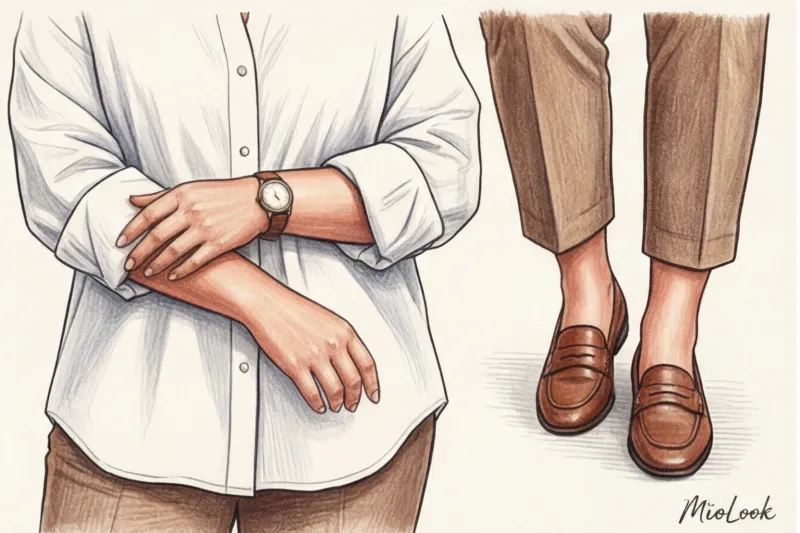
How to put this into practice:
- The "rolled-up sleeves" technique: Never wear oversized shirts or jackets with long sleeves. Pull them up slightly to the elbow or casually roll them up, revealing your forearms and slender wrists. Add a chunky watch or bracelet for contrast.
- Cropped trousers: Choose a pants or jeans length that hits just above the ankle (about two finger widths above the ankle bone). Paired with loafers or basic sneakers, this creates incredible lightness at the bottom of the silhouette.
- V-neck: Unbutton the top two or three buttons on your shirt to lengthen your neck.
Many people are afraid to wear belts, believing they accentuate their midriff. But a belt in an architectural wardrobe isn't meant to cinch (don't try to cut yourself in half!), but to gently define the narrowest part of the torso—be it the waist or the area under the bust (the empire line). If you're having trouble figuring out which proportions work best for you, I recommend using a smart wardrobe. MioLook — Artificial intelligence will help analyze your images and suggest where accents are missing.
Your perfect look starts here
Join thousands of users who look flawless every day with MioLook.
Get access — €0.99 onceChecklist: How to Choose and Style Oversized Clothing for a Fuller Figure
Theory is great, but let's move on to practical shopping. Over 14 years of shopping guidance, I've developed strict rules that work flawlessly. However, there's an important caveat. Fair warning: this method does NOT work. If you have a pronounced "inverted triangle" body type with very broad shoulders and a heavy chest, and you choose a double-breasted jacket with huge shoulder pads, the top will look cartoonish.
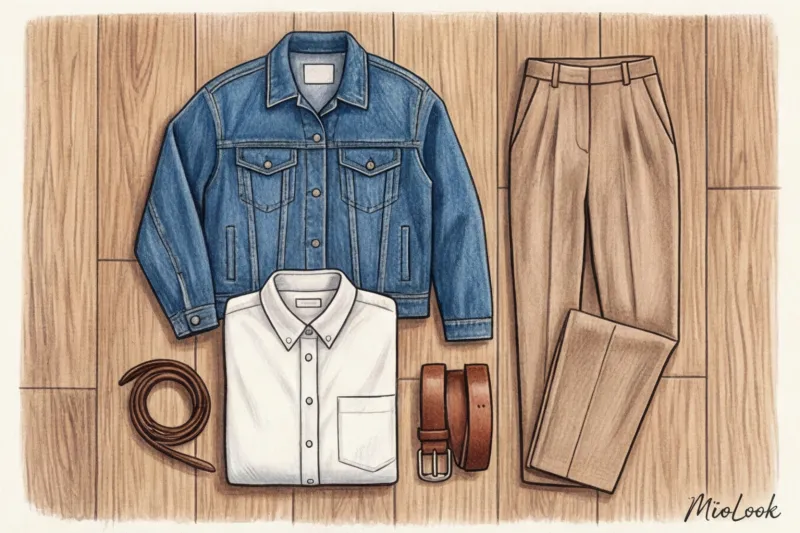
For most body types (apple, pear, hourglass), the following instructions work:
- Follow the shoulder line. Choose pieces with either a set-in shoulder and shoulder pads (they create a regal posture) or an architecturally extended shoulder in a stiff fabric. Avoid raglan armholes in soft fabrics—they will make your shoulders appear sloping and add a slouched appearance.
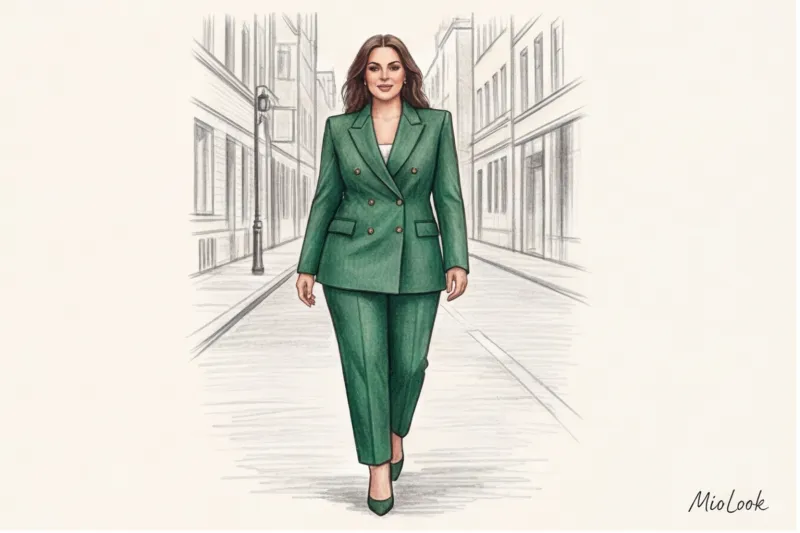
- Combine volumes wisely. Never wear an oversized top and oversized bottoms at the same time unless you're a Fashion Week-level street style stylist. The golden rule: a voluminous, structured top (jacket) + semi-fitted bottoms (straight jeans, pencil skirt). Or vice versa: wide-leg palazzo pants with a pleated waist + a compact, form-fitting top.
- Control the lengths. The most dangerous length for a top is one that ends at the widest point of your hips. An oversized shirt or jacket should end either above this point or below, overlapping the breeches and extending into a slimming vertical line.
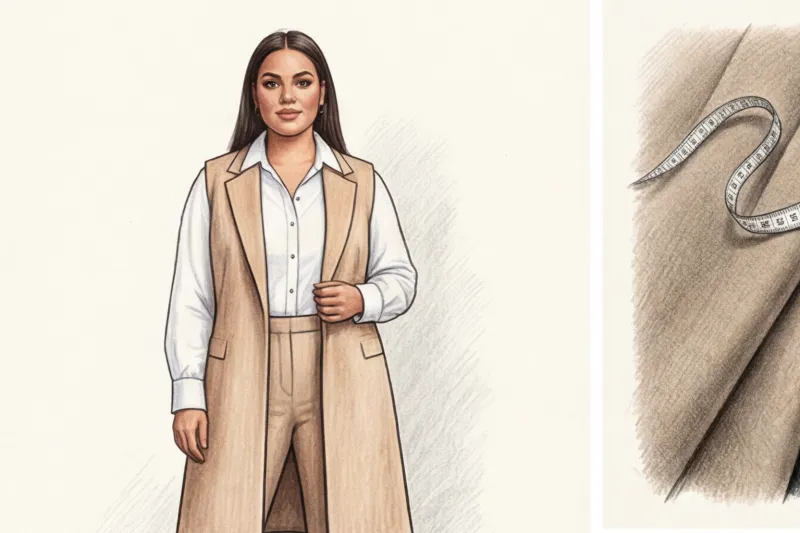
- Use the magic of verticals. An unbuttoned oversized shirt or jacket worn over a basic T-shirt creates two vertical lines along the edges of your front. These lines visually "cut off" your sides, elongating your height and making your figure appear twice as slim.
Instead of a conclusion: from camouflage to body architecture
The transition from shapeless tunics to structured oversize clothing is always a psychological step. When you've been used to hiding for years, putting on a jacket that broadens your shoulders and makes you look more noticeable can be terrifying. Remember my client Anna? Her tears of joy weren't just from a beautiful reflection. It was the relief of realizing the problem wasn't her body, but the wrong clothes.
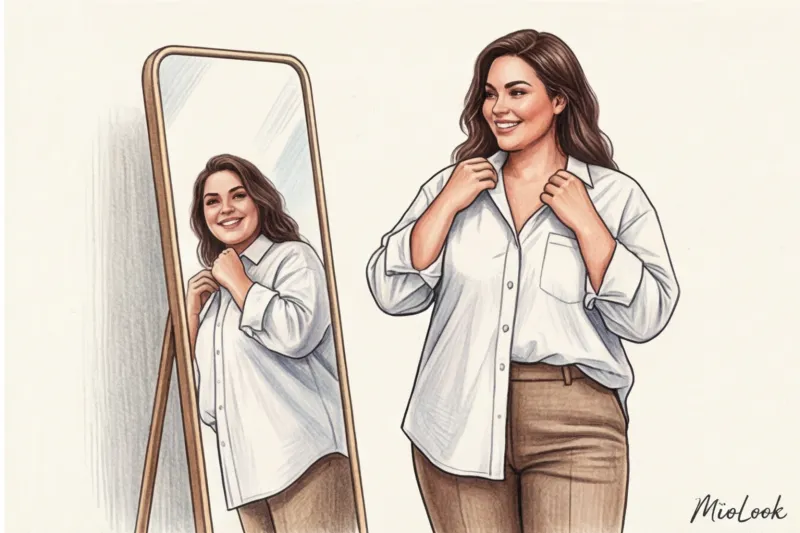
Your body doesn't need to be hidden, cinched, or disguised. It needs to be properly "shaped." Clothes are simply fabric, an architectural material that should serve you, establishing the correct geometry, posture, and self-confidence.
I suggest you do a mini-review today. Open your closet and put aside all the thin viscose sweaters, soft knit cardigans, and shapeless tunics. And on your next shopping trip, try on just one high-quality, well-fitting piece—a crisp white men's-cut shirt or a jacket made of thick fabric. Roll up your sleeves, expose your collarbones, smile at your reflection, and allow yourself to be seen. After all, you are absolutely worth it.