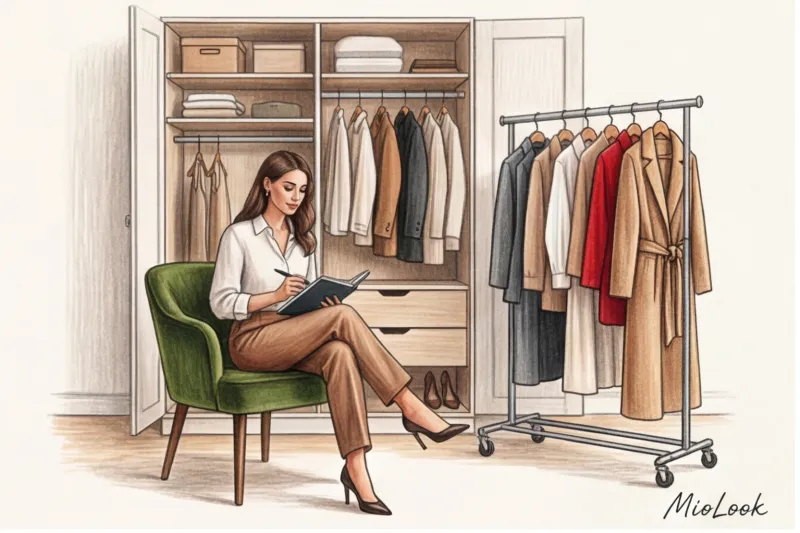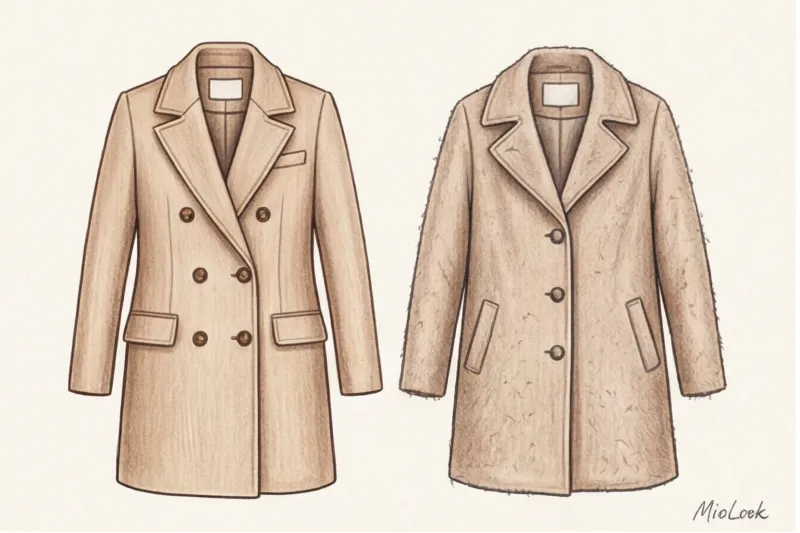
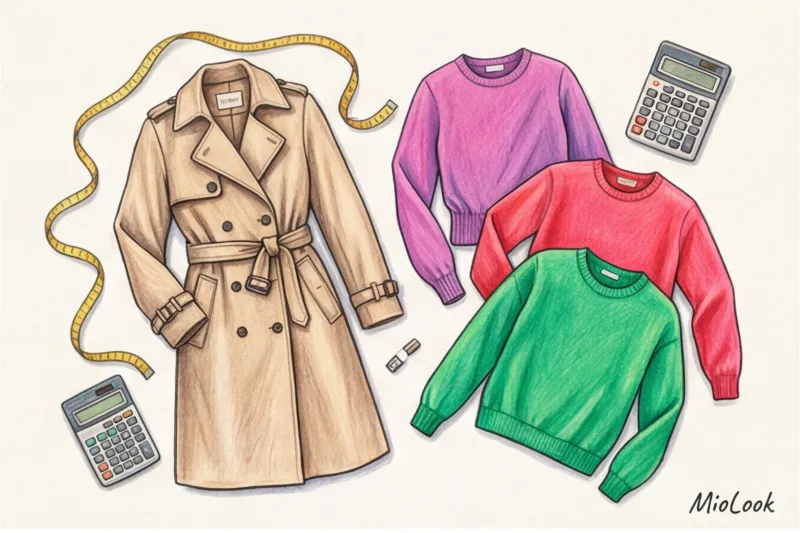
Recently, during a wardrobe review, my client nearly burst into tears of frustration. Two years ago, she bought a classic beige Burberry trench coat for €1,800, but saved it for "special occasions" and wore it exactly three times. That same season, she snagged a pair of ultra-fashionable high-street ankle boots on sale for €80. They turned out to be so stiff that after just one walk, her feet bled and they were permanently consigned to the back of her closet. If we calculate the actual cost per item, it turns out that one outing in the luxurious trench coat cost her €600, and one outing in the cheap ankle boots cost her the same €80, plus bandages and a ruined mood.
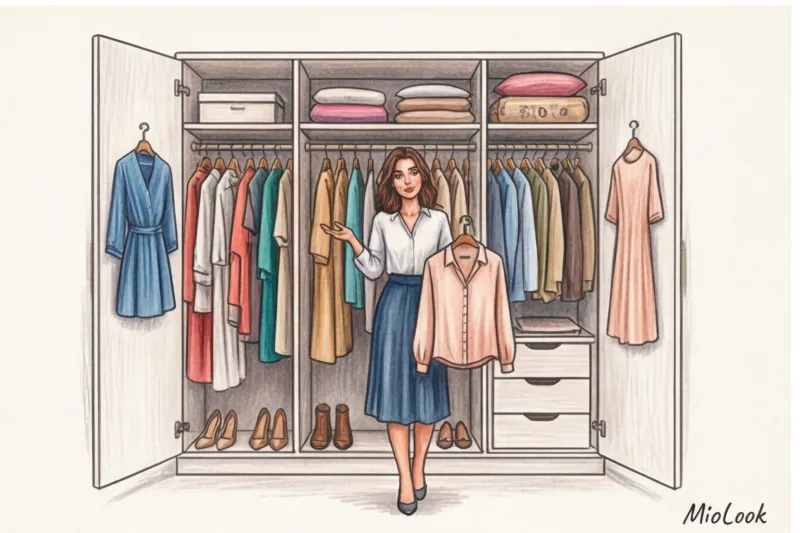
This story perfectly illustrates the main illusion of our consumption: we confuse the price tag with the actual cost of ownership. To stop wasting budgets on disposable trends, the industry has long used the Cost Per Wear (CPW) index. But calculating it manually is utopian. We've covered more about how to automate this process in our The complete guide to a digital wardrobe and solving the "nothing to wear" problem.
Today we'll explore why traditional style math no longer works in our heads, and how to turn boring cost calculations into a creative tool for creating new looks.
Cost Per Wear (CPW): Why the "Calculator in Your Head" No Longer Works
The Cost Per Wear index is a metric that shows how much each time you wear a specific item, it costs you. It sounds logical, but our brains constantly play tricks on us. Cognitive bias makes us believe that we wear expensive items more often, justifying the investment, while we don't even register cheap purchases at the checkout as expenses.
In practice, clients often swear to me that they wear their favorite jacket "constantly." But when we start digitizing our wardrobes, it turns out that "constantly" means twice a month, or only 24 times a year. According to a 2021 study by WRAP (Worldwide Responsible Accredited Production), about 70% of the items in a typical closet are just dead weight. We live by the Pareto principle: we wear only 20% of our favorite, tried-and-true items 80% of the time.
"The most sustainable and cost-effective item is the one that's already hanging in your closet, provided you wear it."
A turning point in the industry occurred in 2015, when producer and eco-activist Livia Firth (founder of the Eco Age agency) launched the #30Wears campaign on the red carpet. She suggested that women ask themselves one question before making any purchase: "Will I wear this at least 30 times?" If the answer is no, the item stays in the store. This simple filter instantly eliminates 90% of impulse purchases.
Access to MioLook for €0.99 — one-time payment
A smart AI stylist will select the perfect look and help you use your wardrobe to its full potential.
Get access — €0.99 onceThe Mathematics of Style: How to Calculate the Real Cost of a Piece of Clothing
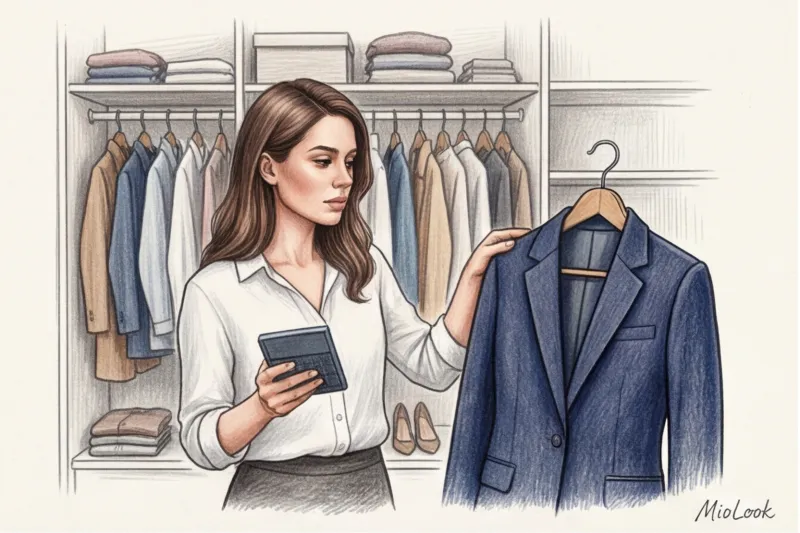
The classic CPW formula looks like this: (Retail Price of the Item + Care and Repair Costs) / Number of Wears. Most online articles coyly omit the second part of the brackets—care costs. But that's a shame. This is where the "invisible taxes" on your wardrobe are hidden.
Imagine you bought a luxurious 100% silk blouse for €150. You wore it 10 times. The CPW would seem to be €15. But intricately cut silk requires professional dry cleaning after every 2-3 wears. Add four dry cleaning visits of €20 each to the price. Your blouse now costs €230, and the final cost jumps to €23. Shoe heel repairs and tailored trousers all add an average of 15-20% to the actual price.
The Fast Fashion Trap: Why Cheap Items Cost More
Why is mass-market fashion so tempting? It's the illusion of a low starting price. McKinsey & Company's "The State of Fashion" report reveals alarming statistics: over the past 15 years, the average lifespan of an item has decreased by 36%. We buy more and wear less.
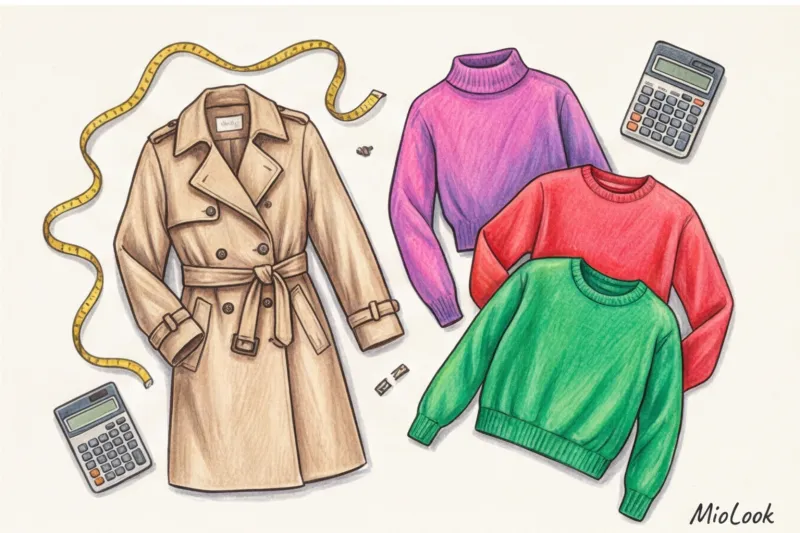
Let's compare a basic cashmere sweater for €300 and a trendy acrylic jumper for €30. Cashmere, with proper care (hand washing with a special shampoo), will last 5 years and be worn at least 100 times. The CPW is €3. An acrylic sweater will pill and lose its shape after the third wash. The average number of wears for a mass-market item today is less than 7. The CPW of an acrylic sweater is €4.2. Paradoxically, a cheap plastic sweater costs you more per wear than a premium cashmere.
Beyond physical wear and tear, there's emotional wear and tear. A garment might be spotless, but its cut betrays a three-year-old trend. You simply don't want to wear it anymore.
Digital Revolution: How the MioLook App Automates Counting
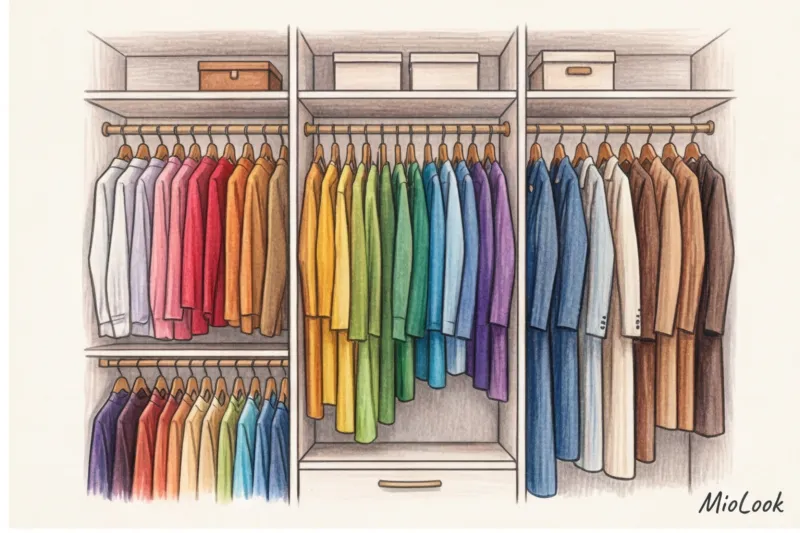
Let's be honest: no one in their right mind would tick off a notepad every night, recording what they wore that day. Manually calculating the cost of an item is a myth for glossy columns. Real control begins only with passive analytics, which a digital wardrobe app provides.
When you add your things to MioLook , the system starts working as your personal financial analyst. You simply collect images in the app before logging out, and the algorithm automatically tracks every use of the item. After a couple of months, you'll have crystal-clear statistics at your fingertips.
You clearly see graphs of your "favorites" (items with the lowest CPW) and "losers" (investments that didn't pay off). This transforms your approach from intuitive shopping to a data-driven wardrobe. You no longer wonder if you need another pair of blue jeans; you know for sure that you've worn your last three pairs a total of 12 times this year.
Your perfect look starts here
Join thousands of users who look flawless every day with MioLook and save money.
Get access — €0.99 once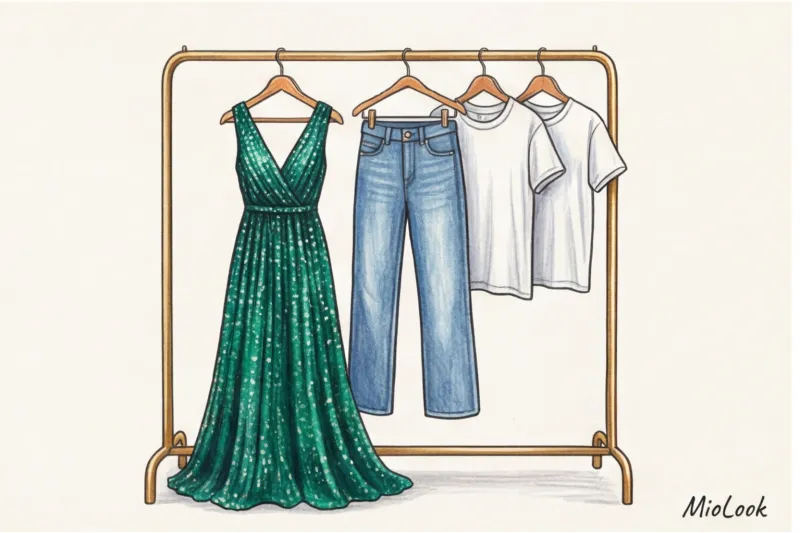
Three Biggest Cost Per Wear Myths, According to a Personal Stylist
When new clients come to me after reading articles about a sustainable wardrobe, they often go to extremes. Over 12 years of practice, I've identified three dangerous myths that prevent women from enjoying fashion.
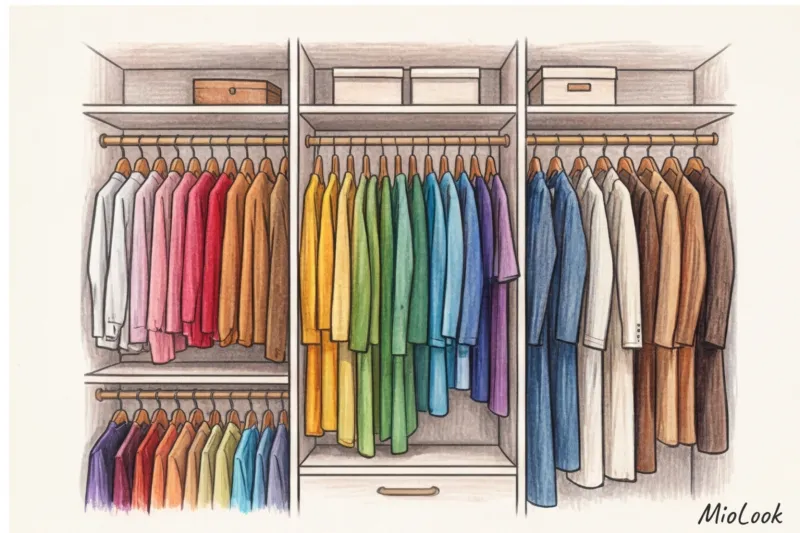
- Myth 1: “Everything should have a low CPW.” It's counterintuitive, but trying to minimize this index for your entire wardrobe is a grave mistake. A wedding dress, a tuxedo, or velvet theater shoes will always have a colossal CPW. And that's perfectly normal. The emotional value of a special occasion item compensates for its infrequent appearance.
- Myth 2: “High price automatically means quality and low CPW.” Backstage at Paris Fashion Week, I constantly see one scene: influential fashion editors wear the same basic jackets from The Row or Céline for years, but they throw away (or resell) trendy, one-day bags costing thousands of euros after just a month. A trendy item, no matter how expensive, quickly becomes outdated and shows a terrible CPW.
- Myth 3: “CPW is a greed metric.” In fact, it's about ecology and developing personal taste. By buying less, but more precisely, you reduce the industry's carbon footprint and force yourself to explore your own style more deeply, rather than blindly copying mannequins from store windows.

Reducing CPW: Tactics for "rescuing" things from the depths of the closet
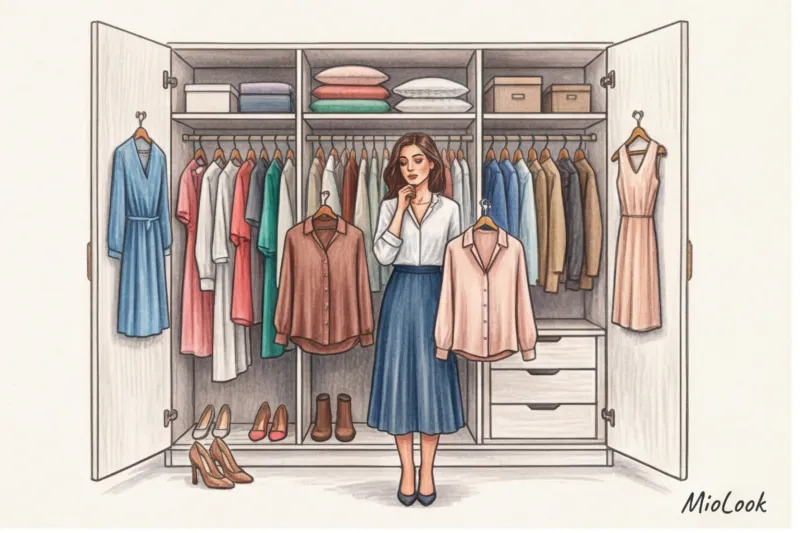
What should you do if the app's analytics mercilessly reveal that half your closet has a sky-high CPW? Don't rush into a complete decluttering. A high CPW isn't a death sentence, but a challenge to your styling skills.
The key tool here is the cross-styling technique, or mixing contexts. Just last week, a client and I "rescued" an emerald silk slip dress bought for a friend's wedding for €400 (worn once). Instead of waiting for the next celebration, we used the technique of down-dressing—an intentional reduction in the degree of formality.
We layered a chunky gray chunky-knit sweater (80% wool, 20% cashmere) over the dress, paired it with thick tights and chunky leather lace-up boots. This dress was worn to the office for a casual Friday afternoon, then to brunch on the weekend. Over the course of the fall/winter season, we reduced the price of this dress by almost tenfold simply by fitting it into a daytime context.
Checkout Checklist: How Analytics Changes Your Shopping Experience
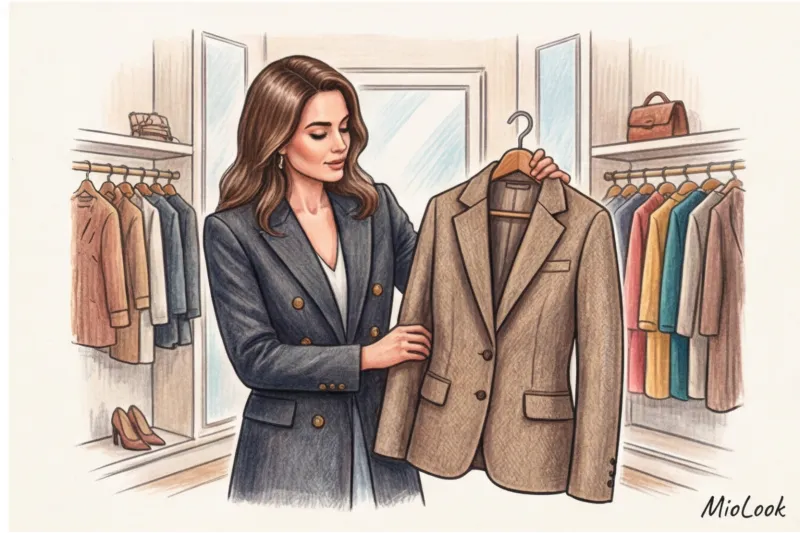
When your data is digitized, shopping stops being an emotional lottery. Before you pay for a purchase, open your app and ask yourself three tough questions:
- Can I, right now, looking at my virtual closet, create at least four different looks with this new item? If not, you're not buying a thing, you're buying a new problem.
- Do I already have an exact equivalent? Statistics are often sobering: "I already have four black turtlenecks, a fifth won't change my style."
- Am I prepared to care for this fabric? Check the tag. If it says "dry clean only" and you hate going to the dry cleaner, the item is doomed to hang in the closet.
To be fair, this strict mathematical approach doesn't work in 100% of situations. If you've fallen in love with a crazy, complex-shaped hat and it makes you absolutely happy simply by its existence, forget about CPW and buy it. Emotions have a price, too.
But for 80% of your basic and everyday wardrobe, the cost per item is the most honest indicator. It shows not how much money you have, but how much your clothes actually serve your real life, not just your fantasy of it.
Ready to get started?
Try the MioLook plan for free, no commitment, and take control of your wardrobe.
Get access — €0.99 once