Imagine this: My client, the CFO of a large corporation, texts me on messenger: "Katarzyna, I found THAT Yves Saint Laurent jacket from the '80s for only 120 euros, but I'm afraid it's a fake or it won't fit me." Ten minutes later, we bought it. I only had to ask the seller for three specific photos with a measuring tape to confirm it was genuine and would fit perfectly.
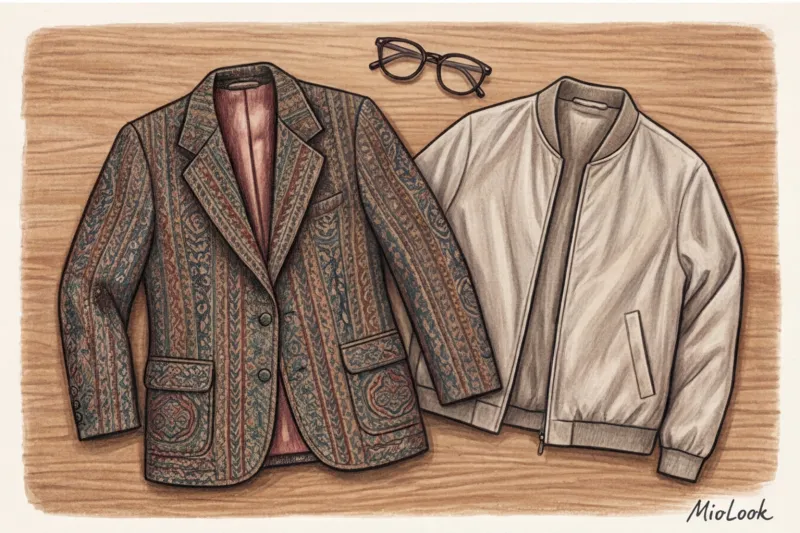
If you are just starting your journey of conscious consumption, we have covered the basic rules in more detail in our The Complete Guide to Second-Hand Shopping But today we'll go further. Forget endless, mindless scrolling. I'll share with you a strict buyer's protocol. We'll explore how stylists read measurements, identify counterfeits from macro shots of seams, and decide Where to buy vintage clothing online safe and profitable.
Why resale isn't a lottery, but the mathematics of quality
Over the past 12 years as a personal stylist, I've seen a radical shift. Five years ago, my wealthy clients would wrinkle their noses at the word "used." Today, top managers ask me to create capsule collections for them that are 70% vintage. According to the annual report ThredUp Resale Report (2024) The secondary market is growing three times faster than traditional retail, and the main drivers of this growth are high-income millennials. Vintage has become a marker of the intellectual elite.
The reason lies in the fabric's architecture. Clothing production 20-30 years ago was radically different from today's. The 1998 Ralph Lauren cashmere sweater I recently bought for myself at a resale store has a tight knit and is not prone to pilling. A similarly priced modern sweater from the current collection becomes covered in pilling after a month of wear.
Moreover, vintage mass-market fashion from the 90s (Zara, H&M, Marks & Spencer) today ranks among the upper middle class in terms of seam quality, cotton density, and fabric composition. When choosing between a new polyester coat for €150 and a vintage wool coat for the same price, the math always favors the latter. We discussed in detail how such items elevate an outfit in our article. How to Look Expensive: Secrets of a Status Wardrobe.
Where to Buy Vintage Clothing Online: A Guide to Reliable Platforms
The geography of your shopping directly impacts your results. I highly recommend European stores—they're an absolute goldmine for building a classic, timeless wardrobe. Italians are selling off their Armani and Max Mara archives en masse, while French women are selling high-quality knitwear and bags.
But the platforms work differently. Vestiaire Collective or The RealReal There is an authentication service: the item first goes to the platform's experts, and only then to you. Vinted or eBay You buy directly from the seller, and all responsibility for checking falls on your shoulders (although buyer protection works properly if you can prove that you received a counterfeit).

Access to MioLook for €0.99 — one-time payment
A smart AI stylist will select the perfect look based on your findings.
Get access — €0.99 onceGlobal marketplaces versus local selections
Global giants (Vinted, Depop, eBay) have an obvious advantage: a huge selection and the ability to negotiate directly. The downside is that their search algorithms return tons of junk, and you'll have to spend hours finding the perfect diamond. The risk of missing hidden defects is highest here.
An alternative is curated vintage Instagram stores and niche websites. Yes, you'll pay 30-50% more than the item's actual value. But you're paying for the work of a stylist/buyer: the item has already been found, dry-cleaned, steamed, professionally photographed, and accurately measured. If your time is valuable, this is the best choice.
The Stylist's Top Secret: How to Read Measurements, Not Sizes
The most common mistake newbies make at resale is buying an item based on the size tag. There's a phenomenon called vanity sizing (flattering sizing) – brands intentionally increase the actual size of clothing, leaving a smaller size on the tag to create psychological comfort for the buyer. As a result, a vintage size 40 (L) from the 1990s often corresponds to a modern size 36 (S).
The golden rule I hammer into all my clients' heads is: never buy an item without measuring it with a tape measure.
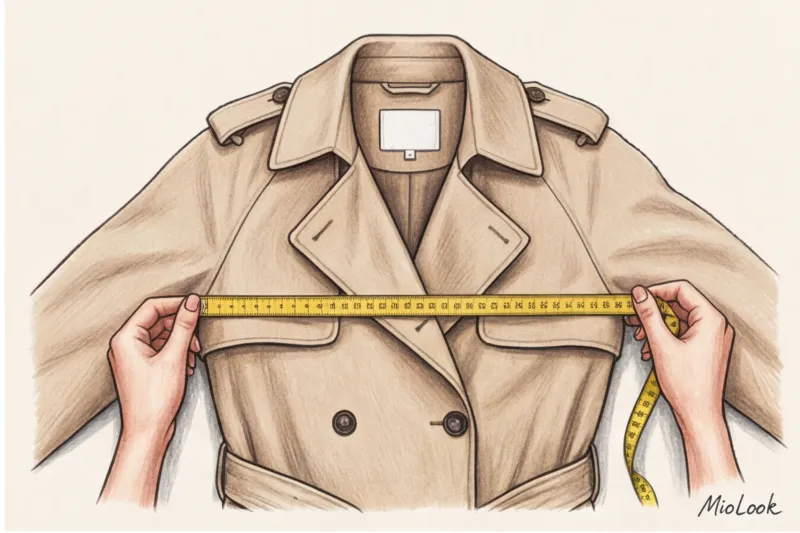
You only need four numbers. I ask clients to take their favorite item from their closet (like their favorite jacket), lay it on the floor, and measure it:

- Pit-to-pit (from armpit to armpit): The most critical measurement for the top. It shows the actual width of the garment at the chest.
- Sleeve length from shoulder seam: This is especially important for tall girls, as vintage sleeves are often shortened.
- Shoulder width: from seam to seam along the back.
- Overall length: along the center of the back from the collar to the bottom edge.
Save these ideal settings to your notes or add them to MioLook virtual wardrobe Now, when you talk to the seller, simply compare their figures with your standard. Do they match? You can take them.
Safety checklist: how to distinguish an original from a fake using a photo
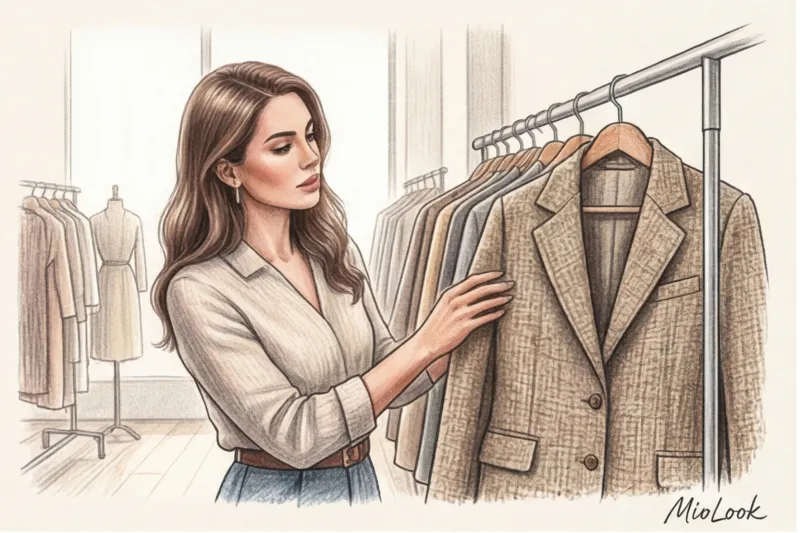
Even if you're buying from a trusted platform, the initial inspection using photos is your responsibility. Here's the checklist I send to my assistants when searching for luxury vintage.
First, look at the hardware, not the logo. Counterfeiting high-quality zippers is too expensive for counterfeiters. On vintage and premium items, you'll almost always find a stamp. YKK , riri or Lampo On the back of the zipper pull. Buttons on high-status items are made of horn, mother-of-pearl, or heavy metal, not lightweight, jingling plastic.
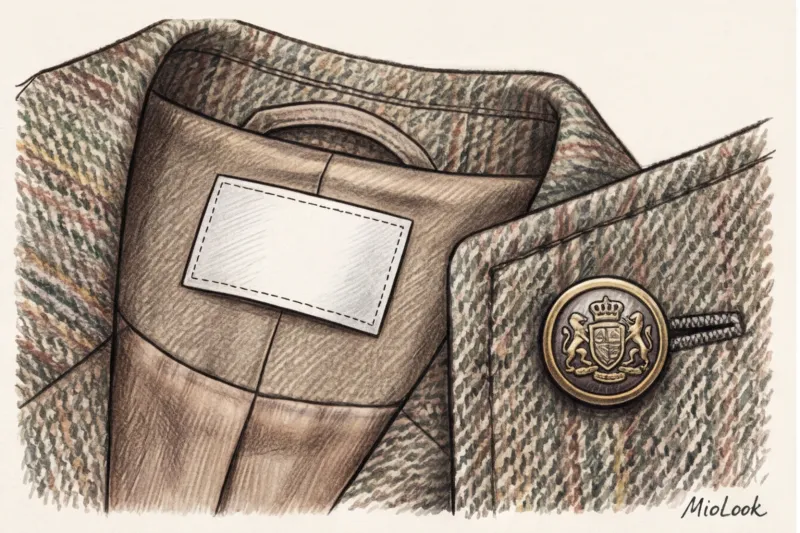
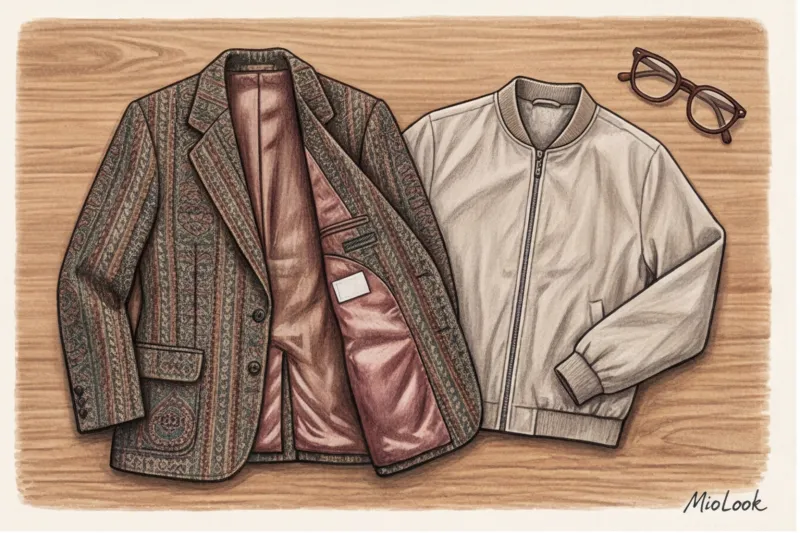
Secondly, examine the inside. A premium jacket's lining is either hand-sewn (you'll see a slight unevenness in the stitching, a sign of expensive handwork) or has a perfect machine-finished binding. Mass-market jackets often have sloppy backing with loose threads.
"The most reliable way to check the authenticity of vintage is to check the care label. Visit the free database Vintage Fashion Guild "It contains photos of tags for all major brands, broken down by decade. If the font on the "Dior 1980s" tag in the ad doesn't match the archive, close the page."
Your ideal image begins Here
Join thousands of users who look flawless every day with MioLook.
Get access — €0.99 onceRed Flags in Ads: When to Avoid a Purchase
There's one counterintuitive insight that often surprises my clients. A perfect condition item with a store tag (condition Mint with tags or NWT ), which the seller claims is already 20 years old, is often a huge red flag.
A true vintage item has been around for a while. It might have tiny snags in the lining, a professionally replaced button, or a slight scuff on the leather trim. This is a guarantee that the item is authentic, not sewn in a Guangzhou factory a month ago using '90s patterns. Don't be afraid of minor defects; be wary of suspiciously new items.
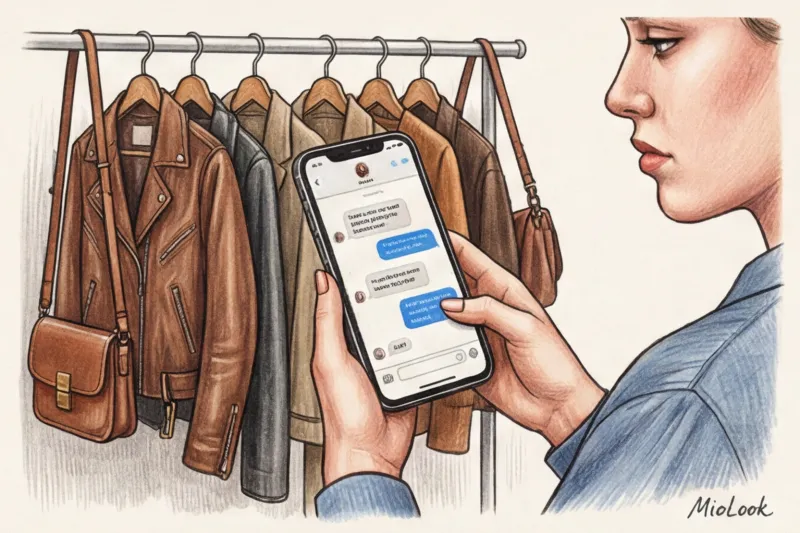
Here are three situations where I prevent customers from clicking the Buy button:
- Blurry photos of tags and seams. If you ask the seller to take a clear macro photo of the tag with the ingredients in daylight, and they say "no time" or send a blurry photo taken under a yellow lamp, say goodbye.
- The price is too low for an iconic essential. A genuine Burberry trench coat (even well-worn) can't cost €50. The market knows its own prices. Only surplus items or fakes are sold cheaply.
- No photos of the item on a hanger or of a person (only studio shots on a white background, stolen from other websites).
The algorithm for a successful purchase: from the first message to unpacking
Resale is a marketplace, and in a marketplace, you need to communicate. I have a prepared template (script) that I send to the seller before the deal. It goes like this: "Hello! I really like your jacket. Could you tell me: 1) Has it been dry cleaned or does it need to be washed? 2) Are there any hidden defects, underarm stains, or an odor (perfume/tobacco)? 3) Can you take a photo of the item with a measuring tape from armpit to armpit?" The seller's responses are recorded in the platform's chat and will serve as your strongest argument in the event of a dispute.
Bargaining is possible and necessary. But be sure to do so with a reasoned argument. Don't simply say, "I'll take it for half." Write: "I see a button is missing on my sleeve. A repair at a tailor's would cost me 15 euros. Are you willing to budge on that amount?" In 9 out of 10 cases, the seller agrees.
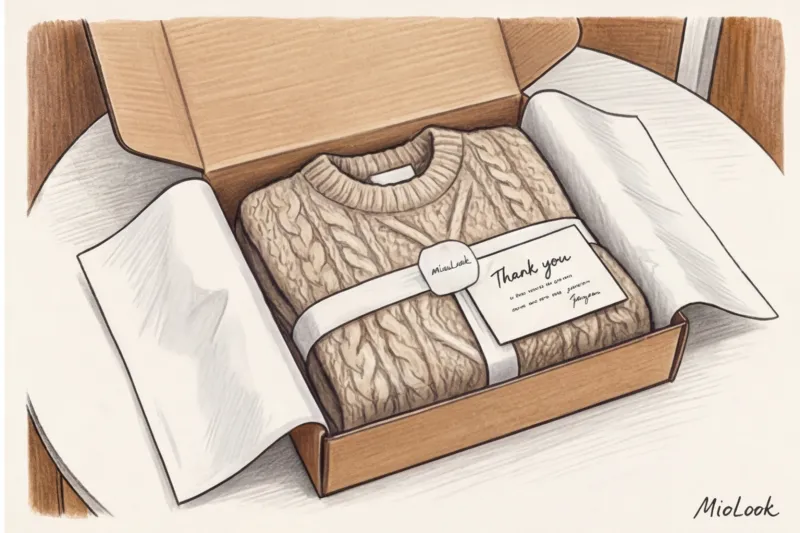
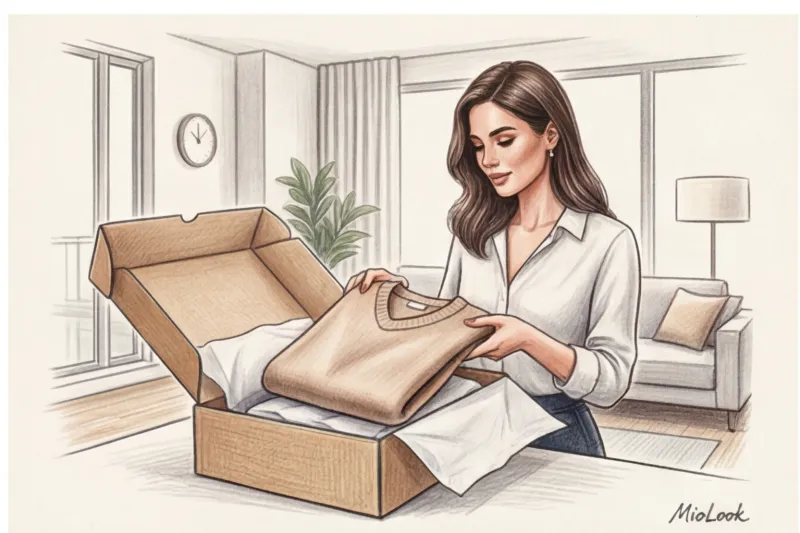
When a package arrives, many people euphorically rip off the packaging tape. Stop. You only have 10 minutes to protect yourself. Turn on your phone camera and film the unpacking process in one shot, showing the integrity of the package, and then the item itself and its condition. If the seller sent you a torn sweater instead of a perfect cashmere sweater, this video will decide the platform's arbitration in your favor in five minutes. Without the video, proving that you didn't make the hole is practically impossible.
Integrating resale finds into a modern, high-status wardrobe
The main danger of vintage is looking like you've plundered your great-grandmother's chest. To avoid this, follow the stylists' golden rule: only one accent vintage piece per look. We often mention this when creating smart casual looks for women.
How does this work in practice? We take that same YSL jacket from the '80s with its wide shoulders and mix it with a completely modern, neutral base: straight-leg blue jeans, a perfect white T-shirt, and trendy chunky-soled loafers. The contrast of eras creates dynamism and that sophisticated, effortless chic.
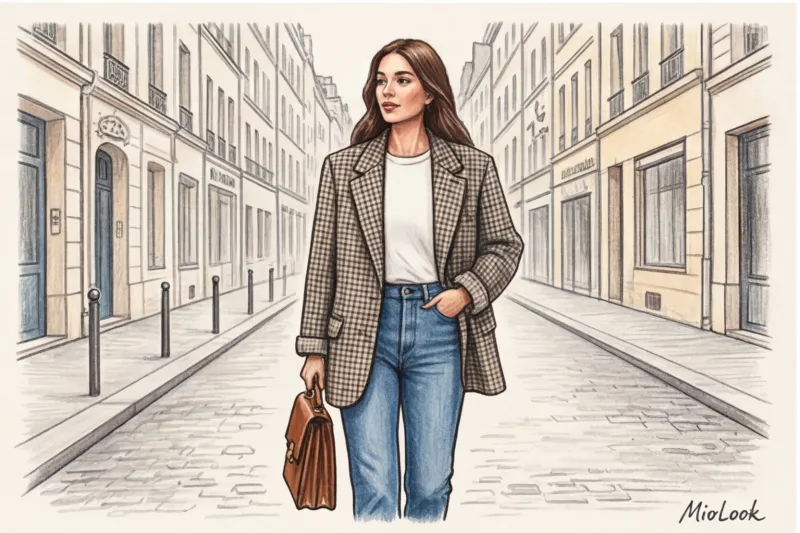
Never wear something straight from the post office. Budget an extra 20-30 euros for any final touches. Dry clean it, take it to a tailor to have the sleeves adjusted to fit your wrist bone, or replace boring plastic buttons with vintage metal. This customization is what turns a used item into a truly exclusive piece.
Online reselling requires a keen eye, patience, and a cool head. Don't be swayed by brand names on tags—check the seams, ask for measurements, and don't be afraid to negotiate. If you learn to apply these rules, your wardrobe will become not only prestigious but also truly unique.