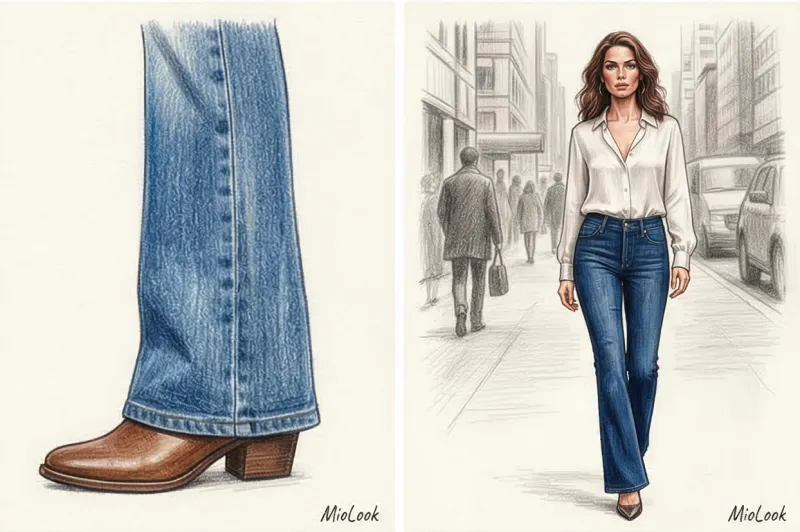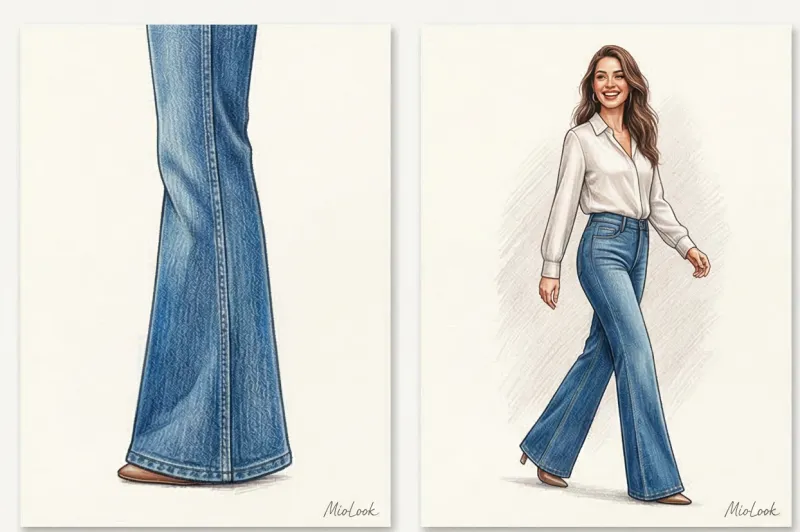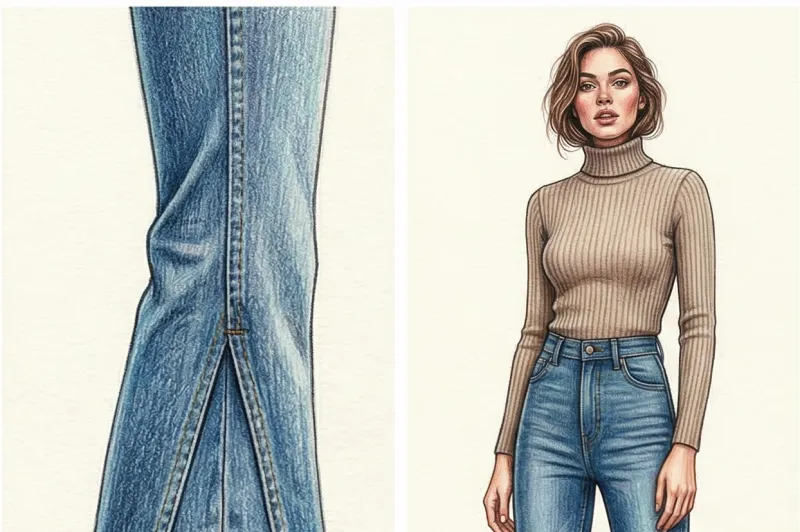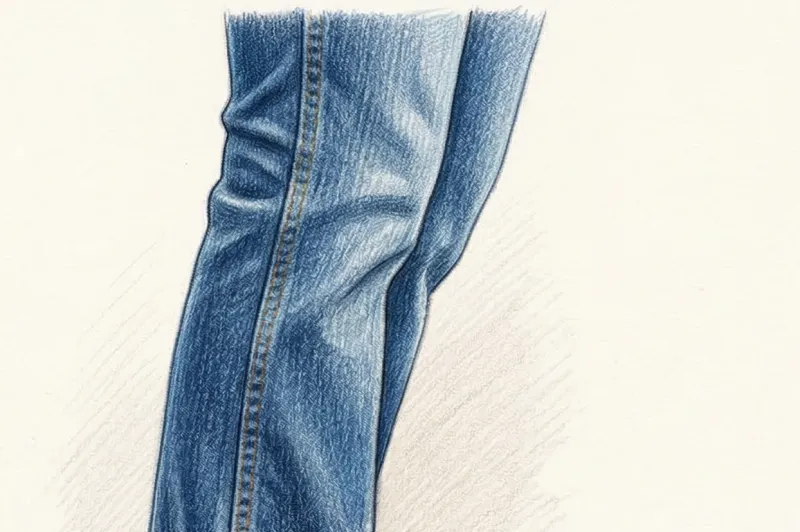
Bootcut is a trouser silhouette that fits snugly through the hips and thighs before flaring slightly from the knee down. This cut features a mid or high rise, is made from denim or wool, and requires a length that covers half the shoe. It is used in casual and business wardrobes.
What Does Bootcut Mean?
The term originates from the practical need to wear trousers over traditional footwear. Historically, this specific cut was developed for cowboys, ranchers, and manual laborers who needed their jeans to pull easily over tall, sturdy work boots. The name itself is entirely literal, combining the words "boot" and "cut" to describe a garment tailored specifically to accommodate this type of footwear. While it began as a purely functional design, the silhouette eventually transitioned into mainstream fashion.
It became a massive staple of everyday wardrobes throughout the 1990s and early 2000s. During this era, it offered a much more understated, practical, and versatile alternative to the extreme bell-bottoms that had previously dominated fashion trends in the 1970s. Today, it remains a timeless classic that regularly cycles back into modern collections.
Distinctive Features of the Silhouette
The main characteristic that defines this cut is its moderate and highly gradual flare. Unlike dramatic wide-leg styles, the expansion begins strictly at the knee rather than higher up on the leg. The width of the bottom hem is usually equal to, or only slightly wider than, the width of the thigh, creating a beautifully balanced look.
The design offers a very snug, tailored fit through the waist, buttocks, and thighs, maintaining this closeness all the way down to the kneecap. This specific tailoring creates a clean, sculpted silhouette that visually elongates the figure, making the wearer appear taller and leaner. While the early 2000s saw this style paired almost exclusively with extremely low waistlines, modern iterations have evolved. Today, these jeans and trousers are predominantly available in mid-rise or high-rise styles, which provide better support and a more flattering line for various body types.
Key Characteristics of Bootcut Jeans and Trousers
Understanding the exact specifications of this cut helps in selecting the perfect pair. The table below outlines the standard features you should look for.
| Feature | Description |
|---|---|
| Upper Fit | Snug through the waist, hips, and thighs |
| Flare Point | Begins strictly at the knee |
| Hem Width | Approximately equal to the thigh width |
| Rise | Predominantly mid-rise or high-rise in modern styles |
| Materials | Denim, heavy suiting wool, corduroy, cotton blends |
| Ideal Length | Covers half the shoe, leaving the toe visible |
How to Choose the Correct Length
The length of the garment is absolutely crucial for maintaining the correct proportions of the silhouette. Classic jeans and trousers in this style are specifically cut to accommodate heels or boots. The correct leg length should cover at least half of the shoe, leaving only the toe box visible to the eye. However, the edge of the fabric must never actually touch or drag on the floor, as this ruins the clean line and damages the garment over time.
Because of this strict length requirement, fashion experts always recommend taking the exact shoes you plan to wear with the trousers when you go shopping or visit a tailor for alterations. A pair hemmed perfectly for three-inch heels will look awkward and drag on the ground if worn with lower footwear.
What Shoes to Wear With a Bootcut
These pants require careful footwear selection to maintain the elongated, flattering silhouette they are designed to create. The extra fabric at the hem needs to fall cleanly over a structured shoe. Ankle boots with a sturdy block heel, classic Western or Cossack boots, platform shoes, or boots with chunky soles are the ideal companions. These options provide the necessary height and structure to let the flare drape perfectly.
On the other hand, completely flat shoes present a styling challenge. Pairing this cut with ballet flats, thin-soled sneakers, or simple loafers can visually shorten the legs and completely throw off your body proportions. The hem will likely pool around the ankles, creating a sloppy appearance rather than the sleek, tailored look the cut is meant to achieve.
Best Tops and Outerwear Combinations
When styling the upper half of your outfit, the goal is to balance the slight volume at the bottom of the trousers. Tucked-in basic shirts, fitted turtlenecks made of fine wool, sleek bodysuits, or tailored tops work best as base layers. A smooth, fitted top accentuates the waistline and perfectly offsets the extra bulk at the hem, creating an hourglass illusion regardless of your natural body shape.
For outerwear, layering plays a significant role. Over your base layer, you can easily add a cropped leather biker jacket, which highlights the waist and maintains the leg-lengthening effect. Alternatively, a structured straight-cut jacket that hits mid-thigh or a classic double-breasted trench coat provides a sophisticated, layered look.
This silhouette also translates exceptionally well into business attire. Trousers crafted from a heavy suiting fabric featuring pressed front creases pair perfectly with crisp, tailored cotton blouses and classic leather pointed-toe pumps for a sharp, professional aesthetic.