

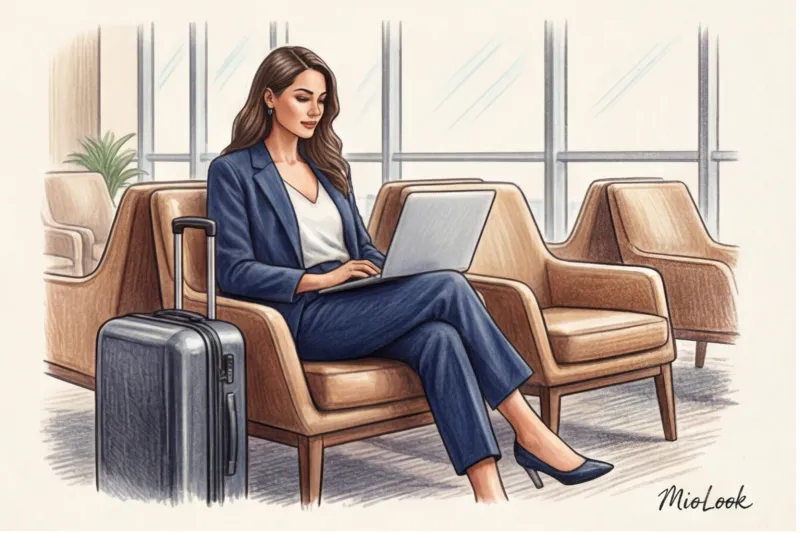
You're standing at the baggage carousel in Terminal 2E at Charles de Gaulle Airport. The carousel stops with a thud. Your suitcase isn't there. You have exactly three hours left until a crucial board meeting or investor meeting. What are you wearing? A cozy cashmere suit with stretched knees, or an outfit you could wear right now, right now, walking into a boardroom?
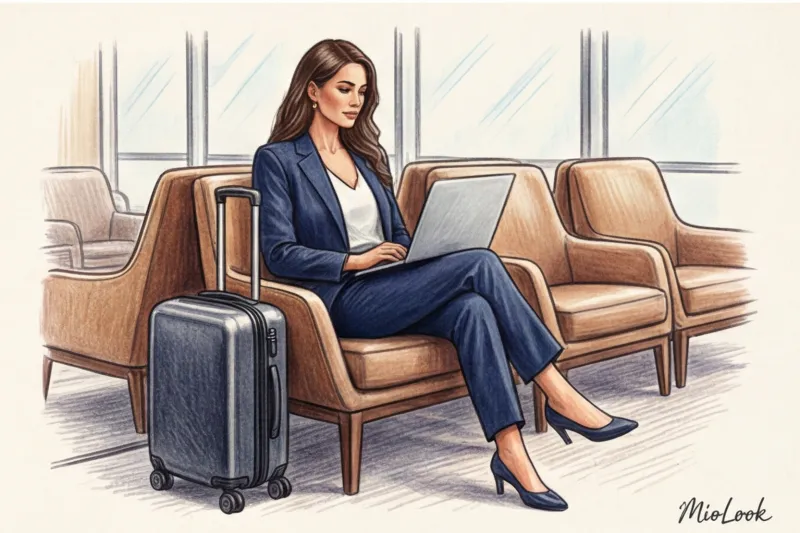
Over 12 years of working with top executives and regularly flying between fashion weeks, I've learned one ironclad rule: your on-airplane look isn't about the comfort of home. It's your insurance policy. In the professional world, we call this approach the "Executive Stealth-Wealth" concept—creating an in-flight wardrobe from high-tech fabrics that will withstand 10 hours in the seat and maintain impeccable silhouette.
If you want to learn how to strategically pack your entire suitcase for a business trip, we've broken down the process in detail in our The complete guide to creating a travel capsule In this article, we'll focus on the most challenging part—flight attire.
The Zero Kilometer Rule: Why Your Flight Image Is Your Insurance
The idea behind "Kilometer Zero" is simple: your business trip begins not when you check into your hotel, but at the check-in counter. You should be ready for a business meeting right at the plane's steps. This isn't paranoia, but cold, hard statistics. According to the SITA Baggage IT Insights 2023 global report, airlines lose or delay 7.6 pieces of baggage for every 1,000 passengers. Unfortunately, this trend is increasing.
One of my clients, a vice president at an IT corporation, was once flying to London for a pitch. Her luggage was left behind on her layover in Frankfurt. Had she given in to the temptation of flying in her favorite velour joggers, the deal could have fallen through simply due to psychological discomfort and loss of confidence. Luckily, she was wearing heavy, wrinkle-resistant palazzo pants and a structured blazer. She delivered the presentation in the same clothes she'd stepped off the plane in, and the investors had no idea anything was amiss.
"A classy appearance at the airport isn't just about protecting yourself from lost luggage. It's also your invisible ticket to a different class of service. In my experience, a smart, casual look significantly increases your chances of a free upgrade when overbooked. Airline staff are always scanning the crowd for those who would fit seamlessly into the business class cabin."
The Anatomy of Status Comfort: Fabrics at 10,000 Meters
When we discuss what to wear on a business trip, most people make a fatal mistake: they focus on the cut, forgetting about the fabric. At 10,000 meters, fabric is everything.
According to aviation specifications, humidity in the cabin of a modern airliner drops to an extreme 10–20% (for comparison, humidity in the Sahara Desert is around 25%). Under such conditions, any cheap synthetic fabric will instantly accumulate static electricity. Not only will you collect all the dust, but your clothes will also stick to your body, ruining your silhouette.
The Cashmere and Joggers Trap
Here I want to debunk one of the main myths propagated by influencers: Cashmere tracksuits are the worst choice for a business woman on a flight.
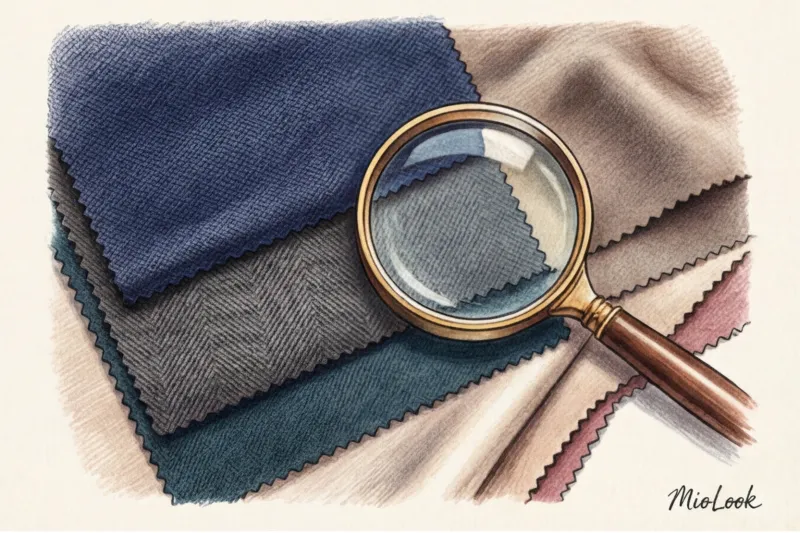
Yes, premium cashmere is incredibly soft. But it has no structural memory. After three hours of sitting in a chair, your pants will inevitably develop elongated "bubbles" at the knees, and your sweater will develop elongated "bubbles" at the elbows. The appearance of relaxation will instantly cross the line and begin to look sloppy. This is unacceptable for a manager.
Smart textiles: Ponte di Roma and cupra
So what should you wear? Look for fabrics with a natural spring. My absolute favorite is knitwear. Ponte di Roma (Roman knit). Thanks to its special double weave, it looks like an expensive suiting fabric, but has four-way stretch like yoga leggings. Pants made from this material will cost between €100 and €250, but it's an investment that pays for itself on your first flight.
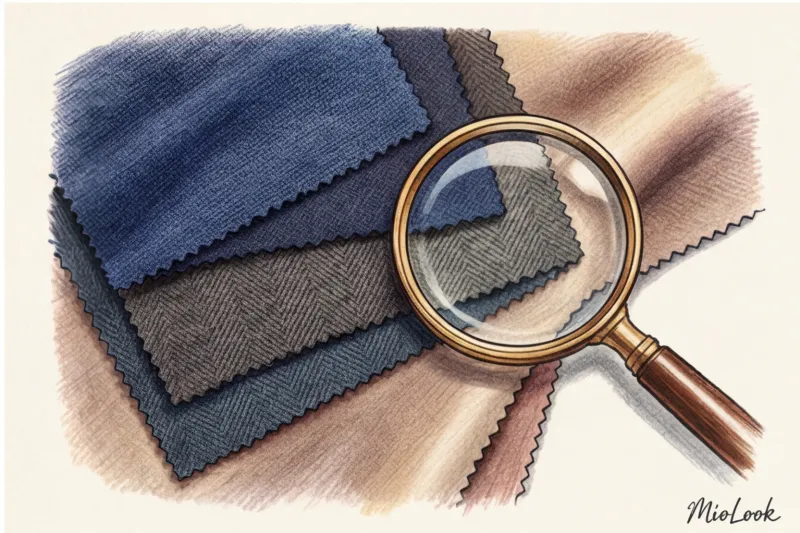
For base layers (tops, t-shirts), I recommend avoiding pure cotton—it wrinkles and loses its freshness quickly. Consider cupro, or heavy silk with 5% elastane. Cupro is a breathable fiber that mimics matte silk but is virtually wrinkle-free and excellent at wicking away moisture.
Layering strategy: climate control without sacrificing style
Airports and airplanes are zones of extreme temperature contrasts. You sweat at security, languish in the stuffy air in your sleeve, and freeze under the icy air conditioning during the flight (temperature fluctuations in the cabin can range from 18°C to 24°C).
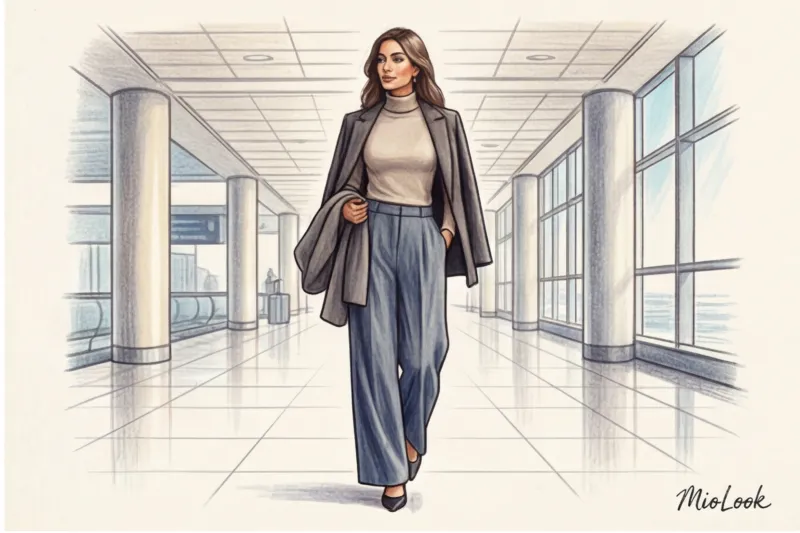
The stylistic solution to this problem is a clever three-layer formula:
- Breathable base: A silk top or a thin merino turtleneck (merino wool has natural antibacterial properties).
- Insulating layer: A thin, thick-knit cardigan or a trendy suit vest.
- Structuring layer: Unconstructed blazer.
An important nuance: Never check a good jacket as luggage. No matter how carefully you fold it, it will lose its shape. Keep it with you. On the plane, you can carefully place it on top of your bags (or give it to a flight attendant in the cloakroom if you're flying business class), and then put it on before you leave. The shoulder piece is what brings a relaxed flight look together and adds that alluring ruggedness.
Ready-made formulas: what to wear on a business trip
If you're planning a trip and struggling with your wardrobe, here are two ready-made formulas that work flawlessly 99% of the time.
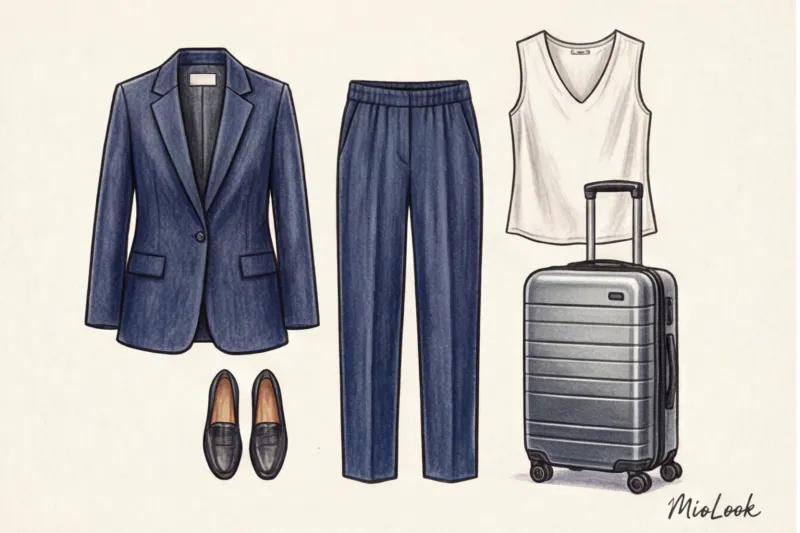
- Formula 1: Hidden Comfort. Palazzo trousers with a hidden elastic band at the back (classic belt at the front) + basic turtleneck + long loose blazer.
- Formula 2: Elegant monolithicity. A-line midi dress made of thick knitwear (from 400 g/m²) + cropped jacket made of high-twist wool (which is springy and doesn’t wrinkle).
Color palette: Forget the idea of flying in all-black. Black is your enemy on a plane. It will show every speck of dust, every lint from the seat, and every pet hair from the business lounge. If you want practicality and status, choose monochrome in shades of navy (deep blue), cool graphite, or rich camel. These colors look like a million euros and do a great job of hiding stray drops of water or coffee during turbulence.
Your Perfect Travel Wardrobe with AI
Upload photos of your items, and a smart MioLook stylist will put together the perfect capsule wardrobe for your business trip, taking into account the dress code and weather.
Flight Shoes: Between Business Etiquette and Swollen FeetMedical fact: changes in blood pressure and prolonged sitting cause swelling in everyone's feet, regardless of age. So, leave your stilettos and narrow pumps in your suitcase.
The perfect compromise is loafers made of soft, glove-like leather (such as nappa) with a flexible sole. They're easy to remove at security (laces are a waste of time) and instantly restore a professional look. Budget-friendly options range from €80–€120, while premium brands start at €450. But what matters here isn't the price, but the softness of the heel.
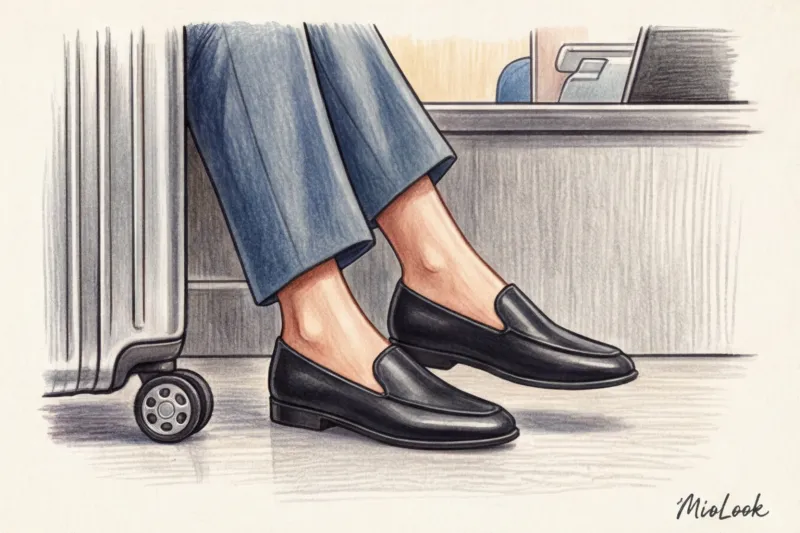
Are sneakers acceptable? Yes, but only premium, minimalist sneakers made of smooth leather (white, beige, or dark blue) without bulky logos or complex sports-inspired embellishments. They should look like sailing shoes, not marathon running shoes.
"A seasoned traveler's style secret: compression socks. I never board a plane without first-class compression stockings. To avoid looking like a medical emergency, I wear wide-legged pants that completely cover my ankles, and black socks that blend in with my shoes."
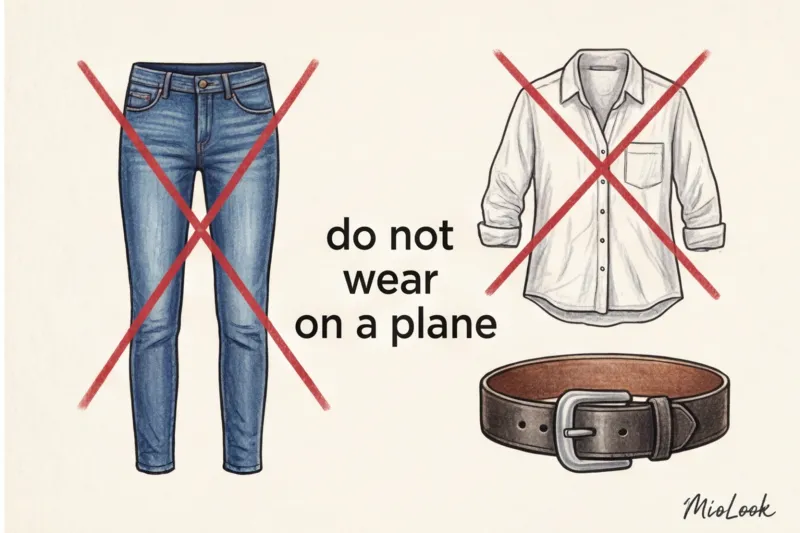
Style Safety Checklist: 5 Things You Shouldn't Wear on a Plane
Observing passengers in transit areas, I compiled a list of things guaranteed to ruin your flight (and your image):
- 100% linen. Yes, it's natural, but after 15 minutes in a chair, you'll look like you've been sleeping in it for a week. Linen is only acceptable when blended with silk and elastane.
- Skinny jeans. Heavy denim with a high percentage of elastane is deadly for circulation during flight. The risk of thrombosis is not a price worth paying for style.
- Light-colored wide trousers. One misstep from a neighbor with tomato juice during turbulence and your look is ruined. Save light bottoms for meetings on the ground.
- Clothes with complex fittings. The abundance of metal buttons, massive belt buckles, and zippers will not only jingle in the metal detectors, but will also begin to painfully dig into your skin after a couple of hours in the chair.
- Off the shoulder or deep neckline. Firstly, headrests on airplanes aren't the most hygienic place. Secondly, it's a clear violation of business etiquette, even if you're flying to Cyprus in the summer.
Organize your wardrobe before your trip
Digitize your closet with MioLook. Plan your travel outfits in advance and never carry unnecessary items again.
Try a smart wardrobeCarry-on luggage as part of the image: the finishing touch
Your flight look doesn't end with your clothes. The bag and suitcase you carry into the conference room (if your luggage is lost) or the hotel lobby add the finishing touch to your status. Huge, shapeless shopping bags, stuffed to the brim, betray a sense of hustle and bustle and disorganization.
Invest in two items. The first is a structured tote made of stiff leather that holds its shape even when empty (it's big enough to hold a laptop, documents, and a makeup bag). The second is a compact, cabin-size polycarbonate spinner with four double wheels. Choose matte textures in dark shades—they're less likely to scratch and look more expensive than glossy ones.
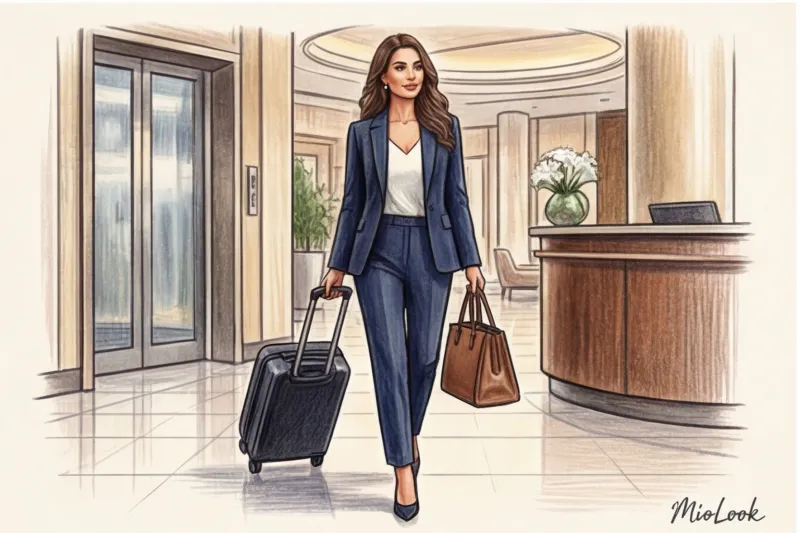
Business travel is always fraught with stress, unexpected delays, and jet lag. The confidence that comes from wearing the right, high-tech, and classy attire alleviates a huge amount of anxiety. By choosing the right outfit for your flight, you allow yourself to focus on the main purpose of your trip, confident that you'll look impeccable—from the check-in counter to the final handshake with your business partners.
Frequently Asked Questions
What dress code suits you?
Find out what style of clothing for work and life perfectly reflects you
About the author
Unlock MioLook
for €0.99
Start creating perfect outfits with artificial intelligence
Get access — €0.99 onceRelated Articles
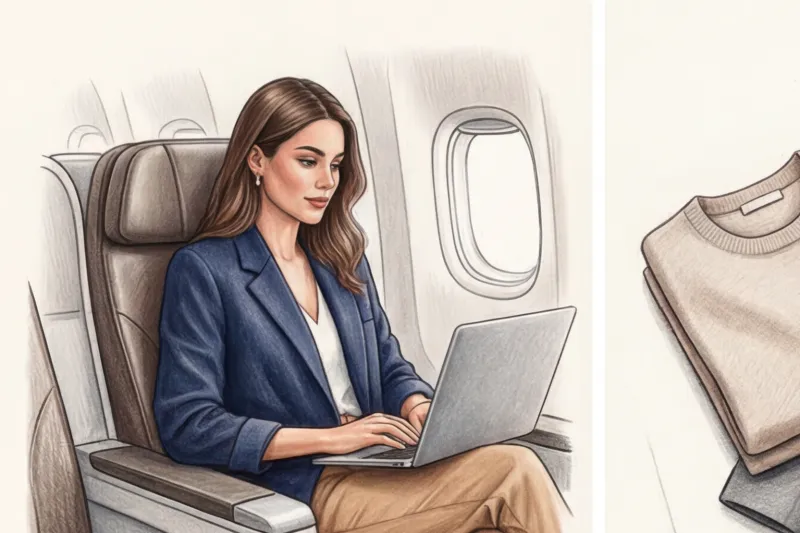
Business Flight Attire: Style and Comfort
How to survive a long flight and get off the plane ready for an important meetin...
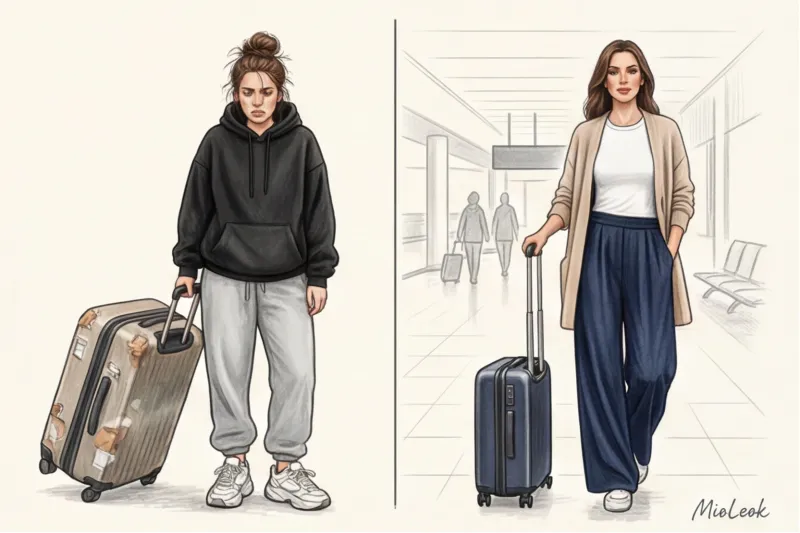
What to Wear on a Plane: Stylish and Comfortable Looks
Breaking travel wardrobe stereotypes: how to look elegant and feel comfortable o...
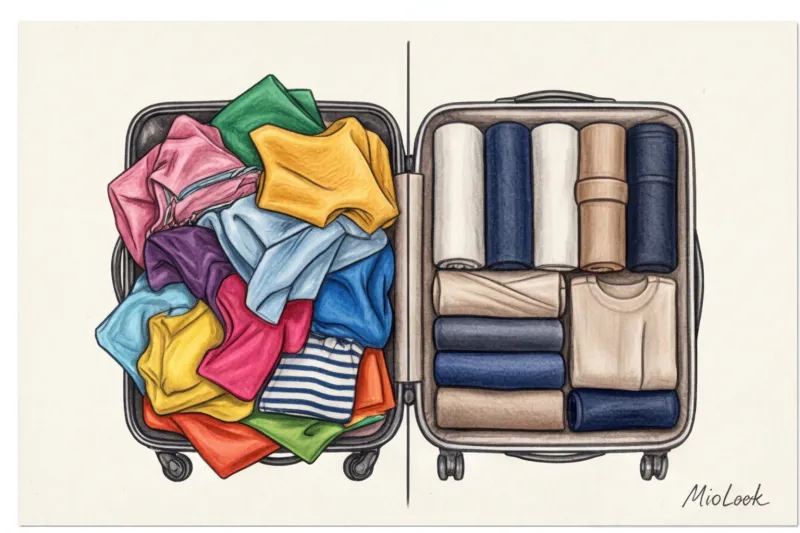
What a woman should take on a business trip: a capsule for 3-5 days
How to put together a stylish wardrobe for a work trip and avoid overweight? We ...
Summer Business Trip Clothing for Women: Stylists' Advice
How to look impeccable on a business trip when it's 38°C outside? We'll break do...