Have you ever noticed how sometimes an expensive designer suit looks... unconvincing on a woman? It's as if she's wearing someone else's uniform, one she's physically uncomfortable in. Over 12 years of working with premium wardrobes, I've learned a hard and fast rule: the price of a garment is irrelevant if its design is hopelessly outdated. You can wear a jacket made of the finest Italian wool, but if its proportions distort your silhouette, your business partners will subconsciously dismiss the look as outdated.
In this article, we'll explore the key anti-trends in business style. We'll shift the focus from typical advice like "throw away that blouse" to a deeper understanding of cut, proportions, and macro trends. We've covered the evolution of silhouettes in more detail in our a complete guide to anti-trends in clothing , and today we'll talk about how your office wardrobe affects your career status.
The Anatomy of an Outdated Wardrobe: Why Business Style Anti-Trends Are Ruining Your Authority
Your clothes are your nonverbal resume. When you walk into a meeting room, your appearance communicates your competence, flexibility, and ability to adapt to a changing world even before you utter a single word.
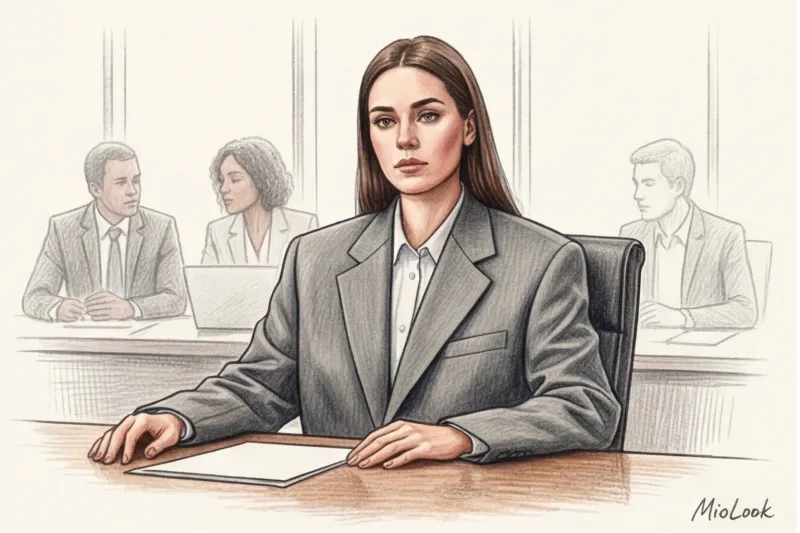
The story of one of my clients, Anna, the CFO of a large IT company, is revealing. She came to me after an unsuccessful round of investor negotiations. She was wearing an objectively expensive suit (around $3,000), but its cut—a cropped, fitted jacket with narrow lapels and mid-rise trousers—conveyed a stiff, outdated air. Investors, people from dynamic environments, subconsciously interpreted this conservative, constrained silhouette as a marker of inflexibility in financial decision-making. Premium Italian wool didn't save the situation.
It's important to understand the difference here. "Out of fashion" means fuchsia isn't worn this season. And "outdated silhouette" means the armhole length, shoulder width, and fit physically distort your proportions. And it's the latter factor that betrays a lack of status.
The main anti-trend: “too figure-hugging” and false femininity
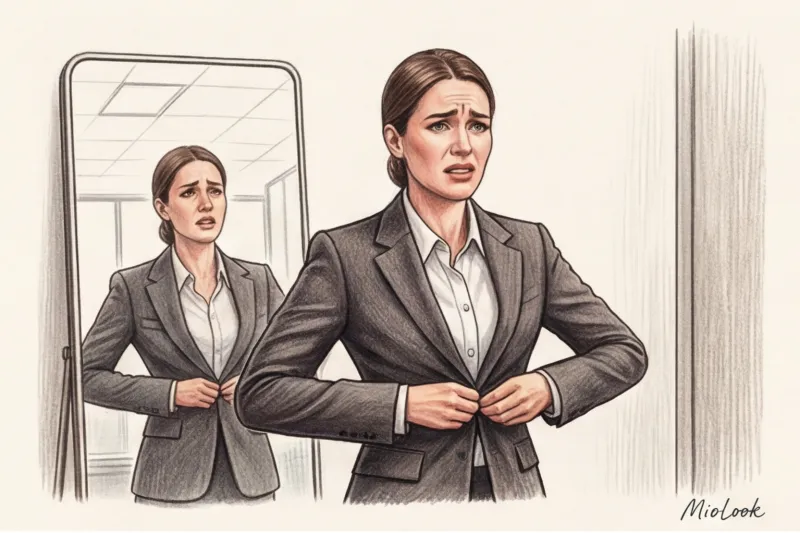
The most common and damaging misconception among female executives is: "Clothes that fit well always look neat and professional." I constantly see clients trying to squeeze into jackets that are a size too small, sincerely believing it will make them look slimmer.
In fact, overly fitted and tight-fitting clothing is a major anti-trend in the office. Why? It's all about the psychology of perception. A lack of "air" between the body and the fabric conveys vulnerability and dependence, creating an effect of "false femininity" that is completely inappropriate for senior positions. When a button is pulled tight across the chest and the sleeve digs into the shoulder, you convey tension, not leadership.
"Modern business dress codes are built on the principles of soft power. Your authority is emphasized through structured tailoring, not through aggressive displays of curves."
The Italian approach to tailoring (famous sprezzatura ) teaches us to choose a soft yet clear structure. A jacket should support the shape of the shoulder girdle while still allowing freedom of movement. According to research in the psychology of perception, a wide and clear shoulder line correlates with the subconscious perception of a person as an authoritative expert.
Access to MioLook for €0.99 — one-time payment
A smart AI stylist will select the perfect business look, taking into account your proportions and modern macro trends.
Get access — €0.99 onceTop 5 Things That Mark Old-Fashioned Business Attire (and Smart Alternatives)
Let's get practical. When reviewing the wardrobes of C-level executives, I repeatedly remove the same items. Below, we'll examine how they physically damage your figure and what to replace them with, based on long-term macro trends.
Short jackets vs. structured blazers
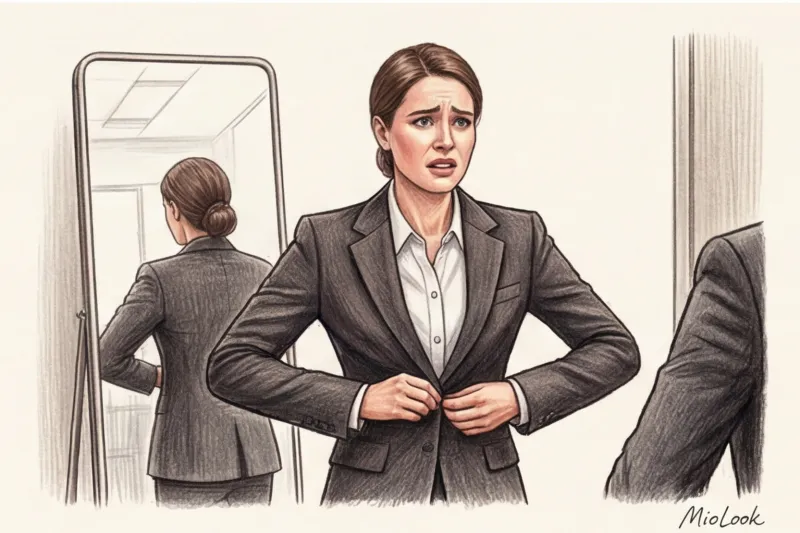
Anti-trend: A short, mid-thigh-length jacket with narrow sleeves, a single button, and sharp darts just below the bust. This cut visually cuts the figure in half, making the hips appear heavier and the shoulders appear sloping.
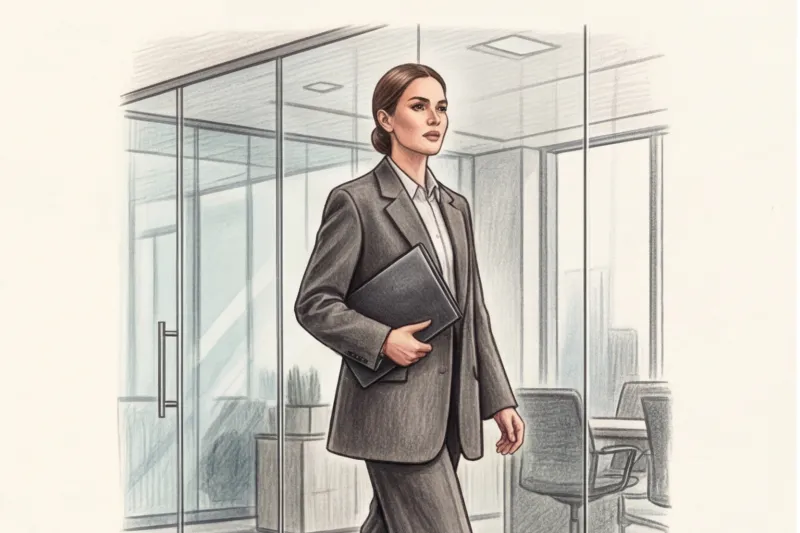
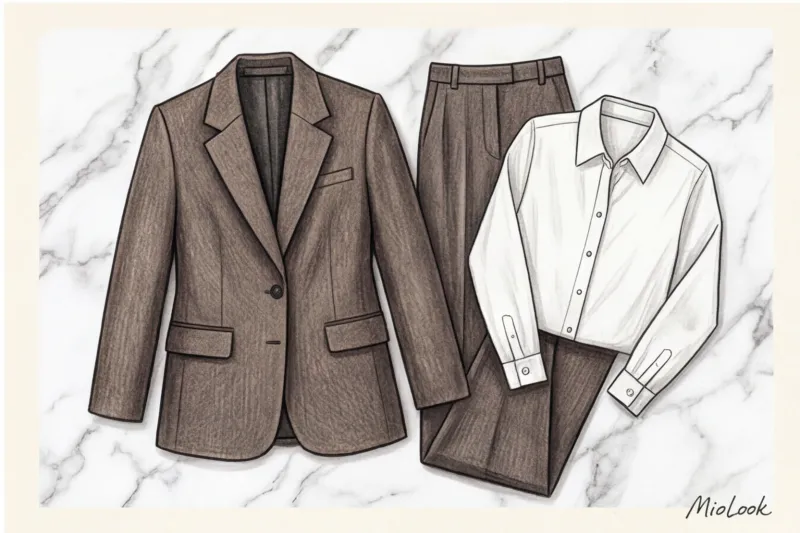
Modern alternative: A masculine-cut blazer. Slightly longer (covering the buttocks), with a defined shoulder line, loose armholes, and a straight or slightly semi-fitted silhouette. Traditional Savile Row tailoring, adapted for women's wear, dictates that the lapel width should be proportionate to your facial features and shoulder width.
Thin button-down knits versus thick layers
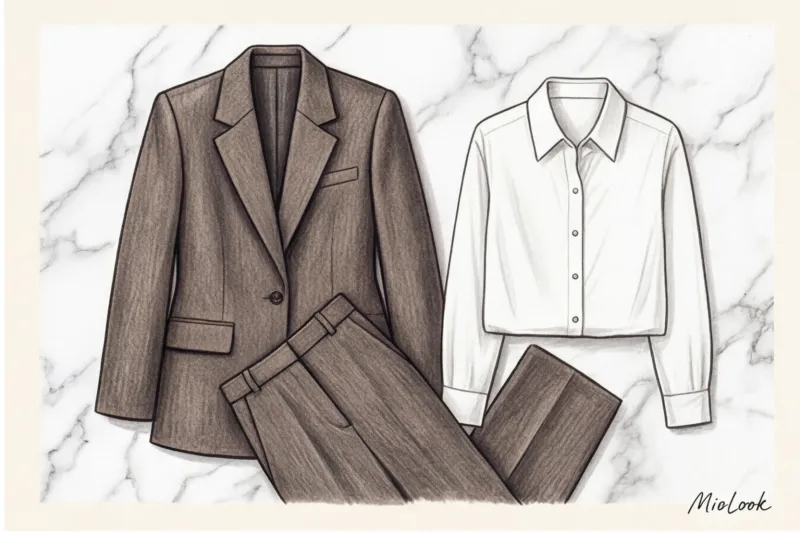
Anti-trend: Flimsy cardigans with tiny buttons and thin viscose turtlenecks, through which the texture of lace lingerie treacherously shows through, drastically cheapen the look.
Modern alternative: Thick suit vests worn barefoot (or over a shirt), voluminous cashmere or heavy merino jumpers, and poplin shirts (cotton with a weight of at least 180 g/m²). High-quality knitwear is always an investment. It can't be cheap, if only because of the cost of the raw materials and the complex double-twist technology.
Low-rise and skinny pants versus full-length
Anti-trend: Skinny trousers with a mid-rise or (even worse) low waist, cropped to the ankle, especially in a chilling combination with nude nylon tights.
Modern alternative: Palazzo pants or straight, structured, full-length trousers with a high or confident mid-rise. The high rise and long leg (which sits slightly over the shoes) visually elongate the legs by a few centimeters and add that confident, monumental air that a leader needs.
Accessories and shoes that make a premium suit look cheaper
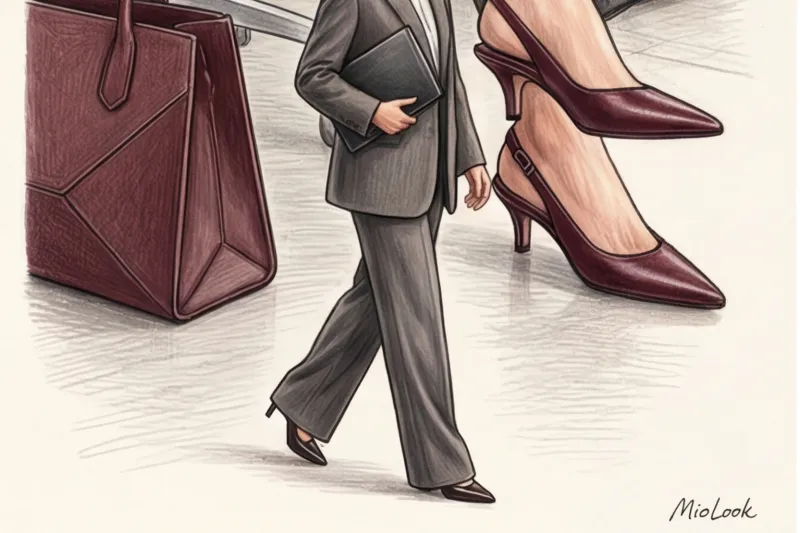
Shoes and bags are the litmus test of your wardrobe. You can wear the perfect suit from The Row or Jil Sander, but if you wear a pair of 2010s-era round-toe pumps with a hidden platform underneath, the look is ruined.
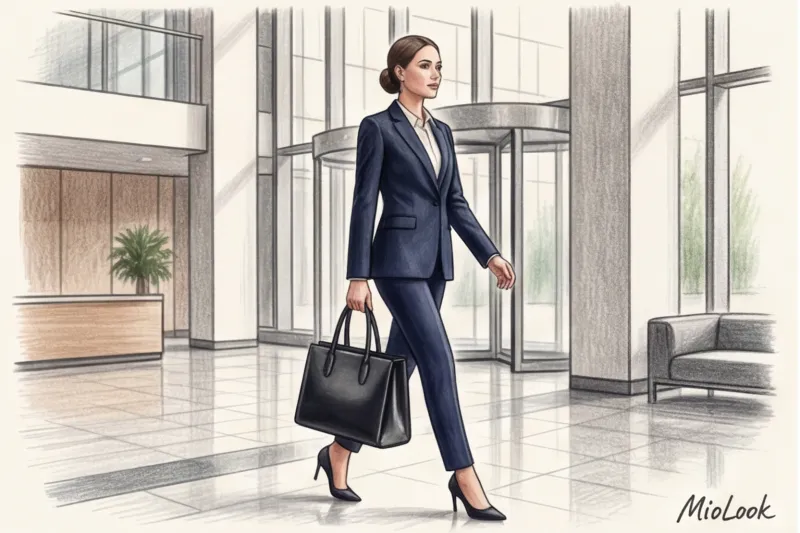
According to Lyst's 2024 reports, the aesthetics of the "office siren" and intellectual minimalism have finally supplanted hyper-sexuality in footwear. Go to kitten heel (micro heels), loafers with a rigid shape, and shoes with a pointed or square toe. A pointed toe instantly brings a look together, making it more dynamic and predatory—in the good, business sense of the word.
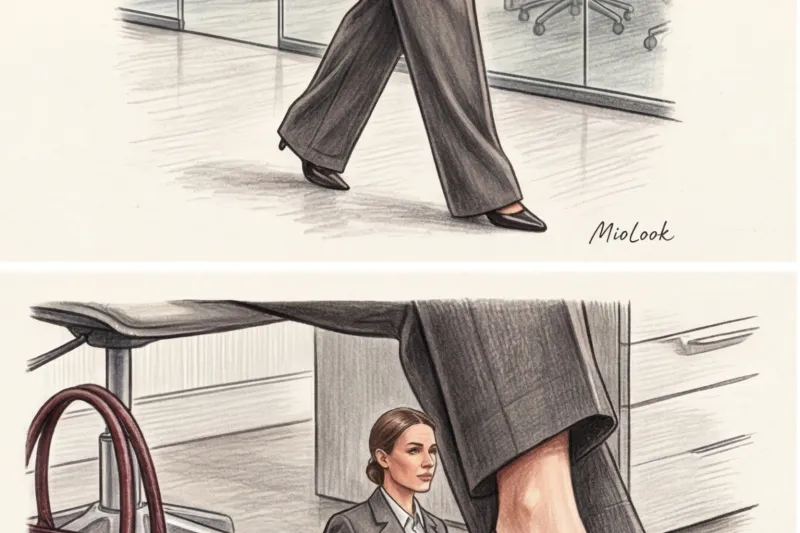
The same goes for bags. Forget those soft, shapeless tote bags that tip over as soon as you set them down on the conference room table. Your bag should have a rigid frame, a geometric shape, and stand on its own. This is a sign of poise.
When it comes to jewelry, there's a strict no-match policy. Wearing earrings, a ring, and a pendant from the same set with identical stones is hopelessly outdated. Use the "three-point rule": distribute accents so the other person's eye glides over your outfit. For example: large matte gold earrings, a simple men's watch on the wrist, and a statement leather belt. That's it. It looks expensive without being overly cluttered.
Your perfect wardrobe starts here.
Join thousands of users who manage their accessories and clothing with a smart wardrobe.
Digitize your wardrobeInvesting in Macrotrends: How to Create a Modern Foundation for 5-7 Years
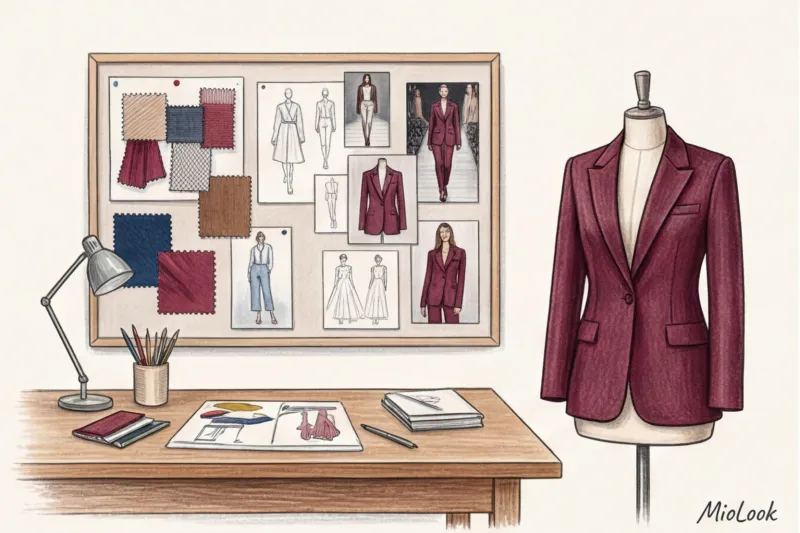
According to the analytical agency WGSN, we're currently seeing a strong polarization of fashion cycles. Microtrends (like leopard print or feathers) last 3-6 months, while macrotrends (silhouettes, volumes, shoulder lines) form a foundation for 5-7 years. A smart woman invests only in the latter.
I always teach my clients to think in categories Cost-per-wear (cost per exit) Let's do the math. You could buy five flimsy, outdated cardigans for $50. You'll wear each one maybe five times because they'll quickly lose their shape. The cost per wear is $10. Or you could invest $500 in an impeccably structured blazer made of thick wool. You'll wear it 150 times over the next three years. The cost per wear is $3.30. An expensive, well-cut item saves you money.
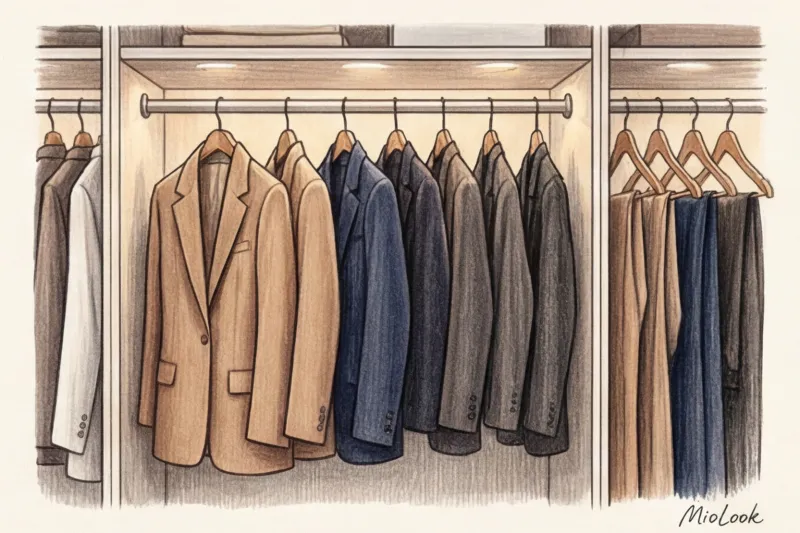
This approach is close to the Swiss concept of wardrobe planning: fewer items, but of impeccable quality and a modern cut. For such a capsule to work, all the elements must be easily combined. To avoid having to remember all the combinations, I recommend my clients digitize their wardrobe. Use MioLook app — it will help you visually assess how new, voluminous items will integrate into your existing formal wardrobe.
Stylist Checklist: A Quick Audit of Your Work Wardrobe
It's time to take action. Open your closet right now and run your work clothes through this quick audit:
- Step 1: Fit test. Put on a jacket or shirt and cross your arms over your chest. If you notice any tension creases in the back and the buttons in the front are about to fall off, the item is too small. There should be at least 2-3 centimeters of air space between your body and the fabric.
- Step 2: Analyze the shoulder line. Avoid jackets with hyper-narrow shoulders, which make your head look disproportionately large. The shoulder line should be defined, even if the jacket doesn't have stiff shoulder pads.
- Step 3: Check the fit. Pants and skirts that sit below your natural waistline will cut off your height. Stick to items that sit directly on the narrowest part of your torso. Fair limitation: If you have an apple-shaped figure, choose a fit that falls just below the waist, but compensate for this with a longer top layer.
- Step 4: Inspection of fittings. This is my favorite stylist secret. Often, a good basic item is cheapened by plastic or shiny hardware. Replace the buttons on your jackets with high-quality horn, mother-of-pearl, or minimalist metal ones. It costs pennies, but it dramatically increases the visual value of the item.
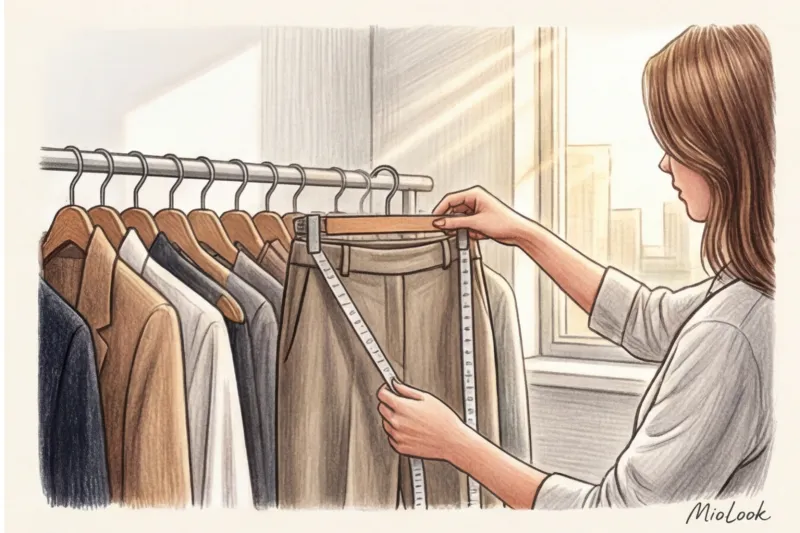
Your appearance is a tool of influence. A dated, short jacket isn't just an aesthetic mistake; it's a signal that you're unwilling to keep up with the times. Swap fitted clothing for structure, cheap knitwear for thick wool, and micro-trends for durable, architectural silhouettes. Believe me, once you put on the right, well-tailored suit, it won't just be your reflection in the mirror that changes. The way you negotiate will change, too.