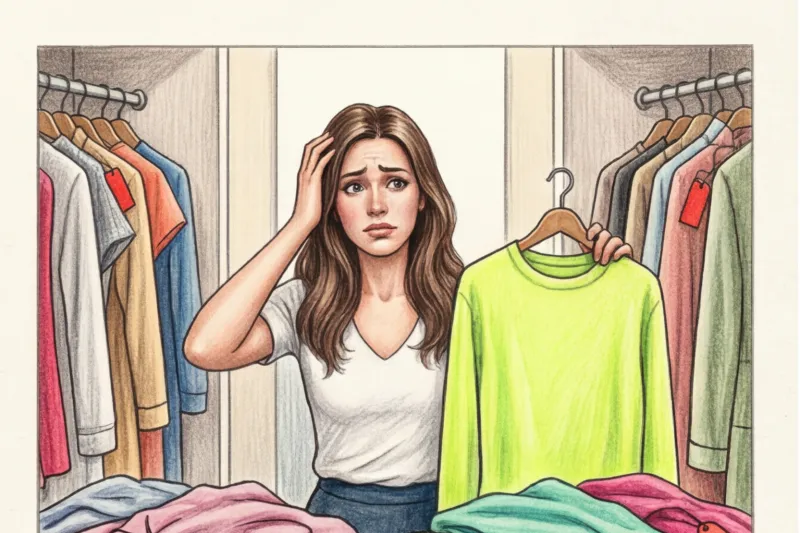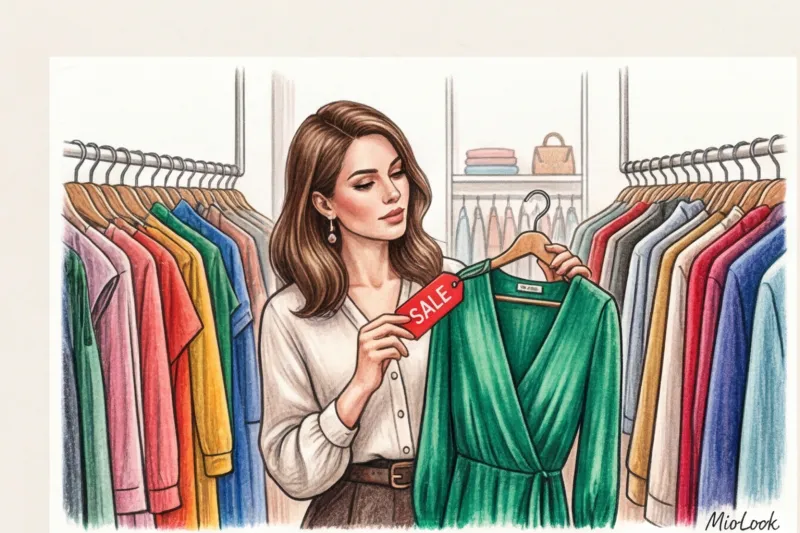
According to a large-scale study by McKinsey (2024), the average woman spends approximately €600 annually on clothes she wears exactly once. And do you know when 80% of these "one-time" purchases are made? That's right, during the big sales season. Have you ever noticed how your heart rate quickens and your critical thinking shuts down at the sight of a red price tag with the coveted "-70%"?
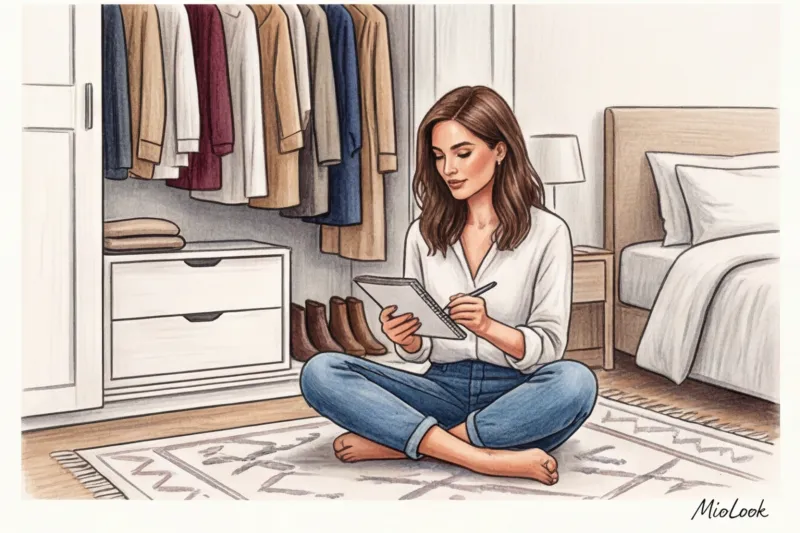
It's not a lack of taste or willpower. The neuroscience of shopping proves that the sight of a discount triggers a sharp release of dopamine, temporarily blocking the prefrontal cortex, the brain's logical processing center. Today, we'll discuss how to outsmart this mechanism and assemble the perfect capsule wardrobe on sale , using a rigorous mathematical approach and knowledge of textures. We've already discussed psychological traps in more detail in our the complete guide to smart shopping , and here we will focus on pure stylistic practice.
The "Sale-Points" Syndrome: Why We Buy Excesses and Have Nothing to Wear
Let me tell you a story from my early years. Milan, 2018. Already a certified stylist, I walked into an outlet store and saw an acid-orange hobo bag from a famous brand. The price tag was magical: €240 instead of the starting price of €1,200. 80% off! At that moment, my brain simply turned off its filters. The result was predictable: this bag hadn't been worn in six years. It simply didn't fit into my muted autumn wardrobe.
To avoid such mistakes, the Fashion Business Institute recommends using the formula CPW (Cost Per Wear) This is the main tool of a professional buyer and stylist.
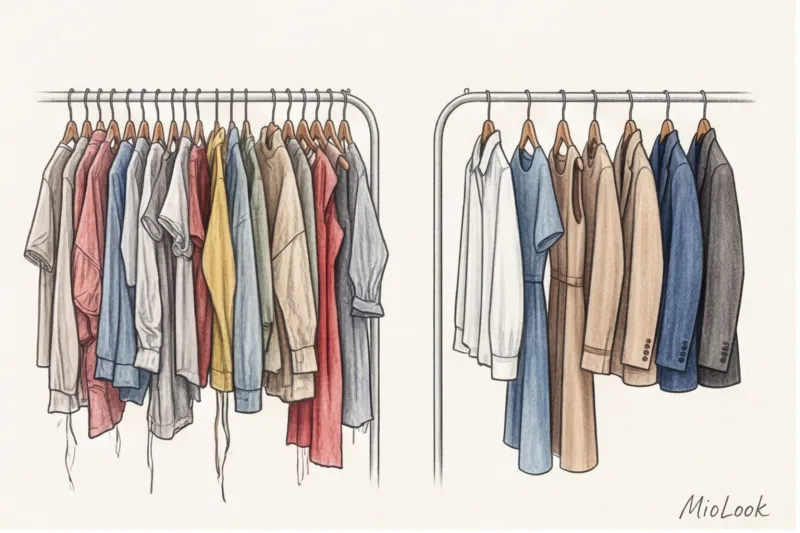
"A 100% merino sweater bought for €100 and worn 50 times a season will cost you €2 per outing. A cheap acrylic T-shirt for €10, which will pill after the first wash and will be worn once, will cost you €10 per outing. A cheap item costs five times more than a quality one."
The main rule I hammer into every client's head is that a capsule wardrobe on sale follows the same strict rules as a full-price one. A discount doesn't make an unwanted item feel necessary.
Access to MioLook for €0.99 — one-time payment
A smart AI stylist will select the perfect look for every day and help you avoid unnecessary purchases.
Get access — €0.99 onceThe Cold Cart Method: A Stylist's Pre-Sales Strategy
Last Black Friday, my client Elena put together the perfect business capsule set of 15 items, saving almost €800. Her secret? We didn't visit any brands' websites on the day of the sale. We used the "Cold Cart" method, which works flawlessly.
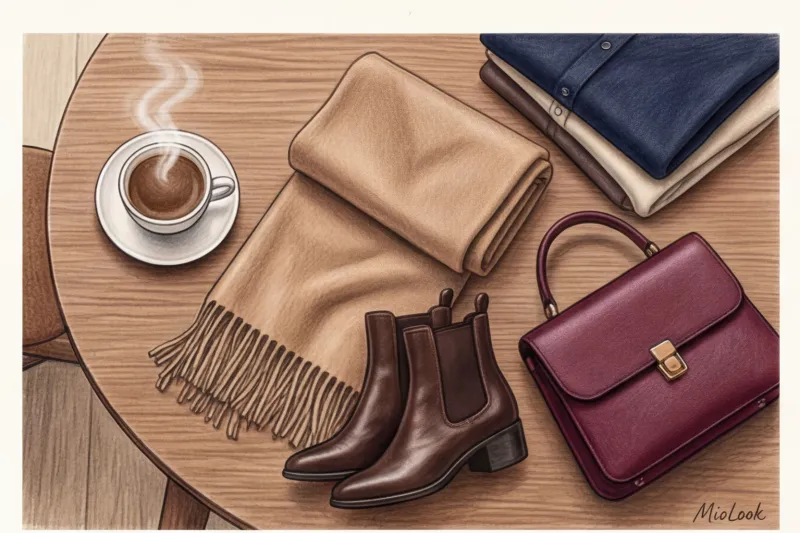
Marketers love the scarcity effect: countdown timers, alarming red signs that say "only 1 left in your size." It forces us to rush. The algorithm for avoiding this trap looks like this:
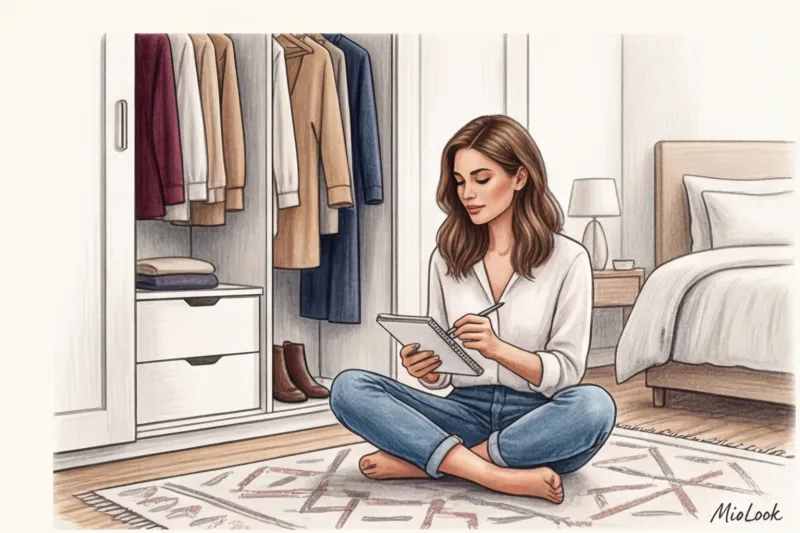
- Cabinet inspection: We identify gaps in your wardrobe. What's missing to complete your looks?
- Making a strict list: not "any skirt," but "an A-line midi skirt, camel color, containing at least 50% wool."
- Assembling the basket: 5-7 days before the expected start of a sale at brands like COS, Massimo Dutti, or local brands, you add the items you want to your cart.
- 72-hour rule: If you see a high price for an item not on the list, give yourself three days to think about it. The desire to buy usually fades by the second morning.
And one more technical detail: set a hard limit on a separate debit card. Never link credit cards to marketplaces—that's a surefire way to a financial hangover.
The main myth of the sale: "Buy only the basics"
If you open 90% of glossy magazines before the sale season, you'll see the same overused advice: "Buy basic white T-shirts and plain jeans." As a practicing image consultant, I declare: this is the worst strategy possible.
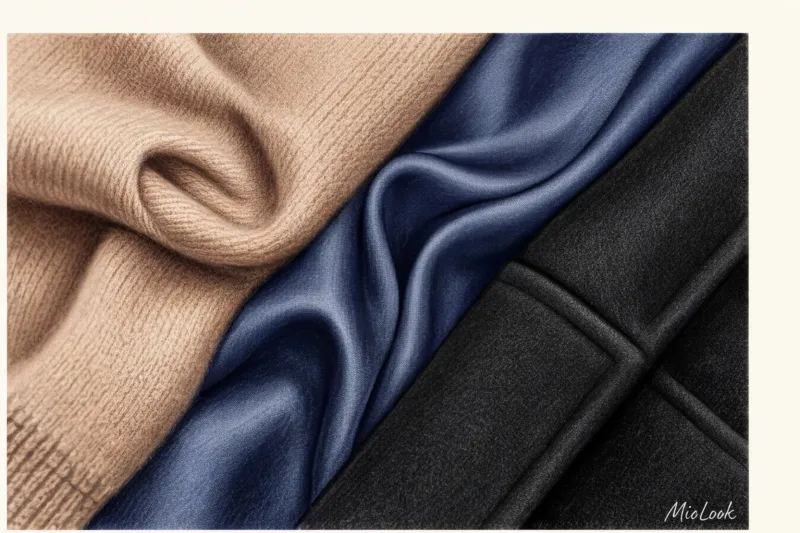
According to reports from the analytical agency WGSN, basic cotton items on sale are often so-called loss leaders — decoy products. Mass-market brands deliberately produce batches of T-shirts from loose cotton (below 140 g/m²) to sell them at a discount and lure in traffic. Moreover, white items on sale are almost always irreparably ruined by foundation after hundreds of tries.
The sale is designed so that you can buy premium textures at mass-market prices Look for a 100% cashmere sweater at the price of an acrylic one. Hunt for natural silk blouses (ideally over 19mm) at the price of polyester. A quality, structured leather bag, the right loafers, and a wool coat form the luxurious "skeleton" of your look, not just another thin T-shirt.
When this advice does NOT work: To be honest, this rule doesn't apply if your season budget is strictly limited to under €50. In this situation, buying a good, thick cotton base layer without discounts is a much smarter decision than searching for "killed" cashmere on the final shelves of outlet stores.
Your perfect look starts here
Join thousands of users who look flawless every day with MioLook. Digitize your closet now.
Get access — €0.99 onceColor Palette: Your Bulletproof Vest Against Impulse Buying
Knowing your natural contrast and appearance color type Saves up to 50% of your budget on sales. Why? Because when you walk into a store, you automatically ignore 70% of the selection. If it's the dead of winter, you have absolutely no business browsing racks of dusty peach or mustard jumpers, no matter how great a deal they seem.
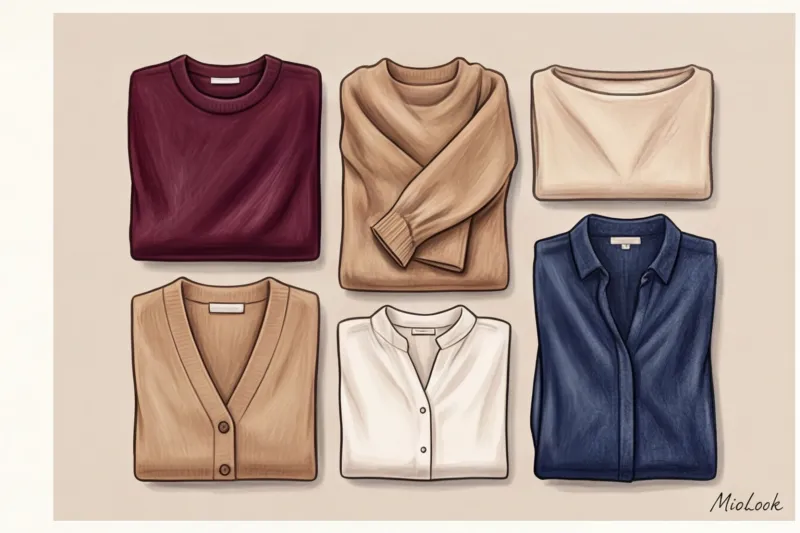
For assembly capsule wardrobe When on a budget, I recommend using a strict "Three Color Rule":
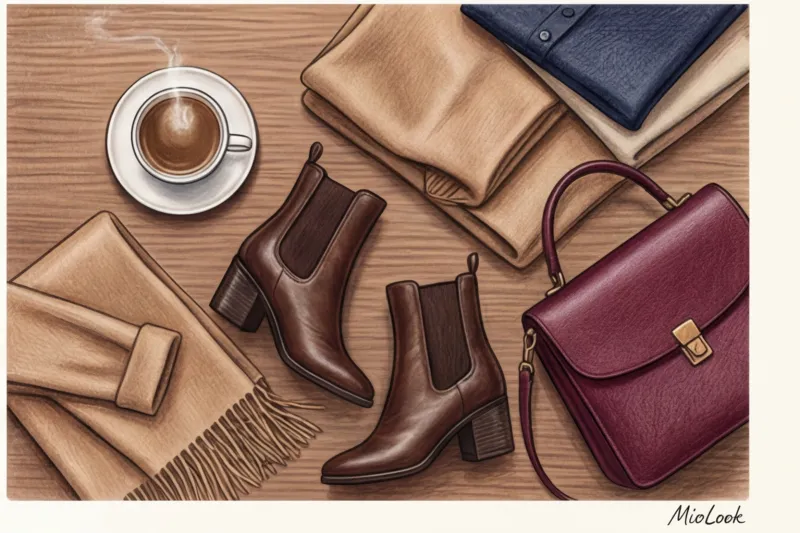
- First base (dark): for example, deep navy, graphite or dark chocolate (occupies 40% of the capsule).
- Second base (light): camel, milk, ecru or oatmeal (40% capsule).
- Accent color: burgundy, emerald or deep cobalt (20% for accessories and tops).
Conduct a rigorous test right in the fitting room. Ask yourself: "Can I wear this item with at least three other items ALREADY in my closet?" If the answer is "no" or "I'll have to buy other shoes for it," leave the item on the hanger. Even if it's 90% off.
Budget capsule formula: 12 items = 30+ looks
The math of wardrobe is relentless: people remember us by our tops (the pieces closest to our face), so there should always be fewer bottoms in a capsule wardrobe. Here's my tried-and-true strategy for distributing a minimal sales budget, guaranteed to give you over 30 unique outfits.
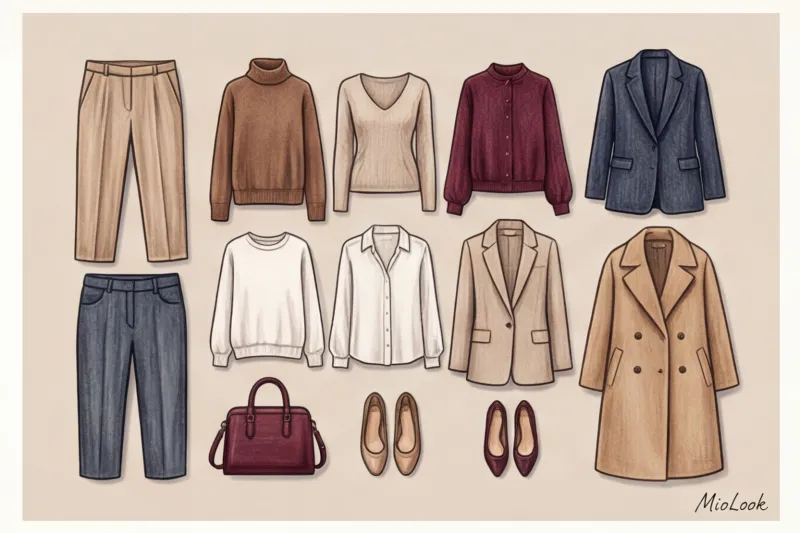
Foundation (30% of the budget)
These are the items you can't skimp on, even during a crisis. They "pull together" your look and make it prestigious:
- Structured jacket: Look for a thick wool or high-quality cotton blend. The jacket should support the shape of your shoulders.
- Quality footwear: Basic leather loafers or ankle boots with a sturdy heel. No mass-market suede—it quickly loses its shape in our climate.
- Medium sized hard bag: Choose styles without flashy logos or excessive gold hardware. The more minimalist, the more expensive they look.
Bottom line (20% of the budget)
Bottoms get dirty faster, but they're what define the figure's proportions. Here's a look at the mid-price range:
- Straight or wide leg full length trousers: Look for suiting fabric with added elastane (no more than 5%, otherwise the knees will stretch out).
- Jeans of a current cut: Straight or palazzo. Strictly no scuffs, rhinestones, or rips—excessive embellishment instantly cheapens the look.
- Midi skirt or trousers made of eco-leather: A great way to add textured variety to a smooth fabric capsule.
The top (50% of the budget)
The most active area that requires variety to create layering:
- 1 thick sweater: Cashmere or merino. Be sure to check the knitting density by holding it up to the light.
- 1 silk or viscose blouse: to create feminine or evening accents.
- 2 thick t-shirts or long sleeves: cotton with a density of 180 g/m².
- 1 accent top: or a shirt in the color of your personal palette.
Ready to get started?
Try the MioLook plan for free—no commitments required. Upload your current items and see which capsule pieces you're really missing.
Get access — €0.99 onceFitting Room Checklist: How to Avoid Buying Bad Clothes at a Discount
Over 12 years of working as a personal stylist, I've learned a hard truth: items that survive until the final weeks of sales (60-70% off) are often clearly defective or seriously worn out after hundreds of fittings. Inspect the item as if you were buying a used car.
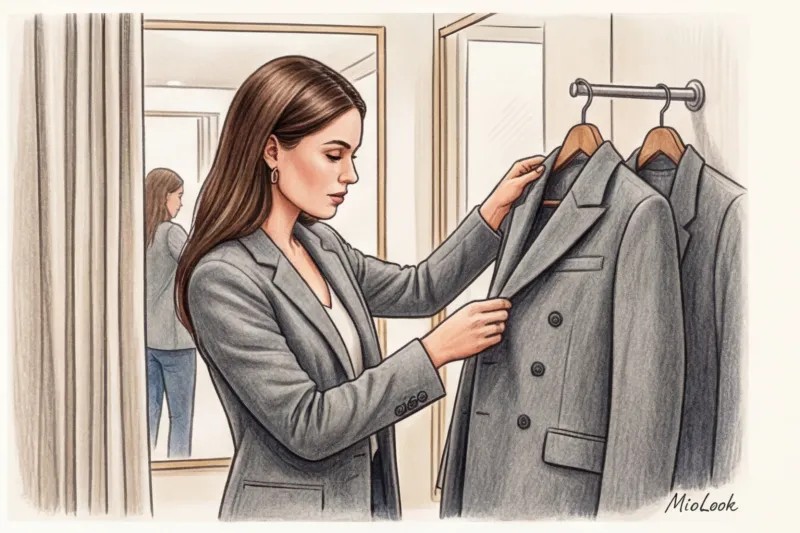
- Inspection of seams and neck: Knitwear in sales is often stretched beyond repair on hangers. If the collar is rippling, the item is ruined.
- Checking the fittings: sticking zippers, missing spare buttons on the tag, peeling coating on the buttons.
- Stains: Carefully inspect the inside of the collar (foundation) and underarm area (deodorant). On light-colored fabrics, such stubborn stains won't come out, even if you dry clean the item.
- Cut distortion: This is my biggest pet peeve when sorting through my wardrobe. Cheap viscose items on sale are often warped along the grain. Pay attention to the side seams—if they "slip" forward or back when trying them on, don't buy that item even for €5; it will twist with every step.
Digitization instead of pulses: why assemble a capsule in an app
The main problem with modern shopping is that we don't remember the contents of our closets. While in a shopping mall, under the influence of harsh lighting and music, we buy a third pair of identical black pants simply because we've forgotten about the two pairs sitting on the back shelf at home.
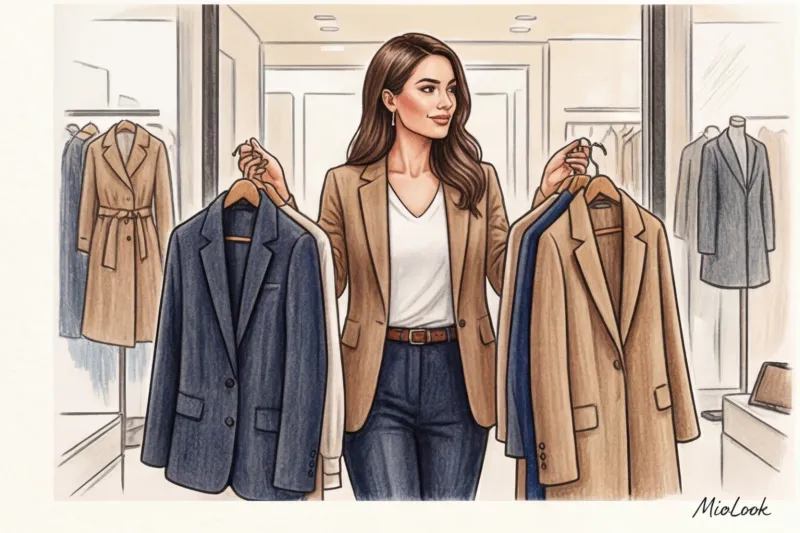
Digitizing your wardrobe is the ultimate solution to the problem of overconsumption. the "smart wardrobe" feature in MioLook , you're changing the rules of the game. Imagine standing in the fitting room with a stunning emerald jacket at 60% off. Instead of agonizing over whether it will go with your gray trousers, you simply take a photo of the jacket on your phone, upload it to the app, and virtually "try it on" with your digital clothes.
Smart shopping is when you manage discounts, not when they manage you. Invest your budget only in textures and colors that will make your wardrobe last for years, not just until the first wash.