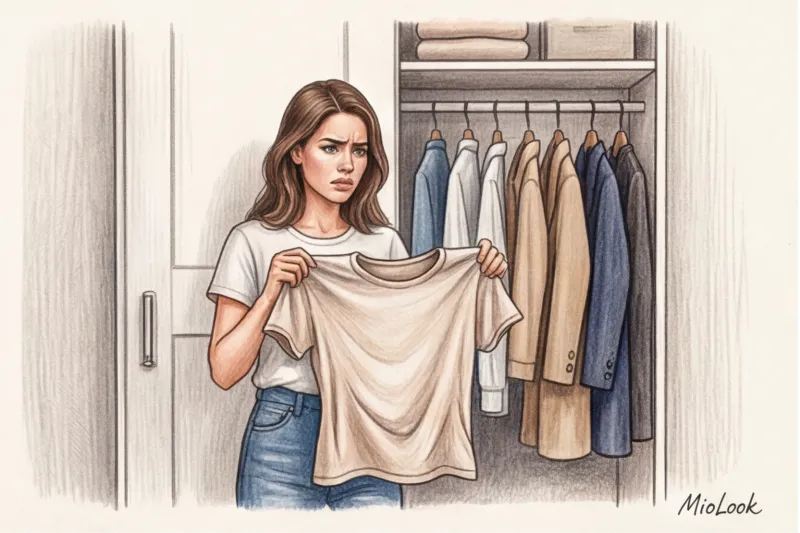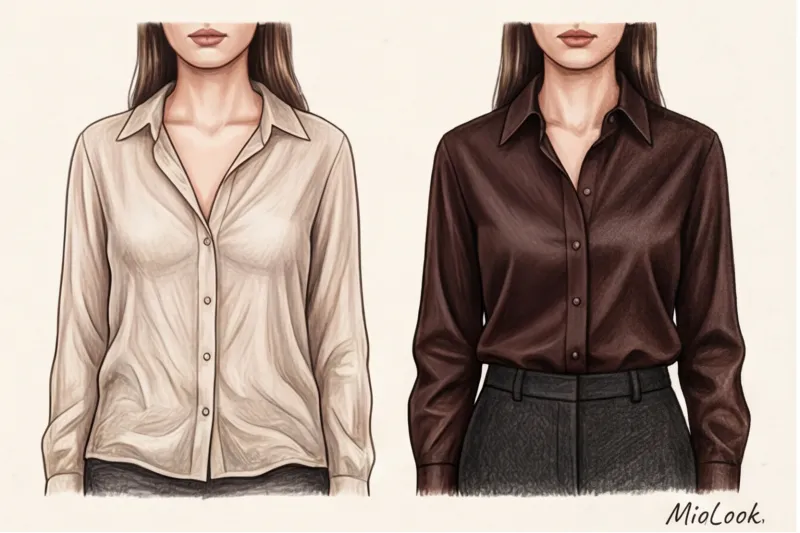
I still remember the day a client dumped five identical blouses made of the finest, crisp polyester on the sofa in my studio. "Look, Darina! But they're all beige and basic, I saved a ton of money!" she gleefully announced. Spoiler alert: we couldn't make any of those blouses work with the high-status look. Cheap beige always looks cheap, and the money we saved ended up as dead weight on the hangers.
There's a huge difference between "looking poor" and "dressing on a budget." Building a status image isn't a logo competition, but rather math, geometry, and color. We've covered how attitudes toward clothes change with age in our A complete guide to a basic wardrobe for a 30-year-old woman And today I will share professional secrets of that, How to build a basic wardrobe inexpensively , relying not on labels, but on the architecture of the fabric and the laws of light reflection.
The Biggest Illusion: Why the "Buy Basic Colors" Rule Often Ruins Your Wardrobe
The most damaging myth peddled by glossy magazines is: "If you're short on cash, buy plain white, beige, or black—they always look flattering." As a certified colorist, I'm willing to argue with this statement until I'm hoarse.
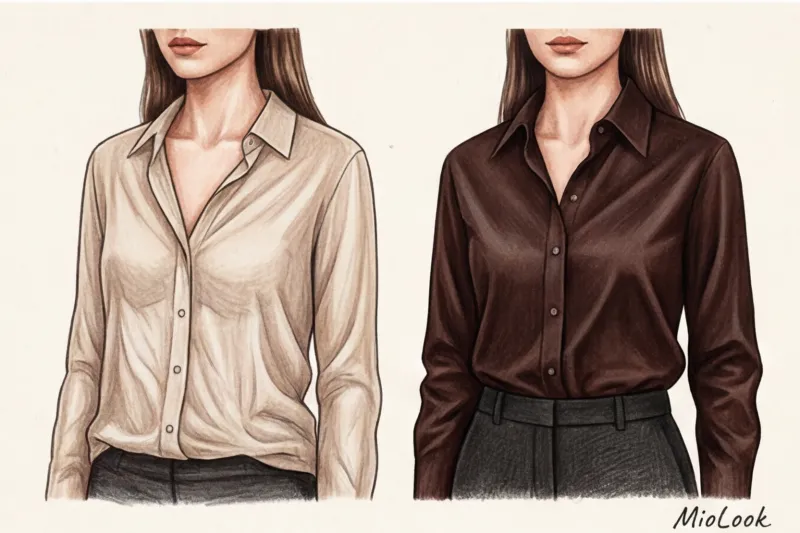
Light shades (white, cream, classic beige) are highly translucent. This means that if the fabric is budget-friendly, it will inevitably show through. Uneven seams, hemlines, and underwear contours will be visible through an inexpensive beige blouse. This instantly ruins the illusion of quality.
Another pitfall is the color black. Over 12 years of experience, I've learned that cheap black cotton or jersey is a disaster. Budget-friendly fabrics use sulfur dyes, which wash out after the third wash. As a result, the garment becomes covered in pilling and takes on a dull, tired gray undertone. Black requires a perfect texture: silk, high-quality wool, or thick crepe.
Only a deep, complex shade that absorbs light can save a cheap fabric.
If your budget is limited, look for items in shades of dark chocolate, graphite, wine, emerald, or navy (deep blue). According to the Pantone Color Institute, complex, multi-component shades are perceived by our brains as more prestigious. A deep chocolate color visually increases the cost of even inexpensive viscose or cotton blends because it prevents light from penetrating the fibers, hiding minor texture imperfections.
Cut is more important than brand: how to build a basic wardrobe on a budget
Incorporate one simple filter into your thinking: a garment must hold its shape. This is the key to building a basic wardrobe on a budget while still looking like you're wearing high-end clothing.
Shapeless, fine knitwear hugs every curve of the body, stretching at the elbows and sagging at the chest. A structured cut, on the other hand, creates a structured silhouette. A jacket with a defined shoulder line, an A-line skirt in a dense fabric, or straight-leg trousers with a crease create a stately silhouette.
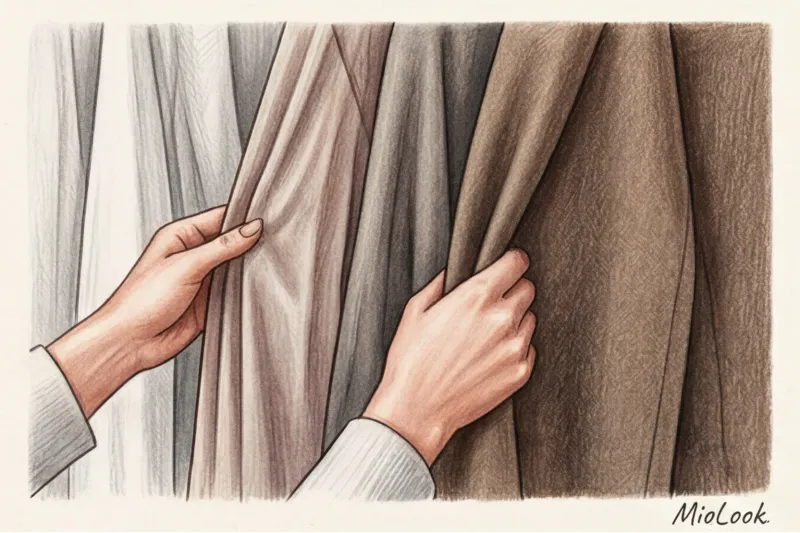
How do you test fabric right in the store? I always teach my clients two tactile tests:
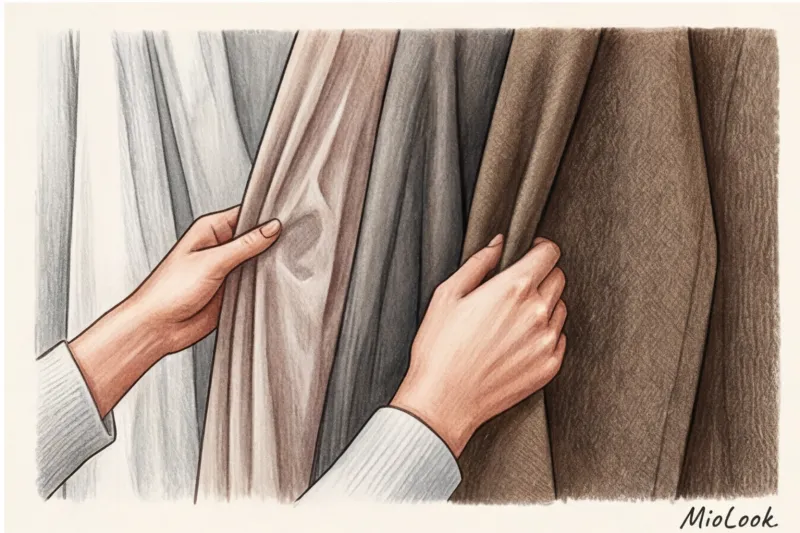
- Fist Crush Test: Squeeze the fabric tightly in your fist for 10 seconds and release. If it's covered in small, sharp creases, return it to the hanger. If the creases are soft and quickly unravel (like high-quality twill or twill), keep it.
- Translucency test: Hold the fabric up to the store's lights. If you can clearly see the silhouette of your hand through the weave, the fabric is too loose. A high-quality item has a high thread count per square inch.
Fabrics that save your budget
Don't chase 100% natural fabrics if you're on a budget. Cheap 100% cotton quickly becomes misshapen, and budget silk falls apart at the seams. Look for technologically advanced blends:
- Heavy viscose (rayon, cupro). It flows, has a delicate matte shine and feels like thick silk.
- Cotton with the addition of 5-10% elastane. Elastane acts as reinforcement, preventing cotton from stretching at the knees and elbows. A T-shirt made from this cotton (with a density of 180 g/m² or higher) will last five times longer than a regular T-shirt.
- High quality blended polyester. Sound scary? Don't be. Modern, dense crepe or neoprene-like polyester is perfect for trousers and jackets—they don't wrinkle, hold their shape perfectly, and look flawless all day long.
Access to MioLook for €0.99 — one-time payment
A smart AI stylist will select the perfect look based on your appearance and wardrobe.
Get access — €0.99 onceThe "a penny saved is a penny earned" rule: strategic tailoring
A perfect fit is always more important than the price tag. One of the most important rules of stylists, rarely mentioned, is that mass-market clothes should be adjusted by a tailor.
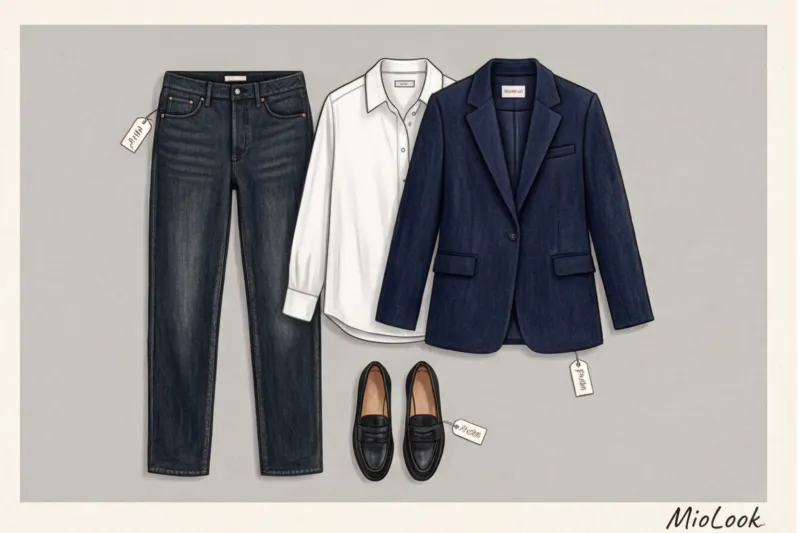
Let me give you a concrete example from my own experience. Recently, a client and I bought a pair of straight, wide-leg trousers from Zara for €40. They had a great viscose blend and the perfect navy color, but they were loose in the waist and the length was awkward. We took them to a tailor: for €15, the tailor trimmed the waist and made them the perfect length to match her favorite loafers. The final price was €55, but the fit and appearance were absolutely identical to a pair of €200 premium trousers.
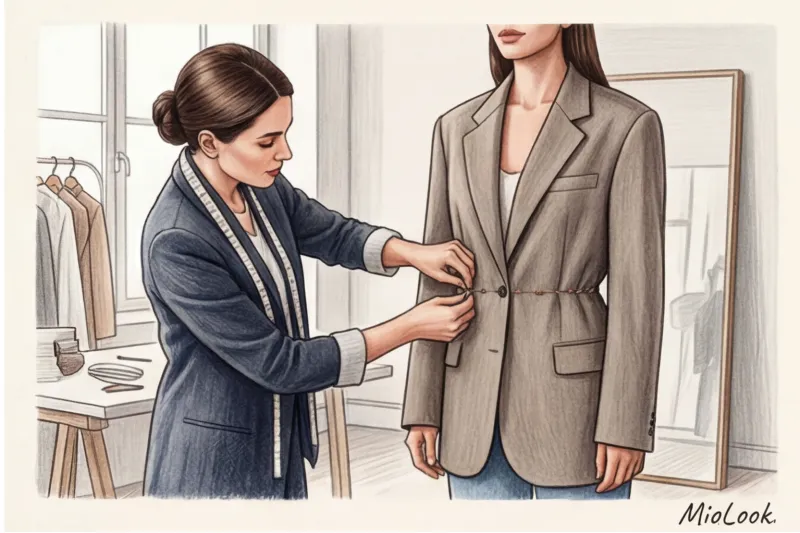
But there is here strict limitation (when it does NOT work): You should only take items to a tailor for length and fit adjustments. Things that need adjusting: trouser length, waist width, jacket sleeve length, and button placement. Things that can't be corrected: narrow shoulders (the shoulder girdle should fit perfectly from the start!), an incorrect armhole, or a short crotch (where the trousers dig into the groin). If an item doesn't fit well in the shoulders, don't buy it; a tailor can't fix it.
The Mathematics of Style: The Cost Per Wear Formula
Wardrobe mindfulness comes when you stop looking at the price of an item and start considering its cost per wear (CPW). For women over 30, this mindset shift is crucial. If you want to organize your belongings, I recommend digitizing them using MioLook — the app will clearly show you which items you wear regularly and which ones are just dead weight.
The CPW formula is simple: Price of the item ÷ Number of wears = Cost per wear.
Let's use a real-life example from my client Anna. She bought an acrylic jumper for €20. After three washes, it became pilled, stretched out, and was sent to the dacha. Total:
20 € ÷ 3 socks = 6.6 € per exit.
Instead, we chose a basic jumper made of thick merino wool from a premium mass-market store for €80. She wears it at least twice a week per season (about 50 times a year) for two years. Total:
80 € ÷ 100 socks = 0.8 € per exit.
A cheap item turned out to be eight times more expensive than a high-quality one. That's why a basic wardrobe's affordability isn't about the price tag at the checkout, but about how many washing cycles and wears the fabric will survive.
Your perfect look starts here
Join thousands of users who look flawless every day with MioLook. Digitize your wardrobe and calculate your CPW automatically.
Get access — €0.99 onceMicro-investments: fittings and hidden details
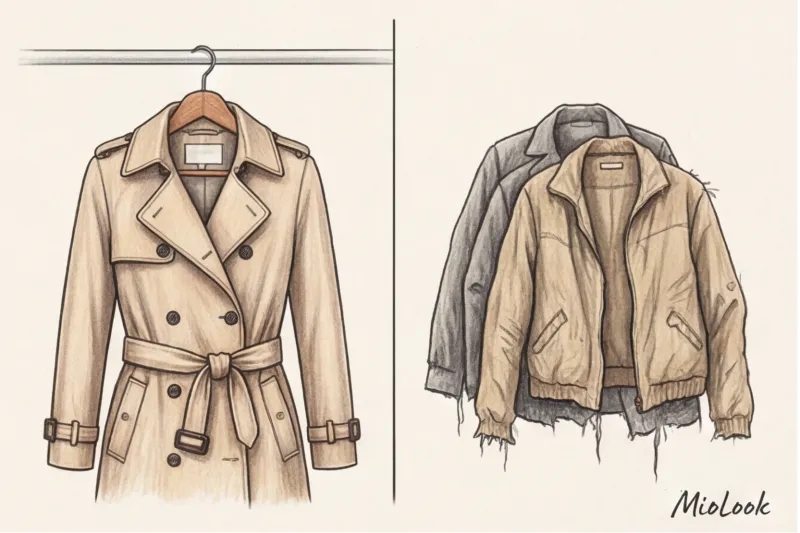
Mass-market manufacturers skimp on details. You can find a trench coat with a luxurious cut and fabric, but it will be betrayed by thin, squeaky plastic buttons with a cheap sheen.
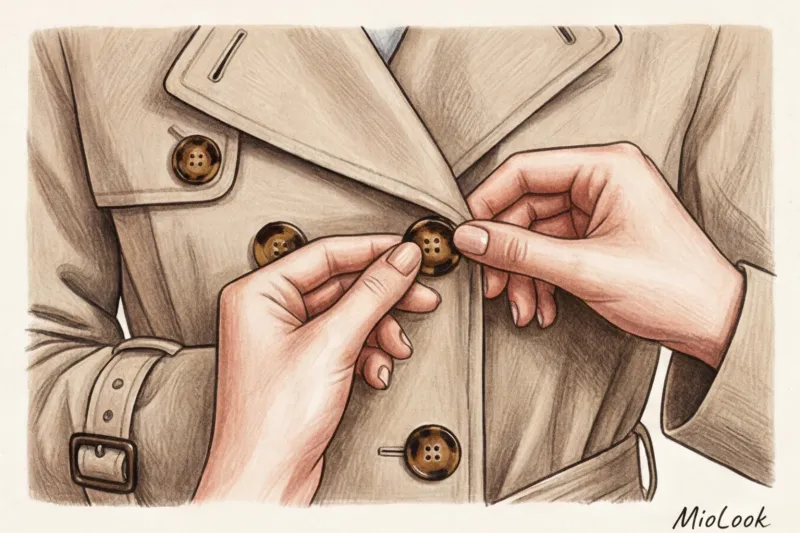
What you need to do immediately after purchasing an inexpensive basic item:
- Replace the buttons. Buy horn, matte metal (no shine), or fabric-covered buttons at a sewing store. This will cost €5–10, but will visually increase the value of your jacket or coat several times over.
- Get rid of your "native" belts. If your dress or pants come with a flimsy belt made of the same fabric with a thin plastic buckle, throw it in the trash. Replace it with a high-quality, medium-width leather belt. A stiff belt will instantly pull your look together.
- Cut off the excess. Remove cheap labels from scarves (especially those sewn on with white thread in a visible place) and be sure to cut off the inner satin loops for hangers - they always treacherously peek out from under the collar at the most inopportune moment.
Insider trick: If you bought a budget bag or shoes with metal hardware that looks too shiny and cheap, use a regular nail file with the softest grit. Using light strokes, mattify the metal—it will give it a refined, vintage look.
Checklist: What to save on and where to invest
According to a 2024 McKinsey consumer habits study, modern women over 30 are no longer looking for compromises within their comfort zone, especially when it comes to footwear. And this is absolutely the right strategy.
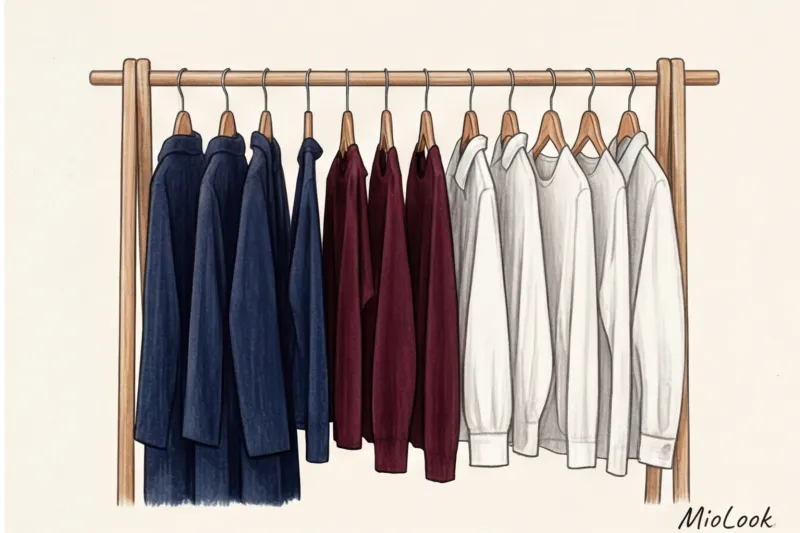
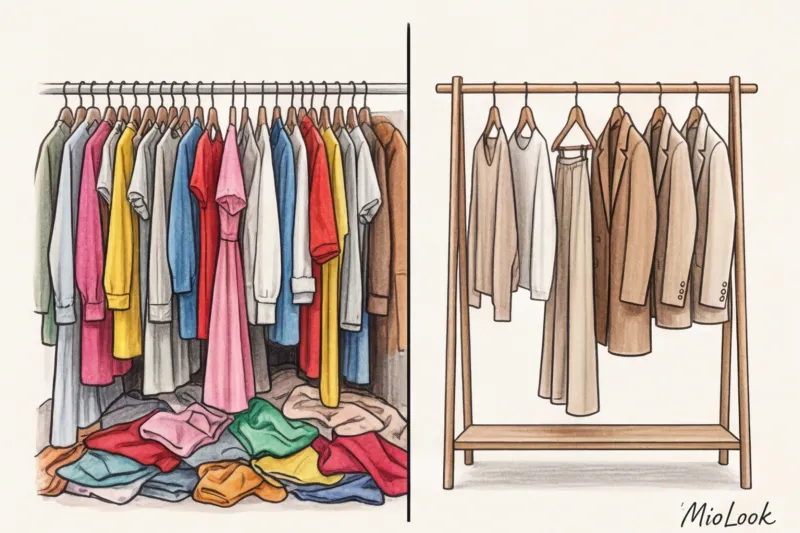
To build a capsule without going broke, split your budget 30/70.
Where you can safely save (consumables):
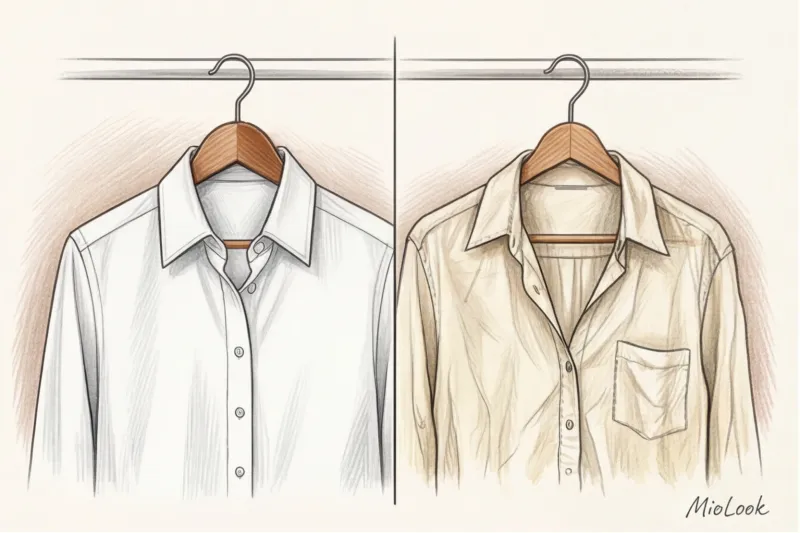
- White T-shirts (they turn yellow from deodorants, no matter the price; buy thick cotton ones for €15–€20).
- Thin turtlenecks and tops under a jacket.
- Summer cotton shirts of a simple cut (the main thing is to ensure the collar holds its shape).
Where to invest the bulk of the budget:
- Shoes. A stiff shoe last on a budget shoe deforms your foot and ruins your gait. What difference does it make how your suit fits if you're hobbling around in pain? Invest in the right leather and a comfortable last (from €100).
- Bags. A bag should have a rigid frame. Soft, budget-friendly bucket bags quickly lose their shape and look sloppy. A structured tote bag made of thick, smooth leather will pull together even a simple jeans look.
- Outerwear and jackets. A coat is the first thing people see on the street. It should have a high wool content (at least 60%) and a perfect shoulder line.
The Invisible Filter of Luxury: Caring for Your Clothes
No brand, even genuine Chanel, can save a wrinkled, pilled, or washed-out item. Conversely, a perfectly ironed basic shirt from H&M looks classy. Your invisible luxury filter is grooming.
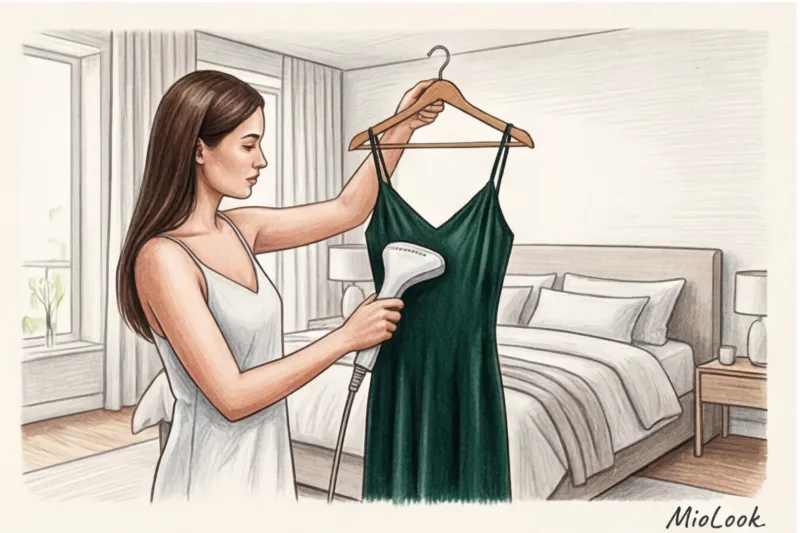
The biggest mistake is ironing clothes with a hot iron. The iron flattens the fabric fibers, causing a cheap, shiny sheen to appear on seams (especially on dark trousers). Invest €40–50 in a good handheld or floor steamer. Steam not only smooths the fabric but also lifts its nap, making the color more vibrant and the texture more luxurious.
The second essential tool is a lint remover (costs around €15). Use it on sweaters, knit dresses, and even coat linings once a month.
Pro storage tip: never hang knitted sweaters and cardigans on hangers! Their weight stretches them out, creating unsightly "ears" on the shoulders from the hanger edges, which instantly ruins the silhouette. Knitwear should only be stored folded on a shelf.
Style isn't a function of your wallet; it's a function of your intellect and your eye for detail. To build a classy wardrobe on a budget, you don't need to buy a lot of things. You just need to buy correct things: complex shades, dense textures and with a perfect fit.