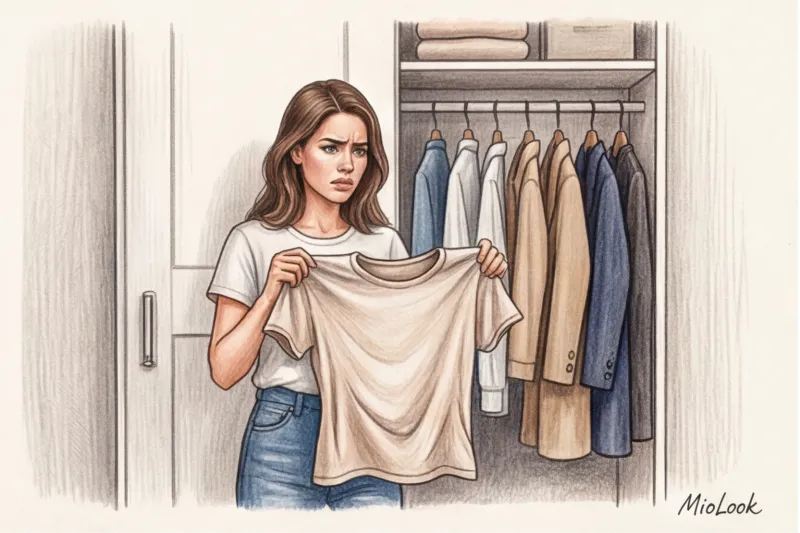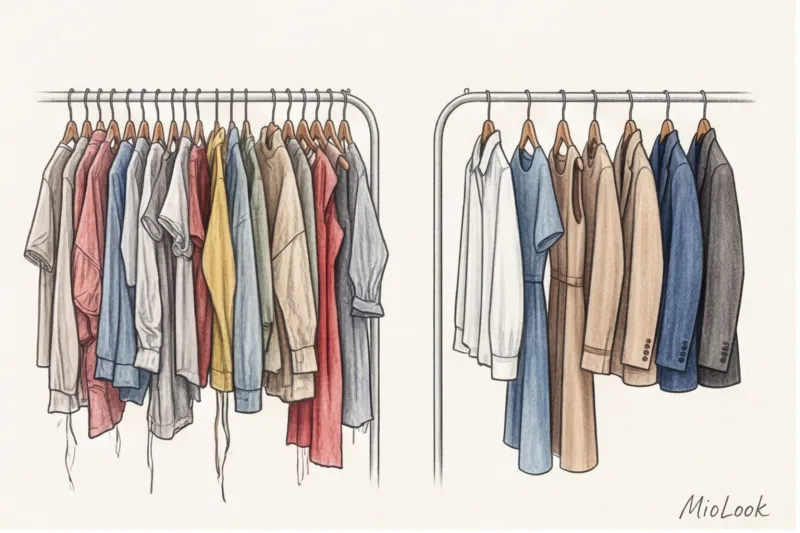
Recently, a client came to me for a wardrobe review and proudly dumped a huge bag of clothes on the bed. "Look, Camilla! Fifteen items on sale for only €500!" she beamed. It was a classic fast-fashion trap. A month later, three T-shirts were warped after the first wash, pants were covered in pilling in strategic places, and a fashionable thin polyester jacket absolutely refused to hold its shape. Ultimately, out of the fifteen items, only two remained in rotation.
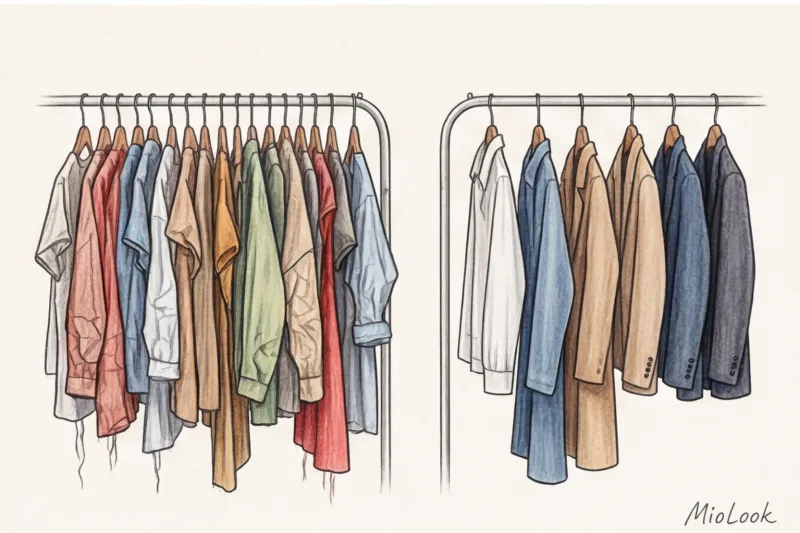
Let's be honest: real budget capsule wardrobe It has nothing to do with mindlessly buying cheap basic T-shirts. The tighter your budget, the more strategically precise your purchases should be. In this article, I'll share the algorithms I use with clients to create visually expensive looks without breaking the bank. We discussed the architecture of such digital solutions in more detail in our The Complete Guide to the AI-Powered Capsule Wardrobe App.
The Illusion of Savings: Why Cheap Things Cost More
The fast fashion industry has conditioned us to the dopamine rush of cheap purchases. But the mathematics of style are merciless. Report McKinsey "The State of Fashion" The 2024 projection reveals a frightening trend: the average number of times an item is worn has decreased by 36% over the past 15 years. We buy more, wear less, and throw it away faster.
Instead of looking at the price tag in the store, I teach my clients to count. CPW (Cost Per Wear) This formula sobers you up better than a double espresso.
CPW formula = Cost of an item ÷ Expected number of outputs in it.
Let's compare two pairs of jeans. The first are ultra-fashionable mass-market jeans for €30. The fabric is thin, the fittings are cheap. You'll wear them 10 times a season, after which they'll lose their shape. CPW = €3 per outing. The second are thick, basic jeans with a well-cut fit (for example, from COS or Levi's) for €120. They'll last you at least three years, and you'll wear them about 150 times. CPW = €0.80 per outing. The expensive item turns out to be almost four times cheaper to wear.
Access to MioLook for €0.99 — one-time payment
A smart AI stylist will select the perfect look for every day and help calculate the effectiveness of your wardrobe.
Get access — €0.99 onceBudget Capsule Wardrobe: The 70/30 Rule from Stylists
When your budget is limited, spreading it evenly across all items is a crime against style. A successful capsule collection is built according to the 70/30 rule: we spend 70% of our budget on 30% of the items (our core) and 30% on the remaining 70% (consumables and accessories).
This is the basis of the strategy High-Low (a mix of expensive and affordable brands). Over 12 years of working in the fashion industry, I've learned one biohack: the human eye reads the status of an image in a specific way. We look at the profile (shoulder and collar), then evaluate the shoes, and finally, the texture of the bag. If these three elements are impeccable, the brain automatically "ups" the cost of simple cotton trousers or a basic T-shirt to luxury levels.
Capsule core: what you absolutely mustn't skimp on
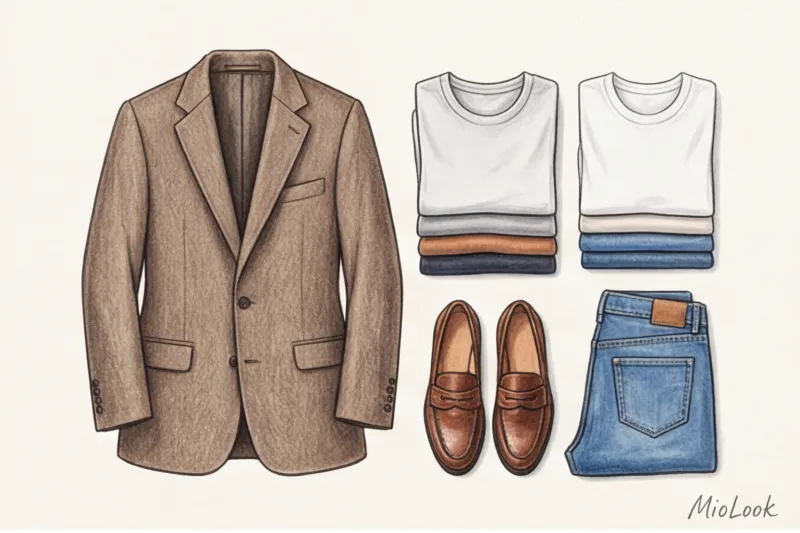
There are things that shape posture and gait. Invest in your wardrobe it is worth it in them:
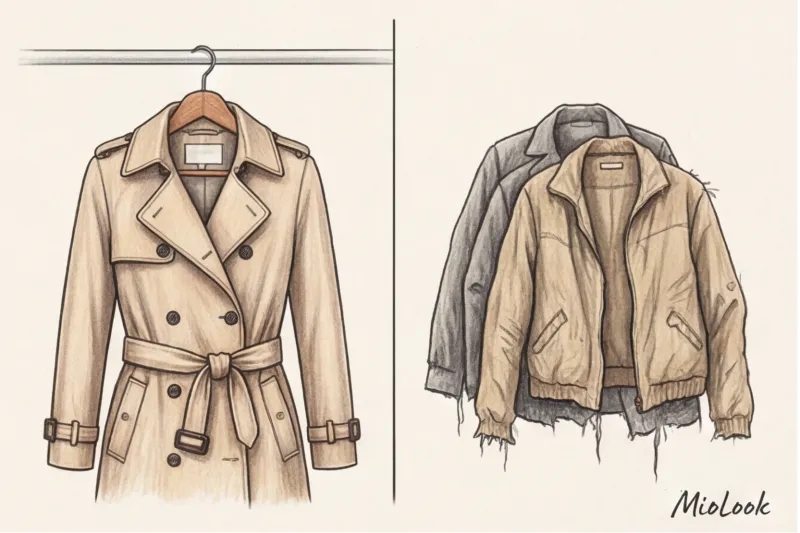
- Outerwear (coats, trench coats): A cheap coat always gives itself away with crooked shoulder seams and thin, wrinkle-prone fabric. A coat should be the architectural framework of the look.
- Shoes: It's not just a matter of aesthetics, but also of health. A poor last can ruin your gait. Cheap faux leather doesn't breathe. High-quality shoes made of genuine leather or high-tech modern materials are an absolute must-have.
- Structured Jacket: That's the element that instantly transforms any relaxed jeans look into an elegant urban outfit.
Savings Zone: Where You Can Cut Costs
This is where we can save our euros. There's no point in spending hundreds on something that only lasts one season or gets washed frequently:
- First layer T-shirts and tank tops: This is a consumable item. A white T-shirt for €15 made of thick cotton (from 180 g/m²) will be just as good as a designer one for €150.
- Trendy jewelry: Trendy chunky earrings or plastic rings will last six months. Mass-market items will do the job just fine.
- Summer dresses: Lightweight items made from blended fabrics (for example, viscose with 5% elastane) often look good even in the budget segment.
Smart Shopping Tips: How to Find the Diamonds in the Mass Market
The mass market hides some great basics if you know how to look for them. I call it "hunting with a magnifying glass."
Firstly, wrinkle test Found a beautiful pair of wide-leg trousers at Zara? Squeeze the fabric in your fist for 10 seconds. If it looks like a dinosaur chewed it, put it back on the hanger. You won't stand like a mannequin in real life, and wrinkled synthetics are a style killer.
Secondly, the fittings give away the price I have a professional life hack that saves money: the "Resewn Button Rule." Shiny plastic buttons on a cardigan scream price. Buy horn, mother-of-pearl, or cast metal buttons at a good fabric store for €5-10 and resew them. One of my clients did this with a basic Mango blazer, and her office colleagues were convinced it was the new Max Mara collection.
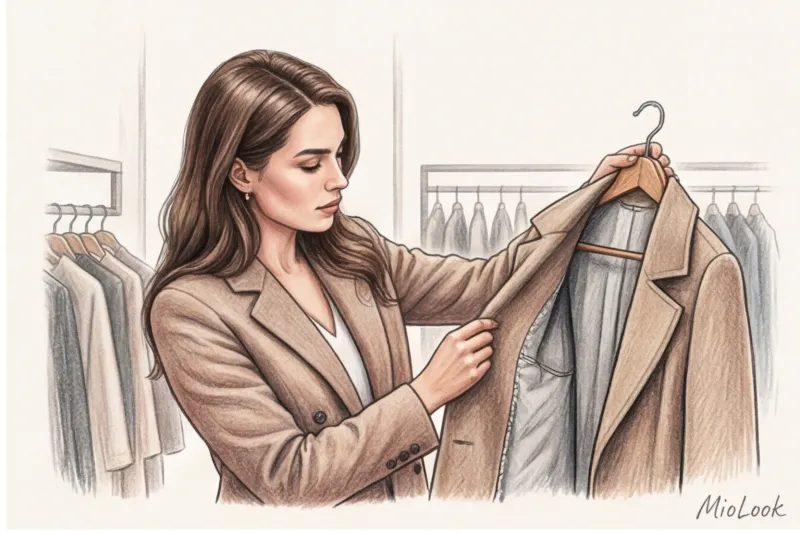
Thirdly, pay attention to color palette If you're buying an inexpensive item, avoid complicated floral prints (they often look muddy on cheap fabric due to poor printing). colors that historically look expensive: deep wine (burgundy), pure milky (ecru), classic dark blue (navy) and camel.
Your ideal image begins Here
Join thousands of users who look flawless every day with MioLook's intelligent tips.
Get access — €0.99 onceResale and Vintage: Secret Weapons for a Luxury Base
There's a common myth: "If you're on a budget, you should shop cheap." As a professional, I say the opposite: The smaller your budget, the less often you should go to mass-market stores for complex items like coats or jackets. Your path lies on resale platforms and vintage boutiques.
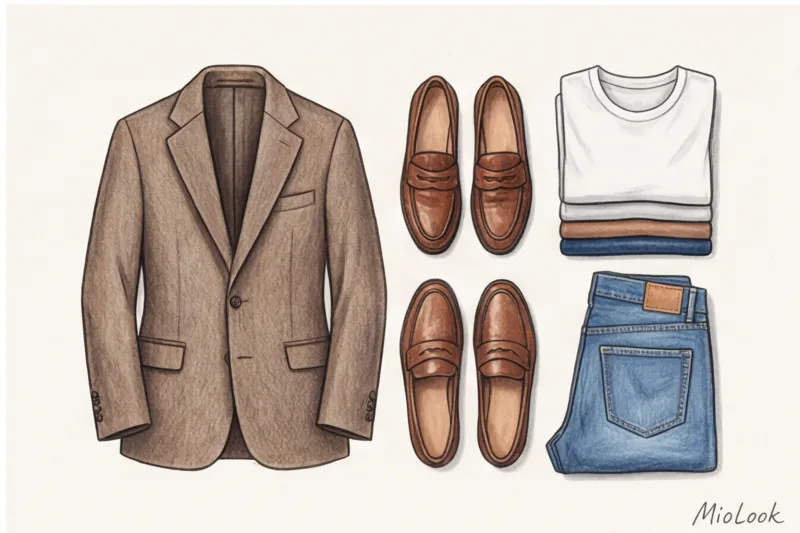
Modern resale isn't about the shady thrift stores of the '90s. It's about conscious consumption and the opportunity to buy 100% cashmere or silk for the price of acrylic from H&M.
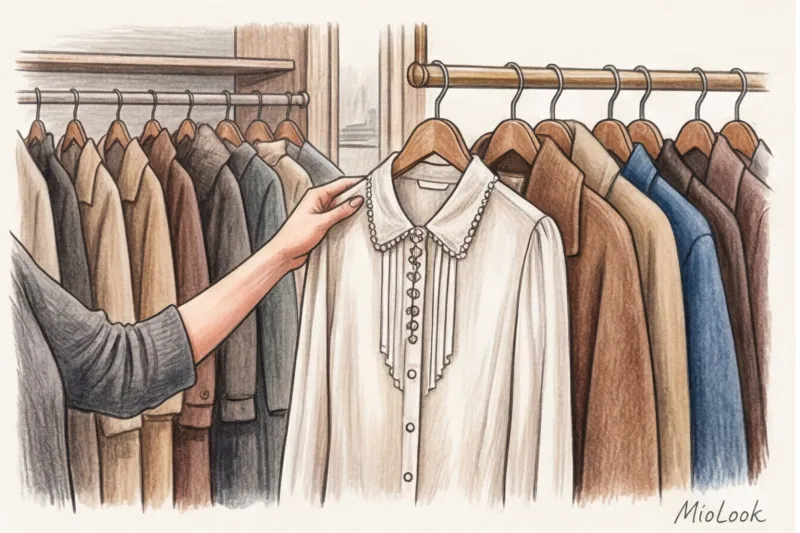
I remember finding a men's wool Yves Saint Laurent blazer from the '80s in a Parisian vintage shop for a mere €40. Perfect peak lapels, timeless fabric, impeccable oversized fit. Nowadays, items with this level of tailoring cost upwards of €1,500.
What to hunt for at resale: voluminous men's jackets (wool), basic bags are out of fashion , silk blouses, cashmere sweaters, high-quality trench coats.
What is better to buy new: underwear, first-layer knitwear (T-shirts), shoes (due to hygiene and individual deformation of the foot last).
To be fair, I'll point out an important caveat: vintage and resale aren't for everyone. If you have a non-standard figure that requires very specific patterns, or you hate time-consuming searches and fittings, this route may be disappointing. In that case, it's better to save up for new, high-quality items.
Digital Control: How AI Protects Against Impulse Buying
According to data from the British organization WRAP (Waste and Resources Action Programme), almost 30% of the clothes in Europeans' closets haven't been worn in the past year. Why? Because of visual noise. We wear only what we see and remember.
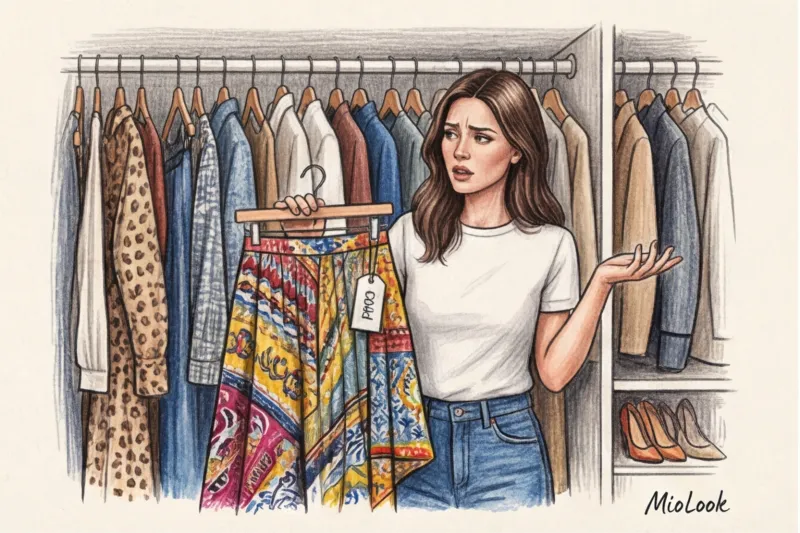
When your budget is tight, every mistake costs twice as much. Buying a beautiful silk skirt on sale, only to have it hang in your closet for six months because there's no matching top, is a failure.

That's why I strongly recommend my clients to digitize their wardrobes. MioLook , you can try on the item in a virtual format TO before you check out. While in the fitting room, you simply add a photo of a new item to the app and see if it matches at least three stylish combinations with your current capsule collection. Artificial intelligence will suggest whether you're buying a fifth similar shirt.
Step-by-step plan: building a basic capsule from scratch (approximate budget)
Let's do the math. Let's say our starting budget for a seasonal capsule collection is €450–€500. How can we wisely allocate this money when creating a 12-piece base from scratch that will yield over 30 looks?
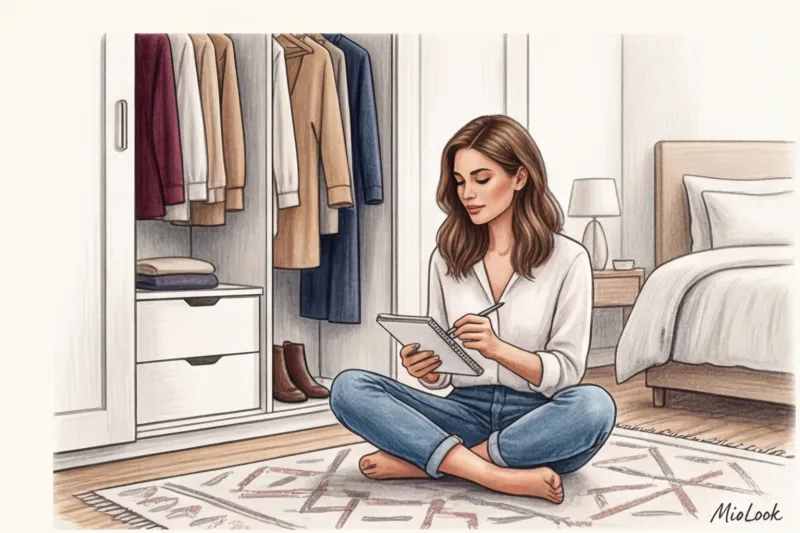
- Step 1: Hard audit (0 €). Take everything out. Keep only those items that fit perfectly now, not when you lose 3 kilograms.
- Step 2: Two “bearing” investments (≈ €250). Here we use resale or clearance items from mid-market brands. We need a structured coat/trench coat (around €130 on resale) and impeccable shoes (leather loafers or ankle boots – €120).
- Step 3: Basic bottoms (≈ 100 €). Straight-leg trousers or jeans. One pair of blue jeans (€50) and one pair of classic pleated trousers (€50, good-fitting mass-market brands) will suffice.
- Step 4: Variation of tops (≈ 100 €). Tops are what create the feeling of wearing something new every day. For the remaining money, we'll buy a crisp white T-shirt (€15), a men's-cut shirt (€30), a Breton-striped long-sleeve top (€20), and a cozy cardigan (€35).
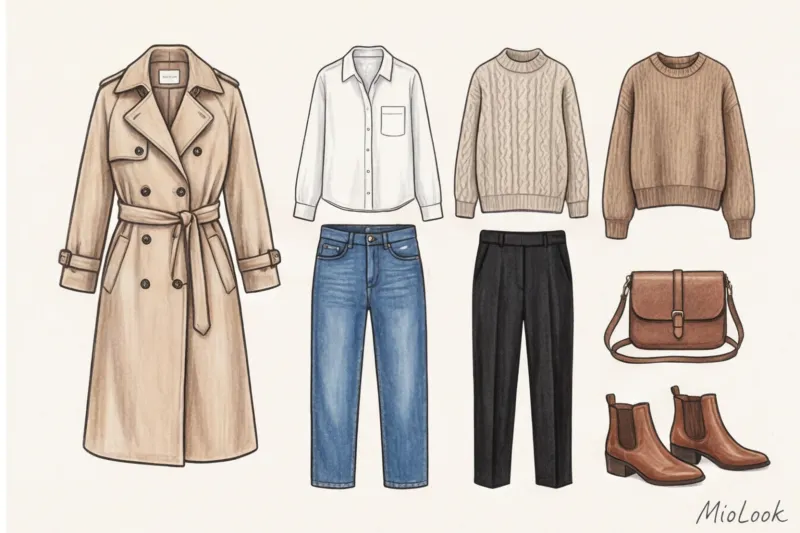
The magic of the capsule in the mathematics of combinatorics. Four top options multiplied by two bottom options = 8 unique bases. Add the option of wearing a shirt unbuttoned over a T-shirt, or a cardigan draped over a long-sleeve, and the number of looks doubles.
Ready to get started?
Try MioLook's free plan—no commitments required. Upload your items and let the AI assemble them into stylish capsule wardrobes.
Get access — €0.99 onceSummary: Your Checklist Before Going to the Checkout
I always say: the best shopping experience is the one that didn't happen because of a well-timed question. Save this checklist and refer to it every time you reach for your wallet:
- The rule of three combinations: Can I create three different looks for three different occasions (for example, to the office, for coffee with a friend, on a date) with this item right now, without buying anything new? If not, the item stays in the store.
- Care question: Buying a viscose-silk blend blouse for €25 seems like a great deal. But if the tag says "Dry Clean Only," the €15 monthly dry cleaning will eat up all your savings for the season.
- Emotional test: My favorite trick: Ask yourself: "Would I buy this item right now if it didn't have a red 70% off price tag on it?" If the answer is no, you are buying a discount, not an item.
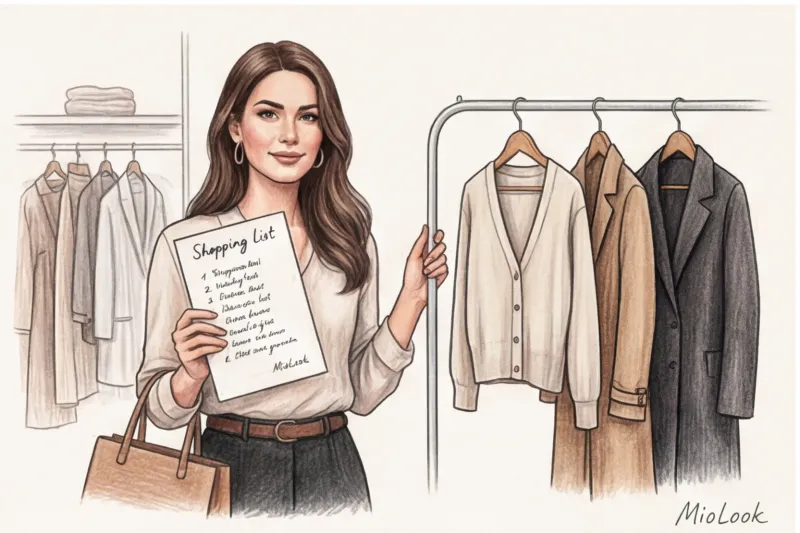
Impeccable style isn't about the size of your wallet or the logos on your bags. It's about math, discipline, and a little foresight. Invest in knowledge of fabrics, use technology to plan your wardrobe, and you'll be surprised how luxurious you can look with minimal expense.