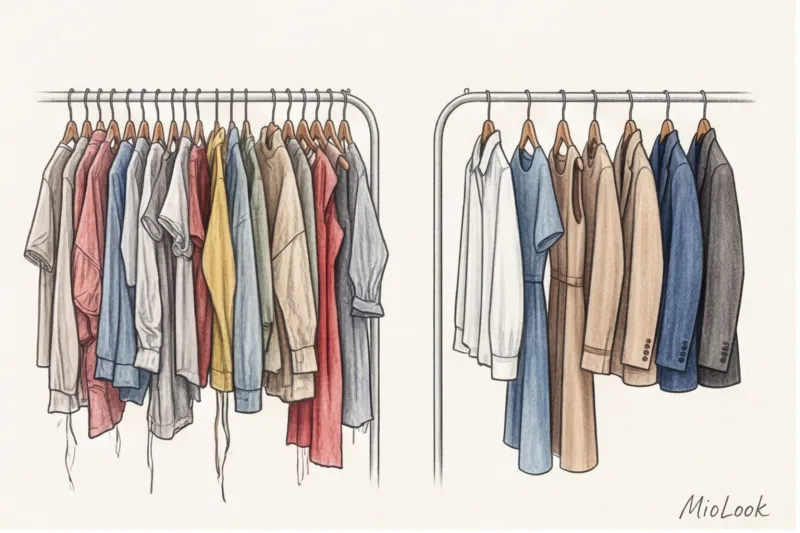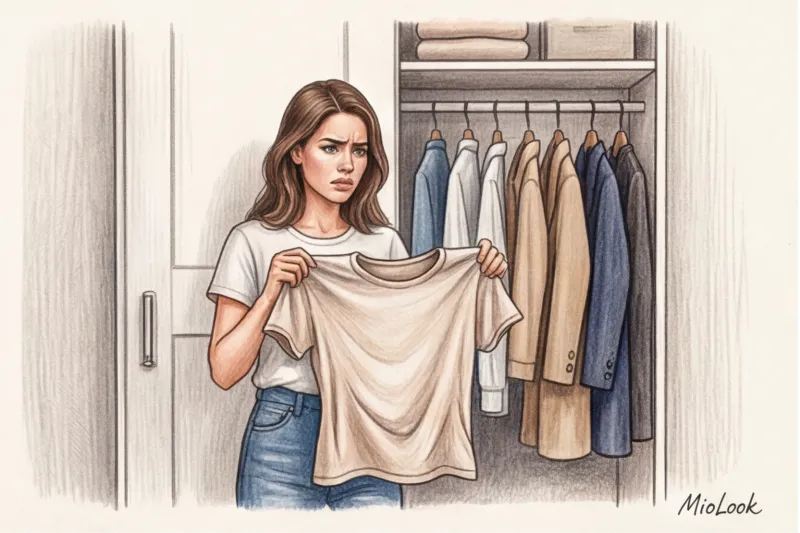
Recently, a woman came to me for a wardrobe review, genuinely upset. A month ago, she decided to build a "basic wardrobe." She went to a popular high-street store and bought five black items: a turtleneck, pants, a jacket, and a couple of T-shirts. She thought black was a safe investment. After four washes, the turtleneck was covered in pilling, the pants were shiny around the thighs, and the jacket had acquired a dirty, rusty undertone.
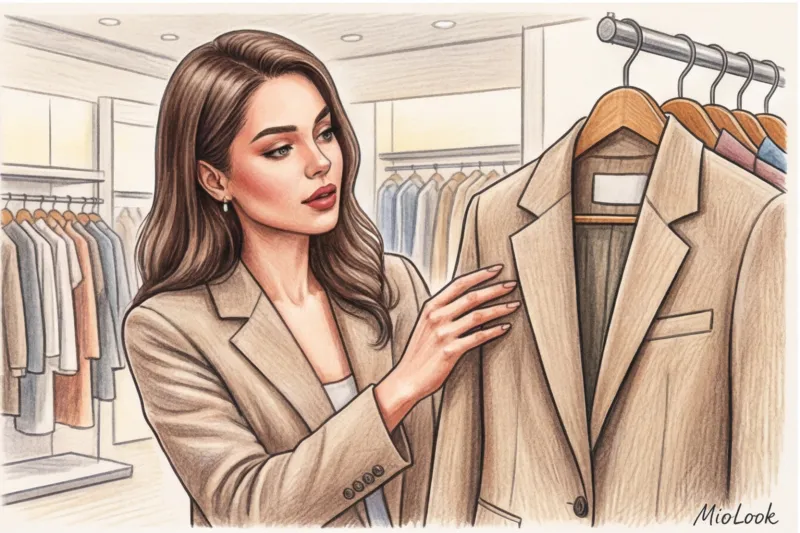
Hi, I'm Darina Marchenko, a stylist, colorist, and a proponent of smart consumption. Over 12 years of practice, I've learned one strict rule: collect capsule wardrobe on a budget — this is a problem with an asterisk, requiring mathematical calculations and knowledge of fabric chemistry. Luxury forgives mistakes, mass market never does.
Today, we won't just list cheap brands. I'll give you a concrete system: how to distribute a hard limit of €200 (the equivalent of our conditional budget) so that your base looks like a solid mid-market segment. We've covered the fundamental principles in more detail in our The Complete Guide: How to Build a Basic Wardrobe on a Budget: Stylist Tips.
A Capsule Wardrobe on a Budget: The Hidden Rules of Mass-Market Fashion
When budgets are tight, shopping ceases to be a pastime and becomes an analytical exercise. The key metric we should rely on is Cost Per Wear (CPW).
According to MioLook's internal analytics for 2023, items made from 100% cheap polyester last three times less in a wardrobe than items made from blended fabrics (e.g., 80% cotton/20% polyester). Cheap synthetics quickly lose their shape, become staticky, and become covered in pilling (the same pills).
The "visual luxury" strategy is based on deceiving the eye. We must choose textures and shades that are difficult to spoil in the factory. A smooth, matte, medium-weight fabric always looks more prestigious than a thin, shiny knit that makes underwear appear translucent.
The Coloristics of Poverty: Why I Forbid Buying Cheap Black
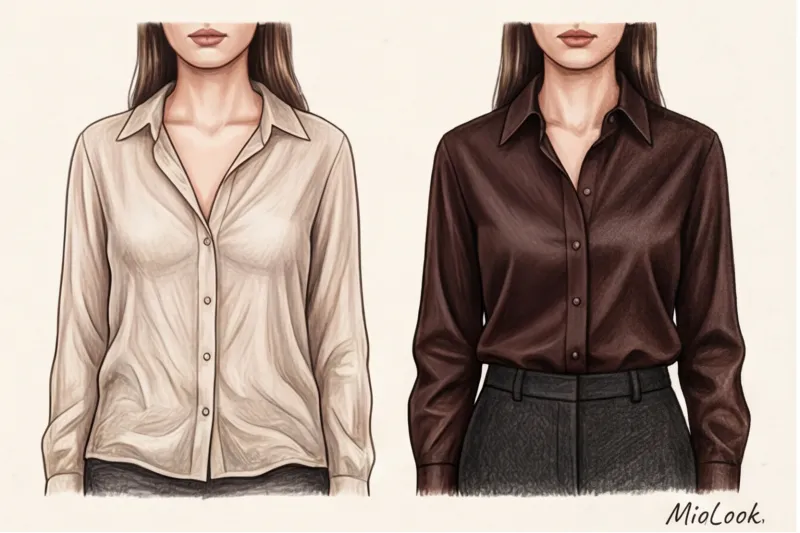
And now my favorite counterintuitive tip, which is often the reason newbies argue with me. In the mass market, black isn't a basic classic. It's a sign of cheapness.
"Cheap black dye is extremely unstable. In the budget segment, factories skimp on fixing the pigment. As a result, the black quickly washes out, turning brown, green, or gray. Furthermore, every speck of dust, pet hair, and lint is instantly visible on mass-market black."
If your budget for an item is less than €30–40, forget about black. What colors look elegant even in inexpensive fabrics?
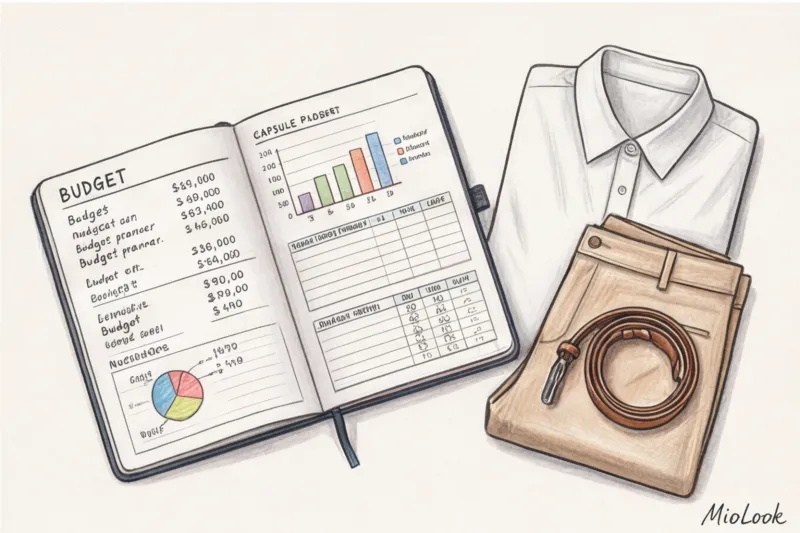
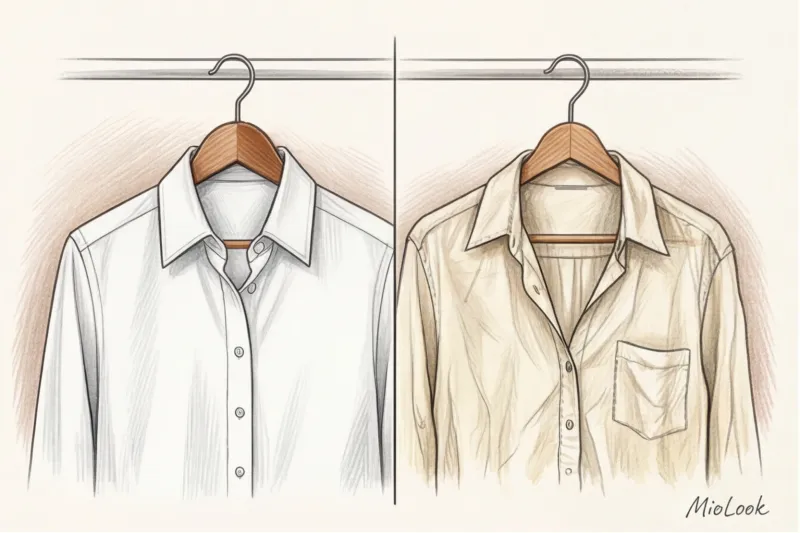
- Milky and ecru: They don't require complex pigments and refresh the face (unlike snow-white, which often turns blue).
- Camel and sand: Historically associated with cashmere and camel wool, the brain subconsciously reads them as “expensive”.
- Deep Dark Blue (Navy): An excellent and much more prestigious alternative to black for trousers and jackets.
Access to MioLook for €0.99 — one-time payment
A smart AI stylist will select the perfect palette for your appearance and help you create a flawless capsule wardrobe.
Get access — €0.99 onceCapsule Mathematics: How to wisely allocate €200
The most common mistake my clients make is splitting their budget equally. Buying sneakers for €20, jeans for €20, a sweater for €20, and so on. This is the path to a wardrobe in which everything looks equally mediocre.
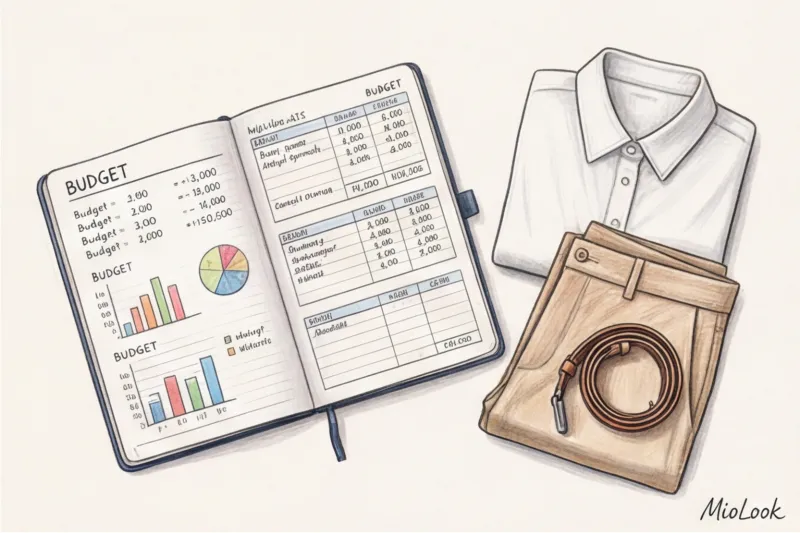
I use the "40/60" rule. We invest 40% of the budget in the "framework" of the look (shoes, bags, outerwear, or a structured jacket). These are the things people notice first; they set the tone. The remaining 60% goes to clothing.
Approximate cost of our capsule (200 €):
- Shoes and structured bag: ~80 € (we look for discounts on basic models made of high-quality eco-leather or inexpensive natural suede).
- Bottoms (3 items): ~60 €
- Tops (4 items): ~60 €
A 9-piece framework: putting together a complete base
The minimum working capsule for the season is not 30 items, but just 9 carefully chosen pieces. The formula for combination is simple: 3 bottoms + 4 tops + 2 pairs of shoes gives us over 24 different combinations if all the colors are complementary.
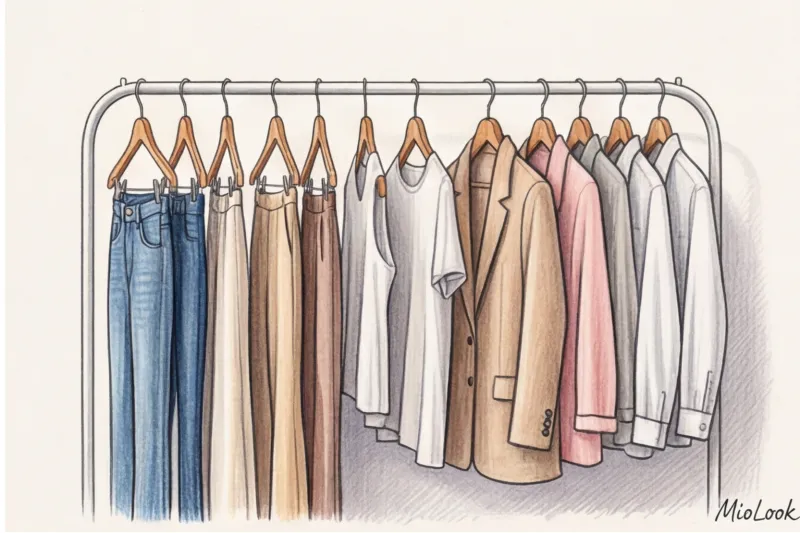
The main requirement for a cut in the budget segment: no complications Avoid draping, ruffles, complex asymmetries, and excessive hardware. The simpler the cut of a garment, the less likely a crooked seam will reveal its origins. Choose a semi-fitted silhouette: there should be some air between you and the garment.
Bottoms: jeans, trousers, skirt (Budget ~60 €)
This trinity will cover 90% of your needs:
- Thick denim without abrasions. Remember: the ideal mass-market jeans should be solid-colored (blue, gray, or graphite). No faux-groin fluff or ripped knees—in cheap manufacturing, this always looks homemade. The cotton weight should be at least 12 ounces, so they hold their shape.
- Palazzo trousers with creases. We look for suiting fabrics with at least 20-30% viscose. A crease elongates the silhouette and adds a more composed look.
- Satin midi skirt. There is an important limitation here: This advice doesn't work for women with a pronounced belly, as the shine will accentuate the volume. If your figure allows, look for a bias-cut skirt—it flows beautifully rather than hangs loosely. The shine should be muted and matte, otherwise the skirt will look like a cheap nightgown.
Tops and layers: shirt, jacket, knitwear (Budget ~60 €)
To keep your tops lasting, use my pro tips:
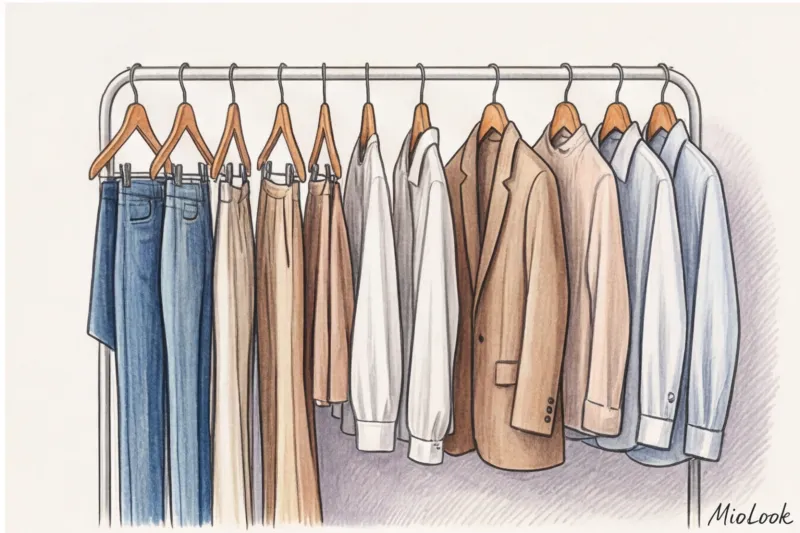
- Men's cut cotton shirt. Life hack: go to the men's department at Zara or H&M. Men's shirts are made from heavier cotton (180 g/m² and up), they hold their collar shape better, aren't see-through, and are often cheaper than their women's counterparts.
- The right jacket. Look at the shoulder line (it shouldn't sag) and be sure to check the lining. If the lining crunches like a plastic bag, leave it at the store.
- Long sleeves and T-shirts. Look for heavyweight cotton with 5% elastane. 100% cotton in the budget segment quickly warps after washing.
Hidden gems of the mass market: what to focus on
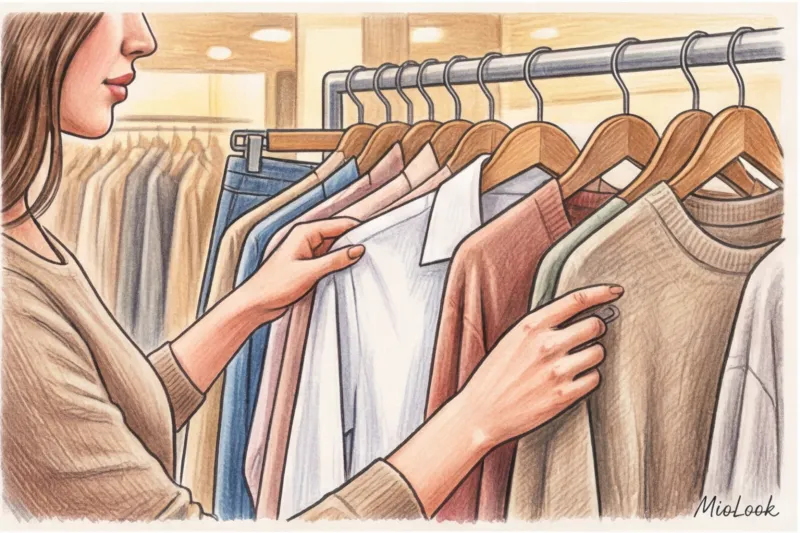
The mass market is a minefield, but there are treasures there if you know where to look.
Knitwear. A study by the WGSN Institute shows that today's consumers throw away knitwear more often than other fabrics. Avoid 100% acrylic—it's a "glass" yarn that will make you sweat outdoors and freeze indoors. Look for blends on the tags: at least 10-15% wool or alpaca combined with polyamide or cotton.
A stylist's life hack with accessories. This is what I do for 8 out of 10 of my clients. We buy a basic jacket or cardigan for €40, go to a tailor's shop, and buy high-quality buttons (horn, metal, fabric-covered) for €5. We alter them. The garment instantly looks like it belongs to a €200 brand.
Eco-leather. It can look stunning if it's matte and has a "meat" texture on the reverse side. Thin, glossy eco-leather with a textile backing will crack in the cold within the first season.
Your ideal image begins Here
Take photos of your items, and MioLook's algorithms will create dozens of new outfits from them, taking into account the principles of a capsule wardrobe.
Get access — €0.99 onceStylist Checklist: 5 Things to Test Right in the Fitting Room
Never buy an item without thoroughly stress-testing it in the fitting room. It only takes a minute, but it will save you money.
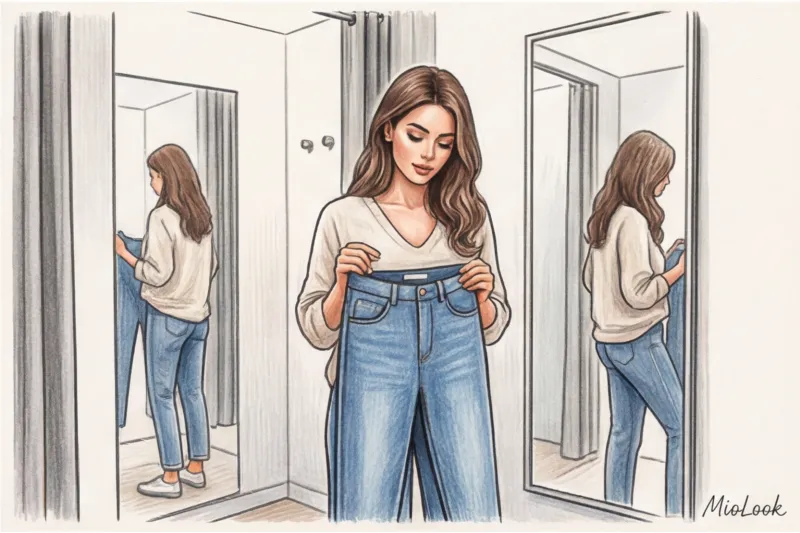
- Crease test. Squeeze the fabric in your fist and hold it for 10 seconds. Release. If it still looks like chewed paper, don't handle it. You'll go crazy ironing it, and it'll wrinkle on the way to the office.
- Translucent test. Lift the item and look through it at the bright fitting room lights. Are the outlines of the lights too clearly visible? The fabric is loose and will quickly lose its shape.
- Checking the seams. Gently (but not excessively!) pull the fabric apart at the seam. If threads are visible or holes form, the seam will unravel within a month. For printed items (such as stripes), the pattern at the seams should match.
- Evaluation of the inside. Turn the garment inside out. Loose threads and crooked overlock stitches are a sign that the factory was in a hurry.
- Electrification test. Simply run your dry palm over the fabric a few times. If it starts to stick to your hands or crack, it's cheap synthetic and will collect all the dust in the city.
The Sale Illusion: Why Discounts Are Killing Your Budget
And finally, let's talk about the biggest enemy of a budget wardrobe. The trap of red price tags makes us buy what's cheap, not what we need.
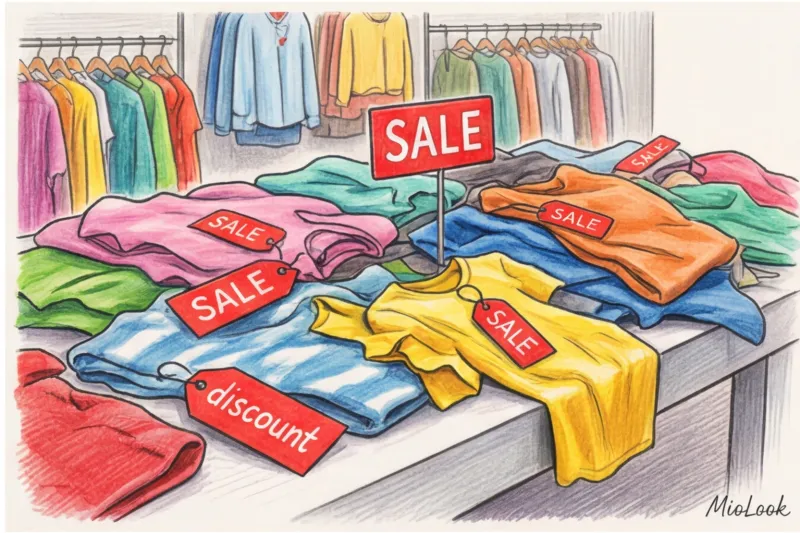
According to statistics, about 60% of items bought at spontaneous sales are worn only once or even leave the tags on. When you see a neon blouse with a 70% discount (for just €10!), your brain releases dopamine. But this blouse will ruin the entire color logic of your capsule. You'll have to buy new pants and shoes to go with it, and your €200 budget is gone.
To avoid this, go shopping with a clear list. Personally, before each season, I write down my planned purchases in MioLook's "smart wardrobe" app This allows you to visually try on a new item against existing ones and understand whether it will fit into the frame.
Putting together a stylish basic for €200 is absolutely possible. You don't need innate talent or hours of shopping at the mall. All you need is a calculator, an understanding of basic textures, and a willingness to eschew compromises in the fitting room. Invest in the quality of the fabric, not the number of labels, and your wardrobe will always look great.