


Have you ever wondered why a perfectly-cut neon sweater can sometimes make your face look tired and your eyes dull? As a textile expert and practicing stylist, I constantly see the same mistake: women try to wear their best bright shades in cheap, loose cotton or matte acrylic. The problem isn't the color. It's the physics of the fabric.

We talked about the basics of seasonal color in more detail in our a complete guide to the 12 color types of appearance , but today we are dissecting the most extreme type. Bright winter color type It's not just a set of contrasting colors. It's a rigorous mathematics of light reflection, where the texture of the material and the eco-friendliness of the dye make all the difference.
Bright Winter Color Type: The Anatomy of Absolute Contrast According to the Munsell System
In the classic 12-season theory, Clear or Bright Winter occupies a borderline position between the cold True Winter and the warm Bright Spring. It is this proximity to Spring that gives this type that vibrant, neon energy that other winter types cannot match.
If we refer to the Albert Munsell color system (a scientific standard used by colorists since 1905), the key characteristic of this color scheme is maximum color purity, or chroma The Bright Winter shades are completely free of gray pigment. No dust, no mutedness.
The natural highlights of this type of appearance are always built on high contrast. These include icy, sparkling whites of the eyes, a clear skin tone free of "dirty" eyeshadow (olive or earthy), and vibrant iris pigmentation. When a woman with this type comes to me for a wardrobe review, the first thing I do is remove all complex, "intellectual," dusty tones like taupe or khaki from her face—on a Bright Winter, they look like unwashed rags.
The Biggest Myth: Why Black Isn't Always Your Best Choice
There's a ingrained stereotype in fashion: if you're a Winter, your ideal base color is all-black. Over 12 years of working with personal style, I've learned that for a Bright Winter, this rule often breaks down.
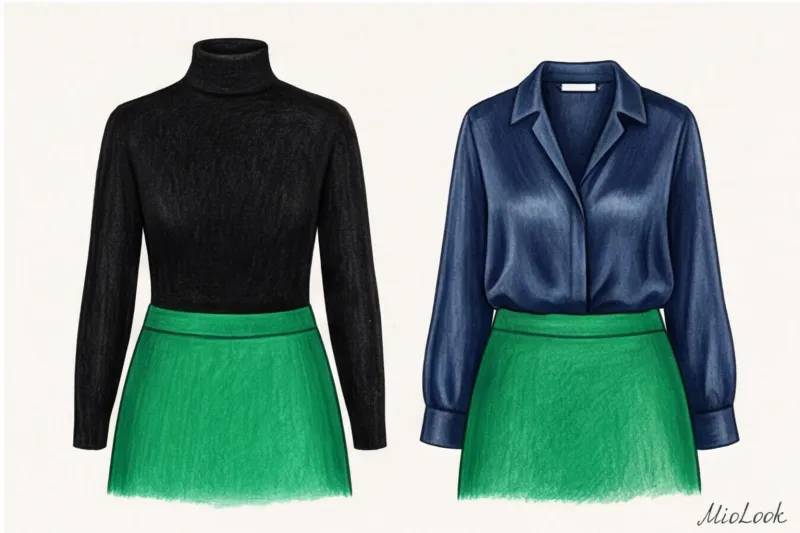
Due to the springtime influence, a dull, matte black can create a "separate head" effect. It absorbs your natural vibrancy instead of serving as a frame for it. I had a telling case with a client, an IT director: we replaced her usual black wool jacket with a midnight blue one made of smooth super 120s wool. The next day, her colleagues were asking if she was back from vacation—her complexion was so refreshed.
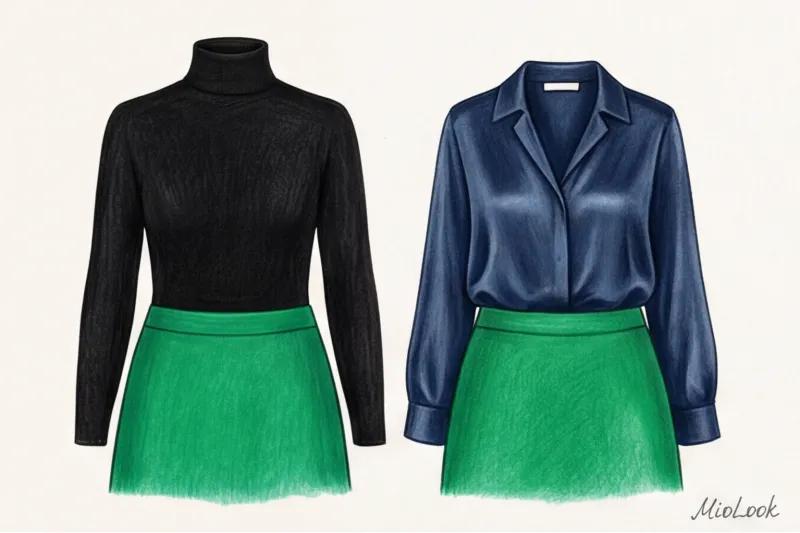
If you want to look expensive, consider premium alternatives to black:
- Icy Navy — the color of the ocean at depth, almost black, but with a cold blue sparkle.
- Pure graphite - dark gray without brown impurities, ideal for business wardrobe by color type.
- Dark Emerald - works as a luxurious backdrop for bright lips or accessories.
Investing in the base: status dark shades
The secret to the right base for Bright Winter is that it should push the accent color to the forefront. Deep blue paired with neon fuchsia looks like a clever design statement, while fuchsia and black often evoke the worst of the 2000s aesthetic. Choose dense, shape-holding fabrics for the dark base: gabardine, heavy silk, or high-quality faux leather.
Your perfect look starts here
Join thousands of users who look flawless every day with MioLook. Our smart AI stylist will help you create a capsule wardrobe featuring your best colors.
Get access — €0.99 onceNeon Shades in Real Life: How to Wear Them Without Looking Cheap
Neon and extremely bright colors are your superpower. But they also carry a colossal danger. I always tell my clients: neon doesn't forgive cheapness. It demands impeccable tailoring and premium materials.
Why do neon items from mass-market stores often look vulgar? The answer lies in chemistry. According to a 2024 report by the authoritative Textile Exchange, most brightly colored fast-fashion items are dyed with harsh synthetic dyes over cheap recycled polyester. This material is incapable of reflecting light gracefully.
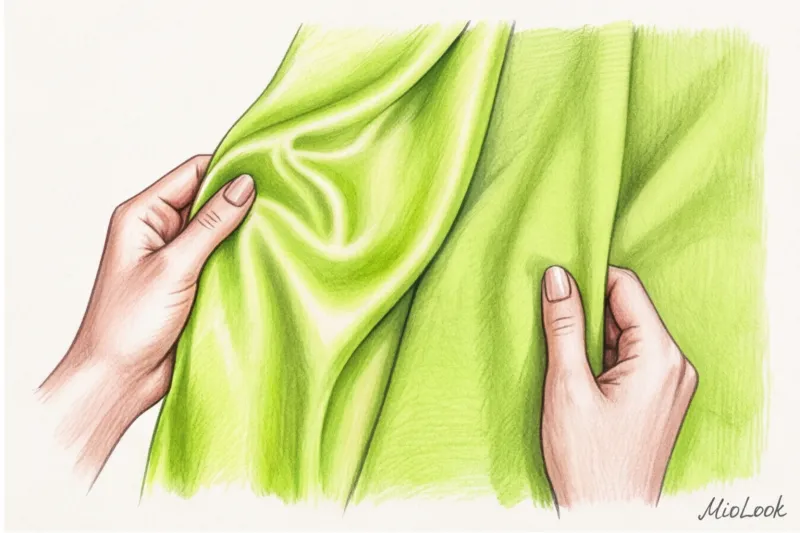
Instead of toxic polyester, I highly recommend eco-friendly alternatives that hold pure pigment beautifully:
- TENCEL™ (lyocell) — an environmentally friendly fiber made from eucalyptus wood that absorbs dye deeper than cotton and gives a luxurious glow.
- Organic silk — the absolute champion in color rendering.
- Cupra — a vegan alternative to silk that has the same fluidity and shine.
Fabric Physics: Why Silk Holds Neon While Loose Cotton Doesn't
This is where the physics of light comes into play. The purity of color required by the Bright Winter color type depends on the reflectance. A satin weave (like silk or viscose) creates a smooth surface. Light reflects off it in a targeted manner, returning a pure, vibrant pigment to our eyes.
But the plain weave of loose cotton, linen, or bouclé diffuses light. Micro-shadows form in the fabric's micro-fibers. These shadows tint your luxurious neon with that same gray, ruining all the magic of Bright Winter. That's why an electric-blue linen jacket will always look like a dull compromise.
Icy tones: how to avoid the washed-out look
Many people confuse pastel and icy shades, which leads to fatal wardrobe mistakes. Pastel is a color that's been washed out and muted with gray (like dusty rose). Icy color is a dazzling white that's been infused with just one drop of pure, vibrant pigment.

For office dress code, especially if you are looking for bright colors in office wear Icy tones are a lifesaver. A smart men's shirt made of smooth poplin in icy yellow or icy blue will refresh your face after a sleepless night better than any concealer.
"Icy shades work like a photographer's reflector: they illuminate the face from below, erasing wrinkles and signs of fatigue. The main thing is to make sure the fabric has a light satin finish, not a matte, rough texture."
But icy tones have a limitation: they mercilessly highlight the uneven texture of the fabric itself. If a thin cotton shirt is see-through or wrinkles after an hour of wear, an icy color will turn it into a washed-out rag. Choose a cotton weight of at least 180 g/m².
Access to MioLook for €0.99 — one-time payment
Start creating your perfect looks with AI. Upload your items and receive ready-made combinations every day.
Get access — €0.99 onceA Capsule Wardrobe for a Bright Winter: An Eco-Friendly and Smart Approach
Building a sustainable wardrobe requires fewer items, but they should be 100% in line with your natural coloring. Color blocking is the ideal strategy for a vibrant winter.
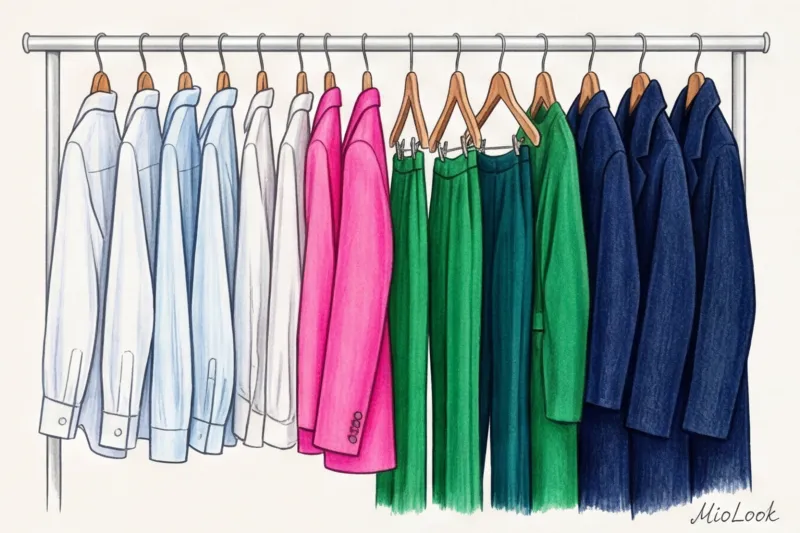
I recommend using the 70/30 rule. Let 70% of your wardrobe consist of basic, deep dark tones and fresh, icy shades. The remaining 30% is those uncompromising neon and pure colors (ruby, sapphire, fuchsia, emerald). This balance allows you to create dozens of outfits of 15-20 items.
For example, a dark blue pantsuit made of dense eco-viscose (70%) is complemented by a fuchsia silk top (30%). You get a classy yet subtly aggressive look, perfect for today's business environment.
Checklist: Check fabrics and shades before buying
When I'm taking my clients on a shopping spree, I always teach them three simple tests that help them avoid buying something that will just end up hanging in their closet like dead weight.
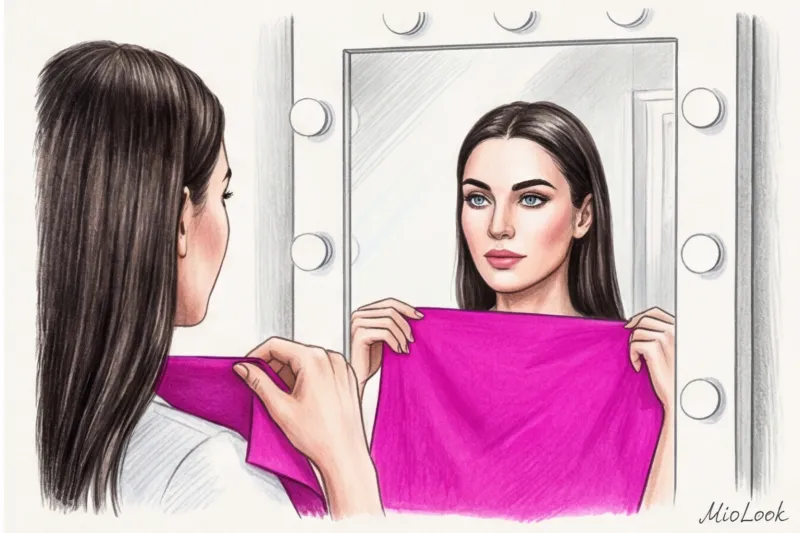
- Face test. Hold a neon item up to your face in daylight (be sure to leave the fitting room with its yellow lights). If the color seems to "enter" the room first, followed by you, the shade is too warm or not pure enough for you.
- White sheet test. To distinguish between pastel and icy shades, place a plain sheet of white paper against the fabric. Against the paper, the icy shade will appear cool, while the pastel will appear dirty.
- Density estimation. A bright color draws maximum attention to detail. Check the seams: if they're pulled tight or the fabric is see-through, neon will cheapen the entire look.
Makeup and Accessories: The Final Touches for a Bright Winter Look
No wardrobe, even the most carefully curated, will work without the right frame in the portrait area. The bright winter color type requires sparkle. Forget matte textures and patinated metals—they're great for autumnal types, but they'll make you look boring.
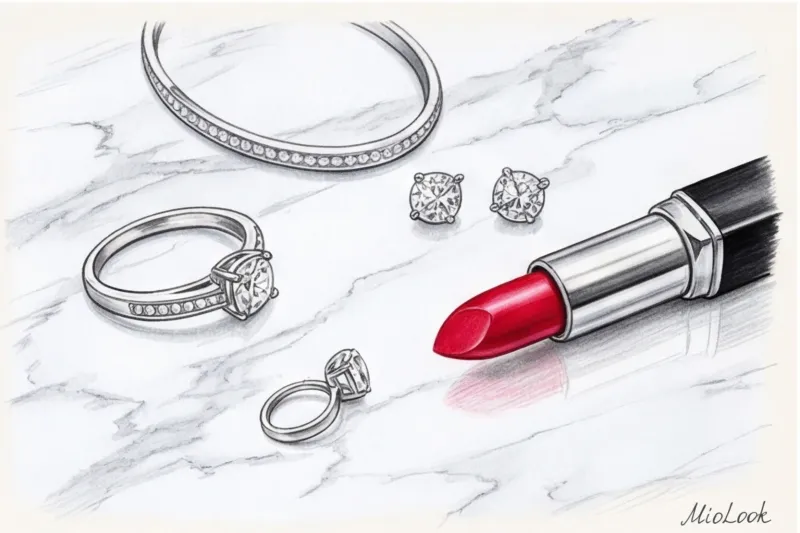
When choosing metals, opt for platinum, white gold, and polished silver. Bronze and copper are your worst enemies. For accessories (bags, shoes), glossy leather, patent leather, or high-tech smooth nylon work well.
The same rule of pigment purity applies to makeup. A pure ruby red or fuchsia on the lips, without the slightest hint of red or brown, will elevate your look to red carpet level. However, there's a caveat: pure, bright lipsticks require a flawless skin tone. If you have active breakouts or redness, neon on the lips will only accentuate them. On such days, it's best to stick to an icy highlighter and add a pop of color to your outfit.
Remember: your appearance is a cut diamond that requires the right light. Choose pure colors, invest in smooth, high-quality textures, and you'll forget about the "nothing to wear" problem.