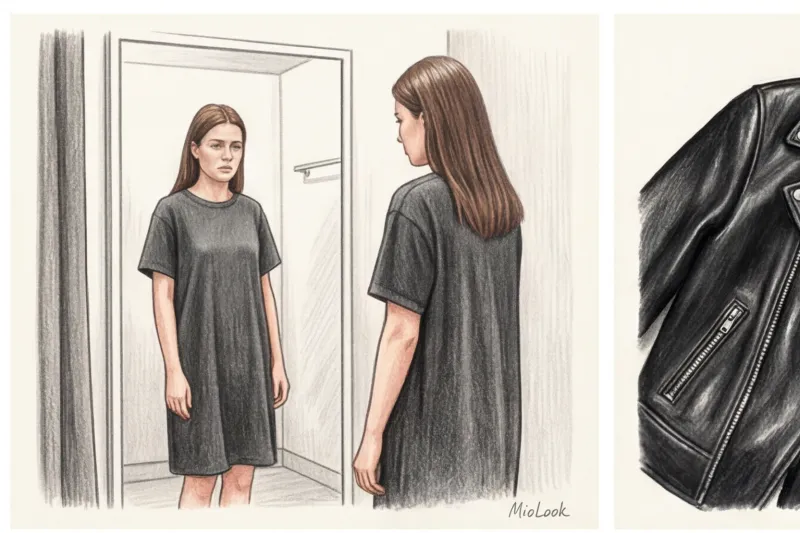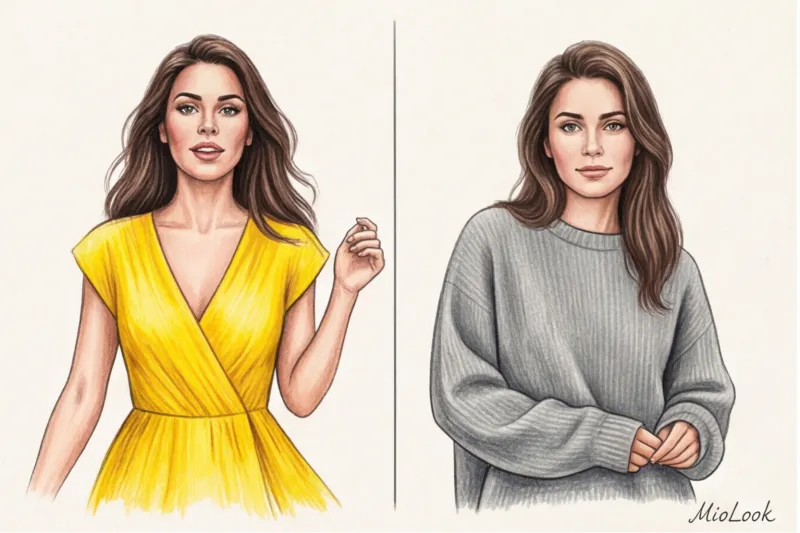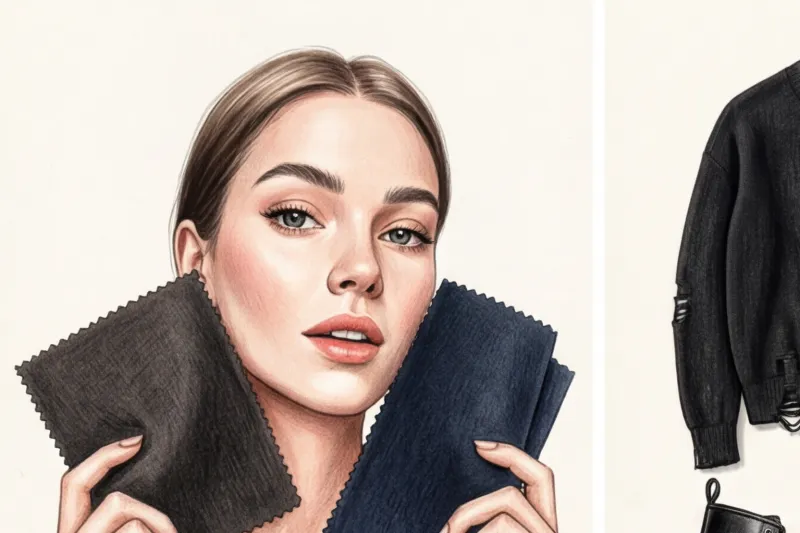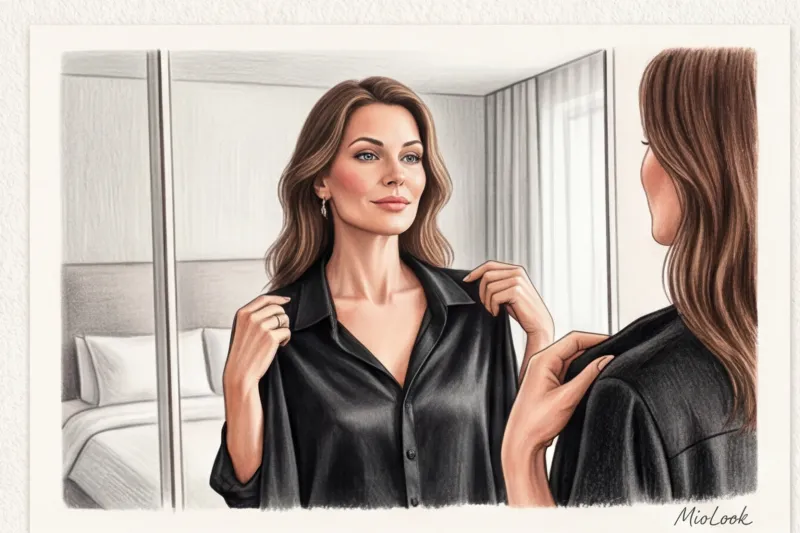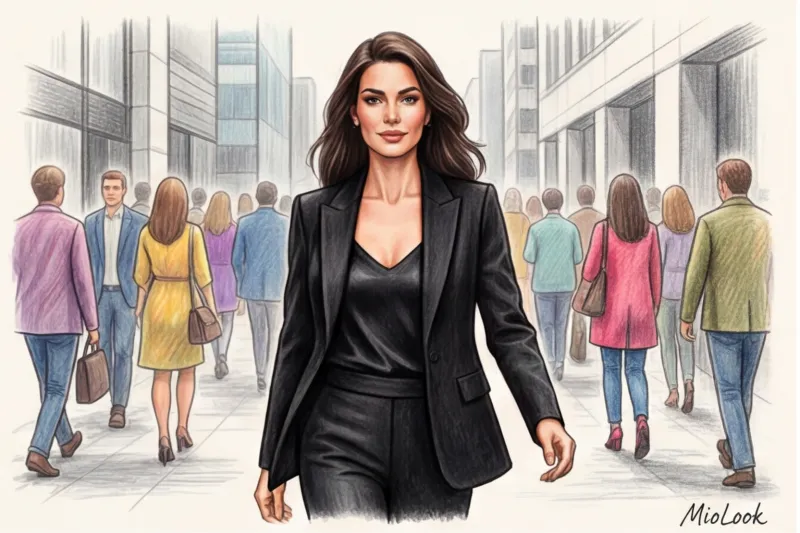
Have you ever noticed how the number of dark items in a woman's wardrobe during a difficult career or personal transition increases exponentially? When we feel vulnerable, we instinctively reach for a shapeless dark sweater. The Psychology of Black in Your Wardrobe pure and simple, and not just a tribute to practicality. We've covered in more detail how different shades shape our sense of self in our A complete guide to the psychology of color in clothing: its impact on mood , but today I want to talk about the most controversial color in fashion history.
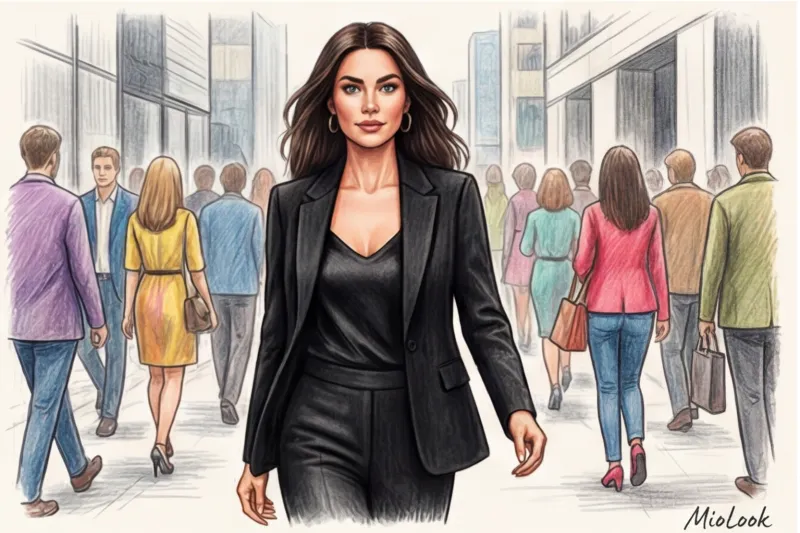
In 12 years of working as a personal stylist, I've learned one thing: black can be both your best ally and your most insidious trap. It's not just elegance. It's a powerful impression-management tool that the mass market sells us under the guise of versatility.
The Psychology of Black in Your Wardrobe: Why Do We Choose Total Black?
"Black is both modest and arrogant. Black is lazy and simple—yet mysterious. But above all, black says: I don't bother you, and you don't bother me." This iconic phrase by Japanese designer Yohji Yamamoto explains better than any textbook why city dwellers are so obsessed with this color.
From a neurobiological perspective, we live in an era of extreme sensory overload. Bright advertising, smartphone screens, street noise—our brain is constantly processing thousands of visual signals. Max Lüscher's famous color test, developed back in 1947, interprets black as a symbol of absolute demarcation, a stop, and a rejection of external stimuli.
Physics dictates that black doesn't emit light waves—it absorbs the entire spectrum. By wearing all-black, you literally create a zone of visual silence around yourself. This gives you a tremendous sense of control.
Armor from the outside world: Black as protection
The difference between "stylish minimalism" and "psychological retreat" is enormous. When new clients come to me with a wardrobe review request, I always pay attention to how exactly They wear black. If they're wearing oversized hoodies, stretched-out cardigans, and loose-fitting jeans, I'm looking at someone who's unconsciously built a wall between themselves and the world. It's the armor of an introvert after a lot of stress.
Uniform of Power: Why Leaders Wear Black
But there's another side to the coin. According to a 2022 study by the Journal of Fashion Marketing and Management, a dark, structured suit increases the perception of a speaker's competence and authority by 40%. Why is this?
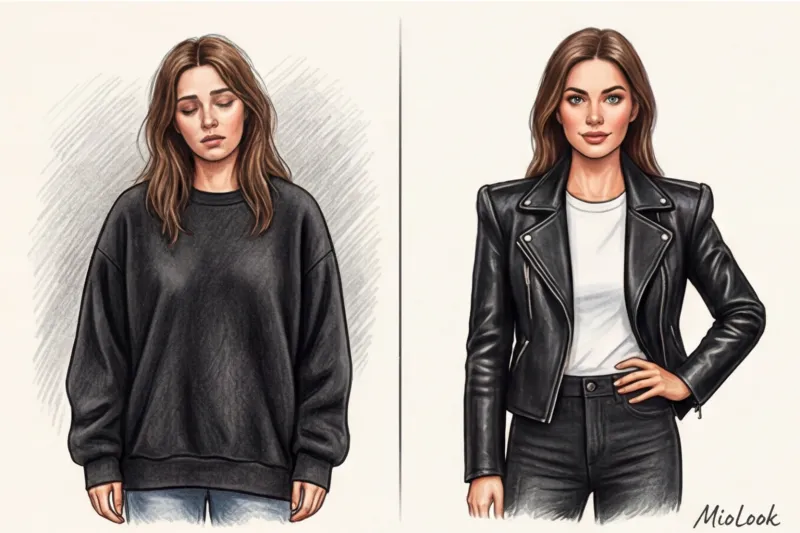
Black blurs the boundaries of the body and eliminates visual noise. When you stand before an audience in a perfectly tailored black jacket, there's nothing else in your attire for the other person to notice. The only bright spot is your face. Attention automatically focuses on your facial expressions, your eyes, and, most importantly, your words. This is the pure archetype of the Ruler.
Your perfect look starts here
Join thousands of users who look flawless every day with a smart AI stylist.
Get access — €0.99 onceSecrecy or Losing Yourself: When Black Becomes a Trap
The habit of "if I have nothing to wear, I'll just wear black" is the most alarming sign when working on my personal style. I had a telling story in my practice. My client, Anna, an IT director at a large corporation, came to me complaining that she was no longer being noticed at meetings. Opening her closet, I saw a solid black wall: 90% of her clothes were basic knitwear: turtlenecks, soft trousers, jumpers.
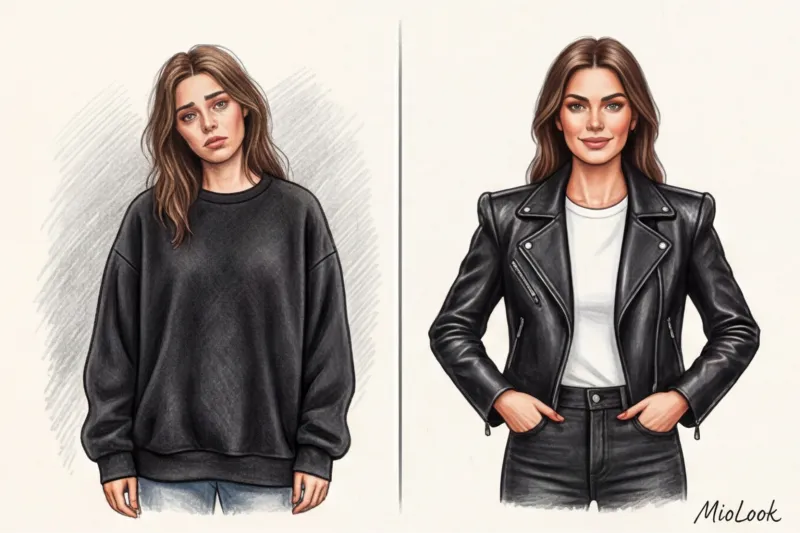
Anna was experiencing professional burnout. Her wardrobe had lost its "dopamine dressing" effect—the practice of wearing clothes that stimulate the release of feel-good hormones. Dressing in dull, soft black every day exacerbated her apathy, physically draining her energy.
When black stops bringing you a sense of sharp, collected confidence and becomes simply a "comfortable, safe option," you've fallen into a trap. It's time to change your palette.
The "slimming black" myth: what stylists know but the mass market doesn't
It's time to debunk the fashion industry's most persistent myth. We've all heard the mantra: "black is always slimming." This is an absolute lie, and it drives women to buy clothes that flatter their figures.
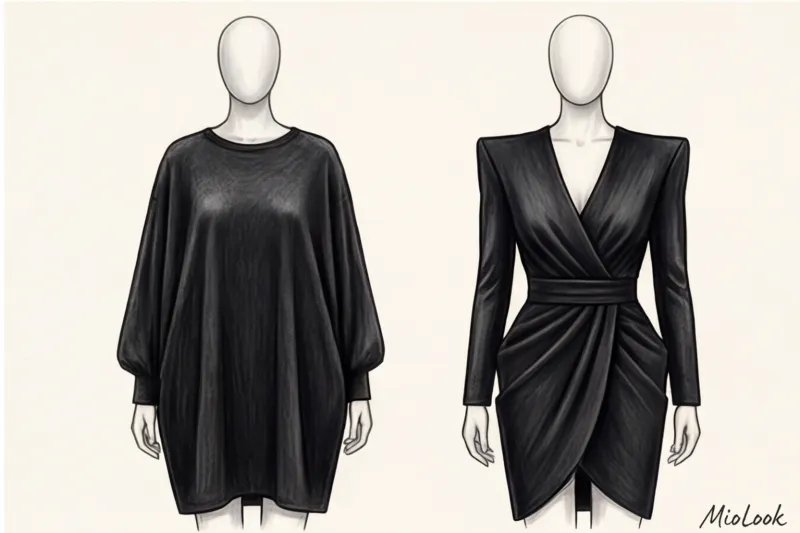
Imagine a black hooded dress or a voluminous jumper made of matte viscose. Because black absorbs light, such fabric doesn't create light and shadow. The viewer's brain doesn't see the curves of your body; it sees only a dense, solid dark spot. This is called the "black hole" effect. If the garment is shapeless, matte black will visually make you appear larger and heavier than you actually are.
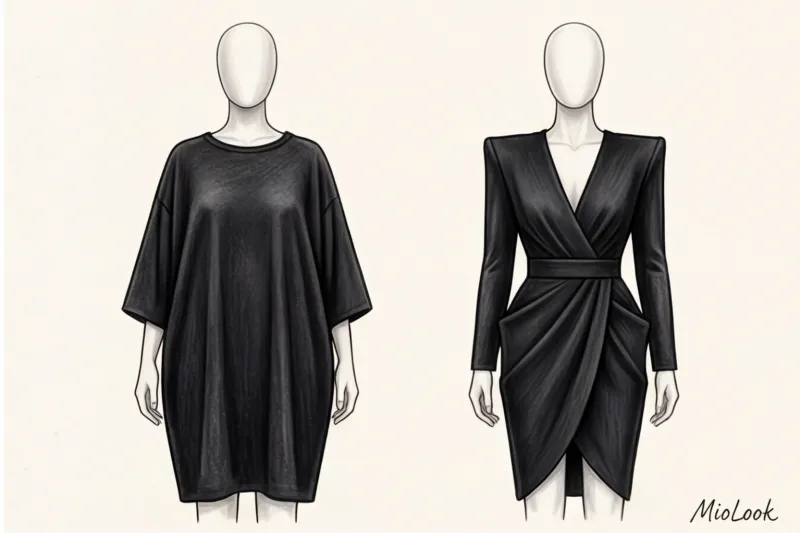
It's not the fabric's pigment that slims. It's the cut's architecture, strong vertical lines, and playful proportions that do. A perfectly tailored jacket for €150 in light, dense wool will make your waist appear smaller than a shapeless black cardigan for the same price. If you want black to really work for you, choose pieces with a clear tailoring: strong shoulders, a defined waist, and dense fabrics.
To stop buying clones, try digitizing your wardrobe. Using the "smart wardrobe" feature in MioLook , you'll clearly see how many shapeless black items are already hanging in your closet, and you'll be able to make informed decisions about your next purchases.
How to Wear Black Without Looking Tired: 3 Golden Rules of a Stylist
Black is merciless to our faces. It's simply a law of physics: when placed in a portrait area, it draws light toward itself, highlighting even the slightest shadows under the eyes, wrinkles, and uneven skin tone. I'll be honest: deep black near the face is absolutely unsuitable for women with muted, low-contrast color types (like "Soft Summer"). It simply "eats" them.
But if you're not ready to give it up, here are my professional rescue tools.
Style formula: a play of textures (matte vs. glossy)
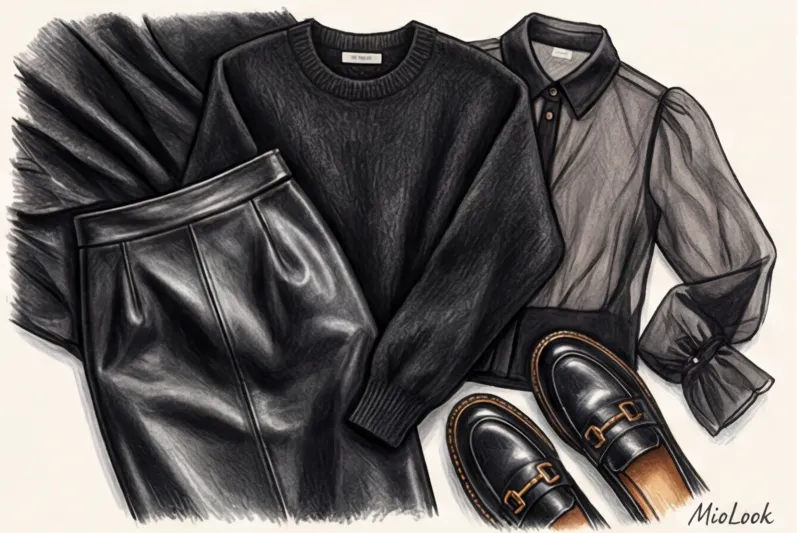
All-black looks flat, cheap, and boring when put together from a single fabric. The secret to a luxurious look lies in contrasting textures. Remember my favorite formula: matte + glossy + translucent.
For example: trousers made of thick matte wool + a flowing silk blouse + smooth leather shoes. Light will reflect differently off each surface, creating a voluminous, luxurious look.
The Geometry of Necklines: Why the V-Neck Saves the Day
To prevent black from dominating your face, move it away from the portrait area. A solid black turtleneck is a dangerous choice without bold makeup. However, a deep V-neck, unbuttoned top buttons, exposed wrists (rolled sleeves), and ankles break up the monolithic black block. Exposed skin acts as a reflector, illuminating the look.
Ready to get started?
Try the MioLook free plan—no commitments required. A smart AI stylist will help you find the perfect look.
Get access — €0.99 onceBlack in a business wardrobe: status or boredom?
In office dress codes (especially smart casual or business formal), black often becomes synonymous with boredom or an intern's uniform. To avoid looking like you've walked into a funeral, black in the office requires meticulous attention to detail.
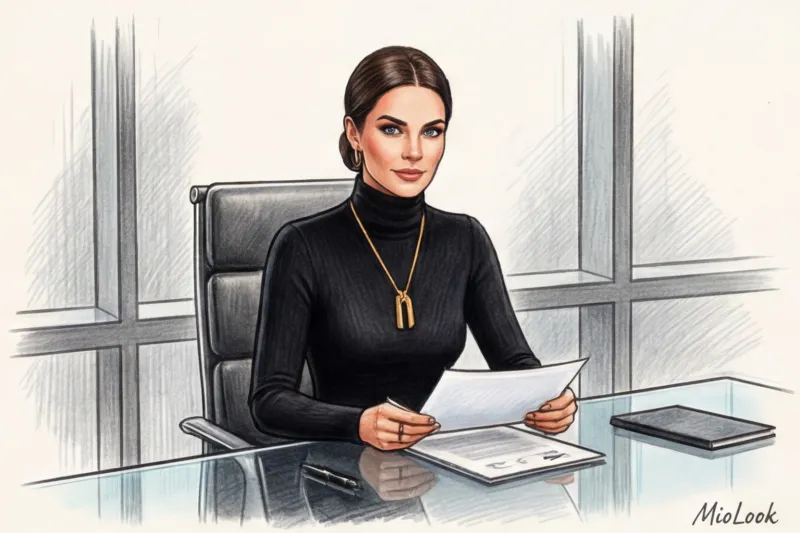
First, invest in hardware. A black jacket with cheap plastic buttons screams frugality. The same jacket with chunky metal buttons (in vintage gold or silver) looks classy.
Secondly, if your corporate culture allows, replace black with its more refined alternatives. According to PANTONE, deep navy, graphite gray, or dark chocolate hues inspire greater trust in your interlocutors because they appear less commanding while still maintaining a high-status tone.
Checklist: Audit Your Black Items
Knowledge is useless without practice. Tonight, open your closet and conduct a ruthless audit based on three criteria:
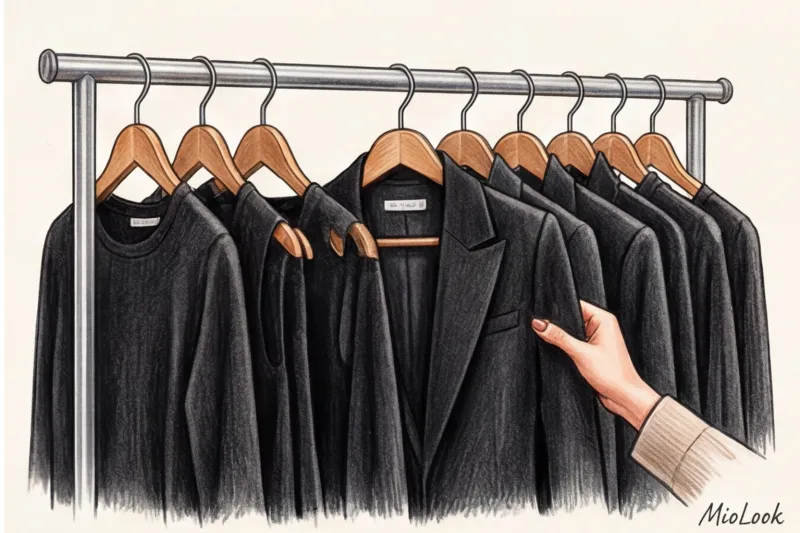
- Pigment test. Throw away all washed-out black knitwear. Faded, pilled black with a reddish or whitish undertone looks sloppy and cheap. Keep only the deep, rich pigment.
- 50% test. Consider the balance of your wardrobe. If black items make up more than half of your closet (and you're not a conscious adherent of avant-garde minimalism), you're hiding. This is a good time to consider adding some color.
- Landing test. A quality structured blazer in the mid-range segment costs around €150–250, but it will take your style to the next level, replacing a dozen shapeless pieces that hide your figure.
Black isn't a panacea for the "nothing to wear" problem. It's a complex, profound tool that requires a perfect cut, well-groomed skin, and, most importantly, inner confidence. Don't let color wear you. Wear it.