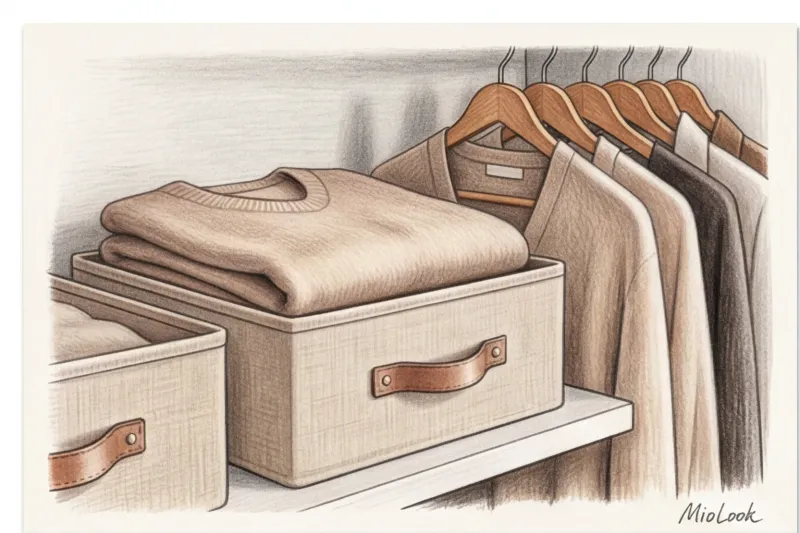
Last fall, a client came to me in tears. She'd taken her beloved vintage Loro Piana cashmere sweater out of the vacuum-sealed bag where it had been stored since spring, only to discover that instead of the luxurious garment, she'd found a compressed, lifeless piece of felt. The fibers were irreparably broken, and the springiness of the yarn was lost forever. This incident once again confirmed my cardinal rule of style: how you store your items speaks volumes about their true value.
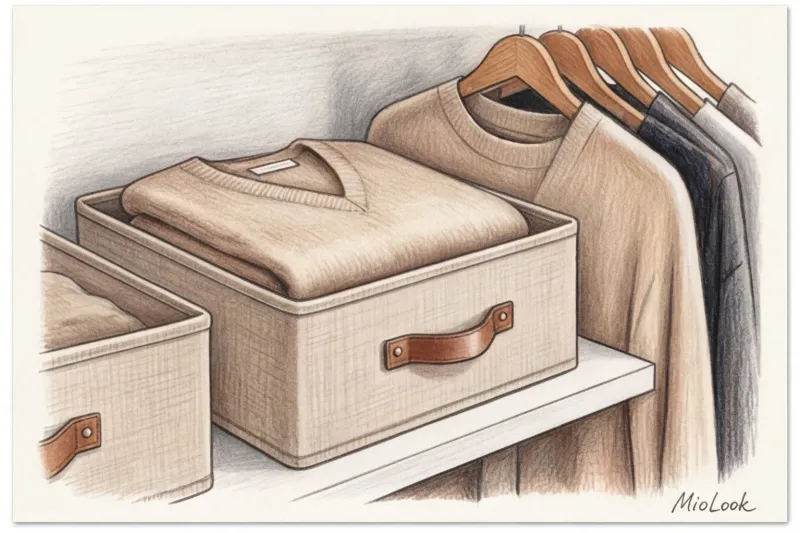
We talked about the global architecture of cabinets in more detail in our The complete guide to organizing clothing storage , but today I want to talk about the hidden foundation of this system. Most women perceive storage organizers as banal plastic boxes from a marketplace, designed to hide clutter. But as an investment wardrobe expert, I suggest you look at them differently. The right organizer is a safe for your investment, protecting premium fabrics, extending the life of your favorite items, and saving you a colossal amount of time in the morning.
Why Cheap Storage Organizers Are Ruining Your Wardrobe
One day, while sorting through a client's wardrobe, we found four identical black Zara turtlenecks at the bottom of a deep, disorganized drawer. Four! Lacking proper dividers, she simply couldn't see what she already owned and kept buying duplicates. This case, which I often cite as an example, perfectly illustrates the problem of "blind stacking."
Things are even worse with the popular clear containers. The illusion of order they promise quickly shatters reality: the stacks inside tend to fall over, and the translucent plastic creates the incredible visual noise we were so eager to eliminate. You open the cabinet and see a motley mess, not a finished product. status capsule for the office.
"Closet organization follows the Pareto principle: you wear 20% of your clothes 80% of the time. Your storage system should instantly reveal this active core, not hide it behind opaque plastic."
Plastic, vacuum and other enemies of natural fabrics
The worst crime against a good wardrobe is vacuum bags. Remember: they are only suitable for synthetic down jackets and ski gear. When you suck the air out of a bag of cashmere or merino wool, you literally break the structure of the protein fiber. The garment loses its natural fluffiness and ability to retain heat.
Cheap acrylic boxes are also dangerous. They accumulate static electricity, acting as a magnet for micro-dust, which over time can cling to light-colored, delicate fabrics. Luxury demands air, period.
Digitize your ideal wardrobe
Tired of forgetting about things tucked away on the back shelves? Upload your wardrobe to MioLook and create stylish looks in a single click.
Get access — €0.99 onceInvesting in Storage: Organizer Materials Stylists Choose
During my internship in Milan, I had the opportunity to explore the back rooms of top luxury boutiques. You'll never find plastic containers there. High-status clothing demands high-status conditions. The way you store your clothes is a direct extension of how you care for them.
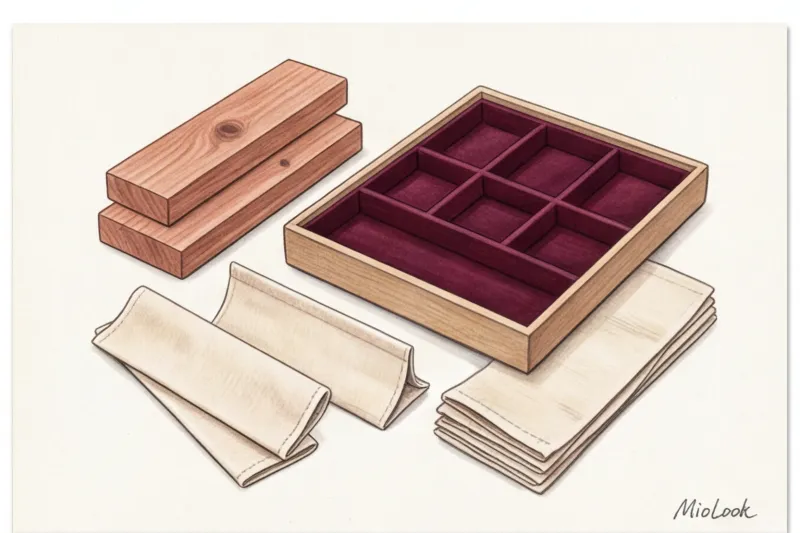
According to a 2022 study by the British Textile Institute, natural animal fibers (silk, wool, alpaca) require constant air circulation. Otherwise, residual moisture leads to a musty odor and the destruction of the fibers. Therefore, dense cotton (from 200 g/m²), linen, and stiff canvas are ideal materials for trunks.
According to the international platform WGSN, up to 10% of the value of expensive knitwear is wasted annually due to improper storage—creases from hangers, fading, and moth damage. High-quality, breathable organizers increase the lifespan of items by 15-20%.
Cedar and Velvet: Protecting Premium Shoes and Accessories
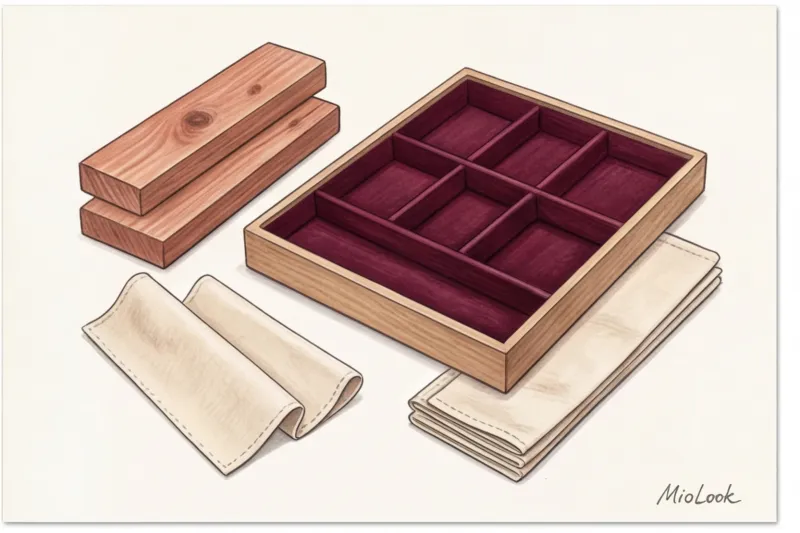
Never store leather shoes in closed, solid shoe boxes, especially if they're laminated. Leather needs to breathe. Fabric shoeboxes with untreated red cedar inserts are an ideal solution. Cedar acts as a natural moisture absorber and repellent, keeping the leather supple.
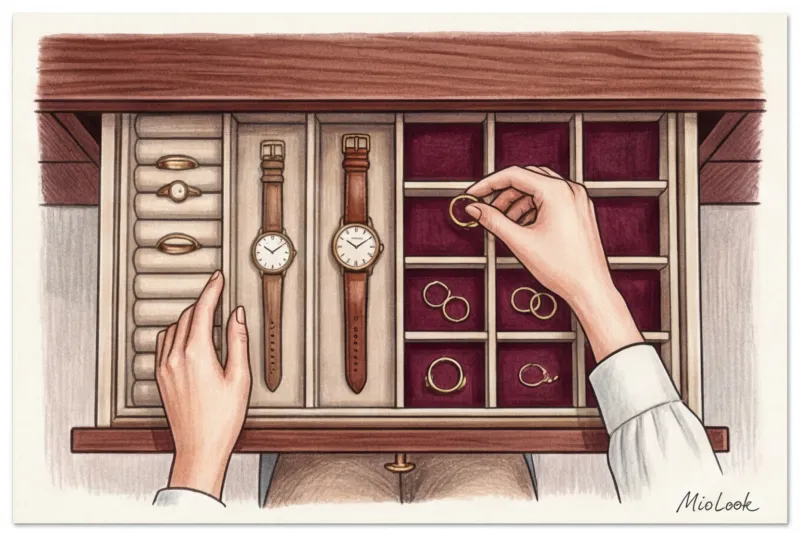
And for status accessories For belts with expensive hardware, and jewelry, velvet or suede inserts are crucial. They prevent micro-scratches on the metal when you pull out the drawer.
Shelf Organizers: Open Storage Architecture
Switching from shapeless stacks to a modular system radically changes the perception of space. My favorite principle for deep shelves is "one category, one box." If a shelf is filled with sweaters, belts, and a couple of T-shirts, you'll inevitably create chaos when trying to find what you need.
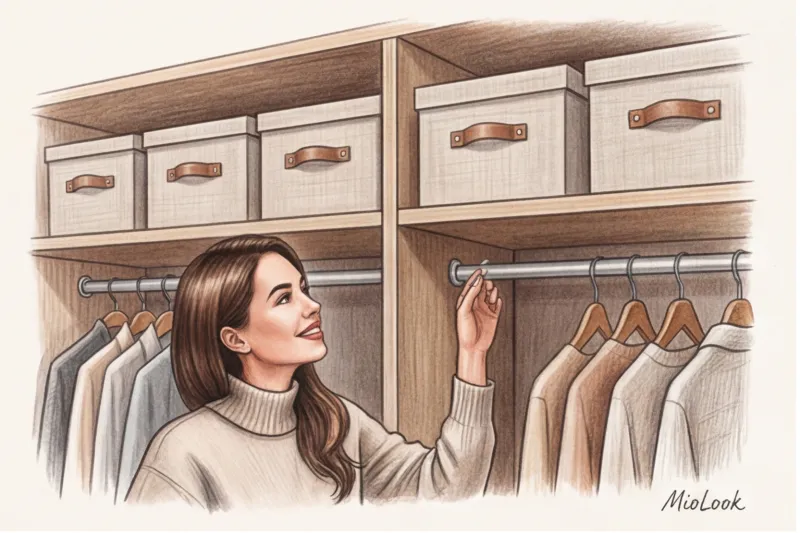
Use trunks with a rigid frame, covered in textured fabric. They create a clear geometric line on the shelf. When you line up these trunks, visual noise disappears completely. Open the closet door and you're faced with the aesthetics of an expensive boutique, not a mass-market warehouse. To avoid confusion, sort items by season and fabric thickness.
Vertical Dividers: How to Avoid the Domino Effect
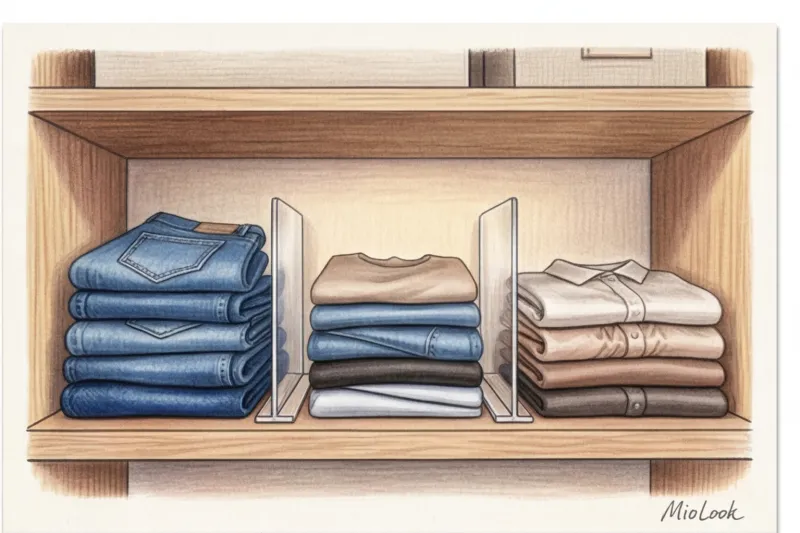
Have you ever noticed how a perfectly folded stack of jeans turns into a shapeless pile the moment you pull out a pair from the middle? It's the "domino effect." To avoid this, I use clear acrylic dividers that attach directly to a wooden shelf.
They physically prevent the stacks from falling over. This is especially important for fine cashmere and basic knitwear smart-casual capsule , which cannot be hung on hangers to avoid deformation of the shoulder seam.
Your perfect look starts here
Join thousands of users who look flawless every day with the MioLook AI stylist.
Get access — €0.99 onceDrawer Organizers: Micro-Managing Your Closet
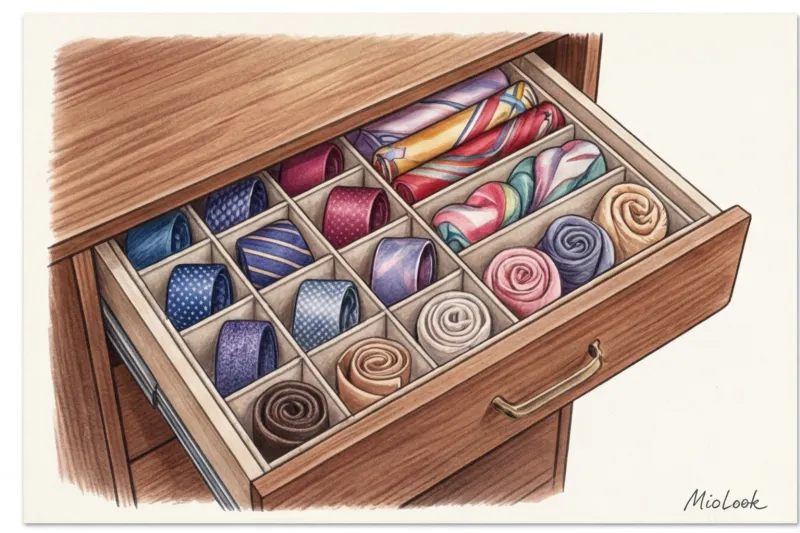
Drawers are the main blind spots of any closet. They're where we tend to throw things when we're in a hurry. The famous Japanese method of vertical storage (hello, Marie Kondo) is truly brilliant, but there's a catch: it absolutely doesn't work without rigid dividers.
If you simply stack your T-shirts vertically in an empty, deep drawer, they'll fall over the first time you open them. You need adjustable wooden or bamboo spring dividers. They allow you to adjust the width of the compartment to fit a specific item, whether it's a bulky sweatshirt or a thin silk top. According to my statistics, a perfectly organized drawer with basics cuts 10-15 minutes off your morning routine. You simply pull out the drawer and see your entire selection at the top, like a catalog.
Honeycomb dividers for underwear and hosiery
For delicate items—thick designer tights, fine silk underwear—use honeycomb fabric organizers. Note: the edges of the mesh compartments must be soft! Cheap, hard plastic with burrs on the seams can cause snags in Wolford tights costing several thousand euro within the first day.
Sort your tights by denier and color. This will save you from the classic morning panic of putting on black tights and only realizing they're actually dark blue when you're outside.
How to calculate the number of organizers you need (without spending too much)
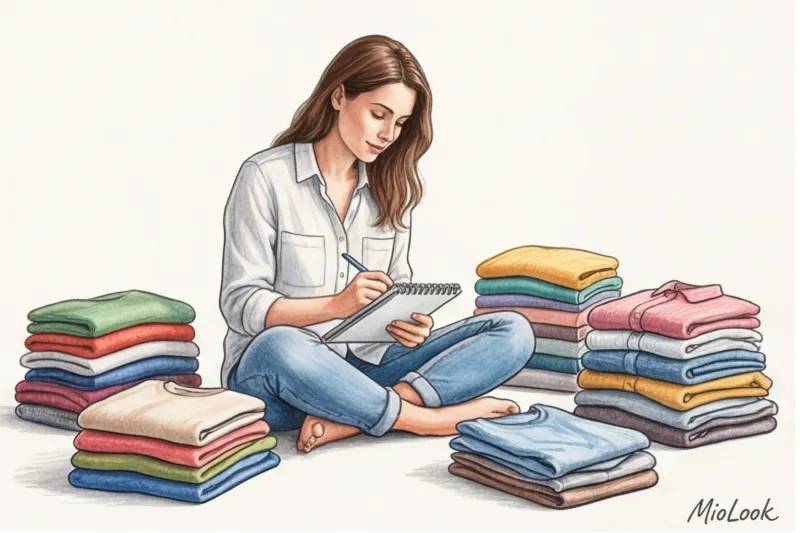
The most common mistake beginners make is heading to a home goods store and buying pretty boxes before they've done a wardrobe audit. You risk buying organizers for things you should have thrown out long ago.
The algorithm for conscious consumption is simple: first, declutter, then measure, and only then buy. And you need to measure wisely.
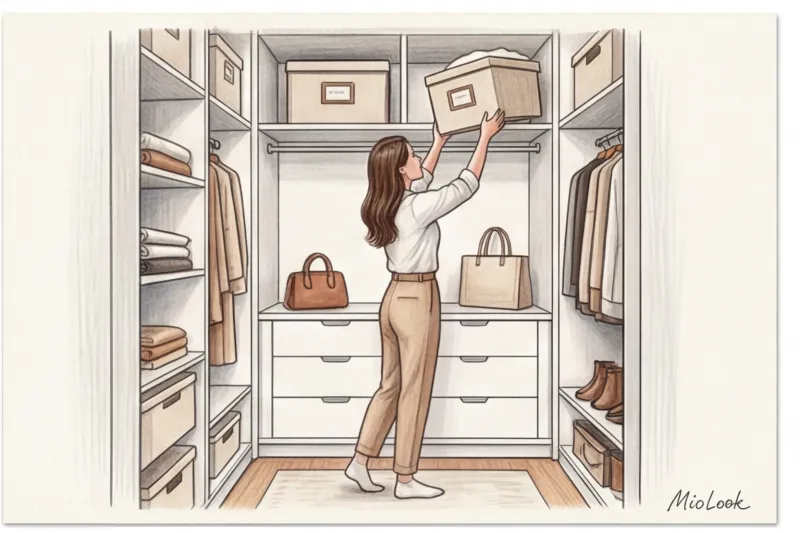
The stylist's formula for free space: The organizer shouldn't be placed flush against the top shelf. Leave at least 4-5 centimeters of space above to allow your hand to easily slide through and reach an item without having to pull out the entire heavy case. Furthermore, the organizers themselves should be no more than 80% full. Items shouldn't be compressed.
Checklist: Upgrading Your Storage System in a Weekend
I often give my clients this practical plan after shopping to ensure new items "settle" organically in their closets, rather than becoming the start of a whole new mess. Set aside one weekend for this.
- Total devastation. Take everything out. Wipe the shelves with a damp cloth and a drop of cedar or lavender essential oil.
- Measuring dimensions. Measure the depth, width, and height of each shelf. Record this information in your phone (app) MioLook (perfect for securing technical details like those found on your cabinet).
- Refusal of plastic. Ditch the wool vacuum bags and fragile plastic. Order cotton and linen bags and wooden dividers.
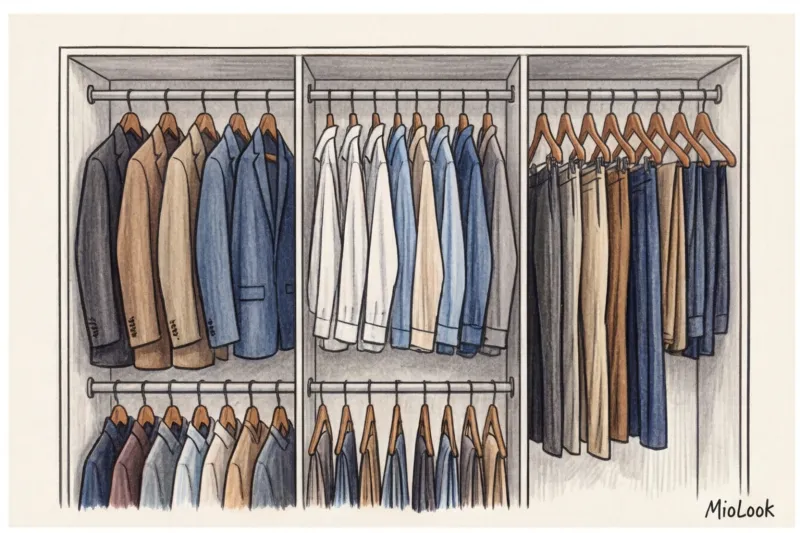
- Zoning. Organize your items by accessibility: eye level (the most convenient area) for your base and active core, top shelves for off-season storage in closed cases, and bottom drawers for sportswear and loungewear.
- Marking. If you use closed, opaque trunks on top shelves, attach elegant leather or cardboard tags to them. A label labeled "Chunky Knit Sweaters - Winter" will save you from having to open every box in November.
Stylist's Resume: Order That Pays Dividends
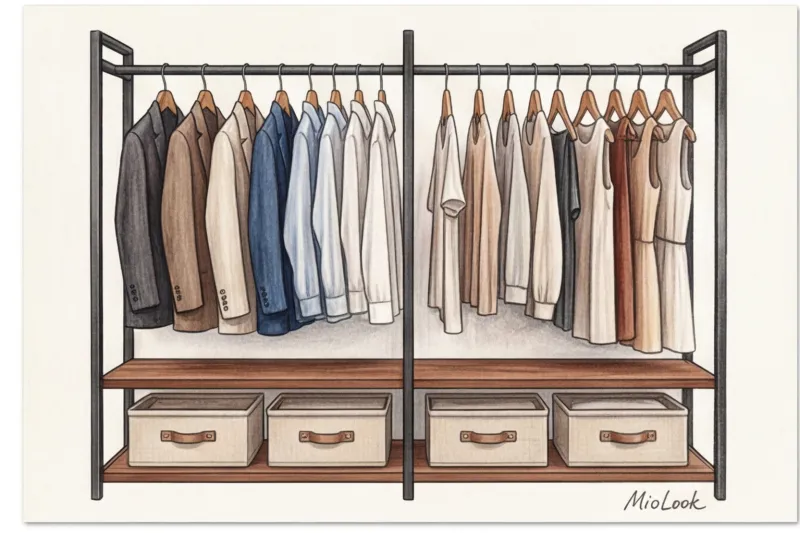
High-quality organizers made from breathable natural materials aren't an expense item. They're a direct investment in the safety of your clothes and your peace of mind. We wear what we see. Cluttered shelves steal not only your time but also your stylistic creativity, forcing you to wear the same tried-and-true (and wrinkled) items from the edge of the shelf day after day.
The architecture of a smart wardrobe is built on respect for your belongings. I encourage you to audit at least one shelf today, replace shapeless piles with an elegant fabric trunk with dividers, and you'll immediately feel the difference. A beautiful, breathable, structured closet motivates you to dress impeccably every morning.